
**Install smart thermostats first—they deliver the fastest payback** of any home automation investment, typically recovering their $200-400 cost within 12-18 months through reduced heating and cooling bills. Australian households can expect 10-23% energy savings by automatically adjusting temperatures based on occupancy and weather patterns, with devices like Google Nest or Daikin’s smart controllers working seamlessly with our climate zones.
**Replace standby power drains with smart plugs** to eliminate the $100-200 annually that the average Australian home wastes on phantom loads. These $15-30 devices let you schedule or remotely control appliances like washing machines, entertainment systems, and pool pumps, ensuring they only draw power when actually needed.
**Monitor real-time energy consumption with smart meters and companion apps** to identify your biggest power guzzlers. Many Australian energy retailers now offer free apps that break down usage by appliance, revealing surprising culprits—often older fridges, inefficient hot water systems, or poorly timed air conditioning use—and helping you make targeted upgrades.
**Integrate smart LED lighting systems** that adjust brightness and colour temperature throughout the day, reducing lighting costs by up to 80% compared to traditional bulbs while improving comfort. Motion sensors in hallways and outdoor areas ensure lights activate only when needed, particularly valuable for Australian homes with large outdoor entertaining spaces.
The beauty of smart home energy efficiency lies in its scalability. Whether you’re investing $50 or $5,000, every device communicates within an ecosystem that grows more powerful with each addition. For Australian households facing rising electricity prices and increasingly volatile weather patterns, these technologies transform energy management from guesswork into data-driven decisions that benefit both your wallet and our shared environment.
Why Australian Homes Are Bleeding Energy (And Money)
Australian homes are facing a perfect storm of energy challenges, and the numbers tell a sobering story. While we pride ourselves on our resourcefulness, the reality is that many of our homes are working against us when it comes to energy efficiency.
Consider this: Australia experiences some of the most extreme temperature variations in the developed world. From scorching 40-degree summer days in Perth to frosty winter mornings in Melbourne, our heating and cooling systems are doing overtime. The Australian Energy Market Commission reports that the average household energy bill has climbed by over 35% in the past five years, with cooling and heating accounting for roughly 40% of that consumption.
The challenge runs deeper than just weather. Much of our housing stock wasn’t built with energy efficiency in mind. Those classic weatherboard homes and brick veneers that characterize Australian suburbs often lack proper insulation, have single-glazed windows, and feature outdated electrical systems. In fact, homes built before 2005 typically use up to 50% more energy than those constructed to modern standards.
Then there’s the pricing puzzle. Peak demand pricing means that when we most need our air conditioning—during those sweltering summer afternoons between 2 and 8 pm—we’re paying premium rates. For many families in Sydney and Brisbane, these peak hours can see electricity costs triple compared to off-peak times.
The good news? Understanding where your energy is escaping is the first step toward reclaiming control. Professional home energy assessments can reveal the hidden culprits draining your wallet, from poorly sealed doors to ancient hot water systems.
This isn’t about pointing fingers or dwelling on problems—it’s about recognizing that our homes have massive potential for improvement. With Australian households collectively spending over $20 billion on energy annually, even modest efficiency gains can translate into significant savings while reducing our environmental footprint. The question isn’t whether we can afford to act, but whether we can afford not to.
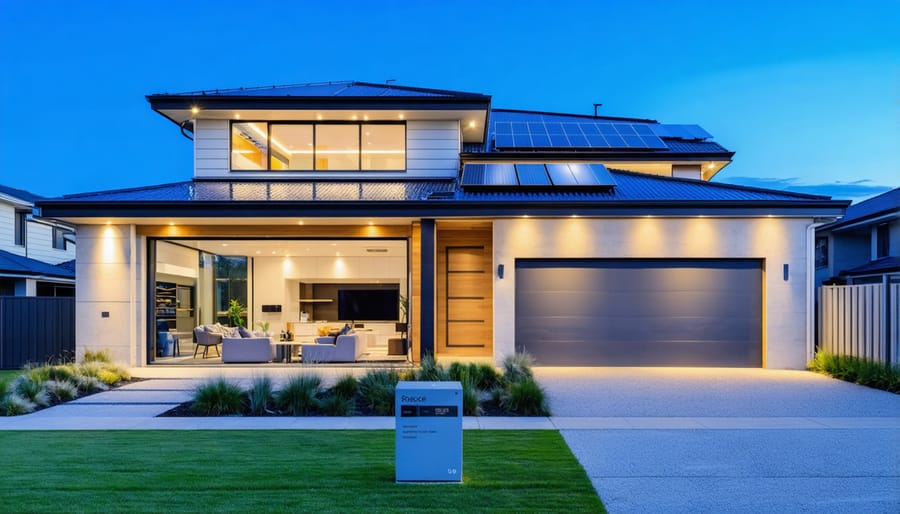
What Makes a Smart Home Actually Smart About Energy
The Three Pillars of Smart Energy Management
Think of smart home energy management like a three-legged stool – remove one leg and the whole system becomes unstable. The three pillars working in harmony are what transform your Australian home from an energy guzzler into an efficient, comfortable sanctuary.
**Monitoring** forms the foundation. Smart meters and energy monitoring apps give you real-time visibility into exactly where your energy dollars are going. Many Aussie households discover their biggest energy drains aren’t what they expected – perhaps that second fridge in the garage or the pool pump running during peak tariff times. Knowledge is power, and monitoring provides the insights you need to make informed decisions.
**Automation** takes the mental load off your shoulders. Smart thermostats learn your family’s routines, automatically adjusting your air conditioning before you arrive home on those scorching summer days. Smart plugs can schedule your hot water system to run during off-peak hours when electricity is cheapest. You’re not sacrificing comfort – you’re simply letting technology handle the optimization behind the scenes.
**Optimization** brings it all together. This is where your system learns and adapts, using data from monitoring to refine automation rules. Perhaps it notices your solar panels generate surplus energy between 10am and 2pm, so it pre-cools your home during this window, reducing reliance on grid power during expensive evening peaks.
Together, these three pillars create a responsive ecosystem that reduces consumption while maintaining the lifestyle you love.
Smart Devices That Actually Pay for Themselves
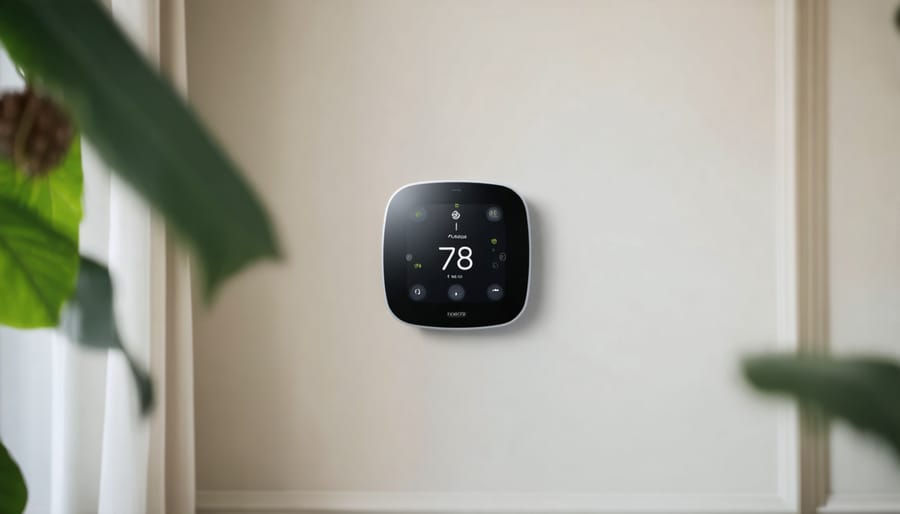
Smart Thermostats That Understand Australian Seasons
Australian summers are fierce, and our electricity bills prove it. Smart thermostats designed for our unique climate can transform how you manage heating and cooling, cutting costs while keeping your home comfortable year-round.
Unlike basic programmable thermostats, today’s smart devices learn your patterns and adapt to Australian conditions. The Google Nest Learning Thermostat and ecobee SmartThermostat both integrate seamlessly with most Australian reverse-cycle air conditioners and ducted systems. These devices understand that our 40-degree summer days demand different strategies than our mild 15-degree winters.
Take Melbourne homeowner Sarah Chen, who installed a Nest thermostat in her three-bedroom home. “During last summer’s heatwave, the thermostat pre-cooled our house before peak electricity pricing kicked in at 3pm,” she explains. “Our summer bills dropped by $180 compared to the previous year, and we were actually more comfortable.”
Smart thermostats achieve savings through intelligent scheduling, geofencing (detecting when you’ve left home), and integration with weather forecasts. They’ll adjust temperatures based on actual outdoor conditions rather than running your system harder than necessary.
Brisbane-based energy consultant Marcus Thompson shares data from his clients: “We’re consistently seeing 20-30% reductions in cooling costs for homes using smart thermostats properly. That’s typically $200-400 annually for average households.”
The key is choosing devices compatible with Australian voltage standards and HVAC systems. Most major brands now offer Australian-specific models with local support, making installation straightforward for licensed electricians.
Intelligent Lighting That Cuts Waste Without Thinking
Remember when your parents would walk through the house switching off lights in empty rooms? Smart lighting takes that nagging responsibility off everyone’s shoulders—and does it far more efficiently than any human could.
The real game-changer isn’t just switching to LED bulbs (though that’s a brilliant first step, cutting lighting energy use by up to 75%). It’s about creating systems that think for you. Motion sensors ensure lights activate only when rooms are occupied, perfect for hallways, laundry rooms, and those mysterious storage spaces we forget about. In Australian homes where natural light is abundant most of the year, daylight harvesting systems automatically dim artificial lights as sunshine streams through windows—something particularly valuable in open-plan living areas facing north.
Here’s where truly intelligent systems differ from basic timers: simple timers operate on fixed schedules, which might switch on lights at 6pm every day regardless of whether you’re home, on holiday, or it’s still bright outside during summer’s extended daylight. Smart systems adapt in real-time, learning your patterns and responding to actual conditions. They communicate with your solar panels, maximizing self-consumption during peak generation hours.
Many Australian households report 40-60% reductions in lighting costs after implementing comprehensive smart lighting—savings that accumulate season after season without requiring any thought once installed.
Solar Integration and Smart Energy Storage
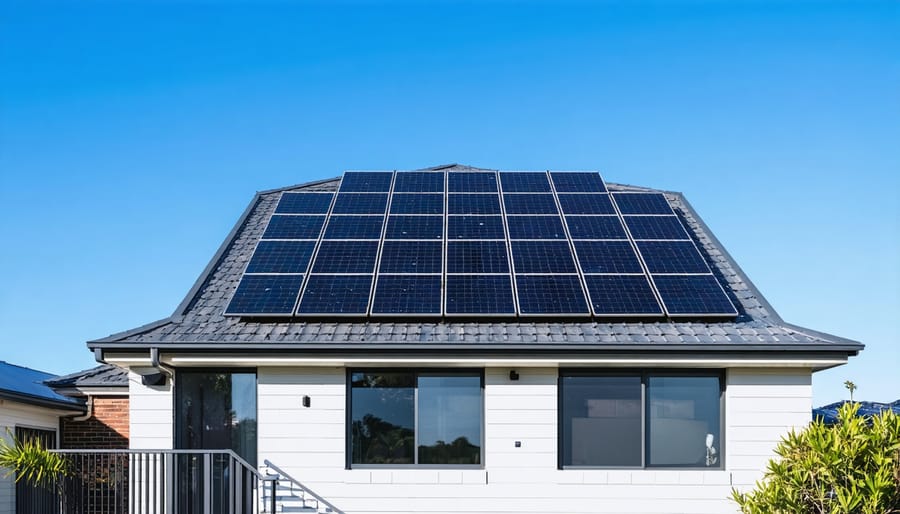
Australia leads the world in rooftop solar adoption, with over three million households already harnessing the sun’s energy. But here’s where it gets exciting: smart energy systems are transforming how we capture, store, and use that power, turning good solar investments into brilliant ones.
Smart solar inverters and battery management systems now work together like a well-rehearsed orchestra. They monitor your energy production in real-time, learn your household patterns, and make intelligent decisions about when to store power, when to use it, and when to export it back to the grid. These smart features that save money are particularly valuable given Australia’s time-of-use electricity pricing.
Consider time-of-use optimization: your smart system charges your battery during off-peak solar production hours, then automatically switches to battery power during expensive peak periods (typically 4-9pm when everyone’s cooking dinner and running air conditioning). Some systems even predict weather patterns, ensuring your battery is fully charged before cloudy days.
Community battery projects are emerging across Australian suburbs too, allowing neighbours without suitable roofs to participate in solar storage collectively. This democratises renewable energy access while strengthening local resilience.
The beauty of these systems lies in their set-and-forget nature. Once configured, they quietly maximise your solar investment every single day, often saving households $600-1,200 annually while reducing grid dependency and emissions.
Smart Power Boards and Energy Monitoring
Real-time energy monitoring transforms how Australian households understand their power consumption. Smart power boards like the Kogan SmarterHome™ or TP-Link Kasa can track individual appliances, revealing those sneaky “energy vampires” draining your wallet while you sleep. Many Aussie families are shocked to discover their gaming consoles consume 15-20 watts on standby, while older plasma TVs can draw up to 30 watts even when switched off.
These monitoring devices connect to smartphone apps, showing you exactly where your money goes. One Melbourne household discovered their second fridge in the garage was costing them $180 annually – more than it was worth keeping! Set-top boxes, microwaves with digital displays, and phone chargers left plugged in are common culprits, collectively adding 5-10% to typical household bills.
The beauty of smart power boards is their dual function: they monitor consumption and eliminate phantom loads with programmable schedules or remote switching. You’ll quickly identify which appliances deserve their own circuit and which should be completely disconnected overnight. This immediate feedback creates powerful behaviour change across the whole household.
Building Your Smart Home Energy System on Any Budget
The $500 Starter Setup
Starting your smart home energy journey doesn’t require a hefty investment. For around $500, you can tackle the biggest energy drains in most Australian homes and see immediate results on your next electricity bill.
Begin with a smart thermostat ($150-200), which typically pays for itself within twelve months by optimizing your heating and cooling—responsible for up to 40% of household energy use. Models compatible with Australian systems learn your schedule and automatically adjust temperatures when you’re away.
Add four to six smart plugs ($15-30 each) to control phantom power drain from entertainment systems, kitchen appliances, and charging stations. These sneaky energy vampires can cost Australian households up to $150 annually when left on standby.
Complete your starter kit with smart LED bulbs ($10-15 each) for your five most-used lights. They use 75% less energy than traditional bulbs and last years longer.
This combination addresses the low-hanging fruit of energy efficiency without requiring permanent installations—perfect for renters or those wanting to test smart home technology before committing further. Many Australian community energy groups report members saving 15-25% on bills within the first three months of implementing this basic setup.
The Mid-Range Upgrade ($1,500-$3,000)
Ready to take your energy efficiency to the next level? This investment range transforms your home into a genuinely intelligent, interconnected system that works harmoniously to slash your energy bills.
At this budget, you’re looking at a comprehensive smart home ecosystem. Start with a premium smart hub that connects everything—think Samsung SmartThings or a sophisticated HomeKit setup. Add smart thermostats for both heating and cooling zones (particularly valuable in Australia’s varied climate), smart lighting throughout main living areas, and intelligent power monitoring for your entire home, not just individual appliances.
The game-changer here is integration. Your air conditioning responds to weather forecasts, your blinds close automatically during peak heat, and your solar system communicates with your battery storage and appliances to maximize self-consumption. Many Australian households in this range report 30-40% reductions in energy bills within the first year.
Consider investing in quality smart plugs for high-consumption appliances, a smart hot water controller, and comprehensive energy monitoring software. This budget also allows for professional installation, ensuring everything works seamlessly together. You’re not just buying devices—you’re creating an intelligent ecosystem that learns your patterns and actively reduces waste while maintaining comfort year-round.
The Whole-Home Transformation
If you’re building new or undertaking major renovations, you’re in the enviable position of designing energy efficiency into every corner of your home from the ground up. This is where smart technology truly shines, creating an integrated ecosystem that works seamlessly together.
Consider starting with a professional energy assessment to establish your baseline and identify the most impactful opportunities. Many Australian homeowners are combining smart thermostats with automated blinds, whole-home battery systems, and intelligent hot water management to create homes that practically run themselves while slashing energy bills by 40-60%.
The beauty of this approach is that professional installers can wire everything during construction, avoiding the retrofit challenges others face. You’ll want to explore integrated platforms like Google Home or HomeKit that allow all your devices to communicate effectively. Think solar panels feeding batteries that power your home during peak tariff periods, with excess energy automatically diverted to heat your water or charge your EV.
Here’s the exciting part for Australian households: generous government incentives can significantly offset these upfront costs. Federal schemes like the Small-scale Renewable Energy Scheme, combined with state-specific programs—Victoria’s Solar Homes Program, NSW’s Empowering Homes initiative, and various rebates across other states—can reduce your investment by thousands of dollars. Many councils also offer additional rebates for energy-efficient appliances and smart systems.
Yes, this premium approach requires careful planning and higher initial investment, but you’re creating a future-proofed home that delivers ongoing savings and environmental benefits for decades to come.
Making It Work: Setup and Optimization Tips
Navigating Australian Energy Tariffs and Peak Times
Understanding your energy tariff is like learning the rhythm of your local community – once you know the pattern, you can dance along and save significantly. Most Australian households now have access to time-of-use (TOU) pricing, where electricity costs vary throughout the day based on grid demand.
In Victoria and New South Wales, peak times typically run from 2pm-8pm on weekdays, when prices can triple compared to off-peak periods. South Australian households often face peaks between 1pm-7pm, while Queensland’s Energex customers see higher rates from 4pm-9pm during summer months. Western Australia’s Synergy offers different structures again, with shoulder and off-peak periods offering substantial savings.
The beauty of smart home systems is their ability to work these schedules automatically. Program your smart hot water system to heat during off-peak hours (usually 10pm-7am), saving around $200-400 annually for the average household. Set your pool pump, dishwasher, and washing machine to run after 10pm, and configure battery storage systems to charge when rates are lowest and discharge during peak times.
Origin Energy, AGL, and Energy Australia customers can often access smart meter data through their apps, making it easier to identify your household’s peak consumption patterns. Many smaller retailers like Powershop and Diamond Energy offer even more flexible tariff options that reward strategic energy use, turning your smart home into a genuine money-saving partner.
Avoiding Common Smart Home Energy Mistakes
While smart home technology promises significant energy savings, many Australian households fall into traps that undermine these benefits. Understanding these pitfalls helps you make smarter choices from the start.
**Over-automation** is surprisingly common. Installing smart plugs on every appliance might seem efficient, but these devices themselves consume standby power—typically 0.5 to 2 watts each. If you’ve got twenty smart plugs running constantly, you’re adding up to 350 kWh annually just to power the automation. Focus on high-energy devices like air conditioners, heaters, and pool pumps where the savings genuinely outweigh the consumption.
**Incompatible ecosystems** create another headache. Mixing brands that don’t communicate means running multiple apps and losing integration benefits. Before purchasing, check if devices support Matter (the new universal standard) or work within your chosen ecosystem—whether that’s Google Home, Apple HomeKit, or Amazon Alexa.
Australian conditions present unique challenges too. Our extreme temperatures can interfere with Wi-Fi signals, particularly affecting outdoor devices. If your smart irrigation system keeps disconnecting during summer, consider installing a Wi-Fi extender or switching to devices with stronger connectivity options.
**Phantom load culprits** include devices that never truly switch off. Smart speakers, displays, and hubs can consume 2-15 watts constantly. While convenient, having six smart speakers throughout your home adds unnecessary baseload consumption.
The fix? Audit your setup quarterly. Check your energy monitoring data to identify devices using more power than anticipated. Sometimes the simplest solution—a basic timer on a standard power board—delivers better results than an energy-hungry smart alternative. Your community often has valuable troubleshooting insights too, so don’t hesitate to seek advice from local sustainability groups.
Beyond Your Bills: The Bigger Impact
When you upgrade to smart home energy technology, you’re not just reducing your own power bills—you’re contributing to a movement that’s reshaping Australia’s energy future. Each household that adopts smart energy management becomes part of a living network that helps stabilise our grid and accelerate the transition to renewable energy.
Consider this: when thousands of smart homes in Sydney automatically reduce air conditioning load during peak demand, it prevents blackouts and reduces the need for expensive, polluting peaker plants. In South Australia, where renewable energy already powers much of the state, smart home batteries are helping solve the intermittency challenge by storing excess solar during the day and feeding it back when the sun sets.
Communities across Australia are already seeing the collective impact. The Yackandandah community in Victoria has embraced smart energy monitoring as part of their journey toward 100% renewable energy, with neighbours sharing insights and celebrating milestones together. In Perth’s White Gum Valley, a smart microgrid connects 18 homes, demonstrating how coordinated energy management can benefit entire neighbourhoods.
These sustainable home improvements create ripple effects that extend far beyond individual properties. When grid operators can predict and manage demand more effectively through aggregated smart home data, they can integrate more renewable energy sources with confidence. Your smart thermostat isn’t just saving you money—it’s helping wind and solar become more viable alternatives to coal and gas.
The Australian Energy Market Operator estimates that by 2030, coordinated smart home technology could reduce peak demand by up to 30%, saving billions in infrastructure costs while cutting emissions. But this future depends on Australians like you making the switch today. Every smart home device installed is a vote for a cleaner, more resilient energy system that benefits us all. Together, we’re not just upgrading our homes—we’re building the sustainable Australia our grandchildren deserve.

Making your home smarter and more energy-efficient isn’t just possible—it’s happening right now in Australian households from Sydney to Perth, and the results speak for themselves. Whether you’re starting with a single smart power board or planning a whole-home transformation, every step you take contributes to meaningful change for both your household budget and our environment.
The beauty of smart home technology is that it meets you where you are. There’s no pressure to overhaul everything at once or invest beyond your means. Start small, learn what works for your lifestyle, and build from there. The families we’ve featured throughout this article began exactly where you are now—curious, perhaps a bit uncertain, but ready to try something new.
Remember, you’re not alone in this journey. Our community is filled with Australians who are navigating the same decisions, sharing their experiences, and celebrating their successes together. Through our website, you’ll find ongoing support, updated resources, and real stories from people who’ve walked this path before you. We’re here to answer questions, provide guidance, and connect you with others in your area who are passionate about sustainable living.
Here’s the truth that matters most: when thousands of Australian homes become even slightly more efficient, the collective impact becomes extraordinary. Your individual action, multiplied across communities nationwide, creates the future we’re all working toward. So why not take that first step today?