
Examine your superannuation portfolio today—many Australian funds unknowingly support fossil fuel extraction, deforestation, or exploitative labour practices that directly contradict your environmental values. Align your investment choices with the seven core ethical principles that leading sustainable businesses follow: transparency, accountability, respect for stakeholder wellbeing, environmental stewardship, fairness, legal compliance, and integrity. Understanding these principles transforms how you evaluate companies seeking your investment dollars, moving beyond simple “green” marketing claims to identify genuinely responsible businesses.
These seven principles aren’t abstract corporate ideals—they’re practical filters for ethical investing that protect both your conscience and your financial future. Australian companies like Patagonia Australia, Who Gives A Crap, and numerous B-Corps already demonstrate how strong ethical frameworks drive innovation, customer loyalty, and long-term profitability. When businesses embed environmental responsibility into their core operations rather than treating it as an afterthought, they build resilience against climate risks, regulatory changes, and shifting consumer expectations.
This guide breaks down each principle through an environmental lens, showing you exactly what to look for in company reports, how to spot genuine commitment versus greenwashing, and which Australian investment options best reflect each principle. Whether you’re redirecting your super, choosing shares, or supporting local enterprises, you’ll gain the knowledge to ensure your money actively supports the sustainable future you want to see rather than undermining it.
The Real Cost of Ignoring Ethics in Your Investment Strategy
Every dollar invested carries weight—and consequences. When we place our money into conventional investment portfolios without considering ethical implications, we might unknowingly become financial backers of environmental destruction. Traditional investment funds often include companies with troubling environmental track records, from fossil fuel extraction to industrial-scale deforestation.
Consider Australia’s own investment landscape. Many superannuation funds have historically held significant stakes in thermal coal mining operations, even as the industry contributes substantially to climate change and local environmental degradation. The 2020 destruction of the 46,000-year-old Juukan Gorge rock shelters by a major mining company serves as a stark reminder of how corporate interests can clash dramatically with environmental and cultural preservation. Investors in such companies, often without realizing it, become part of that story.
The environmental costs are tangible and mounting. Conventional investments may support industries driving the Great Barrier Reef’s ongoing decline, companies contributing to land clearing that threatens native wildlife habitats, or operations responsible for significant water pollution in regional communities. These aren’t abstract concerns—they’re unfolding in our own backyard, affecting ecosystems and communities we hold dear.
Yet here’s the empowering truth: individual investors possess remarkable influence. When enough Australians redirect their investment dollars toward environmentally responsible companies, markets respond. We’ve already witnessed this shift beginning—sustainable investment funds in Australia have grown exponentially, now managing over $1.5 trillion in assets as of recent reports.
Your investment choices are essentially votes for the kind of future you want to see. By understanding the seven ethical principles that guide responsible business practices, you’re equipped to ensure your money actively supports environmental protection rather than undermining it. This isn’t about sacrifice; it’s about aligning your financial goals with your environmental values, creating prosperity that doesn’t cost the earth.

Transparency: Know Exactly Where Your Money Goes
Transparency sits at the heart of ethical investing – it’s about lifting the corporate curtain to see exactly where your hard-earned dollars are going. When companies operate openly, sharing both their triumphs and challenges, you gain the power to make investment decisions that genuinely reflect your environmental values.
For Australian investors, transparency means accessing clear information about a company’s environmental footprint, labour practices, and governance structures. It’s the difference between blind trust and informed confidence. Without transparency, claims of “sustainability” or “eco-friendly” operations become empty marketing buzzwords – what’s commonly known as greenwashing.
**Understanding ESG Reporting**
Environmental, Social, and Governance (ESG) reports are your window into corporate practices. In Australia, many companies now publish annual sustainability reports detailing their carbon emissions, water usage, waste management, and biodiversity impacts. Look for companies that report against recognised frameworks like the Global Reporting Initiative (GRI) or align with the Task Force on Climate-related Financial Disclosures (TCFD).
**Practical Tools for Australian Investors**
The Australian Council of Superannuation Investors (ACSI) provides comprehensive ESG research on ASX-listed companies, offering insights into environmental performance and climate risk management. The Australian Ethical Investment’s transparency reports showcase how specific super funds invest member contributions, breaking down holdings by industry and company.
Market Forces, an Australian environmental advocacy organisation, runs campaigns highlighting which banks and super funds finance fossil fuel projects – invaluable information for conscious investors. Their website features interactive tools comparing financial institutions’ environmental commitments.
**Demanding Clarity from Fund Managers**
Don’t hesitate to question your fund managers directly. Ask specific questions: Which companies hold the largest positions in your portfolio? How do you screen for environmental harm? What’s your approach to engaging with companies about climate risks? Transparent fund managers welcome these conversations and provide detailed, accessible answers rather than vague reassurances.

Accountability: Investing in Businesses That Own Their Environmental Impact
True accountability means companies don’t just acknowledge their environmental impact—they actively measure, report, and take responsibility for addressing it. For environmentally conscious investors, distinguishing between businesses genuinely owning their footprint and those merely ticking boxes is crucial.
Several Australian companies are setting the benchmark. Thankyou Group, the social enterprise behind everyday household products, publishes detailed impact reports showing exactly where every dollar goes, including their carbon footprint and waste reduction initiatives. Meanwhile, Who Gives A Crap donates 50% of profits to building toilets and sanitation systems while manufacturing their products with 100% recycled paper and carbon-neutral operations. These businesses demonstrate that accountability isn’t about perfection—it’s about transparency and continuous improvement.
Mining giant BHP has committed to operational greenhouse gas emissions targets and invests in rehabilitation projects to restore ecosystems post-mining. While extractive industries remain controversial, companies taking measurable steps toward ecological restoration show what accountability looks like in traditionally high-impact sectors.
When evaluating potential investments, look for companies publishing third-party verified environmental reports with specific, measurable targets. Genuine accountability includes Scope 3 emissions (the full supply chain), not just direct operations. Check whether companies are certified B Corporations or members of initiatives like the Australian Packaging Covenant Organisation, which binds them to tangible waste reduction goals.
Watch for these red flags: vague sustainability claims without data, reports that cherry-pick positive metrics while ignoring major impacts, and targets set so far in the future they lack urgency. Companies using phrases like “eco-friendly” or “natural” without certification or substantiation are often greenwashing.
The most accountable businesses don’t hide when things go wrong—they acknowledge setbacks publicly and adjust their strategies. They understand that owning their environmental impact isn’t a marketing opportunity; it’s a fundamental business responsibility. As investors, supporting these companies sends a powerful message that accountability matters more than empty promises.
Sustainability: Building Long-Term Value Without Environmental Destruction
Sustainability isn’t just about doing less harm—it’s about building businesses that thrive for decades while nurturing the planet that sustains us all. Forward-thinking Australian companies are proving that environmental responsibility and profitability go hand in hand, creating genuine long-term value rather than chasing short-term gains at nature’s expense.
Consider Infigen Energy, an Australian renewable energy pioneer that’s been powering homes with wind and solar since 2003. They’ve demonstrated that clean energy isn’t just viable—it’s increasingly profitable as fossil fuel costs fluctuate and climate risks mount. Similarly, Who Gives A Crap has transformed the humble toilet paper industry, manufacturing 100% recycled or bamboo products while donating half their profits to building toilets in developing nations. They’ve built a thriving business by solving real problems sustainably.
The circular economy movement is reshaping how Australian businesses operate. TerraCycle Australia partners with major brands to recycle previously “unrecyclable” items—from coffee capsules to cosmetic containers—keeping millions of items out of landfill annually. Meanwhile, companies like Thankyou are proving that purpose-driven businesses focused on sustainability attract loyal customers who become brand advocates.
Here’s what savvy investors already know: sustainable businesses consistently outperform their conventional competitors over the long haul. Why? They’re preparing for inevitable regulatory changes, avoiding costly environmental cleanup, attracting top talent, and building resilience against climate shocks. They’re also increasingly favoured by green service providers and conscious consumers who vote with their wallets.
For Australian investors, sustainability represents opportunity. Companies investing in resource efficiency, renewable energy, and waste reduction are positioning themselves for a carbon-constrained future. They’re not just protecting the environment—they’re protecting shareholder value by building businesses designed to last. When you support sustainable businesses, you’re backing innovations that create genuine prosperity without compromising the natural systems we all depend upon.
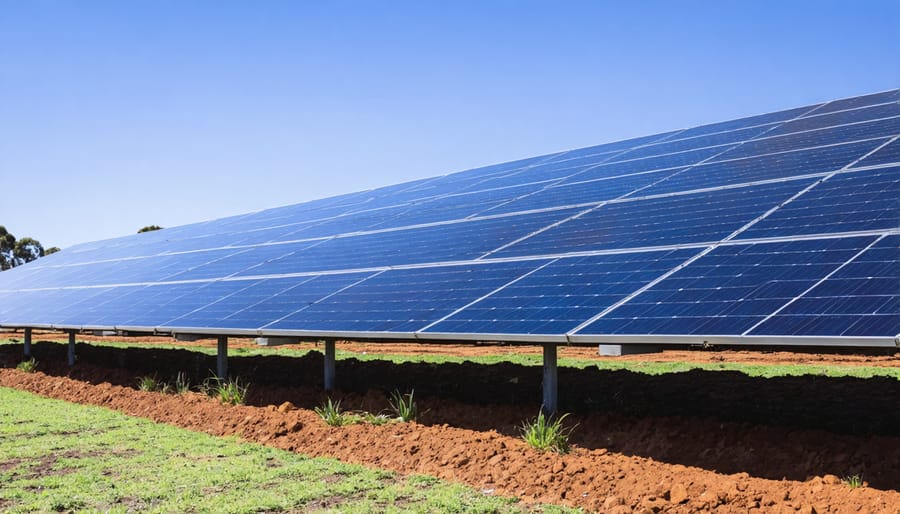
Fairness: Supporting Businesses That Treat Communities and Ecosystems Justly
Fairness in business extends beyond treating employees well—it’s about recognising that every business decision ripples through communities and ecosystems. When companies extract resources or operate on Country, they hold a responsibility to those who’ve stewarded these lands for millennia and to the vulnerable populations most affected by environmental decisions.
Some businesses have built entire models on exploitation, extracting natural resources while leaving communities to deal with degraded land, polluted waterways, and disrupted livelihoods. But a growing number of Australian companies are demonstrating that fairness isn’t just idealistic—it’s essential for sustainable success.
Consider the partnership between Kakadu Plum Co. and Wagilak Aboriginal Corporation in the Northern Territory. Rather than simply sourcing the superfruit, the company established genuine revenue-sharing agreements with Traditional Owners, respecting cultural protocols around harvesting and ensuring Indigenous communities benefit directly from their ancestral knowledge and Country.
Similarly, Intrepid Travel has pioneered community-based tourism that prioritises fair economic distribution. Their Australian tours ensure Indigenous guides and cultural experiences are compensated fairly, and they actively consult with communities about tourism’s environmental impact on sensitive ecosystems.
Fair businesses recognise that “fair trade” isn’t just for international coffee—it applies equally to how we engage with farmers in rural Queensland or fisher communities along our coasts. They understand that cutting costs by dumping waste near low-income suburbs or avoiding consultation with First Nations peoples isn’t just unethical—it undermines the very communities they depend on.
When you invest in companies committed to fairness, you’re supporting businesses that ask difficult questions: Whose land are we operating on? Who benefits from our presence? What legacy will we leave? These companies understand that true prosperity must be shared, not extracted.
Responsibility: Choosing Companies That Actively Reduce Environmental Harm
True environmental responsibility goes beyond ticking compliance boxes—it’s about companies actively choosing to reduce their ecological footprint, even when regulations don’t require it. For environmentally conscious investors, this principle represents businesses that see environmental protection not as a cost centre, but as a core value woven into their operations.
Australian businesses are increasingly stepping up. Take Thankyou, the social enterprise that has committed to eliminating all virgin plastic from its products by partnering with recycling innovators to create bottles from 100% recycled ocean-bound plastic. Meanwhile, Melbourne-based Who Gives A Crap has built its entire business model around protecting forests, using recycled paper and bamboo while donating 50% of profits to build toilets and improve sanitation in developing nations.
Some companies are going even further by actively restoring what’s been damaged. Patagonia Australia works with conservation groups to protect the Great Barrier Reef, while Australian brewery Stone & Wood has implemented a comprehensive waterway protection program in their Northern Rivers community, measuring and reducing their water usage while funding local river restoration projects.
When evaluating potential investments, look for companies with specific, measurable environmental targets rather than vague sustainability statements. Genuine responsibility programs include published reduction goals (like “30% emissions cut by 2025”), third-party environmental certifications, transparent annual sustainability reports, and evidence of investment in environmental restoration projects.
Ask yourself: Does this company report actual progress, not just intentions? Are their environmental commitments independently verified? Do they openly acknowledge challenges and setbacks? Companies truly committed to environmental responsibility aren’t afraid to show their journey—including the difficult parts—because they understand that authentic action builds trust with both customers and investors who share their values.
Respect: Investing in Businesses That Value Natural Systems
Respect in business means recognizing that nature isn’t just a resource to be extracted—it has intrinsic value worth protecting. Companies demonstrating this principle understand that healthy ecosystems are foundational to thriving communities and economies, not obstacles to overcome.
Australian businesses leading with respect are transforming their relationship with the land. Patagonia Australia partners with Traditional Owners to support conservation projects that protect native habitats while acknowledging Indigenous custodianship spanning tens of thousands of years. Their model shows how respecting First Nations environmental knowledge creates better outcomes for everyone.
Regenerative agriculture offers another powerful example. Businesses like Provenance Growers in Victoria are moving beyond sustainability to actively heal degraded farmland. Through practices that rebuild soil health, increase biodiversity, and sequester carbon, they’re investing in landscapes that become more productive over time—demonstrating that respect and profitability aren’t mutually exclusive.
Water stewardship particularly resonates in our sunburnt country. Companies like Jocelyn’s Provisions source ingredients from farmers using water-positive practices, ensuring their operations contribute to healthier waterways rather than depleting them. This respect for precious water resources reflects an understanding of ecosystem services that extend far beyond individual business operations.
The mining sector is also evolving. Some companies now engage meaningfully with Traditional Owners before projects commence, implementing biodiversity offset programs that genuinely restore habitat rather than merely ticking compliance boxes.
When you invest in businesses practicing respect, you’re supporting a fundamental shift—from viewing nature as something to dominate toward recognizing ourselves as part of interconnected living systems. These companies prove that respecting natural systems isn’t just ethical; it’s essential for long-term business resilience and community wellbeing.
Integrity: Ensuring Your Investments Align With Your Environmental Values
Integrity in ethical investing means your money truly walks the talk. It’s about ensuring the consistency between what companies claim to value and what they actually do—and the same applies to your investment choices.
Consider Melbourne’s Sarah Chen, who discovered her “green” superannuation fund still held shares in companies with questionable environmental records. “I felt betrayed,” she recalls. “I’d chosen that fund specifically for its environmental focus.” Sarah’s experience reflects a common challenge: finding investments with genuine environmental integrity requires looking beyond marketing claims.
The reality is that greenwashing—when companies exaggerate their environmental credentials—is widespread in the investment world. True integrity demands we dig deeper. Start by examining company sustainability reports, checking independent ratings from organizations like the Responsible Investment Association Australasia, and reviewing actual environmental performance data rather than just stated commitments.
Australian investors are becoming increasingly savvy about this. They’re asking harder questions: Does this renewable energy fund invest in coal companies too? Has this corporation genuinely reduced emissions, or just purchased offsets? Are environmental policies enforced throughout the supply chain?
Integrity also requires ongoing monitoring. Your portfolio isn’t a “set and forget” exercise. Companies change, new information emerges, and standards evolve. Quarterly reviews help ensure your investments continue reflecting your values.
Many Australian investors now align your investments through specialist advisors who understand environmental criteria deeply. These professionals can navigate the complexity, identifying opportunities that genuinely match your environmental commitment.
Remember, building a portfolio with environmental integrity isn’t about perfection—it’s about continuous improvement and honest alignment between your values and where your money grows. That consistency matters, both for your conscience and our collective environmental future.
Making the Switch: Practical Steps to Build Your Ethical Investment Portfolio
Making the transition to ethical investing might feel overwhelming, but thousands of Australian investors are successfully navigating this journey every year. The good news? You don’t need to overhaul everything overnight.
Start by understanding what you currently own. Request a detailed breakdown of your superannuation holdings and investment portfolio. Many Australians are surprised to discover their retirement savings inadvertently support fossil fuel companies or industries misaligned with their values. This awareness becomes your catalyst for change.
Next, explore Australian ethical alternatives that match your financial goals. For superannuation, consider funds like Australian Ethical Super, Future Super, or Verve Super—all specifically designed to exclude harmful industries while delivering competitive returns. These funds have consistently demonstrated that ethical doesn’t mean sacrificing performance. In fact, many ethical super funds have outperformed traditional options over the past five years.
For direct investments, investigate ESG (Environmental, Social, and Governance) managed funds available through Australian platforms. The Australian Ethical Investment and BetaShares offer locally-focused options that screen companies based on sustainability criteria. Green bonds, increasingly popular among Australian councils and corporations, provide fixed-income opportunities that fund environmental projects.
Rebalancing your ethical investment portfolio doesn’t require perfect timing. Consider a gradual transition—perhaps start by switching your super, then redirect new investments toward ethical options. As existing holdings mature or reach your target sell points, replace them with ethical alternatives.
Common concerns about returns and diversification deserve attention. Research from the Responsible Investment Association Australasia shows that ethical investment funds achieve comparable or superior returns to conventional funds, particularly over longer timeframes. Diversification remains achievable through ethical options spanning various sectors—renewable energy, sustainable agriculture, green technology, and ethical banking all offer growth potential.
Practical resources make this journey easier. The Sustainable Living Guide provides comprehensive reviews of ethical investment options. Market Forces offers tools to check your bank’s fossil fuel investments. The RIAA’s searchable database helps identify certified responsible investment products.
Remember, every dollar redirected toward ethical investments strengthens companies committed to environmental stewardship while signaling that Australians demand better from the business community. Your financial future and environmental values can absolutely align.

Choosing ethical investments isn’t simply about achieving a warm inner glow—it’s about harnessing your financial power to create tangible environmental change. Every dollar you invest in companies upholding ethical principles sends a clear message: businesses prioritizing sustainability, transparency, and environmental responsibility deserve our capital. When Australian investors collectively embrace these seven ethical principles, we become a formidable force reshaping corporate behavior across our nation and beyond.
The ripple effects are already visible. Australian companies are increasingly adopting renewable energy, reducing waste, and implementing genuine environmental stewardship—often because ethical investors demanded it. Your superannuation, your portfolio, your everyday investment choices contribute to this transformation. You’re not just building financial security for yourself and your family; you’re actively participating in protecting the environment we’ll pass to future generations.
The beauty of ethical investing lies in this dual purpose: securing your financial future while safeguarding our planet’s future. Whether you’re just beginning your investment journey or reconsidering your existing portfolio, today is the perfect moment to take that first step. Review your current investments, speak with an ethical investment adviser, or explore sustainable fund options. Your financial choices matter more than you might think—let’s make them count.