
The daily commute across Australian cities pumps approximately 58 million tonnes of carbon dioxide into our atmosphere each year, yet the solution sits closer than most of us realise. Right now, Australians are pioneering transport alternatives that cut emissions by up to 90% while saving thousands of dollars annually—and these aren’t futuristic concepts, but accessible choices transforming our streets today.
From Brisbane’s expanding electric bus network to Melbourne’s bicycle superhighways carrying 20,000 riders daily, sustainable transport has shifted from aspiration to achievement. Sydney resident Emma Chen reduced her household transport costs from $18,000 to $4,200 yearly by switching to an electric vehicle and combining it with cycling for shorter trips. Meanwhile, Perth-based logistics company GreenFleet converted their entire delivery fleet to electric vehicles, slashing operational costs by 40% within two years.
The urgency couldn’t be clearer. Transport accounts for 19% of Australia’s total emissions, with private vehicles responsible for the lion’s share. Yet this statistic represents our greatest opportunity: every car trip replaced with walking, cycling, public transport, or electric alternatives chips away at this figure while building healthier, more connected communities.
Whether you’re an individual frustrated with fuel costs and traffic congestion, or a business seeking competitive advantages through sustainability, the pathways forward are proven and practical. The question isn’t whether sustainable transport works in Australia—thousands of early adopters have already demonstrated it does—but rather which combination of solutions fits your circumstances. This guide walks you through every option, from immediate changes you can make tomorrow to longer-term investments that reshape how you move through your world.
Why Australia’s Transport System Needs a Complete Rethink
Australia’s transport sector accounts for nearly 19% of our national greenhouse gas emissions, making it the third-largest contributor to our carbon footprint. Every day, our reliance on private vehicles pumps approximately 100 million kilograms of CO₂ into the atmosphere—that’s equivalent to the weight of 15,000 elephants. These numbers aren’t just statistics; they represent real consequences for communities across the continent, from bushfire-prone regions experiencing more intense fire seasons to coastal towns watching sea levels creep higher.
Our cities tell a compelling story of transport gone wrong. Melbourne and Sydney residents now spend an average of 71 and 81 hours annually sitting in traffic, time that could be spent with family, pursuing hobbies, or simply breathing cleaner air. This congestion costs our economy over $19 billion yearly in lost productivity, whilst simultaneously degrading air quality in urban centres. Communities in Western Sydney and Melbourne’s outer suburbs bear the brunt, with children in these areas experiencing higher rates of respiratory issues linked directly to vehicle emissions.
Australia’s unique geography presents distinct challenges that other nations don’t face. Our sprawling cities—among the least dense in the developed world—create longer average commute distances. Meanwhile, regional communities often lack viable alternatives to car ownership, creating transport inequality that affects everything from employment opportunities to access to healthcare. The carbon tax implications of this car-dependency ripple through our economy and environment.
Yet within these challenges lies tremendous opportunity. Communities from Hobart to Darwin are already demonstrating that change is possible. The question isn’t whether we can transform our transport system—it’s how quickly we can act together to create healthier, more connected communities whilst protecting the environment we all cherish.
Electric Vehicles: Australia’s Fastest Growing Transport Shift
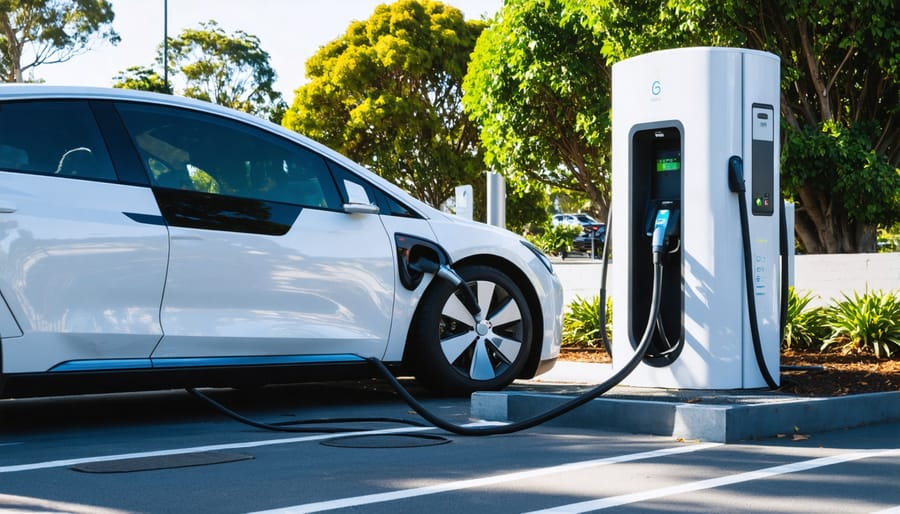
Making the Switch: What Australian EV Owners Wish They’d Known
When Melbourne’s Sarah Chen bought her EV two years ago, she thought she’d need a home charging station immediately. “Turns out, a regular powerpoint worked fine for my daily commute,” she shares. “I wish someone had told me not to panic-buy expensive equipment straight away.”
Range anxiety tops the list of concerns for prospective EV owners, but Brisbane driver Marcus Williams discovered it fades quickly. “After the first month, I realised my 300km range covered everything except road trips—and even then, charging stops became coffee breaks.” He recommends downloading apps like PlugShare before purchasing to map charging stations along your regular routes.
Climate considerations vary significantly across our vast continent. Perth owner Janine Roberts notes that extreme heat can reduce battery efficiency by 10-15% during summer, whilst Hobart’s Tom Bradley actually sees improved range in moderate temperatures. “Understanding your local climate helps set realistic expectations,” Tom explains.
The maintenance savings surprised nearly everyone interviewed. Sydney’s David Nguyen calculated he’s saving $1,800 annually compared to his previous petrol vehicle. “No oil changes, fewer brake replacements thanks to regenerative braking, and almost no servicing for the first three years.”
The most common wish? “Start with overnight home charging,” advises Sarah. “Public charging for emergencies, not daily use.” Many also recommend joining local EV owner groups on social media—these communities share charging locations, answer questions, and offer real-world advice that dealerships often can’t provide.
Public Transport Innovations Transforming Australian Cities
Australian cities are witnessing a remarkable transformation in public transport, with innovative projects reshaping how communities connect and move. These initiatives demonstrate that well-designed public transport isn’t just about reducing emissions—it’s about creating vibrant, accessible cities where people want to live.
Sydney’s Metro Northwest has revolutionized commuting for hundreds of thousands of residents since its launch. The driverless trains run every four minutes during peak times, slashing travel times and offering a glimpse into the future of urban transit. Local resident Maria Chen shares her experience: “My commute from Rouse Hill to the city dropped from 90 minutes to 45. I’ve gained back hours each week to spend with my children.” This project has catalyzed development along its corridor, with new housing and businesses flourishing around stations.
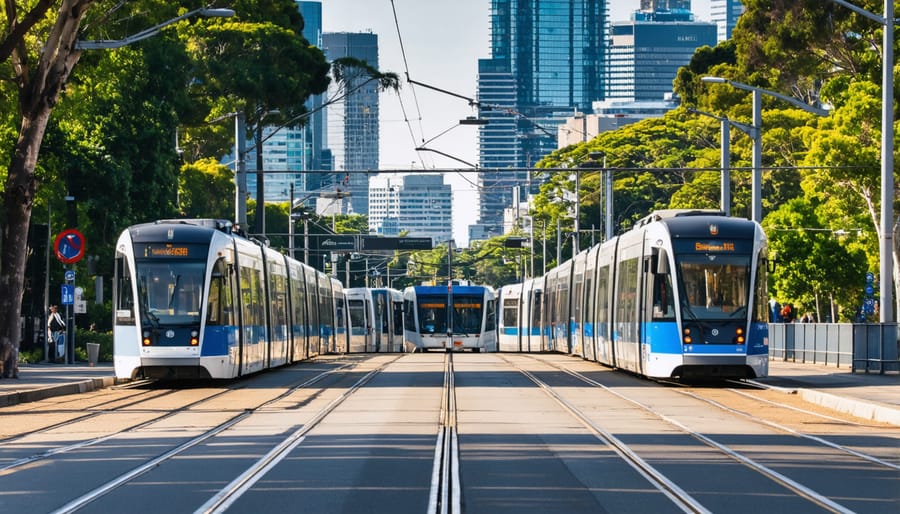
Melbourne’s tram network, already the world’s largest, continues expanding with contemporary low-floor trams that improve accessibility for elderly residents and people with disabilities. The recent Route 96 extension serves previously isolated communities in East Brunswick, connecting them seamlessly to employment hubs and healthcare services. The integration with bike-sharing stations at major tram stops has created a truly multimodal experience.
Brisbane’s busway system stands as Australia’s most successful bus rapid transit network, moving over 90,000 passengers daily along dedicated lanes that bypass congestion entirely. The Eastern Busway completion has transformed travel from Coorparoo to the CBD into a swift 15-minute journey. Small business owner James Morton credits the busway with expanding his customer base: “People now visit from across Brisbane because getting here is so straightforward.”
Regional cities aren’t being left behind. Canberra’s light rail Stage 1 has exceeded patronage expectations, carrying over 5 million passengers in its first year. The social impact extends beyond transport—the Gungahlin-to-city corridor has become a thriving urban spine with cafes, shops, and community spaces clustering around stations.
These success stories share common elements: dedicated infrastructure that prioritizes public transport over private vehicles, frequent services that make timetables almost irrelevant, and thoughtful integration with walking and cycling networks. They prove that when governments invest boldly in public transport, communities respond enthusiastically, choosing sustainable options that benefit everyone.
The Cycling Renaissance: Building Bike-Friendly Communities
Your Business Case for Cycling to Work
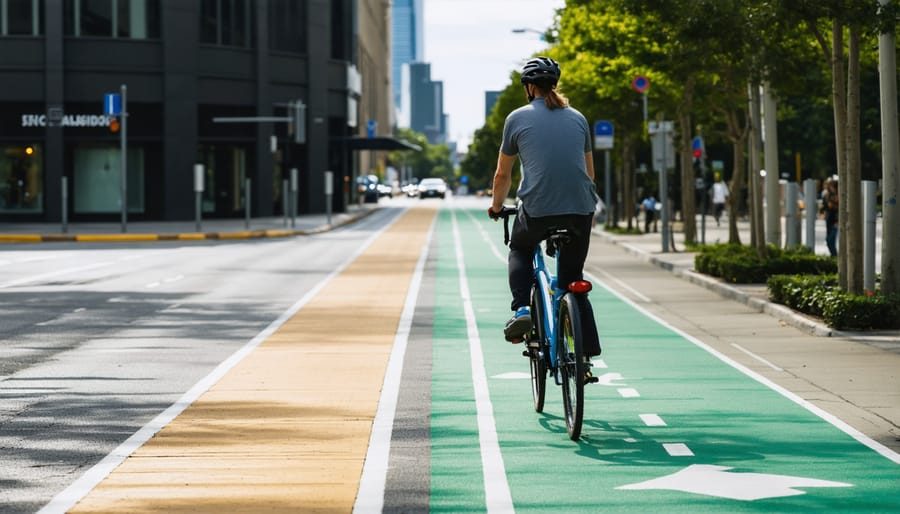
Cycling to work delivers compelling financial and health returns that make the switch remarkably worthwhile. The average Australian spends around $4,000 annually on commuting by car—factor in petrol, parking, registration, and maintenance. A quality commuter bike costs between $500-$1,500 upfront, with minimal ongoing expenses. That’s a substantial saving that adds up year after year.
Beyond your wallet, cycling transforms your wellbeing. Regular cycle commuters enjoy improved cardiovascular fitness, reduced stress levels, and arrive at work energized rather than frazzled from traffic. Melbourne’s Yarra Trails users report feeling more productive throughout their workday, while Brisbane cyclists appreciate starting their day with vitamin D rather than road rage.
When evaluating potential employers or advocating at your current workplace, look for end-of-trip facilities including secure bike storage, showers, lockers, and changing rooms. Many Australian businesses now recognize these amenities attract talent whilst reducing parking infrastructure costs.
Climate considerations needn’t be dealbreakers. Tropical Queensland cyclists recommend early morning rides before the heat peaks, lightweight moisture-wicking clothing, and keeping a fresh shirt at work. In temperate Tasmania, layering is essential—arm warmers and a light jacket handle cool mornings while packing small for warmer afternoons. Sydney and Melbourne riders swear by quality rain gear during winter months.
Start with one or two days weekly, gradually building confidence and fitness. Join local cycling groups through your council or workplace—there’s tremendous support within Australia’s growing cycling community, and riding together makes the journey safer and more enjoyable.
Shared Mobility: The Community Approach to Transport
The beauty of shared mobility lies in its simplicity: why should every household own multiple vehicles when communities can share resources more efficiently? Across Australia, this philosophy is transforming how we think about transport, reducing our collective carbon footprint while strengthening neighbourhood connections.
Car-sharing services like GoGet and Car Next Door have established footholds in major cities, allowing members to book vehicles by the hour when needed. In Melbourne’s inner suburbs, some families have ditched their second car entirely, saving thousands annually while contributing to fewer vehicles clogging local streets. These services work particularly well for those occasional trips that public transport can’t easily accommodate—the Saturday IKEA run or weekend getaway.
Community-led initiatives are proving equally powerful. The Yarra Community Car Share in Victoria started with just three residents sharing a single vehicle and has grown into a thriving local network. In Brisbane’s West End, neighbours have organised informal car pools for school runs and shopping trips, using simple WhatsApp groups to coordinate. These grassroots efforts demonstrate that sustainable transport doesn’t always require sophisticated apps or corporate backing—sometimes it just needs willing participants and good communication.
Micro-mobility options are filling the crucial “last mile” gap in Australian cities. E-scooters from providers like Beam and Neuron now operate in over 20 Australian cities, while bike-sharing schemes help residents cover short distances without firing up a car engine. In Adelaide, the city’s e-bike share program has recorded over 100,000 trips since launch, with users reporting it’s changed their daily routines—that five-minute car trip to the café now happens on two wheels instead of four.
The environmental mathematics is compelling: each shared car typically replaces 10-15 privately owned vehicles, dramatically reducing manufacturing emissions and freeing up valuable urban space. When combined with other sustainable transport options, shared mobility becomes a cornerstone of truly car-lite living.
Active Transport: Walking Our Way to Better Cities
Sometimes the most powerful sustainable transport solution requires nothing more than our own two feet. Walking represents the ultimate zero-emission journey, and Australian cities are increasingly recognising that designing for pedestrians creates healthier, more connected communities while significantly reducing our carbon footprint.
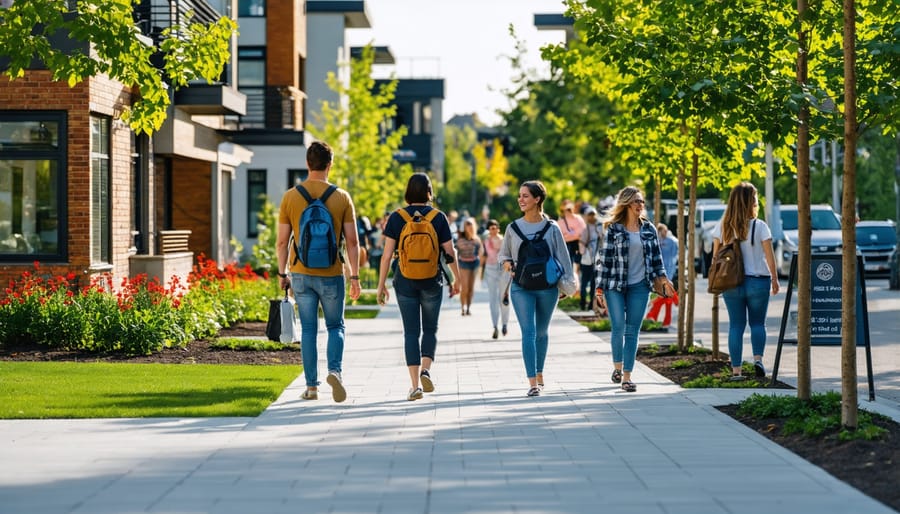
The 20-minute neighbourhood concept is transforming how we think about urban planning across Australia. This approach ensures residents can meet most daily needs—groceries, schools, parks, healthcare—within a comfortable 20-minute walk from home. Melbourne’s City of Moreland has pioneered this model, redesigning streets to prioritise pedestrians over cars, creating more inviting spaces where people naturally choose to walk rather than drive.
The benefits extend far beyond environmental gains. Research shows that walkable neighbourhoods reduce obesity rates, improve mental health, and foster stronger community connections. When we bump into neighbours at the local shops or walk children to school together, we’re building the social fabric that makes communities resilient.
Australian councils are leading impressive transformations. The City of Sydney has created over 17 kilometres of new pedestrian pathways in recent years, while Brisbane’s Green Bridges initiative connects neighbourhoods with dedicated walking and cycling infrastructure. Adelaide’s Park Lands Trail offers a 760-kilometre network encouraging recreational walking right through the city centre.
Creating walkable cities means widening footpaths, improving street lighting, planting shade trees, and ensuring safe crossings. It’s about making walking the easy choice, not the difficult one. For residents, supporting local businesses within walking distance and advocating for pedestrian-friendly infrastructure in your council helps accelerate this shift.
Every journey that begins on foot is an investment in our health, our community, and our planet’s future.
How Australian Businesses Are Leading the Transport Transition
Australian businesses are proving that sustainable transport isn’t just good for the planet—it’s smart for the bottom line. From major corporations to small enterprises, companies across the country are reimagining how their teams get to work and how their operations move.
Melbourne-based tech company Atlassian has set a benchmark with their comprehensive transport strategy. They’ve installed end-of-trip facilities at their offices, complete with showers, secure bike storage, and maintenance stations. Employees who cycle, walk, or use public transport receive monthly incentives, while the company runs a bike-buddy program pairing experienced cyclists with newcomers. The result? A 40% reduction in employee car trips and a measurable boost in staff wellbeing.
Fleet electrification is gaining serious momentum. Australia Post has committed to converting their entire delivery fleet to electric vehicles by 2030, already operating over 3,000 electric delivery vehicles across urban areas. This shift is playing a crucial role in reducing Australia’s emissions from the transport sector. Even smaller businesses are joining in—Brisbane’s Organic Empire Café uses electric cargo bikes for local deliveries, cutting fuel costs while becoming a neighbourhood talking point.
Remote and hybrid work policies have emerged as unexpected sustainability champions. Perth mining consultancy Orefind introduced a four-day office week, with one day fully remote. This simple change reduced their team’s annual commute emissions by 20% while improving work-life balance.
For businesses just starting their journey, the path forward doesn’t require massive investment. Begin with a transport survey to understand your team’s commute patterns. Partner with nearby bike shops for maintenance workshops. Negotiate corporate public transport discounts with local providers. Install basic bike racks and dedicate parking spots for carpoolers. Even small actions create ripples—when Sydney accounting firm LedgerWise introduced “Walk Wednesday,” encouraging staff to walk or cycle mid-week, participation grew from five employees to twenty-three within six months, sparking conversations about sustainability throughout their client network.
Your Personal Action Plan: Start Your Sustainable Transport Journey Today
Ready to transform your daily commute into a force for positive change? The journey to sustainable transport doesn’t require an overnight overhaul—it starts with one simple step today.
**Week One: Assess and Experiment**
Begin by tracking your current transport habits for just seven days. Where could you swap a short car trip for walking or cycling? Most Australian trips under two kilometres take roughly the same time by bike as by car once you factor in parking. Download apps like TripView or Transit to explore public transport options you might not have considered. This awareness phase connects beautifully with other everyday sustainability choices that collectively make a real difference.
**Month One: Build New Habits**
Commit to one car-free day weekly. Join a local bike group through Bicycle Network Australia to build confidence on two wheels. Investigate your council’s active transport maps—many Australian councils now offer detailed cycling route planners highlighting safer paths. Check your eligibility for government rebates: Queensland’s zero-interest e-bike loans, Victoria’s e-bike subsidies, or NSW’s active transport grants could make sustainable options surprisingly affordable.
**Months Three to Six: Bigger Commitments**
Ready for more? Explore car-sharing through GoGet or Carshare, reducing ownership costs while maintaining occasional vehicle access. If purchasing a car, research federal EV incentives and state-based rebates—savings can reach $10,000 in some states. Connect with community initiatives like Ride2Work Day or your local council’s sustainable transport forums.
Remember, this isn’t about perfection—it’s about progress. Every sustainable trip you take reduces emissions, saves money, and inspires others in your community to follow suit. What’s your first step?
The journey toward sustainable transport isn’t about making perfect choices overnight—it’s about taking meaningful steps that collectively reshape our communities. Right now, across Australia, from the bike-sharing networks revitalising Melbourne’s CBD to the community car pools connecting suburban Sydney, everyday people are proving that change is not only possible but already happening.
Your contribution matters more than you might think. When you choose to cycle to the local shops, catch the bus to work, or join a neighbourhood car-share program, you’re not just reducing your personal environmental impact—you’re inspiring others and strengthening the case for better infrastructure. Each sustainable trip creates momentum for improved cycling paths, more frequent public transport, and greener urban planning.
Start small and celebrate progress. Perhaps this week, you’ll research EV options for your next vehicle purchase, or simply walk to the café instead of driving. Connect with local sustainability groups to discover car-pooling opportunities or advocate for better bike lanes in your area.
Together, we’re building a cleaner, healthier Australia—one journey at a time. What will your first step be?