
Divert at least 50 percent of construction and demolition debris from landfill to achieve LEED certification’s baseline Materials and Resources credit, transforming what would typically become waste into valuable resources for future projects. Australian construction sites generate approximately 20 million tonnes of waste annually, yet leading projects across Sydney, Melbourne, and Brisbane now demonstrate that 75-90 percent diversion rates are entirely achievable with proper planning and commitment.
Conduct a pre-construction waste audit before breaking ground, identifying specific materials like concrete, metals, timber, and plastics that dominate your waste stream. This single step allows you to establish targeted recycling partnerships with local facilities and set realistic diversion goals that align with LEED requirements. Projects that skip this crucial phase consistently underperform on waste metrics and miss opportunities to reduce disposal costs by up to 40 percent.
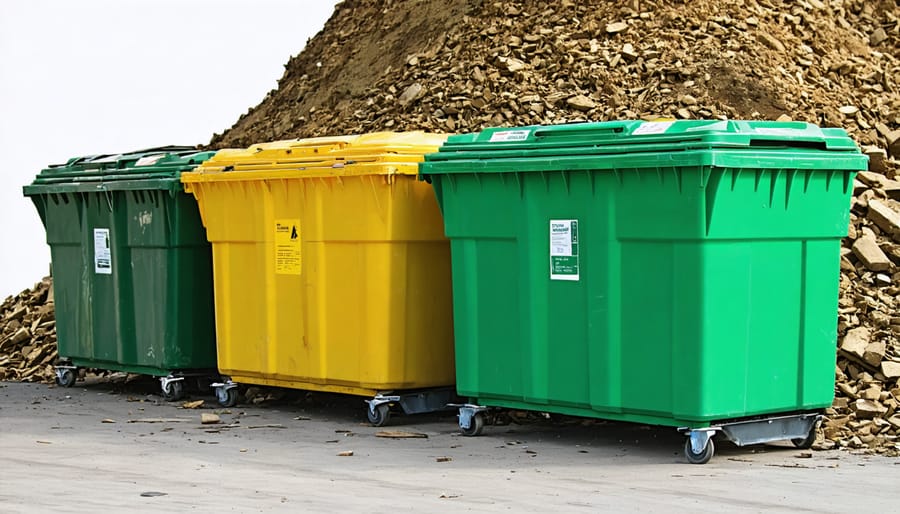
Designate separate collection zones on-site for each recyclable material stream, clearly labeled and strategically positioned near work areas where these materials naturally accumulate. Contamination remains the primary reason recyclable construction materials end up in landfill, but proper segregation at the source solves this challenge while simultaneously reducing hauling costs and simplifying documentation for LEED verification.
Partner with LEED Accredited Professionals familiar with Australian waste management infrastructure, as they understand regional recycling facility capabilities, state-specific regulatory requirements, and documentation standards that satisfy Green Building Council of Australia audits. Their expertise prevents costly mistakes and ensures your waste management plan delivers both environmental impact and certification success.
What Makes LEED Construction Waste Management Different
The LEED Waste Management Credits Explained
Understanding LEED’s approach to construction waste management starts with the Materials and Resources credits in LEED v4.1, which reward projects for responsible waste handling. Think of it as a roadmap that transforms what might seem like a daunting challenge into achievable milestones with real environmental impact.
The primary credit, Construction and Demolition Waste Management, offers up to two points based on how much waste your project diverts from landfill. Here’s where it gets exciting: diverting at least 50 percent of construction waste earns you one point, while achieving 75 percent diversion secures the full two points. For Australian building projects, this means carefully sorting materials like timber, metal, concrete, and cardboard rather than sending everything to tip.
The documentation process might sound complex, but it’s quite straightforward when broken down. You’ll need to track the total weight or volume of waste generated, maintain records from recycling facilities and waste contractors, and calculate your diversion rate. Many Australian waste management companies now provide detailed reporting that makes this process smoother, understanding that builders are increasingly pursuing green certifications.
What makes this particularly relevant for Australian projects is our growing network of recycling facilities and material recovery centres across major cities and regional areas. From Sydney to Perth, infrastructure is expanding to support these sustainability goals, making higher diversion rates more achievable than ever before.
Additional points are available through the Building Product Disclosure and Optimization credits, which reward using materials with verified environmental profiles. By choosing locally sourced Australian products with Environmental Product Declarations, you’re not only earning LEED points but also supporting our domestic sustainable manufacturing sector.
The beauty of this system lies in its flexibility. Whether you’re managing a small community centre or a major commercial development, the pathway to certification scales with your project’s ambitions.
Why Australian Builders Are Embracing LEED Principles
Across Australia, a quiet revolution is transforming construction sites. While LEED certification originated in the United States, savvy Australian builders are increasingly adopting its waste management principles, regardless of whether they’re pursuing formal certification. Why? Because these strategies simply make good business sense.
The numbers tell a compelling story. Projects implementing LEED waste management approaches typically divert 75-90% of construction waste from landfill, translating to significant cost savings through reduced disposal fees and recovered material revenue. Sydney’s Barangaroo South precinct embraced these principles early, diverting over 95% of construction waste during its development. Similarly, Melbourne’s sustainable construction community has watched projects like the Pixel Building demonstrate how systematic waste sorting and material recovery can work at scale.
What’s particularly encouraging is how these practices are filtering down to mainstream construction. Brisbane builders working on commercial fit-outs are now routinely implementing waste stream separation, while Perth developers are incorporating material reuse targets into project planning. It’s becoming standard practice rather than exceptional.
The growing movement isn’t just about environmental credentials. Builders discover that LEED-inspired waste management improves site organization, reduces clean-up time, and strengthens relationships with environmentally conscious clients. Adelaide’s construction sector has seen multiple contractors report that implementing these systems gave them a competitive edge when tendering for new work.
For Australian builders, adopting LEED principles represents practical sustainability in action. It’s proof that environmental responsibility and project efficiency can go hand in hand, creating cleaner sites and healthier bottom lines simultaneously.
The Five Core Strategies of LEED-Compliant Waste Management
1. Source Reduction: Stopping Waste Before It Starts
The most effective construction waste management strategy is surprisingly simple: create less waste in the first place. Source reduction, a cornerstone of LEED certification, tackles the problem at its root by preventing waste generation during the construction process itself. For Australian builders and project managers, this approach not only earns valuable LEED credits but also delivers impressive cost savings—studies show that source reduction can slash waste disposal costs by up to 30%.
Prefabrication stands out as a game-changer in this arena. When components are manufactured in controlled factory settings rather than on-site, precision improves dramatically. Melbourne-based supplier Fabprefab has pioneered this approach, producing bathroom pods and wall panels that arrive ready to install, generating minimal offcuts. Their clients report waste reductions of 40-50% compared to traditional methods.
Precise material ordering transforms how projects approach procurement. Using digital measurement tools and Building Information Modeling (BIM), contractors can calculate exact quantities needed, eliminating the old practice of “ordering extra just in case.” Brisbane’s Hutchinson Builders has embraced this technology, achieving waste diversion rates exceeding 85% across multiple projects.
Modular construction techniques take waste reduction practices even further. By designing buildings with standardized dimensions that match common material sizes, architects can minimize cutting waste. A Perth housing development recently used this principle, specifying room dimensions based on standard plasterboard sheets, resulting in near-zero drywall waste.
Design optimization during the planning phase makes all the difference. When architects, engineers, and builders collaborate early, they identify opportunities to eliminate unnecessary materials, standardize components, and select products with minimal packaging. This integrated approach creates a ripple effect, reducing waste throughout the entire construction lifecycle while keeping projects on budget and schedule.
2. On-Site Segregation Systems That Actually Work
Creating an effective on-site segregation system transforms waste management from chaos to clarity, and Australian construction sites are leading the way with practical solutions that boost diversion rates significantly.
The foundation starts with a strategic bin system. Rather than relying on general skip bins, successful sites deploy dedicated containers for each waste stream: timber, metal, concrete, plasterboard, cardboard, general waste, and hazardous materials. Position these bins near work zones where materials are actively used, reducing the temptation for workers to toss everything into the nearest container.
Colour-coding becomes your silent site manager. Adopt a consistent scheme across your project: yellow for mixed recyclables, green for organic waste, blue for paper and cardboard, red for general waste, and orange for metal. Pair this with clear, weather-resistant signage featuring images rather than text alone, acknowledging the multilingual workforce common on Australian sites. Visual guides showing exactly what belongs in each bin eliminate confusion and improve compliance dramatically.
A Melbourne commercial development demonstrates these principles in action. Before implementing structured segregation, the site achieved just 42% waste diversion. After introducing colour-coded bins, multilingual signage, and weekly toolbox talks, diversion rates jumped to 78% within three months. The project team conducted 15-minute inductions for all new workers, explaining the importance of environmentally conscious disposal and showing exactly where materials belonged.
Training programs needn’t be complex. Short, regular reminders during toolbox talks, visible segregation champions on-site, and simple incentive schemes, like morning tea for crews maintaining clean segregation areas, create lasting behaviour change. When workers understand why separation matters and how it’s done, compliance becomes second nature rather than an added burden.
3. Material Reuse and Salvage Opportunities
One of LEED’s most impactful principles is keeping perfectly usable materials out of landfill, and Australia has a thriving network of organizations making this easier than ever. Rather than viewing leftover timber, fixtures, or fittings as waste, these items can find new life through strategic reuse, donation, or salvage.
On-site material reuse often presents the simplest solution. That stack of timber offcuts might become formwork bracing, while excess tiles could create feature areas in landscaping. Many Australian builders are discovering that dedicating a small area on-site for “pre-loved” materials not only reduces disposal costs but sparks creative problem-solving among trades.
When materials can’t be reused on-site, community organizations are ready to welcome them. The Bower Reuse and Repair Centre in Sydney has diverted thousands of tonnes from landfill, accepting everything from timber and tiles to doors and windows. Melbourne’s Detour House connects construction projects with community groups, schools, and social enterprises that transform waste into resources. In Brisbane, Reverse Garbage accepts building materials that fuel creative projects across the region.
Salvage marketplaces have also modernized the process. Online platforms like Gumtree’s building materials section and specialist salvage yards make it simple to find buyers for unwanted materials. Some contractors have found that quality hardwood flooring or heritage fixtures actually generate revenue rather than disposal fees.
The key is planning ahead. Designating a project team member to coordinate material reuse and establishing relationships with local salvage organizations before demolition begins ensures materials find new homes rather than burial grounds.
4. Partnering With Specialist Recycling Facilities
Finding the right recycling partners is crucial for meeting LEED’s construction waste diversion targets. In Australia, we’re fortunate to have a growing network of specialist facilities equipped to handle the diverse waste streams generated on building sites.
The most commonly recycling construction materials in LEED projects include concrete and masonry, which can be crushed and reused as aggregate or road base. Metal framing, roofing, and offcuts are highly valuable and readily accepted by scrap metal recyclers across most Australian cities. Timber can often find new life through specialist timber recyclers who process it into mulch, engineered wood products, or even reclaimed building materials. Plasterboard recycling is gaining momentum, with facilities now able to separate the gypsum for agricultural use and recycle the paper backing. Cardboard and packaging materials remain straightforward to divert through standard recycling channels.
Start by connecting with your local council or state waste authority to identify licensed recyclers in your area. Organizations like the Australian Building and Construction Commission and state-based industry groups maintain directories of certified waste processors. Many councils across Melbourne, Sydney, Brisbane, and other metropolitan areas offer specialized construction waste collection services.
Building relationships with these facilities early in your project planning ensures smooth waste management processes. Ask about their acceptance criteria, contamination limits, and documentation procedures. Most LEED-focused recyclers provide detailed tracking reports, making it easier to compile the necessary evidence for your certification submission while demonstrating your commitment to Australia’s circular economy goals.
5. Documentation and Tracking for Accountability
Here’s the reality: LEED certification isn’t just about implementing great waste diversion strategies—it’s about proving you’ve done it. Documentation and tracking form the backbone of accountability in LEED construction waste management, and fortunately, Australian builders now have excellent digital tools to make this process straightforward.
At the heart of LEED requirements sits the Waste Management Plan, a living document that outlines your waste reduction targets, sorting procedures, and diversion strategies before a single shovel hits the ground. This isn’t busywork—it’s your roadmap to success. Throughout your project, you’ll need to track waste by weight, not volume, as LEED calculates diversion rates based on actual tonnage. Your waste haulers should provide detailed receipts showing material types and weights, distinguishing between diverted and landfilled waste.
Photography becomes your visual evidence trail. Document your sorting stations, material stockpiles, and diversion activities with dated images. These photos tell the story of your commitment when certification reviewers assess your submission.
Many Australian construction teams are embracing digital solutions that streamline this process considerably. Apps like WasteMax and platforms such as RecycleSmart’s commercial tracking tools allow real-time waste logging from your mobile device. Some councils across Victoria and New South Wales now offer digital waste reporting portals that integrate directly with LEED documentation requirements.
The construction community in Brisbane and Melbourne has particularly embraced collaborative tracking approaches, with project teams sharing digital dashboards that keep everyone—from site managers to subcontractors—accountable to diversion goals. When documentation becomes this accessible, sustainability targets transform from bureaucratic boxes to genuine team achievements worth celebrating.
Real-World Results: Australian Projects Leading the Way
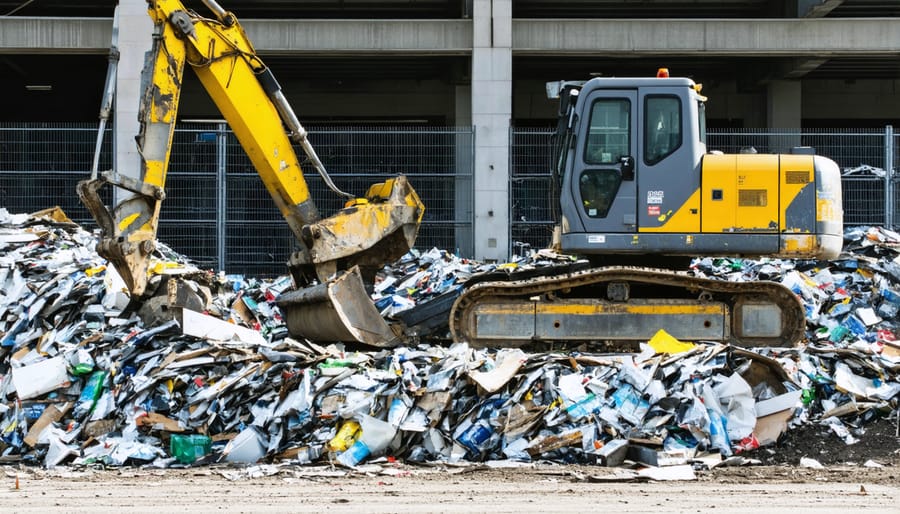
Australian construction projects are proving that ambitious waste diversion isn’t just theory – it’s achievable right here on our shores. These pioneering projects demonstrate how LEED-inspired practices translate into tangible environmental and financial wins for our communities.
The Barangaroo South development in Sydney stands as a shining example of what’s possible when sustainability meets determination. This massive mixed-use precinct achieved an impressive 96% construction waste diversion rate across its commercial towers. The project team implemented a comprehensive waste sorting system on-site, with dedicated bins for timber, metal, concrete, plasterboard, and cardboard. What made this particularly remarkable was overcoming the challenge of limited space in a dense urban environment. By partnering with local recycling facilities and scheduling regular collections, they transformed potential landfill into valuable resources. The financial benefits were substantial too – the project saved approximately $2.3 million in landfill levies while creating local jobs in the recycling sector.
Over in Melbourne, the Pixel Building in Carlton pushed boundaries by achieving 95% waste diversion during construction. This innovative office building embraced zero-waste strategies from day one, including crushing concrete on-site for reuse as aggregate and donating excess materials to community organisations. The biggest challenge was coordinating multiple subcontractors to maintain consistent waste sorting practices, which they solved through regular toolbox talks and clear visual signage throughout the site.
In Queensland’s residential sector, the Sekisui House development in West Village, Brisbane, achieved an 89% diversion rate by prefabricating components off-site, dramatically reducing construction waste. This approach minimised material off-cuts and packaging waste while improving construction efficiency.
These projects collectively prevented over 15,000 tonnes of waste from reaching landfill, demonstrating that whether you’re building a high-rise office tower or residential homes, exceptional waste management is within reach. The common thread? Early planning, committed teams, and strong partnerships with local recycling networks. Most importantly, they’ve created blueprints that other Australian projects can follow, proving that environmental responsibility and project success go hand in hand.
Getting Started: Your LEED Waste Management Action Plan
For Small Residential Projects
You don’t need a massive commercial project to embrace LEED-inspired waste management principles. Home renovations and small builds across Australia are perfect opportunities to divert waste from landfill while keeping costs manageable.
Start with a simple DIY sorting system using clearly labelled bins for timber, metal, concrete, cardboard, and general waste. A local Sydney family recently renovated their kitchen and diverted 82% of waste by dedicating weekend trips to nearby recycling facilities. Melbourne residents can access ResourceSmart drop-off points, while Brisbane’s waste transfer stations accept sorted construction materials at reduced rates.
Connect with your community through online groups where renovators share tips and even coordinate depot runs together. Many Perth and Adelaide councils offer free collection services for separated materials, making cost-effective waste management achievable for everyone.
Consider donating usable fixtures, tiles, or timber to organizations like Reverse Garbage or local Habitat for Humanity ReStores. Your unwanted materials become someone else’s treasure while earning you waste diversion credits. Even small-scale projects contribute meaningfully when we collectively choose sustainable practices over convenience.
For Commercial Construction Sites
Large commercial construction sites have tremendous potential to lead Australia’s sustainable building revolution, but they require a more structured approach to achieve LEED construction waste management standards. The scale of these projects means even small improvements create significant environmental impact across our communities.
Start by establishing clear contractor requirements in all tender documents. Specify waste diversion targets of at least 75 percent, mandate detailed waste management plans before work begins, and include financial incentives for exceeding targets. Australian commercial projects that embed these expectations from day one consistently outperform those treating waste management as an afterthought.
Consider engaging a dedicated waste management consultant for projects over $5 million. These specialists conduct waste audits, identify material reuse opportunities, and ensure compliance throughout construction. They’ve helped Sydney and Melbourne developments achieve diversion rates exceeding 90 percent while actually reducing disposal costs.
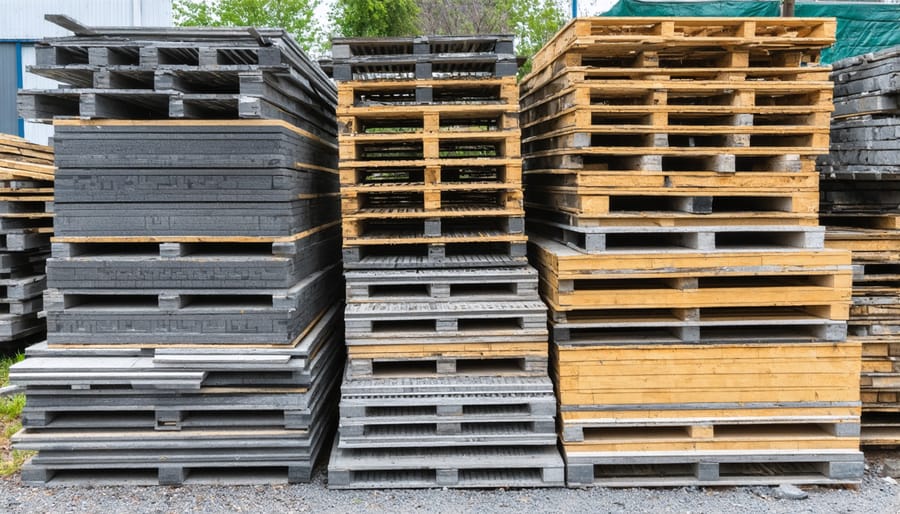
Transform your procurement approach by specifying materials with recycled content and minimal packaging. Work with suppliers who’ll take back excess materials and pallets. Establish designated sorting zones on-site with clearly labeled bins for different waste streams, making it simple for all trades to participate.
Create a culture of accountability through regular reporting. Share waste diversion metrics with your entire team monthly, celebrating wins and addressing challenges together. When everyone understands their role in the bigger environmental picture, remarkable results follow.
Resources and Support in Australia
Australia’s construction industry has strong support networks ready to help you implement LEED-style waste management practices. The Green Building Council of Australia (GBCA) leads the way with their Green Star certification program, which mirrors many LEED principles while addressing local context. They offer comprehensive training courses, technical manuals, and regular workshops across major cities.
For hands-on guidance, certified waste management consultants like Sustainable Resource Use and Planet Ark work with businesses of all sizes to develop tailored waste reduction strategies. Many offer initial consultations to help you understand where your project stands and what improvements are achievable.
Local councils in Sydney, Melbourne, and Brisbane run free seminars on construction waste diversion, connecting builders with recycling facilities and resource recovery centres. Community groups such as Construction Material Reuse Australia facilitate material exchanges, helping projects source recycled materials while keeping usable items out of landfill.
Industry associations including the Master Builders Association provide members with waste management templates, case studies, and peer networking opportunities. TAFE institutions across the country now incorporate sustainable construction modules into their building qualifications, ensuring the next generation arrives job-ready with waste reduction knowledge. These resources make sustainable construction achievable for everyone, from large developers to owner-builders tackling their first project.
Here’s the truth about LEED construction waste management: it’s never been just about ticking boxes for certification. It’s about fundamentally reshaping how we think about materials, resources, and our responsibility to future generations. Every concrete offcut diverted from landfill, every salvaged timber beam finding new purpose, every team member educated about waste sorting—these actions ripple outward, creating change that extends far beyond your building site.
Australian construction projects are already proving that environmental stewardship and financial success aren’t opposing forces. When you reduce waste, you’re simultaneously cutting disposal costs, discovering revenue streams through material sales, and building a reputation that resonates with increasingly conscious clients and communities. The local businesses implementing these strategies aren’t dealing with abstract concepts—they’re seeing tangible results in their bank accounts and their communities.
You don’t need to overhaul everything overnight. Start with one strategy that fits your current project. Perhaps it’s conducting that first waste audit, partnering with a local recycling facility, or simply having a proper conversation with your team about material efficiency. These seemingly small steps are how movements begin.
The Australian construction industry stands at a pivotal moment. Every project choosing sustainable waste management adds momentum to a collective shift that’s reshaping our built environment. Your next decision on materials, your next conversation about waste diversion, your next choice about disposal—they all matter. The question isn’t whether to start, but what you’ll implement first. Together, we’re not just building structures; we’re building a legacy of environmental responsibility that future Australians will inherit.