
Every time you start your car’s engine, invisible gases escape through the exhaust pipe—carbon dioxide, nitrogen oxides, and particulate matter that directly impact our air quality and climate. Reducing emissions means actively lowering the quantity of these harmful gases your vehicle releases, and for Australian drivers, this isn’t just an environmental buzzword—it’s a practical commitment that saves money, protects our unique ecosystems, and contributes to cleaner cities from Sydney to Perth.
The concept extends beyond simply driving less. Modern emission reduction encompasses choosing fuel-efficient vehicles, maintaining your car properly to ensure optimal combustion, adjusting driving habits like reducing idling time, and exploring alternatives such as carpooling or electric vehicles. Each action directly decreases the pollutants entering our atmosphere.
Understanding what reduction truly means empowers you to make informed decisions. Whether you’re considering your next vehicle purchase or looking at ways to minimize your current car’s environmental footprint, grasping these fundamentals transforms emission reduction from an abstract goal into tangible steps you can implement today. For Australian communities already experiencing the effects of climate change, every reduction counts toward building a more sustainable transport future together.
Breaking Down Car Emissions: What’s Actually Coming Out of Your Exhaust
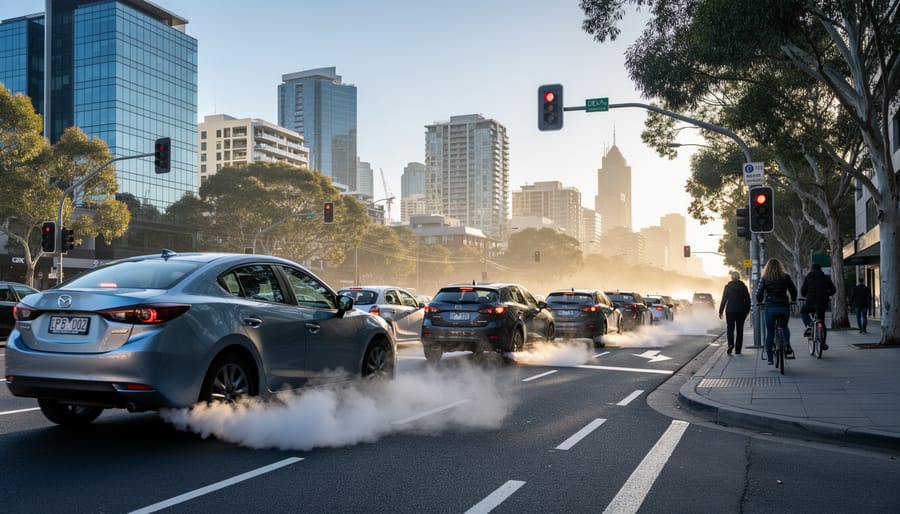
The Main Culprits in Your Tailpipe
Every time we turn the key or press the start button, our vehicles release a cocktail of emissions into the air we all breathe. Understanding what’s actually coming out of your tailpipe is the first step toward making a real difference.
Carbon dioxide sits at the top of the list as the primary greenhouse gas from our vehicles. It’s invisible and odourless, but it’s the main contributor to climate change. When you fill up at the servo, nearly all that petrol or diesel eventually becomes CO2 floating into the atmosphere. On average, Australian passenger vehicles emit about 181 grams of CO2 per kilometre travelled, which adds up quickly during our famously long road trips.
Nitrogen oxides are the troublemakers behind that brown haze you might notice hovering over Sydney or Melbourne on still days. These gases form when fuel burns at high temperatures in your engine, contributing to smog and respiratory problems. They’re particularly noticeable during summer when more Australians are on the roads heading to the coast.
Particulate matter, especially from diesel vehicles, consists of tiny particles that can penetrate deep into our lungs. Think of it as microscopic soot that affects air quality in our cities and suburbs. While newer vehicles produce less thanks to improved technology, older cars on Australian roads still contribute significantly to this invisible health hazard affecting our communities.
How Australian Cars Compare Globally
Until recently, Australian vehicles have lagged behind global standards when it comes to emissions control. While Europe, Japan, and the United States implemented stringent Euro 6 standards years ago, Australia only began phasing in similar requirements from 2024. This meant our roads carried vehicles emitting significantly more pollutants than those in comparable nations. The good news? Australia is finally catching up. Our new vehicle efficiency standards, introduced in 2024, align us more closely with international best practices. These regulations require car manufacturers to reduce average emissions across their fleets, bringing cleaner vehicles to Australian showrooms. For everyday Australians, this shift means access to more fuel-efficient cars that cost less to run while producing fewer harmful emissions. It’s an encouraging step forward, driven partly by community pressure and growing awareness. As we transition away from being a dumping ground for older, more polluting vehicle technology, we’re joining the global movement toward cleaner transportation that benefits both our health and our environment.
Why Your Car’s Emissions Matter More Than You Think
Picture Sarah, a Melbourne mum who drives her kids to school each weekday during morning peak hour. She’s one of millions of Australian motorists who probably don’t think twice about the invisible exhaust plumes trailing behind their vehicles. Yet those emissions are quietly shaping the air her children breathe, both in the car and in the schoolyard.
Every vehicle on Australian roads contributes to a collective impact that’s more significant than most of us realise. The numbers tell a compelling story: transport accounts for nearly 19% of Australia’s total greenhouse gas emissions, with private vehicles responsible for the lion’s share. That’s not just a statistic, it’s the air quality in Sydney’s western suburbs on a summer afternoon, or the haze that settles over Brisbane during peak traffic times.
The health implications hit close to home. Communities living near major Australian highways experience higher rates of respiratory issues, particularly affecting children and elderly residents. The tiny particles in vehicle emissions don’t just disappear into the atmosphere; they settle into lungs, contribute to asthma, and aggravate existing heart conditions. In Australian cities, vehicle emissions are a leading contributor to premature deaths linked to air pollution.
Beyond our immediate surroundings, each trip we take adds to Australia’s carbon footprint. While one car’s emissions might seem negligible, multiply that by the 20 million vehicles registered across the country, and suddenly we’re looking at a major climate driver. The encouraging news? Every small change we make collectively creates meaningful impact. When we understand how our individual choices ripple outward, reducing emissions transforms from an abstract concept into a tangible way we can protect our communities and environment right now.
Simple Ways to Slash Your Vehicle’s Emissions Today
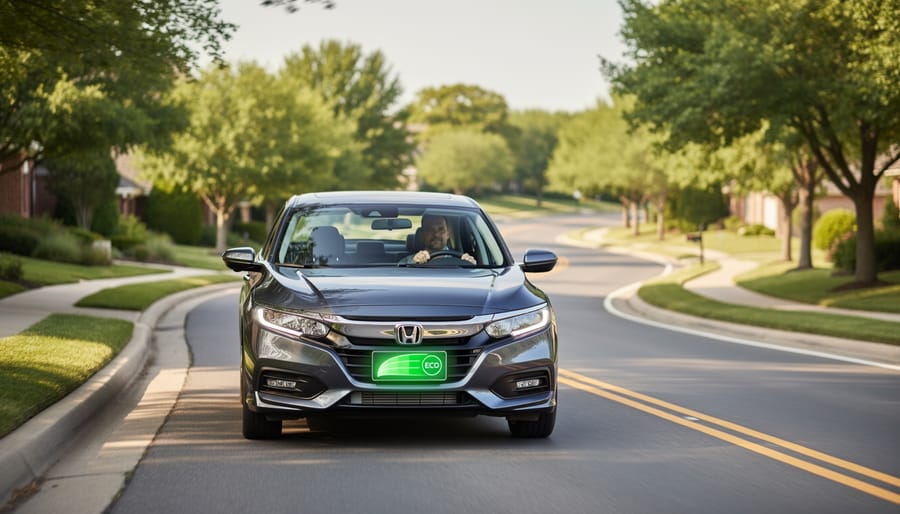
Master Your Driving Style
The way you drive has a remarkable impact on your vehicle’s emissions, and the good news is that eco-driving techniques are surprisingly simple to master. Think of it as a conversation between you and your car, where gentleness wins every time.
Smooth acceleration is your first tool. Rather than pushing hard on the accelerator from traffic lights, gradually build speed as if you’re carrying a cup of tea on your dashboard. This approach significantly reduces fuel consumption and emissions, especially beneficial during Melbourne’s stop-start traffic or Sydney’s congested arterials.
Maintaining steady speeds transforms your fuel efficiency. On Australian highways like the Hume or Pacific Motorway, using cruise control helps you avoid the constant speed fluctuations that guzzle fuel. When possible, anticipate traffic flow ahead, allowing you to coast rather than brake abruptly and accelerate again.
Idling is often overlooked but matters tremendously. If you’re waiting more than 60 seconds, whether at a level crossing or picking up the kids from school, turning off your engine makes a genuine difference. Modern vehicles are designed to handle frequent restarts without excessive wear.
These techniques aren’t just about individual action; they’re part of a growing community of Australian drivers choosing to reduce their environmental footprint one trip at a time.
Keep Your Car Running Clean
Looking after your car doesn’t just save you money at the petrol pump, it’s one of the most effective ways to reduce your vehicle’s emissions right now. Think of your car like your body: when it’s well-maintained, it performs better and more efficiently.
Start with your tyres. Underinflated tyres create more resistance against the road, forcing your engine to work harder and burn more fuel. Check your tyre pressure monthly, and you could improve fuel efficiency by up to 3 percent. It’s a quick job at your local servo, and many have free air pumps available.
Your air filter deserves attention too. A clogged air filter restricts airflow to your engine, similar to trying to breathe through a blocked nose. This makes your engine less efficient and increases emissions. Replacing a dirty air filter can improve acceleration and fuel economy, particularly in older vehicles.
Regular engine tune-ups keep everything running smoothly. Spark plugs, oxygen sensors, and emission control systems all need periodic checks. When these components aren’t working properly, your car burns fuel inefficiently and releases more pollutants.
Many Australian mechanics now offer eco-tune services specifically designed to optimise your vehicle’s environmental performance. By staying on top of these simple maintenance tasks, you’re not just extending your car’s life, you’re actively contributing to cleaner air in your community.
Rethink Your Journey Planning
Before you start your engine, consider whether you really need to make that trip at all. Many Australians are discovering that smart journey planning can slash their weekly emissions while saving money on fuel. Try combining multiple errands into one outing rather than making several separate trips throughout the week. This simple shift can reduce your vehicle emissions by up to 30%.
Route optimization also makes a significant difference. Using navigation apps to avoid traffic congestion not only saves time but reduces the stop-start driving that guzzles fuel and increases emissions. Peak-hour traffic in cities like Sydney and Melbourne can double your fuel consumption, so timing your trips strategically pays off.
Consider exploring public transport options for your regular commutes. Australian cities are investing heavily in rail, bus, and tram networks that connect communities efficiently. Car-sharing services and workplace carpool programs are also gaining momentum across the country, allowing you to share both costs and environmental impact with others heading in the same direction. Even swapping just one or two car trips per week creates meaningful change when multiplied across your community.
Making the Switch: Lower-Emission Vehicle Options in Australia
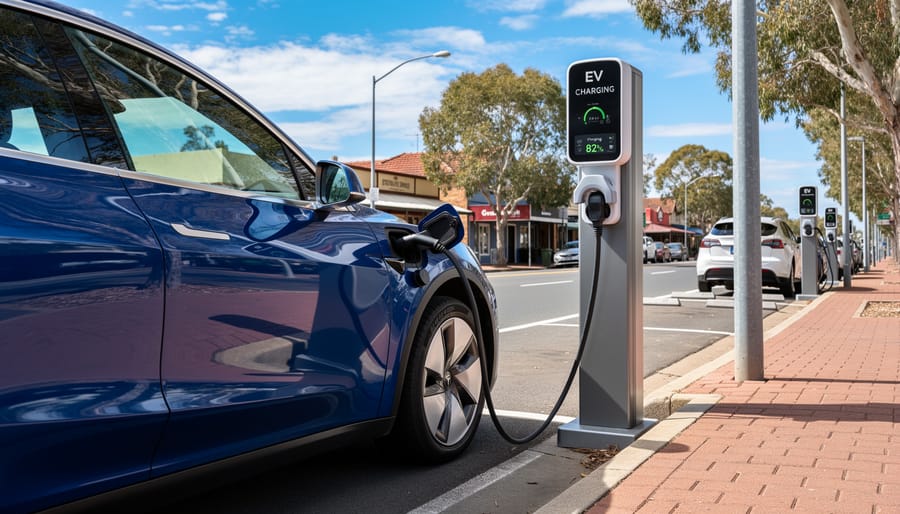
Understanding Your Lower-Emission Options
Making the switch to lower-emission vehicles has never been more accessible for Australians, with options to suit every lifestyle and budget. Let’s explore what’s available and how they might fit into your daily life.
Hybrid vehicles combine a petrol engine with an electric motor, automatically switching between or blending both power sources. Popular Australian models like the Toyota Camry Hybrid and Mazda CX-60 are perfect for those wanting better fuel economy without changing charging habits. They’re ideal if you do lots of highway driving or don’t have home charging access.
Plug-in hybrids (PHEVs) offer the best of both worlds. Models like the Mitsubishi Outlander PHEV can run purely on electricity for shorter trips, typically 50-80 kilometres, before the petrol engine kicks in for longer journeys. They’re brilliant for Sydney commuters who occasionally drive to the Blue Mountains or Melbourne families weekend-tripping to the coast.
Fully electric vehicles represent the ultimate in emission reduction. The Tesla Model 3, BYD Atto 3, and MG ZS EV are gaining popularity across Australian cities. With home charging or workplace facilities, EVs suit urban dwellers and those with predictable driving patterns. Australia’s expanding charging network makes them increasingly practical for regional travel too.
When choosing energy efficient vehicles, consider your daily kilometres, parking situation, and access to charging infrastructure. Many Australians find that even a modest upgrade significantly reduces their transport emissions while lowering running costs.
Australian Incentives and Infrastructure
Making the switch to an electric vehicle in Australia has never been more achievable, thanks to growing incentives and infrastructure nationwide. While programs vary by state, you’ll find genuine support wherever you’re located.
New South Wales offers stamp duty exemptions and registration discounts for eligible EVs, while Victoria provides rebates up to $3,000 for new battery electric and hydrogen fuel cell vehicles under the Zero Emissions Vehicle subsidy. Queensland residents can access interest-free loans, and the ACT continues leading the charge with zero stamp duty and free registration for zero-emission vehicles. South Australia, Tasmania, Western Australia, and the Northern Territory each offer their own combinations of registration concessions and purchase incentives.
Charging infrastructure is expanding rapidly across the country. Major highways now feature fast-charging networks connecting capital cities, making interstate travel increasingly practical. Urban areas benefit from growing numbers of public charging stations at shopping centres, council car parks, and workplaces. Regional communities are catching up too, with charging points appearing in country towns as local councils recognize the importance of supporting EV adoption.
For those concerned about home charging, most Australian households can install a wall charger using existing electrical systems, though you’ll want to consult a licensed electrician about your specific setup. Many energy providers now offer special EV charging tariffs, making overnight charging remarkably affordable and helping you maximize your emissions reduction while minimizing costs.
Community Initiatives Driving Change Across Australia
Across Australia, communities are proving that meaningful emission reductions happen when neighbours work together. In Melbourne’s inner north, the Moreland Energy Foundation has helped residents slash their transport emissions by 30% through community-led electric vehicle co-ops and bike-sharing programs. Members pool resources to access EVs for occasional longer trips while cycling locally, demonstrating how green commuting strategies become more achievable through collaboration.
Brisbane’s Yeronga Community Centre runs monthly workshops teaching residents simple car maintenance techniques that improve fuel efficiency, from proper tyre inflation to eco-driving skills. Their “Low Carbon Champions” program has engaged over 500 households since 2022, with participants reporting average fuel savings of 15%.
In regional areas, the Coffs Harbour Council pioneered a rural car-sharing scheme connecting residents who need occasional vehicle access without full ownership costs. This initiative has removed 47 privately-owned vehicles from local roads while ensuring everyone maintains mobility.
Western Australia’s Fremantle community established “Walking School Bus” routes where parent volunteers walk groups of children to school together, reducing morning traffic congestion by 20% around local schools. These grassroots initiatives prove that reducing emissions doesn’t require massive lifestyle sacrifices. When communities share knowledge, resources, and commitment, individual actions multiply into significant collective impact. Your participation in local sustainability groups or council programs can amplify these positive changes while connecting you with like-minded Australians making a real difference.
The Road Ahead: What’s Next for Australian Transport Emissions
Australia’s transport landscape is set for significant transformation over the coming years. The federal government has committed to implementing stricter fuel efficiency standards similar to those in Europe and the United States, which means new vehicles on our roads will produce fewer emissions by default. Electric vehicle infrastructure is expanding rapidly across our major cities and regional centres, making clean transport increasingly accessible to everyday Australians.
Yet our unique geography presents genuine challenges. The vast distances between our cities and communities mean we can’t simply replicate solutions from smaller countries. This is where Australian innovation and community spirit shine through. Local councils are investing in charging networks along popular regional routes, while car-sharing initiatives are gaining traction in suburban areas, proving we can adapt solutions to suit our lifestyle.
Your role in this transition matters enormously. Whether you’re maintaining your current vehicle for optimal efficiency, considering an electric or hybrid for your next purchase, or advocating for better public transport in your area, these actions collectively shape Australia’s transport future. The road ahead requires patience and persistence, but communities across the country are already proving that reducing transport emissions is achievable, practical, and beneficial for both our environment and hip pockets.
Here’s the truth about reducing emissions: it’s not about achieving perfection overnight, but rather making progress one choice at a time. Every Australian who decides to carpool twice a week, maintain their vehicle regularly, or consider fuel efficiency when making their next car purchase is contributing to cleaner air for our communities. The beauty of this movement is that small individual actions, when multiplied across millions of households, create transformative change.
Start somewhere. Pick one or two practical changes from this article that feel manageable for your lifestyle. Maybe it’s checking your tyre pressure this weekend or planning your errands more efficiently. Perhaps you’ll explore public transport options for your work commute or research electric vehicle incentives in your state. Whatever you choose, you’re joining countless other Australians who are actively shaping a more sustainable future.
This isn’t a solo journey. From Melbourne to Cairns, communities are proving that when we work together toward cleaner transport and reduced emissions, we create healthier neighbourhoods for everyone. Your actions matter, your choices inspire others, and collectively, we’re building the sustainable Australia we want to see. The question isn’t whether you can make a difference, it’s which step you’ll take first.