
Every minute, approximately 30,000 single-use coffee pods end up in landfills globally, and Australian workplaces are contributing significantly to this mounting crisis. If your office serves just 20 cups of pod coffee daily, you’re generating roughly 5,000 non-recyclable capsules annually—that’s 75 kilograms of mixed plastic and aluminium waste that will persist in our environment for up to 500 years.
The convenience of K-Cups and similar pod systems has revolutionised workplace coffee culture, but this convenience comes at a steep environmental price. These tiny capsules represent a perfect storm of sustainability challenges: they’re composed of multiple materials that can’t be easily separated, contaminated with organic matter that complicates recycling, and often too small to be processed by standard recycling facilities. The result? Even pods marketed as recyclable typically end up in landfill because the preparation required makes proper disposal impractical in busy office environments.
For Australian businesses navigating the intersection of employee satisfaction and environmental responsibility, understanding the true impact of pod coffee systems isn’t about guilt—it’s about making informed decisions. The coffee pods filling your office bin aren’t just waste; they’re a significant carbon footprint stretching from manufacturing through to disposal, with each cup generating approximately 10 times more waste than traditional brewing methods.
This isn’t a call to abandon workplace coffee culture. Instead, it’s an invitation to explore how Australian businesses are successfully transitioning to sustainable alternatives without sacrificing convenience or quality. The solutions exist, the suppliers are ready, and the business case for change is stronger than ever. Your next coffee decision could eliminate thousands of pods from landfill while actually reducing costs and strengthening your sustainability credentials.
The Real Environmental Cost of Single-Serve Coffee Systems
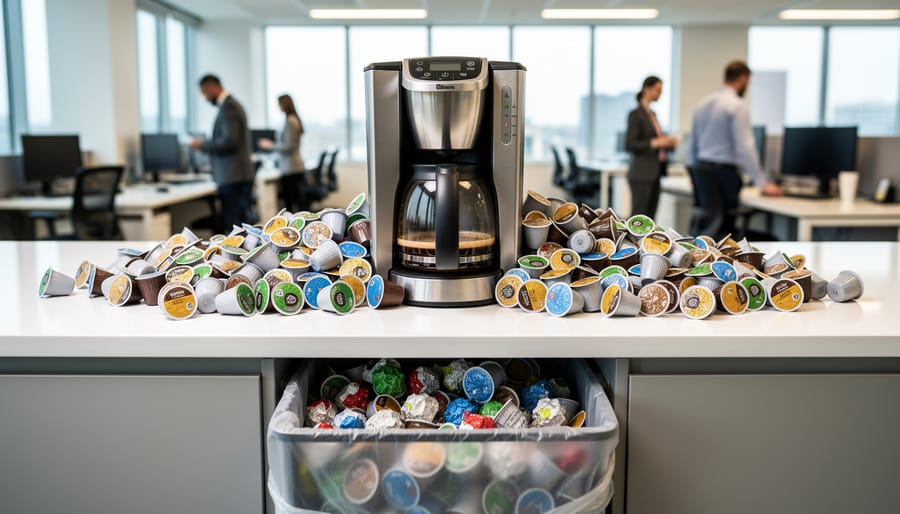
What Makes K-Cups So Problematic
K-cups present a significant environmental challenge that’s particularly pressing here in Australia. Each little pod is essentially a complex package made from multiple materials bonded together: a plastic cup (typically polypropylene or polyethylene), an aluminium foil lid, a paper filter, and a small amount of organic coffee grounds. While this clever design delivers convenience, it creates a recycling nightmare.
The manufacturing process itself is energy-intensive, requiring separate production of each component before assembly. When you consider that Australians consume millions of these pods annually, the cumulative energy footprint becomes staggering before the first cup is even brewed.
Here’s where things get particularly tricky for Australian communities: our recycling facilities simply aren’t equipped to handle K-cups effectively. The mixed materials need to be separated for proper recycling, but most councils can’t process them through standard kerbside collection. The aluminium lid might be recyclable, the plastic cup possibly recyclable, and the paper filter compostable, but they’re fused together in a package roughly the size of your thumb. Separating these components manually isn’t realistic for most households or workplaces.
Some K-cup manufacturers have introduced “recyclable” versions, but these still require you to peel off the lid, empty the grounds, and dispose of components separately. In reality, most end up in landfill where the plastic can take up to 500 years to break down. For Australian businesses committed to sustainability, this presents a clear conflict between workplace convenience and environmental responsibility.
The Numbers Behind Professional Coffee Consumption
The scale of K-cup consumption in Australian workplaces tells a compelling story. Recent industry data suggests that Australian businesses consume approximately 180 million coffee pods annually, with larger corporate offices averaging 25-40 pods per employee each year. When you consider that a single K-cup weighs roughly 12 grams, this translates to over 2,160 tonnes of pod waste flowing through commercial settings alone.
To put this in perspective, workplace coffee pod waste now rivals printer cartridges as a significant component of office waste management challenges. While paper and cardboard still dominate office bins at approximately 70% of total waste, coffee pods represent a growing concern due to their complex multi-material composition, making them far more challenging to process than traditional recyclables.
What makes these numbers particularly striking is the concentration factor. A typical Melbourne CBD office building with 500 employees might generate 12,500 pods yearly, equivalent to 150 kilograms of mixed plastic, aluminium, and organic waste. These figures demonstrate why addressing K-cup consumption has become a priority for sustainability-focused businesses across Australia.
Carbon Footprint Beyond the Cup
The environmental story of K-Cups extends well beyond the landfill. For Australian businesses, understanding the full carbon lifecycle reveals surprising impacts that many overlook when calculating their sustainability footprint.
Transportation emissions form a substantial part of the problem. Most K-Cup pods travel considerable distances to reach Australian shores, with the majority manufactured in North America or Europe. This international shipping adds approximately 0.5 to 1 kilogram of carbon emissions per kilogram of coffee transported, before the pods even reach your office kitchen. From ports to distribution centres to your workplace, each leg of the journey compounds the impact.
The packaging itself tells another carbon-heavy story. Manufacturing the plastic and aluminium components requires energy-intensive processes, contributing roughly 33 grams of CO2 equivalent per pod before it’s even filled with coffee. When you multiply this across the estimated 200 million K-Cups used annually in Australian workplaces, the collective impact becomes staggering.
Here’s the encouraging news: Australian businesses are uniquely positioned to make a difference. By choosing locally roasted coffee options and reusable pod systems, companies across Melbourne, Sydney, and Brisbane are already cutting their coffee-related emissions by up to 80 percent whilst supporting local roasters and creating community connections around sustainable choices.
Professional Strategies for Immediate Impact Reduction
Recyclable and Compostable Pod Alternatives
The good news? Australians now have access to genuinely sustainable pod alternatives that don’t require compromising on convenience. Several brands have stepped up, creating pods designed with end-of-life in mind from the start.
When evaluating recyclable options, look for pods certified by the Australasian Recycling Label (ARL) program. This Australian-specific standard tells you exactly how to dispose of each component. Some pods feature fully recyclable aluminium construction, while others use plant-based materials that can break down naturally. Remember that ‘recyclable’ means the pod can be processed through your kerbside yellow bin or dedicated collection programs, not that it requires complicated disassembly.
Compostable pods deserve special attention, though the terminology can be confusing. Genuine compostable pods carry certification from organizations like the Australasian Bioplastics Association or meet AS 4736 standards for commercial composting. Here’s the catch: most won’t break down in home compost bins. They need the high temperatures of commercial composting facilities, which aren’t available in every Australian region. Before switching to compostable pods, check whether your workplace has access to commercial composting services or consider partnering with local community gardens that maintain hot composting systems.
Several Australian suppliers now stock certified alternatives, including pods from brands like Tripod Coffee and Tripodium, which work in standard machines. The Melbourne-based coffee roaster Sustainable Coffee Co has even created return-mail programs, collecting used pods regardless of type for proper processing. This community-focused approach transforms waste management into a circular system that actually works.
Reusable Pod Programs That Actually Work
Making the switch to reusable pods in your workplace doesn’t have to be complicated. Several Australian businesses have already paved the way, demonstrating that with the right approach, reusable systems can actually improve both your bottom line and environmental footprint.
Melbourne-based digital agency Luminary implemented reusable pods across their three offices in 2022, achieving remarkable results. Within six months, they’d reduced coffee-related waste by 89% and cut their beverage costs by $4,200 annually. Their secret? They designated “coffee champions” on each floor who managed the pod cleaning station and maintained supplies. Staff received personal stainless steel pods with their names engraved, transforming what could have been a chore into something people actually enjoyed using.
The cost-benefit analysis consistently favours reusable systems. While quality reusable pods cost between $15-35 each, they eliminate the premium charged for single-use K-cups. Most businesses see return on investment within three to four months, with ongoing savings of 40-60% compared to disposable pods. Brisbane accounting firm Nexus Partners calculated their annual savings at $6,800 after switching their fleet of office Keurig machines to reusable pods filled with locally roasted coffee.
Success hinges on three key factors: making cleaning stations accessible and well-equipped, choosing high-quality pods that don’t leak or clog machines, and securing employee buy-in through clear communication about environmental benefits. Consider starting with a pilot program in one department before rolling out company-wide, allowing you to refine your approach based on real feedback from your team.
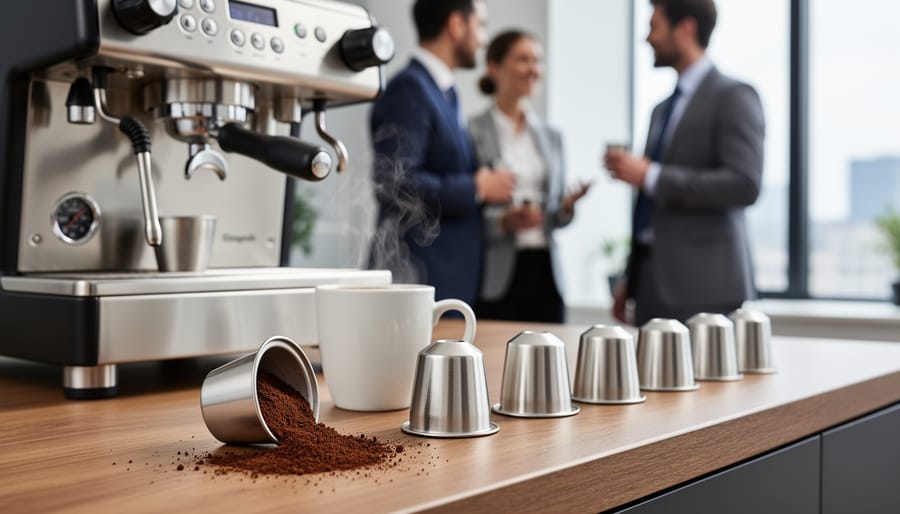
Commercial Coffee Solutions Beyond Pods
Australian workplaces are discovering that moving beyond pods doesn’t mean sacrificing convenience. Professional-grade alternatives are transforming office coffee culture while dramatically reducing waste, and many local businesses are leading the charge.
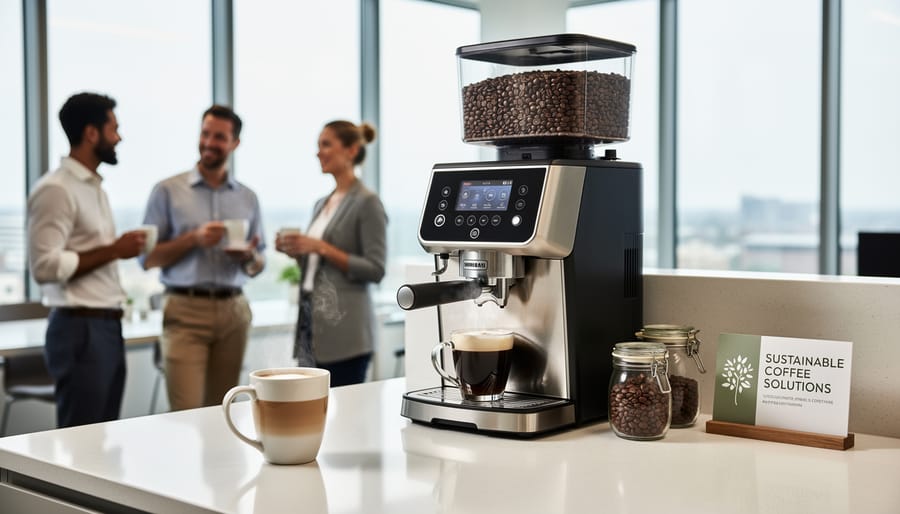
Bean-to-cup machines represent the gold standard for commercial sustainability. These automated systems grind fresh beans on demand, producing café-quality coffee without generating single-use waste. Melbourne’s Ona Coffee Supply reports that businesses switching to bean-to-cup solutions eliminate up to 5,000 pods annually per 20-person office. While the initial investment ranges from $2,000 to $8,000, the combination of reduced waste fees and lower per-cup costs typically delivers payback within 18 months.
Batch brewing systems offer another practical solution, particularly for larger teams. Modern commercial brewers produce consistently excellent coffee for groups, with thermal carafes keeping beverages hot for hours. Sydney-based procurement manager James Chen shares his office’s experience: “We installed a quality batch brewer and set up a simple coffee station with oat milk and proper cups. Staff actually prefer it to the old pod system, and we’ve cut our coffee-related waste by 90 percent.”
For businesses wanting to create genuine café experiences, semi-automatic espresso setups are increasingly viable. While requiring trained operators, these systems deliver premium results and can become workplace highlights. Some Australian companies partner with local roasters who provide equipment, training, and ongoing bean supply, creating community connections while ensuring quality.
The shift also opens opportunities to explore other sustainable office alternatives beyond coffee. Many businesses find that successful coffee transitions inspire broader sustainability initiatives, from reusable cups to composting programs. Whatever system you choose, the key is matching capacity to consumption patterns while prioritizing employee training and engagement for lasting success.
Building a Sustainable Workplace Coffee Culture
Gaining Stakeholder Support for Coffee System Changes
Shifting your workplace away from single-use K-Cups requires more than just environmental conviction—it needs strategic communication that brings everyone on board. Start by presenting the compelling business case to decision-makers: switching to sustainable coffee systems typically saves Australian businesses between $800 and $2,500 annually, depending on consumption levels. These figures resonate powerfully when paired with brand benefits, as 73% of Australian consumers prefer purchasing from environmentally responsible companies.
Frame the transition as part of broader carbon neutral business practices rather than an isolated change. When presenting to leadership, include concrete data on waste reduction—a typical office using K-Cups generates approximately 40 kilograms of plastic waste annually, most of which ends up in landfill.
Address resistance head-on by acknowledging concerns about convenience and taste preferences. Organise taste-testing sessions featuring quality alternatives like French press coffee, commercial-grade espresso machines, or compostable pods. Melbourne-based accounting firm Cooper & Partners successfully navigated this by involving employees in selecting new equipment, transforming potential resistance into enthusiastic adoption.
Create a transition team including representatives from different departments who champion the change. Share progress updates celebrating milestones—”We’ve diverted 15kg of plastic from landfill this quarter!”—building momentum through visible wins. Consider implementing a suggestion box where staff can contribute ideas, fostering ownership of the initiative. When employees feel heard and involved, sustainable changes become embedded in workplace culture rather than imposed from above.
Implementation Roadmap for Professional Settings
Transitioning away from K-Cups doesn’t happen overnight, but a thoughtful, staged approach ensures your workplace embraces the change rather than resisting it. Here’s how to make it work.
Start with a three-month pilot program in one department or floor. Introduce alternatives like French press systems or pod-free machines alongside traditional options, giving staff choice during the adjustment period. This testing ground helps identify practical challenges before rolling out company-wide changes. Appoint sustainability champions within the pilot group—these colleagues become your advocates when expanding the program.
During months two and three, gather honest feedback through quick surveys or coffee-station conversations. What’s working? What barriers remain? Perhaps the grind setting needs adjusting, or staff need a quick tutorial on the new equipment. This is where employee sustainability engagement becomes crucial—people support changes they help shape.
Track meaningful metrics: waste reduction (weigh those bins before and after), cost savings per quarter, and participation rates. Many Australian businesses discover they’re saving 30-40% on coffee expenses within six months while diverting significant waste from landfill.
If adoption lags, don’t abandon ship. Adjust your approach—maybe compostable pods bridge the gap for time-poor teams, or a barista-style station becomes your drawcard. Celebrate wins publicly with posters showing waste diverted or funds saved, converting those savings into workplace improvements or charity donations. Success builds momentum, turning your coffee station into a visible symbol of practical environmental action that ripples throughout your organisation.
Waste Management During Transition
Transitioning away from conventional K-cups doesn’t mean your existing inventory needs to end up in landfill. With a thoughtful approach, your workplace can manage this shift responsibly while building momentum for long-term change.
Start by conducting an inventory audit of your current K-cup stock. Rather than discarding them, use this transition period as an opportunity to educate your team about the change ahead. Set a realistic timeline that allows you to use remaining pods while introducing sustainable alternatives alongside them.
Creating dedicated recycling stations is essential for proper disposal. Australians are increasingly savvy about recycling, but K-cups require specific handling. Set up clearly labelled stations with separate bins for used pods, accompanied by simple visual instructions showing how to separate the foil lid, empty the coffee grounds (which make excellent compost), and rinse the plastic cup. The coffee grounds can be collected for office gardens or local community composting initiatives.
For workplaces committed to zero-waste goals, partnering with specialized recycling programs makes a significant difference. TerraCycle operates in Australia and accepts coffee capsules through their free recycling programs, working with major brands to ensure these items are properly processed. Many Australian offices have found success establishing collection points that TerraCycle services regularly, transforming waste management from an afterthought into a visible commitment to environmental stewardship that resonates with employees and clients alike.
Australian Businesses Leading the Way
Success Stories from Australian Workplaces
Australian workplaces are leading the charge in moving away from single-use coffee pods, with impressive results that prove sustainability and practicality can go hand-in-hand.
Melbourne’s Futurelab Consulting made the switch in 2021, replacing their pod machine with a commercial-grade bean-to-cup system for their 45-person office. Within the first year, they eliminated approximately 23,400 K-cups from landfill and saved $3,200 in purchasing costs. Staff satisfaction actually increased, with 87% of employees reporting they preferred the fresh coffee taste. Operations Manager Sarah Chen notes, “We initially worried about the learning curve, but our team embraced it. The environmental impact was the driver, but the cost savings sealed the deal.”
Brisbane-based advertising agency Ripple Creative took a community approach, partnering with a local café to provide freshly roasted beans while installing a professional espresso machine. Their 30-person team now produces zero pod waste and has built stronger connections with their neighbourhood roaster. They’ve documented a 68% reduction in their break room waste and reinvested the savings into staff development programs.
Perth’s GreenTech Solutions implemented a hybrid system, offering French press stations and a single high-quality drip coffee maker. This low-tech approach eliminated 15,000 pods annually while reducing their carbon footprint by an estimated 2.1 tonnes of CO2 equivalent. The simplicity means minimal maintenance, and their “coffee station champions” help newcomers feel confident with the equipment, creating an unexpected team-building opportunity that’s strengthened their workplace culture.
Industry-Specific Solutions and Resources
Different workplaces require tailored approaches to reducing K-Cup waste. Australian offices can partner with suppliers likeJar&Co and Reusabrew, both offering bulk refillable pod options and workplace subscription services. Healthcare facilities, where hygiene is paramount, might consider compostable pods from Good & Green alongside dedicated composting bins that meet health regulations. Educational institutions can turn sustainability into a teaching moment, involving students in coffee waste audits while using providers like Responsible Cafes who supply certified sustainable brewing systems.
Look for Australian-certified sustainable suppliers displaying Planet Ark’s Business Recycling certification or Responsible Cafes accreditation. These locally recognized standards ensure genuine environmental commitment rather than greenwashing. Many suppliers now offer workplace sustainability assessments, helping you transition smoothly while maintaining that essential coffee culture your team loves.
Regional councils across Victoria, New South Wales, and Queensland increasingly offer commercial composting programs specifically accepting certified compostable pods. Sydney’s CitySwitch program even provides free sustainability consultations for businesses ready to tackle single-use items. Integrating sustainable coffee solutions into broader professional sustainability practices strengthens your workplace’s environmental credentials while demonstrating genuine commitment to your team and community. Whether you’re managing a small clinic or coordinating facilities for hundreds, Australian suppliers are ready to support your journey toward waste-free caffeine.
The shift towards sustainable coffee systems in Australian workplaces isn’t just environmentally responsible—it’s a tangible opportunity to demonstrate leadership that resonates with employees, clients, and the broader community. The evidence is clear: K-Cups create substantial waste, but the alternatives are both practical and cost-effective. From compostable pods to quality bean-to-cup machines, businesses across Australia are already proving that excellent coffee and environmental stewardship go hand in hand.
Your next steps are straightforward. Start by auditing your current coffee consumption and waste output. Engage your team in the conversation—you’ll likely find enthusiasm for greener options. Research suppliers offering certified compostable pods or explore commercial composting partnerships in your area. Consider trialling reusable pod systems or investing in a quality machine that eliminates single-use waste entirely.
Remember, every cup matters. With Australians consuming millions of pods annually, your workplace decision creates ripple effects throughout the supply chain and inspires others in your professional network. The transition to sustainable coffee isn’t a sacrifice—it’s an investment in your organisation’s values and our shared environment. The time to act is now, and the path forward has never been clearer.