
Every year, Australian households throw away approximately 3.1 million tonnes of edible food—that’s roughly one in five grocery bags walking straight from the checkout to the bin. This waste costs families an average of $2,000 to $2,500 annually while simultaneously contributing to 3% of Australia’s greenhouse gas emissions. Yet here’s the empowering truth: achieving zero food waste isn’t about perfection. It’s about progress, and every meal saved makes a tangible difference.
Zero food waste represents a practical approach where nothing edible ends up in landfill. Instead, food moves through a hierarchy: first prevention through smart shopping and storage, then creative cooking with what you have, followed by sharing surplus with neighbours or food rescue organizations, composting what can’t be eaten, and only as a last resort, disposal. This isn’t just an environmental initiative—it’s a movement gaining momentum across Australian communities, from suburban kitchens to commercial kitchens, cafes, and major retailers.
The beauty of this approach lies in its flexibility. Whether you’re a busy parent managing a household, a restaurant owner streamlining operations, or someone simply wanting to reduce their environmental footprint, zero food waste strategies can fit seamlessly into your existing routine. You don’t need to transform your entire lifestyle overnight. Small, consistent changes—like planning meals around what’s already in your fridge or understanding date labels properly—create ripple effects that benefit your wallet, your community, and the planet we all share.
What Zero Food Waste Actually Means (And What It Doesn’t)
Let’s clear something up right from the start: zero food waste isn’t about achieving perfection. If you’ve been putting off starting because you think you need to get it 100% right, here’s your permission to let that go.
Zero food waste is a commitment to systems and practices that prevent food from ending up in landfill wherever possible. It’s about making better choices most of the time, not beating yourself up when a punnet of berries goes mouldy at the back of your fridge. What matters is what you do next, and how you build waste reduction habits that stick over time.
Think of food waste management as a hierarchy, with the best options at the top and less ideal ones below. Prevention sits at the peak – this means planning meals, storing food properly, and only buying what you’ll actually use. Next comes rescue, where surplus food that’s still perfectly good gets redirected to people who need it through community fridges, food banks, or sharing apps. Then there’s recovery, where food scraps become animal feed or ingredients for other products. Finally, at the base, we have composting – returning nutrients to the soil rather than sending organic matter to landfill where it creates methane.
Here’s what stops many Australians from starting: the belief that if they can’t compost everything, or if they occasionally waste food, they’ve failed. That’s simply not true. Every kilogram of food you prevent from entering landfill matters. Every meal planned, every leftover transformed, every banana peel composted – it all counts.
The goal isn’t perfection; it’s progress. It’s about understanding this hierarchy and doing your best to move up it, step by step, choice by choice, creating a system that works for your household or business while contributing to a larger community movement.
The True Cost of Food Waste in Australian Homes and Businesses
Meet Sarah from Melbourne’s inner north. Each week, she tosses wilted lettuce, forgotten leftovers, and those too-ripe bananas into her bin, thinking it’s just a small household mishap. But here’s the reality: Australian households like Sarah’s are collectively throwing away around $2,000 to $2,500 worth of perfectly good food every single year. That’s roughly a month’s rent for many families, vanishing into landfill.
The numbers tell a sobering story. Across Australia, we waste approximately 7.6 million tonnes of food annually, with households responsible for the lion’s share. When organic matter breaks down in landfill without oxygen, it produces methane, a greenhouse gas 25 times more potent than carbon dioxide. Our collective food waste generates emissions equivalent to 1 in 5 cars on Australian roads.
But this isn’t about pointing fingers or creating guilt. It’s about recognising an opportunity that connects directly to Australia’s growing zero waste economy movement.
For businesses, the stakes escalate further. Cafes, restaurants, and food retailers across Australia collectively waste around 2 million tonnes annually, representing significant financial losses and missed opportunities to serve communities in need.
The encouraging news? Every meal saved makes a tangible difference. When families reduce their food waste by just half, they’re not only keeping an extra $1,000 in their pockets but also actively contributing to emissions reduction. These individual actions, multiplied across communities, create meaningful environmental impact while strengthening food security for vulnerable Australians. The true cost of food waste extends beyond money, it’s about resources, energy, water, and possibilities we can’t afford to squander.
Prevention First: Stopping Food Waste Before It Starts
Smart Shopping and Meal Planning Strategies
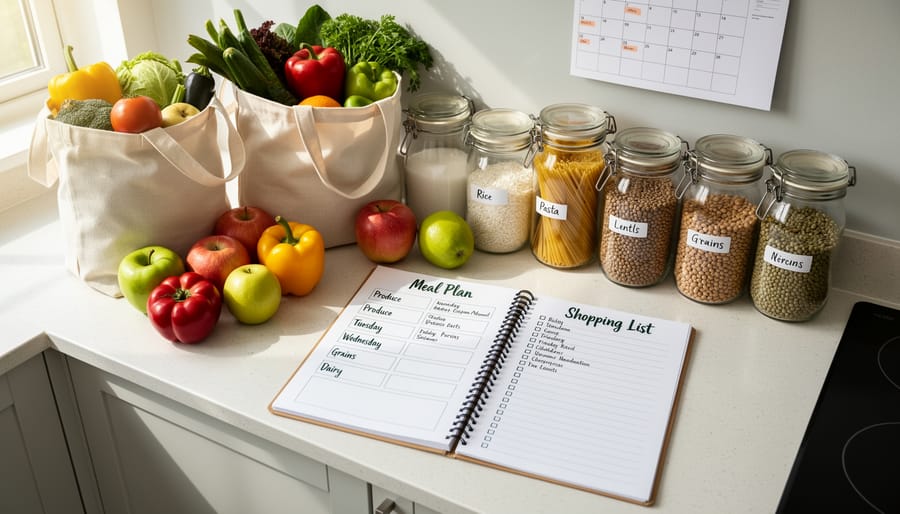
The foundation of zero food waste begins before you even step into a shop. Start by taking inventory of what’s already in your fridge, freezer, and pantry – you’ll be surprised how often we duplicate purchases simply because we’ve forgotten what’s tucked away at the back. Create a weekly meal plan around these ingredients first, then build your shopping list from there.
When it comes to portion sizes, Australians tend to cook more than needed. A practical rule is 75-100 grams of protein and one cup of cooked grains per person. Planning for leftovers purposefully, rather than accidentally, transforms them into tomorrow’s lunch or components for another meal.
Shopping mindfully means choosing quality over convenience. Visit your local farmers markets where produce often lasts longer because it’s fresher, and you’re supporting regional growers simultaneously. Many Australian communities now have food co-ops and bulk stores where you can purchase exactly the quantities you need, eliminating packaging waste and preventing overbuying. Stores like The Source Bulk Foods and Naked Foods operate across multiple states, making package-free shopping increasingly accessible.
Consider joining community buying groups or co-ops where members pool orders for better prices and reduced waste. Apps like Bring Me Home and YourGrocer connect you directly with local producers, often offering imperfect produce at reduced prices – vegetables that taste identical but don’t meet supermarket appearance standards.
Remember, perfect planning isn’t the goal; reducing waste progressively is. Start with one planned meal per week and gradually build your confidence from there.
Proper Food Storage Techniques That Extend Shelf Life
Mastering proper food storage is one of the simplest yet most powerful ways to slash household waste. Australian households throw away around 312 kilograms of food annually, and much of this could be prevented with better storage knowledge.
Let’s start with understanding date labels. Use-by dates indicate safety for perishables like meat and dairy – these matter for food safety. Best-before dates simply suggest peak quality, meaning foods remain safe to eat beyond this date if stored correctly. A quick sniff test and visual check can guide you.
For our warm Australian climate, refrigerator management is crucial. Keep your fridge between 3-5°C and avoid overloading it, as air circulation prevents spoilage. Store raw meat on the bottom shelf to prevent cross-contamination. Leafy greens last longer wrapped in damp tea towels, while herbs stay fresh in water like cut flowers.
Your pantry needs attention too. Store flours, grains, and cereals in airtight containers to combat humidity and keep pantry moths at bay – a common Australian pest. Position older items at the front using the “first in, first out” principle.
Climate-specific tips make a difference here. During humid summers, check dried goods more frequently for moisture. If you’re in tropical areas, consider refrigerating items like bread and nuts that might otherwise go rancid quickly.
Root vegetables prefer cool, dark spaces outside the fridge. Onions and potatoes should never share storage space, as they accelerate each other’s spoilage. Tomatoes develop better flavour at room temperature, while mushrooms breathe better in paper bags than plastic.
Small changes in storage habits create significant impacts, transforming how long your groceries last and how much money stays in your pocket.
Creative Cooking with What You Have
Transforming odds and ends into delicious meals is both an art and a powerful waste-reduction strategy. Before tossing that wilted celery or overripe bananas, consider the countless ways these ingredients can shine in soups, smoothies, or baked goods.
Start by conducting regular fridge audits, moving soon-to-expire items to the front. Keep a “use first” basket for produce that needs immediate attention. Mastering recipe substitutions is your secret weapon: swap buttermilk for milk with vinegar, use applesauce instead of eggs in baking, or replace fresh herbs with dried versions at a 1:3 ratio.
Scrap cooking takes creativity further by utilizing parts typically discarded. Broccoli stems become slaw, carrot tops transform into pesto, and vegetable scraps create rich stock. Stale bread finds new life as croutons, breadcrumbs, or bread pudding. Even citrus peels can infuse vinegar for natural cleaning solutions or candied for sweet treats.
Australian communities are leading the charge with innovative resources. The Melbourne-based community cookbook initiative “Use It Up” features recipes from locals designed specifically for surplus ingredients. OzHarvest’s free recipe app suggests meals based on ingredients you already have, while community gardens across Sydney, Brisbane, and Perth host regular cooking workshops focused on seasonal, whole-ingredient cooking.
Local councils increasingly provide food-saving recipe cards at farmers markets, celebrating Indigenous Australian approaches to nose-to-tail eating and using every plant part. These resources connect you with a broader movement of Australians reimagining their relationship with food, proving that creative cooking reduces waste while building community connections.
Food Rescue: Giving Surplus Food a Second Life
Connecting with Australian Food Rescue Organisations
Australia’s food rescue networks are doing remarkable work, and the best part? They make it incredibly easy for everyday Australians and businesses to get involved. Whether you’ve got surplus produce from your backyard veggie patch or you’re a café with end-of-day meals, there’s a place for you in this movement.
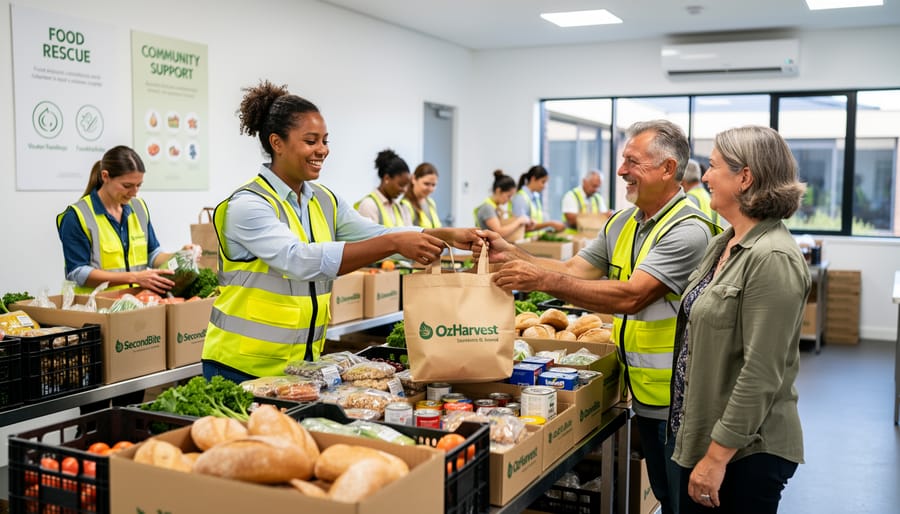
OzHarvest leads the charge as Australia’s leading food rescue organisation, collecting quality excess food from commercial outlets and delivering it directly to charities supporting vulnerable Australians. They’ve rescued over 250 million meals since 2004. What makes them special is their yellow vans, now iconic across Sydney, Melbourne, Brisbane, and beyond. Businesses can register as food donors through their simple online portal, while individuals can volunteer as drivers or participate in their education programs.
SecondBite takes a slightly different approach, focusing on rescuing fresh produce that might otherwise go to waste due to cosmetic imperfections or oversupply. They work extensively with farmers and growers, making them particularly relevant if you’re in regional areas. Their network spans every state, with strong connections in Victoria’s farming regions and Queensland’s tropical fruit belt.
Foodbank Australia operates as the nation’s largest hunger relief organisation, functioning like a pantry for charities. They accept both food donations and warehouse volunteers, with state-based branches making local participation straightforward. Their Brisbane warehouse, for instance, processes millions of kilograms of food annually, while their Perth operation has pioneered school breakfast programs.
Getting involved is refreshingly simple. Most organisations offer flexible volunteering schedules, some as short as two-hour shifts. Businesses benefit from free food collection, reduced waste disposal costs, and tax deductions. For households, many organisations now accept home-grown excess through community collection points. Check your state branch for specific opportunities, because reducing food waste truly takes a village, and these organisations have built vibrant, welcoming communities ready to include you.
Community-Level Food Sharing Initiatives
Community-level food sharing initiatives are transforming how Australians tackle food waste, one neighbourhood at a time. These grassroots movements connect people who have excess food with those who need it, creating vibrant networks of generosity and sustainability.
Community fridges are popping up across Australian cities, offering free access to fresh food that would otherwise go to waste. Melbourne’s Share the Dignity fridges and Sydney’s community pantries demonstrate how shared spaces can reduce waste while supporting food security. These refrigerators, often located outside cafes or community centers, operate on trust and mutual respect.
Food swap events bring neighbours together to exchange homegrown produce, preserves, and baked goods. These gatherings, increasingly popular in Brisbane and Perth suburbs, create connections while preventing surplus from spoiling. They work similarly to donating surplus items, but with fresh food at the center.
The OLIO app has gained significant traction in Australian communities, connecting neighbours and local businesses to share food instead of binning it. Users simply photograph surplus items, and nearby residents can claim them within hours. It’s particularly effective for sharing excess from home gardens or pantry cleanouts.
Starting your own initiative is simpler than you might think. Begin by connecting with neighbours through social media groups or notice boards. Partner with local councils, which often provide support for community food projects. Even informal arrangements between a few households can make a meaningful difference, building community resilience while diverting food from landfill.
Business-to-Business Food Recovery Programs
Australian businesses have a powerful opportunity to combat food waste through collaborative recovery programs. Restaurants, cafes, and retailers can partner with organizations like OzHarvest, Foodbank Australia, and SecondBite to redirect surplus food to community members facing food insecurity. These partnerships transform would-be waste into nourishment, with OzHarvest alone rescuing over 180 tonnes of food weekly across the country.
The Good Samaritan provision under Australian law protects businesses donating food in good faith, removing liability concerns that often hold proprietors back. This legal safety net means your excess stock from that over-ordered delivery or perfectly edible day-old pastries can safely reach someone’s table rather than the bin.
Beyond formal rescue organizations, innovative food-sharing apps like OLIO connect businesses directly with locals, while platforms such as Too Good To Go allow customers to purchase surprise bags of surplus food at reduced prices. Many cafes are also establishing community fridges where surplus prepared meals find grateful recipients after closing time. Start small by reaching out to one rescue organization this month and discover how satisfying it feels to know your excess becomes someone else’s meal.
Recovery and Transformation: When Food Can’t Be Eaten As-Is
Preservation Methods to Extend Food Life
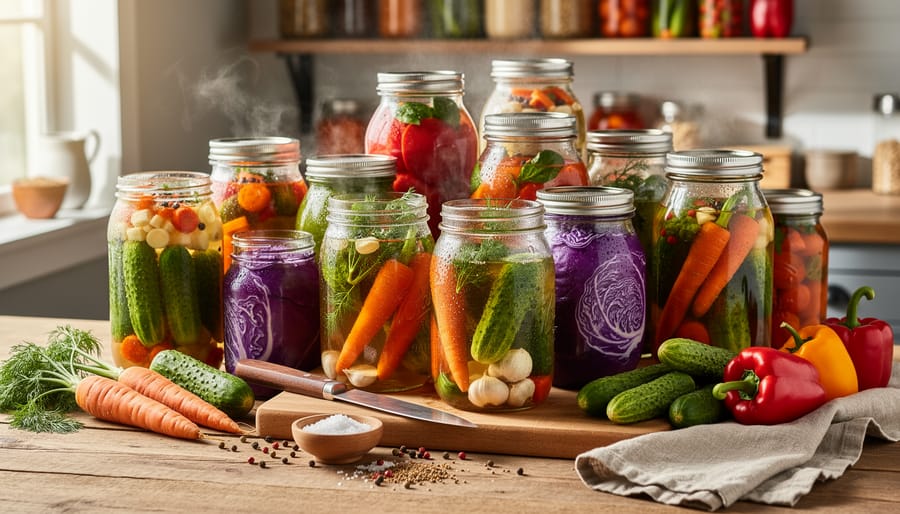
Transforming surplus produce into preserved foods is like giving your ingredients a second life, and it’s easier than you might think. These time-tested methods turn potential waste into pantry staples while celebrating seasonal abundance.
Fermenting creates probiotic-rich foods from vegetables that might otherwise spoil. Simple sauerkraut requires just cabbage and salt, while kimchi transforms wilting greens into flavourful condiments. The process is forgiving and requires minimal equipment, making it perfect for beginners.
Pickling offers another quick preservation method. Those cucumbers going soft or leftover cauliflower florets become tangy additions to meals. A basic vinegar brine (equal parts vinegar and water with salt and sugar) preserves most vegetables for months in your fridge.
Freezing remains the most accessible option for busy households. Blanch vegetables before freezing to maintain colour and nutrients, portion leftovers into meal-sized containers, and freeze herbs in oil using ice cube trays. These simple steps prevent that dreaded freezer burn and food going to waste.
Dehydrating works brilliantly for fruit approaching its use-by date. While dedicated dehydrators are helpful, your oven on low heat achieves similar results. Dried fruit becomes healthy snacks, while dehydrated vegetables create instant soup bases.
Canning might seem intimidating, but community workshops across Australia make learning approachable. Organisations like Permaculture Australia and local Sustainable Living groups regularly offer hands-on classes. Many councils also run preservation workshops through their environmental programs, connecting you with like-minded locals while building valuable skills. Libraries increasingly stock preservation guides, and online communities provide ongoing support as you develop confidence with these transformative techniques.
Turning Scraps Into Stocks, Broths, and Ingredients
Your kitchen scraps hold incredible potential beyond the compost bin. Australians are discovering that vegetable peelings, bones, and other materials typically discarded can become flavourful foundations for countless meals.
Start with vegetable stock, perhaps the easiest gateway into scrap cooking. Keep a container in your freezer for onion skins, carrot tops, celery ends, mushroom stems, and herb stalks. Once full, simmer these scraps with water for an hour to create rich, golden stock that costs nothing. Even wilted greens and broccoli stalks work beautifully. Strain, freeze in ice cube trays, and you’ve got instant flavour boosters for months.
Bones from roast chicken or meat purchases become liquid gold when transformed into bone broth. Simply cover with water, add a splash of vinegar to extract nutrients, and simmer for 12-24 hours. The result is a nutrient-dense base packed with collagen and minerals. Many Melbourne and Sydney cafes now sell bones specifically for this purpose, showing how mainstream this practice has become.
Beyond broths, citrus peels make excellent candied snacks or dried seasonings. Parmesan rinds add depth to soups and risottos. Stale bread becomes breadcrumbs, croutons, or bread pudding. Even banana peels can be blended into smoothies or fried as crispy snacks.
These techniques require minimal effort but deliver maximum impact. You’re not just reducing waste; you’re enriching your cooking while saving money. Start with one technique this week and watch how naturally it becomes part of your kitchen rhythm.
Composting and Organic Recovery: The Final Safety Net
Home Composting Systems for Australian Climates
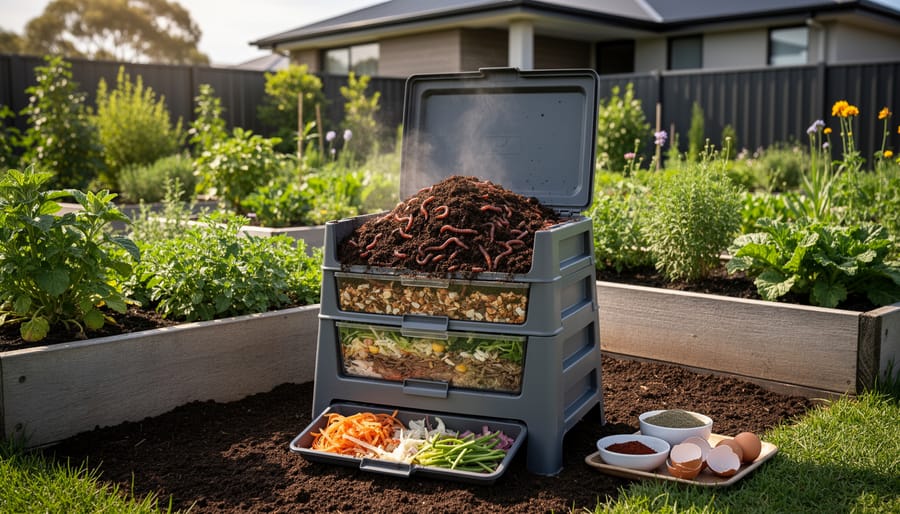
Australia’s diverse climates offer unique opportunities for home organic waste recycling, and there’s a perfect system for every situation. Traditional compost bins work brilliantly in backyards across temperate regions, though Queenslanders might need shadier spots to prevent their bins from drying out too quickly. Worm farms are champions for apartment dwellers and those in warmer climates, turning kitchen scraps into nutrient-rich castings while staying compact and odour-free. The key is keeping your wriggly workers happy with consistent moisture and shade during hot spells.
Bokashi systems are game-changers for meat-eaters and those without outdoor space, fermenting all food waste including dairy and meat in sealed buckets. This Japanese method suits every Australian climate and apartment living perfectly. Many Melburnians swear by combining bokashi with their council’s green bin collection.
Speaking of councils, don’t miss out on local support. Many Australian councils offer composting workshops and generous rebates on bins and worm farms, sometimes covering up to 50 percent of costs. Newcastle, Sydney, and Melbourne councils run particularly active programs. Check your local council website for specific composting methods workshops and rebate schemes. Community gardens also welcome food scraps if home composting isn’t feasible. Remember, choosing any system beats sending organics to landfill, so start where you are with what suits your situation.
Community and Council Organic Waste Programs
Across Australia, FOGO (Food Organics Garden Organics) programs are transforming how communities handle food scraps. These council-run initiatives provide households with a dedicated lime-green bin for food waste and garden clippings, which are then processed at commercial composting facilities into nutrient-rich soil amendments.
The availability and specifics of FOGO programs vary significantly by state and council. Victoria leads the charge, with most metropolitan councils offering comprehensive three-bin systems. New South Wales is rapidly expanding services across Sydney and regional areas, while Queensland councils are progressively rolling out programs following state government targets. South Australia, Western Australia, Tasmania, and the ACT have varying levels of implementation, with some regions offering full FOGO services while others remain in planning stages.
To find out if your council offers FOGO, visit their website or contact them directly. Most provide free bins and collection schedules, along with helpful guides on what can go in your organics bin. If your area doesn’t yet have FOGO, consider attending council meetings to voice support or explore community composting hubs and sharehouses.
For businesses generating larger volumes, commercial composting services operate in major cities, collecting food waste from restaurants, cafes, and offices. These facilities use accelerated composting processes, diverting tonnes of organic material from landfill while creating valuable products for agriculture and landscaping industries.
Building Your Personal Zero Food Waste System
Creating your personal zero food waste system doesn’t require a complete kitchen overhaul or perfect execution from day one. The most successful approach starts with small, manageable changes that gradually become part of your daily routine.
Begin by conducting a simple waste audit. For one week, notice what you’re throwing away. Is it wilted vegetables? Forgotten leftovers? Bread crusts? This awareness reveals your specific patterns and shows where to focus first. You might discover that most of your waste comes from just two or three categories, making your starting point crystal clear.
Next, tackle one area at a time. If vegetables are your main culprit, start there. Learn to store leafy greens in breathable containers with a paper towel to absorb moisture. Keep herbs fresh by treating them like flowers in a jar of water. Master these basics before moving to the next challenge.
The key is building systems that work with your lifestyle, not against it. If you’re time-poor during weekdays, dedicate Sunday afternoon to meal prep and vegetable processing. Chop and freeze overripe vegetables for future soups and stir-fries. Batch cook grains and legumes. These simple preparations prevent waste when the week gets hectic.
Common hurdles will arise, and that’s completely normal. When motivation dips, remember why you started. Connect with local food rescue groups or community gardens across Australia to reignite your enthusiasm. Many suburbs now have active food-sharing networks on social media where neighbours exchange surplus produce and share preservation tips.
Perfectionism is the enemy of progress in zero waste living. Some weeks you’ll nail it; others, not so much. Perhaps you’ll forget about that cucumber, or life gets overwhelming and takeaway becomes necessary. These moments don’t erase your previous efforts or future potential.
Start where you are, with what you have. Choose one strategy this week, whether it’s meal planning, better storage, or composting. Build from there. Every small action contributes to a larger shift, both in your household and across Australian communities working toward the same goal.
Here’s the truth: zero food waste doesn’t require perfection. It thrives on progress, one meal at a time, one community initiative at a time, one household joining the movement at a time.
Right now, across Australia, families are transforming vegetable scraps into thriving compost systems, cafes are partnering with food rescue organisations to redirect surplus meals, and neighbours are sharing excess produce through community fridges and pantries. These aren’t isolated actions—they’re part of a growing wave of Australians who’ve realised that small, consistent choices create remarkable collective impact.
You’ve already taken the first step by reading this far. The knowledge you’ve gained about the food waste hierarchy, prevention strategies, and rescue opportunities positions you perfectly to make a tangible difference. Whether it’s finally starting that meal plan, connecting with OzHarvest in your area, or simply freezing those bananas before they turn, every action matters.
This week, choose one strategy that resonates with you. Just one. Perhaps it’s conducting a fridge audit before your next grocery shop, or reaching out to a local community garden about their composting program. That single choice joins thousands of others happening simultaneously across the country, creating a ripple effect that extends far beyond your kitchen.
The zero waste community is here, it’s active, and it’s making genuine progress. Your contribution isn’t just welcome—it’s essential. Together, we’re proving that zero food waste isn’t an impossible dream; it’s an achievable reality we’re building right now.