
Understanding carbon credit pricing empowers Australian households and businesses to make informed decisions that genuinely impact climate action. Calculate your expected investment by researching current Australian Carbon Credit Unit (ACCU) prices, which typically range between $30-45 per tonne of CO2 equivalent, though prices fluctuate based on market demand and project quality. Compare verified project types—reforestation, renewable energy, or soil carbon—as each carries different price points reflecting their permanence, co-benefits, and verification standards. Request transparent pricing breakdowns from providers that show exactly how much reaches the actual environmental project versus administrative costs.
The Australian carbon market operates differently from international schemes, with local ACCUs often commanding premium prices due to rigorous government oversight and genuine additionality requirements. Understanding how carbon pricing works helps you recognize fair value and avoid inflated costs that don’t deliver proportional environmental benefits. Quality credits supporting Australian Indigenous land management or native ecosystem restoration may cost more initially but deliver lasting biodiversity gains alongside carbon sequestration.
Your purchasing power matters. Whether offsetting a single flight or achieving carbon neutrality for your entire business, knowing what drives pricing—verification standards, project location, co-benefits, and permanence guarantees—positions you to invest wisely. This guide demystifies carbon credit pricing, connects costs to real environmental outcomes, and equips you with practical strategies for selecting credits that align with your values and budget while supporting Australia’s transition to net zero.
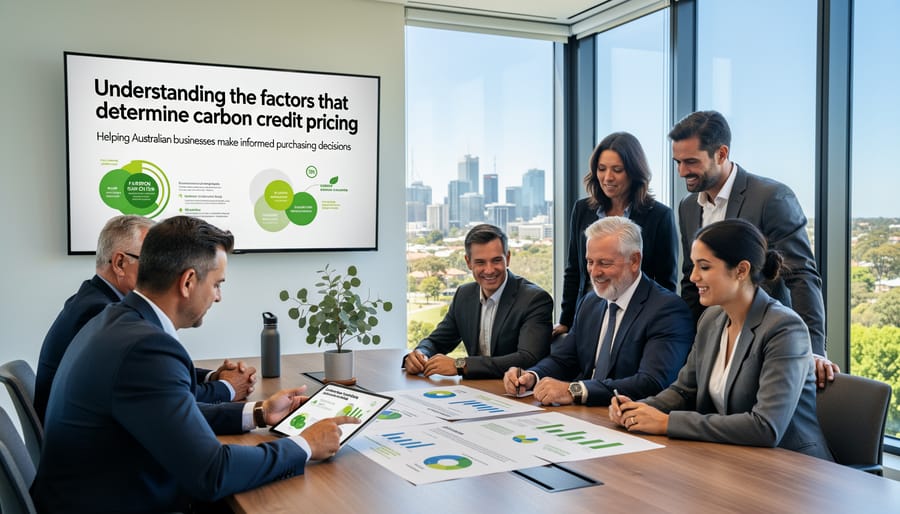
What Actually Determines a Carbon Credit’s Price
Compliance vs Voluntary Markets in Australia
In Australia, understanding the distinction between compliance and voluntary carbon markets is essential for making informed decisions about carbon credit investments.
The compliance market operates under the Australian Government’s Safeguard Mechanism, where large emitters must meet legislated emissions reduction targets. Here, Australian Carbon Credit Units (ACCUs) are the gold standard. These government-issued credits are generated through approved projects that reduce or sequester emissions, verified under the rigorous Emissions Reduction Fund framework. ACCUs typically trade between $30 and $45 per tonne of CO2-equivalent, though prices fluctuate based on demand from companies with compliance obligations. These credits carry legal weight and are recognized across various carbon pricing mechanisms.
Voluntary markets offer more flexibility but greater price variation. International credits like Verified Carbon Standards (VCS) or Gold Standard certificates often cost significantly less, sometimes under $10 per tonne, but vary wildly in quality and environmental integrity. Australian businesses and individuals purchasing for voluntary offsetting can choose ACCUs for their robust Australian standards or international credits for potentially lower costs.
For everyday Australians looking to offset personal emissions, voluntary international credits might seem attractive due to lower prices. However, choosing ACCUs supports local environmental projects while ensuring genuine emissions reductions under Australian conditions. Businesses with compliance obligations have no choice but ACCUs, while those voluntarily offsetting should weigh price against credibility and local impact. Community-minded buyers increasingly recognize that paying more for quality ACCUs directly supports Australian regeneration projects, from Indigenous fire management to native reforestation initiatives across our unique landscapes.
Quality and Verification Standards
Not all carbon credits are created equal, and understanding quality standards is essential when you’re investing in climate action. Just as you’d check the certification on organic produce at your local farmers market, carbon credits come with their own verification stamps that significantly influence their price and environmental impact.
The main certification schemes operating in Australia include the Gold Standard, Verra (which manages the Verified Carbon Standard), and our homegrown Climate Active certification program. These organisations act as watchdogs, ensuring projects deliver genuine emissions reductions. Gold Standard credits, for instance, often command premium prices because they incorporate strict environmental and social safeguards, particularly supporting community development in project areas.
Two concepts fundamentally determine a credit’s value: additionality and permanence. Additionality means the emissions reduction wouldn’t have happened without carbon credit funding. Think of it this way: planting trees in an area already scheduled for reforestation doesn’t count, but establishing new forest corridors that connect isolated wildlife populations does. This principle explains why some credits cost $5 while others fetch $50 or more.
Permanence addresses whether the carbon stays locked away long-term. A tree plantation risks releasing stored carbon through bushfires or disease, which is why nature-based credits typically cost less than technological solutions like direct air capture. Australian buyers increasingly seek credits with robust permanence guarantees, particularly after our recent fire seasons highlighted these vulnerabilities. When comparing prices, remember that higher-certified credits reflect more rigorous verification, stronger community benefits, and greater confidence in lasting climate impact.
The Real Range: What You’ll Pay in Australia Right Now
Breaking Down Project Types and Their Price Tags
Not all carbon credits carry the same price tag, and understanding these differences helps you make informed choices that align with your values and budget. In the Australian market, prices vary dramatically based on project type, quality, and verification standards.
Reforestation and afforestation projects typically range from $15 to $40 per tonne of CO2. These nature-based solutions resonate strongly with Australian communities, particularly projects restoring native bushland or creating wildlife corridors. The Great Eastern Ranges Initiative, connecting habitats from Victoria to Queensland, offers credits around $25-30 per tonne while delivering biodiversity co-benefits that matter to local ecosystems.
Renewable energy projects, including wind and solar farms across regional Australia, generally sit at the lower end of the spectrum at $8 to $20 per tonne. While more affordable, these projects face scrutiny around additionality—whether they would have happened anyway without carbon credit revenue.
Soil carbon sequestration projects, increasingly popular with Australian farmers from the Riverina to the Darling Downs, command prices between $20 and $35 per tonne. These credits support regenerative agriculture practices that improve soil health, increase drought resilience, and strengthen farming communities facing climate uncertainty.
Blue carbon projects protecting coastal mangroves and seagrass meadows represent the premium end, often exceeding $40 per tonne. Their scarcity and exceptional co-benefits—protecting coastlines, supporting fisheries, and preserving critical habitats—justify higher prices.
The price variation reflects permanence guarantees, verification rigor, co-benefits delivered, and project location. Australian projects typically command premiums over international credits because buyers value local environmental outcomes and supporting domestic communities working towards our collective climate goals.

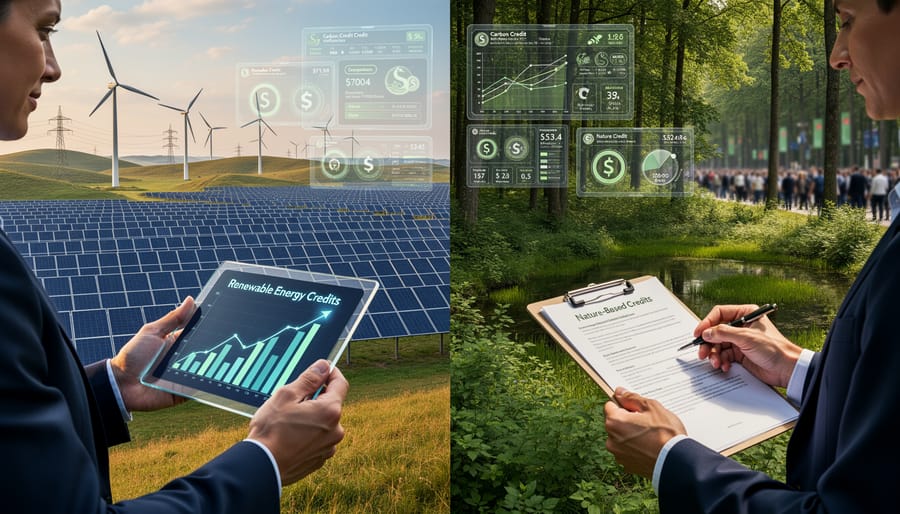
How Carbon Pricing Drives Actual Emission Reductions
When Higher Prices Mean Better Outcomes
You’ve probably heard the saying “you get what you pay for,” and it rings particularly true in the carbon credit market. While budget credits might seem appealing, premium-priced credits often deliver substantially greater environmental and social benefits that justify their higher cost.
In Australia, projects commanding higher prices typically incorporate meaningful co-benefits beyond carbon reduction. Take the Yarra Yarra Biodiversity Corridor in Western Australia, for example. This project doesn’t just sequester carbon through native tree planting – it’s actively restoring habitat for endangered species while providing employment opportunities for local communities. These additional benefits explain why credits from such projects trade at a premium compared to basic offset schemes.
Premium credits often come from projects with rigorous verification standards and transparent monitoring systems. Australian Indigenous-led fire management initiatives in Arnhem Land, for instance, command higher prices because they combine traditional ecological knowledge with cutting-edge carbon accounting, while supporting Indigenous ranger programs and protecting sacred Country.
The community outcomes matter too. Projects that invest in regional employment, skill development, and local economic growth create lasting positive impacts that extend far beyond tonnes of CO2 reduced. When you’re evaluating carbon credits, consider what those extra dollars support – whether it’s protecting endangered koala habitat, supporting First Nations communities, or restoring degraded farmland to productive ecosystems.
For Australian businesses and individuals committed to genuine climate action, paying more for credits that deliver measurable environmental restoration and community benefits represents an investment in our collective future, not just a compliance exercise.
The Safeguard Mechanism’s Impact on Pricing
Australia’s strengthened Safeguard Mechanism, reformed in July 2023, is reshaping the carbon credit landscape in ways that directly impact pricing. This policy shift has created a more robust market dynamic that affects both credit suppliers and purchasers across the country.
The Mechanism now requires Australia’s 215 largest emitters to reduce their emissions by 4.9% annually, declining to net zero by 2030. When facilities exceed their baseline emissions, they must either reduce emissions or purchase Australian Carbon Credit Units (ACCUs) to offset the difference. This compliance requirement has injected significant demand into the market, pushing prices upward from historical lows of around fifteen dollars per credit to current ranges between thirty-five and forty-five dollars.
For businesses operating above the baseline threshold of 100,000 tonnes of carbon dioxide equivalent annually, this translates to tangible financial implications. Mining operations, manufacturing facilities, and large energy users now face a choice: invest in emissions reduction technology or factor carbon credit costs into their operational budgets. Unlike a carbon tax, the Mechanism creates market-driven pricing while maintaining regulatory compliance.
This increased demand benefits local carbon farming projects and renewable energy initiatives, as they can command higher prices for their credits. Community-based projects in regional Australia are particularly well-positioned, with Indigenous land management programs and regenerative agriculture ventures experiencing heightened interest from compliance buyers seeking reliable credit sources. The strengthened Mechanism essentially creates a more predictable market environment, encouraging long-term investment in emissions reduction while supporting Australia’s climate commitments.
Making Smart Choices: Buying Credits That Matter
Red Flags and Green Lights
Navigating the carbon credit market requires a discerning eye, particularly when your investment aims to create genuine environmental impact. Let’s explore the warning signs and positive indicators that can guide your decisions.
Red flags worth watching include projects with suspiciously low prices—if credits cost significantly less than the Australian market average of $25-40 per tonne, question why. Credits lacking third-party verification from recognised bodies like Gold Standard or Verra should raise immediate concerns. Be wary of projects that can’t provide transparent documentation about their methodology or refuse to share monitoring reports. Phantom additionality is another serious issue—if a project would have happened anyway without carbon credit funding, it’s not creating additional environmental benefit.
In Australia, some older tree-planting projects have faced criticism for claiming credits on vegetation that was already protected or would have regenerated naturally. Projects with no community consultation or those displacing local populations represent another major warning sign.
Green lights include comprehensive documentation showing baseline measurements, clear monitoring protocols, and regular independent audits. Legitimate projects demonstrate additionality—proving their activities wouldn’t occur without carbon credit revenue. Look for community co-benefits beyond carbon sequestration, such as biodiversity improvements or local employment.
Strong Australian examples include the Yarra Yarra Biodiversity Corridor in Western Australia, which combines carbon sequestration with habitat restoration, and Indigenous-led savanna burning projects in northern Australia that maintain cultural practices while reducing emissions. These projects openly share data, welcome scrutiny, and demonstrate measurable, verifiable impact that extends beyond mere carbon accounting.
Australian Businesses Leading the Way
Australian companies are proving that carbon credits aren’t just a compliance exercise—they’re a practical tool for real climate action, and the stories emerging from across the country are genuinely inspiring.
Take Melbourne-based café chain Glee Coffee, which purchases around 50 tonnes worth of carbon credits annually at approximately $25-30 per tonne. Rather than selecting the cheapest option, they’ve partnered with a Queensland-based savanna fire management project run by Indigenous rangers. Their customers can scan a QR code at the counter to see exactly where their offset dollars go, creating transparency that’s strengthened customer loyalty and attracted media attention worth far more than the $1,500 annual investment.
In the corporate space, Atlassian made headlines by committing to offset all emissions since the company’s founding in 2002. They’re paying premium prices—around $35-45 per credit—for Australian reforestation projects, deliberately choosing higher-priced domestic credits over cheaper international alternatives. This decision reflects their integration of carbon credits into broader sustainability strategies that prioritize local environmental and social benefits.
Community co-operatives are also emerging as powerful players. The Byron Bay Carbon Co-op pools purchasing power from 23 local businesses, negotiating bulk rates of around $22 per tonne while supporting nearby wetland restoration projects. Members report that the collaborative approach has created unexpected benefits—shared learning, cross-promotion opportunities, and a strengthened sense of regional environmental leadership.
Wine producers in South Australia’s Barossa Valley have formed a similar alliance, collectively purchasing credits from mallee tree plantings that also provide biodiversity corridors and erosion control. They’re paying $28-32 per tonne but gaining marketing advantages in export markets where carbon neutrality increasingly influences purchasing decisions.
What unites these examples is intentionality. These businesses aren’t simply ticking boxes—they’re choosing projects with genuine co-benefits, communicating their choices transparently, and viewing carbon credits as one element of comprehensive climate action that includes emissions reduction, renewable energy adoption, and community engagement.

Understanding carbon credit pricing is about more than just finding the cheapest option—it’s about recognising the true value of climate action and ensuring your investment creates genuine environmental impact. As you navigate this evolving landscape, remember that reduction must always come before offsetting. The most effective carbon strategy starts within your own community, business, or household by cutting emissions first, then using quality carbon credits to address what remains.
The Australian carbon market is rapidly expanding, creating unprecedented opportunities for everyday citizens and businesses to participate meaningfully in climate solutions. Whether you’re supporting Indigenous-led land management projects in Queensland, backing regenerative agriculture initiatives in regional Victoria, or investing in renewable energy across our sunburnt country, your choices matter.
This isn’t a journey you need to take alone. Connect with local environmental groups, engage with community carbon projects, and share your experiences with neighbours and colleagues. As carbon pricing mechanisms become more sophisticated and transparent, informed decision-making becomes easier—but it requires staying curious and asking questions.
The path forward is clear: understand the difference between cost and value, prioritise emissions reduction, choose verified high-quality credits, and engage with your community. Together, we’re not just pricing carbon—we’re building a sustainable future for all Australians.