
Every Australian household flushes approximately 50,000 litres down the toilet annually, but a dual-flush system can halve that figure overnight. As water restrictions tighten across our states and utility bills climb, the question isn’t whether to act on water conservation—it’s where to start making the biggest impact with the least effort.
The reality facing Australian communities is stark yet solvable. Our continent is the driest inhabited landmass on Earth, and recent drought patterns have pushed water security to the forefront of household planning. Yet the average Australian uses 340 litres daily, well above the global average, with significant portions lost to inefficient fixtures, outdoor watering, and ingrained habits developed during wetter decades.
This represents both a challenge and an opportunity. Small residential changes, multiplied across neighborhoods, create watershed moments for local water supplies. A leaking tap wastes 20,000 litres yearly. An unregulated garden sprinkler can consume 1,000 litres per hour during summer peaks. These aren’t abstract statistics—they’re dollars disappearing from family budgets and strain on community resources that affects everyone from Perth to Brisbane.
The good news? Water conservation doesn’t require lifestyle sacrifice or prohibitive investment. Strategic upgrades like low-flow showerheads pay for themselves within months through reduced bills. Behavioral shifts such as shorter showers and full-load washing deliver immediate savings without spending a cent. Meanwhile, state and territory governments now offer rebates covering much of the cost for water-efficient appliances and rainwater systems, making sustainable choices more accessible than ever.
This guide walks you through proven, Australia-specific solutions spanning indoor efficiency upgrades, drought-smart outdoor practices, and behavioral changes that stick—transforming your home into a model of water stewardship while protecting your budget and our shared future.
Why Australian Homes Need Water Conservation More Than Ever
The Real Cost of Water Waste in Your Home
Every time you turn on a tap, there’s more at stake than the water flowing out. Across Australian households, the average family uses around 900 litres of water daily, with significant variations between states. In Perth, where water scarcity hits hardest, households average slightly lower consumption, while Sydney residents typically use more. These patterns translate directly to your hip pocket, with quarterly bills ranging from approximately $200 in Adelaide to over $350 in Melbourne, depending on usage and supply charges.
But here’s what doesn’t appear on your bill: the true environmental cost. Every litre wasted represents energy spent pumping, treating, and delivering water to your home. In drought-prone regions across Queensland and New South Wales, this becomes even more critical as we draw from already stressed river systems and aquifers. The Murray-Darling Basin, supporting millions of Australians and vital agricultural communities, continues facing unprecedented pressure.
Consider this from your neighbourhood’s perspective: a single dripping tap wastes up to 20,000 litres annually. Multiply that across your street, and you’re looking at water that could sustain entire communities. Indoor water usage, particularly in bathrooms accounting for roughly 40 percent of household consumption, presents the greatest opportunity for meaningful change. When we understand these patterns, we’re better positioned to make impactful decisions. The encouraging news? Simple conservation measures can reduce your consumption by 30 percent or more, benefiting both your wallet and our shared water resources without compromising your lifestyle.
Indoor Water Conservation Solutions That Actually Work
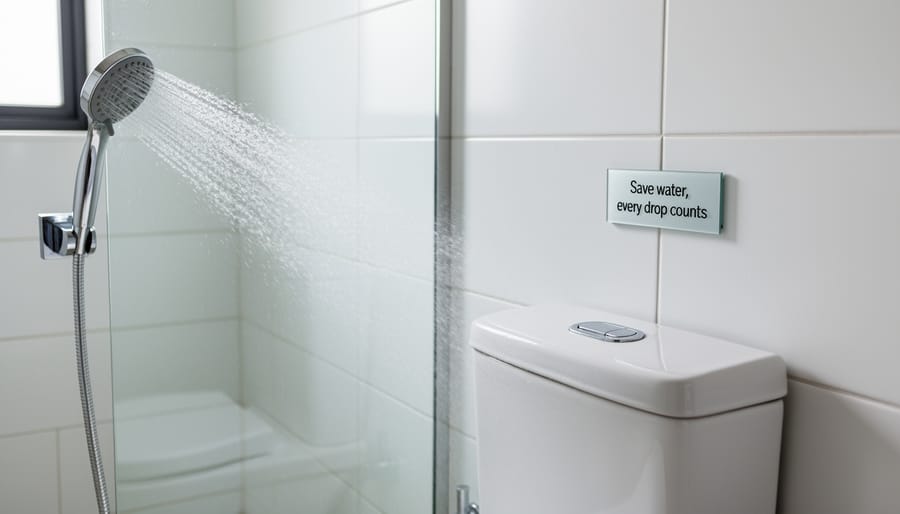
Bathroom Upgrades That Pay for Themselves
Your bathroom holds incredible potential for water savings without sacrificing comfort. The beauty of modern water-efficient fixtures is that they often pay for themselves within two to three years through reduced water and energy bills, making them genuine investments rather than expenses.
Let’s start with low-flow showerheads, which are absolute champions of water conservation. A standard Australian showerhead flows at around 15-20 litres per minute, while a three-star WELS-rated low-flow model uses just 9 litres per minute. For a family of four taking eight-minute showers daily, that translates to roughly 130,000 litres saved annually. At typical water and sewerage rates across Australian cities, you’re looking at savings between 200 to 350 dollars yearly. Brands like Methven’s Satinjet or Caroma’s Care models offer excellent water efficiency while maintaining that satisfying shower experience Australians love. Installation takes just minutes with a simple wrench and some plumber’s tape.
Dual-flush toilets have become the Australian standard for good reason. Older single-flush models use 11 litres per flush, while modern dual-flush systems use just 3 litres for half-flush and 4.5 litres for full-flush. With the average person flushing five times daily, a household of four could save approximately 50,000 litres yearly, cutting around 100 to 180 dollars from water bills. Caroma pioneered this technology right here in Australia, and their models remain reliable choices.
Don’t overlook tap aerators, the humble heroes costing just 10 to 20 dollars each. These tiny devices mix air into your water stream, reducing flow from 15-18 litres per minute to around 6 litres without noticeably affecting pressure. Combined with mindful habits like turning off taps while brushing teeth or soaping dishes, these simple changes create surprisingly substantial savings that benefit both your household budget and our precious water resources.
Kitchen and Laundry Water Wins
Your kitchen and laundry account for approximately 30% of household water use, making them prime targets for conservation wins. The good news? Modern efficient appliances and fixtures combined with smarter habits can slash this consumption dramatically.
When shopping for dishwashers and washing machines, look for the Water Efficiency Labelling and Standards (WELS) scheme ratings. These star ratings run from one to six stars, with more stars indicating better water efficiency. A 4-star washing machine uses around 50 litres per wash compared to 150 litres for older models, translating to savings of over 30,000 litres annually for an average household. The WELS label also shows litres per wash cycle, helping you compare models directly.
For existing appliances, maximise efficiency by running only full loads. Your dishwasher uses the same amount of water whether half-full or completely loaded, so waiting until it’s full makes every drop count. Many Australians are surprised to learn that modern dishwashers actually use less water than handwashing, typically 15 litres versus 50 litres for a full sink wash.
Embrace cold water washing for your laundry. Australian detergents are formulated to work brilliantly in cold water, and making the switch saves energy while being gentler on fabrics. Around 90% of washing machine energy goes to heating water, so this simple change delivers environmental and financial wins.
At the kitchen sink, keep a jug handy to catch running water while waiting for it to heat up. This captured water can hydrate your plants or fill pet bowls. Install a simple aerator on your tap to reduce flow without sacrificing pressure, cutting usage by up to 50% for just a few dollars.
Finding and Fixing Leaks Before They Drain Your Wallet
Hidden leaks are silent budget drainers, with the average Australian household losing up to 20,000 litres annually to drips and faulty fixtures. That’s equivalent to the water used in over 100 loads of washing, literally disappearing down the drain.
Start your leak detection by checking your water meter before bedtime when no water is being used. Take a reading, ensure no taps or appliances run overnight, then check again in the morning. Any change indicates a leak somewhere in your system. Listen for the telltale hiss of running toilets, inspect under sinks for dampness, and watch for unexplained wet patches in your garden or on walls.
Common culprits include worn tap washers, faulty toilet flappers, and deteriorating pipe connections. A dripping tap losing one drop per second wastes approximately 15 litres daily. Multiply that by several leaky fixtures, and you’re looking at significant water loss and inflated bills.
Many minor leaks are DIY-friendly. Replacing tap washers, tightening pipe connections, and adjusting toilet mechanisms are straightforward tasks for most homeowners familiar with sustainable plumbing practices. However, Australian plumbing standards under AS/NZS 3500 require licensed plumbers for work involving water supply alterations or repairs affecting structural plumbing.
Call a licensed professional when you encounter hidden pipe leaks, hot water system issues, or any plumbing work requiring compliance certification. While the upfront cost might seem steep, professional repairs prevent water damage that could cost thousands down the track, while ensuring your repairs meet Australian building codes.
Smart Technology for Effortless Water Monitoring
Managing your water consumption has never been easier, thanks to smart technology that does the monitoring for you. Across Australian cities, smart water meters are becoming increasingly available through local councils, providing real-time data on household usage directly to your smartphone. Sydney Water, Yarra Valley Water, and SA Water are among the providers rolling out these innovative meters that alert you to unusual spikes in consumption—often the first sign of hidden leaks that could be costing you hundreds annually.
Water monitoring apps like Dropcountr and Flume connect seamlessly with these smart meters, offering detailed breakdowns of when and where you’re using water most. Many Australian households are also integrating water monitoring into broader home automation systems, creating a connected approach where smart irrigation controllers communicate with weather stations and soil moisture sensors. The beauty of these systems is their ability to make conservation decisions on your behalf, adjusting watering schedules during rainfall or shutting off supply when leaks are detected. By embracing these technologies, you’re not just reducing bills—you’re joining a growing community of Australians making water stewardship effortless and effective.
Outdoor Water Conservation for Australian Gardens
Native Plants and Drought-Tolerant Landscaping
Transforming your garden with native plants isn’t just about water savings—it’s about creating a thriving ecosystem that practically looks after itself. Australian native species have spent millennia adapting to our challenging climate, developing deep root systems and water-storing capabilities that make them champions of drought tolerance.
Consider the success story of the Thornbury Community Garden in Melbourne, where residents replaced thirsty exotic lawns with native grasses like Lomandra and Dianella. Their water usage dropped by 60%, and they’ve noticed more native birds and beneficial insects returning to the neighbourhood.
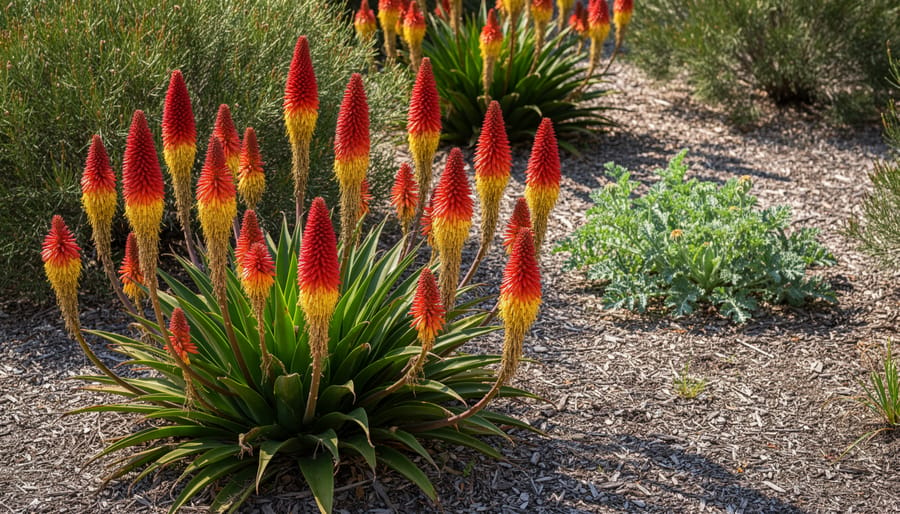
Xeriscaping principles work beautifully with Australian conditions. Start by grouping plants with similar water needs—place your water-wise kangaroo paw and bottlebrush together, while positioning any slightly thirstier natives near downpipes. Add a generous layer of mulch (around 75mm) to lock in moisture and reduce evaporation, which can account for up to 70% of water loss in summer.
For tropical Queensland, try the resilient native ginger and lomandra. In temperate regions spanning Melbourne to Perth, grevilleas and westringia thrive with minimal water. South Australian and Victorian gardeners have excellent results with eremophila and native grasses.
The beauty of natives extends beyond water conservation—they require minimal fertiliser, resist local pests naturally, and create habitat for wildlife. Local councils often run native plant giveaways and workshops, making it easier and more affordable to begin your water-wise transformation. By choosing plants that belong here, you’re not just conserving water; you’re nurturing the landscape our native species call home.
Smart Irrigation and Watering Practices
Australian gardens account for nearly 40% of household water use, but here’s the encouraging news: smart irrigation can slash that consumption by up to 50% while keeping your garden thriving.
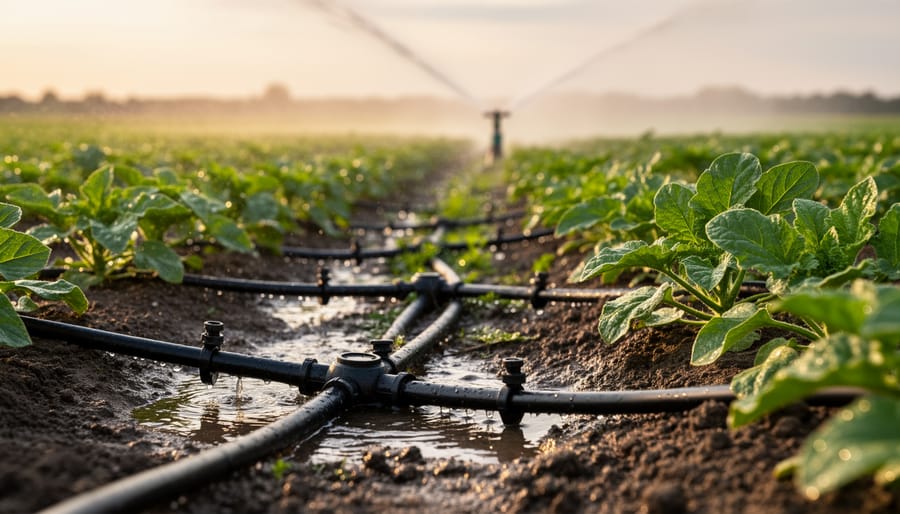
Drip irrigation systems are game-changers for water-wise gardening. Unlike sprinklers that lose water to evaporation and overspray, drip systems deliver water directly to plant roots where it’s needed most. A basic drip setup costs around $100-300 for a typical garden bed and pays for itself within two years through reduced water bills. Many councils across New South Wales, Victoria, and South Australia offer rebates on drip irrigation installations, making the investment even more attractive.
Smart irrigation controllers take efficiency further by adjusting watering schedules based on weather forecasts, soil moisture, and plant needs. These devices connect to your smartphone, letting you monitor and control watering remotely. When paired with soil moisture sensors, they prevent overwatering by only activating when plants genuinely need hydration.
Timing matters enormously in Australia’s climate. Water between 4am and 8am to minimize evaporation during our hot days—you’ll use up to 30% less water than afternoon watering. Evening watering invites fungal diseases in humid regions.
Mulching is perhaps the simplest yet most effective practice. A 7-10cm layer of organic mulch around plants reduces evaporation by up to 70%, suppresses weeds that compete for water, and enriches soil as it breaks down. Local councils often provide free mulch from green waste programs—a perfect example of community resources supporting sustainable gardening.
Greywater and Rainwater Systems
Capturing water before it goes down the drain or into stormwater systems makes tremendous sense for Australian households. Both rainwater harvesting and greywater reuse offer practical pathways to slash your mains water consumption by up to 50%.
Rainwater tanks range from compact 2,000-litre systems suited to inner-city properties through to expansive 20,000-litre installations for rural homes. Regulations vary significantly across states—NSW requires tanks for new homes in some areas, while Queensland mandates plumbed rainwater systems for toilet flushing and laundry in new builds. Victoria offers more flexibility but still has specific guidelines around overflow management. Installation costs typically range from $2,000 for basic systems to $8,000+ for sophisticated pumped setups with multiple connection points.
Understanding rainwater vs greywater systems helps determine what suits your property best. Greywater systems redirect water from showers, baths, and washing machines to gardens, saving 30-50% of household water. Treatment systems range from simple diversion devices (around $300) to advanced systems with filtration and storage ($3,000-$8,000). Most states permit basic greywater reuse without approval, though treated systems often require plumbing permits.
Financial support sweetens these investments considerably. Sydney Water offers rebates up to $400 for rainwater systems, while some Victorian councils provide up to $1,000. South Australian residents can access grants through local water authorities. Check your council and water provider websites regularly, as rebates change with seasonal demand. Many Australians recoup their investment within 3-5 years through reduced bills.
Making Water Conservation a Family Habit
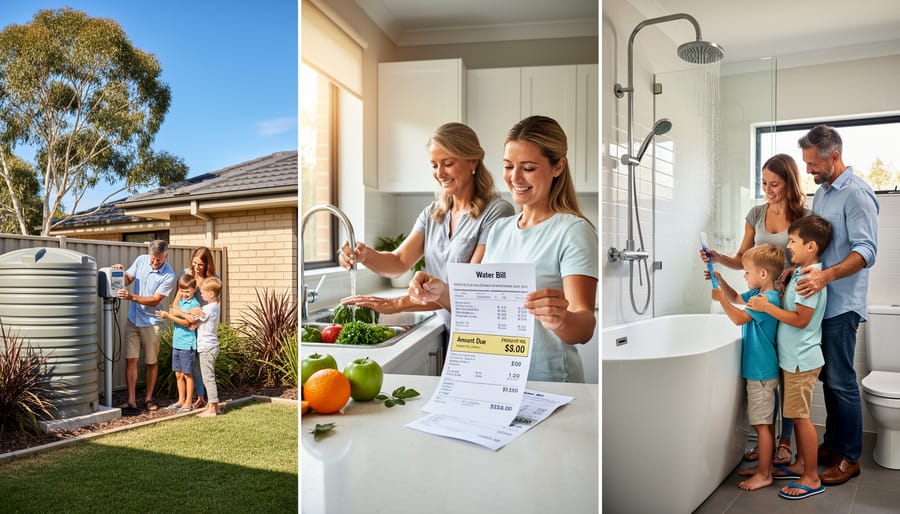
Transforming water conservation from a temporary effort into lasting family practice requires more than good intentions—it needs strategy, engagement, and celebration. The key is making water-saving habits feel rewarding rather than restrictive.
Start by involving children in age-appropriate ways. Younger kids can become “shower timer champions,” using a waterproof timer or singing their favorite song to keep showers under four minutes. Older children might track household water meter readings weekly, graphing progress and calculating the environmental impact of your family’s conservation efforts. This transforms abstract concepts into tangible achievements they can own.
Visual tracking systems work remarkably well for maintaining momentum. Create a simple chart where family members add stickers or marks for completed water-saving actions—turning off taps while brushing teeth, collecting shower warm-up water for plants, or running only full dishwasher loads. Monthly rewards for reaching collective goals reinforce positive behaviors without creating pressure.
Community challenges amplify motivation through friendly competition and shared purpose. Melbourne’s “Waterwise Household Challenge” saw participating suburbs reduce consumption by 15 percent over three months, with families earning local business vouchers for verified savings. In Brisbane’s Paddington neighborhood, street-level competitions encouraged residents to compare meter readings, creating supportive networks where neighbors shared tips and celebrated milestones together.
The psychological principle of “social norming” proves powerful here. When families see their peers embracing conservation, it normalizes the behavior and removes the sense of sacrifice. Consider starting a neighborhood water-saving group, sharing progress through community noticeboards or social media groups.
Remember, slip-ups happen. Rather than abandoning efforts after forgetting to turn off a tap, treat it as data. What triggered the oversight? How can you adjust systems to prevent recurrence? This growth mindset approach builds resilience and ensures conservation becomes woven into your family’s identity.
Financial Support and Incentives Available to You
Making the switch to water-efficient systems doesn’t have to break the bank. Right across Australia, governments and utility providers are backing residents who choose conservation with tangible financial support.
Most state and territory governments offer rebates for water-saving installations. In Victoria, for instance, households can access rebates through the Victorian Energy Upgrades program for water-efficient showerheads and tap aerators. New South Wales residents might qualify for council-specific rebates on rainwater tanks, with some councils offering up to $500 back on your investment. Queensland’s Urban Water Security Program has supported numerous community water-saving initiatives, while South Australia provides rebates through SA Water for greywater systems and rainwater harvesting installations.
Your local water utility is often your best first port of call. Many offer free water efficiency audits, helping you identify where you’re using the most water and where simple changes could save you hundreds annually. Sydney Water, for example, provides free water-saving devices to residential customers, while Yarra Valley Water in Melbourne runs a WaterChat service offering personalised conservation advice.
To access these programs, start by visiting your state’s environment department website and your local water provider’s rebate page. Most applications are straightforward, requiring proof of purchase and installation certification. Some councils also run seasonal promotions with enhanced rebates, particularly before summer when water demand peaks.
Don’t let upfront costs discourage you. These financial incentives are designed to make sustainable choices accessible to every Australian household. The combination of rebates and ongoing bill savings means many water-saving upgrades pay for themselves within two to three years, while you’re contributing to our collective water security from day one.
The time to act on water conservation isn’t tomorrow—it’s today. Every Australian household holds the power to make a meaningful difference in addressing our nation’s water challenges, and the beauty is that starting doesn’t require perfection, just commitment to one small change.
Throughout this guide, we’ve explored solutions ranging from simple behavioral shifts to strategic upgrades. The most impactful actions you can take right now include fixing those dripping taps that waste up to 20,000 litres annually, reducing your shower time by just two minutes, and transitioning your garden to drought-tolerant native plants. These aren’t sacrifices—they’re smart choices that reduce your bills while protecting the precious water resources our communities depend on.
Remember, residential water conservation connects directly to broader sustainability goals. As you implement these water-saving strategies, you’re contributing to the same mindful approach that creates a carbon-neutral home and a healthier planet for future generations.
You’re not alone in this journey. Across Australia, thousands of households are joining the water conservation movement, sharing tips with neighbors, and proving that collective action creates lasting change. Your local water authority offers rebates and support, and community groups are ready to welcome your participation.
Start today with one simple change. Check your taps, time your shower, or research native plants for your garden. That single step will spark momentum toward a more sustainable, water-wise home and inspire others to follow your lead.