
Every time rain falls on your driveway or patio, thousands of litres of precious water rush straight into stormwater drains, carrying pollutants, heating up our waterways, and wasting an opportunity to nourish your garden. Traditional concrete and asphalt surfaces create impermeable barriers that contribute to urban flooding, strain our drainage systems, and disrupt natural water cycles—problems that become increasingly critical as Australian cities face more intense weather events.
Eco-friendly pavement offers a brilliant solution that transforms how your outdoor spaces interact with the environment. Unlike conventional paving, permeable alternatives allow rainwater to filter naturally through the surface, replenishing groundwater, reducing runoff by up to 90%, and creating healthier soil conditions for surrounding plants. These surfaces work hand-in-hand with sustainable water management systems like rain gardens, creating integrated landscapes that capture and clean stormwater right where it falls.
The beauty of modern permeable paving is that it’s genuinely achievable for DIY enthusiasts. Whether you’re laying permeable pavers in your backyard, creating gravel pathways, or installing grid systems filled with groundcover plants, these projects don’t require specialized equipment or professional landscapers. You’ll discover options suited to every budget and skill level, from simple gravel installations completed in a weekend to more structured permeable paver systems that rival traditional paving in durability and aesthetics.
This guide walks you through everything Australian homeowners need to know about choosing, installing, and maintaining eco-friendly pavement that benefits both your property and our shared environment.
The Problem with Traditional Paving in Australian Climates
Most Australian neighbourhoods share a common sight: driveways, pathways, and patios covered in traditional concrete or asphalt. While these surfaces might seem practical, they’re quietly creating significant environmental challenges that affect us all, especially during our increasingly unpredictable weather patterns.
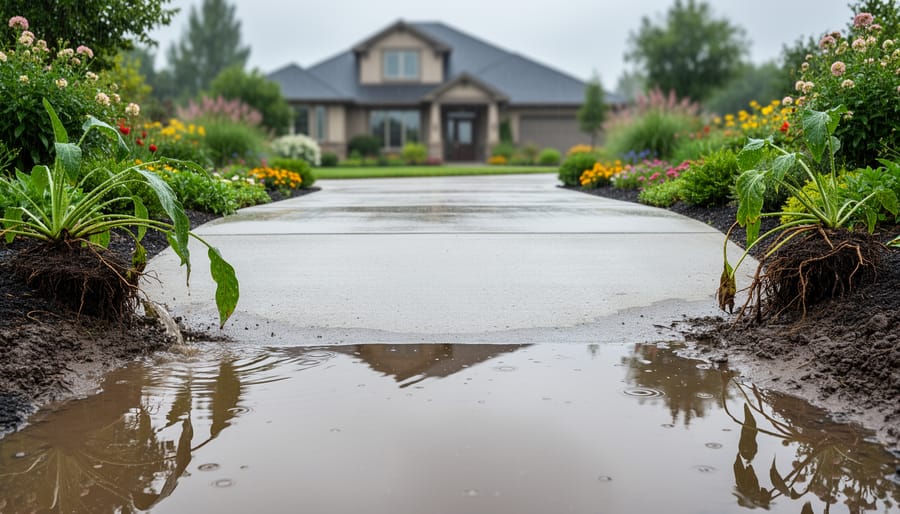
When heavy rainfall arrives, as it often does in dramatic bursts across our continent, impermeable surfaces create a cascade of problems. Instead of water soaking naturally into the ground, it rushes across sealed surfaces, overwhelming stormwater drains and contributing to localised flooding. Many Australian communities have witnessed this firsthand during La Niña events, where established drainage systems simply can’t cope with the volume of runoff from our paved suburbs.
The impact doesn’t stop at flooding. Traditional paving actively prevents groundwater recharge, a critical process for maintaining our underground water reserves. This becomes particularly concerning when you consider Australia’s notorious drought cycles. We’re essentially blocking nature’s water storage system at a time when we need it most. The irony is stark: during droughts, we implement water restrictions while our sealed surfaces continue preventing rainfall from replenishing groundwater supplies.
Then there’s the heat factor. Concrete and asphalt absorb and radiate heat, intensifying the urban heat island effect that makes our cities uncomfortably hot during summer months. Walk barefoot across a concrete driveway on a 35-degree day, and you’ll understand the problem immediately. This heat absorption doesn’t just affect comfort; it increases energy consumption as households crank up air conditioning to compensate.
The good news? Recognising these problems is the first step toward practical solutions that work with our Australian environment rather than against it.
What Makes Pavement ‘Eco-Friendly’?
How Permeable Paving Works
Think of permeable paving as nature’s drainage system, cleverly engineered beneath your feet. Unlike traditional concrete that sends stormwater rushing into drains, permeable paving welcomes rain through its surface layer of specially designed pavers, gravel, or porous materials.
Here’s where the magic happens: beneath those pavers sits a carefully constructed layered system doing the real work. The top layer allows water to pass through gaps or porous surfaces. Just below, you’ll find a bedding layer of fine aggregate that helps distribute the water evenly. The heart of the system is a generous storage layer of crushed rock or gravel, typically 200-400mm deep depending on your local rainfall and soil conditions.
This storage layer acts like a temporary reservoir, giving rainwater time to gradually infiltrate into the soil beneath, replenishing groundwater naturally. In areas with clay soil common across many Australian suburbs, or where complete infiltration isn’t possible, a perforated pipe system can be installed within the gravel layer to direct excess water to garden beds, your rain garden, or council stormwater systems.
The beauty of this system is its simplicity. You’re essentially creating a mini water treatment plant right in your driveway or pathway, filtering pollutants through natural processes while preventing the flooding and erosion that plague our urban waterways.
The Perfect Partnership: Permeable Paving and Rain Gardens
Imagine your permeable paving and rain garden working together like teammates in a cricket match – each playing their part to achieve something greater. This partnership creates what landscape designers call a “treatment train,” where stormwater gets cleaner at each stage of its journey.
Here’s how it works in your backyard: As rain falls on your permeable pavers, the water filters through, removing oils, sediments, and pollutants trapped between the pavers and in the base layers. This pre-filtered water then flows into your strategically placed rain garden, where native plants and soil microbes provide a second round of purification. The plants’ roots create channels that further improve infiltration while absorbing excess nutrients like nitrogen and phosphorus – common pollutants in Australian urban runoff.
Many Australian suburbs, from Brisbane to Melbourne, are seeing residents embrace this double-act approach. One Sydney community group recently transformed a bare concrete laneway into a shared space featuring permeable pavers directing water to three rain gardens planted with native grasses and lomandra. The result? Zero runoff during typical storms and a thriving habitat for local insects and birds.
This partnership doesn’t just clean water – it creates cooling green spaces that combat urban heat while requiring minimal maintenance once established.
Types of Eco-Friendly Pavement for DIY Projects
Permeable Pavers
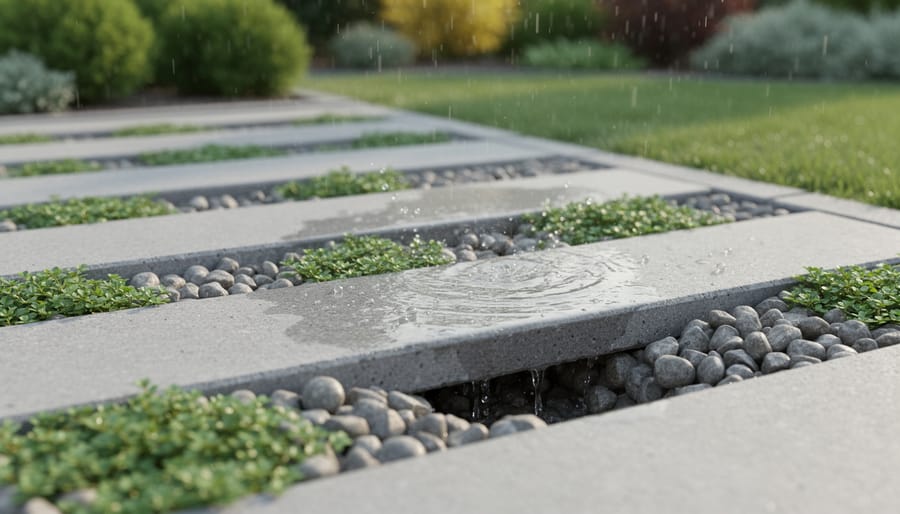
Permeable pavers offer an elegant solution for Aussie yards, combining aesthetic appeal with environmental responsibility. These interlocking concrete or clay pavers feature intentional gaps that allow rainwater to filter through to the soil below, rather than rushing into stormwater drains. It’s like giving your driveway or patio a built-in rain garden system.
The magic happens in the spacing. These pavers create channels filled with sand or gravel, letting water percolate naturally while preventing erosion and filtering pollutants. For Australian conditions, they’re remarkably versatile, performing well across climates from tropical Darwin to temperate Melbourne, though proper base preparation matters more in clay-heavy soils.
Several Australian suppliers make sourcing straightforward. Adbri Masonry and Boral both manufacture permeable paver systems designed for our conditions, while smaller local manufacturers often provide region-specific options. You’ll typically pay between 80 to 150 dollars per square metre installed, depending on your chosen style and complexity.
Durability stands as a major advantage. Quality permeable pavers withstand Australia’s harsh UV exposure and temperature fluctuations brilliantly, often lasting 20-plus years with minimal maintenance. They handle our summer scorchers without buckling and cope admirably with heavy downpours, making them particularly valuable for communities tackling urban heat and flooding challenges together. Best of all, many homeowners find them manageable for DIY installation with proper planning.
Gravel and Crushed Stone
If you’re working with a tight budget, gravel and crushed stone offer the most wallet-friendly entry point into eco-friendly paving. Across Australian suburbs, countless DIYers have transformed their outdoor spaces using locally-sourced stone – from Hawkesbury sandstone in NSW to recycled concrete aggregate available at most landscape supply yards.
The beauty of gravel lies in its natural permeability. Water flows freely through the gaps between stones, reducing runoff while recharging groundwater. For garden pathways and informal driveways, crushed stone creates that satisfying crunch underfoot while keeping your environmental footprint light.
To prevent that annoying gravel-spreading problem, you’ll need proper stabilization. Start with a compacted base layer, then consider plastic grid stabilizers or even repurposed wine bottles buried neck-down (a clever technique gaining traction in community gardens around Melbourne). Edge restraints using recycled timber or stone keep everything contained.
Choose crushed granite, bluestone screenings, or pea gravel depending on your local availability and aesthetic preferences. Larger stones suit driveways handling vehicle traffic, while finer gravels work beautifully for footpaths.
Maintenance is straightforward – rake periodically to redistribute stones, top up annually, and pull weeds before they establish. Your neighbours might just ask how you created such a natural-looking, sustainable space on a shoestring budget.
Porous Concrete and Asphalt
For those tackling larger areas or wanting maximum water infiltration, porous concrete and asphalt deserve serious consideration. These professional-grade materials allow rainfall to filter directly through their surface into the ground below, making them exceptional performers during Australia’s increasingly intense storm events.
While they typically require professional installation due to specialized equipment and laying techniques, they’re worth exploring for driveways, larger pathways, or commercial projects where durability and high traffic matter. Porous concrete, in particular, handles our harsh UV exposure remarkably well, though regular maintenance prevents the pores from clogging with sediment.
Australian conditions suit these materials beautifully in most regions. They reduce urban heat island effects by allowing evaporative cooling and work brilliantly alongside rain gardens by directing filtered stormwater to planting beds. In Perth, Melbourne, and Sydney, community councils have successfully implemented porous pavements in public spaces, demonstrating their long-term viability.
The investment is higher upfront compared to DIY options, but the environmental payoff is substantial. You’re essentially creating a giant filter that cleanses stormwater while replenishing groundwater supplies. For businesses or households committed to making a lasting impact, these permeable surfaces represent a professional-grade solution that serves both property and planet for decades to come.
Grass Pavers and Living Pathways
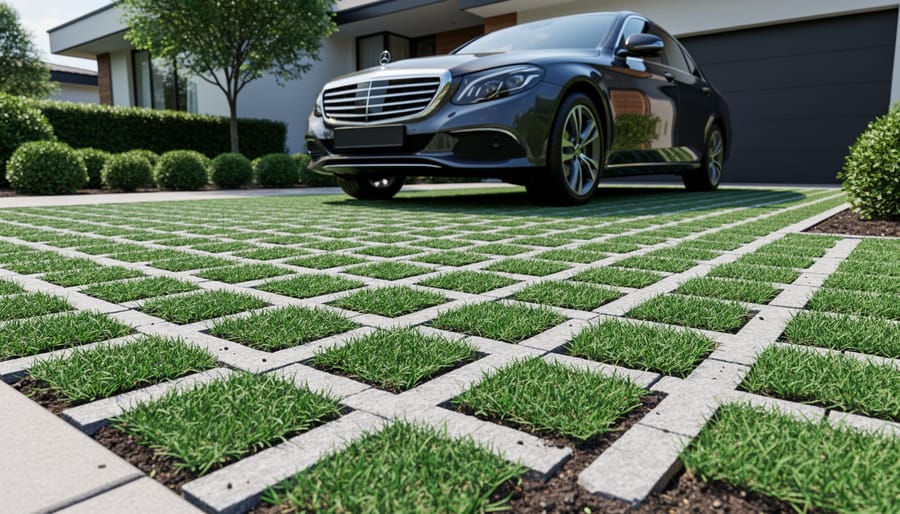
Grass pavers offer a brilliant compromise for Australian homeowners who want the functionality of a solid surface without sacrificing green space. These clever grid systems, typically made from recycled plastic or concrete, create a honeycomb-like structure that bears the weight of vehicles while leaving generous pockets for grass to grow through. The result? A driveway or pathway that looks like lawn but handles daily wear beautifully.
The beauty of grass pavers lies in their dual purpose. They prevent soil compaction and rutting that would occur with regular vehicle traffic on grass, while maintaining up to 90% permeability for rainwater. This makes them ideal for driveways, overflow parking areas, and garden paths where you want to maximise your property’s green coverage and stormwater absorption.
For our challenging Australian climate, choosing the right grass variety makes all the difference. Native couch grass thrives in sunny areas and handles foot traffic exceptionally well. Buffalo grass varieties like Sir Walter offer excellent drought tolerance and stay green longer during dry spells. For shadier spots or cooler southern regions, consider kikuyu, though be mindful it can be invasive.
Installation is surprisingly manageable as a weekend DIY project. After excavating and creating a stable base with compacted gravel, the pavers simply lock together. Fill the cells with quality soil and either seed or lay turf pieces. Regular watering establishes the grass initially, but once mature, these living pathways need minimal maintenance beyond occasional mowing. Many councils across Australia now encourage grass pavers, sometimes offering rebates as part of stormwater management initiatives.
Planning Your DIY Permeable Paving Project
Assessing Your Site and Soil
Before investing in permeable paving, understanding your site’s unique characteristics sets you up for success. Start with a simple percolation test that anyone can do at home. Dig a hole about 300mm deep and 300mm wide, fill it with water, and let it drain completely. Fill it again and time how long it takes to empty. Water should drain within 24 hours for permeable paving to work effectively. If it drains in under 12 hours, you’re in excellent shape.
Next, observe your yard during rain. Notice where water pools or flows, as these patterns reveal natural drainage routes that your new paving should support rather than block. Australian soil types vary significantly across the country. Sandy loam, common in coastal areas, drains beautifully and suits most permeable options. Clay soils, prevalent inland and across Victoria and New South Wales, present more challenges but aren’t dealbreakers. Clay can be amended with organic matter and sand, or you might need an underground drainage system to help water move through. Many suburban Australians have successfully tackled clay using these methods, transforming problem areas into functional, attractive spaces that manage stormwater while reducing runoff into local waterways.
Designing for Australian Conditions
Australia’s unique climate demands thoughtful planning when installing eco-friendly pavement. Unlike many international examples, our landscapes experience both extremes: intense downpours followed by extended drought periods that can last months.
When designing permeable paving for Australian conditions, start by considering your region’s rainfall patterns. In areas prone to heavy summer storms, like Queensland and coastal New South Wales, your permeable surface needs to handle sudden water surges. This means incorporating adequate subsurface storage layers, typically 200-300mm deep, filled with clean aggregate. These reservoirs temporarily hold stormwater before it infiltrates into the soil below.
Slope is another critical factor. Permeable paving works best on relatively flat surfaces with gradients between 1-5%. Steeper slopes require additional design elements like check dams or stepped sections to slow water movement and prevent erosion. For driveways or paths on hillier properties, consider terracing your permeable areas.
Connecting your permeable pavement to rain gardens creates a powerful combination for Australian yards. Direct overflow from your paved areas into rain garden depressions positioned downslope. This partnership manages excess water during flooding rains while the permeable base supports plants through dry spells by releasing stored moisture gradually.
For sizing calculations, aim for your permeable paving and connected rain garden to handle at least the first 25mm of rainfall from your catchment area. A simple formula: multiply your paved area in square metres by 0.025 to determine the minimum storage volume needed in cubic metres. This community-tested approach ensures your eco-friendly pavement performs beautifully through Australia’s weather extremes.
Council Regulations and Rebates
Before you start your eco-friendly pavement project, it’s worth checking what your local council has to say. Australian councils are increasingly supportive of permeable paving and rain gardens, but requirements vary significantly between cities. In Melbourne, for instance, many councils encourage stormwater management initiatives and offer detailed guidelines on permeable surfaces. Sydney councils often have specific requirements around water-sensitive urban design, particularly in new developments or major renovations.
Brisbane and Perth councils are particularly progressive, with some offering rebates for residents who install permeable paving or rain garden systems that reduce stormwater runoff. These rebates can offset a portion of your material costs, making sustainable choices more affordable. The City of Adelaide has similar programs, and Canberra’s focus on water conservation means there are often incentives available.
Start by visiting your council’s website or calling their planning department. Ask specifically about stormwater management rebates, water-sensitive urban design incentives, and any permits you might need. Some councils offer free consultations, similar to home assessments for energy efficiency, where experts can advise on your drainage project.
Don’t miss out on potential savings. Many councils also provide technical support and may even subsidize rainwater tank installations that complement your permeable paving system. By doing your homework upfront, you’ll ensure your project meets local standards while maximizing available financial support for your sustainable drainage solution.
Installing Permeable Paving: A DIY Approach
Materials and Tools You’ll Need
Getting started with your eco-friendly pavement project doesn’t require specialised tools, and most materials are readily available from Australian suppliers. For a typical 20-square-metre driveway or pathway, you’ll need permeable paving materials such as porous concrete, permeable pavers, or recycled gravel. Bunnings and local landscape suppliers like Australian Paving Centre stock these options, with costs ranging from $40-$100 per square metre depending on your choice.
Your equipment checklist includes a sturdy shovel for excavation, a wheelbarrow for moving materials, a hand tamper or plate compactor for base preparation, and a spirit level to ensure proper drainage slopes. You’ll also need landscaping fabric (about $50 for a 50-metre roll from Bunnings), and aggregate base material like crushed rock or recycled concrete ($70-$120 per tonne from local quarries).
For rain garden integration, consider adding native plants from community nurseries, which often offer seedlings at affordable prices and expert local advice. Budget approximately $800-$1,500 for materials on a medium-sized project, with potential savings when choosing recycled materials. Many councils across Australia offer rebates for permeable paving installations, so check your local council website before purchasing to maximise your investment in sustainable infrastructure.
Installation Steps
Installing your eco-friendly pavement is an achievable weekend project that connects you directly with creating a healthier outdoor space. Let’s walk through the process step by step, keeping in mind our Australian climate and conditions.
Start by excavating to a depth of 150-200mm, depending on your chosen materials and expected traffic. This might seem like hard yakka, especially during warmer months, so plan to tackle excavation during the cooler early morning hours. Your council may have specific depth requirements, so it’s worth checking before you dig in.
Next comes the base layer, which is crucial for proper drainage. Use 100-150mm of crushed rock or recycled aggregate as your foundation. This recycled material performs just as well as virgin stone while giving construction waste a second life. Compact it firmly but avoid over-compaction, as you want water to permeate through. A simple hand tamper works perfectly for smaller areas.
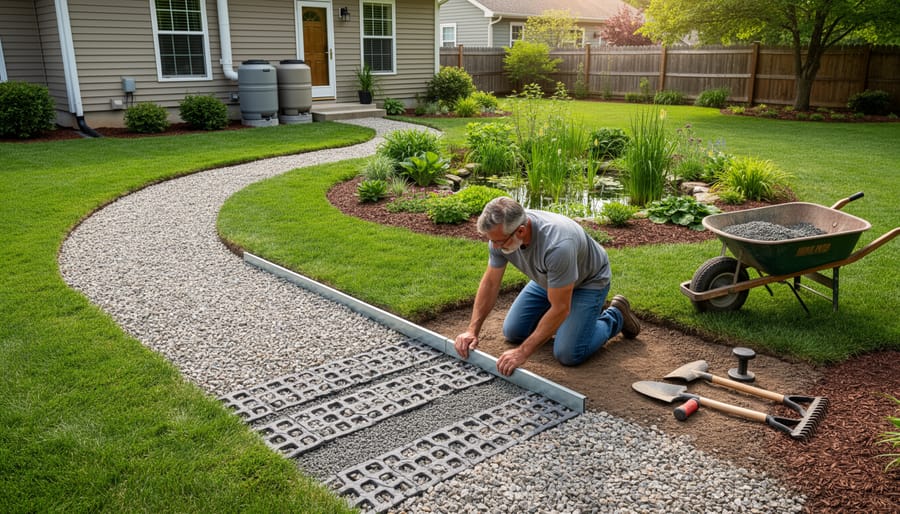
Edge restraints prevent your pavers or gravel from spreading over time. Recycled plastic edging or salvaged timber treated with natural oils provides sturdy containment. Position these around your excavated area, ensuring they’re level and secure.
Now for the satisfying part – laying your permeable pavers or spreading permeable gravel. If using pavers, leave 5-10mm gaps between each piece for water infiltration. Fill these joints with small aggregate or coarse sand rather than standard jointing sand. For gravel installations, aim for a top layer of 50-75mm.
During hot Australian days, work in sections and keep yourself well-hydrated. The materials can become scorching to handle, so early morning installation is ideal. Lightly water down dusty aggregates to reduce airborne particles, but avoid creating muddy conditions that compromise your base layer’s stability.
Connecting to Your Rain Garden
Directing water from your permeable pavement into a rain garden creates a beautiful closed-loop system that maximises stormwater benefits. The key is proper grading – ensure your paving slopes gently (around 1-2%) toward your rain garden to allow natural water flow. Many Australian homeowners find this works brilliantly for driveways and pathways adjacent to garden beds.
For surface connections, create a shallow swale or decorative river rock channel that guides overflow from your paving into the rain garden’s basin. This visible connection becomes a feature during rain events, showing your water management system in action and sparking conversations with neighbours about sustainable practices.
If you’re after a tidier look, consider subsurface connections using slotted agricultural pipe buried 30-40cm deep. This underground approach works particularly well in compact urban spaces where surface channels aren’t practical. Connect the pipe to your rain garden’s infiltration zone, ensuring the outlet sits slightly above the garden bed to prevent backflow. Either method transforms excess water into an asset, supporting your plants whilst reducing stormwater runoff into local waterways.
Maintenance and Long-Term Care
The good news is that eco-friendly pavement is remarkably low-maintenance compared to traditional surfaces, but it does need some attention to keep working effectively. Think of it as caring for a living system rather than just cleaning a driveway.
Australian conditions present unique challenges for permeable paving. Eucalyptus leaves are perhaps your biggest ongoing task. Those waxy leaves can accumulate quickly, especially during autumn, creating a mat that blocks water infiltration. A simple monthly sweep or leaf-blow keeps pores clear. Many communities organize neighbourhood clean-up days, turning maintenance into a social activity while keeping everyone’s installations functioning well.
Dust and fine sediment also pose challenges in our drier regions. During extended dry periods, these particles settle into gaps between pavers or aggregate. A quarterly rinse with a garden hose, or better yet, letting natural rain do the work after sweeping loose debris, usually solves this issue. For stubborn blockages in permeable concrete or pavers, a vacuum designed for wet-dry use works brilliantly.
Weed growth between pavers is natural but manageable. Rather than reaching for herbicides that defeat the environmental purpose, hand-pulling young weeds after rain when soil is soft takes just minutes. Some households embrace low-growing native ground covers like native violet between pavers, which actually helps filter water while suppressing unwanted plants.
Here’s a practical seasonal checklist: Before summer storms arrive, clear all debris and check drainage function by pouring a bucket of water over the surface. Mid-winter, inspect for any settling or damage. Spring calls for weed management, while autumn demands vigilant leaf removal.
The time investment averages just 2-3 hours quarterly for a typical driveway, far less than maintaining sealed surfaces that require periodic resurfacing. Your permeable pavement will reward consistent care with decades of reliable, eco-friendly performance.
Real Results: Australian Case Studies
Across Australia, homeowners are transforming their properties with permeable paving and rain garden combinations, and the results speak for themselves.
In Melbourne’s inner suburbs, Sarah and Tom replaced their concrete driveway with permeable pavers and installed a native rain garden along the boundary. Within the first year, they noticed their water bill dropped by 40 percent as captured rainwater irrigated their garden naturally. More importantly, the pooling water that previously flooded their garage during heavy storms completely disappeared. “We were skeptical about the cost initially, but seeing our neighbours’ water running down the street while ours soaks into the garden makes it worthwhile,” Sarah shares.
Up in Brisbane, the Chen family tackled their sloping front yard with a combination of gravel pathways and strategically placed rain gardens featuring local grasses and sedges. Their property value increased by an estimated $15,000 when they sold two years later, with the real estate agent specifically highlighting the sustainable water management system as a drawcard for environmentally conscious buyers.
Meanwhile, in Perth’s sandy soils, James created a demonstration eco house feature by combining recycled brick pavers with bioswales. He measured a 60 percent reduction in stormwater runoff, and his neighbours have since followed suit, creating a mini-community initiative.
These aren’t isolated success stories. From Adelaide’s heritage homes to Sydney’s suburban blocks, Australians are proving that eco-friendly pavement solutions deliver tangible benefits. The combination of reduced water costs, eliminated flooding issues, and enhanced property appeal makes permeable paving more than just an environmental choice—it’s a smart investment in your home’s future.
Making the switch to permeable paving isn’t just about managing stormwater—it’s about creating a healthier, more resilient property that benefits both you and the environment. Every square metre of eco-friendly pavement you install helps reduce flooding, recharge groundwater, and filter pollutants before they reach our waterways. These improvements work harder for your property while treading lighter on our planet.
The beauty of this approach is that you don’t need to transform your entire property overnight. Starting with a single pathway, patio area, or driveway section allows you to test materials, learn the installation process, and see the benefits firsthand. Many Australians who’ve embraced permeable paving began with modest projects that grew as their confidence increased. These small sustainable property improvements collectively make a significant difference across our communities.
For those eager to deepen their knowledge, connecting with sustainable living communities throughout Australia provides invaluable support. Local permaculture groups, council sustainability programs, and online forums offer practical advice tailored to regional conditions and challenges.
As you embark on your permeable paving journey, consider documenting your experience and sharing it with neighbours. Your visible commitment to sustainable practices often sparks conversations and inspires others to explore similar solutions. Together, we’re building more resilient communities one pervious surface at a time. What will your first project be?