
Save seeds from your healthiest, most productive plants at the end of each growing season by allowing a few fruits or flowers to fully mature on the vine, then dry them thoroughly in a cool, dark place before storing in labeled paper envelopes. This simple practice preserves genetic diversity suited to your specific garden conditions while cutting costs by up to 90% compared to purchasing new seeds annually.
Select open-pollinated and heirloom varieties rather than hybrid seeds, as these produce offspring that remain true to the parent plant’s characteristics. Australian gardeners can start with resilient varieties like Purple King beans, Diggers Club tomatoes, or native spinach species that thrive in our unique climate zones and require minimal intervention once established.
Join your local seed-saving network through organizations like Seed Savers’ Network Australia or community gardens in your area, where experienced members share heritage varieties and region-specific knowledge. These connections provide access to rare Australian-adapted seeds while building food security across neighborhoods—a practical step toward both growing your own food and strengthening community resilience.
Document which plants performed best in your garden by noting flowering dates, disease resistance, and yield patterns throughout the season. This information becomes invaluable for selecting superior seeds year after year, gradually developing your own locally-adapted strains that require fewer resources and inputs.
The environmental impact extends beyond your backyard. Each seed you save reduces demand for industrial seed production, which relies heavily on chemical treatments, plastic packaging, and long-distance transportation. When multiplied across thousands of Australian households, this individual action transforms into measurable reductions in agricultural emissions and waste while preserving biodiversity that commercial agriculture increasingly threatens.
Why Seed Saving Is the Missing Piece in Your Sustainable Garden
Every time you purchase a packet of seeds, you’re participating in a global supply chain that requires energy for production, packaging, and transport—often from overseas. But what if your garden could become its own renewable seed source? Seed saving transforms your plot from a consumer of resources into a self-sustaining ecosystem, and it’s one of the most overlooked practices in sustainable gardening.
The environmental benefits extend far beyond reducing your shopping trips. Commercial seed production involves extensive monoculture farming, chemical treatments, and significant carbon emissions from international shipping. When you save seeds from your own plants, you eliminate this entire chain. You’re also preserving biodiversity at the grassroots level, maintaining genetic diversity that’s increasingly threatened by industrial agriculture’s focus on standardized varieties.
For Australian gardeners, seed saving offers something particularly valuable: climate adaptation. Seeds saved from plants that have thrived in your specific microclimate—whether that’s Perth’s hot, dry summers or Brisbane’s humid subtropics—develop characteristics that help them perform better in those exact conditions with each generation. This natural selection process creates varieties perfectly suited to your local environment, something no commercial packet can replicate.
The economic case is equally compelling. While heritage tomato seeds might cost eight dollars per packet, a single plant can yield hundreds of seeds for future seasons. Over five years, that initial investment can save you hundreds of dollars while producing increasingly resilient plants. Many Australian gardeners report spending less than twenty dollars annually on seeds once they’ve established their saving practice, compared to the hundred-plus dollars they previously spent.
Heritage and heirloom varieties particularly deserve our attention. Varieties like the Queensland Blue pumpkin or Yates’ Australian Yellow tomato have been selected over generations for Australian conditions, yet many are disappearing from commercial catalogues. By saving and sharing these seeds, you become a custodian of living agricultural history while maintaining varieties that simply perform better in our unique climate than mass-produced alternatives.
Perhaps most importantly, seed saving connects you to a thriving community. Seed swaps and sharing networks across Australia—from community gardens in Melbourne to online groups connecting rural growers—create resilience beyond individual gardens, building food security from the ground up.
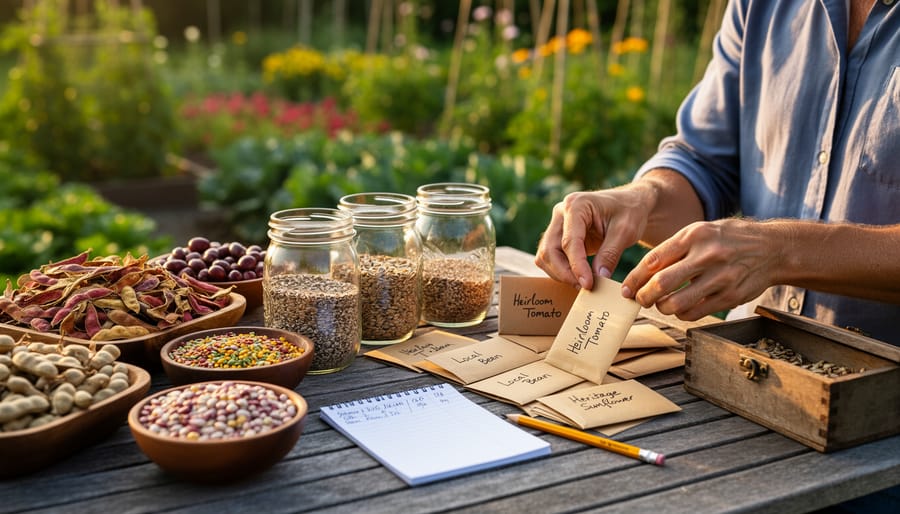
The Three Golden Rules for Successful Seed Saving
Choose Open-Pollinated and Heirloom Varieties
When you’re building a sustainable seed-saving practice, choosing the right varieties makes all the difference. Open-pollinated seeds are your best allies here. Unlike hybrid varieties, which are bred from two different parent plants, open-pollinated plants produce seeds that grow into plants identical to their parents. This means you can save seeds year after year, knowing you’ll get consistent results—a cornerstone of true self-sufficiency.
Hybrid seeds, while often marketed for uniformity and vigour, won’t breed true in subsequent generations. Their offspring can be unpredictable, making them unsuitable for seed saving. For Australian growers, this matters even more when you consider our unique climate challenges.
Heirloom varieties offer something special: they’re open-pollinated seeds passed down through generations, often perfectly adapted to local conditions. Consider trying Diggers Club’s Australian heritage tomatoes, which thrive in our variable summers, or the Purple King climbing bean, beloved by generations of Australian gardeners. The Yates Grosse Lisse tomato has been a backyard staple since the 1950s for good reason—it’s proven itself across diverse Australian microclimates.
By choosing these varieties, you’re not just saving seeds; you’re preserving agricultural biodiversity and connecting with a proud tradition of Australian food growing.
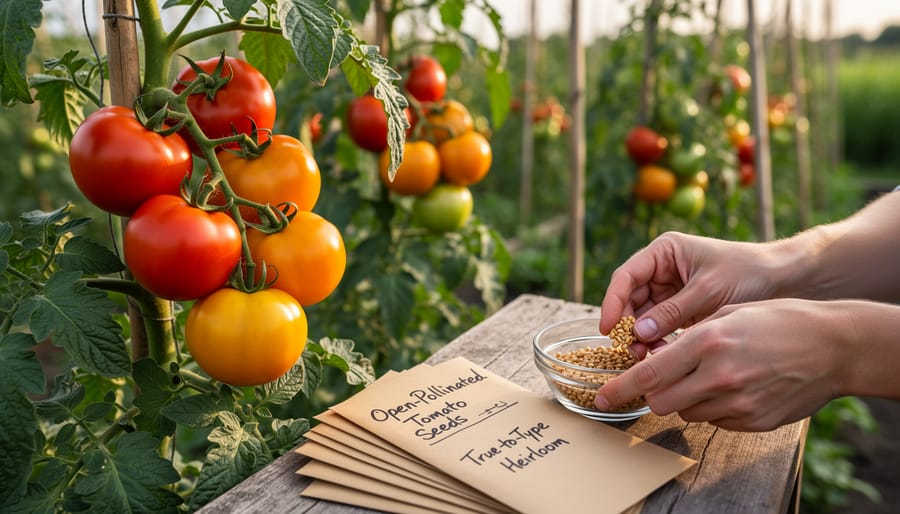
Select Your Strongest Plants
When selecting plants for seed saving, you’re essentially becoming a plant breeder right in your own backyard. Look for the champions in your garden—those tomatoes that thrived through last summer’s heatwave, the beans that resisted rust when others struggled, or the lettuce that kept producing well into autumn.
Walk through your garden regularly during the growing season, observing which plants exhibit the traits you value most. In Australian conditions, heat and drought tolerance are often priorities, alongside disease resistance and strong yields. Mark your standout performers with coloured ribbons or stakes so you’ll remember them when harvest time arrives.
Rather than saving seeds from just one plant, select from several strong performers to maintain genetic diversity. This approach mirrors what Indigenous Australian communities have practised for millennia—working with plant populations rather than single specimens.
Consider your local climate zone too. A plant perfectly adapted to Melbourne’s cool-temperate conditions might struggle in Darwin’s tropical heat. By consistently selecting seeds from plants that flourish in your specific environment, you’re gradually developing varieties uniquely suited to your patch of earth, building resilience into your garden year after year.
Master the Timing
Knowing when your seeds are ready makes all the difference between successful saving and disappointing results. The key is patience combined with careful observation. For most vegetables, seeds are mature when the plant has finished its main growing cycle and begun to dry naturally.
In Australia’s varied climate zones, timing shifts considerably. For tomatoes grown across southern regions, seeds are ready when the fruit is fully ripe and slightly overripe, typically late summer through autumn. Lettuce, which bolts quickly in our hot conditions, produces mature seeds about three to four weeks after flowering when the seed heads turn fluffy and white. Beans and peas are straightforward – simply wait until pods become brown and papery on the plant, usually six to eight weeks after you’d normally harvest them for eating.
Root vegetables like carrots require a different approach. They’ll flower in their second year, with seeds ready when the umbels turn brown and crispy, generally late spring in temperate zones. Native plants like warrigal greens produce black seeds when fully mature, perfect for collection after coastal summer growth.
The simple squeeze test works wonders – mature seeds feel firm and hard between your fingers, not soft or squishy.
Simple Seed Saving Methods for Australian Gardens
Easy Wins: Tomatoes, Beans, and Lettuce
Starting your seed saving journey doesn’t require years of experience or complicated equipment. Three crops stand out as particularly forgiving for beginners: tomatoes, beans, and lettuce. Each teaches you fundamental techniques you’ll use across your entire garden.
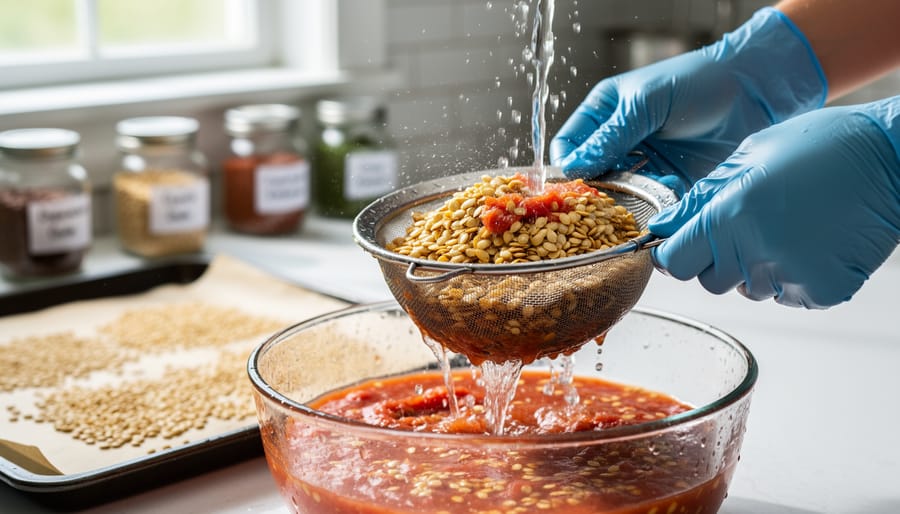
Tomatoes require wet seed processing, which sounds intimidating but actually mimics nature’s own method. Choose your healthiest, most flavourful fruit from open-pollinated or heritage varieties. Scoop the seeds and surrounding gel into a jar, add a splash of water, and leave it uncovered on your kitchen bench. Over the next three to five days, fermentation will occur, breaking down the gel that inhibits germination. You’ll notice bubbles and possibly mould forming on the surface. This is exactly what you want. Once the seeds sink to the bottom, pour off the floating debris, rinse the seeds thoroughly in a fine strainer, and spread them on a plate to dry completely. This process eliminates seed-borne diseases while preparing your seeds for storage.
Beans and lettuce follow the simpler dry seed method. For beans, simply leave a few pods on your healthiest plants until they rattle when shaken. The pods should feel papery and brittle. Shell them out, check for damage or discolouration, and store in an envelope. Lettuce seeds develop after the plant bolts and flowers. Wait until the fluffy seed heads form, then collect them on a dry afternoon. Rub the heads between your palms over a bowl to release the tiny seeds, then winnow away the chaff by gently blowing or using a small fan.
These three crops will give you confidence while building essential skills that translate across your entire sustainable farming practice.
Intermediate Challenge: Brassicas and Root Vegetables
Once you’ve mastered quick-growing annuals, you’re ready to tackle the rewarding challenge of saving seeds from brassicas and root vegetables. These biennial beauties, including cabbages, broccoli, carrots, and beetroot, require a two-year commitment as they need to survive winter before producing seeds in their second season.
The main challenge here is cross-pollination. Brassicas are particularly promiscuous, with different varieties happily interbreeding within 800 metres to 1.6 kilometres. In suburban Australian gardens, this creates quite the puzzle. Your neighbour’s kale can easily cross with your broccoli, creating unexpected hybrids that won’t grow true to type.
Don’t let this discourage you though. Many Melbourne and Adelaide gardeners have found creative solutions by coordinating with neighbours, agreeing to grow different brassica varieties each season. This community approach transforms a limitation into an opportunity for connection and seed swapping.
For smaller spaces, try focusing on one brassica variety per season, or use physical barriers like mesh cages during flowering. Root vegetables like carrots require similar isolation but are generally easier to manage as they’re less common in neighbouring gardens.
Timing is crucial too. In cooler regions like Tasmania and Victoria’s highlands, plants naturally overwinter. In warmer Queensland and northern NSW climates, you’ll need to simulate winter conditions by storing roots in damp sand in the fridge before replanting. This vernalisation process tricks them into flowering, making seed saving possible even in subtropical conditions.
Advanced Level: Cucurbits and Cross-Pollinating Crops
For dedicated seed savers tackling cucurbits like pumpkins, cucumbers, and melons, cross-pollination presents an exciting challenge. These vigorous plants readily share pollen between varieties, which means that Queensland Blue pumpkin growing beside a butternut could produce some wonderfully unexpected offspring next season.
Hand-pollination gives you complete control over variety purity. Start by identifying male flowers (those with straight stems) and female flowers (with tiny fruit at their base) before they open in the early morning. Use isolation bags made from breathable fabric or fine mesh to cover unopened flowers the evening before. When flowers are ready to open, transfer pollen from the male to female flower using a small paintbrush or by gently rubbing the male flower directly onto the female’s stigma. Re-bag the pollinated female flower and label it clearly with the variety name and date.
Across Australian community gardens, growers are sharing isolation bag techniques and creating pollination schedules to maintain heritage varieties. Some Melbourne gardening groups coordinate timing so members can focus on different cucurbit varieties each season, then share seeds at swap events. This collaborative approach means everyone benefits from pure-strain seeds while building resilience in our local food systems. Remember, saving seeds from hand-pollinated fruits ensures your favourite Australian heirlooms remain true to type for generations.
Cleaning, Drying, and Storing Seeds the Right Way
Once you’ve gathered your precious seeds, the work’s not quite done yet. Proper cleaning, drying, and storage are what separate next season’s thriving garden from a disappointing box of duds. Think of it as giving your seeds the best possible start before their long sleep.
Start by cleaning your seeds thoroughly. For dry seeds like beans and peas, simply remove any remaining pod fragments or plant material. Wet seeds from tomatoes, cucumbers, and pumpkins need a bit more attention. The fermentation method works brilliantly here: place seeds in a jar with a little water for two to three days, allowing the gel coating to break down. This process actually mimics what happens in nature and can improve germination rates. Once fermented, rinse thoroughly and spread on paper towels.
Now comes the crucial part for Australian growers: drying. Our humidity levels vary dramatically from Darwin’s tropical dampness to Adelaide’s dry heat, so you’ll need to adjust accordingly. The golden rule is to dry seeds completely before storage, as any residual moisture invites mould and dramatically reduces viability. Spread cleaned seeds in a single layer on paper plates or screens in a warm, well-ventilated spot away from direct sunlight. A spare bedroom with good airflow works perfectly. In humid coastal areas, consider using a dehumidifier or even positioning seeds near (not on) a warm spot. Most seeds need one to two weeks to dry properly. You’ll know they’re ready when they snap rather than bend.
Storage containers matter more than you might think. Glass jars with tight-fitting lids are ideal, though clean, dry paper envelopes work well for short-term storage. Many Australian community seed libraries use small brown envelopes, which allow seeds to breathe while protecting them from pests. Whatever you choose, add silica gel packets if you’re in a particularly humid region.
Labeling is non-negotiable. Include the plant variety, harvest date, and any special notes about the parent plant’s characteristics. Future you will be grateful when selecting seeds next season.
Store your labeled containers in a cool, dark, dry location. A cupboard in the coolest room of your house is perfect. Avoid garages or sheds where temperature fluctuations can damage seed viability. Under ideal conditions, most vegetable seeds remain viable for three to five years, with some lasting even longer.
Propagation Techniques That Multiply Your Garden Sustainably
Cuttings: Free Plants from What You Already Grow
Taking cuttings is one of the most rewarding ways to multiply your plants without spending a cent. It’s expanding your garden while reducing waste and building resilience in your local ecosystem.
Softwood cuttings work brilliantly for herbs and many Australian natives during spring and early summer. Choose fresh, flexible growth from plants like rosemary, lavender, or native mint bush. Cut 10-15cm lengths just below a leaf node, remove the lower leaves, and pop them in moist propagating mix. Keep them humid with a plastic cover or cloche, and roots typically appear within 4-6 weeks.
Semi-hardwood cuttings suit plants like grevillea, westringia, and pelargoniums from late summer through autumn. Select stems that are firmer but still bend without snapping. The process mirrors softwood cuttings, though these may take 6-8 weeks to establish roots. A light application of hormone powder can help, though many gardeners find success without it.
Hardwood cuttings are perfect for winter propagation of deciduous plants and some hardy perennials. Cut 20-30cm sections of dormant wood, plant them directly into garden beds or large pots, and let winter rains do the work.
This simple practice connects you to generations of gardeners who’ve shared plants over backyard fences, building community while reducing our collective environmental footprint. Start with forgiving plants like lavender or rosemary, and you’ll soon have extras to share with neighbours.
Division and Layering for Perennials
While seed saving captures our imagination, many productive garden plants propagate even more easily through division and layering. For Australian gardeners building resilient, sustainable gardens, these techniques offer a straightforward path to abundance.
Perennial vegetables like Jerusalem artichokes, warrigal greens, and society garlic thrive across diverse Australian climates and multiply readily through simple division. During the cooler months, dig up established clumps and gently separate them into smaller sections, ensuring each piece has roots and shoots. Replant immediately and water well. This method not only increases your harvest but also rejuvenates older plants that may have become congested.
Herbs provide another excellent opportunity for low-effort propagation. Divide rosemary, thyme, and oregano clumps in autumn or early spring when plants are actively growing but not stressed by heat. Many Australian native herbs like native mint and river mint respond beautifully to this treatment, establishing quickly in their new positions.
Layering works wonderfully for sprawling plants like sweet potato, which performs remarkably well in warmer regions. Simply bury a section of stem while it’s still attached to the parent plant, securing it with a small stone or wire hoop. Within weeks, roots develop at the buried nodes. Once established, cut the new plant free and transplant.
These techniques require minimal equipment and perfectly suit community garden settings where neighbours can share successful divisions. You’re not just multiplying plants but building living connections that strengthen local food security and reduce reliance on commercial nurseries.
Building Seed Resilience: Creating Your Own Climate-Adapted Varieties
Every time you save seeds from your healthiest plants, you’re not just preserving varieties—you’re actively breeding crops that thrive in your unique growing conditions. This process, called adaptive selection, happens naturally when you consistently choose seeds from plants that perform well in your specific microclimate, soil type, and rainfall patterns.
Think of it as a conversation between your garden and the plants themselves. That tomato that flourished during last summer’s heatwave? Its offspring will likely carry those heat-tolerant traits. The lettuce that handled your clay soil without flinching? You’re selecting for adaptability that commercial seeds simply can’t offer.
The beauty of this approach lies in patience and observation. Lisa Chen, a community seed saver from the Yarra Valley, has been saving seeds from her Italian heirloom tomatoes for eight seasons. “The difference is remarkable,” she shares. “My tomatoes now set fruit two weeks earlier than when I started, perfectly timed to our local growing season. They’ve adapted to my garden.”
This long-term relationship with place creates resilience. When you save seeds year after year, you’re building a living library suited to your Australian edible garden—one that understands your summer dry spells, your winter frosts, and your soil’s quirks.
Community seed libraries across Australia demonstrate this power beautifully. The Seed Savers’ Network connects growers who’ve developed climate-adapted varieties over decades, from drought-tolerant beans in central Queensland to cold-hardy greens in Tasmania. These aren’t just seeds; they’re generations of adaptation compressed into small packets.
Starting your own breeding program requires nothing more than selecting the best performers each season. Choose plants that germinate quickly, resist local pests, and produce abundantly despite whatever weather challenges your region throws at them. Over time, you’ll develop varieties uniquely suited to your patch of earth—a deeply sustainable practice that connects you to centuries of agricultural wisdom while preparing for future climate uncertainty.
Joining the Seed Saving Community in Australia
Seed saving becomes infinitely more rewarding when you connect with fellow enthusiasts who share your passion for preserving Australia’s agricultural heritage. Across the country, a vibrant network of seed savers is working together to protect regional varieties and build collective climate resilience, one seed at a time.
The Seed Savers Network stands as Australia’s premier organization dedicated to preserving open-pollinated and heirloom varieties. With members across every state, this community-driven initiative has been safeguarding rare seeds since 1986. Membership connects you with experienced seed savers who understand the unique challenges of Australian growing conditions, from tropical humidity in Queensland to the dry heat of South Australia. You’ll gain access to their extensive seed collection, featuring varieties adapted to local climates that you simply won’t find in commercial catalogs.
Community seed libraries are sprouting up in suburbs and towns nationwide, operating much like book libraries where you can borrow seeds to plant, then return fresh seeds from your harvest. Melbourne, Sydney, Brisbane, and Adelaide all host multiple seed libraries, often housed in community gardens, local councils, or environmental centers. These spaces serve as knowledge hubs where novice and experienced gardeners exchange growing tips specific to your region.
Seed swaps offer another fantastic entry point into the community. These informal gatherings happen seasonally across Australia, bringing together gardeners to trade seeds, cuttings, and wisdom. Check community noticeboards, local Facebook groups, or the Seed Savers Network website to find events near you. Many councils and sustainability groups organize autumn and spring swaps timed perfectly for planting seasons.
Regional seed banks focus on preserving varieties unique to specific Australian environments. Indigenous seed networks are particularly valuable for learning about native food plants and traditional growing methods that have sustained communities for thousands of years.
Start your journey by searching online for seed savers groups in your area, visiting your local community garden, or attending a workshop at botanical gardens or permaculture centers. The community welcomes everyone, regardless of experience level, united by the shared goal of protecting Australia’s food security and biodiversity for future generations.
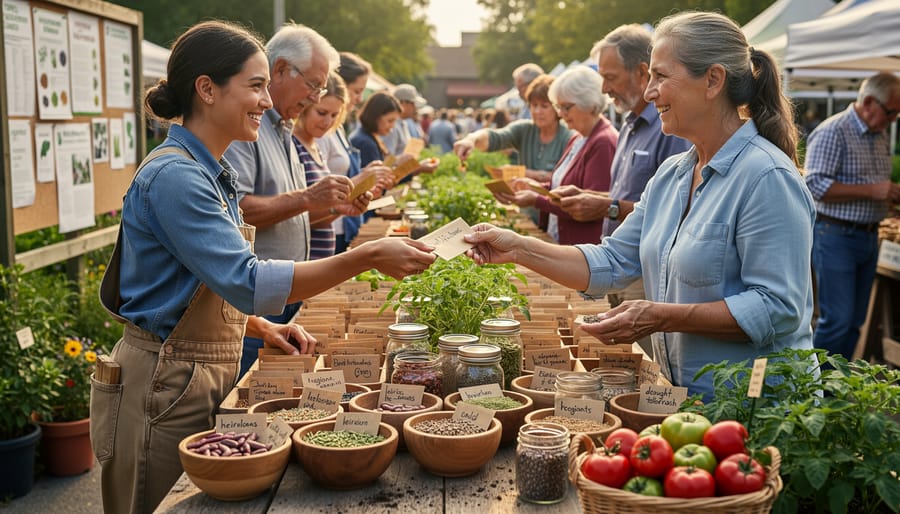
Seed saving isn’t just an isolated practice—it’s a powerful thread woven into the broader tapestry of sustainable farming. When you save seeds from your garden, you’re participating in the same cyclical thinking that underpins composting, water-efficient practices, and natural pest management. Each saved seed represents a closed loop, reducing your dependence on external inputs while strengthening your garden’s resilience to Australian conditions.
The beauty of this practice is that you don’t need to transform your entire garden overnight. Starting small is not only acceptable—it’s recommended. Choose one or two easy crops like lettuce or tomatoes this season. Learn their rhythms, observe how they respond to your local microclimate, and celebrate when those first saved seeds germinate the following year. That moment of connection, when you hold seeds from your own garden in your palm, creates something profound: a tangible link between past harvests and future abundance.
As you build confidence, you’ll discover you’re part of something much larger. Across Australia, from suburban backyards in Sydney to community gardens in Melbourne and rural properties in Queensland, thousands of gardeners are reclaiming their seed sovereignty. Together, we’re preserving genetic diversity, reducing agricultural carbon footprints, and building food security from the ground up.
Your garden, however small, matters. Every seed you save is a quiet act of resistance against uniformity and a vote for biodiversity. It’s an investment in knowledge that can be shared with neighbors, passed to children, and adapted for generations. Start today. Save those seeds. Join the movement that’s growing not just food, but a more sustainable future for all Australians.