
Install a programmable or smart thermostat that learns your household patterns and automatically adjusts heating and cooling to minimize energy waste during empty hours. Australian homes can reduce energy consumption by up to 23% simply by setting temperatures to 20°C in winter and 26°C in summer, allowing your thermostat to maintain these eco-friendly baselines.
Choose a model with zoning capabilities that heat or cool only occupied rooms rather than your entire home. This targeted approach proves particularly effective across Australia’s diverse climate zones, from Darwin’s tropical humidity to Hobart’s cool maritime conditions, preventing unnecessary energy expenditure in unused spaces.
Connect your thermostat to renewable energy sources like rooftop solar panels to maximize environmental benefits. Many Australian households already generate surplus solar power during peak daylight hours, and an eco-friendly thermostat can prioritize running your HVAC system when this clean energy is available, dramatically reducing your carbon footprint while slashing electricity bills.
Monitor your energy usage through your thermostat’s app or display to identify consumption patterns and optimization opportunities. Real-time data empowers you to make informed decisions about your heating and cooling habits, transforming abstract environmental intentions into measurable action. This visibility creates accountability while demonstrating how small temperature adjustments accumulate into significant annual savings.
Eco-friendly thermostats represent more than cost-cutting technology. They’re practical tools that align your daily comfort with Australia’s urgent climate goals, proving that sustainable living doesn’t require sacrifice. When your community collectively adopts smarter temperature control, the cumulative impact reduces strain on our energy grid and accelerates our transition toward a carbon-neutral future.
What Makes a Thermostat Eco-Friendly?
Not all thermostats are created equal when it comes to environmental impact. What sets eco-friendly thermostats apart is their sophisticated ability to reduce energy consumption while maintaining comfort in your home or workplace.
At the heart of an eco-friendly thermostat lies intelligent learning capabilities. These devices observe your daily routines, noting when you wake up, leave for work, and return home. Over time, they create personalised heating and cooling schedules that eliminate energy waste during empty hours. For Australian households juggling varied routines across different climate zones, from Darwin’s tropical heat to Hobart’s cool temperate conditions, this adaptability is particularly valuable.
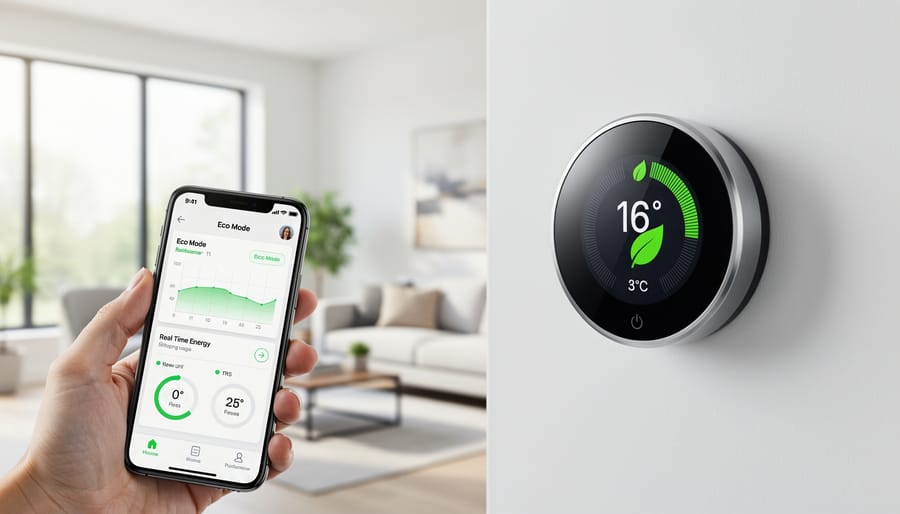
Energy monitoring features provide real-time insights into your consumption patterns. Many eco-friendly models display exactly how much energy you’re using and translate this into cost savings, helping you understand the direct impact of your temperature adjustments. This transparency empowers you to make informed decisions about your energy use rather than operating blindly.
Advanced energy-saving algorithms work behind the scenes, making micro-adjustments throughout the day. These systems consider factors like outdoor temperature, humidity levels, and even upcoming weather forecasts to optimise performance. In Australia’s diverse climate zones, where coastal regions experience different seasonal patterns compared to inland areas, these algorithms adapt to local conditions for maximum efficiency.
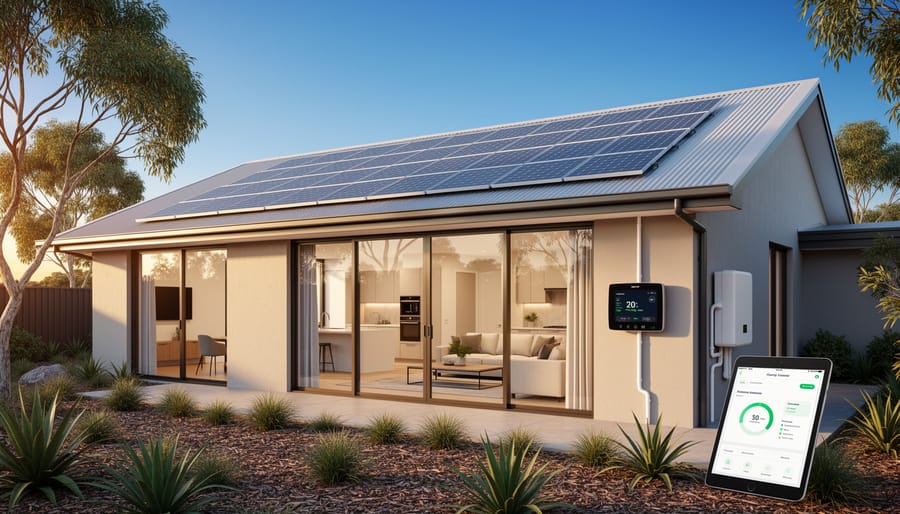
Integration with renewable energy systems represents another crucial feature. Modern eco-friendly thermostats can communicate with solar panels, battery storage, and smart grids. They prioritise heating or cooling during peak solar generation hours, maximising your use of clean energy and reducing reliance on grid electricity during expensive peak periods.
Remote access through smartphone apps allows you to adjust settings on the go, preventing unnecessary heating or cooling when plans change unexpectedly. This flexibility, combined with detailed usage reports, creates a powerful tool for reducing your carbon footprint.
For Australian communities committed to sustainable living, these features transform a simple temperature control device into an active partner in environmental stewardship, making meaningful contributions to both household budgets and our collective climate goals.
The Real Cost of Traditional Heating and Cooling in Australian Homes
Traditional heating and cooling accounts for approximately 40% of the average Australian household’s energy consumption, making it the single largest contributor to residential energy bills. For most families, that translates to somewhere between $900 and $1,500 annually, with significant variations across our diverse climate zones. In Melbourne’s temperate climate, households cycle through heating and cooling demands throughout the year, while tropical Darwin residents face near-constant cooling costs that can exceed $2,000 annually.
The environmental toll is equally concerning. A typical Australian home using conventional thermostat technology emits around 3.5 tonnes of carbon dioxide annually from temperature control alone. Multiply that across our 10 million households, and we’re looking at a substantial contribution to national emissions that could be dramatically reduced with smarter technology.
Outdated thermostats present several efficiency challenges that directly impact your wallet and our environment. Manual systems fail to adjust when you leave home, with studies showing many Australian households heat or cool empty homes for up to 8 hours daily. That’s roughly one-third of your daily energy use achieving absolutely nothing. Traditional programmable thermostats, while better, still can’t adapt to schedule changes, unseasonably warm winter days, or cool summer evenings when natural ventilation would suffice.
The hidden cost extends beyond electricity bills. As Australia moves toward carbon pricing mechanisms and renewable energy targets, inefficient homes face increasing financial pressure. Meanwhile, air conditioning systems working harder than necessary wear out faster, leading to premature replacements and additional environmental waste.
For our community to meet climate goals, we need smarter solutions that work with Australian conditions, not against them. This is where eco-friendly thermostats enter the conversation, offering technology designed specifically to address these wasteful patterns.
How Eco-Friendly Thermostats Work Their Magic
Smart Learning and Adaptive Scheduling
The real magic of eco-friendly thermostats lies in their ability to think for themselves. Unlike traditional thermostats that simply maintain whatever temperature you set, these smart devices actually learn from your daily routines and make intelligent decisions that benefit both your comfort and the environment.
Here’s how it works in practice: during your first few weeks, the thermostat quietly observes when you wake up, leave for work, return home, and settle in for the night. It notes temperature preferences across different times and seasons, building a detailed picture of your household’s rhythm. Many Australian families are discovering that their thermostats can predict when to start cooling before Brisbane’s afternoon heat peaks or warming a Melbourne home before the evening chill sets in.
The adaptive scheduling feature then takes this knowledge and creates an energy-efficient routine. Rather than maintaining a constant temperature when nobody’s home, it allows natural fluctuation during vacant hours, then brings your space back to comfort just before you return. This seemingly simple automation can reduce your heating and cooling energy consumption by up to 30 percent, translating to real savings on your power bills while significantly cutting carbon emissions. The beauty is that it all happens seamlessly in the background, requiring no daily input from you once the learning phase is complete.
Remote Control and Zone Management
Modern eco-friendly thermostats put complete climate control at your fingertips, no matter where you are. Through intuitive smartphone apps, Australian households can now adjust temperatures from the beach, the office, or even while travelling overseas. This remote capability means you’re never wasting energy heating or cooling an empty home—simply check your app and make adjustments in real-time.
The real game-changer for Australian homes is zoning technology. Rather than treating your entire house as one space, smart thermostats with zoning capabilities let you control different areas independently. Running a home office in Brisbane? Keep that room comfortable during work hours while reducing energy to unused bedrooms. Melbourne families are discovering they can maintain cosy living areas in the evening whilst allowing sleeping zones to naturally cool down.
This precision control translates directly into energy savings. Many Australian users report cutting their heating and cooling costs by 20-30% simply by avoiding the wasteful practice of conditioning empty rooms. The technology learns your patterns too, suggesting optimal settings based on your routine. For households committed to reducing their carbon footprint, this level of control transforms an everyday appliance into a powerful tool for environmental action. Your community benefits when thousands of homes make these smart, targeted choices together.
Integration with Solar and Renewable Energy
Across Australia, thousands of households are discovering that eco-friendly thermostats become even more powerful when paired with solar panels and renewable energy systems. These smart devices can be programmed to maximise your self-generated solar power by running heating or cooling during peak solar production hours, typically between 10am and 3pm. This means you’re drawing less from the grid and making the most of your rooftop investment.
For those working toward zero energy homes, this integration is essential. Advanced thermostats can communicate with your solar inverter, automatically adjusting your climate control based on available renewable energy. During cloudy periods, they’ll reduce consumption or shift to battery storage.
Australian energy retailers increasingly offer time-of-use tariffs, with cheaper rates during off-peak periods. Smart thermostats can be configured to pre-cool or pre-heat your home during these windows, reducing costs without sacrificing comfort. Some models even track your energy source in real-time, displaying whether you’re running on solar, battery, or grid power. This transparency helps Australian families understand their energy patterns and reinforces sustainable choices, creating a virtuous cycle of renewable energy adoption and efficient use.
Choosing the Right Eco-Friendly Thermostat for Your Australian Home
Climate Zone Considerations
Australia’s diverse climate zones demand thoughtful thermostat selection to maximise both comfort and energy savings. If you’re living in tropical North Queensland or the Northern Territory, prioritise cooling features like intelligent humidity control and zone-based temperature management. These capabilities help your air conditioner work efficiently during extended hot periods without overcooling, which wastes energy and strains the grid.
For temperate regions across southern Australia, including Melbourne and Tasmania, you’ll benefit from thermostats offering balanced heating and cooling programs. Look for models with adaptive algorithms that learn seasonal patterns, automatically adjusting to crisp winter mornings and mild summer evenings. This smart adaptation prevents unnecessary energy use during shoulder seasons when many homes can rely on natural ventilation.
Communities in arid zones like Central Australia should choose thermostats with wide temperature range capabilities and desert mode settings that account for dramatic day-night temperature swings. The right thermostat becomes your partner in reducing environmental impact while maintaining comfort, wherever you call home. Consider sharing your experiences with local sustainability groups to help neighbours make informed choices suited to your shared climate reality.
Compatibility with Australian HVAC Systems
Before investing in an eco-friendly thermostat, it’s essential to ensure it works with your home’s existing setup. Australian homes typically feature ducted air conditioning systems, split systems, or individual reverse-cycle units, and compatibility varies significantly between models.
For ducted systems, check whether the thermostat supports zone control capabilities, allowing you to heat or cool specific areas rather than the entire home. This feature alone can slash energy consumption by up to 40% in larger Australian homes. Split system owners should verify the thermostat can communicate with their specific brand, as some manufacturers use proprietary protocols.
Those with multi-split or hydronic heating systems need thermostats offering multiple zone management. Additionally, if you’re part of the growing Australian community embracing solar panels, look for models that integrate with renewable energy systems to optimise self-consumption.
Most smart thermostats list compatible systems on their packaging, but don’t hesitate to contact local suppliers or installers for guidance. Many Australian HVAC professionals now specialise in sustainable retrofits and can recommend solutions that maximise both compatibility and energy savings for your specific setup, helping you make a confident, environmentally sound choice.
Must-Have Features vs Nice-to-Haves
When choosing an eco-friendly thermostat for your Australian home, focus first on the must-have features that deliver genuine energy savings. Essential capabilities include programmable scheduling so you can automatically adjust temperatures during work hours or overnight, learning algorithms that adapt to your routine without constant input, and compatibility with your existing heating and cooling system. Remote access via smartphone apps is crucial for unexpected schedule changes, while energy usage reports help you track your environmental impact and savings over time.
Nice-to-have features add convenience but aren’t deal-breakers. These include voice control integration with smart home systems, occupancy sensors that detect when rooms are empty, humidity monitoring for comfort optimization, and advanced analytics comparing your usage to similar households. Weather-responsive adjustments and geofencing technology offer extra efficiency, but remember that a simple programmable thermostat with solid scheduling beats a feature-packed model you’ll find too complex to use effectively. For most Australian households, investing in the core energy-saving functions delivers better environmental outcomes than splurging on premium extras you might never fully utilize. Choose what matches your lifestyle and technical comfort level.
Installation and Setup: Making the Switch
Making the switch to an eco-friendly thermostat is easier than you might think, and it’s a meaningful step toward reducing your household’s carbon footprint. Whether you’re comfortable with DIY projects or prefer professional assistance, understanding the process helps ensure a smooth transition.
For most Australians, the installation choice depends on your existing system and confidence level. If you’re replacing a basic manual thermostat with a similar eco-friendly model, DIY installation can be straightforward. However, there’s an important caveat: all electrical work in Australia must comply with AS/NZS 3000 wiring standards. While low-voltage thermostat wiring is generally simpler than other electrical tasks, regulations vary between states. Some jurisdictions require licensed electricians for any work involving mains power connections, so check your local requirements before proceeding.
Professional installation typically costs between 150 and 300 dollars but provides peace of mind. Licensed electricians understand Australian electrical safety standards and can identify compatibility issues with your heating or cooling system. This investment often pays for itself by preventing costly mistakes and ensuring optimal performance from day one.
During initial setup, take time to program your thermostat according to your household’s actual patterns. Many Australians make the mistake of using default settings that don’t align with our climate or lifestyle. Consider your local weather patterns: a thermostat strategy for Brisbane differs significantly from one in Melbourne or Hobart.
Common pitfalls include placing thermostats near heat sources like windows or appliances, which creates inaccurate temperature readings and wastes energy. Position your device on an interior wall away from direct sunlight and drafts.
Remember, you’re joining thousands of Australian households making this positive change. The learning curve is brief, and the environmental benefits begin immediately, reducing both emissions and energy costs while contributing to our collective sustainability goals.
Maximizing Your Savings: Tips from Australian Households
Australian households are proving that small changes can lead to remarkable savings, and eco-friendly thermostats are playing a starring role in their success stories.
The Thompson family from Brisbane discovered their smart thermostat reduced cooling costs by 35% in their first summer. Their secret? Programming different zones throughout their Queenslander-style home and setting slightly higher temperatures during peak afternoon heat. “We learned that 24°C feels perfectly comfortable when the air circulates properly,” shares Sarah Thompson. “The thermostat’s learning mode adjusted to our routines within two weeks, and we barely notice it working in the background.”
Down in Melbourne, the Nguyens combined their programmable thermostat with other energy efficiency measures including ceiling fans and thermal curtains. This integrated approach slashed their quarterly bills by $280. Their top tip for Victoria’s variable climate? Create separate seasonal programs rather than constantly adjusting settings manually.
Regional strategies matter significantly across our diverse climate zones. In Perth, households report success setting thermostats to 22°C in winter mornings but relying on natural warmth by mid-afternoon. Tasmania residents recommend pairing thermostats with door sensors to avoid heating unused rooms during extended cold spells. Meanwhile, Darwin families focus on humidity control settings, finding that managing moisture levels reduces the need for constant air conditioning.
Tracking your savings creates motivation and accountability. Many Australian families use their thermostat’s companion app to compare monthly usage, turning energy reduction into a friendly household challenge. Some communities have formed neighbourhood sustainability groups, sharing seasonal tips and celebrating milestones together.
The key is starting simple. Set your thermostat one degree higher in summer or lower in winter than usual. Most Australian bodies adapt within days, and this single adjustment typically reduces energy consumption by 10%. From there, explore scheduling features, zone controls, and seasonal programming. Remember, every kilowatt-hour saved contributes to both your financial wellbeing and our collective environmental future.
Beyond Your Home: The Broader Environmental Impact
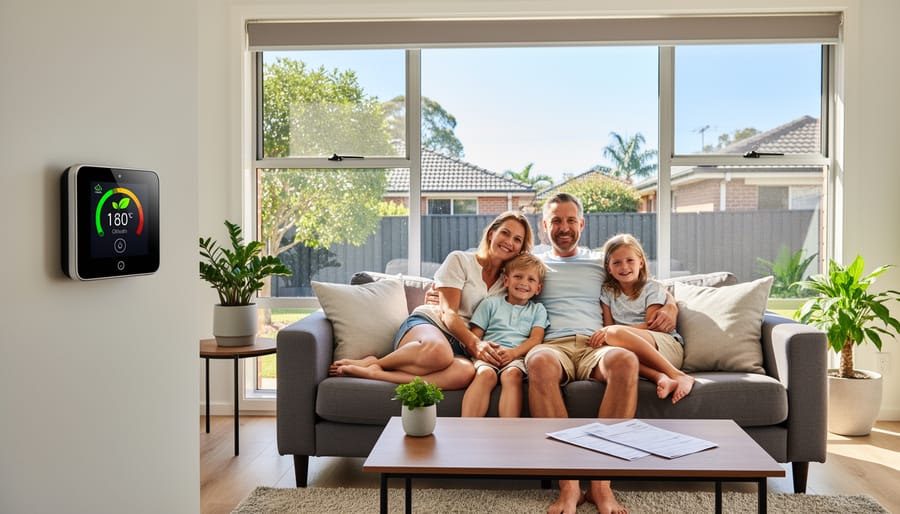
When you install an eco-friendly thermostat, you’re joining thousands of Australian households creating meaningful environmental change. Each smart thermostat that optimizes heating and cooling cycles represents another step toward our national emissions reduction targets, transforming individual actions into collective impact.
The ripple effect extends beyond your electricity bill. During scorching summer afternoons when air conditioners strain the grid, smart thermostats help prevent blackouts by reducing peak demand. In South Australia and Victoria, where renewable energy integration is accelerating, these devices enable homes to shift energy consumption to times when solar and wind power are abundant. This flexibility supports grid stability as we transition away from coal-fired generation.
Consider the numbers: if just one suburb of 1,000 homes adopted smart thermostats, the collective energy savings could power dozens of additional households or prevent several tonnes of carbon emissions annually. These aren’t abstract figures but tangible contributions to cleaner air and a more stable climate for future generations.
Your thermostat becomes part of broader carbon mitigation strategies that strengthen community resilience. As more Australians embrace this technology, energy retailers notice shifting demand patterns, encouraging further investment in renewable infrastructure. You’re not just controlling your home’s temperature; you’re casting a vote for the energy system we’re building together. Every degree adjusted mindfully, every scheduling optimization, contributes to a movement making Australia’s clean energy future possible.
Making the switch to an eco-friendly thermostat is one of the most practical steps you can take toward a more sustainable home while enjoying tangible financial benefits. By investing in smart temperature control, you’re not just reducing your energy bills—you’re actively contributing to Australia’s cleaner, greener future. Every kilowatt-hour saved translates to reduced carbon emissions and less strain on our energy grid, particularly during those scorching summer peaks that challenge our infrastructure.
The journey toward sustainable living doesn’t have to be overwhelming. Start by researching which smart thermostat models best suit your home’s unique needs and your local climate zone. Reach out to accredited local installers who understand Australian conditions and can ensure optimal performance. Consider connecting with sustainable living initiatives in your community to share experiences and learn from others who’ve already made the transition.
Remember, every Australian household that adopts energy-efficient technology brings us closer to our collective environmental goals. Your decision today creates ripple effects that extend far beyond your own four walls, inspiring neighbors and strengthening community commitment to sustainability. Together, we’re building a future where comfort and environmental responsibility go hand in hand.