
Imagine halving your environmental footprint while never eating dinner alone. Co-housing communities make this possible by combining private homes with shared spaces and resources, creating neighbourhoods where residents actively collaborate on everything from community gardens to renewable energy systems. These intentional communities are reshaping how Australians live sustainably, proving that collective action doesn’t mean sacrificing privacy or independence.
Co-housing emerged in Denmark during the 1970s and has gained momentum across Australia as climate-conscious individuals seek alternatives to conventional suburban living. Residents own or rent their individual dwellings but share common facilities like workshop spaces, guest rooms, laundries, and large communal kitchens. This design dramatically reduces resource consumption while fostering genuine connections between neighbours who participate in decision-making and share responsibilities.
The environmental benefits are substantial. By pooling resources, co-housing communities slash per-person energy use by up to 40%, significantly reduce waste through sharing tools and equipment, and create opportunities for collective renewable energy installations that would be prohibitively expensive for single households. Community gardens produce fresh food with minimal transport emissions, while shared cars reduce vehicle ownership and associated manufacturing impacts.
Yet co-housing isn’t simply about environmental metrics. Australian communities from urban Melbourne to regional New South Wales demonstrate how this model builds resilience, combats social isolation, and creates support networks that help residents weather personal and environmental challenges. The lifestyle requires commitment to consensus decision-making and active participation, but thousands of Australians have discovered that sharing resources and building community doesn’t diminish their quality of life—it enriches it beyond measure.
Whether you’re exploring sustainable housing options or seeking deeper community connection, understanding co-housing’s practical realities will help you determine if this transformative approach aligns with your values and lifestyle.
What Co-Housing Actually Looks Like in Practice
Private Homes, Shared Values
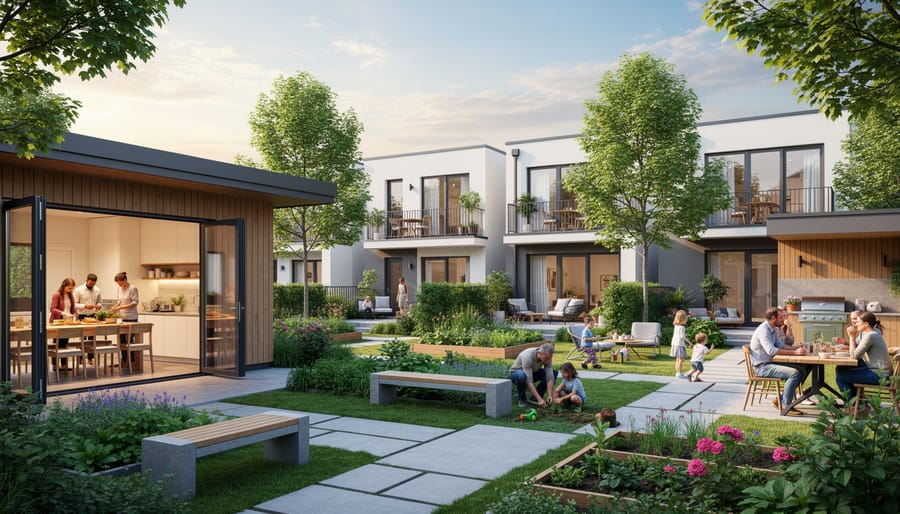
The beauty of co-housing lies in its thoughtful architecture that honours both privacy and connection. Each household maintains their own self-contained home with private kitchens, bathrooms, and living spaces, yet these dwellings are deliberately designed to encourage interaction through shared community facilities.
Typical Australian co-housing developments feature clustered private dwellings arranged around common areas like shared gardens, workshop spaces, children’s play areas, and a communal house. This central hub often includes a commercial-grade kitchen for community meals, a dining area that can seat all residents, and multipurpose rooms for gatherings or quiet activities. At Christie Walk in Adelaide, for instance, residents have private apartments but share a rooftop terrace, workshop, and common room that becomes the heart of community life.
Maintaining healthy boundaries requires intentional design and clear agreements. Pathways are positioned to create natural meeting points without compromising privacy. Many communities use shared calendars for common facilities and establish protocols for noise levels and guest visits. The key is creating spaces that make connection easy but never compulsory.
This balance means you’re never alone unless you choose to be. Need to borrow a drill? Pop next door. Craving solitude? Your private space is your sanctuary. It’s about having genuine choice in how you engage with your neighbours, fostering relationships that feel natural rather than forced.
How Decisions Get Made
One of the most distinctive features of co-housing is how residents share decision-making power. Rather than a top-down management structure, most Australian co-housing communities embrace consensus-based decision making, where every household has a voice in shaping their shared environment.
Regular community meetings form the heartbeat of co-housing life. These gatherings, typically held monthly or fortnightly, provide space for residents to discuss everything from garden maintenance rosters to major infrastructure decisions. The Christie Walk community in Adelaide, for example, holds open meetings where residents work through issues together, ensuring transparency and collective ownership of outcomes.
The consensus approach means decisions aren’t rushed. While it takes longer than a simple majority vote, this process builds stronger community bonds and ensures everyone feels heard. Facilitators often guide discussions, helping navigate different perspectives and finding solutions that work for the whole group.
When conflicts arise, and they do in any close-knit community, established processes help resolve tensions. Many communities create conflict resolution protocols during their formation phase, outlining steps from informal conversations through to mediation if needed. The emphasis is always on maintaining relationships while addressing concerns honestly. This commitment to working through challenges together strengthens resilience and creates the foundation for genuine, lasting community connection.
The Environmental Impact That Makes Co-Housing Powerful
Sharing Resources Means Using Less
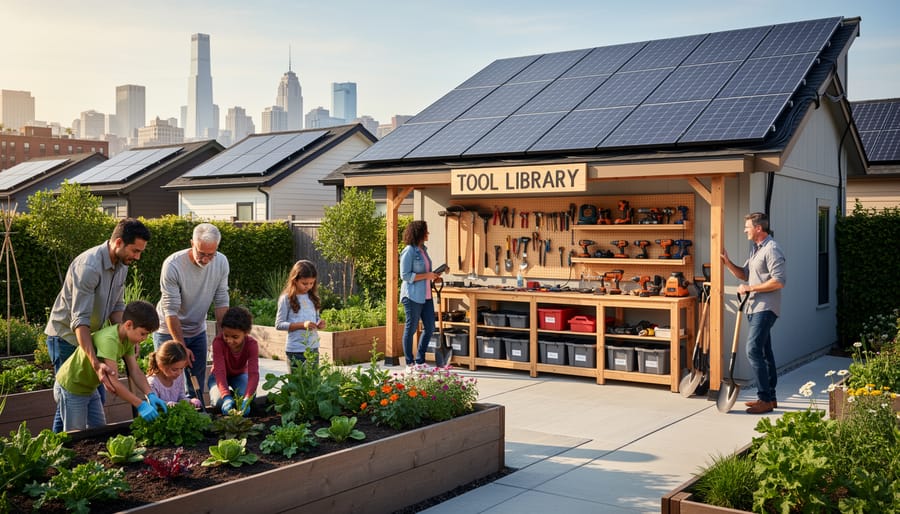
Imagine slashing your household consumption without feeling deprived. That’s the everyday reality in co-housing communities across Australia, where sharing becomes second nature. When twenty households share a workshop filled with power tools, a commercial-grade washing machine, or a ride-on mower, the manufacturing impact per person plummets dramatically.
Christie Walk in Adelaide demonstrates this beautifully. Residents share everything from ladders and camping gear to guest rooms and vehicles. One community car replaces potentially five private vehicles, while shared solar energy systems power common areas far more efficiently than individual installations.
The environmental mathematics are compelling. When you use a pressure washer twice yearly instead of owning one that sits idle, you’re preventing unnecessary production, packaging, and eventual landfill waste. Multiply this across dozens of items—garden equipment, party supplies, specialist kitchen appliances—and the carbon savings become substantial.
Melbourne’s Murundaka Co-housing has tracked their shared resources for over three decades, finding that members consume roughly thirty percent less than comparable suburban households. The shift isn’t about sacrifice; it’s about accessing what you need when you need it, without the burden of ownership, storage, or maintenance.
Energy Efficiency Through Design and Cooperation
Co-housing communities are revolutionising how Australians approach energy efficiency by combining smart design with collective action. Many developments incorporate passive solar principles from the ground up, positioning homes to capture winter sun while providing natural shade during our scorching summers. Wide eaves, strategic window placement, and thermal mass construction significantly reduce heating and cooling needs before residents even move in.
The real magic happens through cooperation. Rather than each household installing individual solar systems, communities can invest in shared renewable energy systems that pool resources and distribute power more efficiently. This collective approach means better economies of scale, professional-grade installations, and shared battery storage that maximises renewable energy use around the clock.
Communities like Christie Walk in Adelaide demonstrate this brilliantly, generating much of their own electricity while dramatically reducing each household’s carbon footprint. Shared facilities such as laundries, workshops, and guest rooms mean fewer appliances and less duplicate infrastructure overall. When neighbours combine their buying power and knowledge, everyone benefits from lower energy bills and a lighter environmental impact. It’s sustainable living made achievable through the simple power of working together.
Waste Management as a Community Effort
One of the most visible benefits of co-housing is how effectively residents tackle waste together. At Melbourne’s Cascade Co-housing, for instance, residents maintain a three-bin composting system that processes kitchen scraps, garden waste, and even cardboard from the entire community. The resulting compost nourishes shared vegetable gardens, creating a beautiful closed-loop system that’s diverted tonnes of organic waste from landfill since 2019.
Group accountability plays a surprisingly powerful role in reducing waste generation. When your neighbours can see your recycling habits and you’re collectively responsible for waste management costs, there’s natural motivation to do better. Many Australian co-housing communities report that residents become significantly more mindful about packaging choices and single-use items after moving in.
Collective recycling programs go beyond council requirements in many communities. Brisbane’s Murri Way Co-housing established a soft plastics collection point and organizes quarterly trips to specialized recycling facilities for electronics and household chemicals. This shared effort removes barriers that often prevent individuals from recycling tricky items properly.
The financial benefits add up too. By sharing bulk bins and negotiating group rates with waste services, communities often pay less per household while achieving higher diversion rates than conventional suburbs. It’s practical proof that collaboration creates better environmental outcomes.
Real Co-Housing Communities Thriving Across Australia
Christie Walk, Adelaide: Urban Eco-Living in the City Heart
Nestled in Adelaide’s inner-city suburb of Whitmore Square, Christie Walk stands as Australia’s first purpose-built urban eco-village, proving that sustainable community living isn’t just for rural areas. Since 2006, this remarkable development has transformed a former industrial brownfield site into a thriving community of 27 dwellings where neighbours share more than just a postcode.
The project’s environmental credentials are impressive. Solar panels dot rooftops, rainwater harvesting systems reduce mains water use by 70%, and shared gardens produce fresh vegetables year-round. Residents have designed their homes around passive solar principles, with thermal mass construction keeping interiors comfortable while slashing energy bills. The car-free central courtyard encourages walking and cycling, with shared vehicles reducing individual car ownership.
What truly sets Christie Walk apart is its community heartbeat. Regular shared meals in the common house, collective decision-making, and collaborative garden maintenance foster genuine connections between residents. Families, retirees, and young professionals live side-by-side, creating a diverse social fabric rarely found in conventional housing developments.
The project demonstrates that urban density and sustainability can coexist beautifully. By sharing resources, spaces, and skills, residents achieve a lighter environmental footprint while building the social connections many Australians crave. Christie Walk isn’t just housing; it’s a living blueprint for reimagining how we live together in our cities.
Murundaka Cohousing, Melbourne: Decades of Community Living
Tucked away in Melbourne’s inner north, Murundaka Cohousing has been quietly demonstrating that co-housing works for the long haul. Established in 1979, this pioneering community of around twenty households has weathered decades of change while maintaining its core values of shared living and environmental responsibility.
What sets Murundaka apart isn’t just its longevity, but the practical wisdom accumulated over 40-plus years. Residents have learned that successful co-housing requires clear communication structures and regular gatherings to maintain community bonds. Their weekly shared meals aren’t just about saving resources; they’re the social glue that keeps relationships strong through life’s inevitable transitions.
The community’s environmental footprint reflects their commitment to sustainable living. Shared facilities including a common house, workshop, and extensive gardens mean less individual consumption and more collaborative resource use. Solar panels, composting systems, and car-sharing arrangements have evolved naturally from their collective approach.
Perhaps Murundaka’s most valuable lesson is this: co-housing isn’t about perfection. It’s about ordinary Australians choosing to live intentionally, supporting each other through challenges, and proving that community-focused living remains viable across generations. Their experience shows that when people commit to shared values and open communication, co-housing can thrive for the long term.
Earthsong Eco-Neighbourhood Inspired Projects in Regional Australia
Victoria’s Earthsong Eco-Neighbourhood has sparked a wave of inspiration across regional Australia, with communities adapting the co-housing model to suit local conditions and challenges. Unlike their urban counterparts, these regional initiatives often incorporate larger land parcels, enabling residents to establish community gardens, revegetation projects, and even small-scale farming operations.
In northern New South Wales, several groups are exploring co-housing developments that blend passive solar design with regenerative agriculture practices. These communities recognise that regional Australia’s lower land costs create unique opportunities for environmental stewardship while maintaining affordable housing options.
The Sunshine Coast in Queensland has seen particular interest, with multiple planning groups investigating how co-housing can address both social isolation in rural areas and environmental degradation. These projects typically feature shared workshop spaces, tool libraries, and collaborative land management that reduces individual resource consumption.
What makes these regional adaptations particularly compelling is their focus on place-based solutions. Rather than importing overseas models wholesale, Australian communities are weaving together co-housing principles with Indigenous land care knowledge, native landscaping, and water harvesting techniques suited to our unique climate. This grassroots innovation demonstrates that co-housing isn’t just an urban phenomenon but a flexible framework that can strengthen regional communities while treading more lightly on the land.
The Hidden Benefits Beyond Environmental Impact
Building Social Capital in an Isolated World
In an era where loneliness has been dubbed a public health crisis, co-housing communities are emerging as a powerful antidote, weaving connections that span generations and transform neighbours into chosen family.
Research from the Australian Institute of Health and Welfare shows that social isolation affects one in ten Australians, with particularly high rates among older adults and young families. Co-housing directly tackles this challenge through its intentional design. Shared courtyards become daily gathering spots where toddlers play under the watchful eyes of retired residents who share decades of wisdom, while working parents find support from fellow community members who genuinely know their children’s names.
At Cascade Co-housing in Hobart, 73-year-old Margaret shares how her life transformed after moving in. “I went from eating dinner alone every night to regular shared meals where I’m surrounded by laughter, diverse perspectives, and genuine friendship. The teenagers here helped me set up video calls with my grandchildren interstate, and I teach the younger kids about native plants in our communal garden.”
These intergenerational connections create safety nets that extend beyond casual friendships. When residents face challenges, whether it’s recovering from surgery, navigating career changes, or managing mental health struggles, the community rallies with practical support and emotional presence.
The architecture itself encourages interaction. Common houses, shared pathways, and collaborative spaces make chance encounters inevitable, transforming isolation into opportunity. What begins as borrowed garden tools evolves into book clubs, skill-sharing workshops, and celebrations that honour both individual milestones and collective achievements, building the resilient social fabric that modern Australian society desperately needs.

Economic Advantages of Shared Living
Living in a co-housing community can significantly ease the financial pressures many Australian households face today. By sharing resources and expenses, residents typically reduce their individual living costs by 20-30% compared to traditional housing arrangements.
The magic lies in what happens when neighbours work together. Instead of each household purchasing a lawnmower, pressure cleaner, or power tools, communities share these items through common tool libraries. One resident’s bread maker becomes everyone’s bread maker, and that expensive ladder gathering dust in your garage suddenly serves twenty families instead of one.
Shared amenities deliver substantial savings too. Rather than each home installing solar panels or maintaining a swimming pool, communities invest collectively in high-quality infrastructure that everyone can access. Common kitchens, laundries, and guest rooms mean you’re not paying to heat, cool, or maintain spaces you rarely use.
The collective purchasing power of co-housing communities extends beyond equipment. Residents often buy groceries, household supplies, and even energy in bulk, securing discounts that individual households simply cannot access. Some Australian communities have negotiated group rates that slash electricity bills by up to 15%.
Financial resilience strengthens when communities support each other through life’s uncertainties. Whether it’s sharing childcare, providing meals during illness, or pooling skills for home maintenance, these networks create a safety net that reduces reliance on expensive external services. When your neighbour fixes your bike or teaches your kids guitar in exchange for your gardening expertise, everyone’s budget breathes easier.
Navigating the Challenges: What Makes Co-Housing Difficult
Australian Zoning and Planning Hurdles
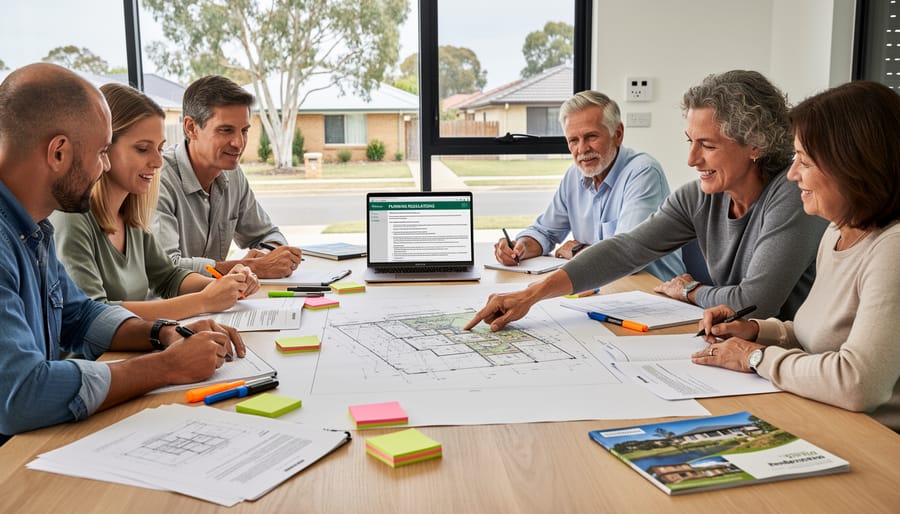
Navigating Australia’s planning systems can feel like the biggest hurdle for aspiring co-housing communities, but it’s absolutely surmountable with the right approach. Local councils often categorize co-housing projects somewhere between residential subdivisions and multi-dwelling developments, creating confusion about which regulations apply.
The most common challenges include minimum lot sizes, parking requirements designed for conventional housing, and body corporate rules that don’t accommodate shared facilities like community kitchens or workshops. In some council areas, the shared common house at the heart of co-housing might not even have a clear classification in planning schemes.
However, innovative communities are finding ways through. The Christie Walk community in Adelaide succeeded by working closely with council planners from the earliest stages, helping them understand how co-housing differs from standard developments. Others have partnered with sympathetic architects who specialize in navigating development applications for alternative housing models.
Some communities have achieved success by initially establishing as a community land trust or cooperative housing model, which can provide clearer legal frameworks. Several Victorian communities found that engaging a town planner experienced in sustainable developments early in the process saved months of back-and-forth with councils.
The key is persistence, clear communication about your community’s vision, and finding council officers willing to think creatively about how existing regulations can accommodate innovative housing solutions.
The Human Element: Conflict and Commitment
Let’s be honest: living closely with neighbours isn’t always sunshine and rainbows. Co-housing communities thrive on shared decision-making, which means residents typically commit to monthly meetings, working groups, and communal maintenance rosters. For busy Australians juggling work and family, this time investment can feel overwhelming, particularly in the early months.
Conflicts inevitably arise. Perhaps someone consistently skips their cleaning roster, or neighbours disagree about the best approach to managing the shared garden. One Melbourne co-housing resident recalls a heated six-month debate about whether to install solar panels, with differing opinions on budget priorities testing relationships.
What separates thriving communities from struggling ones? Successful co-housing groups invest in conflict resolution training and establish clear communication protocols from the start. They embrace disagreement as part of the process rather than a failure. Regular community dinners and social events help build the goodwill needed to weather tougher conversations.
The Christie Walk community in Adelaide credits their longevity to structured decision-making processes and a shared commitment to working through challenges rather than walking away. While the time commitment averages 4-6 hours monthly, residents consistently report that the connections forged and environmental impact achieved make every meeting worthwhile. Co-housing requires genuine commitment, but for many Australians, it’s an investment that pays dividends in belonging and purpose.
How to Start Your Co-Housing Journey in Australia
Joining an Existing Community vs. Starting Fresh
Deciding between joining an established co-housing community or starting fresh is a significant choice that depends on your timeline, energy levels, and vision for community living.
Joining an existing community offers immediate benefits. You’ll step into established routines, tested governance structures, and existing relationships. The physical infrastructure is already built, meaning you can begin your co-housing journey sooner. Many Australian communities, particularly in Queensland and Victoria, welcome new members and often have waiting lists that demonstrate their success. This path suits those who prefer proven systems and want to avoid the intensive development phase. However, you’ll need to adapt to existing community culture and may have limited input on major decisions already made.
Starting fresh allows complete creative control. You’ll shape everything from architectural design to community values, ensuring alignment with your vision for sustainable living. This appeals to those passionate about specific features like passive solar design or permaculture integration. The challenge? It requires substantial time commitment, typically three to five years before moving in, plus navigating complex planning approvals and securing financing. You’ll need dedicated founding members willing to weather uncertainties together.
To evaluate opportunities, visit communities multiple times, attend communal meals, and speak honestly with residents about challenges. Review governance documents, financial statements, and decision-making processes. Consider whether their environmental commitments match yours and if the location supports your sustainable relocation goals. Trust your instincts about whether these people could become your extended family, because in co-housing, they will be.
Australian Resources and Networks to Get You Started
If you’re feeling inspired to explore co-housing, you’ll be pleased to know that Australia has a growing network of resources to guide you on this journey. The Australian Co-housing Network serves as the central hub, connecting existing communities and aspiring co-housers across the country. Their website features directories of established communities, upcoming projects, and regular workshops that walk you through everything from initial planning to moving in.
Cohousing Australia offers practical workshops and feasibility studies, particularly helpful if you’re considering starting a community from scratch or joining an existing project. These sessions cover legal structures, financing options, and design principles tailored to Australian conditions and regulations.
State-based groups like Victorian Cohousing Network and NSW Cohousing actively host information evenings and community tours, giving you firsthand glimpses into this lifestyle. Many communities also welcome visitors for open days, where you can chat with residents and experience the shared spaces in action.
For those juggling an eco-friendly startup alongside co-housing dreams, these networks often connect you with like-minded professionals who’ve successfully balanced both commitments.
Online platforms like the Co-housing Community Forum provide spaces to ask questions, find potential co-housers in your region, and learn from others navigating similar paths. Local sustainability centres and community hubs frequently host co-housing discussions too, making it easier to connect with neighbours who share your vision for collaborative, sustainable living. Start by attending just one event or workshop, and you’ll quickly discover a welcoming community ready to support your exploration.
Co-housing offers a compelling response to two of the most pressing challenges facing Australians today: our environmental footprint and the growing sense of social isolation in modern life. By sharing resources, reducing duplication, and building genuine connections with neighbours, these communities demonstrate that sustainable living doesn’t mean sacrificing quality of life. In fact, residents often discover the opposite is true, finding their lives enriched by the balance of privacy and community that co-housing provides.
It’s important to recognise that co-housing isn’t the right fit for everyone. The collaborative decision-making process requires time, patience, and a willingness to compromise. You’ll need to be comfortable with more social interaction than typical suburban living offers, and genuinely committed to the shared values that bind these communities together.
However, as climate concerns intensify and more Australians seek meaningful alternatives to conventional housing, co-housing’s relevance continues to grow. These communities prove that we can live lighter on the earth while simultaneously strengthening the social fabric that makes life meaningful. Whether you’re drawn to the environmental benefits, the community connection, or both, co-housing represents a practical pathway toward a more sustainable and connected future.
If the principles of shared resources, environmental responsibility, and intentional community resonate with your values, it might be worth exploring whether co-housing could be part of your journey. The growing number of established and emerging communities across Australia suggests you’re not alone in seeking this different way of living.