
Transform your shaded garden spaces into thriving ecosystems by selecting native plants that naturally flourish beneath Australia’s eucalypt and rainforest canopies. Layer your woodland garden strategically: establish a groundcover foundation with species like native violets and kidney weed that spread readily in dappled shade, add mid-height plants such as Lomandra and native iris for structure, then incorporate feature specimens including tree ferns and bangalow palms to create vertical interest.
Match plants to your specific microclimate by observing moisture patterns and light levels throughout the day. The darkest corners beneath dense trees require different species than bright, filtered shade areas, while dry shade under established eucalypts demands tough, drought-adapted natives compared to moisture-loving ferns suited to damper spots.
Prepare your site by removing invasive weeds and enriching soil with leaf mulch that mimics the natural forest floor, creating conditions where native woodland plants establish quickly and outcompete future weed growth. Position plants in natural-looking clusters rather than formal rows, replicating the organic patterns found in Australian bushland.
Your woodland garden will require minimal intervention once established, with native plants naturally adapted to local rainfall patterns, seasonal temperature fluctuations, and existing soil conditions. This approach saves water, eliminates the need for chemical inputs, and creates vital habitat corridors for native birds, beneficial insects, and wildlife increasingly displaced from urban areas. The result is a garden that grows more beautiful each season while contributing meaningfully to local biodiversity and environmental resilience across Australian communities.
Why Native Woodland Plants Are Perfect for Australian Gardens
Choosing native woodland plants for your shaded garden spaces isn’t just about creating something beautiful—it’s about building resilience into your landscape while supporting the ecosystems that sustain us all. When you establish an indigenous garden, you’re working with plants that have evolved over millennia to thrive in Australia’s unique conditions, making them naturally suited to our climate extremes and variable rainfall patterns.
The practical benefits are compelling. Native woodland plants excel at water efficiency because they’ve adapted to Australian conditions, requiring significantly less irrigation once established compared to exotic alternatives. This translates to lower water bills and less time spent maintaining your garden—a win for both your schedule and the environment. Many species, like native violets and hardenbergias, actually prefer the dappled shade conditions that challenge traditional exotic plants.
Perhaps the most rewarding aspect is the wildlife habitat creation that happens almost effortlessly. Native plants support local insects, birds, and small mammals that have co-evolved with them, creating vital stepping stones of habitat even in suburban areas. Picture blue wrens darting through native grasses or honeyeaters visiting your correas—these connections bring your garden to life in ways imported species simply cannot replicate.
Climate resilience is another crucial advantage as weather patterns become increasingly unpredictable. Plants adapted to Australian conditions handle temperature fluctuations, periodic drought, and heavy rainfall events far better than species bred for European or American climates. They’re survivors by nature.
By choosing native woodland plants, you’re joining a growing community of Australians actively contributing to local conservation efforts. Every indigenous plant in your garden helps preserve genetic diversity, supports local nurseries specializing in provenance plants, and creates corridors for wildlife movement. It’s practical, beautiful, and purposeful gardening that makes a genuine difference.
Understanding Your Woodland Garden Environment
Reading Your Shade: From Dappled to Deep
Understanding your garden’s shade is the first step to creating a thriving woodland sanctuary. Australian gardens experience unique light patterns that shift with our distinct seasons and sun angle, so what works in the Northern Hemisphere doesn’t always translate here.
Start by observing your space at different times throughout a single day. Dappled shade occurs when sunlight filters through an open tree canopy, creating moving patterns of light and shadow. This is perfect for many native woodland plants. Partial shade means your garden receives direct sun for about 3-4 hours daily, typically morning light. Deep shade, found under dense canopies or along southern walls, receives little to no direct sunlight.
Here’s a practical tip from experienced Australian gardeners: photograph the same spot at 9am, midday, and 3pm during both summer and winter. You’ll be surprised how dramatically light patterns change seasonally. In summer, our high sun angle creates different shade patterns compared to winter’s lower trajectory.
Don’t forget to consider your neighbour’s trees and future growth of existing plants. That sunny spot today might become shaded in two years as your Lilly Pilly matures. Understanding these patterns now helps you choose plants that will flourish for years to come, reducing water usage and maintenance while supporting local wildlife communities.
Soil and Moisture Considerations
Understanding your soil is the foundation of a thriving woodland garden, and Australian soils present unique opportunities to work with. Start by observing how water behaves after rain. Does it pool in low spots or drain away quickly? Most native woodland plants prefer well-drained soil that stays slightly moist, mimicking the forest floor conditions they’ve evolved with over thousands of years.
Australian soils are often naturally acidic to neutral, which suits most woodland natives beautifully. A simple pH test kit from your local nursery can confirm your levels. If you’re working with heavy clay common in many suburban gardens, don’t despair. Many gardeners across Australia have transformed these challenging conditions by adding generous amounts of organic matter like leaf mulch and composted bark, gradually improving both drainage and soil structure.
The magic ingredient for woodland gardens is organic matter. Think of how nature builds soil in the bush, with layers of decomposing leaves creating that rich, spongy forest floor. You can recreate this by applying a thick mulch layer of eucalyptus leaves, she-oak needles, or composted native plant material. This approach not only improves moisture retention during our increasingly dry summers but also feeds beneficial soil organisms that help your plants thrive. Remember, healthy soil means resilient plants that need less intervention from you.
Ground Covers and Low Growers for Woodland Floors
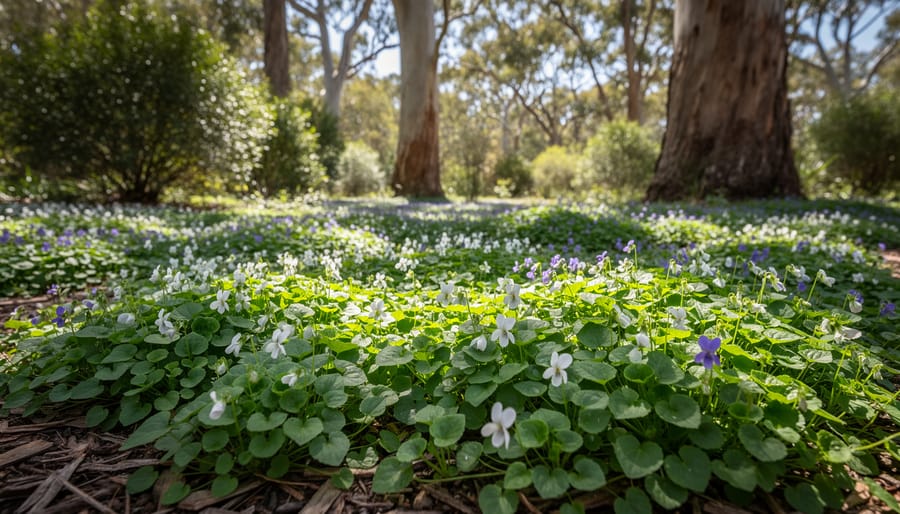
Vigorous Spreaders for Quick Coverage
For those tricky bare patches under established trees where nothing seems to thrive, vigorous ground-covering natives offer an elegant solution. These enthusiastic spreaders create living carpets that naturally suppress weeds while requiring minimal maintenance once established.
Kidney Weed (Dichondra repens) is a true Australian champion for shaded woodland areas. This low-growing native forms a dense, kidney-leafed mat that tolerates foot traffic remarkably well, making it perfect for informal pathways through your woodland garden. Many Australian gardeners have discovered it outcompetes invasive weeds without the aggressive tendencies of exotic alternatives. It even handles periods of dryness once its roots are established in your local soil.
Native Violet (Viola hederacea) brings both beauty and function to the woodland floor. Its delicate purple and white flowers appear throughout spring and summer, creating enchanting drifts beneath canopy trees. This violet spreads steadily through runners, knitting together to form weed-suppressing colonies that still allow spring bulbs to push through.
The beauty of these vigorous spreaders lies in their ability to solve problems while creating habitat. They provide ground-level shelter for beneficial insects and small skinks that help control garden pests naturally. Rather than fighting bare earth with constant mulching, you’re working with plants perfectly adapted to Australian woodland conditions, creating a self-sustaining ecosystem that actually gets better with time.
Delicate Gems for Detailed Planting
The magic of woodland gardens often lies in their intricate details, and that’s where smaller native gems truly shine. These delicate beauties reward those who take time to observe their unique features, creating layers of discovery throughout the seasons.
Trigger plants (Stylidium species) are perfect examples of nature’s ingenuity in miniature. These fascinating plants literally spring into action when pollinators visit, their sensitive trigger mechanism flicking pollen onto unsuspecting insects. With dozens of species across Australia, from the pink-flowered Stylidium graminifolium to tiny alpine varieties, they’re ideal for tucking between rocks or along pathway edges where you’ll notice their clever adaptations up close.
Miniature native lilies bring seasonal bursts of colour to woodland floors. The delicate chocolate lily (Arthropodium strictum) produces nodding purple-brown flowers in spring, while the star-flowered lily (Iphieon) creates drifts of white blooms. These smaller species naturalize beautifully under tree canopies, multiplying gradually to form colonies that look increasingly authentic with each passing year.
Don’t overlook native violets (Viola hederacea and Viola banksii) either. These ground-hugging plants weave through other plantings, softening edges and filling gaps with their heart-shaped leaves and charming purple-and-white flowers. They’re particularly valuable for community gardens where low-maintenance, spreading plants create cohesive planting schemes that benefit local pollinator populations.
Mid-Layer Shrubs That Build Structure
Understory Shrubs for Filtered Shade
The middle layer of your woodland garden is where you’ll create real visual impact, and Australian native shrubs have evolved perfectly for this filtered light environment. These understory champions bring year-round structure, stunning flowers, and vital habitat for local wildlife.
Austral Indigo (Indigofera australis) is a remarkable performer in dappled shade, producing cascades of pink-purple pea flowers throughout the warmer months. Growing to around 1.5 metres, this nitrogen-fixing shrub actually improves your soil while looking beautiful. Many gardeners across suburban Sydney and Melbourne are rediscovering this adaptable native that their grandparents once grew.
Native fuchsias offer something truly special for shadier spots. The Fuchsia Heath (Epacris longiflora) produces delicate tubular flowers that honeyeaters absolutely adore, creating a living connection between your garden and local bird populations. For slightly brighter conditions, try Correa species like Correa reflexa, whose bell-shaped flowers provide winter nectar when little else is blooming.
Crowea (Crowea exalata and Crowea saligna) deserves a spot in every woodland garden. These compact shrubs produce masses of starry pink flowers against fine foliage, bringing cottage garden charm with zero fuss. They’re particularly valuable in Melbourne and cooler regions where they provide structure without overwhelming smaller spaces.
These shrubs work together beautifully, creating layers of flowering interest from spring through autumn. The secret is choosing species suited to your specific shade levels and allowing them space to develop their natural forms. Your local native nursery can guide you toward varieties that thrive in your region’s conditions.
Screening and Feature Shrubs
When you need to create privacy screens or establish strong structural elements in your shaded garden, several Australian natives excel in these roles while celebrating our unique biodiversity. These larger shrubs transform challenging woodland spaces into purposeful, beautiful areas that benefit both your household and local wildlife.
Lilly Pilly cultivars have become garden heroes across Australia, and for good reason. Varieties like Acmena smithii ‘Minor’ and Syzygium australe ‘Resilience’ tolerate moderate shade beautifully while providing dense, glossy foliage that creates effective privacy screens. These adaptable plants reward you with delicate white flowers and colourful berries that attract native birds, turning your screening plants into vibrant wildlife corridors. Many communities have discovered that these hardy shrubs thrive where conventional hedging plants struggle, making them perfect for those tricky shaded boundaries.
Native ginger species, particularly Alpinia caerulea (Native Ginger), bring a subtropical elegance to woodland gardens while handling dappled shade with ease. Growing to around 2 metres, they create striking focal points with their architectural foliage and delicate white flowers, followed by bright blue berries. These plants naturally thrive in Queensland and New South Wales rainforest understorey, making them perfectly suited to recreating that peaceful woodland atmosphere in your own backyard while supporting local ecosystems.
Ferns and Strappy Plants for Textural Interest
Australian Ferns for Every Climate Zone
Australia’s diverse climate zones each support beautiful fern species perfectly adapted to woodland conditions. The great news is that wherever you garden across this continent, there’s a native fern ready to transform your shaded spaces.
In tropical and subtropical regions from northern NSW through Queensland, the majestic Rough Tree Fern (Cyathea australis) creates dramatic canopy layers, while the delicate Maidenhair Fern (Adiantum aethiopicum) adds softness to lower levels. These moisture-loving species thrive in humid coastal gardens where they’ve evolved over millennia.
Temperate gardeners across southern Australia can celebrate species like the Mother Shield Fern (Polystichum proliferum), which tolerates cooler conditions beautifully and even handles some frost. The hardy Rasp Fern (Doodia aspera) suits both coastal and inland gardens, offering year-round texture with distinctive pinkish new growth.
For drier woodland areas, particularly in inland zones, consider the resilient Rock Fern (Cheilanthes austrotenuifolia), which survives tough conditions by going dormant during extended dry periods. Even arid-climate gardeners can enjoy Blechnum nudum in sheltered microclimates with supplementary water during establishment.
Your local native nursery staff are wonderful resources for identifying which ferns naturally occur in your bioregion, ensuring you’re supporting genuine local biodiversity while creating that lush woodland atmosphere you’re dreaming of.
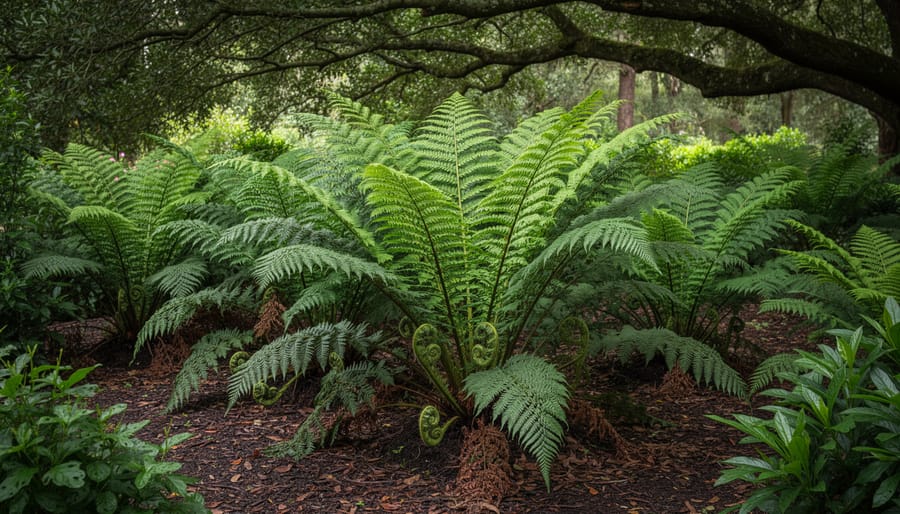
Native Grasses and Strappy Foliage
Grasses and strappy-leaved plants bring wonderful textural contrast and gentle movement to shaded gardens, and Australian natives excel in these roles. While many gardeners assume grasses need full sun, several indigenous species have evolved to thrive beneath tree canopies.
Lomandra longifolia (Mat Rush) is a superstar performer for woodland gardens, tolerating everything from deep shade to occasional sun with equal grace. This hardy strappy plant creates robust clumps that knit together beautifully as groundcover, and communities across Melbourne and Sydney are increasingly using it in public woodland restoration projects. The cultivar ‘Tanika’ offers a more compact form perfect for smaller gardens.
For genuine grass options, Microlaena stipoides (Weeping Grass) deserves celebration. This delicate native grass carpets forest floors throughout southeastern Australia, forming soft, flowing masses that sway with the slightest breeze. It’s particularly valuable for erosion control on shaded slopes whilst creating that coveted natural meadow aesthetic.
Carex appressa (Tall Sedge) thrives in moist, shaded positions, making it ideal for those tricky damp spots under trees where little else prospers. Indigenous sedges like this one also provide crucial habitat for small birds and insects, strengthening your garden’s ecological connections. These architectural plants prove that functional landscaping and beauty work hand in hand.
Creating Seasonal Interest With Flowering Natives
Creating a woodland garden that delights throughout the year is simpler than you might think when you work with the natural rhythms of Australian native plants. The secret lies in selecting species that take turns performing, ensuring your shaded sanctuary always offers something beautiful to discover.
Start your planning with spring bloomers like the delicate Lily Pilly, whose cream flowers burst forth in September and October, attracting native bees before developing into edible berries that local birds adore. As spring transitions to summer, the spectacular flannel flowers will brighten darker corners with their soft grey-green foliage and pure white blooms, providing essential nectar for small honeyeaters.
Winter needn’t mean a dull garden either. Native violets carpet the ground with purple and white flowers from May through September, while Correa species offer tubular flowers in shades of pink, red, and cream that become lifelines for honeyeaters during the cooler months when other food sources dwindle.
The real magic happens when you layer these seasonal performers together. Picture early wattles providing golden winter colour in the canopy, native iris blooming at ground level in spring, and Christmas bush offering its distinctive red bracts as the year ends. This staggered flowering creates what ecologists call a nectar corridor, supporting pollinator populations throughout their entire lifecycle rather than just offering a brief seasonal feast.
Many Australian gardeners are already discovering how this approach transforms their woodland gardens into thriving ecosystems. By thinking seasonally and choosing plants that flower at different times, you’re not just creating visual interest for yourself but establishing a genuine habitat that supports native fauna year-round. It’s gardening that gives back to the community of creatures sharing your space.
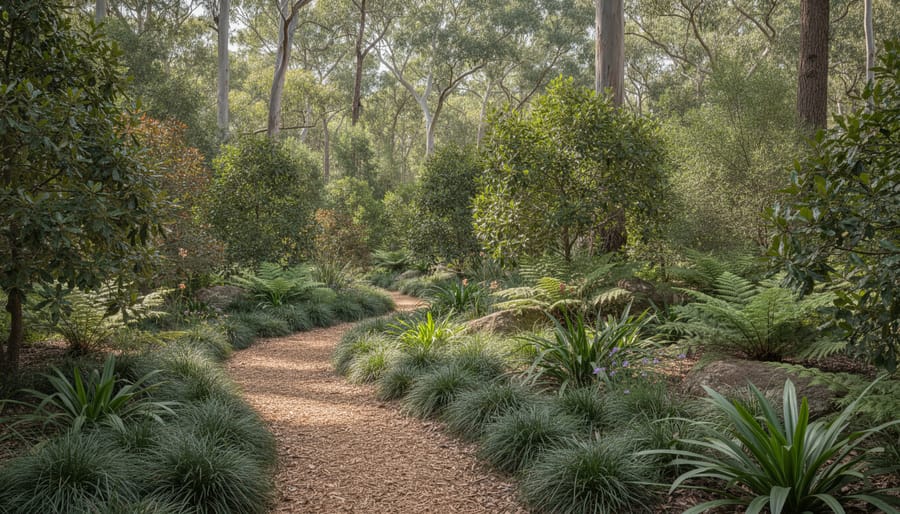
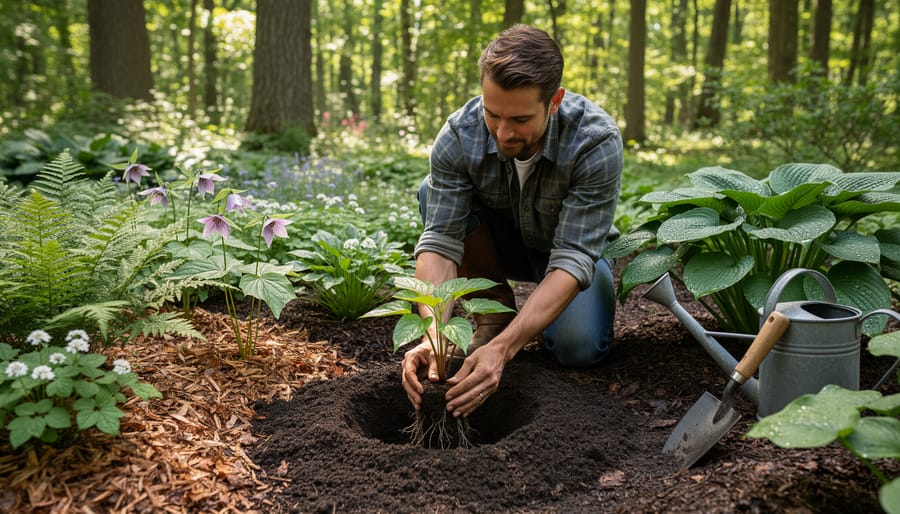
Establishing Your Woodland Garden: Practical Steps
Creating your woodland garden begins with understanding what’s already there. Before digging, spend time observing how water moves through your space and where tree roots are most dense. This knowledge will guide your planting decisions and save you considerable effort.
Start with soil preparation that respects the existing ecosystem. Woodland natives thrive in soil rich with organic matter, much like the forest floor they naturally inhabit. Rather than tilling, which can damage tree roots, top-dress the area with a 5-10cm layer of compost. Many community gardens across Australia run composting initiatives where you can source quality material while supporting local sustainability efforts.
When planting beneath established trees, work carefully around the root zone. Dig individual planting holes rather than trenches, and if you encounter significant roots, simply adjust your plant placement slightly. Native woodland species are remarkably adaptable and will find their way around obstacles. Position plants at the same depth they were growing in their pots, gently teasing out any circling roots.
Mulching with Australian materials is essential for moisture retention and weed suppression. Eucalyptus leaves, casuarina needles, or locally sourced hardwood chips create the perfect woodland aesthetic while breaking down to enrich your soil. Apply a 7-10cm layer, keeping mulch away from plant stems to prevent collar rot.
Initial watering requires attention but not obsession. Water deeply at planting, then maintain consistent moisture for the first 6-8 weeks while roots establish. During this period, check soil moisture twice weekly, especially during dry spells. Once established, most woodland natives will thrive on rainfall alone, though occasional deep watering during extended droughts helps them flourish.
Remember, tree roots will compete for water and nutrients, so position new plants between major roots where possible. This isn’t about fighting nature but working alongside it to create a harmonious, sustainable garden that benefits both you and the broader environment.
Maintaining Your Native Woodland Garden Sustainably
One of the greatest joys of creating a native woodland garden is watching it thrive with minimal intervention. Unlike thirsty lawns and exotic borders, your established native woodland becomes a self-sustaining ecosystem that actually gets better with age while reducing your environmental footprint significantly.
Mulching is your garden’s best friend, but choose wisely. Apply a 75-100mm layer of locally sourced organic mulch like eucalyptus chips or shredded bark, keeping it away from plant stems to prevent collar rot. This living blanket suppresses weeds, retains moisture, moderates soil temperature, and gradually enriches the soil as it breaks down. Many Australian councils offer free mulch from their tree-trimming programs, turning would-be waste into garden gold.
Here’s the wonderful truth: once your native woodland plants establish (typically 12-18 months), most require virtually no supplementary watering. Their deep root systems access moisture unavailable to shallow-rooted exotics. During extreme droughts, an occasional deep watering helps, but these tough Australians are built for our climate.
Forget the pesticides. Native woodlands support balanced ecosystems where beneficial insects, birds, and small mammals keep potential pests in check through natural pest management. If you notice something munching your plants, pause before intervening. Often, it’s native wildlife feeding, or the problem resolves naturally within weeks.
Your seasonal tasks are refreshingly simple. Autumn brings mulch replenishment and any necessary pruning to maintain shape. Spring is perfect for adding new plants if desired. Remove weeds while they’re small, and leave fallen leaves where they land, they’re free fertilizer and habitat for beneficial insects.
Compared to traditional gardens demanding weekly mowing, constant watering, and chemical inputs, your native woodland garden saves water, eliminates polluting runoff, and cuts maintenance time by up to 80 percent. That’s sustainability you can actually see.
Connecting With Local Native Plant Communities
Creating a thriving woodland garden becomes so much richer when you connect with others who share your passion for Australian native plants. Right across the country, dedicated native plant societies and bush regeneration groups are working to preserve and promote our unique flora, and they’re always welcoming new members.
Your local Australian Plants Society branch is an excellent starting point. These communities bring together experienced growers and enthusiastic beginners who freely share knowledge about which species thrive in your specific area. Members often hold plant sales featuring locally-provenant stock, which means plants grown from seed collected in your region. This local provenance matters enormously because plants are naturally adapted to your exact climate patterns, soil types, and local wildlife.
Community nurseries and bush regeneration groups offer another wonderful avenue for engagement. Many run volunteer days where you can learn propagation techniques, collect seeds ethically, and even take home plants you’ve helped grow. It’s hands-on learning that builds both skills and friendships.
When sourcing plants, always ask nurseries about provenance. Plants labelled as ‘local native’ should ideally come from within 20 kilometres of your garden. This precision ensures genetic diversity appropriate to your bioregion and supports truly sustainable gardening.
Beyond acquiring plants, these groups often coordinate habitat restoration projects and citizen science initiatives. You might find yourself surveying local populations of rare woodland species or helping restore degraded bushland. These activities deepen your understanding of how woodland ecosystems function while contributing meaningfully to conservation efforts that protect Australia’s botanical heritage for future generations.
Creating a native woodland garden is more than just solving that challenging shady corner. It’s about transforming forgotten spaces into thriving ecosystems that support local wildlife while adding year-round beauty to your property. Every fern you plant, every groundcover that takes hold, and every bird that visits becomes part of a larger story of environmental regeneration happening right in your own backyard.
The beauty of this journey is that you don’t need to tackle everything at once. Start with just a few species that suit your conditions, observe how they perform, and gradually build your woodland haven. Many Australian gardeners find this approach less overwhelming and more rewarding, as they develop a deeper understanding of their local environment with each season.
Your woodland garden will contribute to vital habitat corridors, support struggling native species, and help restore the natural balance in your local area. It’s a tangible way to make a difference while creating a peaceful retreat you’ll cherish.
Ready to begin? Take a walk through your shaded areas this weekend. Notice the light patterns, feel the soil, and imagine the possibilities. Then choose three or four native plants suited to your region and give them a home. Your woodland garden adventure starts with that first small step, and the rewards will unfold for years to come.