
Transform your broccoli stalks into creamy soup bases, your carrot tops into vibrant pesto, and your citrus peels into natural cleaning solutions. Every year, Australian households discard roughly 3.1 million tonnes of food, with much of it being perfectly edible parts we’ve been conditioned to throw away. Zero-waste cooking challenges this habit by recognizing the culinary potential in every part of your ingredients, from beetroot greens to chicken carcasses.
The movement goes beyond environmental responsibility. It’s about rediscovering traditional cooking wisdom that our grandparents practiced by necessity, now elevated by modern techniques and global flavour profiles. When you save vegetable scraps for stock or pickle watermelon rinds, you’re not just reducing bin weight; you’re unlocking new flavours, stretching your grocery budget by up to 30%, and developing a creative approach to meal planning that makes cooking more engaging rather than restrictive.
Australian kitchens are uniquely positioned to embrace this practice. Our abundance of fresh produce markets, multicultural culinary traditions, and growing network of community gardens and composting initiatives create an ideal ecosystem for zero-waste experimentation. Indigenous food practices, which have utilized whole plants and animals for millennia, offer additional inspiration for resourceful cooking.
This guide provides the framework to transform your relationship with food scraps. You’ll learn which parts of common ingredients are edible and delicious, master preservation techniques that extend shelf life naturally, and discover recipes that turn what you once discarded into standout dishes. The goal isn’t perfection but progress, building sustainable habits one saved scrap at a time while connecting with a community of like-minded Australians reimagining what belongs in our kitchens versus our bins.
The True Cost of What We Throw Away
Every year, Australian households bin around 2.5 million tonnes of food that could have been eaten. That’s roughly 300 kilograms per household, or about one in five bags of groceries we bring home. For the average family, this translates to approximately $2,000 to $2,500 worth of food ending up in landfill annually. That’s a significant chunk of the household budget literally going to waste.
Beyond our wallets, the environmental ripple effects are substantial. When food decomposes in landfill without oxygen, it produces methane, a greenhouse gas 25 times more potent than carbon dioxide. Australia’s food waste generates the equivalent of 7.6 million tonnes of CO2 each year, making it a major contributor to our carbon footprint.
The water story is equally compelling. Australia is the driest inhabited continent on Earth, yet we use precious water resources to grow food that never gets eaten. Consider that it takes roughly 50 litres of water to grow a single orange, or 2,400 litres for one kilogram of wheat. When we throw away that produce, we’re also discarding all the water, energy, and labour invested in bringing it to our tables.
Our landfill capacity is another pressing concern. Major cities like Sydney and Melbourne face increasing pressure on waste infrastructure, with some sites projected to reach capacity within decades. Every carrot top, potato peel, and broccoli stalk we discard takes up valuable space.
Here’s the opportunity: even small changes in how we use ingredients can make a meaningful difference. By embracing zero-waste cooking and buying local and seasonal produce with less packaging, we’re not just saving money. We’re reducing methane emissions, conserving water, and easing pressure on our waste systems. Communities across Australia are already proving that cooking with what we have, rather than what we waste, creates positive change for both households and the environment.
Your Kitchen’s Hidden Ingredients: What You’re Actually Throwing Out
Vegetable Scraps Worth Saving
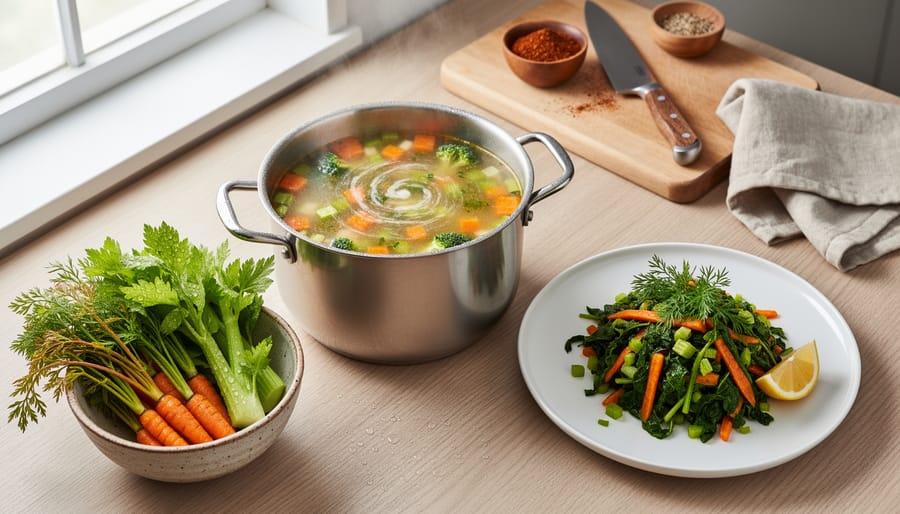
Before you toss those vegetable offcuts, consider this: many parts we discard are packed with flavour and nutrition. Aussie households can dramatically reduce kitchen waste by recognising the potential in these often-overlooked scraps.
Broccoli stems are surprisingly versatile, containing the same nutrients as their florets. Peel the tough outer layer and slice them thinly for stir-fries or grate them raw into coleslaws. Carrot tops, rich in vitamin K and antioxidants, transform into vibrant pestos or chimichurri sauces that rival traditional basil versions.
Cauliflower leaves deserve a second chance too. These outer greens can be roasted until crispy for a nutritious snack or chopped into curries and soups. When buying organic produce, you’re getting even cleaner scraps to work with, free from pesticide residues.
Beetroot leaves and stems make excellent substitutes for silverbeet in any recipe, while celery leaves add intense flavour to stocks and salad dressings. Even corn cobs, after kernels are removed, can simmer in broths to impart subtle sweetness.
The key is shifting our mindset from waste to resourcefulness, recognising that nutritional goodness doesn’t stop at conventional boundaries.
Fruit Parts You Should Never Bin
Before you toss that fruit waste, consider the treasure you’re holding. Australian households bin around 300kg of food annually, and fruit scraps make up a significant portion. The good news? These “scraps” are packed with flavour and nutrients.
Citrus peels are perhaps the most versatile saviours in your kitchen. Freeze lemon, orange, and lime rinds to zest into baking, infuse into cleaning solutions, or simmer with cinnamon for a natural air freshener. Local Melbourne cafes have embraced candying citrus peels as garnishes, turning waste into beautiful edible decorations.
Apple cores contain pectin, making them perfect for homemade stock or vinegar. Simply collect cores in your freezer until you have enough to ferment into tangy apple cider vinegar—a staple in many Sydney zero-waste communities.
Watermelon rinds might surprise you most. That white flesh pickles beautifully with vinegar and spices, creating a crunchy condiment that’s become popular at Australian farmers’ markets. You can also blend rinds into smoothies or stir-fries after removing the tough outer skin.
Stone fruit pits infuse syrups with subtle almond flavours, while berry tops blend seamlessly into morning smoothies. The key is shifting perspective: these aren’t scraps, they’re ingredients waiting for their moment to shine.
Beyond Produce: Bones, Bread, and Other Treasures
Zero-waste cooking extends far beyond vegetable scraps. Your kitchen holds treasures you might be tossing away daily. Take meat bones, for instance. After your Sunday roast, those leftover bones transform into liquid gold. Simmer them for 12-24 hours to create nutrient-rich bone broth, perfect for soups and stews. Many Australian households are discovering this traditional practice while reducing meat consumption, making the most of what they do purchase.
Stale bread never needs to see the bin. Blitz it into breadcrumbs for schnitzel, or cube and toast it for crunchy croutons. Parmesan and other hard cheese rinds can simmer in pasta sauces or minestrone, infusing incredible depth of flavour. Those herb stems you usually discard? Blend them into pesto or chimichurri alongside the leaves.
Even citrus peels deserve a second life. Dry them for homemade tea, candy them for desserts, or blend with vinegar for natural cleaning solution. Melbourne cafes are increasingly using orange peels in marmalade and baked goods, showing how commercial kitchens embrace these practices. Every item has potential when we shift our mindset from waste to resourcefulness.
Essential Zero-Waste Cooking Techniques Every Australian Kitchen Needs
The Art of Stock Making
Transforming kitchen scraps into rich, flavourful stock is one of the most rewarding zero-waste practices you can master. Across Australian households, we’re collectively binning vegetable off-cuts, chicken carcasses, and beef bones that could become the foundation for countless meals.
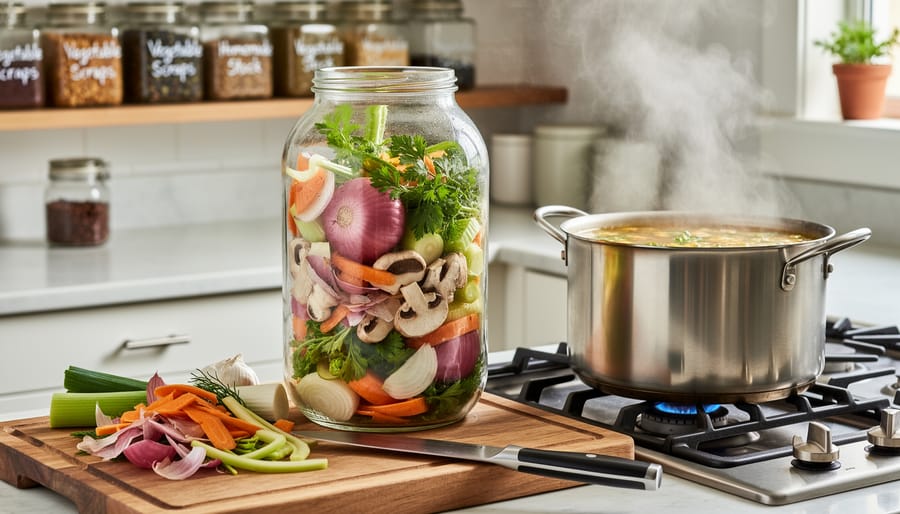
Start by keeping a dedicated container in your freezer for vegetable scraps. Onion skins, carrot tops, celery leaves, herb stems, and mushroom stalks all contribute depth and nutrients. Once you’ve collected about four cups of scraps, place them in a large pot with 2 litres of water, add a bay leaf and peppercorns, then simmer for 45 minutes. Strain and you’ve got golden vegetable stock.
For chicken stock, save your roast chicken bones and simmer them with veggie scraps for 2-3 hours. Beef bones benefit from roasting first at 200°C for 30 minutes to deepen flavour, then simmering for 4-6 hours with aromatics.
Storage is crucial in our Australian climate. Cool stock quickly by placing your pot in a sink of cold water, then refrigerate immediately. Stock keeps for 4 days refrigerated or 3 months frozen. Pour into ice cube trays for convenient portions, or fill clean jars leaving 3cm headspace for expansion. Label with the date and type, and you’ve created nutrient-dense cooking liquid while keeping valuable scraps from landfill.
Regrow Your Greens: Kitchen Windowsill Gardening
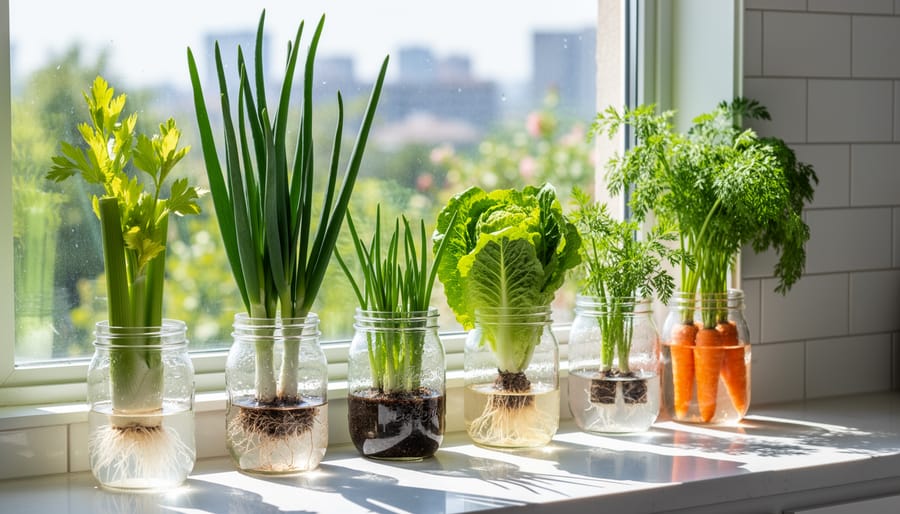
Your kitchen windowsill can become a thriving mini-garden with nothing more than vegetable scraps and water. This simple practice transforms what would be compost into fresh produce, perfectly suited to Australian apartments and homes with limited outdoor space.
Start with spring onions, the easiest gateway to windowsill gardening. Place the white root ends in a glass with 2-3 centimetres of water, positioning them where they’ll catch natural light. Within days, you’ll see bright green shoots emerging. Change the water every second day to prevent bacterial growth in our warm climate. Harvest the greens as needed, and they’ll continue producing for weeks.
Celery hearts and lettuce stumps follow the same principle. Submerge the base in shallow water, misting the top daily to maintain moisture. After 5-7 days, roots will develop, and new leaves will sprout from the centre. Once established with a solid root system, transfer them to soil-filled pots for continued growth.
This connects beautifully with community efforts across Australia where neighbours share their regrown starts and tips. You’re not just reducing waste; you’re joining thousands of Australians discovering that the scraps we nearly discarded hold remarkable potential for renewal.
Preservation Methods That Extend Your Ingredients
Transforming your scraps and overripe produce into preserved treasures is easier than you might think, and Australian kitchens are perfectly positioned to embrace these time-honoured techniques.
Pickling turns those limp carrot tops, radish greens, and wilting cauliflower leaves into tangy condiments. Simply pack them into sterilised jars with a basic brine of vinegar, water, salt, and your favourite spices. Within days, you’ll have flavour-packed additions to salads and sandwiches.
Fermenting takes preservation further by creating probiotics from vegetable scraps. Cabbage cores, broccoli stems, and beetroot peels become nutritious sauerkraut or kimchi. The process requires just salt, water, and patience as beneficial bacteria work their magic over two to four weeks.
Freezing is your quickest preservation ally. Blend overripe bananas for smoothie packs, freeze herb stems in ice cubes with olive oil, or store vegetable scraps in containers until you’ve collected enough for stock. Melbourne chef Sarah Chen from the Sustainable Kitchen Collective recommends labelling everything with dates to maintain rotation.
Drying works brilliantly in Australia’s climate. Dehydrate citrus peels for zest, transform overripe tomatoes into sun-dried gems, or create vegetable powders from kale stems and carrot peels to boost nutrition in future meals.
Food Scrap Recipes That Actually Taste Amazing
Breakfast and Brunch Winners
Start your morning right by transforming yesterday’s leftovers into today’s breakfast heroes. That half-loaf of bread going stale on your bench? It’s destined for a glorious bread and butter pudding that’ll have your household asking for seconds. Simply tear it into chunks, soak in a mixture of eggs and milk, add a handful of dried fruit, and bake until golden.
Australian kitchens are buzzing with creative ways to use every scrap. Blend your vegetable pulp from juicing into nutrient-packed smoothies, adding banana and berries to mask any earthiness. Community gardens across Melbourne and Sydney report members swapping tips for using broccoli stems and kale ribs in frittatas, where these often-discarded bits add brilliant texture and flavour.
The beauty of breakfast zero-waste cooking lies in its flexibility. Wilted spinach, leftover roasted vegetables, even that last spoonful of pesto hiding in your fridge can find new life in a weekend frittata. These aren’t just budget-friendly options; they’re genuinely delicious dishes that celebrate resourcefulness while keeping precious food from landfill. Your morning routine becomes part of the solution.
Soups, Stocks, and Mains
Transform your everyday cooking scraps into nourishing meals that celebrate resourcefulness while reducing landfill waste. Australian households throw away approximately 300 kilograms of food annually, but these hearty recipes prove that what we often discard holds incredible potential.
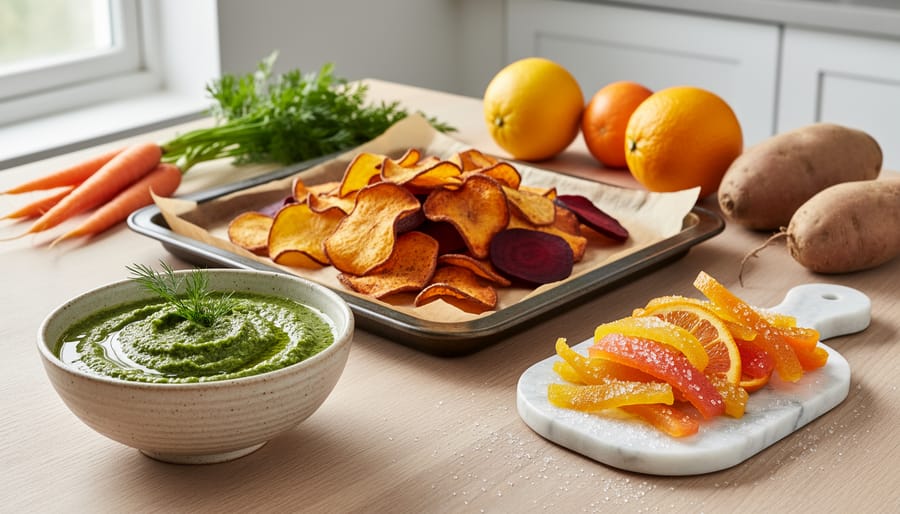
Those bright carrot tops wilting in your crisper? Blend them into a vibrant pesto with garlic, nuts, olive oil, and parmesan. The slightly peppery flavour pairs beautifully with pasta or roasted vegetables, and you’re giving life to greens that typically end up in the bin. It’s a perfect gateway into plant-based cooking that minimises waste.
Broccoli stems often get discarded in favour of florets, yet they’re tender and flavourful when prepared properly. Peel the tough outer layer, dice the stem, and fold it into risotto for added texture and nutrition. The creamy rice embraces these crunchy morsels, creating a dish that’s both economical and delicious.
Perhaps the most surprising transformation comes from vegetable peelings. Potato skins, beetroot ends, and carrot shavings become crispy, seasoned chips when tossed with olive oil and roasted until golden. These make fantastic garnishes for soups or standalone snacks that impress guests while showcasing your commitment to sustainability.
Melbourne’s community kitchens have embraced these techniques, running workshops that bring neighbours together to share scraps and recipes. By reimagining what belongs in our meals rather than our waste bins, we’re not just cooking differently—we’re building a more sustainable food culture across Australia.
Sweet Treats from Scraps
Who knew those citrus peels destined for the bin could become elegant candied strips that rival any store-bought confection? Across Australian kitchens, a delightful transformation is happening as home cooks discover that food scraps make surprisingly sophisticated desserts.
Candied citrus peels are a brilliant starting point. Simply simmer orange, lemon, or grapefruit peels in sugar syrup until translucent, then coat in extra sugar for a chewy, sweet treat that stores for weeks. Melbourne’s waste-wise bakers have embraced this technique, often dipping the candied peels in dark chocolate for an extra indulgent touch.
Banana peels, often overlooked, create incredibly moist cakes when blended into batters. The peels add natural sweetness and a tender crumb that keeps cakes fresh longer. Meanwhile, apple cores and peels contain abundant pectin, making them perfect for homemade jellies. Simply simmer with water and sugar, strain, and you’ve got a gorgeous spread without purchasing commercial pectin.
These sweet transformations prove that zero-waste cooking doesn’t mean sacrificing pleasure. Instead, it opens up creative possibilities while keeping perfectly good ingredients from landfill. Start with just one recipe this weekend and taste the difference for yourself.
Condiments and Flavour Boosters
Transform your kitchen scraps into flavour powerhouses that reduce waste while elevating every meal. Those wilted herb stems and vegetable offcuts are brimming with potential.
Start with herb salts by blending leftover parsley, coriander, or basil stems with sea salt, then spreading the mixture on baking paper to dry. Once crisp, you’ve created a versatile seasoning that lasts for months. Melbourne’s community gardens are already sharing this technique at their zero-waste workshops, turning forgotten greens into shelf-stable flavour bombs.
Vegetable peels make incredible powders too. Dehydrate carrot, beetroot, or celery scraps in a low oven until completely dry, then blitz into fine powders. These add concentrated flavour and natural colour to soups, dressings, and even homemade pasta.
Don’t discard those citrus peels either. Submerge them in white vinegar for two weeks to create cleaning vinegar, or in olive oil for a zesty cooking oil that transforms salad dressings. Aussie cafés from Sydney to Perth are already bottling their scrap-based condiments, proving that waste-free flavour creation isn’t just possible, it’s delicious and economical. Your pantry will thank you, and so will the planet.
Setting Up Your Zero-Waste Kitchen System
Storage Solutions That Work
Good storage is the backbone of any zero-waste kitchen, turning enthusiasm into everyday habits. Start with a variety of glass jars and containers – old pasta sauce jars work brilliantly for storing vegetable scraps destined for stock. Keep a dedicated container in your freezer specifically for collecting odds and ends like onion skins, celery tops, and carrot peels. Many Australian households find success with the two-container method: one for stock scraps and another for items like bread crusts and herb stems.
Clear containers let you see what you’ve got at a glance, preventing that out-of-sight, out-of-mind problem we’ve all experienced. Label everything with masking tape and a permanent marker, noting the date and contents. This simple system means you’ll actually use what you’ve saved rather than discovering mystery bags months later.
Organize your freezer with designated zones. One Melbourne community garden coordinator shared how she keeps a small basket in her freezer door for quick-grab scraps, making it easy to toss in broccoli stems or kale ribs without rummaging. Flat-pack items in freezer bags to maximize space – citrus peels and herb stems store beautifully this way. Remember, the easier your system is to maintain, the more likely you’ll stick with it long-term.
The Weekly Scrap-Saving Routine
Building a weekly scrap-saving routine transforms zero-waste cooking from an overwhelming concept into manageable, sustainable habits. The key is creating a rhythm that fits your household’s cooking patterns.
Start each Sunday by conducting a fridge audit. Check what vegetables are looking tired, which herbs need using, and what odds and ends have accumulated. This becomes your meal planning compass for the week ahead. That wilting silverbeet? Perfect for Wednesday’s pasta. Those carrot tops? They’ll transform into pesto by Thursday.
Designate Tuesday evenings as stock-making time. Many Australian households find this works brilliantly after the weekend cooking surge when scraps have accumulated. Toss vegetable peelings, herb stems, and allium ends you’ve collected in your freezer scrap bag into a pot with water. Simmer for an hour while you’re relaxing, then strain and store. You’ll have beautiful stock ready for risottos, soups, and braises throughout the week.
Friday becomes your transformation day. Before the weekend shop, use up remaining scraps creatively. Blend vegetable offcuts into fritters, turn stale bread into croutons or breadcrumbs, or simmer fruit scraps into compote.
Keep a dedicated container in your freezer for scraps that don’t fit this week’s plan. Label it with the date and use contents within a month. This simple system ensures nothing gets forgotten and your zero-waste practice stays realistic and achievable for the long term.
When Composting Is the Better Choice
Let’s be honest: not every food scrap belongs in your kitchen creations. While zero-waste cooking transforms many scraps into delicious meals, some items simply serve the environment better by returning to the soil. Composting these scraps is still very much part of your zero-waste journey, and it’s absolutely nothing to feel guilty about.
Certain scraps are better composted for practical reasons. Citrus peels, while occasionally useful for zest or cleaning solutions, often accumulate faster than you can use them. Onion and garlic skins, though theoretically edible, can be papery and unpleasant in texture. Eggshells provide brilliant calcium for gardens but are challenging to incorporate into most dishes. Coffee grounds and tea leaves have limited culinary applications once brewed, but they’re composting gold that enriches soil beautifully.
The good news? Australia has made composting increasingly accessible. Most local councils across the country now offer green bin services that accept food scraps, turning your kitchen waste into valuable compost for community gardens and municipal landscaping. Many councils provide discounted compost bins or worm farms to residents, making home composting achievable even in apartments with limited space.
Sydney, Melbourne, Brisbane, and Perth have rolled out comprehensive food organics and garden organics (FOGO) programs, diverting thousands of tonnes of food waste from landfill annually. Community gardens throughout Australia also welcome food scraps, creating connection points where your kitchen waste supports local growing initiatives.
The key is understanding that zero-waste cooking and composting work hand-in-hand. Cook what makes sense, compost the rest, and landfill nothing. This balanced approach respects both your time and the environment. When you scrape those vegetable trimmings into your compost bin or green waste service, you’re completing the natural cycle, returning nutrients to earth and preventing methane emissions from landfill. That’s still a zero-waste win worth celebrating.
Australian Community Initiatives Leading the Way
Across Australia, inspiring community initiatives are transforming food waste into opportunity, making zero-waste cooking more accessible and achievable than ever before. These grassroots movements and innovative businesses are proving that sustainable food practices aren’t just environmental wins—they’re powerful community builders too.
OzHarvest, Australia’s leading food rescue organization, operates across major cities collecting surplus food from restaurants, supermarkets, and farms that would otherwise go to waste. They’ve rescued over 200 million meals since 2004, redistributing them to charities while running educational programs that teach zero-waste cooking skills. Their NEST program (Nutrition Education Sustenance Training) offers free cooking classes using rescued ingredients, empowering people to make delicious meals from whatever’s available.
Community gardens are flourishing in suburbs from Fremantle to Cairns, creating hubs where neighbours share composting knowledge, swap surplus produce, and learn preservation techniques together. The Brisbane City Council’s community garden network supports over 100 gardens where members practice circular food systems—turning scraps into compost that feeds future harvests.
Innovative businesses like The Good Grocer in Perth and Silo in Sydney are championing commercial zero-waste practices, demonstrating that restaurants can operate without bins while creating extraordinary food. These establishments work directly with suppliers to eliminate packaging and showcase root-to-stem cooking techniques that inspire home cooks.
To get involved, start by searching for food rescue programs in your area through Foodbank Australia’s directory or volunteering with local community gardens. Many councils offer free composting workshops and connect residents with neighbourhood food-sharing initiatives. Follow social enterprises like Yume and SecondBite, which redistribute commercial surplus food at reduced prices, making sustainable eating more affordable.
These initiatives prove that zero-waste cooking thrives when communities collaborate. Whether you join a garden working bee, volunteer at a food rescue kitchen, or simply share your surplus lemons with neighbours, every action strengthens Australia’s growing sustainable food movement. Together, we’re building a future where nothing edible goes to waste.
Zero-waste cooking isn’t just good for the planet—it’s brilliant for your wallet and surprisingly liberating for your creativity in the kitchen. By transforming what would have been waste into nourishing meals, you’re actively participating in the solution to Australia’s significant food waste challenge while discovering flavours and techniques you might never have explored otherwise. The beauty of this approach is that it connects you to a growing community of conscious Australians who understand that every carrot top saved and every stale loaf transformed represents a small victory for our environment.
You don’t need to overhaul your entire kitchen routine overnight. Start with just one technique that resonates with you—perhaps saving vegetable scraps for stock, or trying that rockmelon rind pickle recipe. Commit to rescuing one type of scrap this week, and notice how quickly it becomes second nature. Keep a container in your freezer for odds and ends, experiment with that wilting bunch of herbs, or challenge yourself to use every part of your next grocery shop. The point is to begin somewhere, because every scrap you save genuinely matters.
As more Australians embrace zero-waste cooking, we’re building something remarkable together—a culture that values resourcefulness over convenience, creativity over waste. Your participation strengthens this movement, inspiring neighbours, friends, and family to rethink their own kitchen habits. The scraps you save today contribute to the sustainable future we’re collectively creating, one meal at a time.