
Conduct a comprehensive energy audit of your facility to identify the biggest consumption culprits—Australian manufacturers typically find that HVAC systems, compressed air, and motors account for 60-70% of total building energy use, making these prime targets for optimization. Install smart building management systems that integrate lighting, heating, and ventilation controls with your production schedule, reducing energy waste during non-peak hours by up to 40% while maintaining optimal conditions for your workforce and processes.
Retrofit aging equipment with variable speed drives and high-efficiency motors, a strategy that delivers 15-25% energy savings and often qualifies for state-based energy efficiency programs like Victoria’s Energy Saver Incentive or NSW’s Energy Savings Scheme. Couple industrial equipment energy optimization with building envelope improvements—sealing air leaks, upgrading insulation, and installing high-performance windows—to create a holistic approach that maximizes returns while minimizing operational disruption.
The urgency for Australian businesses has never been clearer. With commercial electricity prices rising 20% annually in some regions and pressure mounting to meet net-zero commitments, building energy optimization isn’t just environmental responsibility—it’s financial survival. Every kilowatt-hour saved translates directly to improved competitiveness in both domestic and export markets.
The good news? You’re not alone in this transformation. A growing community of Australian manufacturers is proving that energy optimization delivers measurable results, typically achieving payback periods of 2-4 years while reducing carbon footprints by 30-50%. Whether you’re running a small workshop in regional Queensland or managing a sprawling facility in Melbourne’s industrial heartland, the pathway to energy efficiency combines proven technologies with strategic planning tailored to your specific operations and climate zone.
Why Building Energy Optimization Matters for Australian Industry
The Real Cost of Inefficient Industrial Buildings
Across Australian industrial facilities, energy waste isn’t just an environmental concern—it’s draining bottom lines at an alarming rate. Recent studies show that manufacturing facilities in Australia lose up to 30% of their energy expenditure through preventable inefficiencies, translating to tens of thousands of dollars annually for medium-sized operations.
The biggest culprit? Outdated or poorly maintained efficient HVAC systems. In Queensland’s humid summers and Victoria’s chilly winters, inefficient climate control can account for 40-50% of a facility’s total energy consumption. Many facilities still operate with legacy systems that run continuously regardless of actual demand, cooling or heating empty spaces overnight or during low-production periods.
Lighting represents another significant drain. Factories running outdated fluorescent or metal halide systems consume roughly 60% more electricity than modern LED alternatives, while generating excess heat that compounds HVAC inefficiencies. Meanwhile, poor thermal insulation in older industrial buildings creates a constant battle against the elements, with conditioned air escaping through unsealed doors, aging roof materials, and inadequate wall insulation.
These inefficiencies cascade beyond energy bills. Equipment running in suboptimal temperature and humidity conditions experiences accelerated wear, leading to increased maintenance costs and unexpected downtime. For Australian manufacturers competing in global markets, these compounding costs erode competitiveness while contributing unnecessarily to our national carbon footprint. The encouraging news? Addressing these issues delivers measurable returns, with many facilities achieving 20-40% energy reductions through targeted improvements.
Australia’s Net-Zero Targets and Industrial Responsibility
Australia has committed to achieving net-zero emissions by 2050, with an interim target of 43% reduction by 2030. This ambitious goal requires action across all sectors, and industrial facilities have a particularly important role to play. Our industrial and commercial buildings currently account for nearly 25% of Australia’s total electricity consumption, making them a critical focus area for emissions reduction.
The good news is that Australian businesses are increasingly recognizing that climate action and economic sense go hand in hand. Energy optimization in industrial facilities isn’t just about meeting targets, it’s about future-proofing operations, reducing costs, and demonstrating leadership within our communities.
Industrial facilities face unique challenges, from energy-intensive manufacturing processes to large warehouse spaces requiring substantial heating and cooling. However, these same facilities also present enormous opportunities for impact. When a single manufacturing plant reduces its energy consumption by 20%, the emissions savings can be equivalent to taking hundreds of cars off the road.
As we work collectively toward our national climate commitments, optimizing building energy use in industrial settings represents one of the most practical and cost-effective pathways forward. Every improvement contributes to Australia’s climate goals while strengthening business resilience.
Smart Building Systems That Work With Your Equipment
Building Automation That Responds to Production Needs
Imagine your manufacturing facility as a living organism that breathes, adjusts, and responds to the rhythm of production. That’s precisely what modern building automation systems achieve, creating intelligent environments that adapt to your actual operational needs rather than running on rigid, wasteful schedules.
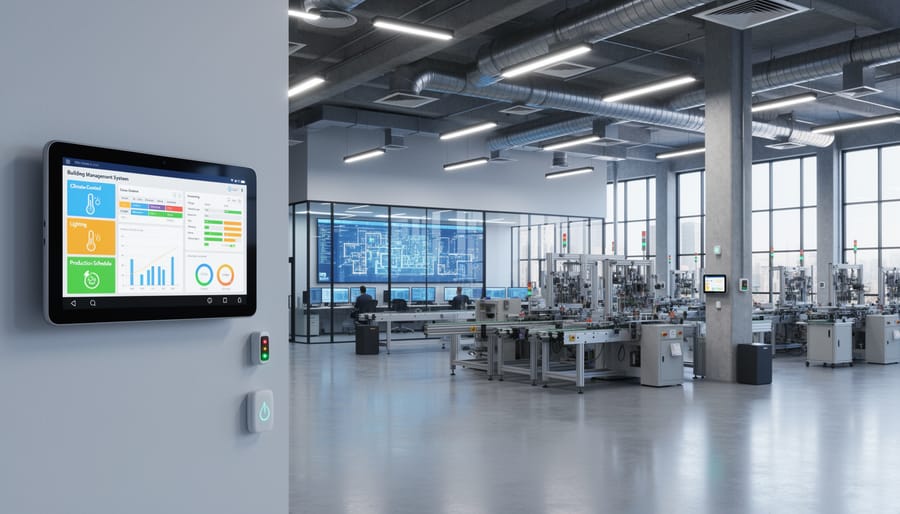
Smart building management systems (BMS) integrate with production equipment to create dynamic responses throughout your facility. When a production line powers down, the system automatically adjusts lighting levels, reduces ventilation rates, and modifies climate control in that zone. During shift changes or scheduled maintenance, these systems seamlessly transition to energy-conserving modes without compromising worker safety or comfort.
At a food processing plant in Melbourne’s west, automation sensors detect equipment operation in real-time, triggering corresponding adjustments to HVAC systems. When refrigeration units cycle down during off-peak processing periods, the facility’s cooling infrastructure follows suit, reducing compressor loads by up to 40 percent. Similarly, automated lighting systems dim or switch off in storage areas when forklifts aren’t active, with motion sensors ensuring safety for any workers entering these spaces.
A metal fabrication facility in Newcastle implemented zone-based climate control linked to welding station operation. The ventilation system ramps up automatically when welding begins, ensuring proper air quality, then scales back during idle periods. This responsive approach cut energy consumption by 35 percent while maintaining superior air quality standards.
These systems learn from production patterns too, using machine learning algorithms to anticipate daily and seasonal variations. They pre-cool spaces before heat-generating equipment starts, optimise fresh air intake based on actual occupancy, and coordinate with renewable energy systems to maximise self-consumption of solar generation.
The beauty lies in eliminating the guesswork and waste inherent in static building operations, creating facilities that work as efficiently as the equipment within them.
Real-Time Monitoring and Predictive Adjustments
Modern sensors and IoT technology are transforming how Australian manufacturers understand and optimize their energy use, creating opportunities that were unimaginable just a few years ago. These smart monitoring systems work around the clock, tracking everything from equipment performance to ambient conditions, giving facility managers the insights they need to make meaningful improvements.
Think of these sensors as your building’s nervous system, constantly gathering data about temperature, humidity, power consumption, and equipment cycles. When integrated properly, they create a complete picture of how your facility operates, revealing patterns and inefficiencies that would otherwise remain hidden. The real magic happens when this data feeds into predictive algorithms that can anticipate problems before they occur and automatically adjust systems for optimal performance.
Melbourne-based food processor SPC recently implemented an IoT-enabled monitoring system across their Shepparton facility, and the results speak volumes. By tracking refrigeration cycles and production equipment in real-time, they identified opportunities to reduce energy consumption by 18 percent while actually improving product quality. The system now automatically adjusts cooling schedules based on production forecasts and weather conditions, eliminating waste without requiring constant manual intervention.
Similarly, a Brisbane metal fabrication company discovered through sensor data that their compressor systems were cycling inefficiently during off-peak hours. Armed with this knowledge, they reprogrammed their equipment schedules and saved over 40,000 dollars annually in energy costs. These aren’t isolated success stories – they’re becoming the new standard for forward-thinking Australian manufacturers who recognize that you can’t optimize what you don’t measure.
Making Your Industrial Building Work Smarter, Not Harder
Insulation and Thermal Management for Australian Climates
Australia’s diverse climate zones demand different insulation strategies, yet one principle unites them all: a well-designed building envelope dramatically reduces the energy burden on your industrial equipment. Whether you’re managing a facility in Darwin’s tropical humidity or Melbourne’s cool winters, getting your insulation right creates the foundation for genuine energy optimization.
In Queensland’s north, the challenge isn’t just heat—it’s managing moisture while keeping cool air inside. Industrial facilities here benefit enormously from reflective roof coatings and radiant barriers that can reduce heat gain by up to 40%. This means your air conditioning systems work smarter, not harder, immediately translating to lower operating costs.
Southern states face the opposite challenge during winter months. Facilities in Victoria and Tasmania often discover their heating costs plummet after upgrading wall and ceiling insulation. One Melbourne manufacturer we spoke with reduced their heating requirements by 35% simply by addressing thermal bridging in their warehouse walls.
The temperate zones—Perth, Adelaide, and Sydney—require balanced solutions. Here, the sweet spot often involves combining quality wall insulation with strategic glazing improvements. Double-glazed windows might seem like a building upgrade rather than equipment optimization, but they’re intrinsically linked. When your building envelope performs efficiently, your HVAC equipment operates within its optimal range, extending equipment life while slashing energy consumption.
The beauty of these improvements? They work 24/7, creating permanent efficiency gains that support every piece of energy-consuming equipment in your facility. Australian businesses investing in climate-appropriate insulation typically see payback periods of 3-7 years—a solid foundation for broader energy optimization initiatives.
Natural Ventilation and Passive Cooling Strategies
Australia’s climate offers remarkable opportunities for natural ventilation, particularly in regions with cooler evenings and consistent coastal breezes. Smart building design can harness these advantages to dramatically reduce mechanical cooling loads while protecting valuable industrial equipment.
Consider how Melbourne-based manufacturers are implementing automated window systems that open during cooler periods, drawing fresh air through facilities while maintaining security and dust control. These systems use sensors to monitor temperature differentials, outdoor air quality, and equipment protection zones, ensuring sensitive machinery remains safeguarded whilst maximising free cooling.
The key lies in strategic ventilation planning. Positioning air intakes away from pollution sources and installing filtration systems protects both workers and equipment. Many Australian facilities now incorporate thermal mass strategies, using concrete floors and walls to absorb daytime heat and release it during evening ventilation cycles, cutting cooling costs by 30-40 percent.
Stack ventilation proves particularly effective in high-bay warehouses and manufacturing spaces. By designing buildings with strategically placed high-level vents, hot air naturally rises and escapes, drawing cooler air through lower openings. This passive approach works brilliantly across Australia’s southern states during spring and autumn months.
Community initiatives are emerging where industrial precincts share weather data and ventilation strategies, helping neighbouring facilities optimise their systems collectively. This collaborative approach strengthens our collective journey toward energy independence whilst maintaining the productivity and equipment reliability that Australian industry demands.
LED Lighting and Daylight Harvesting in Industrial Spaces
Australian industrial facilities are discovering that smart lighting strategies deliver remarkable energy savings while creating safer, more productive workspaces. Traditional high-intensity discharge lighting in warehouses and manufacturing plants generates substantial heat, forcing cooling systems to work harder and driving up costs. Making the switch to LED lighting upgrades typically reduces lighting energy consumption by 50-75%, with some facilities achieving even greater savings.
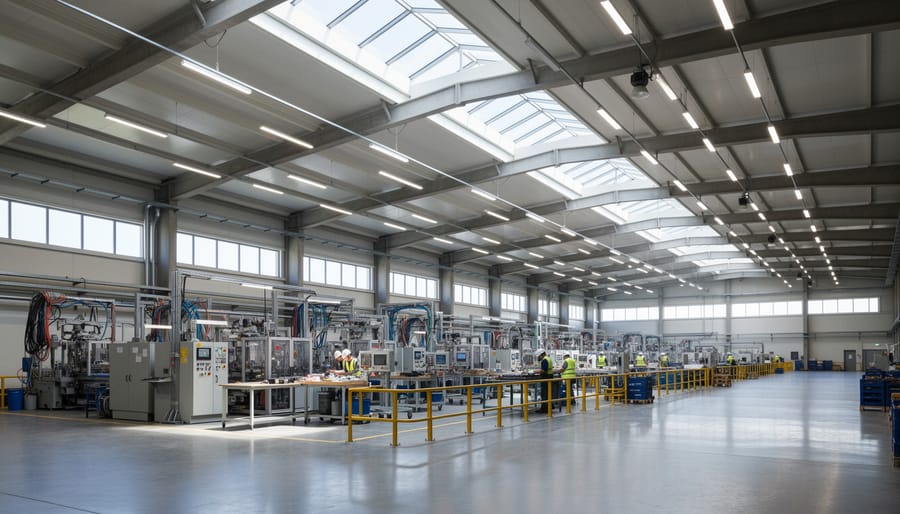
Beyond simple replacement, daylight harvesting transforms how industrial spaces use natural light. Sensors automatically dim or switch off artificial lighting when sufficient daylight enters through skylights or clerestory windows. This approach works particularly well in Australian facilities blessed with abundant sunshine, especially across our northern regions where natural light is available year-round.
Motion sensors in low-traffic areas like storage zones ensure lights operate only when needed, preventing waste in spaces used intermittently throughout shifts. Combined with task lighting at workstations, this creates targeted illumination where workers need it most while reducing overall fixture counts.
The improvements extend beyond energy bills. Better visibility reduces workplace accidents, helps operators spot equipment issues earlier, and improves quality control processes. Many Australian manufacturers report that workers appreciate the clearer, more consistent light quality, particularly during detailed assembly work or inspection tasks. The initial investment typically pays back within two to four years through reduced energy costs and lower maintenance requirements.
Renewable Energy Integration for Industrial Buildings
Solar Power Systems Designed for Industrial Loads
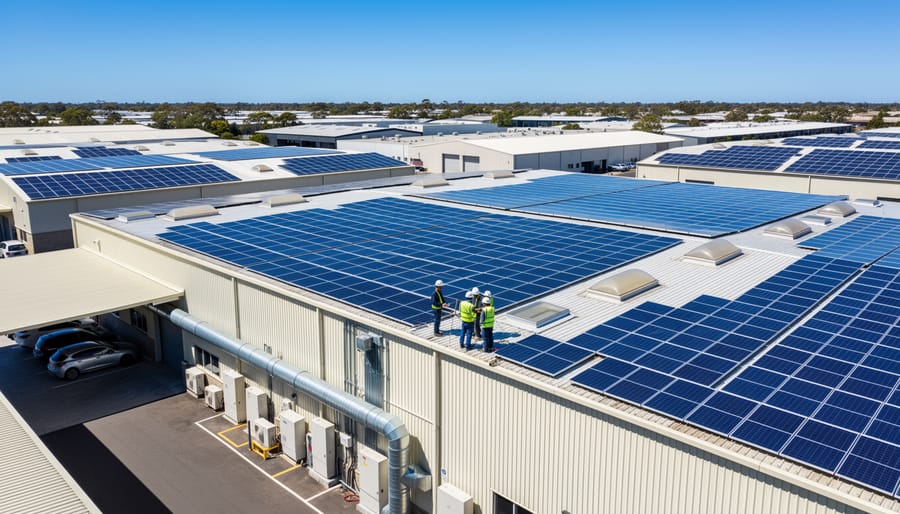
Australian industrial facilities are increasingly turning to solar power as a cornerstone of their energy optimization strategies, and the results speak for themselves. Manufacturing plants and warehouses across the country are discovering that properly sized commercial solar installations can dramatically reduce electricity costs while powering both building operations and heavy equipment.
The key to success lies in accurate load assessment. Industrial facilities typically require systems ranging from 100kW to several megawatts, depending on machinery demands and operational hours. Working with experienced solar designers ensures your system accounts for peak loads during production runs, shift patterns, and seasonal variations unique to Australian manufacturing cycles.
Battery storage has become a game-changer for industrial applications. By storing excess solar energy generated during off-peak production times, facilities can power evening shifts or reduce demand charges during grid peak periods. This is particularly valuable in states with time-of-use tariffs, where strategic battery deployment can slash energy bills by 40% or more.
The financial case for industrial solar has never been stronger. The federal government’s accelerated depreciation scheme allows businesses to immediately deduct capital costs, while various state programs offer additional rebates. Many Queensland and New South Wales manufacturers have achieved payback periods under four years through strategic use of these incentives combined with renewable energy systems.
Community-minded businesses are also exploring shared solar arrangements and virtual power plant participation, creating collective resilience while contributing to grid stability. This collaborative approach embodies the Australian spirit of working together toward a sustainable industrial future.
Making the Most of Time-of-Use Tariffs
Time-of-use tariffs represent a significant opportunity for Australian businesses to reduce energy costs while supporting grid stability. These pricing structures, which vary electricity rates based on demand throughout the day, are increasingly common across Australia’s energy networks.
The strategy is straightforward: identify energy-intensive operations that can shift to off-peak periods when electricity is cheaper. Manufacturing facilities might schedule production runs during evening or weekend hours. Industrial refrigeration systems can boost cooling capacity overnight and coast through expensive peak periods. Even simple practices like switching off unused equipment during high-tariff windows can deliver measurable savings.
Smart building management systems excel at automating this load shifting. They can pre-cool buildings before peak rates begin, delay non-urgent processes, and charge battery storage systems when electricity is cheapest. One Queensland warehouse reduced annual energy costs by 23 percent simply by rescheduling forklift charging to overnight periods.
Understanding your facility’s tariff structure is the first step. Contact your electricity retailer for detailed rate schedules, then audit your energy consumption patterns. Many Australian businesses discover that 30-40 percent of their electricity use is flexible enough to shift, creating immediate cost savings while reducing strain on the grid during peak demand.
Getting Started: A Roadmap for Australian Manufacturers
Conducting Your Energy Baseline Assessment
Understanding where your building loses energy is the essential first step toward meaningful optimization. Think of it as getting a health check for your facility – you can’t treat what you haven’t diagnosed.
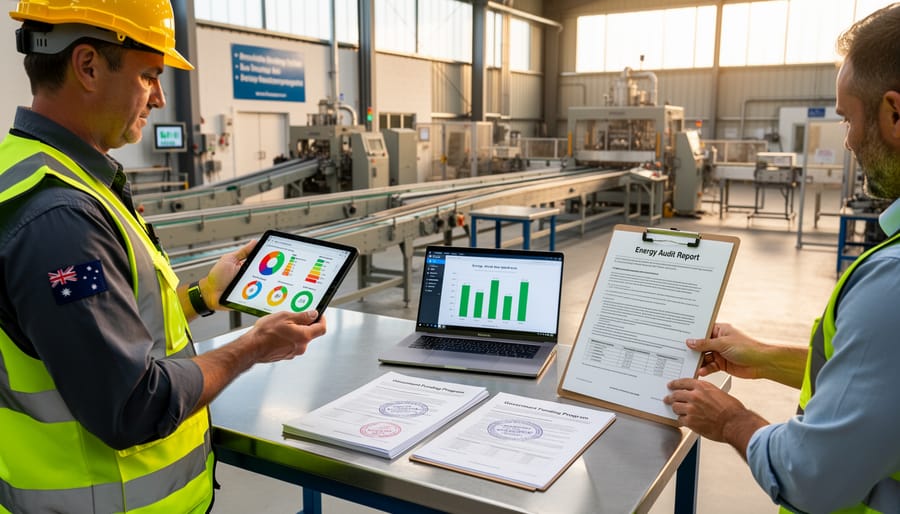
A professional energy audit reveals the biggest opportunities hiding in plain sight. Qualified auditors use thermal imaging cameras to spot insulation gaps, analyse your energy bills to identify consumption patterns, and assess equipment efficiency across your operations. For industrial facilities, this often uncovers surprises: poorly maintained compressors, oversized motors running inefficiently, or lighting systems consuming far more than necessary.
The encouraging news? Australian businesses don’t have to navigate this alone. The Australian Government’s Energy Efficiency Grants and Programmes provide substantial support for energy assessments. Many states also offer complementary programs – Victoria’s Sustainability Victoria, for instance, delivers tailored assessments for manufacturers, while NSW runs the Energy Savings Scheme with accredited certificate providers who can conduct comprehensive audits.
Your local business chambers and industry associations often connect members with certified energy assessors who understand sector-specific challenges. Some utilities even provide free basic assessments to commercial customers.
The investment in a proper baseline assessment typically pays for itself within months once you implement the identified improvements. It transforms energy optimization from guesswork into strategic action, giving you clear priorities and measurable benchmarks for success.
Grants, Rebates, and Support for Industrial Energy Upgrades
Good news for Australian manufacturers ready to take the energy efficiency leap: you’re not alone in this journey. A growing range of financial incentives and support programs can help offset the upfront costs of industrial energy upgrades, making the transition to optimised facilities more accessible than ever.
The Clean Energy Finance Corporation stands as a cornerstone of federal support, offering tailored financing solutions for energy efficiency projects across manufacturing and industrial sectors. Through low-interest loans and co-financing arrangements, CEFC helps businesses access capital for everything from LED lighting retrofits to comprehensive building management system installations. Their expertise extends beyond simply providing funds – they partner with manufacturers to structure financing that aligns with projected energy savings, creating positive cash flow from day one in many cases.
State governments have also stepped up with region-specific programs that recognise the unique challenges facing local industries. Victoria’s Sustainability Victoria offers business energy audits and grants, while NSW’s Energy Savings Scheme provides financial incentives through creating tradeable certificates. Queensland manufacturers can tap into the Business Energy Savings and Transformation program, which supports detailed energy assessments and implementation assistance.
The Australian Renewable Energy Agency continues expanding its focus on industrial applications, supporting innovative projects that combine renewable energy with manufacturing processes. Many programs now include technical advisory services alongside financial support, helping businesses navigate the sometimes complex landscape of equipment selection and system integration.
Regional manufacturers should also check with their local councils and industry associations, as many offer additional rebates or group-buying arrangements that amplify savings. Together, these programs create a supportive ecosystem where investing in energy efficiency becomes not just environmentally responsible, but financially strategic for Australia’s industrial future.
Building energy optimization isn’t just about installing the latest technology or upgrading equipment in isolation. It’s about understanding how every element of your facility works together as an interconnected system, where building envelope efficiency, equipment performance, renewable integration, and intelligent controls create a powerful multiplier effect. When you optimize your building’s thermal performance, your HVAC equipment works less. When your equipment runs efficiently, your energy costs drop and your environmental footprint shrinks. It’s a virtuous cycle that benefits both your bottom line and our shared Australian environment.
The journey toward optimization might feel overwhelming at first, but you’re not alone in this transition. Right across Australia, businesses and facilities are taking these same steps, sharing knowledge, and building momentum together. Start with an energy audit to identify your biggest opportunities. Explore the rebates and incentives available through your state government and industry programs. Connect with local sustainability networks and industry associations where you can learn from others who’ve already walked this path.
The business case is clear: reduced operating costs, improved equipment longevity, enhanced resilience against energy price volatility, and future-proofing your operations. The environmental imperative is equally compelling as every kilowatt-hour saved contributes to Australia’s emissions reduction targets and creates a more sustainable future for the next generation.
Your next step matters. Whether it’s scheduling that energy audit, investigating a lighting retrofit, or joining your local business sustainability group, action today creates lasting impact. Together, we’re building a more efficient, resilient, and environmentally responsible industrial sector for all Australians.