
Imagine a toilet that uses no water, produces no sewage, and can be installed virtually anywhere—from remote campsites to urban tiny homes. That’s the promise of dry flush toilets, an innovation that’s gaining traction across Australia as water scarcity pushes us to rethink even our most basic systems.
A dry flush toilet wraps human waste in a specialized barrier film after each use, creating an odor-proof, sanitary seal without a single drop of water. Unlike composting toilets that require biological breakdown or chemical toilets that rely on harsh additives, this system mechanically packages waste for easy disposal—similar to how a nappy bin operates, but engineered for adult sanitation.
For Australians exploring rainwater harvesting systems or living off-grid, understanding this technology opens up practical possibilities. The mechanism is surprisingly straightforward: press a pedal or button, and an electric motor activates a bagging system that wraps the bowl’s contents in FDA-approved film. The sealed cartridge drops into a collection chamber below, while a fresh section of film lines the bowl for the next use.
Whether you’re managing a caravan, establishing a remote property, or simply committed to radical water conservation, dry flush toilets represent a genuine alternative to conventional plumbing. This article breaks down exactly how the technology works, what it costs to run, and whether it genuinely delivers on its environmental promises in the Australian context.
What Is a Dry Flush Toilet?
A dry flush toilet is a waterless sanitation solution that uses individual barrier bags to seal waste after each use, eliminating the need for traditional flushing mechanisms. Unlike other waterless alternatives, dry flush toilets operate through a simple bagging and sealing system rather than biological or thermal processes.
To understand what sets dry flush toilets apart, it’s helpful to compare them with other waterless options. Composting toilets break down waste through natural decomposition, requiring regular maintenance and specific conditions to function properly. Incinerating toilets use high heat to reduce waste to ash, demanding significant electricity and proper ventilation. Dry flush toilets, however, take a different approach entirely. They wrap each deposit in a biodegradable or standard barrier film, creating an airtight seal that contains odours and waste until the cartridge is removed and disposed of.
The growing popularity of dry flush toilets across Australian homes stems from our increasing awareness of water scarcity and the need for sustainable living solutions. For households relying on rainwater systems, every litre conserved matters. Traditional toilets can account for up to 30% of household water consumption, making dry flush systems an attractive option for those committed to reducing their environmental footprint.
These toilets are particularly gaining traction in off-grid properties, tiny homes, caravans, and as secondary facilities in established households. They require no plumbing, no water connection, and minimal installation effort. For Australian communities embracing water conservation, especially during drought periods or in remote areas where water infrastructure is limited, dry flush toilets represent a practical stepping stone toward more sustainable sanitation practices without the complexity of other waterless systems.
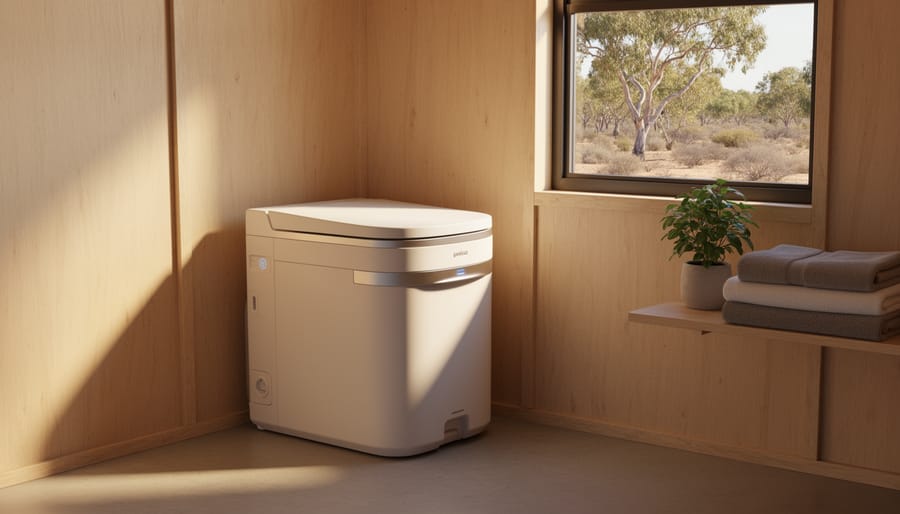
The Mechanics: How Dry Flush Technology Actually Works
The Cartridge System
At the heart of every dry flush toilet is an ingenious cartridge system that makes waterless sanitation possible. Think of it as a self-contained waste management unit that sits beneath the toilet bowl. The cartridge contains a continuous tube of biodegradable bagging material, typically made from materials like polyethylene combined with plant-based additives that break down over time.
Here’s how it works in practice. When you use the toilet and activate the flush mechanism (usually by pressing a button or pulling a lever), an electric motor springs into action. This motor powers a series of mechanical arms that heat-seal the waste into individual packets within the continuous bag. Each flush creates a new sealed compartment, effectively wrapping and isolating the waste in an airtight, odor-proof package.
Most cartridges used across Australian installations can handle between 15 to 17 flushes before needing replacement. The entire process takes about 15 seconds per flush and uses only battery power or a small amount of electricity. What makes this particularly appealing for remote Australian properties is the system’s simplicity. There are no moving parts to clog, no septic tanks to maintain, and no precious water supplies to divert from your garden or livestock.
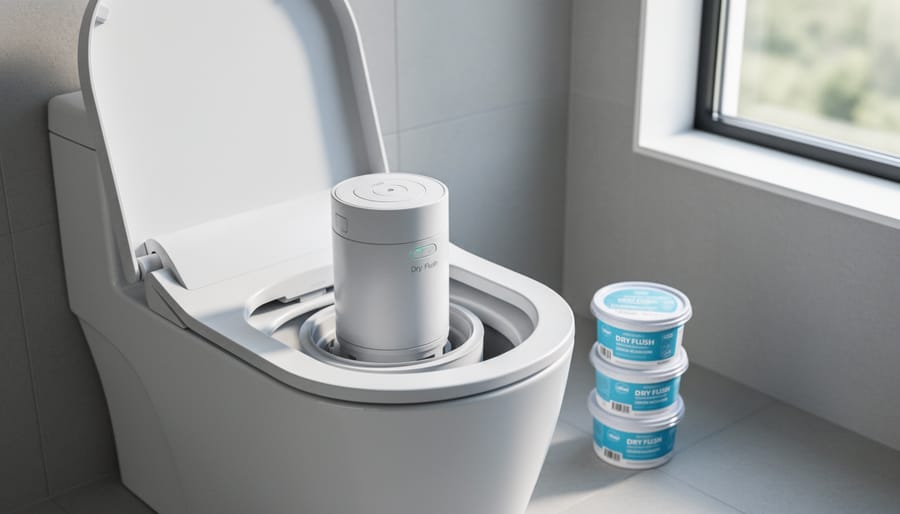
The Sealing Process
Here’s where the clever engineering really shines. Once you’ve used the toilet, a simple battery-powered electric motor springs into action with the push of a button or pull of a lever. This motor rotates the cartridge mechanism, twisting the bag material above and below the waste to create a completely sealed, individual package. Think of it like twisting a sausage casing – the waste becomes isolated in its own compartment within the larger liner bag.
This sealing process is what makes dry flush toilets such a game-changer for Australian off-grid properties, caravans, and remote work sites. The double-seal technique means absolutely no odours escape, and each use is hygienically contained. The motor typically runs for just a few seconds, using minimal power that can easily be supplied by a 12-volt battery or solar setup.
For those of you managing rainwater systems or working to reduce your household’s water footprint, this mechanical simplicity is reassuring. There’s no complex plumbing to fail, no water connections to leak, and no chemical reactions to monitor. The entire sealing process happens mechanically and reliably, creating a sanitary solution that works independently from your precious rainwater reserves while maintaining the dignity and convenience we expect from modern facilities.
Power Requirements
Most dry flush toilets operate on minimal electrical power, making them remarkably energy-efficient for sustainable living. The typical unit requires either a standard 12-volt battery connection or direct 240-volt mains power, with many models drawing less power than a standard light bulb during operation. Each flush cycle uses approximately 0.05 kilowatt-hours, which translates to mere cents per use.
For Australian rural properties embracing self-sufficiency, this low power requirement means dry flush toilets integrate seamlessly with off-grid solar setups. A modest solar panel array can easily support multiple daily flushes without straining your system’s capacity. Many Aussie farmers and remote property owners report running their units entirely on renewable energy, with battery backup ensuring reliable operation during cloudy periods.
The beauty lies in the flexibility: portable models often include rechargeable battery packs lasting weeks between charges, while permanent installations can hardwire directly into your existing solar infrastructure. This adaptability makes dry flush technology particularly attractive for cabins, tiny homes, and properties where traditional plumbing isn’t feasible, all while maintaining your commitment to reducing environmental impact.
Waste Containment and Disposal
After each flush, waste is securely sealed within the cartridge using the multilayer bagging system. Each cartridge typically handles 15-17 uses before requiring replacement, though this varies with household size. You’ll know it’s time for a change when the bag material becomes visible at the top of the unit or through indicator lights on some models.
Replacing cartridges is refreshingly straightforward—simply remove the sealed waste package and insert a new cartridge, much like changing a bin liner. The beauty of this system is that waste is already contained and hygienic for disposal.
In Australia, sealed cartridges from dry flush toilets can generally be disposed of through standard household waste collection, as the waste is treated as solid refuse rather than sewage. However, councils across different states may have specific requirements, so it’s worth checking with your local authority. Some forward-thinking Australian communities are exploring composting programs for compatible cartridges, turning this waste stream into a resource. This disposal method significantly reduces water consumption while maintaining public health standards, making it an increasingly popular choice for water-conscious Australians seeking practical conservation solutions.
Dry Flush Toilets and Rainwater Harvesting: The Perfect Partnership
If you’ve invested in a rainwater harvesting system for your Australian home or business, pairing it with a dry flush toilet creates an incredibly powerful water conservation strategy. Here’s why these two technologies work so brilliantly together.
Traditional toilets account for approximately 20-30% of household water consumption in Australia. That’s around 50 litres per person each day just for flushing. When you’ve gone to the effort and expense of installing rainwater tanks, does it really make sense to use that precious harvested water for flushing waste?
The beauty of dry flush toilets is they take toilet water usage completely off the table. Every drop of rainwater you collect can be directed toward washing clothes, watering gardens, or washing dishes, rather than literally flushing it away. For many Australian households living in water-restricted regions or on rural properties, this shift represents a genuine game-changer.
Consider the story of the Williams family from regional New South Wales. After installing a 5,000-litre rainwater tank, they initially connected it to their conventional toilets. During the prolonged dry spell of 2019, they watched their tank levels drop alarmingly fast, primarily from flushing. When they switched to dry flush toilets in their off-grid cabin, their rainwater supply lasted three times longer, providing greater security during drought conditions.
The mathematics are compelling. An average four-person household using traditional toilets consumes roughly 73,000 litres annually just for flushing. That’s nearly 15 full 5,000-litre tanks worth of water disappearing down the drain. By eliminating this usage entirely, dry flush systems allow your rainwater harvesting setup to serve other essential purposes far more effectively.
This partnership proves particularly valuable for businesses operating in remote locations, eco-tourism ventures, and tiny home enthusiasts who rely entirely on collected rainwater. Rather than upsizing your tank capacity to accommodate toilet flushing, dry flush toilets let you maximize the utility of existing infrastructure.
For regions facing ongoing water restrictions or communities working toward genuine water independence, combining these technologies isn’t just practical, it’s transformative. You’re not simply reducing water consumption; you’re fundamentally reimagining how water resources serve your household or business needs, creating a more resilient and sustainable future.
Where Dry Flush Toilets Make Sense in Australia
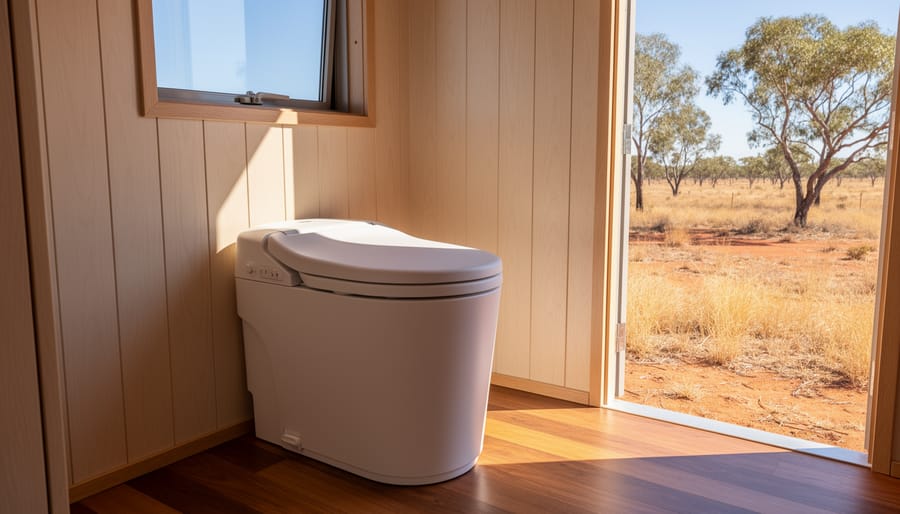
Off-Grid Properties and Remote Locations
For rural Australians living beyond the reach of town water and sewerage, dry flush toilets offer genuine independence. Across the vast stretches of outback properties, weekend retreats in the bush, and coastal shacks where connecting to services simply isn’t feasible, these systems provide dignified sanitation without infrastructure headaches.
Unlike composting toilets that demand regular maintenance and pit toilets that create environmental concerns, dry flush technology works immediately after installation. There’s no need for septic tanks, leach drains, or the costly earthworks these traditional systems require. Many remote property owners are discovering this matters enormously when you’re managing water tanks carefully and every litre counts for drinking, cooking, and washing.
The beauty lies in simplicity. Each cartridge handles waste for weeks, and disposal aligns with council regulations across most Australian shires. For station workers, holiday home owners, and those embracing off-grid living, it’s sanitation that respects both water scarcity and the environment, proving you don’t need to compromise comfort when choosing sustainability.
Tiny Homes and Mobile Dwellings
For Australia’s growing tiny home community and caravan enthusiasts, dry flush toilets are proving to be game-changers. These compact systems fit perfectly into spaces where every centimetre counts, eliminating the need for bulky septic tanks or complicated plumbing that traditional toilets demand.
Across Queensland and New South Wales, tiny home dwellers are embracing this technology as it aligns beautifully with off-grid living aspirations. Without requiring water connections, dry flush toilets give you the freedom to position your dwelling wherever you choose, whether that’s a coastal block or rural property. The sealed cartridge system means no unpleasant odours in your compact space, a crucial consideration when living small.
Caravanners particularly appreciate the lightweight design and simple installation process. Unlike chemical toilets that need regular emptying at dump points, dry flush units offer a cleaner, more dignified solution. The cartridges typically last weeks for a couple, reducing the frequency of maintenance stops during your Australian adventures while supporting your commitment to sustainable travel practices.
Drought-Prone Regions
For communities across NSW’s Central West, Victoria’s Mallee region, and South Australia’s Murray-Darling Basin, dry flush toilets offer a practical lifeline during extended water restrictions. These areas, which have faced some of Australia’s harshest drought conditions in recent years, can save up to 60,000 litres of water annually per household by switching to waterless toilet systems. During Level 4 water restrictions, when conventional toilets become a luxury many can’t afford, dry flush technology ensures families maintain proper sanitation without drawing from precious water supplies. Regional councils in towns like Broken Hill and Mildura have started exploring these systems for public facilities, recognizing that every litre saved extends community water reserves. For farmers and rural property owners managing limited bore water or tank supplies, installing dry flush toilets in shearing sheds, worker accommodation, or tourist facilities means their existing water can stretch further for crops, livestock, and essential household needs, building genuine resilience against future dry spells.
Emergency Preparedness
During emergencies, dry flush toilets become invaluable assets for Australian communities facing unpredictable challenges. When bushfires threaten rural areas, evacuation centres need immediate sanitation solutions that work independently of water supplies and sewerage systems. Dry flush toilets fill this critical gap perfectly, requiring no plumbing connections while maintaining dignity and hygiene for displaced families.
Councils across regional Australia are increasingly including these systems in disaster preparedness kits, recognising their role during water supply disruptions caused by drought, infrastructure damage, or contamination events. Relief organisations appreciate how quickly they can be deployed to emergency shelters, community halls, or temporary camps without specialist installation.
The sealed cartridge system prevents disease transmission during disasters when proper waste management becomes crucial for public health. For households committed to resilience and sustainability, keeping a dry flush toilet as backup ensures your family maintains sanitation standards even when traditional systems fail, embodying true preparedness within our increasingly climate-affected landscape.
The Real Costs: Investment and Running Expenses
Let’s talk numbers, because making sustainable choices shouldn’t mean breaking the bank without understanding what you’re committing to.
In Australia, dry flush toilet units typically range from $800 to $2,500 depending on the model and features. Entry-level residential units start around $1,000, while commercial-grade systems designed for high-traffic areas can reach the upper end of that spectrum. This initial investment sits higher than a basic composting toilet ($400-$800) but lower than installing a traditional septic system in remote locations, which can easily cost $5,000-$15,000.
The ongoing expense that catches many people off guard is cartridge replacement. Each cartridge contains individual biodegradable bags and generally handles 15-17 flushes. For a family of four, you’re looking at approximately one cartridge per week, costing between $8-$12 each. That translates to roughly $40-$50 monthly, or $480-$600 annually. Compare this to traditional sewerage rates in Australian cities, which average $200-$400 yearly for most households, and the ongoing costs become significant.
However, context matters enormously. If you’re setting up a remote property, off-grid cabin, or expanding a rainwater harvesting system where traditional plumbing isn’t feasible, dry flush toilets suddenly make financial sense. You’re avoiding trenching costs, council approvals for septic systems, and ongoing water consumption charges that would otherwise apply.
The sweet spot for dry flush toilets lies in temporary or seasonal use. Weekend retreats, tiny homes, and emergency backup systems benefit most. For permanent residential use with daily traffic, composting toilets or traditional systems typically offer better long-term value. The key is matching the technology to your actual needs rather than viewing it as a one-size-fits-all solution for water conservation.
Environmental Impact: The Sustainability Scorecard
When we talk about sustainability, dry flush toilets present a fascinating paradox that deserves honest examination. As Australians increasingly seek water-wise solutions, particularly in remote areas and during our ongoing droughts, understanding the full environmental picture helps us make informed choices for our communities.
The water savings are undeniably impressive. A conventional toilet uses approximately 9-12 litres per flush, meaning a family of four can send over 200,000 litres down the drain annually. Dry flush systems eliminate this entirely, a significant win for our water-stressed continent. For off-grid properties, caravan parks, and businesses in water-restricted regions, this reduction alone can be transformative.
However, the sustainability equation doesn’t end there. Each flush requires a special biodegradable cartridge that wraps waste in plastic film. While manufacturers claim these cartridges are environmentally friendly, you’ll generate approximately 15-20 cartridges annually per person, all destined for landfill. This creates an ongoing waste stream that some communities find troubling, particularly when compared to genuinely zero-waste alternatives.
The carbon footprint consideration extends beyond the cartridges themselves. Manufacturing, packaging, and transporting these consumables across Australia’s vast distances adds environmental costs that offset some water-saving benefits. Additionally, the system requires battery or electrical power for the sealing mechanism.
Composting toilets offer a compelling alternative for those prioritising waste reduction over convenience. They convert human waste into valuable soil amendment without plastic cartridges or power requirements. However, they demand more active management and aren’t suitable for every situation or comfort level.
The reality? Dry flush toilets occupy a middle ground in the sustainability spectrum. They’re substantially better than conventional flush toilets in water-scarce contexts but fall short of composting systems for overall environmental impact. For many Australian families and businesses, especially in transitional situations or temporary installations, they represent a practical stepping stone toward more sustainable sanitation. The key is choosing the right tool for your specific circumstances rather than seeking a one-size-fits-all solution.
What Australian Users Need to Know Before Installing
Before you rush off to purchase a dry flush toilet for your Australian property, there’s important groundwork to cover. The good news is that many Australian councils are increasingly supportive of waterless sanitation solutions, particularly in regional and remote areas where water scarcity is a genuine concern. However, regulations vary significantly between local government areas.
Start by contacting your local council to understand specific requirements. Most councils classify dry flush toilets as self-contained systems, which typically means less red tape than composting toilets or septic systems. That said, you’ll need to demonstrate proper waste disposal methods. Unlike traditional systems that connect to sewerage, you’re responsible for cartridge disposal, which brings us to a practical consideration many first-time users overlook.
Australian users consistently report that waste management logistics require planning. Each cartridge handles approximately 15-17 uses before requiring replacement. For a family of four, that’s roughly weekly changes. You’ll need to arrange disposal through licensed waste contractors in most metropolitan areas, or check whether your local waste facility accepts sealed cartridges. Some remote communities have established collection points, creating a sense of shared responsibility among users.
Installation itself is remarkably straightforward since there’s no plumbing required, making these systems ideal for off-grid properties and tiny homes. You can literally install one yourself in under an hour. The main challenge reported by Australian users isn’t technical but cultural, particularly convincing family members initially hesitant about the bagging system.
Maintenance expectations are minimal compared to traditional toilets. There’s no water damage risk, no septic tank to pump, and no drainage issues during drought. Australian users in bushfire-prone areas particularly appreciate having functional sanitation when water supplies are redirected to fire suppression.
Dry flush toilets offer an innovative solution for Australians seeking waterless sanitation, using a simple yet effective mechanism of sealed waste cartridges that eliminate the need for traditional plumbing. By wrapping each use in individual barrier film pouches, these toilets provide a hygienic, odour-free alternative that can save thousands of litres of water annually per household.
While dry flush toilets work brilliantly as standalone systems, they shine brightest when integrated into comprehensive water conservation strategies alongside rainwater harvesting, greywater recycling, and mindful usage practices. Together, these approaches create a robust framework for sustainable living that addresses Australia’s unique water challenges.
Whether a dry flush toilet suits your circumstances depends on several factors: your location, budget, environmental priorities, and willingness to manage cartridge disposal. For remote properties, tiny homes, or businesses committed to zero-water sanitation, they’re transformative. For urban households with reliable water access, they might serve best as backup systems or eco-friendly additions to outdoor spaces.
The path to sustainability isn’t one-size-fits-all. Take time to assess your specific needs, calculate potential water savings, and consider how this technology aligns with your broader environmental goals. Every water-saving choice matters in building a more sustainable Australia.