
Claim your renewable energy tax credits now by registering for the Small-scale Renewable Energy Scheme (SRES), which provides Australian businesses with upfront certificates that reduce installation costs for solar panels, small wind turbines, and solar water heaters by 20-40%. Contact an approved Clean Energy Regulator installer who will calculate and assign your Small-scale Technology Certificates (STCs) immediately upon installation—these certificates translate directly into dollar savings deducted from your system price.
Accelerate your depreciation claims through the Australian Taxation Office’s instant asset write-off scheme, currently allowing eligible businesses to immediately deduct the full cost of renewable energy assets in the year of purchase. Solar panel systems, battery storage, and energy-efficient equipment under the threshold qualify for complete upfront tax deductions rather than spreading depreciation over multiple years, significantly improving your first-year cash flow.
Access state-based incentives alongside federal programs to maximize your returns. New South Wales businesses can stack the Empowering Homes program with federal STCs, while Victorian companies benefit from the Solar for Business program offering rebates up to $3,500. South Australian businesses tap into the Business Energy Resilience Program, and Queensland enterprises access interest-free loans through the Business Energy Savings and Transformation program—each state offering distinct advantages that compound your savings.
Partner with accredited installers who understand both the technical requirements and financial incentives to ensure you capture every available credit. These professionals navigate the Clean Energy Council’s installer network, manage paperwork for certificate creation, and verify your eligibility across multiple programs simultaneously. Your renewable energy investment becomes immediately profitable when you layer these incentives correctly, transforming what appears as capital expenditure into a strategic financial decision that strengthens both your bottom line and Australia’s clean energy future.
Understanding Australia’s Renewable Energy Tax Credit Landscape
Federal Tax Incentives for Business Renewable Energy
Australian businesses embracing renewable energy can access several powerful federal tax incentives that make the transition more financially viable. These programs are designed to reward forward-thinking companies while strengthening our collective move toward sustainability.
The Instant Asset Write-Off scheme stands out as a game-changer for many Australian businesses. Currently, eligible companies can immediately deduct the cost of renewable energy assets—think solar panel systems, battery storage, or energy-efficient equipment—rather than depreciating them over several years. This means you could install a commercial solar array in June and claim the entire expense in that financial year, significantly reducing your tax burden while powering your operations with clean energy.
Beyond immediate write-offs, businesses can also benefit from accelerated depreciation schedules for renewable energy infrastructure. This arrangement recognizes that solar panels, wind turbines, and related equipment may have lengthy operational lives, yet businesses can claim the expenses faster than traditional depreciation methods would allow.
The federal government has also established specific renewable energy programs targeting larger commercial operations. These initiatives often combine tax incentives with grants or low-interest financing options, creating multiple pathways for businesses to access support.
What makes these incentives particularly exciting is their timing—they’re available now, while Australia’s renewable energy sector is experiencing remarkable growth. Your local business network likely includes companies already benefiting from these programs. Many have discovered that combining tax incentives with energy savings creates a compelling financial case that often delivers positive returns within just a few years, all while contributing to Australia’s clean energy future.
State and Territory-Specific Programs
While federal incentives provide a solid foundation, Australia’s states and territories have developed their own programs to accelerate the renewable energy transition in their regions. These additional opportunities can significantly boost your business’s return on investment, so it’s worth exploring what’s available in your local area.
New South Wales leads with robust support through programs like the Empowering Homes scheme, offering interest-free loans for solar battery systems. Victorian businesses can tap into the Solar Victoria program, which extends beyond residential properties to support commercial solar installations and battery storage in certain sectors. Queensland’s Business Energy Savings and Transformation program provides grants up to $25,000 for energy assessments and equipment upgrades, making it easier for small to medium enterprises to get started.
South Australian businesses benefit from competitive feed-in tariffs and the Home Battery Scheme, which includes provisions for business premises in some cases. Western Australia offers the Distributed Energy Buyback Scheme, ensuring fair compensation for energy exported to the grid. The ACT stands out with its ambitious renewable energy targets and has implemented various grant programs for commercial properties pursuing sustainability upgrades.
Tasmania and the Northern Territory, while having smaller programs, still offer regional incentives worth investigating, particularly for businesses in rural and remote areas where energy independence creates substantial operational benefits.
The key is combining these state-based incentives with federal tax credits to maximize your financial advantage. Local business chambers and clean energy councils regularly update their resources, helping you navigate what’s current in your territory. Your renewable energy journey becomes far more affordable when you stack these opportunities strategically.
Which Renewable Energy Investments Qualify
Solar Energy Systems
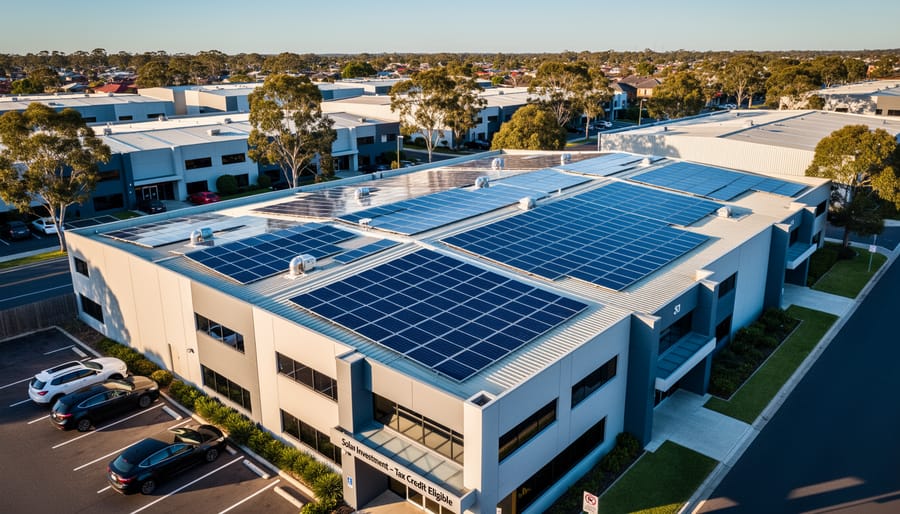
Commercial solar energy systems represent one of the most accessible and financially rewarding investments Australian businesses can make today. When installing renewable energy systems, businesses can tap into substantial federal tax incentives through the instant asset write-off scheme, which allows immediate deduction of eligible assets.
Solar panels designed for commercial applications qualify for these benefits, along with battery storage solutions that help businesses store excess energy for later use. This combination maximizes your energy independence while reducing grid reliance during peak pricing periods. Inverters, mounting systems, and monitoring equipment also fall under qualifying expenses, ensuring your entire solar infrastructure contributes to tax savings.
Australian businesses across manufacturing, retail, and hospitality sectors are already benefiting from these incentives. A Sydney-based café recently reduced their energy costs by 65 percent after installing a 30-kilowatt solar system with battery backup, claiming the full installation cost as an immediate tax deduction. The combination of reduced electricity bills and tax benefits meant their system paid for itself within four years, with decades of clean energy ahead. Whether you operate a small shopfront or manage a large warehouse, solar energy systems offer scalable solutions tailored to your business needs and budget.
Wind, Hydro, and Other Renewable Technologies
Beyond solar, Australian businesses have exciting opportunities to harness alternative renewable technologies that suit their specific locations and needs. Small-scale wind turbines are gaining traction, particularly for rural businesses and farms with consistent wind patterns. These systems can generate significant power when positioned strategically, and many qualify for the same instant asset write-off provisions as solar installations.
Micro-hydro systems present another compelling option for properties with flowing water sources. Several Victorian and Tasmanian businesses have successfully installed these systems, tapping into creek flows to generate reliable baseload power. While the upfront assessment costs can be higher, the consistent energy output often delivers faster returns than intermittent technologies.
Emerging technologies like geothermal heat pumps and biomass systems are also becoming viable, especially for manufacturing and agricultural operations. These systems can attract accelerated depreciation benefits under current legislation, though it’s worth consulting with a renewable energy specialist to understand the specific requirements.
Community energy projects represent an innovative approach where multiple businesses pool resources to develop larger renewable installations, sharing both the investment and returns. Several regional chambers of commerce across Queensland and New South Wales have facilitated these collaborations, creating stronger business cases through economies of scale while building local resilience and fostering genuine environmental leadership within Australian business communities.
Energy Efficiency Upgrades That Count
While renewable energy installations often take centre stage when discussing business incentives, complementary energy efficiency upgrades can significantly boost your overall savings and sustainability impact. The good news? Many of these improvements qualify for their own incentives and can make your renewable energy investment even more cost-effective.
Australian businesses are discovering that combining solar installations with comprehensive efficiency upgrades creates a powerful synergy. When you reduce your energy consumption first, you’ll need a smaller renewable system to meet your needs, lowering upfront costs whilst maximizing returns.
Consider starting with upgrading to efficient lighting throughout your premises. LED conversions typically reduce lighting energy use by 75% and often qualify for state-based programs like the Victorian Energy Upgrades scheme. Similarly, investing in energy efficient appliances for commercial kitchens, refrigeration, or office equipment creates immediate savings that compound over time.
Building envelope improvements like insulation upgrades, window glazing, and smart climate control systems also qualify for various incentive programs. These measures reduce heating and cooling demands, which often represent the largest energy expenses for Australian businesses.
Many local councils and state governments offer rebates specifically for energy audits, which identify the most impactful efficiency opportunities for your specific operation. This strategic approach ensures you’re maximizing every dollar invested in sustainability whilst positioning your business for long-term resilience in our warming climate.
Real Numbers: What Your Business Could Save
Small Business Success Stories
Real Australian businesses are proving that renewable energy investments deliver tangible returns, regardless of size or sector.
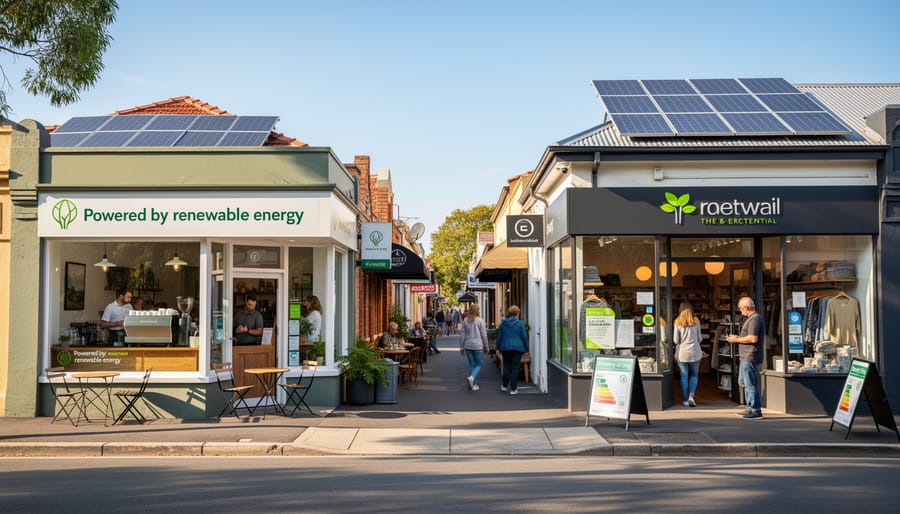
Take Melbourne’s Sunny Side Café, where owner Maria Chen installed a 15kW solar system in 2022. By accessing the instant asset write-off scheme, she claimed immediate tax deductions on the $18,000 investment. Within eighteen months, her electricity bills dropped by 70%, saving approximately $450 monthly. Maria notes the system paid for itself in just over three years, and customer feedback has been overwhelmingly positive, with many locals choosing her café specifically for its sustainability commitment.
In Sydney’s inner west, The Green Wardrobe boutique demonstrates how retail shops can benefit too. Owner James Patterson combined rooftop solar panels with energy-efficient LED lighting throughout his 80-square-metre store. The combined upgrades qualified for Small Technology Certificates under the government’s renewable energy scheme, reducing his upfront costs by nearly $3,000. His quarterly energy expenses decreased from $1,200 to just $320, freeing up capital for inventory and staff training.
Brisbane-based printing business QuickCopy Solutions provides another inspiring example. After installing a 30kW system paired with battery storage, director Sarah Wong secured both federal tax incentives and Queensland’s interest-free renewable energy loan. Her business now operates almost entirely off-grid during daylight hours, with excess energy sold back to the grid generating additional income of roughly $200 monthly.
These businesses share common threads: they started with energy audits, researched available incentives thoroughly, and chose appropriately sized systems for their consumption patterns. Their experiences prove that sustainable investments aren’t reserved for large corporations—accessible entry points exist for every Australian small business ready to take action.
Medium to Large Enterprise Returns
When your business reaches medium to large scale, the financial returns from renewable energy investments become truly transformative. Let’s explore how Australian enterprises are turning sustainability into substantial competitive advantages.
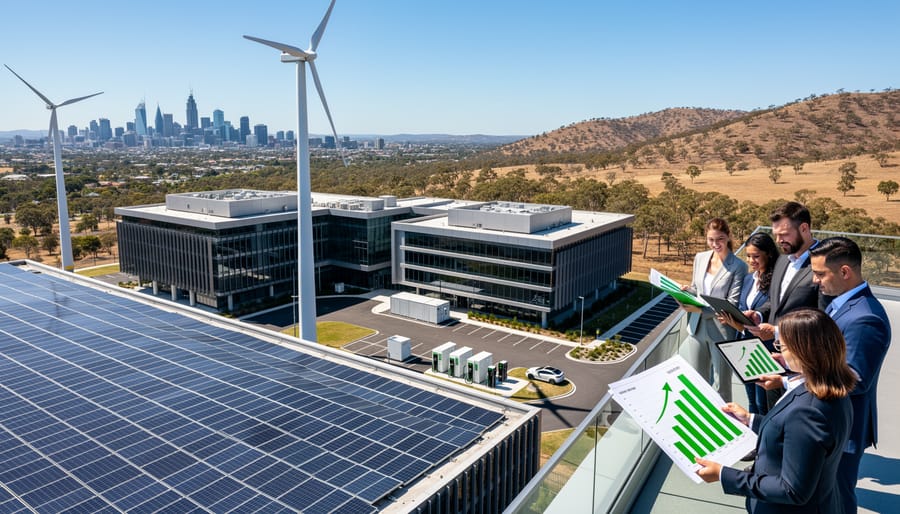
Melbourne-based manufacturing company Precision Components installed a 250kW solar system across their 5,000-square-metre facility in 2022. Within the first year, they reduced energy costs by $78,000 and claimed $82,500 through instant asset write-off provisions. Their operations manager, Sarah Chen, shares: “We were initially concerned about disruption to production, but the installation happened over two weekends. The tax benefits meant our payback period dropped from seven years to just under four.”
In Brisbane, distribution warehouse Green Logistics transformed their entire 12,000-square-metre roof into a solar powerhouse. Their 500kW system now generates enough electricity to power operations and charge their growing electric vehicle fleet. By combining federal tax incentives with Queensland’s interest-free loans for energy efficiency upgrades, they secured $340,000 in immediate tax relief whilst slashing annual energy expenses by $142,000.
Perhaps most impressive is Adelaide’s sustainable packaging manufacturer EcoPack Industries. They invested in both rooftop solar and a commercial battery storage system, creating energy independence whilst accessing multiple incentive streams. Their comprehensive approach included the Technology Investment Boost, allowing them to claim additional deductions on battery storage software and monitoring systems.
These larger operations demonstrate how scalable renewable investments become increasingly cost-effective. The combination of reduced operational expenses, enhanced tax positions, and improved corporate sustainability credentials creates a powerful business case. Many report unexpected benefits too—improved staff morale, stronger customer relationships, and increased property values. For medium to large enterprises, renewable energy tax credits aren’t just environmental choices; they’re strategic business investments delivering measurable returns whilst strengthening Australia’s sustainable future.
How to Actually Claim Your Tax Credits
Documentation You’ll Need
Getting your paperwork sorted might seem daunting, but think of it as building your business’s renewable energy story—one that’ll pay dividends when tax time rolls around. The Australian Taxation Office takes these incentives seriously, and having your documentation in order makes the claiming process straightforward.
Start with your equipment receipts and invoices showing the purchase and installation costs of your renewable energy systems. You’ll need proof that your equipment meets Australian standards—look for Clean Energy Council accreditation certificates and product compliance documents. Keep these safe, as they’re your golden tickets.
Your installer should provide you with a detailed installation report and any relevant building approvals or council permits. If you’re claiming the instant asset write-off, you’ll need evidence showing when the asset was first used or installed for business purposes.
Don’t forget ongoing records too. Energy bills comparing before and after installation demonstrate your system’s performance, which strengthens future claims and helps when sharing your success story with other businesses in your community. Maintain a dedicated folder—digital or physical—containing warranty information, maintenance records, and any correspondence with energy retailers about feed-in tariffs.
Finally, consider getting a letter from your accountant confirming your eligibility and calculations. While not mandatory, it provides additional peace of mind and can speed up processing times significantly.
Working With Accredited Installers and Advisors
Partnering with the right professionals can make the difference between a smooth rebate application and a frustrating rejection. Across Australia, accredited installers and advisors understand the nuanced compliance requirements of various government incentive schemes, ensuring your renewable energy investment delivers both environmental and financial returns.
The Clean Energy Council maintains Australia’s most comprehensive register of accredited installers for solar, battery storage, and other renewable technologies. These professionals stay current with changing eligibility criteria and technical standards, protecting you from costly mistakes that could invalidate your claims. When selecting a contractor, verify their Clean Energy Council accreditation and ask about their experience with specific incentive programs relevant to your project.
Many businesses find success by engaging energy consultants who specialize in navigating federal and state rebate programs. These advisors can identify incentives you might have missed and ensure documentation meets Australian Taxation Office requirements. Your local council’s sustainability office often maintains lists of recommended professionals serving your community, and industry associations like the Smart Energy Council offer valuable referral services.
Remember, choosing accredited professionals isn’t just about compliance—it’s about joining a network of businesses committed to Australia’s renewable energy transition. The right partner becomes an ally in your sustainability journey, helping you maximize available incentives while contributing to our collective clean energy future.

Timeline and Key Deadlines
Timing is everything when it comes to securing renewable energy incentives for your business. The Australian Taxation Office recommends lodging your tax return by 31 October each year to claim eligible deductions and offsets. However, many businesses find it beneficial to consult with their accountant well before this deadline to ensure all documentation is in order.
For immediate deduction opportunities like the instant asset write-off, you’ll need to have purchased and installed your renewable energy equipment before 30 June to claim it in that financial year. Processing times for tax returns typically range from two weeks to several months, depending on complexity.
State-based incentives often operate on different timelines. Victoria’s Solar for Business program, for example, runs in funding rounds that can close once allocations are exhausted, so early application is crucial. Similarly, the Clean Energy Finance Corporation reviews project applications on a rolling basis, with assessment times varying from four to twelve weeks depending on project size.
We encourage you to mark these dates in your calendar now and connect with local business sustainability groups who can share their experiences navigating these timelines successfully.
Beyond Tax Credits: The Full Picture of Business Benefits
While tax credits provide an excellent starting point, the real value of renewable energy investments extends far beyond the immediate financial incentives. Australian businesses embracing clean energy are discovering a cascade of benefits that strengthen their operations and market position for years to come.
Long-term cost predictability stands out as one of the most compelling advantages. Once your solar panels are installed or wind turbines are operational, your energy costs become largely fixed and predictable. This shields your business from the volatility of traditional energy markets—a particularly valuable asset given Australia’s fluctuating electricity prices. Many businesses report 40-70% reductions in their energy bills over the lifetime of their renewable systems, with savings accelerating as conventional energy costs continue rising.
Your brand reputation receives a significant boost too. Today’s consumers, particularly younger Australians, actively seek out businesses demonstrating genuine environmental commitment. A renewable energy investment becomes a powerful story you can share—on your packaging, in your marketing, and through your community presence. Local businesses across Melbourne, Sydney, and Brisbane are finding that their sustainability efforts create meaningful connections with customers who want to support environmentally responsible companies.
Employee morale and talent attraction shouldn’t be underestimated either. Research consistently shows that workers feel prouder and more engaged when their employer takes tangible action on climate change. This translates into better retention rates and easier recruitment, particularly for skilled professionals who prioritise working for values-aligned organisations.
The benefits multiply when combined with other sustainability measures. Businesses that invest in renewable energy often discover improved results from optimising equipment efficiency and water conservation initiatives, creating a comprehensive approach to operational sustainability.
Energy independence also builds business resilience. During grid disruptions or peak demand periods, businesses with onsite renewable generation and battery storage maintain operations while competitors face downtime. This reliability advantage becomes increasingly valuable as extreme weather events become more frequent across Australia.
Common Mistakes That Cost Businesses Thousands
Every year, Australian businesses miss out on substantial savings simply because they weren’t aware of common pitfalls when claiming renewable energy incentives. Understanding these mistakes can mean the difference between maximising your return and leaving money on the table.
One of the most costly errors is poor timing. Many businesses install solar systems or other renewable infrastructure in June, expecting immediate tax benefits. However, the instant asset write-off and depreciation benefits require strategic planning around your business’s financial year. Installing systems too close to year-end might push your claims into the following tax period, delaying benefits when cashflow matters most.
Documentation failures represent another significant stumbling block. We’ve seen businesses invest tens of thousands in solar installations only to discover they can’t claim Small-scale Technology Certificates because their installer wasn’t properly accredited. Always verify your provider holds current Clean Energy Council accreditation before signing contracts. Keep detailed records of all equipment specifications, installation dates, and compliance certificates from day one.
Misunderstanding eligibility criteria costs businesses dearly too. Some assume that leasing solar panels qualifies for the same benefits as ownership, when actually, the asset owner claims the incentives. Similarly, businesses sometimes overlook aggregated turnover thresholds, particularly if they operate multiple entities or have associated businesses that collectively exceed eligibility limits.
Underestimating compliance requirements creates expensive headaches. The Australian Taxation Office increasingly audits renewable energy claims, and incomplete paperwork can result in disallowed deductions plus penalties. Engage qualified accountants familiar with renewable energy incentives before installation, not just at tax time.
Finally, businesses often focus solely on federal incentives while missing generous state-based programs. Victoria, New South Wales, and South Australia each offer additional rebates and grants that stack with federal benefits. Research your state’s current offerings or you might miss thousands in additional support for your sustainable transition.
The path to renewable energy tax credits doesn’t have to be complicated, and you’re certainly not walking it alone. Right across Australia, from Melbourne’s innovative tech startups to Perth’s manufacturing hubs, businesses just like yours are discovering that the transition to renewable energy isn’t just environmentally responsible—it’s financially smart.
Now is genuinely the moment to act. With expanded incentives available and the Australian government committed to supporting the renewable energy transition, the financial landscape has never been more favorable for businesses ready to make the shift. The combination of immediate tax deductions, ongoing energy savings, and enhanced business reputation creates a compelling case that gets stronger every year.
Start with one step. Review your current energy usage, connect with a qualified energy consultant, or simply have that conversation with your accountant about which incentives align with your business goals. Whether you’re considering rooftop solar panels for your office or exploring larger renewable infrastructure investments, there’s a pathway designed for your situation.
You’re joining a thriving community of Australian businesses who’ve discovered that sustainability and profitability aren’t opposing forces—they’re complementary goals. These businesses are reducing their carbon footprint while improving their bottom line, and they’re proving every day that the future of Australian business is both green and prosperous.
Your journey toward renewable energy tax credits begins with a single decision. Take that first step today, and become part of Australia’s sustainable business transformation.