
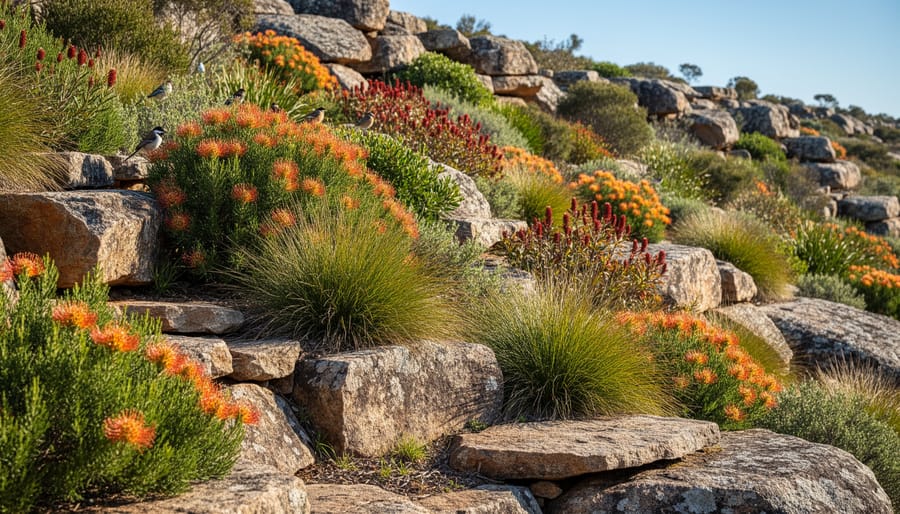
Transform your challenging rocky terrain into a thriving ecosystem by selecting groundcovers like native violets and Scleranthus biflorus that cascade naturally between stones, creating living tapestries that require minimal soil depth. Layer your plantings vertically using tufted species such as Lomandra longifolia and Poa labillardieri in crevices, then anchor the design with structural plants like Banksia spinulosa and Grevillea lanigera that tolerate excellent drainage while providing year-round interest.
Your rocky garden offers what many native plant gardens struggle to replicate: the sharp drainage and lean soil conditions that Australian alpine and coastal species have evolved to thrive in over millennia. Rather than fighting your landscape’s natural character by importing topsoil or removing rocks, you’re working with geological features that mirror the cliff faces, granite outcrops, and sandstone escarpments where these plants naturally flourish.
Establish plants during autumn when cooling temperatures reduce stress, positioning them in existing gaps where rocks create natural pockets that collect organic matter and moisture. Water deeply but infrequently during the first growing season to encourage roots to follow moisture deep into rock fissures, creating drought-resilient plants that anchor themselves into your landscape.
This approach transforms maintenance challenges into opportunities, creating biodiverse habitats for native insects, lizards, and small birds while drastically reducing water consumption compared to traditional garden beds. Your rock garden becomes a living celebration of Australian flora adapted to survive and flourish in conditions where conventional plants simply struggle.
Why Native Plants Thrive Where Other Plants Struggle
Australian native plants have spent millennia adapting to some of the harshest growing conditions on Earth, making them extraordinarily well-suited to rock garden environments where many exotic species simply give up. While your neighbour might be wrestling with wilting imported perennials, native plants are quietly thriving in the exact conditions that challenge conventional garden plants.
The secret lies beneath the surface. Native plants have evolved remarkable root systems designed to extract moisture and nutrients from poor, rocky soils. These roots often grow deeper and spread wider than exotic alternatives, anchoring into crevices and accessing water reserves that shallow-rooted plants never reach. In Sydney’s sandstone escarpments or Adelaide’s limestone country, this adaptation means survival without constant human intervention.
Drought tolerance is another game-changer for Australian natives in rock gardens. Plants like grevilleas and native grasses have developed strategies to conserve water through small, tough leaves and minimal surface area. This translates directly to reduced water usage in your garden, a significant benefit as water restrictions become increasingly common across the continent.
Temperature extremes pose no problem either. Rock gardens experience dramatic temperature swings, with rocks absorbing heat during scorching summer days and releasing it at night. Native plants handle these fluctuations with ease, having evolved alongside similar conditions in their natural habitats.
The sustainability benefits extend beyond water conservation. These resilient plants require minimal fertiliser, resist local pests naturally, and eliminate the need for chemical interventions. You’re not just creating a beautiful garden; you’re participating in a broader movement toward environmental stewardship that’s taking root in communities across Australia. Lower maintenance means more time enjoying your garden and less time fighting against nature’s preferences.
Preparing Your Rock Garden the Australian Way
Understanding Your Site’s Unique Conditions
Before selecting plants, take time to truly understand what your rocky landscape is telling you. Start by observing sun patterns throughout the day—most Australian native rock garden plants thrive in full sun, but some naturally shelter beneath rocky outcrops in dappled shade. Note where shadows fall during different seasons, as this dramatically affects plant success.
Drainage is typically excellent in rock gardens, which suits most natives perfectly. However, check whether water pools anywhere after rain or rushes away too quickly. Rock formations themselves provide valuable microclimates—north-facing rocks in southern states create warm pockets ideal for heat-lovers, while south-facing aspects stay cooler and moister.
Testing your soil pH is straightforward with an inexpensive kit from any garden centre. Most Australian natives prefer slightly acidic to neutral soils (pH 5.5-7), though many rock garden specialists tolerate alkaline conditions. If your rocks are limestone or sandstone, this influences the pH and helps narrow down your plant choices.
Walk your space during different weather conditions and notice where plants already grow naturally. These existing clues reveal microclimates and conditions that successful native plants will appreciate. Your rock garden’s unique character isn’t a challenge to overcome—it’s an opportunity to create something authentically connected to your local landscape.
Sustainable Soil and Drainage Solutions
Rocky terrain doesn’t mean you need to truck in expensive soil amendments or synthetic drainage products. Australian gardeners have brilliant local options right at their fingertips. Start by incorporating crushed sandstone or decomposed granite – materials often available from local quarries – to naturally improve drainage while maintaining the authentic rock garden aesthetic.
For organic matter, consider homemade compost or aged eucalyptus leaf mulch, which naturally breaks down in our climate without introducing nutrients that might encourage unwanted growth. Many community gardens across Australia share composting resources, turning what could be waste into garden gold. This embodies the best sustainable practices while building local connections.
Create natural drainage channels using locally-sourced river pebbles or broken terracotta pots – materials that blend beautifully while serving a practical purpose. Native grasses planted strategically can also stabilise slopes and improve water infiltration without any synthetic intervention.
Remember, rock garden natives have evolved in lean soils, so resist over-enriching. Your goal is mimicking their natural habitat, not creating a traditional garden bed. This approach saves money, reduces environmental impact, and produces healthier, more resilient plants perfectly adapted to your space.
Star Performers: Low-Growing Native Plants for Rock Gardens
Groundcovers That Cascade and Spread
When you’re working with sloping sections or edges in your rock garden, cascading groundcovers create that stunning waterfall effect that transforms rocky outcrops into living tapestries. These spreading champions are perfectly adapted to Australian conditions and actually thrive in the free-draining environment that rocks provide.
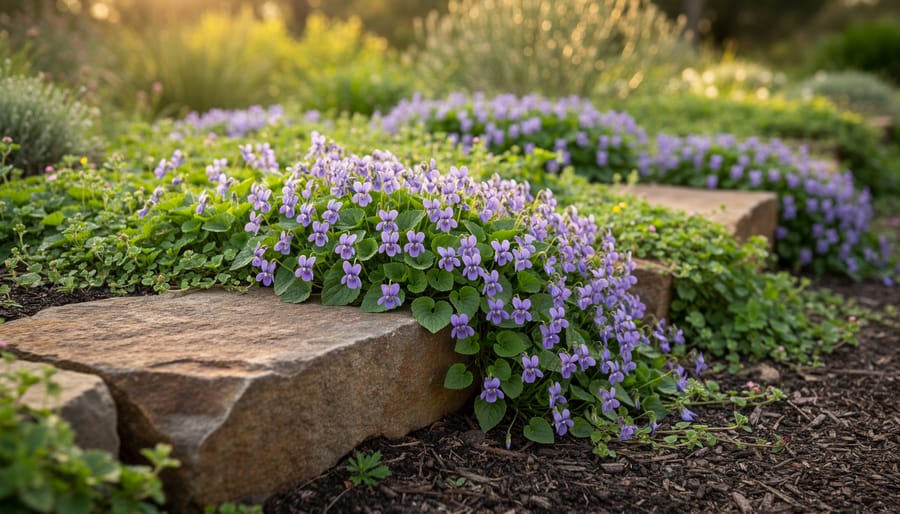
Native violets are absolute stars for tucking into crevices and spilling over rock edges. These delicate-looking plants are tougher than they appear, producing masses of purple or white flowers throughout the cooler months. Position them where they’ll receive morning sun and afternoon shade, particularly in warmer regions. They’ll spread steadily without becoming invasive, creating soft pools of green that contrast beautifully with harsh stone.
For coastal rock gardens or inland areas with sandy soil, Scaevola (fan flower) offers exceptional drought tolerance once established. The blue or purple fan-shaped flowers appear almost year-round, attracting native bees to your garden. Plant them at the top of rocky slopes where they can cascade downward, and resist the temptation to overwater. These plants evolved in tough conditions and actually sulk with too much attention.
Myoporum parvifolium, or creeping boobialla, deserves special mention for larger rock gardens. This vigorous spreader forms dense mats studded with white flowers followed by purple berries. It’s particularly useful for erosion control on steeper rocky sections. Give it space though as it can cover several square metres once established. A light trim after flowering keeps it compact and encourages denser growth, perfect for weaving between larger rocks and anchoring your garden’s design.
Compact Natives with Big Impact
Sometimes the most dramatic garden statements come in compact packages, and Australian native rock gardens are no exception. When you’re working with limited space or want to create intricate layering, smaller native species deliver big visual impact without dominating the landscape.
Dwarf grevilleas are absolute champions for rock gardens. Varieties like Grevillea lanigera ‘Coastal Gem’ grow to just 30cm high but spread beautifully across rocky outcrops, producing pink and cream spider flowers that attract honeyeaters year-round. Grevillea ‘Poorinda Royal Mantle’ creates a stunning crimson carpet effect, hugging rocks and cascading over edges with remarkable drought tolerance once established.
For vertical interest without height, dwarf kangaroo paw varieties offer architectural flair. Anigozanthos ‘Bush Gems’ series, particularly ‘Bush Ranger’ and ‘Bush Pearl’, stay compact at around 40-50cm while producing vibrant flowers that birds simply can’t resist. These varieties have been specifically bred for improved disease resistance, making them more reliable in home gardens than their taller cousins.
Pigface species deserve special mention as hardworking ground covers. Carpobrotus glaucescens spreads across rocky ground, producing cheerful pink and purple daisy-like flowers while actively stabilising soil. The succulent leaves store water efficiently, meaning these plants thrive in the harshest rocky conditions where other ground covers struggle.
These compact natives create brilliant focal points when clustered in rock crevices or positioned where their form can be appreciated up close. Many Australian gardeners are discovering that working with smaller species actually allows for greater plant diversity, creating richer habitats for local pollinators and beneficial insects whilst maintaining that natural, uncluttered aesthetic that makes rock gardens so appealing.
Mid-Layer Natives That Add Structure and Interest
Native Grasses for Texture and Movement
Australian native grasses bring essential softness to rock garden landscapes, creating that gentle contrast against hard stone surfaces that makes the whole design feel balanced and alive. These resilient beauties don’t just look gorgeous swaying in the breeze—they’re perfectly adapted to the dry conditions and drainage that rocky terrain naturally provides.
Wallaby grass (Rytidosperma species) is a rock garden champion that many Australian gardeners are rediscovering. This tufting grass grows in compact clumps that nestle beautifully between rocks, with fine-textured foliage that catches light and dances with the slightest wind. It thrives in well-drained positions and tolerates drought once established, making it ideal for those challenging pockets between boulders.
Weeping grass (Microlaena stipoides) offers a different character with its graceful, slightly drooping habit. This versatile native creates lovely flowing effects when planted along rock edges or allowed to cascade over stone surfaces. It handles partial shade better than many alternatives, perfect for those shadier spots in your rock garden.
For gardeners in coastal areas, coast spear grass (Austrostipa stipoides) introduces elegant vertical movement with its tall, slender seed heads. Meanwhile, kangaroo grass (Themeda triandra) provides stunning seasonal colour changes from green through to russet and gold, adding year-round interest alongside your rocks. These grasses ask for little but deliver enormous visual impact, connecting your garden to Australia’s ancient grassland heritage.
Compact Shrubs and Feature Plants
While groundcovers establish your garden’s foundation, compact shrubs provide essential structure and visual anchors that bring your rock garden to life. The beauty of these feature plants lies in their ability to create focal points without overwhelming the space—a quality that’s transformed countless rocky Australian gardens from barren challenges into thriving ecosystems.
Westringia fruticosa, commonly known as coastal rosemary, exemplifies the perfect rock garden companion. Growing to around one metre, this resilient shrub produces delicate white flowers throughout the year and handles exposed positions with remarkable grace. Many community gardens across coastal New South Wales have successfully used westringia to demonstrate how native plants can thrive where traditional exotic species struggle.
Correas offer another dimension entirely, with their tubular flowers attracting honeyeaters during winter months when other food sources become scarce. Varieties like Correa ‘Dusky Bells’ remain compact while delivering stunning burgundy blooms that create talking points in any garden.
For those wanting something truly distinctive, smaller banksia varieties such as Banksia spinulosa work beautifully among rocks. Their iconic flower spikes add vertical interest while their root systems actually help stabilize rocky slopes—a practical benefit that saves both effort and potential erosion issues down the track. These plants prove that working with nature’s design, rather than against it, creates gardens that genuinely flourish.
Planting and Establishment: Getting It Right from Day One
Getting your native rock garden plants off to a strong start makes all the difference between thriving greenery and disappointing losses. The good news? With the right approach, these resilient Australian natives are naturally equipped to succeed in rocky conditions.
Timing is your first ally. Autumn planting gives natives the best chance to establish before summer stress arrives. In most Australian regions, April through May offers ideal conditions, allowing roots to develop during cooler months when water demands are lower. If autumn isn’t possible, early spring works too, but you’ll need to monitor moisture more carefully through the warmer months ahead.
Before planting, resist the urge to heavily amend your soil. This is where many gardeners stumble with natives. While exotic plants might appreciate enriched soil, most Australian rock garden species have evolved in nutrient-poor conditions and can actually suffer from overly rich environments. Instead, focus on drainage. If water pools in your planting area, incorporate coarse sand or small gravel to improve flow.
When positioning plants, think about their mature size and give them breathing room. Overcrowding invites fungal issues and poor air circulation. A good rule is spacing plants at two-thirds of their expected width. Position taller species on the garden’s higher points and cascading varieties near edges where they can spill naturally over rocks.
The planting hole should be only as deep as the root ball and twice as wide. This encourages roots to spread outward into surrounding soil rather than circling downward. After placing your plant, backfill gently and create a small water basin around the base using soil or small rocks.
Here’s where establishment care becomes critical. Water deeply immediately after planting, then maintain consistent moisture for the first 6-8 weeks without waterlogging. Think “deep and infrequent” rather than light daily sprinkles. Once established, most natives transition beautifully to natural rainfall, embodying the water-wise gardening our communities increasingly value.
One final tip: mulch lightly with local gravel or small pebbles rather than organic mulch, which suits the natural aesthetic while preventing moisture buildup around stems.
Water-Wise Maintenance for Long-Term Success
Once your native rock garden is established, you’ll discover that these resilient Australian beauties practically look after themselves. The secret? Working with nature rather than against it.
During the first summer, water your newly planted natives deeply once a week, allowing soil to dry between sessions. This encourages roots to grow down into cooler, moisture-retentive layers rather than staying shallow. After six months, most established natives will only need supplementary watering during extended dry spells. Morning watering is best, reducing evaporation and fungal issues.
Natural mulching transforms maintenance from chore to simple pleasure. Source local materials like crushed sandstone, decomposed granite, or eucalyptus bark chips. These materials regulate soil temperature, suppress weeds, and slowly release nutrients as they break down. Apply a 5-7cm layer around plants, keeping mulch away from stems to prevent collar rot. Community groups often organize mulch collection days, turning waste materials into garden gold while building connections with fellow sustainability enthusiasts.
Seasonal care follows nature’s rhythm. Autumn brings the perfect opportunity for light pruning of overgrown groundcovers, while spring welcomes a gentle scatter of native-friendly fertilizer if plants look stressed. Winter requires virtually no intervention beyond removing any fallen debris.
Weeds inevitably appear, but hand-pulling after rain proves remarkably effective in rock gardens. The shallow, well-drained soil makes extraction easy. For persistent invaders, try layering cardboard beneath mulch or using boiling water on isolated weeds. These chemical-free approaches protect the beneficial insects and microorganisms that keep your garden ecosystem thriving. Remember, a few weeds won’t harm your garden’s beauty or function, so embrace imperfection as part of sustainable living.
Creating Wildlife Habitat in Your Rock Garden
Your native plant rock garden can become a thriving haven for local wildlife, transforming what might seem like challenging terrain into a vibrant ecosystem right in your backyard. When you choose the right native plants and thoughtfully arrange them among rocks, you create vital refuge for countless creatures, from industrious native bees to sunbathing blue-tongued lizards.
Start by selecting plants that actively support local biodiversity. Kangaroo paw and native fuchsia are magnets for honeyeaters and wattlebirds, while the tubular flowers of Correa species attract tiny eastern spinebills. For ground-dwelling visitors, low-growing natives like native violets and everlasting daisies provide excellent cover for skinks and small birds searching for insects.
The rocks themselves become crucial habitat features when arranged with wildlife in mind. Leave generous gaps and crevices between larger stones where lizards can shelter from predators and regulate their body temperature. Flat rocks placed horizontally create perfect basking platforms, while vertical gaps offer cool retreats during hot days. These simple touches make your garden irresistible to beneficial creatures.
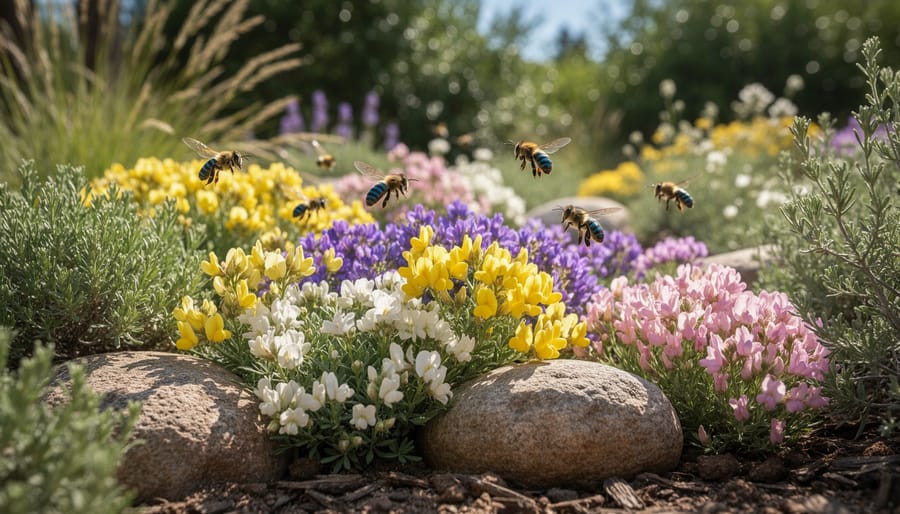
Native bee populations, which are essential pollinators but often overlooked, particularly appreciate rock gardens. Plants like native rosemary, trigger plants, and Billy buttons provide pollen while sunny, bare patches of soil between rocks offer nesting sites for ground-dwelling bee species.
By creating these wildlife-friendly spaces, you’re joining a growing community of Australians making meaningful contributions to local conservation, one rock garden at a time. Your efforts ripple outward, supporting broader ecosystem health and inspiring neighbours to follow suit.
Creating a native plant rock garden is more than an aesthetic choice—it’s a meaningful step toward supporting Australia’s unique biodiversity and building climate resilience in your own backyard. The beauty of this journey is that you don’t need to transform your entire landscape overnight. Start with a small corner, perhaps just three or four species that speak to you, and let your confidence grow alongside your plants.
Every native rock garden, no matter how modest, becomes a refuge for local wildlife and a living testament to sustainable gardening. As you watch your grevilleas attract honeyeaters or observe native bees visiting your flannel flowers, you’ll discover the deep satisfaction that comes from working with nature rather than against it.
The Australian native garden movement is thriving, and your experience matters. Connect with local community groups, share your successes and challenges, and learn from fellow gardeners who understand the unique conditions of your region. Your rock garden isn’t just a personal sanctuary—it’s part of a growing network of environmental stewardship across the continent.
Take that first step today. Choose a few plants, prepare your site, and begin this rewarding adventure. Australia’s environmental future grows stronger with every native garden we create together.