
Start with a waste audit to understand exactly what your school community discards daily—this baseline data reveals whether you need bins for soft plastics, e-waste, or organic waste, and helps you pitch the right program to your principal with concrete numbers. Partner with local councils and community organisations who often provide free recycling bins, educational materials, and collection services specifically designed for Australian schools, transforming what seems like a budget barrier into an accessible opportunity.
Australian schools generate thousands of tonnes of recyclable waste each year, yet many lack structured programs to capture these valuable materials. The good news? Schools across the country are proving that effective recycling programs don’t require massive budgets or complex systems—they need committed champions, student engagement, and smart partnerships with local resources.
Every Australian school can implement a successful recycling initiative, regardless of size or location. From primary schools in regional Queensland running composting programs that feed back into school gardens, to Sydney high schools achieving zero-waste sporting events, the evidence is clear: when students take ownership of recycling, participation rates soar and habits extend beyond school gates into homes and communities.
The real power of school recycling programs extends far beyond diverting waste from landfill. These initiatives create environmental stewards, teach systems thinking, reduce operational costs, and strengthen community connections. Whether you’re an educator wanting to start small with classroom paper recycling or an administrator ready to implement a whole-school approach, the pathway to success involves understanding your school’s unique context, engaging students as leaders, and tapping into Australia’s growing network of recycling education resources.
Why Schools Are the Perfect Starting Point for Recycling Culture
Schools occupy a unique sweet spot when it comes to building a genuine recycling culture in Australia. Unlike workplaces or community centres, schools reach children during their most formative years, when habits and values take root and grow into lifelong behaviours. Research shows that children who learn about environmental responsibility at school don’t just practise it themselves—they become powerful agents of change within their own homes.
Studies have found that young people influence up to 80 percent of household purchasing and waste management decisions after participating in environmental education programs. When a child comes home excited about sorting waste properly or reducing plastic use, parents listen. This multiplier effect means that a single school recycling program can ripple outward, touching hundreds of families and transforming entire communities.
Australian schools are particularly well-positioned to lead this change, with sustainability woven directly into the national curriculum. The Australian Curriculum includes sustainability as a cross-curriculum priority, meaning teachers across subjects—from science to humanities—can integrate recycling and waste reduction into their lessons. This isn’t an add-on; it’s a fundamental part of preparing young Australians for the future they’ll inherit.
Beyond curriculum requirements, schools serve as community hubs where diverse families gather, share ideas, and build collective momentum. When a school commits to recycling, it signals that sustainability matters, creating a visible standard that resonates throughout the neighbourhood. Parents waiting at pickup, attending assemblies, or volunteering in classrooms witness these values in action.
The beauty of starting with schools is that you’re not just managing waste—you’re cultivating environmental champions who will carry these practices forward for decades. Every aluminium can sorted today represents a mindset shift that could influence decisions for a lifetime.
Essential Components of Successful School Recycling Programs
Infrastructure That Actually Works for Students
The difference between a recycling program that thrives and one that collects dust often comes down to simple infrastructure decisions. Getting the physical setup right means students will actually use the bins without thinking twice about it.
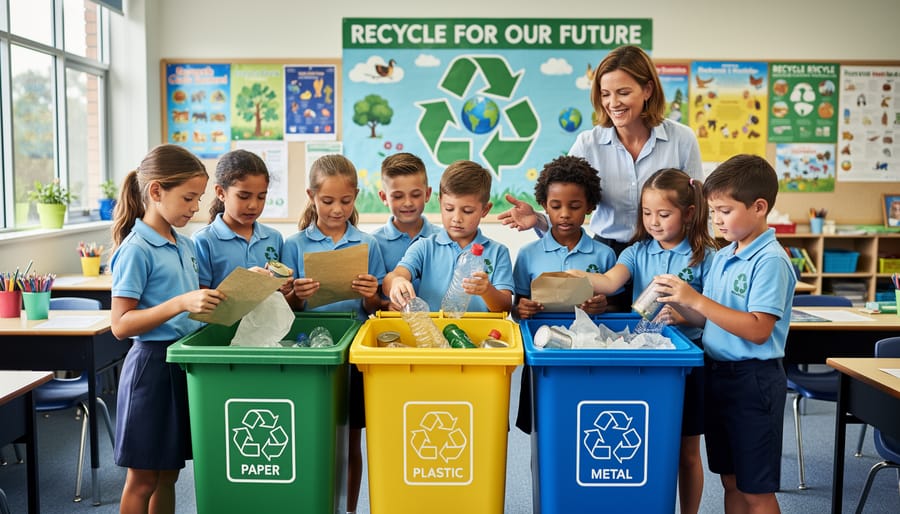
Start with strategic bin placement in high-traffic areas where waste naturally accumulates. Position recycling stations alongside general waste bins in canteens, outdoor eating areas, near vending machines, and at the entrance to each classroom block. When recycling is as convenient as throwing something in the rubbish, students make better choices naturally. Australian schools have found success placing clearly labelled bin clusters—typically three bins for landfill, recycling, and organic waste—at these key points.
Colour-coding makes sorting second nature. The most effective systems across Australian schools use yellow-lidded bins for mixed recycling, green for organics and compost, and red for general waste. This consistency helps students develop habits that extend beyond the schoolyard into their homes and communities.
Signage deserves careful attention. Skip the tiny text and complicated lists. Instead, use large, clear images showing exactly what belongs in each bin. Pictures of juice boxes, sandwich wrapping, and apple cores work far better than written instructions. Consider having students design these signs through art classes—they’ll create visuals that speak directly to their peers while building ownership of the program.
Size matters too. Smaller bins for recyclables in classrooms prevent contamination and encourage regular emptying, while larger stations in communal areas handle higher volumes. Keep bins open-topped where possible to increase participation, but ensure regular collection schedules prevent overflow and maintain the program’s credibility with students.
Student Leadership and Ownership Programs
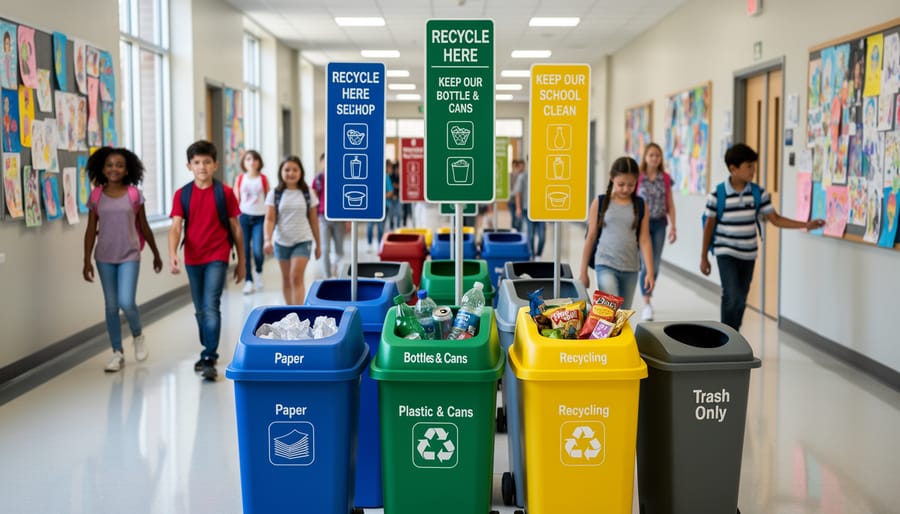
The most successful school recycling programs aren’t run by teachers alone—they’re powered by passionate students who take genuine ownership of sustainability efforts.
Creating student-led eco-warrior teams transforms recycling from a classroom task into a real-world leadership opportunity. At Melbourne’s Brunswick South Primary School, Year 5 and 6 students formed “Green Guardians” who conduct weekly bin audits, present findings at assembly, and design campaigns to reduce contamination. This hands-on approach saw their recycling accuracy jump from 62% to 89% within one term.
Recycling monitors offer another powerful strategy. Students volunteer to manage classroom bins, educate peers about correct sorting, and collect data on waste reduction. Rotating these roles ensures everyone develops environmental literacy while building responsibility and communication skills.
Student-led initiatives create the deepest impact. At Queensland’s Kenmore State High School, students launched a “War on Waste Wednesday” campaign after noticing excessive lunch packaging. They surveyed families, presented findings to the canteen committee, and negotiated changes with suppliers—reducing single-use plastics by 40% across the school community.
The key is giving students authentic decision-making power, not just token participation. When young people identify problems, develop solutions, and see tangible results, they become lifelong environmental advocates. These programs also strengthen connections between schools and their wider communities, inspiring families to adopt better practices at home.
Start small with interested volunteers, provide clear frameworks, and celebrate their achievements publicly to build momentum.
Curriculum Integration Beyond Science Class
Recycling education shouldn’t be confined to science lessons alone—it’s a golden opportunity to enrich learning across your entire curriculum. In maths classes, students can calculate waste reduction percentages, graph recycling data collected from school bins, or estimate the carbon savings from diverting waste from landfill. These real-world applications make numbers meaningful and relevant to Australian students’ daily lives.
Art teachers can champion creative reuse projects, transforming collected materials into sculptures, fashion items, or installations for school exhibitions. Many Australian schools have created stunning artworks from bottle caps, cardboard, and fabric scraps, demonstrating that waste is simply a resource in the wrong place.
English classes offer fantastic opportunities for persuasive writing campaigns, debates about circular economy principles, or documentary projects. Students might write letters to local councils advocating for improved recycling infrastructure or create podcasts interviewing waste management professionals. Consider arranging recycling centre tours as inspiration for creative writing pieces.
In humanities, explore the social and economic impacts of waste, study indigenous Australian perspectives on sustainability, or examine how different cultures approach resource management. Geography students can map their community’s waste journey and identify improvement opportunities. This cross-curricular approach creates environmentally literate students who understand recycling’s broader context beyond simply sorting bins.
Getting Started: A Step-by-Step Launch Plan for Your School
Conducting Your Waste Audit
Before diving into your school recycling program, you’ll need to understand exactly what’s ending up in your bins. A waste audit might sound daunting, but it’s essentially detective work that reveals golden opportunities for change.
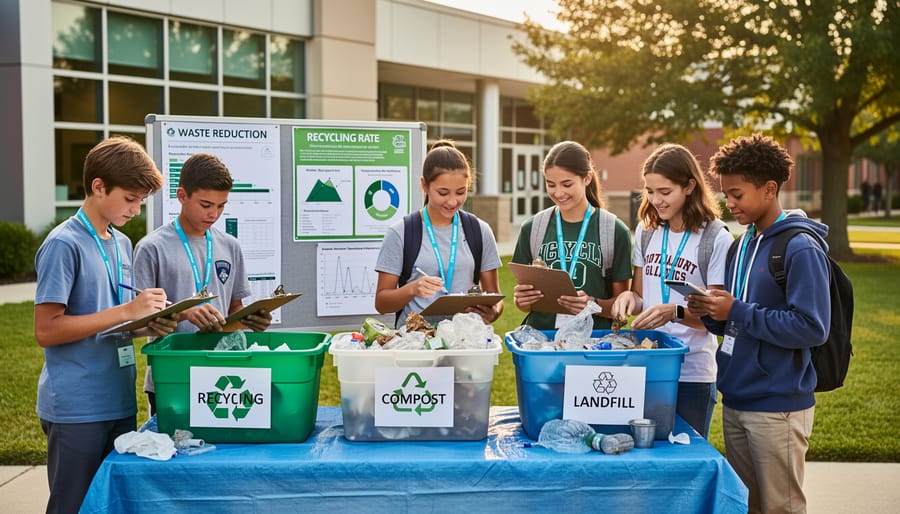
Start by gathering a team of enthusiastic students, teachers, and parent volunteers—this creates ownership from day one. Choose a typical school week and collect all waste from different areas: classrooms, playgrounds, canteens, and staff rooms. You’ll want to sort everything into categories like recyclables (paper, cardboard, containers), organics (food scraps, garden waste), and general waste.
Many Australian schools find that food waste makes up 30-50% of their bins, while recyclable materials often mistakenly end up in landfill. Document your findings with photos and weights—these baseline metrics become your success story later.
The audit process itself is a powerful learning experience. Students quickly spot patterns: perhaps the canteen creates excessive packaging waste, or classrooms need better bin signage. These insights shape your action plan and help prioritize where to focus efforts first.
Remember to conduct follow-up audits every six months. Tracking your progress not only measures improvement but celebrates wins with your school community, building momentum for lasting change.
Building Your Support Team
A successful recycling program thrives when everyone feels part of the mission. Start by assembling a core team that represents your entire school community—teachers who can embed sustainability into lesson plans, enthusiastic students who’ll champion the cause among peers, parents who can volunteer time or resources, and crucially, canteen staff and cleaners who interact with waste daily.
To secure buy-in, speak to each group’s priorities. Teachers appreciate how recycling programs align with curriculum outcomes and create hands-on learning opportunities. Students respond to leadership roles and visible impact—consider forming a student-led Green Team. Parents want their children developing environmental awareness, so highlight the educational benefits. For canteen and maintenance staff, emphasize how proper systems actually make their jobs easier by reducing contamination and managing waste more efficiently.
Host an initial meeting where everyone can voice concerns and contribute ideas. When people help design the program rather than simply following instructions, they become invested stakeholders. Share success stories from other Australian schools to inspire confidence, and acknowledge that you’re building something meaningful together for your community’s future.
Choosing the Right Program for Your School Size and Budget
Every school’s recycling journey looks different, and that’s perfectly okay. Primary schools often thrive with simple, colour-coded bin systems and hands-on sorting activities that turn waste management into learning opportunities. Secondary schools can build on this foundation with student-led green teams and more sophisticated programs like composting or e-waste collection drives.
Small rural schools shouldn’t feel disadvantaged by limited budgets. Start with single-stream recycling bins in high-traffic areas like canteens and staff rooms, then gradually expand. Many Australian councils offer free bin audits and educational resources regardless of your location. Large urban campuses benefit from comprehensive approaches including multiple waste streams, but phasing implementation across different year levels prevents overwhelm.
Budget constraints needn’t derail your efforts. Low-cost options include partnering with local recycling centres, applying for council grants, or organizing community fundraisers. The key is matching your program’s scope to available resources while keeping students engaged. Remember, a small program executed well creates more impact than an ambitious plan that never launches. Build momentum gradually, celebrate wins with your school community, and expand as capacity grows.
Australian Resources and Support Networks for School Recycling
Australian schools have access to an impressive network of resources and support systems designed to make recycling programs both achievable and sustainable. Whether you’re just starting out or looking to expand your school’s initiatives, these programs provide the practical help and expertise needed to create real environmental impact.
Planet Ark stands as Australia’s leading environmental behavior change organization, offering schools the National Recycling Week initiative each November. Their educational resources include free downloadable lesson plans, recycling guides, and the popular Cartridges 4 Planet Ark program, where schools can recycle printer cartridges and earn funds for environmental programs. Their Business Recycling website provides detailed guidance on setting up effective waste systems that schools can adapt.
State-based programs offer tailored support reflecting local priorities. In NSW, the EPA’s Waste Less Recycle More initiative provides grants and educational resources specifically for schools. Victorian schools benefit from Sustainability Victoria’s ResourceSmart Schools program, which offers recognition, professional development, and practical tools for waste reduction. Queensland’s Department of Environment provides school waste auditing templates and curriculum-aligned resources, while South Australia’s Green Industries SA supports schools through their Resource Recovery School Program.
Local councils often provide the most accessible support, with many offering free waste audits, bin provision, and educational workshops. Contact your council’s sustainability officer to discover what’s available in your area—many councils have dedicated school programs waiting to be utilized.
Industry partnerships present valuable opportunities for specialist recycling. TerraCycle Australia offers free recycling programs for hard-to-recycle items like chip packets and oral care products, with schools earning points toward rewards. The Container Deposit Scheme operating across most Australian states enables schools to fundraise while recycling beverage containers.
Australian Association for Environmental Education provides networking opportunities and professional learning for educators passionate about sustainability. These connections foster knowledge sharing between schools, creating a supportive community working toward common environmental goals.
Real Stories: Australian Schools Making It Happen
Across Australia, schools of all shapes and sizes are proving that effective recycling programs aren’t just possible—they’re transformative. Their stories offer valuable blueprints for getting started, no matter your context.
In Sydney’s inner west, Newtown Public School turned their container deposit scheme into a whole-school enterprise. Students operate collection stations during lunch breaks, sort containers by material type, and deposit them at Return and Earn machines. Last year alone, they diverted over 15,000 containers from landfill while raising funds for new playground equipment. The key to their success? Making it student-led from day one.
Meanwhile, rural Charleville State School in Queensland faced different challenges with limited waste infrastructure. Their solution combined creativity with community connection. They established composting programs using simple three-bin systems, partnered with local farmers to use the finished compost, and created a soft plastics collection point that serves both the school and wider community. Despite having just 180 students, they’ve become the regional hub for sustainable practices.
Melbourne’s Brunswick Secondary College took a comprehensive approach, implementing separate streams for paper, containers, organics, and soft plastics through REDcycle. Their environmental captains conduct regular waste audits and share findings with the school community, creating accountability and continuous improvement. Within two years, they reduced general waste by 60 percent.
What unites these diverse success stories? Each school started small, involved students meaningfully, adapted solutions to their specific circumstances, and celebrated wins along the way. They demonstrate that whether you’re in the city or the bush, primary or secondary, well-resourced or budget-conscious, there’s a path forward that works for your school community.
Overcoming Common Challenges and Roadblocks
When Contamination Becomes a Problem
Even the most enthusiastic school recycling programs can hit a snag when contamination creeps in. You might notice pizza boxes in the paper bin or soft plastics mixed with hard containers—it happens, and it’s completely fixable.
The key is catching contamination early through regular bin audits. Consider establishing a student-led “green team” who conducts weekly checks, turning monitoring into an engaging responsibility rather than a chore. When contamination rates climb, it’s time for a refresher campaign. Melbourne’s Brunswick Secondary College tackled this brilliantly by running a “Recycling Reset Week” featuring colourful posters, classroom visits from student ambassadors, and quick daily reminders during assembly.
Visual aids remain your best ally—laminated sorting guides attached to each bin station with clear photos of what belongs where help students make split-second decisions correctly. Some Australian schools have found success with traffic light systems: green for general recycling, yellow for organics, red for landfill.
Remember, contamination isn’t failure; it’s feedback. Use it as an opportunity to re-engage your school community, adjust your approach, and strengthen understanding. Regular reinforcement keeps recycling habits sharp and your bins clean.
Maintaining Momentum After the Initial Excitement
The real challenge begins when the novelty wears off and your recycling program becomes just another fixture in the school landscape. Keeping students genuinely engaged requires creativity and regular refreshment.
Consider rotating student leadership teams each term, giving fresh voices the opportunity to bring new ideas and energy. Melbourne’s Brunswick Secondary College does this brilliantly, with each incoming group launching a mini-campaign around a different theme—from ‘Waste-Free Weddings’ (tackling party waste) to ‘Second-Hand September’.
Transform your messaging seasonally to maintain visibility. Winter might focus on battery recycling drives, while summer could highlight drink container recycling through the container deposit scheme. This prevents your program from blending into the background.
Annual competitions breathe life back into established programs. Host zero-waste lunch challenges, design contests for new bin signage, or recycling treasure hunts where students locate and photograph recycling mistakes around campus. These events create talking points and remind everyone why the program matters.
Connect with neighbouring schools to create friendly inter-school challenges. There’s nothing quite like a bit of healthy competition to reignite enthusiasm. Share success metrics publicly through newsletters and assemblies—celebrating milestones like “10,000 containers recycled” keeps momentum building.
Remember, sustainability isn’t a sprint. Regular small refreshes maintain interest far better than letting programs stagnate until a complete overhaul becomes necessary.
Measuring Impact and Celebrating Success
Tracking your school’s recycling journey transforms good intentions into measurable achievements. Start by establishing baseline metrics before your program launches. Weigh general waste bins for one week, then compare this against your waste output after implementing recycling initiatives. Most Australian schools discover they’re diverting 30-50% of waste within the first term alone.
Calculate your carbon footprint reduction using online calculators from Planet Ark or your local council. These tools help students visualise how their efforts translate into real environmental impact. For example, recycling one tonne of paper saves approximately 13 trees and prevents 2.5 tonnes of CO2 emissions.
Educational outcomes matter too. Survey students quarterly about their recycling knowledge and behaviour changes at home. You’ll likely find that sustainable habits extend beyond the school gates, creating ripple effects throughout families and communities.
Recognition fuels motivation. Establish a ‘Green Classroom of the Month’ award based on waste audit results. Create colourful displays showing waste diversion graphs and celebrate milestones with whole-school assemblies. Consider hosting annual events coinciding with Clean Up Australia Day or World Environment Day to showcase student achievements.
Inter-school competitions spark healthy rivalry. Challenge neighbouring schools to waste reduction battles, sharing results via social media. Invite local media to feature your success stories, building community pride whilst inspiring other schools to follow your lead. Remember, celebrating wins reinforces positive behaviours and demonstrates that every small action contributes to Australia’s sustainable future.
When schools embrace recycling programs, they’re not just reducing waste within their grounds—they’re sparking a movement that ripples outward into homes, neighborhoods, and communities across Australia. Students who learn to sort their lunch scraps and recycle paper at school naturally become environmental champions at home, educating parents and siblings about sustainable practices. This creates a powerful multiplier effect, where one school’s commitment to recycling can influence hundreds of households and inspire neighboring schools to follow suit.
The beauty of school recycling programs lies in their ability to shape a generation that views environmental stewardship not as a burden, but as a natural part of daily life. These young Australians will carry forward the knowledge and habits they’ve developed, ensuring a more sustainable future for our communities.
If you’re an educator, administrator, or parent reading this, now is the time to take that first step. You don’t need a perfect plan or unlimited resources to begin—start small with paper and container recycling, tap into the wealth of support available from local councils and environmental organizations, and watch as your initiative grows. Australian schools have access to excellent programs, grants, and passionate community partners ready to help you succeed. The journey toward a more sustainable school community begins with a single action, and that action starts today.