
Transform your scorching Aussie patio into a cool outdoor haven without breaking the bank by installing shade sails using galvanized steel eye bolts anchored into existing posts or exterior walls, tensioned at angles between 10-20 degrees for optimal water runoff during our unpredictable summer storms. Construct a living pergola framework from recycled timber or sustainably sourced hardwood, then train fast-growing native vines like Pandorea jasminoides or Hardenbergia violacea across the top for natural cooling that can drop underneath temperatures by up to 10 degrees while attracting native pollinators to your backyard.
Creating effective patio shade delivers dual benefits for Australian households, simultaneously reducing energy costs by minimizing heat transfer into your home while expanding usable outdoor living space year-round. Your choice of shade solution depends on three key factors: your patio’s orientation to the harsh afternoon sun, available budget ranging from $50 for simple bamboo screen installations to $500 for comprehensive pergola builds, and your DIY skill level.
The beauty of tackling this project yourself means customizing solutions perfectly suited to your local climate zone, whether you’re battling Darwin’s tropical intensity or Melbourne’s variable conditions. Simple weekend projects like mounting retractable awnings or suspending outdoor curtains from galvanized pipes provide immediate relief, while more ambitious builds create lasting architectural features that increase property value. Each approach we’ll explore uses locally available, sustainable materials and proven techniques refined by Australian DIYers across diverse climates, ensuring your investment delivers maximum comfort with minimal environmental impact.
Why Patio Shade Is Your First Line of Defence Against Heat
Before you reach for the air conditioner remote this summer, consider what’s happening just outside your windows. In Australian homes, up to 40% of unwanted heat enters through windows and glass doors, particularly those facing west and north. Your patio, if left unshaded, becomes a heat trap that radiates warmth directly into your living spaces, forcing your cooling system to work overtime.
Here’s the good news: strategic patio shading can reduce indoor temperatures by 5-10 degrees Celsius through passive cooling alone. This isn’t just about comfort—it’s about taking control of your energy bills during a time when Australian households are feeling the pinch. Recent studies show that proper external shading can reduce cooling costs by up to 25%, translating to hundreds of dollars saved each summer.
The science is straightforward. When sunlight hits unshaded surfaces like concrete patios or brick walls, these materials absorb and store heat, releasing it slowly throughout the day and into the evening. By blocking this heat before it reaches your home’s exterior, shade structures intercept solar radiation at the source. Think of it as an umbrella for your house—simple, effective, and working with nature rather than against it.
For Australians facing increasingly intense heatwaves and rising energy costs, this matters more than ever. The Australian Bureau of Statistics reports that cooling costs now represent a significant portion of household energy consumption, particularly across Queensland, New South Wales, and Victoria. Many families are discovering that investing in shade solutions delivers immediate relief and long-term savings.
If you’re unsure where heat is entering your home, home energy assessments can identify problem areas. But often, the solution starts right outside your back door. Creating effective patio shade doesn’t require expensive contractors or complex installations—with some planning and effort, you can build your first line of defense against Australian summer heat yourself.
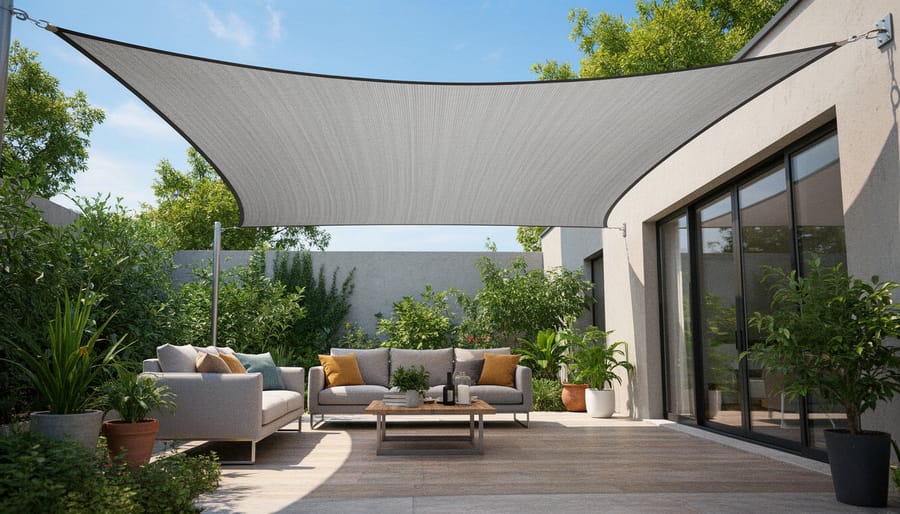
Choosing the Right Shade Solution for Your Space
Assessing Your Patio’s Sun Patterns
Before diving into your DIY shade project, spend a week observing how sunlight moves across your patio. Grab a notepad and sketch your outdoor space, then mark the sunny and shaded areas at different times throughout the day. You’ll quickly notice patterns that help determine the best shade placement.
In most Australian regions, the western and northern sides of your patio cop the harshest afternoon heat, particularly between 11am and 4pm when UV levels peak. This is your critical window for protection. Try taking photos from the same spot at hourly intervals on a typical sunny day to create a visual reference.
Remember that our sun’s path shifts dramatically between seasons. That lovely winter sun streaming onto your patio becomes a fierce summer scorcher. In Brisbane and northern areas, the summer sun sits almost directly overhead, while southern cities like Melbourne experience more angular light. Understanding these regional differences ensures your shade solution works year-round.
Consider consulting neighbours who’ve lived locally for years – they’re goldmines of knowledge about microclimates and seasonal patterns specific to your suburb. This community wisdom, combined with your observations, creates the perfect foundation for designing effective, practical shade that truly works with Australia’s unique climate conditions.
Material Considerations for Australian Climates
Choosing the right materials for your DIY patio shade isn’t just about creating shelter, it’s about building something that lasts through scorching summers, intense UV exposure, and sudden downpours. Here in Australia, we’re fortunate to have access to brilliant sustainable options that perform beautifully in our unique climate.
Recycled timber stands out as a champion material for shade structures. Reclaimed hardwoods like jarrah or ironbark, sourced from old buildings or deconstructed structures, offer exceptional durability and character while keeping usable timber out of landfill. These materials have already proven they can handle decades of Australian weather, making them ideal for pergola frames and support posts.
Natural fabrics deserve serious consideration for shade sails and canopies. Look for locally-woven canvas or organic cotton that’s been treated with eco-friendly water-resistant coatings. These breathable materials allow air circulation while blocking harmful UV rays, following eco-friendly design principles that prioritise both comfort and environmental responsibility.
Bamboo presents another fantastic option, particularly for lightweight structures and decorative elements. This fast-growing renewable resource handles humidity well and brings a natural aesthetic to your outdoor space.
Don’t overlook repurposed materials from your local community. Salvaged corrugated iron, old sailing canvas, or recycled shade cloth from demolition sites can be transformed into effective shade solutions. Check community marketplaces and recycling centres for treasures that reduce waste while saving you money. By choosing materials mindfully, you’re creating shade that protects both your family and our environment.
DIY Shade Sail: The Budget-Friendly Australian Classic
What You’ll Need
Your DIY patio shade project starts with gathering the right materials, and the good news is you can source most of these locally while making environmentally responsible choices. For a basic sail shade (the most popular beginner option), you’ll need shade cloth (recycled HDPE options available at Bunnings from $25-80 depending on size), stainless steel D-rings and carabiners ($15-30), marine-grade rope or stainless steel cable ($20-40), and either existing posts or treated timber posts if you’re installing new supports ($30-100 each).
Looking for something more sustainable? Consider reclaimed timber from salvage yards like Reverse Garbage in Sydney or The Bower for pergola structures (typically $50-200), bamboo screening from nurseries ($40-90 per roll), or fast-growing native vines like Pandorea jasminoides from local nurseries ($15-25 per plant). For living shade solutions, you’ll need quality potting mix, slow-release fertiliser, and appropriate support structures.
Hardware essentials include galvanised brackets, concrete mix for post installation, and basic tools most Aussies already have. Budget between $150-500 for materials depending on your chosen design, with living shade solutions representing the most cost-effective long-term investment. Many community tool libraries across Australia offer free equipment borrowing, reducing upfront costs while building neighbourhood connections.
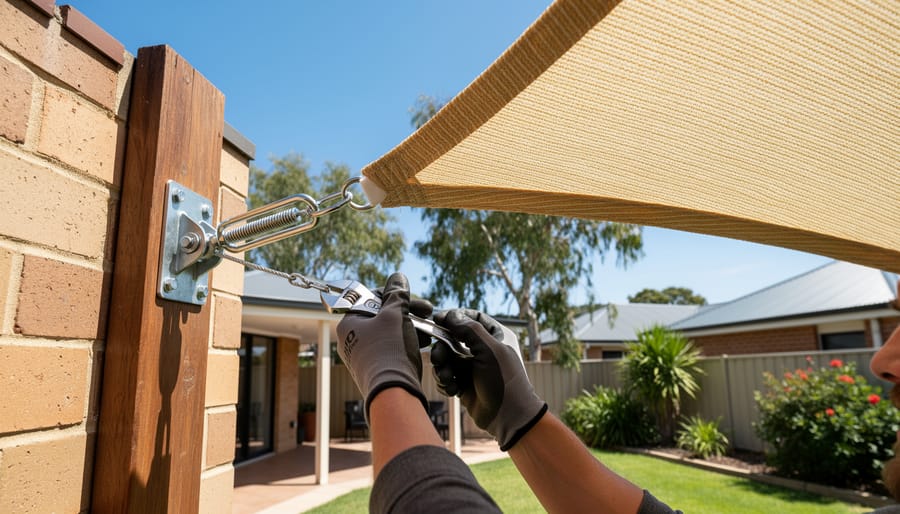
Installation Steps That Won’t Overwhelm You
Installing your shade sail is easier than you might think, and with a methodical approach, you’ll have your patio protected from the harsh Australian sun in an afternoon. Let’s walk through this together.
Start by measuring your space carefully. Hold your measuring tape taut between proposed anchor points, then subtract approximately 5% from each side. This allowance is crucial because shade sails need tension to perform properly and prevent water pooling during those unexpected summer storms. Many first-timers make the mistake of ordering exact measurements, which creates impossible installation challenges.
Mark your anchor points with chalk or stakes. For wall-mounted fixtures, use a stud finder to locate solid timber or masonry. Posts need to be set at least 600mm deep in concrete for stability. A common error here is rushing the concrete curing time. Give it 48 hours minimum before tensioning, even if you’re eager to finish.
When you’re ready to install, attach the lowest corner first, working your way around to the highest point. This creates natural water runoff, essential for longevity. Thread your turnbuckles or D-shackles through the sail’s corner rings before securing them to anchor points. Hand-tighten initially, checking that the fabric sits evenly without twists.
Now comes the satisfying part: tensioning. Gradually tighten each corner in sequence, moving between points to maintain even tension. The sail should feel drum-tight but not strained. You’ll know you’ve overdone it if the fabric develops stress lines radiating from corners. If you can push the centre and feel excessive give, add more tension.
Double-check all connections are secure and rated for outdoor use. Stainless steel fixtures resist our coastal conditions best and won’t let you down during strong winds. Step back and admire your work. You’ve just created sustainable shade that’ll serve your household for years while reducing your cooling costs and environmental impact.
Living Green Walls and Pergola Canopies
Fast-Growing Native Climbers for Instant Shade
Creating living shade with Australian native climbers is one of the most rewarding DIY patio solutions you can implement. These plants work double-duty, providing natural cooling while supporting local wildlife and requiring less water than exotic alternatives once established.
For tropical and subtropical regions across northern Queensland and coastal New South Wales, Pandorea jasminoides (Bower Vine) is a champion performer. This vigorous climber can cover a pergola within 12-18 months, producing stunning white or pink trumpet flowers that attract native bees. It tolerates humidity brilliantly and needs minimal fussing once its roots are down.
Temperate climate gardeners in Victoria, South Australia, and southern coastal areas should consider Hardenbergia violacea (Native Wisteria). This stunning purple-flowering climber reaches 2-4 metres and establishes relatively quickly within two growing seasons. It’s remarkably drought-tolerant and frost-hardy, making it perfect for Melbourne’s unpredictable weather.
For arid and semi-arid zones, Kennedia prostrata (Running Postman) provides ground-level coverage that can be trained upwards. While slower growing, it’s incredibly tough and produces brilliant red flowers that hummingbirds adore.
Quick establishment tips from experienced native gardeners include planting in autumn for best root development, mulching generously with organic matter, and providing temporary shade cloth while plants establish. Install a simple wire or timber trellis framework first, then train growth horizontally across the top for maximum shade coverage. Water deeply but infrequently to encourage deep root systems, and you’ll have created a self-sustaining shade solution that actually improves over time.
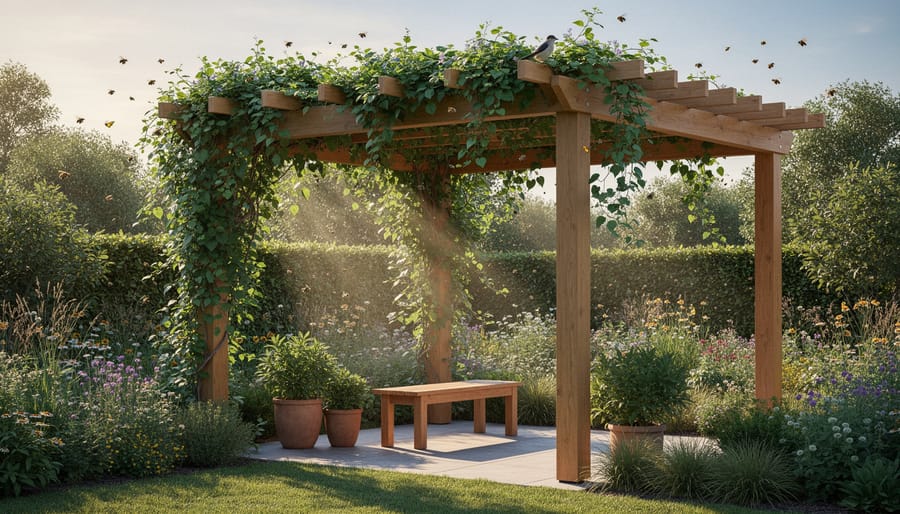
Building a Simple Timber Pergola from Recycled Materials
Building a timber pergola from recycled materials is a rewarding weekend project that combines practical shade creation with environmental responsibility. Across Australia, reclaimed timber from demolished buildings, old fencing, and salvage yards offers character-rich materials at a fraction of new timber costs, while keeping valuable resources out of landfill.
Start by designing your pergola to suit your patio’s dimensions and sun exposure. A simple rectangular structure with posts at each corner works well for most spaces. In Australia’s harsh climate, consider positioning beams running east-west to maximize shade during the hottest midday hours. Aim for post spacing of 2-3 meters, which provides stability while keeping material costs manageable.
For construction, you’ll need four vertical posts, horizontal beams, and crossbeams or rafters. Reclaimed hardwoods like jarrah or ironbark are ideal for posts as they resist weathering naturally. Before starting, inspect salvaged timber carefully for structural integrity, removing any pieces with extensive rot or termite damage. A quick sand and coat of natural oil will enhance weathered timber while maintaining its authentic character.
Basic carpentry skills are sufficient for this project. Set posts in concrete footings at least 600mm deep for stability. Use galvanized brackets and screws for connections, as these withstand Australian weather conditions better than nails. If you’re new to building, many community workshops and Men’s Sheds across Australia offer free advice and tool access, turning your solo project into a community learning experience that strengthens local connections while creating beautiful, sustainable shade.
Repurposed and Upcycled Shade Structures
Pallet Shade Screens
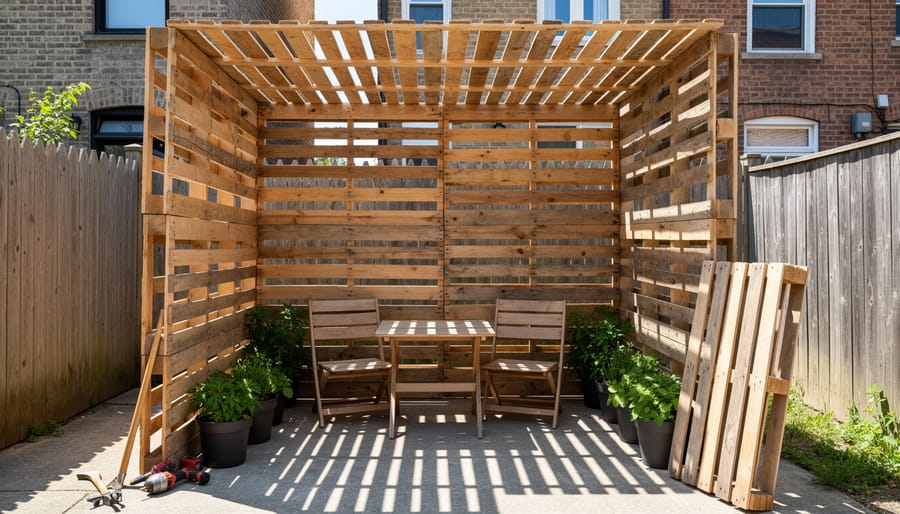
Got a stack of pallets gathering dust in the shed? You’re sitting on perfect shade-making material. Wooden pallets, often available free from local businesses or community marketplaces across Australia, transform brilliantly into vertical shade screens that block harsh western sun while adding rustic charm to your patio.
Start by selecting pallets in good condition without chemical treatment stamps (avoid those marked with MB, which indicates methyl bromide fumigation). Sand them lightly to prevent splinters, then stand them upright along your patio edge. You can anchor them with star pickets or secure multiple pallets together for stability. The natural gaps between slats create filtered shade while maintaining airflow, essential for our hot Australian summers.
Take your screens further by weaving climbing natives like native violet or hardenbergia through the slats. The combination of wood and greenery creates living artwork that evolves with the seasons. Some Melbourne communities have even organised pallet-sharing initiatives, making this zero-waste project truly circular.
For added durability, treat your screens with natural timber oil or paint them with low-VOC outdoor paint in colours that complement your space. Position them strategically where afternoon sun hits hardest, and you’ve created functional, sustainable shade using materials destined for landfill. This project proves sustainability doesn’t mean compromise; it means creativity.
Vintage Sheet and Fabric Canopies
Before investing in new materials, raid your linen cupboard or visit your local op shop for hidden treasures. Old curtains, vintage sheets, and fabric remnants can transform into delightful temporary shade solutions that keep textiles out of landfill while protecting your patio from harsh Australian sun.
Start by assessing what you have. Cotton drop cloths from past painting projects work brilliantly and develop lovely character over time. Those floral sheets from your grandmother? They’re perfect for creating a cottage-garden vibe. Even mismatched fabric pieces can be sewn together patchwork-style for a bohemian look that’s uniquely yours.
For installation, string a wire or rope between existing structures like fence posts, pergola beams, or your home’s eaves. Attach your fabric using curtain rings, clothespins, or simple loops sewn into the material. This approach means you can easily remove the canopy during cooler months or when rain threatens, extending the fabric’s life considerably.
The beauty of this solution lies in its flexibility and affordability. Test different fabrics throughout summer to see what works best for your space. Lighter weaves provide dappled shade and gentle breezes, while heavier materials offer more substantial coverage. Many Australian communities have textile swap groups where you can source materials for free while connecting with like-minded neighbours who value creative reuse over constant consumption.
Maximizing Cooling Performance Beyond Just Shade
Strategic Placement for Cross-Ventilation
Strategic placement transforms shade from merely blocking sun to actively cooling your outdoor space. Think of your patio shade as part of a natural ventilation system—one that harnesses Australia’s afternoon breezes rather than fighting them.
Position your shade structure perpendicular to prevailing winds, typically from the southeast in summer across most Australian regions. This orientation creates a chimney effect where hot air rises and escapes while cooler air flows underneath. Leave at least 30 centimetres of clearance on opposite sides to encourage cross-flow rather than trapping heat beneath your shade cloth or pergola.
Many Australians make the mistake of fully enclosing their patios, essentially creating a greenhouse. Instead, angle your shade to cover the western exposure—where harsh afternoon sun hits hardest—while keeping northern and southern edges open. This approach works particularly well in subtropical Queensland and northern New South Wales, where humidity demands maximum airflow.
Consider adjustable elements like retractable shade sails that you can shift seasonally. During cooler months, you’ll want more sun exposure, while summer demands maximum coverage with strategic gaps for ventilation. This flexible approach respects our unique climate while keeping your outdoor space comfortable year-round.
Combining Shade with Reflective Surfaces
Here’s a clever trick many Aussie gardeners overlook: combining shade structures with reflective surfaces can dramatically reduce your patio’s heat load. While dark materials absorb up to 90% of solar radiation, light-colored surfaces bounce that heat away before it penetrates your outdoor living space.
Consider painting fence panels, nearby walls, or the underside of pergolas in light neutrals like sandy beige or coastal white. These colours reflect heat while maintaining a natural aesthetic that suits Australian landscapes. For a budget-friendly upgrade, position lightweight shade sails in cream or pale grey above existing darker structures, creating a double-layer cooling effect.
White gravel or light-colored pavers surrounding your patio work particularly well, reflecting heat downwards and away from seating areas. This approach mirrors the wisdom of rural communities across Australia who’ve long understood that lighter surfaces mean cooler spaces. When combined with living shade from native plants, you’re creating a passive cooling system that reduces reliance on energy-intensive alternatives while enhancing your outdoor comfort naturally.
Maintenance and Seasonal Adjustments
Your DIY shade structure is an investment in your outdoor comfort and sustainability goals, so maintaining it properly ensures years of reliable service. The good news? Most DIY shade solutions require minimal upkeep when you establish a simple seasonal routine.
Start with regular inspections every few months. Check fabric shade sails for wear, particularly at attachment points where stress concentrates. Tighten any loosened fixtures and look for fraying along edges. Timber pergolas benefit from annual checks for rot or termite activity, especially in Queensland’s humid climate. A quick brush-down removes leaf litter and prevents moisture buildup that can shorten your structure’s lifespan.
Australian weather demands respect, particularly during storm and cyclone season. If you’re in northern regions, removable shade sails are your friend. Take them down before severe weather hits, rolling fabric carefully for storage. Fixed structures like pergolas need secure anchoring from the start, but clearing climbing plants and securing loose elements prevents unnecessary damage. During bushfire season, consider your shade materials carefully. Metal frames paired with non-combustible shade options offer better protection than timber and fabric in high-risk areas. Keep your patio zone clear of dry leaves and debris as part of your broader fire preparedness.
Here’s a often-overlooked advantage: winter flexibility. Many Australians welcome winter sun for natural warmth. Deciduous climbing plants naturally solve this by losing leaves when temperatures drop, allowing sunlight through. Removable shade cloths or retractable options let you adjust coverage seasonally, maximizing passive solar heating when you need it most.
A maintenance mindset keeps your outdoor space functional year-round while supporting your sustainable lifestyle. Small efforts now mean your DIY shade continues delivering comfort, energy savings, and connection to community-minded outdoor living for seasons ahead.
Creating your own patio shade isn’t just about immediate comfort—it’s an investment in a more sustainable future for your home and our planet. By choosing a DIY approach, you’re reducing your carbon footprint, cutting energy costs, and joining thousands of Australians who are embracing passive cooling solutions as our summers grow increasingly intense. Whether you’ve installed a simple shade sail or built a living pergola with native climbers, every project makes a difference.
The beauty of DIY shade solutions is that you don’t need to tackle everything at once. Start with one manageable project that suits your skill level and budget. Perhaps it’s planting a fast-growing deciduous tree this weekend, or ordering materials for that canvas canopy you’ve been planning. As you experience the cooler temperatures and lower electricity bills, you’ll likely find yourself inspired to do more.
You’re part of a growing community of eco-conscious Aussies transforming their outdoor spaces. We’d love to hear about your patio shade project—share your photos and tips with local sustainability groups or online communities. Your experience might inspire someone else to take that first step. Consider connecting with neighbourhood environmental initiatives where you can swap plants, share materials, and learn from others who’ve successfully beaten the heat naturally. Together, we’re creating cooler, greener homes across Australia.