
Every year, Australian businesses discard thousands of Intermediate Bulk Containers—those distinctive cubic tanks holding 1,000 litres that transport everything from food ingredients to industrial chemicals. Most end up in landfill, yet these robust containers contain valuable materials that can be transformed into new products, diverted from waste streams, and even generate cost savings for your operation.
IBC container recycling transforms used bulk containers through systematic cleaning, inspection, and reconditioning processes that extend their lifecycle while reducing environmental impact. Rather than treating these industrial workhorses as single-use items, recycling programs across Australia now collect, sanitise, and either refurbish containers for reuse or break them down into component materials—high-density polyethylene plastic and steel caging—that manufacturers repurpose into new products.
The process addresses a growing challenge for Australian warehouses, manufacturers, and agricultural operations: responsible disposal of bulky containers that regulations prohibit from standard waste collection. With landfill levies increasing across most states and sustainability reporting becoming standard business practice, understanding your recycling options has shifted from environmental nice-to-have to operational necessity.
This approach delivers tangible benefits beyond compliance. Businesses participating in IBC recycling programs often reduce disposal costs by 40-60% compared to landfill fees, while supporting the circular economy principles that Australian consumers increasingly expect from brands they support. Regional collection networks now operate throughout metropolitan and rural areas, making participation accessible whether you’re managing a food processing facility in regional Victoria or a chemical distribution warehouse in Western Sydney.
The following guide explains how IBC recycling works, what happens to your containers, and practical steps to implement a recycling program that aligns with your operational needs and sustainability commitments.
What Exactly Is an IBC Container?
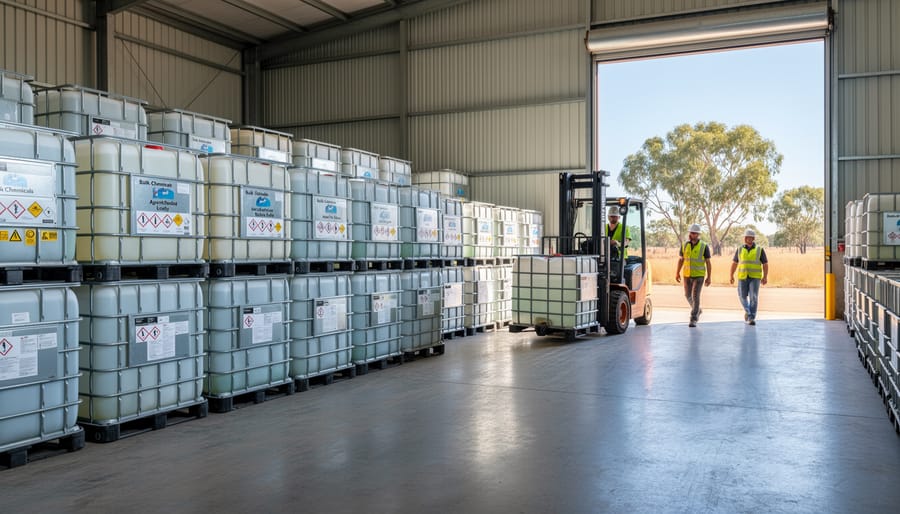
If you’ve worked in Australian industries like agriculture, manufacturing, or food processing, you’ve likely encountered these sturdy cube-shaped containers stacked in warehouses or transport yards. IBC containers—short for Intermediate Bulk Containers—are the workhorses of bulk liquid and granulated material transport across the country.
Think of an IBC as a highly engineered solution sitting between smaller drums and massive storage tanks. The most common type you’ll see features a thick HDPE plastic container (usually holding 1,000 litres) nestled within a protective galvanised steel cage, all mounted on a sturdy pallet base. This clever design makes them stackable, forklift-friendly, and remarkably efficient for moving everything from olive oil and wine to agricultural chemicals and pharmaceutical ingredients.
Across Australian industries, IBCs have become practically indispensable. Farmers use them for fertilisers and pesticides, wineries rely on them during vintage season, food processors transport syrups and concentrates, and chemical manufacturers depend on them for safe handling of industrial products. Their standardised size means they fit seamlessly into shipping containers and warehouse racking systems, making logistics significantly smoother than managing countless smaller containers.
The reason IBCs are so prevalent comes down to practical economics and safety. A single IBC replaces approximately forty 25-litre drums, dramatically reducing handling time, storage space, and transport costs. The rigid cage protects the inner container during rough handling, while the integrated tap allows controlled dispensing without additional equipment.
However, this widespread adoption presents both a challenge and an opportunity for environmentally conscious Australian businesses. With thousands of IBCs cycling through industries nationwide, what happens when they reach the end of their service life becomes a significant environmental consideration. Understanding IBC recycling isn’t just about waste management—it’s about recognising the circular economy potential sitting right there in your storage yard, transforming what many consider disposal problems into sustainable solutions that benefit both your bottom line and our environment.
Understanding IBC Container Recycling
The Three Pathways for Used IBCs
When your business has used IBCs ready for their next chapter, understanding the three distinct pathways available helps you make the most sustainable choice while maximising value. The pathway you select depends largely on the container’s condition and your environmental goals.
The first and most environmentally preferred option is reconditioning and refurbishment for reuse. This pathway suits IBCs that remain structurally sound with no significant damage to the cage, pallet, or bottle. During reconditioning, specialised facilities thoroughly clean the containers using food-grade processes, replace worn components like valves and caps, and conduct rigorous testing to ensure they meet Australian standards. Reconditioned IBCs can serve multiple life cycles, reducing the demand for new containers by up to 80 percent. Australian businesses using this pathway often find they’re supporting local refurbishment operations while significantly cutting their packaging costs.
The second pathway involves component recycling, where containers are systematically disassembled. This approach works well for IBCs with partial damage, perhaps a cracked bottle but intact metal cage, or vice versa. Recycling operators carefully separate the high-density polyethylene bottle from the galvanised steel cage and composite pallet. Each material stream then enters dedicated recycling processes. The steel components typically go to metal recyclers, while the plastic components follow the third pathway.
Material recovery represents the final option, transforming used IBC plastic into raw materials for manufacturing new products. This pathway suits containers too damaged for reconditioning or component separation. The plastic undergoes shredding, cleaning, and reprocessing into pellets that manufacturers use for non-food-grade applications like drainage systems, industrial components, or construction materials. While this pathway requires more energy than reconditioning, it still diverts substantial waste from landfills, keeping valuable resources circulating within Australia’s circular economy.
Why Chemical Containers Need Special Handling
Chemical containers demand extra vigilance in the recycling process, and understanding why helps us all make safer, more responsible choices. When IBCs have stored hazardous chemicals, pesticides, or industrial compounds, they carry risks that go beyond ordinary plastic recycling.
The primary concern is contamination. Even after emptying, microscopic chemical residues cling to container walls, valves, and internal surfaces. These remnants can contaminate entire batches of recycled material if not properly addressed, potentially rendering thousands of kilograms of plastic unusable. More critically, mixing incompatible chemical residues during recycling can create dangerous reactions or release harmful fumes.
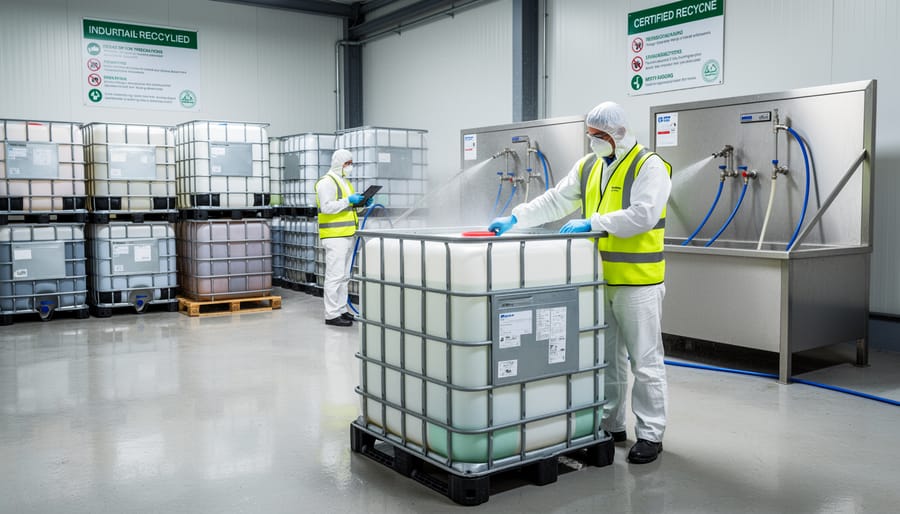
Australian regulations reflect these serious concerns. Under our chemical management framework, IBCs that contained hazardous substances must undergo certified decontamination before entering the recycling stream. This isn’t just good practice—it’s a legal requirement designed to protect workers, communities, and our environment.
This is where certified recycling facilities become essential partners. These specialized centres employ trained technicians who follow strict protocols: triple-rinsing systems, chemical-specific cleaning agents, and rigorous testing to verify complete residue removal. They maintain detailed documentation tracking each container’s history, ensuring complete accountability.
For businesses across Australia using chemical IBCs, partnering with certified processors isn’t an added expense—it’s an investment in community safety and environmental protection. These facilities transform potential hazards into clean, reusable materials, keeping valuable resources in circulation while safeguarding the wellbeing of everyone involved in the recycling chain.
Chemical Container Recycling Programs in Australia
Finding a Certified IBC Recycler Near You
Finding a responsible recycler for your IBC containers doesn’t need to be overwhelming. Across Australia, certified recyclers are making sustainable disposal easier than ever, and connecting with the right partner ensures your containers are handled safely and responsibly.
Start your search by checking for essential certifications. Look for recyclers holding current EPA (Environmental Protection Authority) licenses specific to your state, as environmental regulations vary across NSW, Victoria, Queensland, and other territories. The drumMUSTER accreditation is particularly valuable, indicating the recycler meets stringent industry standards for container handling and environmental responsibility.
Your local council website often maintains directories of licensed waste recyclers, and industry associations like the Waste Management and Resource Recovery Association of Australia can point you toward reputable operators in your region. Many recyclers now offer collection services, making the process even more convenient for businesses managing multiple containers.
Before committing to a recycling partner, ask these essential questions: What specific certifications do they hold? Do they provide documentation proving proper disposal? What happens to the containers after collection? Can they handle containers that previously held hazardous materials? Will they issue compliance certificates for your records?
Regional communities are building strong networks around container recycling. Agricultural cooperatives and industrial estates often share recycler contacts and negotiate group collection rates, reducing costs while strengthening environmental outcomes. Don’t hesitate to reach out to similar businesses in your area—chances are they’ve already navigated this path and can recommend trusted local partners who understand Australian compliance requirements.
What These Programs Accept (And What They Don’t)
Most Australian IBC recycling programs accept containers that have held food-grade materials, cleaning products, non-hazardous chemicals, and water-based solutions. The containers need to be structurally sound with intact cages and functioning valves. Light residue is generally acceptable, as recyclers typically rinse containers as part of their process. Some programs even handle IBCs that previously contained mild industrial chemicals, provided they’re properly labelled.
However, certain conditions make IBCs non-recyclable through standard programs. Containers that held hazardous materials like pesticides, heavy metals, or toxic substances require specialist disposal. Severely damaged IBCs with cracked bottles, broken pallets, or compromised structural integrity won’t be accepted. Unknown contents pose the biggest red flag—recyclers must know what was stored to ensure worker safety and proper processing.
Cross-contamination is another concern. If you’ve mixed different chemical types without proper cleaning between uses, this complicates recycling. The good news? Many Australian recyclers work with businesses to assess borderline cases. When contacting a program, be transparent about what your containers held and their current condition. This honesty helps recyclers determine the best pathway forward, whether that’s standard recycling, specialist treatment, or alternative disposal methods that still prioritise environmental responsibility.
The Business Case: Why Recycling IBCs Makes Sense
Cost Savings and Revenue Opportunities
Here’s something many Australian businesses don’t realise: recycling your IBC containers can actually put money back into your operation rather than draining it away. The numbers tell a compelling story.
Standard disposal of a single IBC through general waste services typically costs between $50 to $150 per container, depending on your location and the contents previously stored. These costs add up quickly for businesses handling dozens or hundreds of containers annually. By contrast, recycling programs often collect IBCs at no charge, and some even offer payment for your used containers.
Several Australian recycling companies now run buyback programs, particularly for food-grade and chemical-grade IBCs in good condition. Depending on the container’s condition and type, businesses can receive anywhere from $20 to $80 per unit. Think about it: instead of paying $100 to dispose of ten containers, you could potentially earn $500 by recycling them through the right program.
Even damaged containers hold value. The steel cages alone contain approximately 20 kilograms of recyclable metal, which scrap metal dealers readily purchase. The plastic bottles, when processed correctly, become raw materials for new products, creating another revenue stream for recycling facilities.
Beyond direct financial returns, businesses discover indirect savings through reduced waste management contracts and improved sustainability credentials. Many Australian companies find that showcasing their IBC recycling efforts helps secure contracts with environmentally focused clients, essentially turning waste management into a competitive advantage. The transition from viewing used IBCs as costly waste to recognising them as valuable resources represents a genuine opportunity for Australian businesses to strengthen both their bottom line and their environmental commitment.
Environmental Impact and Compliance Benefits
IBC container recycling delivers measurable environmental wins that Australian businesses can be genuinely proud of. Each recycled container diverts approximately 50-60 kilograms of plastic and steel from landfill—multiply that across your operations, and the impact becomes substantial. Industry data shows that recycling one tonne of IBC plastic reduces carbon emissions by roughly 1.5 tonnes compared to manufacturing virgin materials, a significant contribution toward Australia’s emission reduction targets.
For businesses seeking to adapt and adopt circular economy principles, IBC recycling offers tangible proof points. Companies implementing comprehensive container recycling programs have reported landfill diversion rates exceeding 90%, transforming what was once considered waste into valuable feedstock for new products.
The compliance advantages extend beyond environmental stewardship. Australian businesses face increasing scrutiny around waste management practices, and demonstrating proper IBC recycling helps satisfy state-based EPA requirements. Many sectors now require detailed sustainability reporting, and IBC recycling provides quantifiable metrics—tonnes diverted, carbon savings, resource recovery rates—that strengthen your environmental credentials.
These benefits aren’t just numbers on a spreadsheet; they represent real environmental protection for Australian communities. Recycled IBC materials often stay within local circular economy loops, supporting domestic manufacturing jobs while reducing our reliance on imported virgin plastics. Whether you’re a small warehouse operator or managing logistics for a national enterprise, participating in IBC recycling demonstrates leadership that resonates with environmentally conscious customers, employees, and stakeholders across the supply chain.
Getting Started: Your IBC Recycling Action Plan
Step 1: Audit Your Current IBC Usage
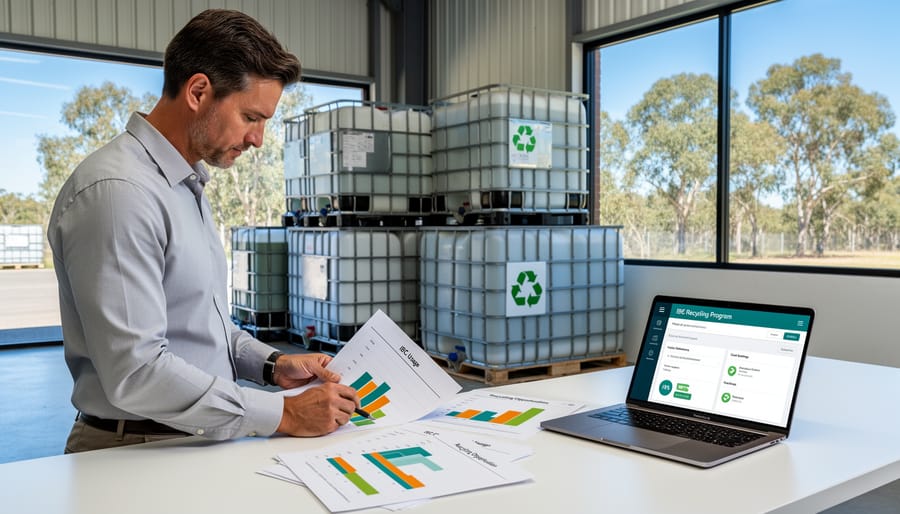
Before diving into IBC container recycling, it’s worth taking a moment to understand exactly what’s happening with your containers right now. Think of this as a stocktake for sustainability—you can’t improve what you don’t measure.
Start by counting how many IBCs your business uses monthly or annually. Walk through your facility and speak with your operations team to get accurate numbers. Are you using 10 containers a month or 100? This baseline figure is crucial for understanding your potential environmental impact and cost savings.
Next, investigate what currently happens to your used containers. Are they being collected by your supplier? Sent to landfill? Perhaps they’re stacking up in a corner somewhere, waiting for a decision? Many Australian businesses discover they’ve been paying for general waste removal without realising recycling options exist.
Now comes the eye-opening part: calculate your current disposal costs. Check invoices from waste contractors, transport fees, and any storage costs for empty containers. Don’t forget the hidden expenses like staff time spent managing disposal. When a Melbourne manufacturing company conducted this audit, they discovered they were spending over $15,000 annually on IBC disposal—money that could be redirected toward more sustainable solutions. Your audit creates a clear picture of where you stand and reveals opportunities for positive change.
Step 2: Connect with Recycling Partners
Once you’ve committed to recycling your IBC containers, the next step is connecting with the right partners who can handle the collection and processing. Think of this as building a relationship that benefits both your business and the environment.
Start by researching local recycling facilities that specifically accept IBC containers. A quick online search for “IBC recycling near me” combined with your location will reveal nearby options. Many Australian recycling companies now offer specialized services for industrial containers, recognizing the growing demand from businesses like yours. Don’t hesitate to reach out to multiple providers to compare their offerings.
When you make contact, be prepared to discuss your needs clearly. How many containers do you generate monthly? Are they made of HDPE plastic or other materials? What products did they previously hold? These details help recyclers assess whether they can accept your containers and determine the appropriate cleaning and processing methods required.
Negotiating collection schedules is crucial for maintaining smooth operations. Most recycling partners offer flexible arrangements, from regular pickups to on-demand collections. If you’re generating containers consistently, a scheduled service might reduce costs and eliminate storage concerns. Smaller operations might prefer to accumulate containers until reaching a minimum pickup quantity.
Understand the pickup requirements upfront. Some recyclers require containers to be empty and rinsed, while others handle contaminated units for an additional fee. Clarify whether you need to remove taps and caps, and confirm any documentation needed for collection, particularly if your containers held hazardous materials. Establishing clear logistics from the start prevents confusion and ensures your recycling program runs smoothly from day one.
IBC container recycling isn’t just good environmental practice—it’s an accessible, practical choice that Australian businesses of all sizes can embrace today. Whether you’re managing a handful of containers or hundreds, recycling options exist across the country, ready to transform your waste stream into a competitive advantage. The process is straightforward, the cost savings are real, and the environmental impact extends far beyond your business premises.
Every IBC container you recycle contributes to Australia’s broader waste reduction goals, keeping valuable plastic and steel out of landfills and reducing the demand for virgin materials. Your decision ripples outward—supporting local recycling industries, creating green jobs, and demonstrating to customers and stakeholders that sustainability matters to your operations.
Starting is simpler than you might think. Reach out to a local IBC recycling provider this week for a no-obligation assessment of your current container usage. Many offer free collection services and can establish ongoing partnerships that simplify your waste management while improving your bottom line.
Remember, sustainable change happens when businesses like yours take that first step. You’re not alone in this journey—you’re joining a growing community of Australian enterprises choosing responsible resource management. Together, we’re building a circular economy where containers get second, third, and fourth lives, where waste becomes opportunity, and where doing right by the environment also means doing right by your business. The choice to recycle your IBC containers is the choice to be part of Australia’s sustainable future.