
Commercial waterproofing systems deliver a dual function that many Australian businesses overlook: they prevent structural damage while simultaneously reducing water waste. When waterproofing fails or underperforms, buildings lose thousands of litres through leaks, seepage, and excessive runoff that could otherwise be captured and reused. The connection between quality waterproofing and water conservation becomes critical as commercial properties face increasing pressure to meet sustainability targets and reduce operational costs.
Australian businesses spend an estimated $1.2 billion annually on water damage repairs, much of which stems from inadequate waterproofing. Beyond the repair costs, failed waterproofing systems allow potable water to escape through compromised roofs, basement walls, and plaza decks. This waste contradicts efforts to conserve water in your business and undermines broader environmental commitments.
Modern water-efficient waterproofing technologies now combine protective barriers with integrated water capture systems, turning what was once a purely defensive building element into an active participant in water management. Green roof assemblies, permeable deck coatings, and smart drainage membranes don’t just keep water out; they direct it toward collection points for irrigation, cooling towers, or greywater systems.
For facility managers and sustainability officers, understanding how waterproofing choices impact water efficiency opens opportunities to address multiple objectives with a single infrastructure investment. The right systems reduce maintenance costs, extend building lifespan, and contribute measurable progress toward water conservation goals. Australian projects from Perth to Brisbane demonstrate that strategic Water proofing choices deliver environmental and financial returns that compound over decades.
The Hidden Water Cost of Poor Waterproofing
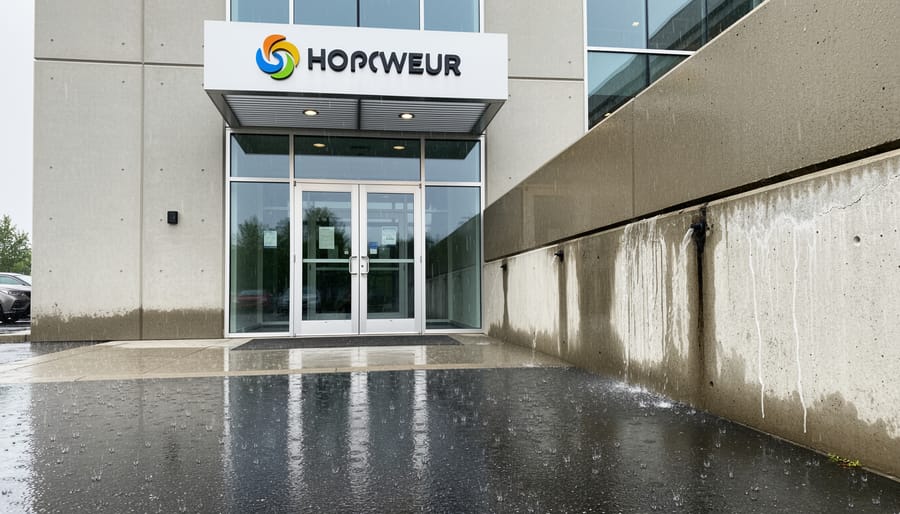
Poor waterproofing doesn’t just damage buildings, it silently drains thousands of litres that never show up on your water bill. When membranes fail, seepage pathways open, and joints crack, water escapes into structural voids, evaporates from damp concrete, or runs off without ever being measured or captured. Australian commercial properties lose staggering volumes this way, and the problem compounds in our climate extremes.
During Sydney’s intense summer downpours, a single failed roof membrane can waste hundreds of litres per event as water bypasses collection systems and flows directly into stormwater drains. In Melbourne’s persistent winter rains, basement seepage from inadequate tanking forces dehumidification systems to work overtime, evaporating captured moisture that could have been prevented. The cycle is expensive and invisible until waterproofing defects drive damage severe enough to trigger emergency repairs.
The water scarcity challenge makes this particularly urgent. Perth, Adelaide, and regional centres already face restricted allocations, yet office buildings waste water through preventable structural leaks while simultaneously purchasing additional supply for cooling towers and amenities. A leaking podium deck can lose 2,000 litres monthly to evaporation and uncontrolled runoff. Basement walls with inadequate waterproofing allow groundwater infiltration that requires constant pumping, water that flows in, gets expelled, and contributes nothing useful.
Beyond the direct waste, structural water damage creates secondary losses. Corroded pipes leak treated water, damaged floor membranes force premature replacement of water-using systems, and compromised building envelopes increase cooling loads that consume water through evaporative systems. The financial toll extends across maintenance budgets, insurance claims, and lost operational efficiency, all traceable to waterproofing that wasn’t designed or maintained with water conservation in mind.
Water-Efficient Waterproofing Systems for Commercial Buildings
Integrated Rainwater Capture Systems
Modern waterproofing systems do more than keep water out, they can actively channel it toward productive use. By designing membranes, drains and slopes with capture in mind from the start, commercial buildings transform roof surfaces and elevated decks into collection zones rather than runoff generators. Instead of sending thousands of litres straight to stormwater systems during every downpour, integrated approaches direct precipitation into holding tanks where businesses can harvest and use rainwater for cooling towers, toilet flushing, landscape irrigation and washing down loading bays.
Rooftop applications offer the cleanest collection surface. A properly specified membrane with strategic fall toward scuppers or internal box gutters feeds water through leaf guards and first-flush diverters before reaching storage tanks. In Sydney and Melbourne, where commercial roofs can yield 50,000 to 100,000 litres annually per 100 square metres, this represents serious volume. Podium decks over car parks or retail spaces work similarly, waterproofing protects the structure below while purpose-built drainage paths gather water from the surface above. Some designs incorporate subsurface collection channels beneath pavers or permeable finishes, capturing water before it evaporates or runs to waste.
The components that enable rainwater harvesting for local use include:
- Sloped membrane installation directing water to designated collection points rather than dispersed drains
- Sealed perimeter detailing preventing bypass flows that skip the capture system
- Separate clean-water and overflow drainage runs for managing different rainfall intensities
- Access-friendly inspection ports allowing maintenance without compromising the waterproof envelope
Commercial properties in water-restricted zones gain dual value, reduced mains consumption lowers operating costs while compliance with water-sensitive urban design guidelines often unlocks council approvals and development incentives. The upfront integration costs typically recover within three to seven years through utility savings alone.
Permeable Waterproofing Solutions
Permeable waterproofing systems tackle the dual challenge of protecting commercial structures while supporting natural water cycles. Unlike traditional impervious membranes that create sealed barriers, these solutions allow controlled water passage through surface layers while maintaining robust protection against structural water ingress below.
For commercial plazas and pedestrian areas, permeable pavers combined with specialized drainage membranes create surfaces that channel rainwater into underlying stone reservoirs. Water slowly filters through these layers, recharging groundwater tables rather than overwhelming stormwater systems. This approach proves particularly valuable in Australia’s urban centres where hard surfaces dominate and every opportunity to replenish aquifers counts.
Car park applications present unique demands, heavy loads, constant traffic, and exposure to oils and chemicals. Modern permeable concrete systems incorporate waterproofing additives that seal the structural substrate while maintaining surface porosity. Water passes through the top layer, gets filtered through gravel beds, then either recharges groundwater or feeds into harvesting tanks. This method can reduce stormwater pollution by filtering contaminants before they reach natural waterways.
The key lies in proper layering: a permeable surface allows water through, a filtration zone captures pollutants and sediments, and a waterproof membrane protects the structural foundation beneath. Design must account for soil permeability, water table depth, and local rainfall patterns. When engineered correctly for Australian conditions, these systems turn commercial hardscapes from water barriers into active participants in sustainable urban water management.
Green Roof Waterproofing Systems
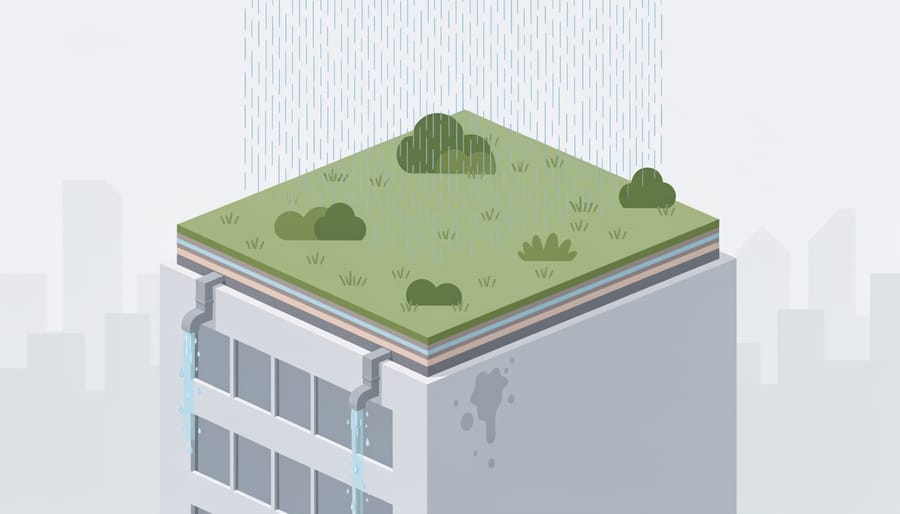
Green roof waterproofing systems represent one of the most sophisticated applications of water-efficient building design, transforming unused rooftop space into productive ecosystems that actively manage water while protecting the structure below. These specialized systems must perform the seemingly contradictory tasks of preventing water from penetrating the building envelope while simultaneously retaining moisture to support plant life.
The waterproofing layer in a green roof assembly typically consists of root-resistant membranes that can withstand penetration from aggressive plant roots without compromising their integrity. Modern systems use modified bitumen or synthetic membranes with built-in root barriers, creating a reliable seal that lasts decades despite constant exposure to moisture and biological activity.
What makes these systems water-efficient is their ability to capture and slowly release rainwater. The growing medium and drainage layers above the waterproofing membrane act as a sponge, absorbing rainfall that would otherwise become runoff. During Melbourne’s heavy downpours, a well-designed green roof can retain 50-80% of precipitation, releasing it gradually through evapotranspiration or controlled drainage. This dramatically reduces the burden on stormwater systems while naturally irrigating the vegetation.
The layered approach also provides thermal benefits that reduce the building’s cooling load and associated water consumption in air conditioning systems. Perth and Brisbane commercial properties with green roofs report measurable decreases in roof surface temperatures, translating to lower energy demands and extended waterproofing membrane life due to reduced thermal stress.
Design Principles That Maximize Water Efficiency
Incorporating water efficiency into commercial waterproofing design requires thinking beyond basic weather protection. The most successful projects treat waterproofing as an active water management system rather than a passive barrier, starting with careful planning and collaboration between architects, engineers, and waterproofing specialists.
Building orientation and surface design dramatically influence water behaviour. Roof slopes should direct rainfall toward collection points rather than simply shedding it to ground level. Even a modest 1-2% gradient can channel thousands of litres weekly toward harvesting systems. For flat roofs common in Australian commercial buildings, strategic drainage design prevents ponding while directing water flow to designated capture or filtration zones. This approach works particularly well for large retail centres and industrial facilities where roof area provides substantial water recovery potential.
Zoning different building surfaces according to water quality helps maximize useful capture. Clean roof runoff travels to dedicated storage, while surfaces exposed to vehicle traffic or heavy pedestrian use connect to filtration systems before reuse or groundwater return. This differentiated approach means you’re not treating all water the same way, reducing processing costs while expanding the volume available for non-potable applications like landscape irrigation or cooling tower makeup.
Material selection directly affects long-term water performance. Choose waterproofing membranes with proven durability in Australian conditions, UV resistance matters as much as waterproofing capacity when systems will operate for decades. High-quality materials reduce the likelihood of premature failure and the water waste that follows. Seam design deserves equal attention; poorly detailed joints become leak points that waste water and compromise structural integrity.
- Conduct a water audit during the design phase to quantify potential capture volumes based on roof area, local rainfall patterns, and intended reuse applications
- Map water flow pathways across all building surfaces, identifying where runoff currently goes and where it could be redirected for beneficial use
- Integrate waterproofing specifications with plumbing and drainage plans to ensure collection systems connect seamlessly with storage and distribution infrastructure
- Design inspection access points into waterproofing layouts so future maintenance teams can monitor performance without damaging membranes or compromising water tightness
- Specify overflow and emergency drainage routes that prevent water damage during extreme weather while still capturing typical rainfall events
Redundancy planning protects both water efficiency and building safety. Secondary drainage paths ensure that if primary collection systems reach capacity, excess water moves safely away from the structure. This layered approach maintains water harvesting benefits during normal conditions while preventing catastrophic failures during the intense storms Australia experiences with increasing frequency.
Maintenance Practices That Prevent Water Waste
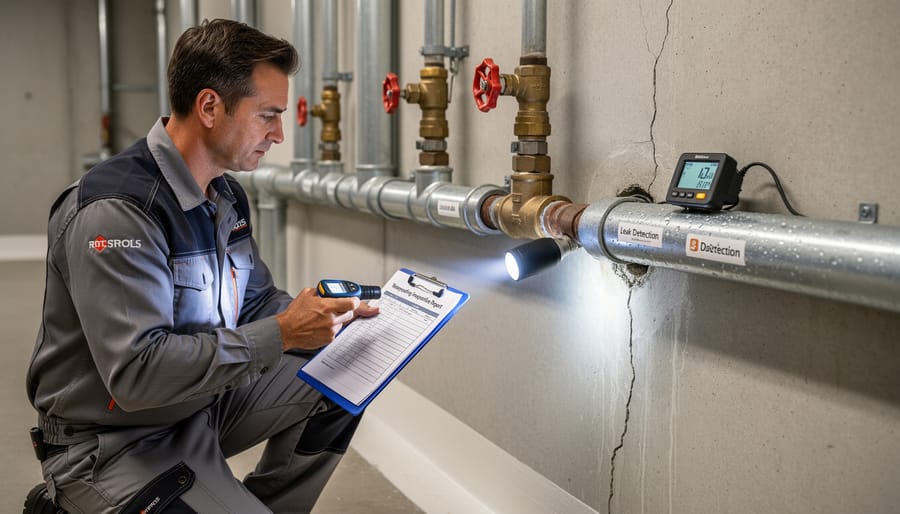
Even the best waterproofing system won’t deliver lasting water efficiency without regular maintenance. A small crack or deteriorating seal can waste thousands of litres before it shows up as a visible leak, and by then, you’re paying for both the water loss and potentially extensive structural repairs.
Australian commercial properties should implement quarterly visual inspections of all waterproofing areas, particularly after heavy rainfall events or extreme heat periods that stress materials. During these inspections, check for ponding water on rooftops and podium decks (which signals drainage issues), discoloration on internal ceilings or walls, and surface cracks in membranes. Early detection catches minor failures before they escalate into major water waste.
For high-value or critical areas, such as below-ground car parks, plant rooms, and buildings with integrated rainwater capture systems, consider annual thermal imaging surveys. These scans identify moisture intrusion invisible to the naked eye, revealing exactly where waterproofing is failing and how much water is penetrating. You’re not guessing which section needs work; you’re addressing the actual problem zone.
When repairs are needed, prioritise them immediately. A delayed patch on a minor crack can cascade into membrane degradation, substrate damage, and continuous seepage that drains both water resources and your maintenance budget. Keep detailed maintenance logs that track inspection dates, issues identified, and repairs completed, this documentation helps you spot patterns and predict when different waterproofing zones will need renewal.
Establish relationships with waterproofing contractors who understand water efficiency goals, not just leak prevention. They’ll recommend repair materials and methods that maintain your system’s water-saving features, whether that’s preserving drainage pathways to rainwater tanks or ensuring permeable surfaces remain functional. Regular maintenance isn’t just about protecting your building, it’s how commercial properties cut water waste consistently over decades, turning waterproofing into an active contributor to operational sustainability.
Australian Success Stories: Buildings Getting It Right
Across Australia, forward-thinking commercial property owners are demonstrating that water-efficient waterproofing delivers measurable environmental and financial returns. These real-world examples offer practical inspiration for businesses ready to upgrade their own systems.
Melbourne’s Pixel Building in Carlton remains a standout example of integrated design. This commercial office building combines advanced waterproofing membranes with an extensive rainwater harvesting system that captures roof runoff for toilet flushing and irrigation. The building’s waterproofing strategy prevented an estimated 1.3 million litres of potable water use in its first operational year while maintaining complete structural protection. The project proved that waterproofing doesn’t need to simply shed water, it can actively manage it as a resource.
In Brisbane’s Fortitude Valley, a mixed-use commercial development retrofitted its aging car park with permeable waterproofing solutions that reduced stormwater runoff by 60 percent. The system allows controlled water passage to underground storage tanks while preventing structural ingress. The facility manager reported significant savings on stormwater charges alongside improved pavement longevity.
We expected the waterproofing upgrade to solve our leak problems, but the water savings were the unexpected bonus that paid back our investment two years ahead of schedule.
Sydney’s Central Park development integrated green roof waterproofing across multiple commercial buildings, creating living rooftops that manage stormwater through vegetation and specialized drainage layers. The system reduces peak stormwater flow by 85 percent compared to conventional roofing while the waterproofing membranes remain completely protected beneath engineered growing media. The development has become a benchmark for high-density commercial projects seeking water efficiency without compromising building envelope integrity.
These examples share a common thread: collaboration between waterproofing specialists, building designers, and sustainability consultants from project inception. Success stems from viewing waterproofing as part of a building’s water management ecosystem rather than a standalone protective layer.
Commercial waterproofing isn’t just about keeping water out, it’s about managing water intelligently. As we’ve explored throughout this guide, the right waterproofing systems protect your building while preventing thousands of litres from being wasted through leaks, inefficient drainage, and missed rainwater capture opportunities.
For Australian businesses facing water scarcity and rising utility costs, this dual benefit represents both environmental responsibility and smart financial management. Every litre conserved through proper waterproofing contributes to your bottom line and your community’s water security.
The examples across Melbourne, Sydney, and Perth demonstrate that water-efficient waterproofing isn’t theoretical, it’s happening now, delivering measurable results for forward-thinking property managers and developers.
Start by assessing your current waterproofing systems. When did you last inspect your roofs, podium decks, and below-grade areas? Are leaks quietly draining resources? Could your building be capturing rainwater instead of channeling it away?
Connect with waterproofing professionals who understand water efficiency as part of their design approach. Ask about integrated systems, maintenance protocols, and quantifiable water savings. Your building can do more than stay dry, it can become part of Australia’s water conservation solution.