
Your heat pump operates most efficiently when set to 20-22°C for heating and 24-26°C for cooling. These narrow temperature ranges deliver the best balance between comfort and energy performance, keeping your system running in its sweet spot where it uses the least electricity per unit of heating or cooling delivered. Straying just a few degrees outside this zone can increase your running costs by up to 25%, particularly during Australia’s peak summer and winter months when energy prices bite hardest.
The science behind these numbers is straightforward. Heat pumps work by moving thermal energy rather than creating it, and their efficiency depends on the temperature difference between indoors and outdoors. The smaller that gap, the less work your compressor does and the more heat or cooling you get for each kilowatt-hour. When you crank your heat pump to 25°C on a cold Canberra morning or drop it to 18°C during a Sydney heatwave, you’re forcing the system to work harder, cycle longer, and consume significantly more power.
For Australian households already grappling with rising electricity costs in 2026, this isn’t just about environmental responsibility. It’s about keeping your quarterly bills manageable while still enjoying the comfort modern heating and cooling provides. The challenge many of us face is knowing not just what temperature to choose, but how to actually configure our systems, maintain those settings through seasonal changes, and verify we’re getting the efficiency gains promised.
This guide walks you through the practical steps to optimize your heat pump’s temperature settings, including the tools you’ll need, safety considerations for accessing your controls, and how to measure whether your adjustments are actually saving energy and money.
Why Heat Pump Temperature Settings Matter for Efficiency
The Energy Cost of Every Degree
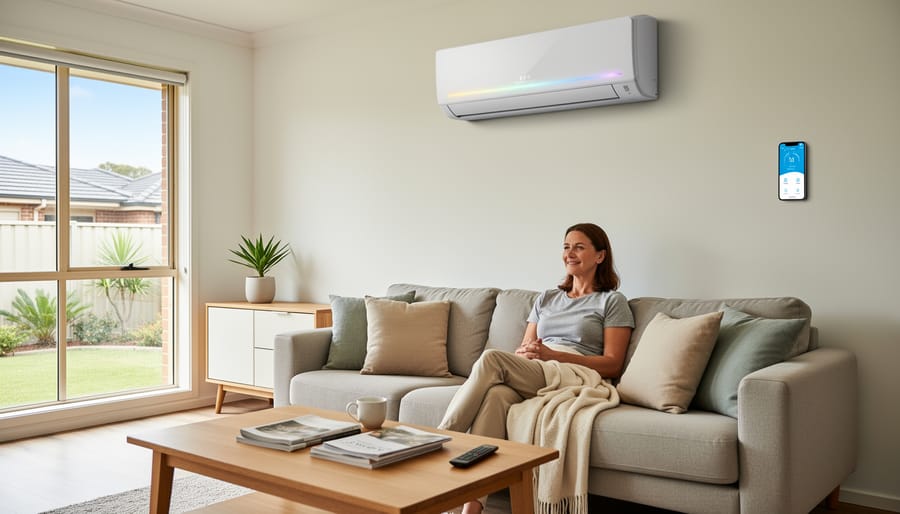
Every degree you push beyond the efficient 18-21°C heating or 24-26°C cooling range compounds your running costs. Australian energy authorities confirm that Every degree affects costs with each degree of cooling below 24°C adding roughly 5-10% to your electricity bill, and each degree of heating above 21°C carrying a similar penalty. For a typical Sydney household spending $400 per quarter on heat pump operation, setting your winter target to 23°C instead of 20°C can add $60-120 annually.
The impact scales because COP depends on ambient temperature: the wider the gap between outdoor and indoor temperatures, the harder your compressor works and the less efficient the heat transfer becomes. In Melbourne’s winter, heating to 22°C instead of 19°C forces your unit to bridge a larger differential, dropping COP from around 3.5 to 2.8 and consuming 20% more energy for marginal comfort gains. Conversely, raising your summer setting from 22°C to the perfect AC temperature of 25°C in Brisbane cuts cooling demand and trims $30-50 off a summer quarter. Small adjustments deliver measurable savings without sacrificing comfort.
What You’ll Need to Optimize Your Heat Pump Temperature
Before you start adjusting your heat pump, gather a few essentials that’ll make the optimization process straightforward and measurable. You don’t need specialized equipment, most items are already in your home or available as free apps. Having these tools ready means you can track what actually works rather than guessing whether your changes make a difference.
Required Tools and Information:
- Baseline energy billYour most recent quarterly or monthly statement showing current kilowatt-hour usage and costs, which you’ll compare against future bills to measure savings.
- Heat pump manualThe manufacturer’s guide contains your specific model’s temperature range, defrost settings, and control instructions; if you’ve lost the physical copy, search the model number online for a PDF version.
- Accurate room thermometerA standalone digital thermometer (not your heat pump’s built-in sensor) verifies whether the displayed temperature matches what you’re actually experiencing in the room.
- Insulation assessmentBasic knowledge of your home’s insulation quality in walls, ceiling, and floors helps you understand why some homes hold temperature better than others; check for drafts around doors, windows, and ceiling access points.
- Programmable thermostat or smart controller (optional but highly recommended)Allows automated temperature scheduling rather than manual adjustments throughout the day; many 2026 models integrate with Australian energy retailers’ off-peak programs.
Each item serves a specific purpose in the optimization process. Your baseline bill gives you concrete numbers to beat, while the thermometer catches discrepancies between your heat pump’s readout and actual room conditions, sometimes a 2°C difference. Understanding your insulation level explains why your neighbour might run their system at 19°C comfortably while you need 21°C; homes with poor insulation work the heat pump harder regardless of settings. The manual prevents costly mistakes like activating auxiliary heating by accident, which can triple your running costs overnight.
Important Considerations Before Adjusting Your Settings
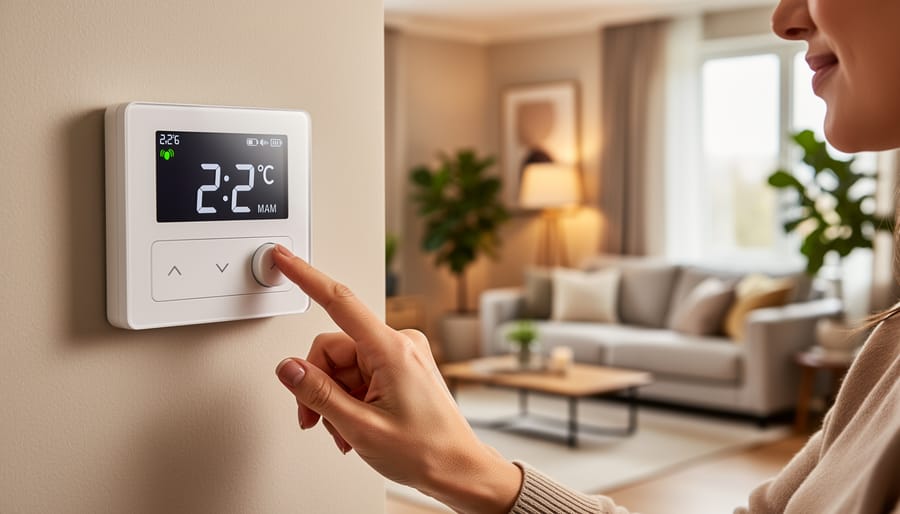
Before you start adjusting your heat pump’s temperature settings, take a moment to consider whether the standard efficiency guidelines suit your situation. While 18-21°C for heating and 24-26°C for cooling work well for most Australian households, some circumstances require different approaches.
If anyone in your home has specific medical conditions, such as respiratory issues, circulatory problems, or temperature regulation difficulties, consult your doctor before implementing temperature changes. Health always takes priority over energy savings. Similarly, households with infants, elderly residents, or those recovering from illness may need to maintain temperatures outside the optimal efficiency range.
Homes with poor insulation present another challenge. If your walls lack adequate insulation, you have single-glazed windows, or significant air leaks around doors and frames, your heat pump will struggle to maintain comfortable temperatures at efficient settings. In these cases, address the building envelope first, sealing drafts and improving insulation, before expecting optimal performance from temperature adjustments alone.
One of the biggest efficiency killers is constantly changing your temperature settings throughout the day. Each time you adjust the thermostat, your heat pump needs to work harder to reach the new setpoint. Frequent changes, tweaking it up and down every hour or two, can actually use more energy than maintaining a steady, slightly less comfortable temperature.
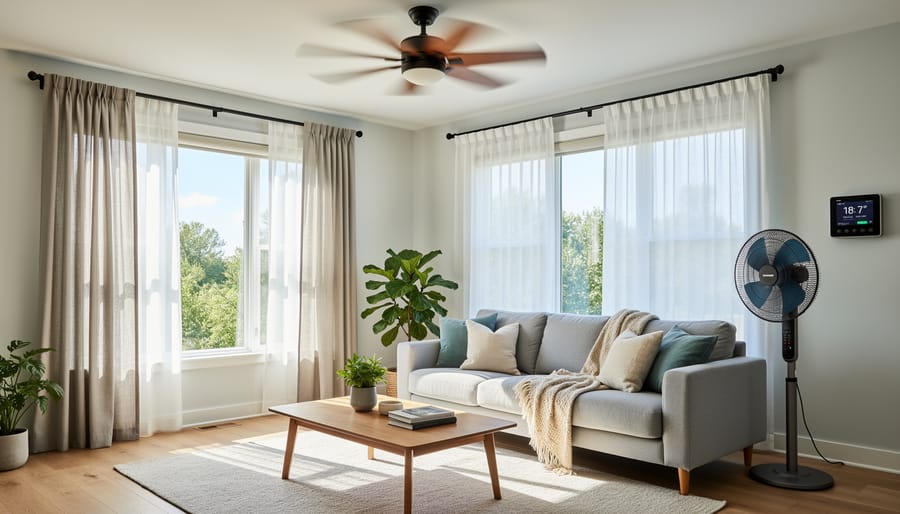
Extreme weather events also warrant caution. During heatwaves above 40°C or cold snaps with frost, your heat pump operates at reduced efficiency regardless of settings. Don’t expect the same performance, and consider supplementary passive strategies like closing curtains during peak heat or using ceiling fans to improve comfort without lowering the setpoint further.
Finally, check your manufacturer’s warranty documentation before making significant changes to default settings or installing third-party smart controllers. Some warranties specifically exclude coverage if modifications alter factory programming, particularly for advanced features or refrigerant cycle adjustments.
Step-by-Step: Setting Your Heat Pump to Peak Efficiency
Step 1: Establish Your Baseline and Assess Your Home
Start by documenting your heat pump’s current thermostat setting and noting how comfortable each room feels throughout the day. Grab your last three months of electricity bills and circle the total kilowatt-hours used, this number becomes your benchmark for measuring improvement.
Walk through your home during the hottest and coldest parts of the day. Press your hand against windows, exterior walls, and door frames to feel for drafts or temperature differences. Poorly insulated areas will feel noticeably warmer in summer or colder in winter. Check your ceiling insulation if accessible; many Australian homes built before 2003 lack adequate coverage, which forces heat pumps to work overtime.
Map out which direction your windows face. North-facing rooms in Australia receive the most sun and typically need less heating but more cooling. Rooms on the south side stay cooler year-round.
Finally, identify problem zones. Maybe your bedroom overheats while the living room stays chilly, or upstairs rooms run five degrees warmer than downstairs. Write these observations down, they’ll guide where you adjust vents, use curtains strategically, or consider zoning solutions. This assessment takes 20 minutes but reveals exactly where your efficiency gains will come from.
Step 2: Set Seasonal Temperature Targets
Set your winter heating target between 18°C and 20°C, and your summer cooling target between 24°C and 26°C. These suggested thermostat ranges balance comfort with energy efficiency for most Australian homes. In cooler regions like Melbourne and Hobart, start at 19°C for winter and adjust down to 18°C if you’re comfortable; in warmer climates like Brisbane and Darwin, you can often maintain 20°C in winter without discomfort. For summer, Perth and Adelaide residents might prefer 25°C during dry heat, while Sydney and Brisbane households should account for humidity. When humidity exceeds 60 percent, the air feels warmer than the actual temperature, so set your cooling target half a degree lower (23.5-24°C) rather than cranking it down dramatically. Conversely, dry inland areas can tolerate 26°C comfortably. Write these seasonal targets directly on your thermostat or lock them into your smart controller, and resist the urge to override them daily. Consistency allows your heat pump to operate in its most efficient range rather than constantly ramping up to chase extreme setpoints.
Step 3: Program Temperature Schedules for Daily Patterns
Smart scheduling multiplies your heat pump’s efficiency without sacrificing comfort. The key is gentle setbacks that work with the system’s strengths, not against them.
For heating in winter, drop your temperature by 2-3°C when you’re asleep or away. Set 17-18°C for overnight (from your daytime 20°C), and the same when everyone’s out during the day. For cooling in summer, raise the setpoint by 2-3°C to 27-28°C during these periods. Heat pumps struggle with extreme temperature swings, a 5°C jump forces the system into high-energy recovery mode that cancels any savings.
Pre-conditioning gives you an edge. Program your heat pump to reach target temperature 15-30 minutes before you wake or arrive home. This gradual ramp-up is far more efficient than blasting the system when you walk through the door feeling uncomfortable.
Avoid the temptation to turn your heat pump completely off during short absences. Reheating or recooling a fully temperature-drifted home wastes more energy than maintaining a moderate setback. For weekend trips or longer, then switching off makes sense.
Step 4: Monitor and Fine-Tune Over 2-4 Weeks
Setting your initial temperatures is just the beginning, the real efficiency gains come from careful observation and incremental refinement. Over the next two to four weeks, you’ll become attuned to how your heat pump responds to different conditions and occupancy patterns.
Start a simple log to track three metrics: your daily comfort rating (scale of 1-10), approximate runtime hours, and energy consumption from your meter or smart monitor. Many Australian electricity retailers now offer apps that show daily usage, making this tracking straightforward. Note outdoor temperature and weather conditions alongside your observations, as a mild week versus a heatwave will dramatically affect performance.
After the first week, review your data for patterns. If you’re consistently comfortable but notice the compressor running non-stop during peak hours, try raising your cooling setpoint by 0.5°C or lowering your heating target by the same amount. Make only one change at a time and wait three to four days before adjusting again, this patience lets you isolate what actually improves efficiency versus what just coincides with milder weather.
If smart meter data shows your highest consumption aligns with your programmed setback recovery periods, extend your pre-conditioning window by 15-30 minutes to spread the load.
Step 5: Integrate Building Temperature Control Strategies
Heat pump temperature settings work best alongside whole-building strategies. Close blinds and curtains during summer days to block solar heat gain, allowing your heat pump to cool at 25-26°C instead of 23°C. In winter, open north-facing window coverings during sunny hours to capture passive warmth, then close them at dusk to retain heat. Run ceiling fans counter-clockwise in summer (creating a wind-chill effect that makes 25°C feel like 23°C) and clockwise on low in winter to push warm air down from ceilings. Zone your system to heat or cool only occupied rooms rather than the entire house. Homes with good insulation, sealed air leaks, and thermal mass elements like concrete floors or brick walls can comfortably maintain the efficient 18-21°C heating and 24-26°C cooling ranges because the building envelope holds temperature longer. For comprehensive guidance on combining heat pump settings with building improvements, see our article on efficient heating and cooling. Every passive strategy you implement reduces the workload on your heat pump, letting you maintain comfort at less aggressive setpoints and lower running costs.
How to Verify Your System Is Running Efficiently
Once you’ve implemented your optimal temperature settings, confirming they’re delivering real efficiency gains takes a few practical checks you can do yourself. Start with your energy bills: compare this month’s consumption (in kWh) to the same month last year, accounting for any differences in weather severity. A well-optimized heat pump in an average Australian home should show a 15-25% reduction in heating and cooling energy use compared to arbitrary temperature settings.
If your heat pump has a digital display or compatible app, check whether it reports coefficient of performance (COP) values in real time. For heating in moderate Australian climates, you’re looking for COP readings of 3.0 or higher, meaning the system produces three units of heat for every unit of electricity consumed. Cooling efficiency (often labeled EER) should sit above 2.5 in typical conditions. Lower values suggest the system is working too hard to bridge the gap between outdoor and indoor temperatures.
Beyond the numbers, observe how your heat pump behaves day-to-day:
- Compressor should cycle on for 10-15 minute runs, not short 3-5 minute bursts (indicates oversized unit or poor settings) or continuous operation without reaching setpoint (suggests setpoint too extreme)
- Temperature variation across the day stays within 1-2°C of your target without constant adjustment
- No cold spots or overheated zones in regularly used rooms
- Defrost cycles in winter occur every 60-90 minutes maximum, lasting under 10 minutes
- Indoor humidity feels comfortable: 40-60% relative humidity year-round
Keep a simple log for two weeks noting daily comfort levels and any manual adjustments you make. If you’re touching the controls more than twice a week, your programmed schedule likely needs refinement rather than the baseline temperatures being wrong. Consistent comfort with minimal intervention signals your settings have hit the sweet spot for your home’s specific conditions.
Troubleshooting Common Temperature Efficiency Problems
Even with perfect temperature settings, your heat pump might not deliver the efficiency you expect. If you’re experiencing persistent problems, these diagnostic steps can help identify the cause.
Heat pump struggles to maintain your target temperature: First, check your air filters, blocked filters are the most common culprit and can reduce efficiency by up to 15%. If filters are clean, inspect outdoor unit clearance; debris, vegetation, or snow accumulation within 60cm restricts airflow. Your home’s insulation might also be inadequate for the system’s capacity, heat pumps work best when the building envelope minimizes heat loss or gain.
High bills despite optimal settings: Review your entire energy usage, not just the heat pump. Phantom loads from standby devices add up; make it a habit to switch off unused appliances. Check if your heat pump’s auxiliary or emergency heat strips are activating unnecessarily, these resistance heaters consume three times more electricity than the compressor. Compare your smart meter data to the heat pump’s runtime to spot anomalies.
Uneven temperatures across rooms: This often indicates poor home zoning or closed doors blocking airflow. Consider whether your return air pathways are obstructed, or if you need to adjust dampers in ducted systems.
Excessive frost cycling: Normal in temperatures below 2°C, but constant defrost cycles suggest refrigerant levels need checking or the reversing valve is failing.
Call a licensed technician if problems persist after basic checks, refrigerant issues are suspected, or electrical components seem faulty.
What to Do Next: Maximizing Long-Term Efficiency
Optimizing your heat pump temperature is just the beginning. Schedule professional maintenance every 12 months to keep your system running at peak efficiency. A qualified technician will clean coils, check refrigerant levels, and calibrate sensors, tasks that maintain optimal COP and prevent costly breakdowns.
Consider upgrading to a smart thermostat that integrates with solar panels or battery storage. These systems automatically shift heating and cooling to periods when renewable energy is abundant, slashing grid dependence. If you haven’t yet made the switch, now’s the ideal time to install a renewable system that works seamlessly with your heat pump.
Join community energy programs like the South Australian Virtual Power Plant or Sydney’s Local Energy Networks. These initiatives pool household batteries and smart devices, reducing everyone’s costs while stabilizing the grid. Many programs offer free smart controllers to participants.
Insulation upgrades deliver lasting returns. Even modest improvements to ceiling, wall, or floor insulation reduce the temperature gap your heat pump must bridge. Pair these upgrades with other energy efficient appliances to compound your savings.
Check the Australian Government’s Energy Rating website and your state rebate programs for 2026 incentives covering insulation, thermostats, and system upgrades. Victoria’s Energy Upgrades program and NSW’s Home Energy Action scheme both offer substantial rebates that make efficiency improvements more accessible.
Common Questions About Heat Pump Temperature Settings
Should I turn off my heat pump when I’m out during the day?
No. Instead of switching it off completely, adjust the temperature by 2-3°C when you leave. Turning it off forces the system to work harder reheating or recooling your home, which uses more energy than maintaining a slightly relaxed temperature. For absences longer than three days, turning it off makes sense.
What’s the best overnight temperature for sleeping?
Set your heat pump to 16-18°C in winter and 25-27°C in summer while you sleep. Most Australians sleep better in cooler conditions, and these settings reduce energy consumption during off-peak hours. A good doona or light bedding compensates for the temperature adjustment without straining your system.
Does fan speed affect my heat pump’s efficiency?
Yes, but not how you might expect. Auto fan mode is typically most efficient because the system adjusts airflow to match demand. Running the fan on high constantly forces the compressor to work harder and wastes energy, while low fan speed can reduce heat transfer efficiency. Let the heat pump manage its own fan speed unless you need quick temperature changes.
How should I adjust settings for humid Queensland summers?
In humid climates, your heat pump removes moisture as well as heat. Set the temperature to 24-25°C rather than higher, because the dehumidification process makes the space feel cooler than the actual temperature. Avoid constantly adjusting the setpoint, which prevents proper moisture removal and leaves the air clammy.
Can solar panels reduce my heat pump running costs?
Absolutely. Heat pumps paired with rooftop solar can slash running costs by 60-80% when you align usage with solar generation hours. Run your system during peak sun hours (10am-3pm) to pre-condition your home, then rely on thermal mass and reduced settings during evening peak tariff periods. Many Australian households with 6.6kW solar systems effectively run their heat pumps for free during daylight.
Why does my heat pump struggle on very hot or cold days?
Heat pumps lose efficiency at temperature extremes because they transfer heat rather than generate it. On 40°C days or sub-5°C nights, the temperature difference between outdoors and your setpoint increases the workload exponentially. This is normal physics, not a fault. Consider supplementing with ceiling fans in summer or zone heating in winter rather than pushing the heat pump harder.
These questions reflect the real-world challenges Australian households face when optimizing their systems. The overnight temperature question is particularly relevant given our climate allows comfortable sleeping without heavy heating or cooling. Understanding the relationship between humidity and perceived temperature matters especially in northern states, where ignoring moisture levels leads to discomfort despite technically correct temperature settings.
The solar integration question addresses a major opportunity in Australia, where rooftop solar penetration leads the world. Timing your heat pump usage to coincide with solar generation transforms it from an energy cost into a storage mechanism for free renewable energy. This strategic approach delivers both financial savings and environmental benefits, aligning your comfort needs with clean energy availability.
Setting your heat pump to run at 18-21°C in winter and 24-26°C in summer isn’t just about shaving dollars off your next energy bill, though you’ll definitely see that benefit. It’s about working with your system’s design rather than against it, reducing strain on the grid, and cutting emissions from your home. When you pair these temperature ranges with thoughtful building practices like sealing draughts, using window coverings strategically, and maintaining your equipment, you create a genuinely efficient space that stays comfortable year-round without the energy waste.
The real power of this approach multiplies when entire communities adopt it. If every Australian household with a heat pump committed to these settings and whole-building thinking, the collective reduction in peak demand and greenhouse gas emissions would be substantial. You’re not just optimizing your own system, you’re contributing to a more resilient, sustainable energy future for all of us.
We’d love to hear how these strategies work in your home, especially if you’ve discovered techniques that suit your local climate or building type. Connect with local sustainability groups, share what you’ve learned, and help build the community knowledge that makes efficient living easier for everyone.