
Renewable energy resources are naturally replenishing sources of power that generate electricity or heat without depleting finite materials or producing harmful emissions. The five primary types available for Australian homes are solar, wind, hydroelectric, geothermal, and biomass energy, each offering distinct advantages depending on your location, budget, and household needs.
Right now, thousands of Australian households are making the shift away from fossil fuel dependence, driven by rising energy costs, climate concerns, and increasingly accessible technology. What once felt like a distant aspiration has become a genuine option for everyday homeowners. Solar panels line suburban rooftops from Perth to Brisbane, community wind projects are powering regional towns, and innovative Australians are finding ways to harness everything from backyard water flows to compost heat.
Understanding these five renewable resources isn’t just about environmental responsibility. It’s about taking control of your energy future, reducing your bills, and joining a growing movement of Australians who refuse to wait for change. Each resource works differently and suits different circumstances. Solar thrives in our sun-drenched climate but needs decent roof space. Wind power delivers results in coastal and elevated areas. Hydroelectric systems can work on properties with reliable water flow. Geothermal taps into the earth’s constant temperature. Biomass converts organic waste into usable energy.
This guide breaks down each resource in plain terms: how it actually works at household scale, what you need to make it viable, and which Australian conditions favour each option. You’ll also discover the rebates, community schemes, and practical considerations that make renewable energy achievable for your home in 2026.
Understanding Renewable Energy for Homes
Renewable energy resources are naturally replenishing power sources that Australian households can tap into without depleting them. Unlike coal, natural gas, or petroleum, which took millions of years to form and will eventually run out, renewable energy comes from ongoing natural processes: the sun shining, wind blowing, water flowing, heat from the earth’s core, and organic matter growing and decomposing. These resources regenerate on human timescales, meaning tomorrow’s sunshine or next week’s wind will be just as available as today’s.
The fundamental difference between renewable and conventional energy lies in sustainability and environmental impact. Conventional power stations burn fossil fuels to generate electricity, releasing carbon dioxide and other pollutants that contribute to climate change. Renewable systems capture energy that’s already flowing through the environment and convert it directly into usable power for your home, producing little to no emissions during operation.
For Australian households, understanding a few key concepts helps clarify how renewable energy integrates into daily life:
- Renewable Energy
- Power generated from naturally replenishing sources like sunlight, wind, or flowing water. These resources naturally restore themselves and produce minimal environmental impact.
- Grid-Tied Systems
- Renewable installations connected to the main electricity network, allowing homes to draw power when needed and export surplus generation back to the grid.
- Off-Grid Systems
- Standalone renewable setups that operate independently from the electricity network, typically incorporating battery storage to ensure continuous power supply.
- Feed-in Tariffs
- Payments Australian households receive from energy retailers for excess renewable electricity exported to the grid. Rates vary by state and retailer.
- Net Metering
- A billing arrangement where exported renewable energy offsets imported grid electricity, though Australian systems typically use separate feed-in tariff structures rather than true net metering.
Why does this matter for Australian homes? Rising electricity prices and growing climate concerns are pushing households to take control of their energy future. Renewable resources offer genuine independence: you’re generating power on your property rather than buying it indefinitely from external suppliers. Over time, this translates to lower bills, reduced carbon footprint, and insulation from price volatility. Australia’s abundant sunshine, strong coastal winds, and diverse climate zones make us particularly well-positioned to harness these natural energy flows at the household level.
How Renewable Energy Systems Work in Australian Homes
Renewable energy systems for Australian homes follow a straightforward three-stage process that transforms natural energy into the electricity that powers your lights, appliances, and devices. Understanding these fundamentals helps demystify what might seem like complex technology and shows how accessible sustainable home power really is.
The first stage is energy capture. Each renewable system uses purpose-built equipment to intercept naturally occurring energy flows. Solar panels capture photons from sunlight, wind turbines harvest kinetic energy from moving air, micro-hydro systems tap into flowing water, ground-source heat pumps access stable underground temperatures, and biomass systems release stored chemical energy from organic materials. The capture method varies dramatically between technologies, but they all share the goal of intercepting energy that would otherwise disperse unused into the environment.
Next comes conversion and conditioning. Raw captured energy rarely matches the form your home needs. Solar panels generate direct current (DC) electricity, which inverters convert to the alternating current (AC) that Australian homes use. Wind turbines produce variable voltage that requires regulation. Micro-hydro systems need voltage control as water flow fluctuates. Geothermal heat pumps move thermal energy rather than generate electricity, while biomass systems create heat that can drive generators. This conversion stage ensures the energy becomes compatible with standard household electrical systems.
The final stage is storage and distribution. Many Australian homeowners pair their renewable systems with battery banks that store excess energy for use when generation drops, like after sunset for solar or during calm periods for wind. The converted energy then flows through your existing switchboard and wiring, powering your home exactly as grid electricity does. Modern systems include smart controllers that decide whether to use generated power immediately, store it for later, or export surplus to the grid for feed-in credits.
Most renewable installations in Australian homes connect to the existing electrical grid, creating a hybrid system. When your renewable source generates more than you need, excess flows to the grid. When generation falls short, grid power seamlessly fills the gap. This grid-connected approach gives you energy security while maximizing the value of your renewable investment through feed-in tariffs available across Australian states.
The Five Main Renewable Energy Resources for Homes
1. Solar Energy
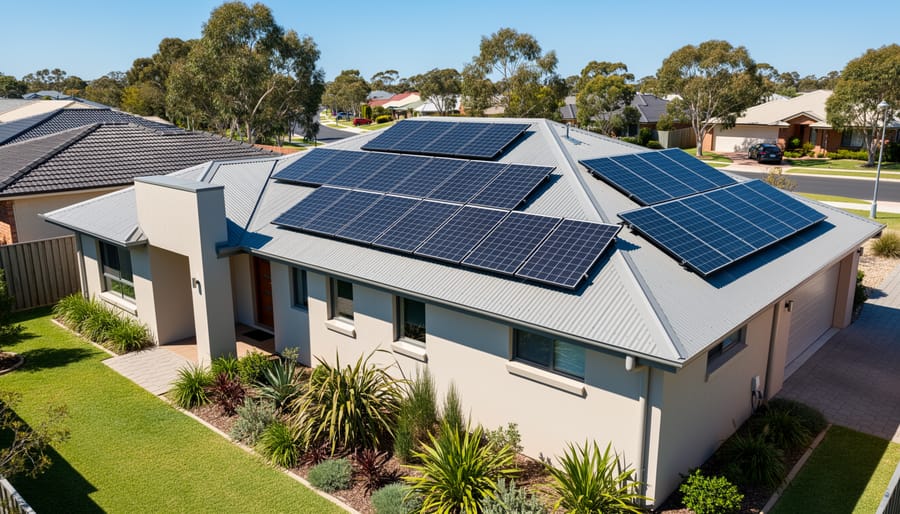
Solar energy is the most popular renewable choice for Australian homes, and for good reason, our sunlit continent receives more solar radiation per square metre than almost anywhere on Earth. Photovoltaic panels, commonly called solar panels, capture sunlight through semiconductor materials (typically silicon) that generate direct current (DC) electricity when photons strike their surface. An inverter then converts this DC power into alternating current (AC) that your home appliances can use, either feeding electricity directly into your household circuits or sending excess power back to the grid for credit on your energy bill.
Rooftop installations dominate the residential solar landscape because they make use of otherwise unused space while positioning panels for optimal sun exposure. Most Australian homes suit north-facing roof pitches between 15 and 35 degrees, though east-west configurations work well for households that use more power in morning and evening hours. Beyond electricity generation, many homeowners install solar hot water systems that use solar thermal collectors to heat water directly, a simple, efficient technology that can slash hot water costs by 50-70% in sunny regions.
A complete home solar system typically includes:
- Photovoltaic panels that capture sunlight and generate DC electricity
- Inverters that convert DC power to usable AC electricity for home circuits
- Battery storage units (optional) that store excess energy for night-time or cloudy-day use
- Mounting and racking systems engineered for Australian wind loads and roof types
- Monitoring equipment that tracks production, consumption, and system performance in real-time
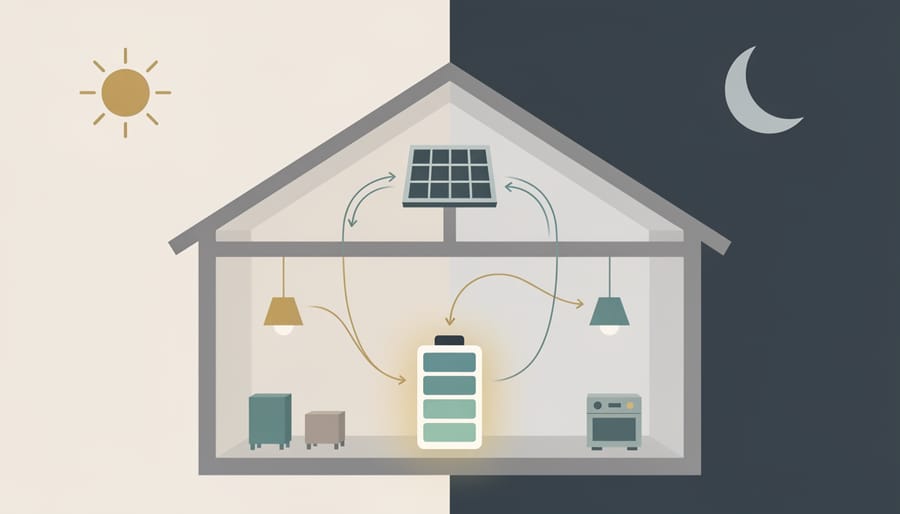
Battery storage integration has transformed solar from a daytime-only solution into round-the-clock power independence. Modern lithium batteries store surplus solar generation during peak sun hours, then discharge that energy after sunset when your panels aren’t producing. Community solar initiatives are also gaining momentum across Australia, shared solar gardens let renters and apartment dwellers access renewable energy without installing panels on their own roofs, splitting generation credits among participants and strengthening neighbourhood ties around sustainable living goals.
2. Wind Energy
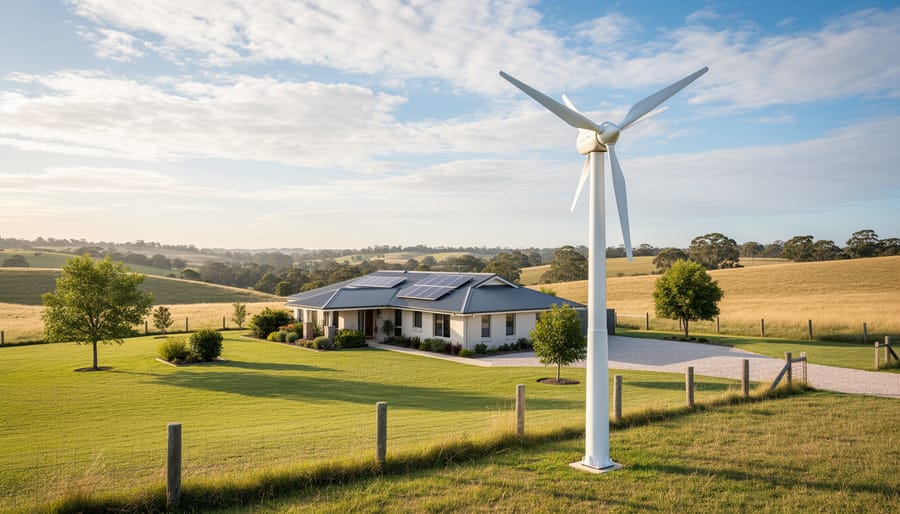
Wind turbines work by capturing moving air with rotor blades that spin a shaft connected to a generator, converting kinetic energy into electricity your home can use. Small-scale residential turbines typically range from 400 watts to 10 kilowatts, generating enough power to supplement or, in ideal conditions, fully meet household energy needs.
For Australian homes, wind energy makes most sense in coastal areas, elevated rural properties, or regions with consistent wind patterns like Tasmania, western Victoria, and parts of South Australia. Urban and suburban properties rarely have the space, wind speeds, or council permissions needed for effective wind generation. Most councils require minimum property sizes, often one hectare or more, and setbacks from boundaries to address noise and safety concerns.
Before considering a home wind system, check average wind speeds for your location. You need consistent speeds above 5 metres per second to make installation worthwhile. Local weather stations or the Bureau of Meteorology can provide historical wind data for your area.
Zoning regulations vary significantly across Australian councils. Some prohibit residential turbines entirely in residential zones, while others allow them with development approval. Height restrictions, noise limits, and visual impact assessments are common hurdles. Always consult your local council before investing in equipment.
Micro-wind works best as part of a hybrid system paired with solar panels and battery storage. Wind often peaks when solar generation drops, during storms, at night, or in winter, providing complementary power generation that evens out your renewable energy supply throughout the year.
3. Hydropower
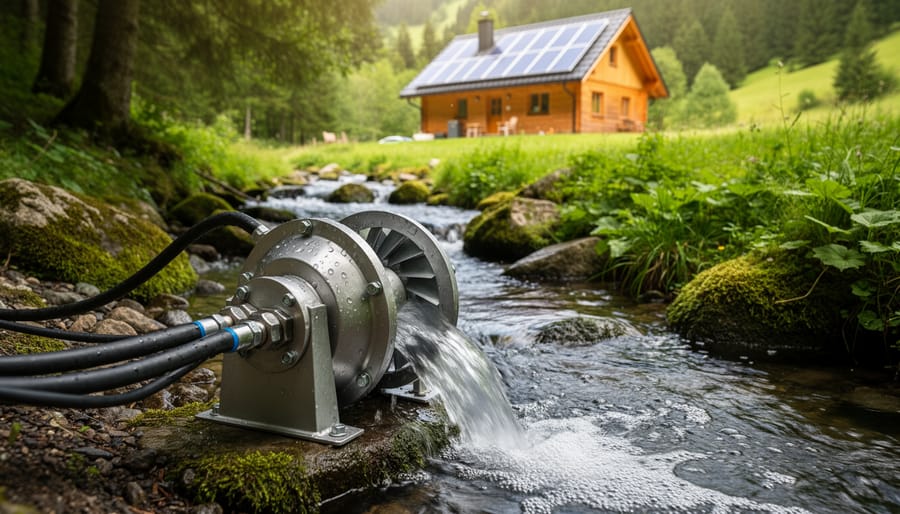
Hydropower harnesses the kinetic energy of flowing water to generate electricity for your home. In a micro-hydro system, water flows through a turbine, usually installed in a creek, stream, or constructed water channel, spinning blades that drive a generator to produce power. The amount of electricity generated depends on two factors: flow rate (how much water moves through the system) and head (the vertical distance the water drops). Even a modest stream with consistent flow can produce substantial household electricity year-round.
For Australian rural properties with reliable water sources, micro-hydro offers advantages that solar and wind can’t match. The system runs continuously day and night, providing baseload power rather than intermittent generation. This consistency often means you need less battery storage compared to solar-only setups. Properties in Tasmania, high-country Victoria, and the Great Dividing Range with permanent creeks are particularly well-suited.
Before installing micro-hydro, you’ll need to navigate water rights and environmental regulations. Most states require permits to extract or divert water, and systems must include fish passage solutions like bypass channels or fish-friendly turbine designs. Environmental impact assessments ensure your installation won’t harm aquatic ecosystems or downstream users.
Initial costs typically run higher than solar due to civil works, intake structures, pipelines, and powerhouse construction, but the 24/7 generation and decades-long lifespan make micro-hydro economically compelling for properties with suitable water resources.
4. Geothermal Energy
Geothermal energy taps into the earth’s stable underground temperatures to heat and cool Australian homes efficiently. Unlike the dramatic temperature swings at the surface, soil just a few metres down stays remarkably consistent year-round, cooler than summer air and warmer than winter nights. Ground-source heat pumps exploit this natural thermal battery by circulating fluid through buried pipes that absorb warmth in winter or shed heat in summer, then transfer it indoors through a compressor system similar to reverse-cycle air conditioning.
For Australian homeowners, geothermal systems are one of the most efficient heating solutions available, delivering three to four times more energy than they consume. Installation requires excavating trenches for horizontal loops (needing significant yard space) or drilling vertical boreholes (more compact but costlier). Upfront investment runs higher than conventional systems, but operating costs drop substantially because you’re moving existing heat rather than generating it from scratch.
It’s crucial to understand that residential geothermal in Australia means climate control, not electricity generation. True geothermal power plants tap volcanic heat deep underground to spin turbines, that’s not viable for homes. What Australians call geothermal for residences is ground-source heating and cooling, harnessing shallow earth temperatures to regulate indoor comfort while slashing energy bills and emissions. Properties with adequate land and moderate heating or cooling needs benefit most, particularly in regions with temperature extremes where the ground’s consistency offers year-round efficiency gains.
5. Biomass Energy
Biomass energy transforms organic materials, wood, crop residues, food scraps, animal waste, into heat or electricity for your home. In regional Australia, where properties often generate garden waste, food scraps, or agricultural byproducts, biomass offers a practical way to close the loop on waste while meeting energy needs.
Wood pellet heating systems are the most common residential biomass application. These compact units burn compressed sawdust pellets at high efficiency, providing space heating and hot water for homes, particularly in cooler regions like Tasmania or the Southern Highlands. Modern pellet stoves produce minimal smoke and ash compared to traditional wood burners, with automated feed systems that require refilling only every few days. Australian suppliers now offer locally produced pellets made from forestry waste, supporting regional industries while keeping transport emissions low.
For properties producing significant organic waste, biogas digesters convert kitchen scraps, garden clippings, and animal manure into methane gas that can fuel cooktops or hot water systems. Small-scale digesters suit hobby farms or homes with large gardens, though they require consistent feedstock and some maintenance knowledge. The process also produces nutrient-rich liquid fertiliser as a byproduct, benefiting your garden.
Biomass works best when you have a reliable local supply of feedstock and space for storage or equipment. While it’s rarely a complete energy solution for suburban homes, regional properties can integrate biomass heating alongside solar power, creating a complementary system that addresses both electricity and thermal needs sustainably.
Comparing the Five Resources
Each renewable resource has its sweet spot. Solar shines across most Australian properties, it’s typically the lowest-cost entry point with the strongest government support and fastest payback. If you’ve got roof space and reasonable sunlight, solar should be your first consideration.
Wind works brilliantly in consistently windy regions like coastal Tasmania or elevated rural areas, but it demands more space and navigating council approvals. Upfront costs run higher than solar, though energy output can be excellent in the right location.
Hydropower delivers the most reliable 24/7 generation if you’re fortunate enough to have flowing water on your property. It suits rural landholders with creek access, but environmental permits and installation complexity make it less accessible than solar or wind.
Geothermal heat pumps excel for climate control rather than electricity generation. They work anywhere in Australia with enough yard space for underground loops, offering superb efficiency for heating and cooling but requiring significant installation investment.
Biomass suits properties generating substantial organic waste or those with access to sustainable wood supplies. It’s practical for heating in cooler climates but less efficient for electricity generation at residential scale.
Most Australian homes find solar the most practical starting point, with other resources complementing specific property advantages.
How Australian Homes Are Using Renewable Energy
Across Australia, homeowners are adopting renewable energy in ways that match their lifestyle, budget and property characteristics. Some achieve complete energy independence with comprehensive solar-plus-battery systems, while others start smaller with targeted applications that address their highest energy costs.
The most straightforward way Australian households harness sustainable electricity is through grid-connected solar systems that offset daytime consumption and feed excess power back to retailers through feed-in tariffs. Battery storage extends this benefit into evening hours, reducing reliance on grid electricity during peak pricing periods. In regional areas with reliable wind or water flow, hybrid systems combine solar with micro-wind or micro-hydro to generate power around the clock.
Renewable energy serves multiple household functions beyond general electricity needs:
- Grid offset: reducing purchased electricity through self-generation during peak consumption periods
- Backup power: maintaining essential services during outages with battery systems or standalone generators
- Water heating: solar thermal systems or heat pump technology replacing electric or gas hot water
- Pool heating: solar collectors extending swimming seasons without fossil fuel costs
- Electric vehicle charging: home solar systems powering transport, eliminating petrol expenses
- Energy export to grid: selling surplus generation back to retailers for income or bill credits
Community energy initiatives are accelerating adoption across neighbourhoods. Bulk-buy solar programs reduce installation costs through collective purchasing power, while community batteries allow apartment dwellers and renters to participate in renewable energy benefits. In some suburbs, neighbours coordinate solar installations to create micro-grids that share surplus energy locally, strengthening community resilience while reducing everyone’s carbon footprint. These collaborative approaches demonstrate that the transition to renewable energy works best when households support each other through shared knowledge and coordinated action.
Frequently Asked Questions
Transitioning to renewable energy raises practical questions, especially about costs, approvals, and timeframes. Many Australian homeowners wonder whether they need to choose just one system or if combining technologies makes sense. Understanding available support and realistic expectations helps you plan your renewable energy journey with confidence.
Which renewable energy resource is easiest to install in Australian homes?
Solar photovoltaic panels are typically the simplest and fastest to install, with most residential systems completed in one to three days by accredited installers. The mature Australian solar industry means competitive pricing, established rebate programs, and straightforward connection approvals in most areas.
Can I combine multiple renewable energy resources for my home?
Absolutely. Many Australian homes pair solar panels with battery storage and solar hot water, while rural properties might add micro-hydro or wind where conditions suit. Combining technologies increases energy independence and resilience during grid outages.
What government rebates and incentives are available for renewable energy in Australia?
The federal Small-scale Renewable Energy Scheme provides upfront discounts on solar and solar hot water systems through STCs (Small-scale Technology Certificates). State governments offer additional rebates that vary by location, with programs covering solar batteries, heat pumps, and energy efficiency upgrades, so check your state’s energy department for current offerings.
Do I need council approval to install renewable energy systems?
Most standard rooftop solar installations proceed under exempt development provisions without council approval, though requirements vary by local council and system size. Wind turbines, ground-mounted arrays, and structural changes typically require development consent, so confirm requirements with your local council before proceeding.
Beyond installation, adopting energy saving habits maximizes the value of your renewable investment by reducing overall demand. Starting with one renewable resource and expanding over time remains a practical approach for many households, allowing you to learn what works for your property while spreading costs across multiple years.
The journey to powering your Australian home with renewable energy isn’t a one-size-fits-all proposition, it’s about finding what works for your unique situation. Whether you’ve got a sun-drenched roof in Brisbane perfect for solar panels, a breezy rural property suited to wind turbines, or a creek running through your land ready for micro-hydro, 2026 offers accessible pathways to sustainable energy independence.
What’s truly exciting is that you don’t need to choose just one resource or make the leap all at once. Many Australian households are starting with solar hot water or rooftop PV, then adding battery storage or exploring complementary systems as their confidence grows. The technology has matured, installation costs have dropped, and government rebates continue making these transitions more achievable for everyday homeowners.
Beyond the environmental benefits and long-term savings, you’re joining a growing movement of Australians taking control of their energy future. Every kilowatt-hour generated from renewable sources reduces grid demand, stabilises your household expenses against rising electricity prices, and demonstrates what’s possible to your community.
The best first step? Assess what your property offers. Take a weekend to observe where the sun hits strongest, whether prevailing winds sweep across your land, or if water flows through your acreage. Talk to neighbours who’ve already made the switch, their real-world experiences will prove invaluable.
Your sustainable energy journey starts with curiosity and one practical step forward. What will yours be?