
Understand this clearly: eating local honey will not cure your allergies, despite what well-meaning friends might tell you. The scientific evidence is overwhelmingly clear on this point, and it’s important you know the truth before spending money on what amounts to a sweet placebo.
The theory sounds logical enough. Local bees collect pollen from plants in your area, process it into honey, and you consume small amounts of these allergens to build immunity—essentially natural immunotherapy. Unfortunately, bees primarily collect pollen from flowers, while most seasonal allergies stem from wind-pollinated plants like grasses, trees, and weeds. The pollen causing your sneezing simply isn’t making it into that jar of honey in meaningful amounts.
Multiple peer-reviewed studies have tested this popular remedy, and none have found statistically significant improvements in allergy symptoms among people consuming local honey versus those taking a placebo. One rigorous study even used honey with added pollen and still found no benefit.
Here’s what matters: this doesn’t mean local honey lacks value. Supporting Australian beekeepers strengthens our food security, protects vital pollinator populations, and reduces the carbon footprint of your pantry. Raw local honey also offers genuine antimicrobial properties and serves as an excellent natural sweetener free from processing and transportation emissions.
For your allergies, however, consult with an allergist about evidence-based treatments like antihistamines or actual immunotherapy. Meanwhile, enjoy local honey for the right reasons—supporting your community and choosing sustainable, delicious food that truly makes a difference to Australian growers and our environment.
The Local Honey Theory: What People Believe and Why
You’ve probably heard it from a neighbour at the farmers market or read it in a wellness blog: eating local honey can cure your hay fever. The theory goes that by consuming small amounts of pollen found in honey harvested near your home, you’re essentially giving your immune system a gentle introduction to the very allergens that make you sneeze and sniffle come spring. It’s nature’s version of immunotherapy, right in a jar.
This idea has gained serious traction across Australian communities, particularly among those passionate about eating local and seasonal foods. The logic feels beautifully simple and intuitive. After all, allergy shots work by exposing you to tiny amounts of allergens over time, so why wouldn’t honey do the same thing naturally? Plus, it fits perfectly into the philosophy of letting food be thy medicine, supporting local beekeepers, and reducing food miles all in one delicious spoonful.
The popularity of this remedy reflects our growing desire to reconnect with traditional wisdom and find solutions that feel more natural than a pharmacy shelf. In sustainability circles, it’s become almost gospel, shared between friends swapping sourdough starters and comparing kombucha recipes. The appeal is understandable: local honey represents everything we value about community-based food systems. It’s traceable, unprocessed, and supports the hardworking beekeepers who tend our vital pollinators.
This theory sounds so plausible that most of us never question whether there’s actually science backing it up. Before you stock up on jars for allergy season, though, it’s worth examining what research actually tells us about this sweet solution.
What Australian Research Actually Reveals
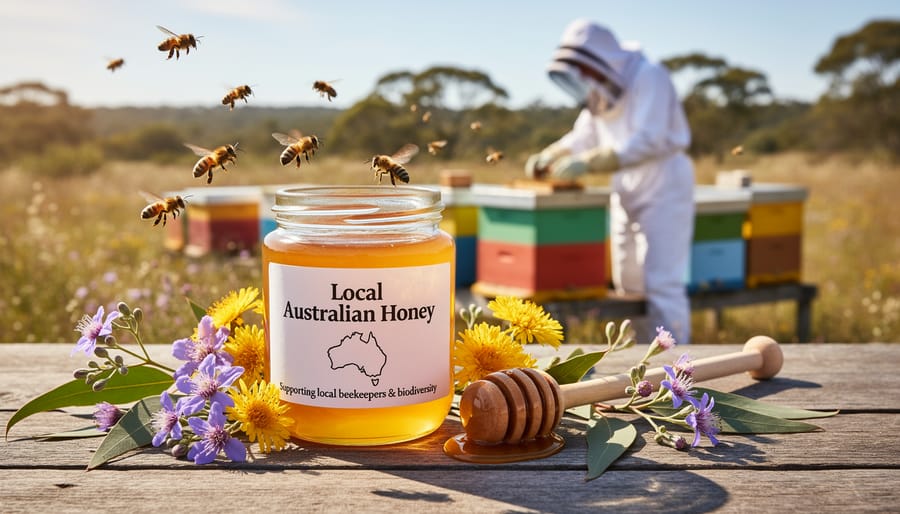
Here’s the truth many Australians might find surprising: despite local honey’s popularity as an allergy remedy, scientific research doesn’t back up the claims. While the idea sounds perfectly logical – eating small amounts of local pollen to build immunity – the biological reality tells a different story.
The most comprehensive review examining honey and seasonal allergies found no significant improvement in symptoms. Australian researchers have similarly found limited evidence supporting honey as an allergy treatment. The disconnect lies in understanding which pollen causes problems.
Here’s what’s actually happening: bees collect pollen from brightly coloured flowers that need insect pollination. These plants produce sticky, heavy pollen grains designed to cling to bees’ fuzzy bodies. However, the pollen triggering most Australian hay fever comes from wind-pollinated plants like ryegrass, Paterson’s curse, and various native trees. These species release light, airborne pollen that travels kilometres on the breeze, easily entering our noses and triggering allergic responses.
Think about it this way – the pollen in your local honey comes from sources quite different from what’s making you sneeze during spring. It’s like training for swimming by practising basketball; they’re both worthwhile activities, but one doesn’t prepare you for the other.
There’s also a practical consideration. For honey to contain enough pollen to potentially affect immunity, you’d need to consume amounts far exceeding what most people would consider reasonable. Plus, introducing concentrated pollen through honey could potentially trigger reactions in people with severe allergies.
This doesn’t mean local honey lacks value – far from it. Australian beekeepers provide essential pollination services for our food systems, and buying their honey supports these community relationships. The honey itself offers antimicrobial properties and acts as a natural sweetener. We simply need to appreciate honey for what it genuinely provides rather than unproven allergy relief.
Why Local Honey Still Deserves a Place in Your Pantry
Supporting Australian Beekeepers and Biodiversity
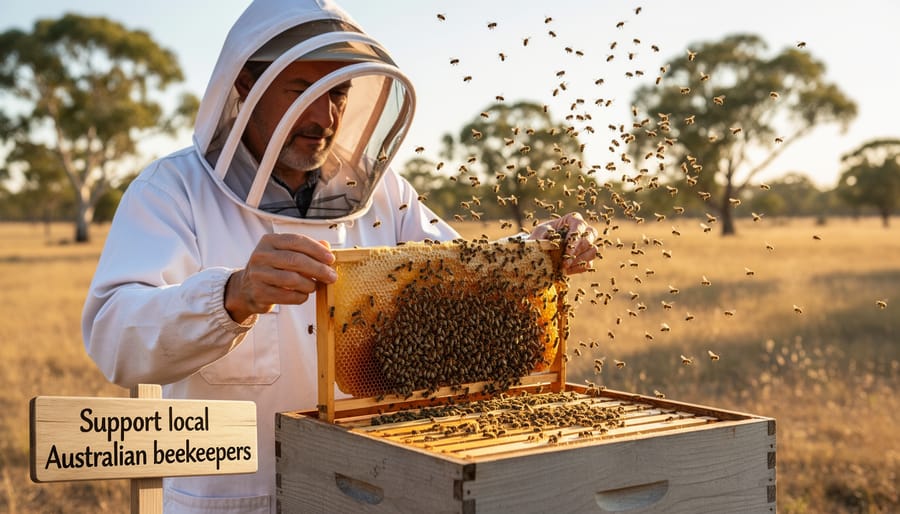
While local honey may not cure your allergies, choosing Australian honey creates meaningful change for our environment and communities. When you purchase from local beekeepers, you’re directly supporting the custodians of Australia’s crucial pollinator populations.
Australian honeybees pollinate around 65% of our agricultural crops, contributing approximately $14 billion annually to our food production. From macadamias in Queensland to almonds in Victoria and stone fruits across the country, these industrious insects are fundamental to our food security. Beyond commercial agriculture, native and honeybee species maintain the health of our unique bushland ecosystems, supporting biodiversity that exists nowhere else on Earth.
Local beekeepers face increasing challenges, from climate variability to habitat loss and pest management. Your honey purchase helps these dedicated custodians maintain healthy hives, invest in sustainable practices, and continue their essential work. Many small-scale Australian beekeepers also actively participate in conservation efforts, maintaining bee corridors and supporting native flora.
By choosing local honey, you’re investing in a network of environmental stewards who understand their regional ecosystems intimately. You’re supporting businesses that create jobs, share knowledge within communities, and maintain the pollinator populations our future depends upon. It’s a simple choice with far-reaching impact, connecting your kitchen table to the broader story of Australian environmental resilience.
Real Health Benefits You Can Count On
While local honey might not cure your hay fever, it certainly deserves a place in your pantry for its genuine health credentials. Australian communities have long appreciated honey’s therapeutic qualities, and modern science backs up much of this traditional wisdom.
Raw, unprocessed honey contains powerful antimicrobial properties that help fight bacteria and fungi. This makes it particularly effective for soothing sore throats and suppressing coughs—in fact, several studies show honey works as well as common cough medicines for children over one year old. Many Australian families are turning to organic and natural alternatives like local honey instead of reaching for the medicine cabinet at the first sign of winter sniffles.
The wound-healing properties of honey have been documented for centuries. Medical-grade honey is now used in Australian hospitals to treat burns and chronic wounds, thanks to its ability to create a protective barrier while reducing inflammation. Local, raw honey retains higher levels of beneficial enzymes and antioxidants compared to heavily processed supermarket varieties, which often lose these compounds through heating and filtration.
Raw honey from local beekeepers also contains more pollen, propolis, and beneficial plant compounds. These antioxidants help protect your cells from damage and support overall wellness. When you choose honey from nearby producers, you’re not just getting a product with better nutritional integrity—you’re supporting sustainable beekeeping practices and strengthening your local food community, which benefits everyone’s health in the long run.
How to Choose and Use Local Honey in Australia
Spotting Authentic Local Honey
Finding genuine local honey in Australia is easier than you might think, and it’s worth the effort for taste and supporting local producers—even if it won’t cure your allergies. Start at farmers markets where beekeepers often sell directly, allowing you to ask questions about their hives’ locations and production methods. Many regional areas have roadside honey stalls, and community food co-ops frequently stock verified local varieties.
Watch for red flags when shopping: honey that’s suspiciously cheap, lacks origin information, or has vague labels like “packed in Australia” rather than “Australian honey” may be imported or blended. Authentic Australian honey should display the producer’s details and regional origin. The watery consistency or lack of crystallisation over time can indicate adulteration, though crystallisation rates vary naturally by floral source.
Connect with local beekeeping associations or community gardens to discover small-scale producers in your area. Many beekeepers welcome visits, offering transparency about their sustainable practices. Building these community connections enriches your understanding of local food systems while ensuring you’re getting the real deal. Remember, you’re not just buying honey—you’re investing in Australian biodiversity, supporting ethical beekeepers, and participating in your local food economy.
Seasonal Honey Varieties Across Australia
Australia’s diverse landscapes create a remarkable tapestry of seasonal honey varieties, each reflecting the unique character of its region. Understanding these seasonal rhythms connects you more deeply with local food systems and supports Australian beekeepers who tend these precious resources.
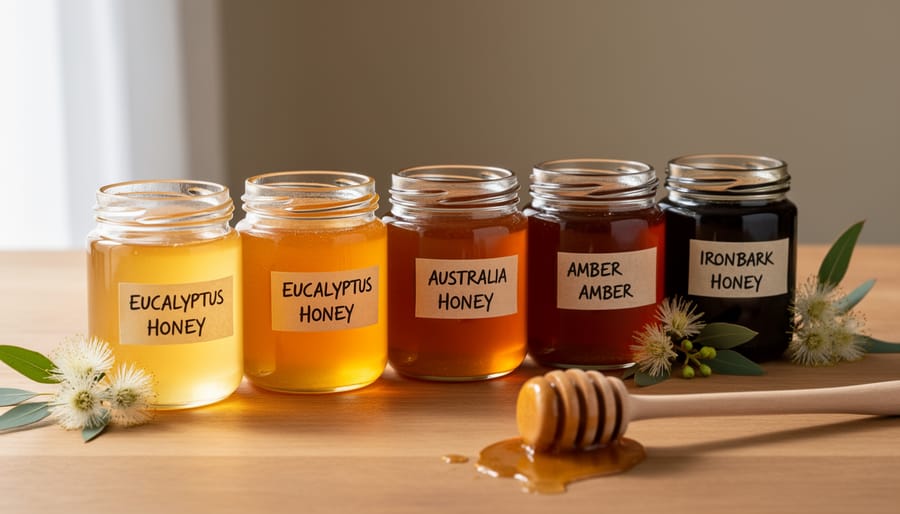
Spring brings the delicate flavours of coastal wildflower honey, while summer sees the rich, amber-toned eucalyptus varieties flourish across the country. The robust ironbark honey from Queensland and New South Wales typically arrives during warmer months, prized for its distinctive malty notes and deep colour. Tasmania’s leatherwood honey, harvested in late summer, offers a unique floral complexity found nowhere else on earth.
Western Australia’s jarrah and marri honeys have their own distinct seasons, while the prized manuka-style honey from coastal regions becomes available in late spring. Yellow box, red gum, and stringybark varieties each follow their flowering cycles, creating a natural honey calendar that varies by region.
By seeking out these seasonal varieties from local producers, you’re not just enjoying exceptional flavour profiles – you’re participating in a sustainable food network that supports regional biodiversity and beekeeping communities. Visit your local farmers’ markets to discover which varieties are currently available in your area, and taste the seasons as nature intended them.
Evidence-Based Ways to Manage Seasonal Allergies Naturally
While local honey won’t cure your allergies, several evidence-based natural approaches can genuinely help manage seasonal hay fever symptoms, particularly during Australia’s challenging spring and summer pollen seasons.
Start by monitoring pollen counts through services like the Australian Pollen Allergen Partnership and plan outdoor activities accordingly. Simple timing changes make a real difference – pollen counts typically peak in early morning and on windy days, so schedule your garden work or beach walks for late afternoon instead.
Create a pollen barrier by wearing wraparound sunglasses outdoors and showering before bed to remove allergens from your hair and skin. This prevents you from spending eight hours breathing in the pollen you’ve collected throughout the day. Many Australians find relief by keeping windows closed during high pollen days and using air conditioning with clean filters instead.
Nasal irrigation using saline solutions has strong scientific backing for reducing congestion and clearing allergens from nasal passages. You can purchase ready-made solutions or create your own using distilled water – never tap water, which can harbour harmful microorganisms.
Consider your indoor environment too. Australian native plants in your garden generally produce less allergenic pollen than introduced species, and switching from exotic flowering plants to natives like bottlebrush and grevillea around your home may reduce exposure. Regularly washing bedding in hot water eliminates dust mites, which often worsen allergy symptoms.
Local environmental groups across Australia sometimes run workshops on creating low-allergen native gardens, combining community connection with practical symptom management. These evidence-based strategies won’t eliminate allergies entirely, but they offer sustainable, affordable relief that actually works with your body’s natural defences rather than making unsubstantiated promises.
While the science doesn’t support local honey as an allergy treatment, this research shouldn’t diminish your enthusiasm for supporting Australian beekeepers. The evidence simply redirects us toward better reasons for choosing local honey: supporting biodiversity, strengthening regional food systems, and backing the dedicated beekeepers who play a vital role in our agricultural ecosystem.
Managing your allergies effectively means working with healthcare professionals on proven treatments like immunotherapy or antihistamines. Meanwhile, your food choices can still reflect your environmental values. Local honey represents an authentic connection to your region’s flora and the hardworking pollinators that sustain it.
Consider this an opportunity to engage with sustainable local food networks in your area with clear eyes and informed expectations. Visit farmers markets, connect with beekeepers in your community, and ask about their practices. You’ll discover stories of environmental stewardship worth supporting, regardless of allergy relief.
By choosing local honey for its genuine benefits—supporting pollinators, reducing food miles, and strengthening community connections—you’re making a meaningful contribution to sustainability. That’s something worth celebrating, even if it won’t cure your hay fever.