
Explore native edible plants through the lens of New York’s remarkable flora, then apply these lessons to your own Australian backyard. While northeastern American forests offer treasures like ramps, pawpaws, and beach plums, this knowledge serves a greater purpose: inspiring us to discover and cultivate the extraordinary native edibles thriving right here in Australia.
New York’s approach to native plant foraging reveals universal principles that translate perfectly to Australian conditions. Their success with reconnecting communities to indigenous food sources demonstrates what’s possible when we look beyond introduced species and embrace plants that evolved alongside our local ecosystems. These American examples showcase how native edibles require less water, resist local pests naturally, and support crucial pollinator populations—benefits that matter even more in Australia’s variable climate.
The parallels are striking. Just as New Yorkers harvest ostrich fern fiddleheads each spring, Australians can forage warrigal greens along coastal areas. Their sugar maple syrup traditions mirror our potential for cultivating native lemon myrtle and bush tomatoes. Creating an indigenous garden filled with edible natives isn’t just about food security—it’s about restoring cultural connections and ecological balance.
This article uses New York’s native plant biodiversity as a teaching framework, but our focus remains firmly on Australian action. You’ll discover how principles of native plant identification, sustainable harvesting, and garden integration apply to species like native yams, pigface, and muntries. By understanding how other communities value their indigenous edibles, we strengthen our commitment to protecting and propagating Australia’s own remarkable native food heritage. The path forward isn’t about importing ideas—it’s about recognising the abundance already surrounding us.
Why International Native Plant Knowledge Matters for Australian Gardeners
You might wonder why Australian gardeners should care about edible plants growing thousands of kilometres away in New York. The answer lies in the remarkable parallels between our native plant journeys and the practical lessons we can apply right here at home.
New York’s indigenous communities have maintained deep relationships with their native edible plants for thousands of years, much like Aboriginal and Torres Strait Islander peoples have with Australian flora. Both regions face similar challenges in the modern era: reconnecting urbanised populations with traditional food systems, preserving indigenous knowledge, and adapting native plant cultivation to contemporary gardens. By examining how New York gardeners are reviving interest in plants like American groundnut and beach plum, we gain insights into successful approaches for promoting our own native edibles like warrigal greens and bush tomatoes.
The climate zone comparisons offer particularly valuable lessons. While New York experiences cold winters unlike most Australian regions, their temperate zones share surprising similarities with parts of Victoria, Tasmania, and the Southern Highlands. Both regions deal with variable rainfall, the need for water-wise gardening, and the challenge of introducing native plants into established garden beds. Understanding how New York’s native plant advocates have created thriving urban food forests and community gardens provides a roadmap for Australian initiatives.
What makes this international perspective especially valuable is observing the community-building aspects. New York has developed robust networks of foraging groups, native plant societies, and seed-saving collectives that have successfully shifted public perception of native plants from roadside weeds to garden treasures. These grassroots movements mirror emerging Australian efforts, from community gardens in Melbourne incorporating native edibles to bush tucker education programs in Brisbane.
The documentation and scientific research surrounding New York’s native edibles also provides methodological frameworks we can adapt. Their success in creating accessible identification guides, seasonal harvest calendars, and beginner-friendly growing instructions demonstrates how to make native plant gardening less intimidating for newcomers.
Most importantly, studying international examples reminds us that the journey toward native plant appreciation is global, yet deeply local. Every region must cultivate its own relationship with place-based plants, but we strengthen our efforts by learning from others who are walking similar paths. The New York experience proves that native edible gardens can thrive in urban environments, engage diverse communities, and create meaningful connections to indigenous food traditions, giving Australian gardeners both inspiration and practical strategies for our own native plant renaissance.
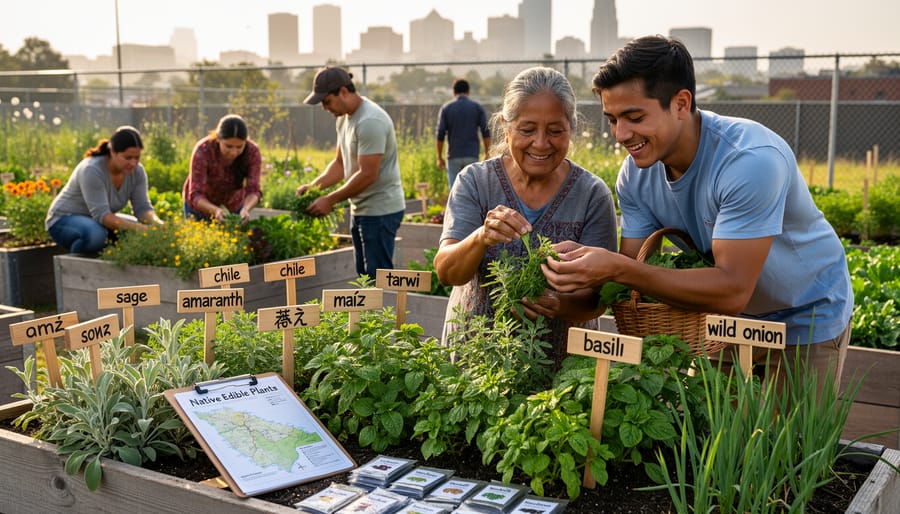
Key Edible Native Plants of New York (And Their Australian Equivalents)
Woodland Edibles and Forest Floor Species
The forest floor offers some of New York’s most treasured edible natives, and understanding these shade-loving plants opens fascinating parallels for Australian foragers and gardeners. Ramps, those pungent wild leeks that spark springtime excitement in North American woods, thrive in cool, moist understories much like our native ginger does in protected Australian bushland pockets. Both require patient cultivation and mindful harvesting to ensure populations regenerate.
Fiddlehead ferns, the tightly coiled spring shoots of ostrich ferns, represent New York’s woodland delicacy. Here in Australia, we have our own fern traditions, though many native species require careful identification. The principle remains universal: shade-tolerant plants adapted to dappled light and rich, decomposing leaf litter create unique flavour profiles you simply cannot replicate in full sun gardens.
Woodland berries like serviceberries and black raspberries flourish along New York’s forest edges, similar to how our native raspberries establish themselves in cooler, sheltered Victorian and Tasmanian bushland. Even warrigal greens, typically considered a coastal plant, can adapt surprisingly well to shaded garden conditions with adequate moisture, creating productive edible groundcover beneath established trees.
These woodland species remind us that productive edible gardens need not occupy only sunny spaces. By observing which native plants naturally inhabit shaded areas in your local bushland, you can design forest garden layers that provide food while supporting biodiversity. Community seed-saving groups across Australia are increasingly focusing on these understory species, recognizing their value in climate-resilient food systems that work with nature rather than against it.

Open Field and Meadow Natives
New York’s open meadows offer inspiring lessons for Australian gardeners exploring native edible landscapes. Wild strawberries (Fragaria virginiana) carpet sunny fields throughout New York State, producing intensely flavoured fruit far superior to commercial varieties. While these northern berries thrive in cooler climates, they mirror the ecological role of Australia’s native running postman (Kennedia prostrata) – both ground-hugging plants that stabilise soil while providing food.
Jerusalem artichokes (Helianthus tuberosus), despite their name, are native North American sunflowers producing nutty, crunchy tubers. They’re remarkably similar in growing habits and nutritional profile to Australia’s native yams like the Murnong (Microseris walteri), which once covered Victoria’s grasslands before European settlement. Both plants represent resilient, low-maintenance food sources that require minimal intervention once established.
The comparison becomes particularly relevant for Australian communities working to restore native grasslands. Just as New York’s meadow restoration projects incorporate native food plants, Australian landholders are rediscovering indigenous grasses like kangaroo grass (Themeda triandra), whose seeds provided staple food for First Nations peoples.
Creating open meadow gardens requires patience and understanding of succession planting. These sun-loving natives don’t demand rich soils – in fact, they often prefer lean conditions that discourage competing weeds. For Australians, the key takeaway isn’t replicating New York species, but understanding the principles: work with climate-appropriate natives, choose plants that served local Indigenous communities, and design landscapes that feed both people and pollinators while requiring minimal water and maintenance.
Wetland and Water-Loving Edible Species
Water-loving edible plants offer remarkable foraging opportunities, whether you’re exploring New York’s wetlands or considering Australian waterside natives for your sustainable garden. In New York, cattails stand as wetland champions – their young shoots, flower heads, and rhizomes have fed indigenous communities for millennia. Watercress thrives in cool, flowing streams, delivering a peppery punch of nutrients that’s made it a foraging favorite for generations.
For Australian gardeners inspired by these northern examples, we’re blessed with equally impressive moisture-loving natives. Native water ribbons grow abundantly in our wetlands, while swamp herbs like river mint offer aromatic leaves perfect for teas and seasoning. These plants aren’t just food sources – they’re water purifiers, habitat providers, and living links to Indigenous Australian food traditions spanning 65,000 years.
Creating a wetland garden zone, even on a small scale, supports local biodiversity while providing fresh edibles. A simple rain garden or bog area can accommodate native water plants, transforming what might otherwise be a drainage problem into a productive ecosystem. Many Australian communities are establishing wetland restoration projects where locals can learn about these plants firsthand – connecting with Country while discovering ancestral food systems.
The beauty of water-loving natives lies in their resilience and productivity. Once established in appropriate conditions, they require minimal intervention, naturally filtering water and attracting beneficial wildlife. Whether you’re foraging responsibly in New York or cultivating Australian wetland species at home, these plants remind us that sustainable food systems work with nature’s water cycles, not against them.
Designing Your Native Edible Garden: Lessons from Two Hemispheres
Working With Your Australian Climate Zone
Just as New York’s native edible plants thrive in specific climate zones, understanding your local Australian conditions is essential for growing native edibles successfully. The good news? Australia’s diverse climate zones offer incredible opportunities for cultivating indigenous food plants that have sustained Aboriginal communities for over 60,000 years.
If you’re in tropical North Queensland, your warm, humid climate mirrors some of New York’s summer conditions but extends year-round. This makes your region perfect for growing Davidson plum, finger limes, and bush tomatoes. These plants love the moisture and warmth, requiring minimal intervention once established.
For subtropical regions around Brisbane and northern New South Wales, you’ll find excellent success with lilly pilly, native ginger, and warrigal greens. These adaptable plants handle both wet summers and drier winters, much like how New York natives cope with seasonal variation.
Temperate zones spanning from Sydney through to Adelaide and Melbourne offer perhaps the widest variety of native edibles. Here, you can cultivate mountain pepper, native mint bush, and kangaroo apple. These plants appreciate distinct seasons and moderate rainfall, making them remarkably hardy once their root systems develop.
Southern Australian gardeners in cooler regions like Tasmania will find success with alpine natives such as native currants and snow berries, which tolerate frost and thrive in conditions similar to New York’s colder months.
The beauty of working with Australian natives is their inherent resilience. Unlike introduced species that often struggle with our unique conditions, these plants have evolved here. They’re naturally drought-tolerant, pest-resistant, and require fewer resources than exotic alternatives. Start by observing what grows naturally in nearby bushland, then connect with local community gardens or indigenous plant nurseries to source species proven in your specific microclimate.
Creating Functional Ecosystem Layers
The forest garden approach transforms traditional gardening by mimicking natural woodland ecosystems, creating productive layers from ground to canopy. While New York’s native edibles like ramps, serviceberries, and pawpaws thrive in their multi-layered forests, Australian gardeners can apply these same permaculture principles using our incredible native species.
Picture a thriving food forest in your backyard, starting with a canopy of macadamia or Davidson’s plum, understory layers of lilly pillies and finger limes, a shrub layer featuring native currants and muntries, ground covers of warrigal greens, and climbing plants like native yams weaving through. This vertical stacking maximizes space whilst creating resilient plant communities that support each other.
The magic happens when you understand companion planting with natives. Nitrogen-fixing wattles enrich soil for neighboring plants, whilst the deep roots of kangaroo apple break up clay and bring nutrients upward. Ground-covering native violets suppress weeds and retain moisture for taller species above. This cooperative system reduces your workload dramatically compared to conventional gardens.
When designing your Australian edible garden, consider microclimates carefully. Taller plants provide shade for species that prefer dappled light, like alpine strawberries or native ginger. Dense plantings create humidity pockets perfect for rainforest species, even in drier regions.
Start small with just three layers and gradually expand. Many communities across Australia are establishing demonstration forest gardens, sharing knowledge and plant cuttings. These living classrooms prove that productive, low-maintenance food systems aligned with local ecosystems aren’t just possible, they’re transformative. Your layered native garden becomes a biodiverse sanctuary producing food year-round whilst regenerating the landscape.

Environmental Benefits of Native Edible Gardens in Your Australian Landscape
While this article explores New York’s native edible plants as an educational example, the environmental principles underlying native plant gardens apply universally—and they’re particularly powerful here in Australia. When we choose to cultivate native edible plants in our own landscapes, we’re not just growing food; we’re creating living solutions to some of our most pressing environmental challenges.
Australia faces unique water challenges that make native edible gardening especially relevant. Our indigenous plants have evolved over millennia to thrive in our variable rainfall patterns and often harsh conditions. Once established, native edibles require minimal supplemental watering compared to exotic species, making water conservation a natural outcome rather than a constant effort. In regions experiencing prolonged drought, this difference can be substantial—both for your household water usage and our broader water security.
Beyond saving water, native edible gardens become vital habitats for Australian wildlife. When you plant warrigal greens, bush tomatoes, or native yams, you’re creating food sources and shelter for insects, birds, and small mammals that have co-evolved with these plants. This approach to supporting local biodiversity transforms ordinary backyards into ecological corridors, particularly important in urban and suburban areas where natural habitats have been fragmented.
The reduced environmental impact extends further still. Native plants eliminate the need for synthetic fertilisers and pesticides that can leach into waterways, as these species are naturally adapted to local soil conditions and have built-in resistance to local pests. You’ll also reduce your carbon footprint by avoiding the transportation and production emissions associated with exotic ornamentals shipped from interstate or overseas nurseries.
Perhaps most significantly, native edible gardens help restore the ecological balance we’ve disrupted through urbanisation. Every square metre planted with indigenous species contributes to soil health, carbon sequestration, and microclimate regulation. These gardens become teaching tools too, sparking conversations with neighbours and inspiring community-wide change.
The beauty of this approach is its simplicity. You’re working with nature rather than against it, creating resilient food gardens that require less maintenance while delivering greater environmental benefits. For Australian gardeners committed to sustainable living, native edible plants offer a practical, powerful way to make a genuine difference right in your own backyard.
Getting Started: Building Your Australian Native Edible Garden
Sourcing Australian Native Edible Plants Responsibly
Finding native edible plants in Australia starts with connecting to your local community and understanding where these precious species grow naturally. Unlike New York’s foraging scene, Australian native plant enthusiasts have access to specialized nurseries across every state that focus on indigenous species. Start by reaching out to your nearest native plant nursery, where knowledgeable staff can guide you toward edible varieties suited to your specific climate zone, from tropical Queensland species to cool-climate Tasmanian natives.
Community seed exchanges have flourished across Australia, creating networks where gardeners share propagated native plants while preserving regional biodiversity. Organizations like the Seed Savers Network operate chapters throughout the country, hosting regular seed swaps where you’ll discover locally adapted varieties and meet experienced growers eager to share their knowledge. These gatherings embody the spirit of eco-friendly gardening practices while building resilient food systems.
Local councils increasingly support community plant swaps, particularly during spring and autumn planting seasons. Check your council website or community notice boards for upcoming events. Many botanical gardens also run educational programs about native edibles, offering ethically sourced seeds and cuttings.
When sourcing from the wild, always obtain proper permissions and never harvest from protected areas or threatened populations. Supporting Australian growers who specialize in native edibles ensures genetic diversity while contributing to rural communities dedicated to conservation. Remember, responsible sourcing means leaving enough plants to regenerate naturally and taking only what you genuinely need.

Connecting With Indigenous Knowledge and Community Resources
While New York’s indigenous food traditions offer valuable lessons, we’re fortunate to have equally rich knowledge systems right here in Australia. First Nations peoples have sustainably harvested and cultivated native plants for over 65,000 years, developing sophisticated understanding of seasonal patterns, plant preparation methods, and ecological relationships that modern foragers are only beginning to appreciate.
Before embarking on your native plant journey, it’s essential to approach Indigenous knowledge with respect and cultural sensitivity. Rather than appropriating traditional practices, consider connecting with local Indigenous communities through properly facilitated cultural education programs. Many Aboriginal Land Councils and Indigenous-run enterprises offer bushtucker tours and workshops where knowledge is shared with permission and proper context. This ensures that cultural protocols are honoured while you learn.
Joining your local native plant society provides another excellent pathway for learning. Organizations like the Australian Plants Society have branches across the country, bringing together passionate gardeners, botanists, and conservation enthusiasts. These groups regularly organize seed exchanges, garden visits, and identification workshops specifically focused on native edible species. You’ll find experienced members eager to share propagation techniques, seasonal harvesting tips, and advice on which plants thrive in your specific microclimate.
Community gardens increasingly incorporate native food plants into their plots, creating accessible spaces where neighbours can learn together. These initiatives often partner with environmental educators and Indigenous cultural advisors to develop respectful, well-informed programs. By participating, you’ll not only expand your knowledge but contribute to building local food resilience and preserving Australia’s botanical heritage.
Start by searching for native plant groups in your area online or through your local council. Many welcome beginners enthusiastically, understanding that every expert gardener started by simply showing up and asking questions.
Exploring New York’s native edible plants offers us more than just fascinating knowledge from across the Pacific. It provides a powerful mirror reflecting what’s happening right here in Australia with our own remarkable native food plants. Just as New Yorkers are rediscovering pawpaws, ramps, and elderberries, we Australians have an incredible opportunity to reconnect with bush tucker species that have sustained Aboriginal peoples for over 60,000 years.
The parallels are striking and urgent. When we see how communities in New York are working to preserve knowledge about their native edibles, it should inspire us to act now in protecting and celebrating our own. Warrigal greens, Davidson plums, lilly pillies, native mint, and finger limes aren’t just ingredients—they’re living connections to this land’s deep history and ecological wisdom.
The encouraging news is that every single one of us can make a difference today. Whether you’re planting a balcony pot of native herbs, joining a local bush tucker gardening group, or simply sharing knowledge with neighbours, these actions ripple outward. Community gardens across Australia are increasingly dedicating space to native edibles, schools are teaching children about traditional food plants, and restaurants are proudly featuring indigenous ingredients.
Time is precious. Each year we delay means more traditional knowledge at risk of being lost and fewer people understanding how to work with these resilient, perfectly adapted plants. But here’s the beautiful truth: learning about and growing Australian native edibles isn’t a sacrifice or hardship. It’s genuinely rewarding, connecting you to country, reducing water usage, supporting local wildlife, and producing extraordinary flavours you won’t find anywhere else on Earth.
Start small, start now, and watch how your contribution strengthens our collective sustainable future.