
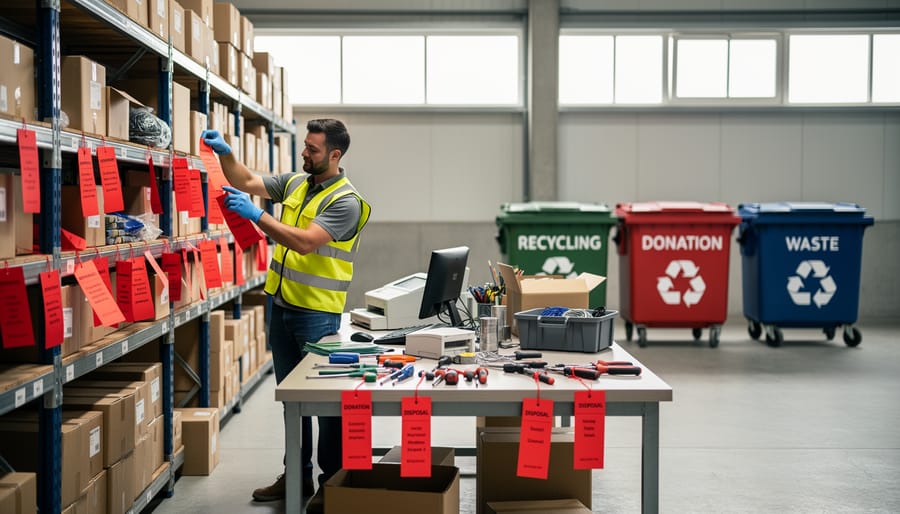
Transform your warehouse into a model of efficiency by implementing Sort as your foundation: designate a single day to remove broken pallets, obsolete inventory, and redundant equipment, then establish a red-tag holding area where questionable items wait 30 days before disposal. Australian warehouses using this approach report reducing floor space dedicated to unused items by up to 40%, simultaneously cutting waste sent to landfill and freeing valuable real estate for productive operations.
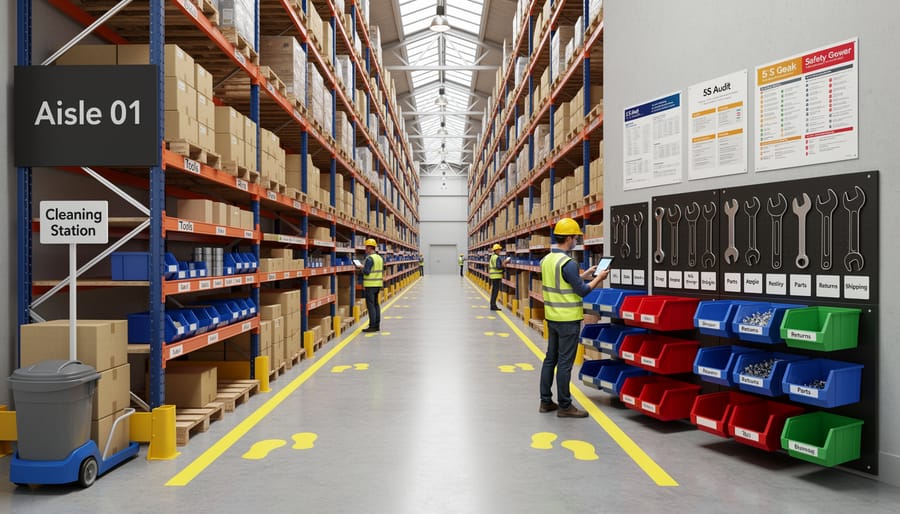
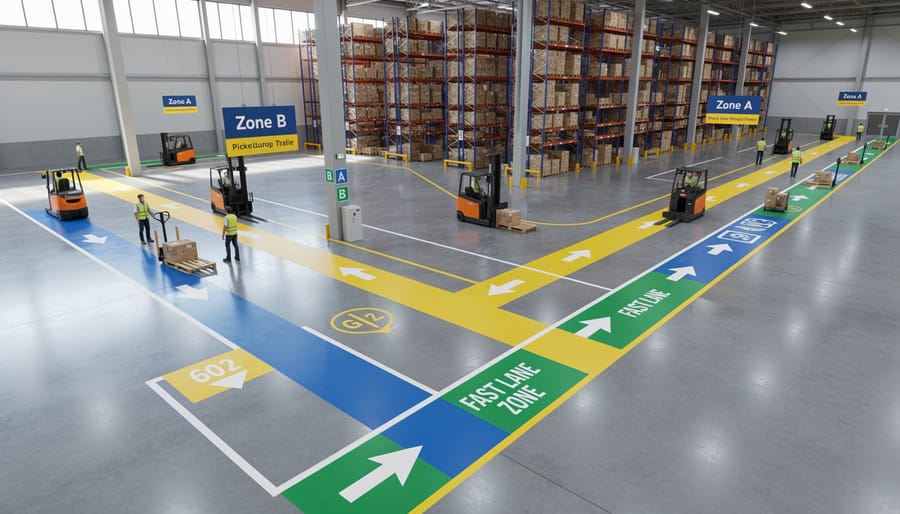
Straighten your workflow by creating visual floor marking systems that define specific zones for receiving, storage, picking, and dispatch, ensuring every tool, pallet jack, and scanning device has a marked home location within arm’s reach of where it’s used most frequently. Paint colour-coded pathways that separate pedestrian traffic from forklift routes, reducing both safety incidents and the energy waste that occurs when workers and equipment take inefficient routes through your facility.
Shine transforms routine cleaning into preventative maintenance: schedule 15-minute team cleaning sessions at shift changes where staff inspect equipment while cleaning, catching oil leaks, damaged racking, and lighting failures before they escalate into costly repairs or safety hazards. This practice has helped Melbourne and Sydney distribution centres reduce equipment downtime by 25% while creating cleaner workplaces that naturally consume less energy through properly maintained machinery and well-functioning LED lighting systems.
Standardise these improvements through visual management boards displaying before-and-after photos, documented procedures with simple diagrams, and daily checklists that take under five minutes to complete. Sustain momentum by appointing rotating 5S champions from your warehouse team who conduct monthly audits, celebrate wins at team meetings, and continuously identify new opportunities where lean practices intersect with your sustainability goals, creating a workplace culture where efficiency and environmental responsibility reinforce each other naturally.
What 5S Really Means for Sustainable Warehousing
The Environmental Cost of Disorganized Storage
When warehouses lack proper organization, the environmental ripple effects extend far beyond the facility walls. Picture a typical disorganized storage area where staff can’t locate inventory quickly—lights stay on longer as workers search through cluttered aisles, air conditioning runs continuously in underutilized spaces, and forklifts idle while operators hunt for misplaced pallets. This inefficiency translates directly into excessive energy consumption and increased carbon emissions.
Poor organization also triggers a costly cycle of redundant purchasing. Australian businesses waste millions annually buying items already sitting forgotten in poorly organized storage areas. This unnecessary duplication means more manufacturing, more packaging, and more transport emissions—all for products you already own.
Material waste compounds the problem too. When products expire, become damaged, or deteriorate due to improper storage conditions, they end up in landfill. Consider how many Australian warehouses have discovered expired stock worth thousands simply because it was stored out of sight and out of mind.
The transportation impact deserves attention as well. Disorganized warehouses require more delivery trips to locate and retrieve items, more return journeys for misplaced goods, and longer routes within the facility itself. Each unnecessary kilometer adds emissions to our atmosphere. The good news? Implementing proper organizational systems can reverse these impacts while improving your bottom line.
Why Australian Warehouses Are Embracing 5S
Australian warehouses are increasingly turning to 5S methodology, and it’s not just about tidier spaces. The push comes from a perfect alignment of regulatory requirements, ambitious sustainability targets, and genuine bottom-line benefits that resonate across industries.
Under Australian workplace health and safety regulations, businesses face stringent requirements for maintaining safe, organized environments. The 5S system naturally supports compliance with these standards while reducing incident rates. But there’s more at play here. As Australia works toward its net-zero emissions commitment by 2050, warehouses are discovering that 5S principles directly support environmental goals through reduced waste, improved energy efficiency, and smarter resource management.
The business case is equally compelling. Australian companies implementing 5S report significant reductions in operating costs through decreased inventory losses, optimized space utilization, and fewer workplace injuries. These savings create opportunities to invest further in eco-friendly business practices, creating a positive cycle of improvement.
What’s particularly encouraging is how Australian warehouse communities are sharing their successes. From small family-run operations in regional areas to major distribution centers in metropolitan hubs, there’s a growing recognition that organized, efficient warehouses aren’t just good for business, they’re essential for our environmental future. The methodology’s simplicity makes it accessible to operations of any size, removing barriers to adoption and fostering a nationwide movement toward sustainable logistics practices that benefit everyone.
Sort: Eliminating Excess and Preventing Waste
Red Tagging Items for Reuse and Recycling
Red tagging is where the 5S methodology intersects brilliantly with environmental responsibility, and Australian warehouses are leading the charge in transforming waste into opportunity. This step involves systematically identifying items that no longer serve their primary purpose—think unused inventory gathering dust, outdated machinery taking up valuable floor space, or mountains of packaging materials from daily operations.
At a Melbourne distribution centre recently, the team discovered over $40,000 worth of perfectly usable excess stock during their red tagging exercise. Rather than writing it off, they partnered with local community organisations and second-hand retailers, keeping these items in circulation while claiming tax benefits. It’s a win-win that many Australian businesses overlook.
The process itself is straightforward. Attach red tags to anything questionable—equipment unused for six months, redundant warehouse storage solutions, damaged pallets, or excessive packaging supplies. Then categorise each tagged item into clear pathways: donate to community groups like Reverse Garbage or The Bower in Sydney, resell through industrial auctions, or recycle through proper channels.
Packaging materials deserve special attention. Cardboard, bubble wrap, and timber pallets can find new homes through REDcycle programs or local recycling networks. One Brisbane warehouse now partners with a neighbouring business, creating a circular economy where their excess becomes someone else’s resource.
This systematic approach not only declutters your space but actively reduces landfill contributions while supporting Australian communities—proof that efficiency and sustainability naturally complement each other.
Case Study: Melbourne Distribution Centre Diverts 3 Tonnes from Landfill
When Melbourne-based Williams Distribution Centre implemented 5S methodology in their 8,000-square-metre facility, they weren’t just looking to improve efficiency—they wanted to measure their environmental impact. The results spoke volumes.
Within six months of introducing the Sort phase across their warehouse, the team diverted 3.2 tonnes of materials from landfill. Here’s how they achieved it: During their initial sorting audit, warehouse manager Sarah Chen and her team discovered 47 broken pallets that could be repaired rather than discarded, 280 kilograms of cardboard packaging materials suitable for recycling, and 15 obsolete equipment items that were sold to smaller operations just starting out.
The breakthrough came when they connected their sorting efforts to broader zero-waste initiatives already gaining momentum in Melbourne’s business community. They partnered with a local recycling cooperative to establish weekly collection points for materials that previously went straight to skip bins.
Sarah’s team documented everything. They photographed the before and after, tracked weights of diverted materials, and calculated the cost savings—roughly $4,800 in avoided landfill fees and equipment replacement costs. But the real win was cultural. Staff members began suggesting their own sorting improvements, from composting cardboard to donating surplus office supplies to community groups.
The key lesson? Start with one section, measure everything, and celebrate the wins publicly. Williams Distribution Centre now runs quarterly sorting audits, maintaining their diversion rates while inspiring other Australian warehouses to follow suit.
Set in Order: Strategic Placement That Saves Energy
Visual Management Tools Made from Recycled Materials
Creating visual management tools doesn’t mean compromising your environmental values. Australian warehouses are discovering clever ways to implement effective 5S visual systems using recycled and repurposed materials, proving sustainability and efficiency go hand in hand.
Consider floor marking using reclaimed or recycled vinyl strips instead of new materials. Melbourne-based facilities have successfully used recycled plastic lumber cut into strips for creating durable aisle markers and work zone boundaries. These last for years and divert plastic waste from landfill. For temporary markings during layout changes, biodegradable floor tape made from plant-based materials offers flexibility without environmental guilt.
Signage presents wonderful opportunities for creativity. Old wooden pallets transform into rustic yet professional directional signs and safety reminders. Brisbane warehouses have turned damaged plastic containers into weather-resistant location markers and bin labels. Even cardboard from incoming shipments becomes effective temporary signage when laminated with eco-friendly coating, perfect for seasonal storage areas.
Label holders fashioned from recycled acrylic offcuts or repurposed metal strips provide clear identification systems without new resource consumption. Some Perth operations use old milk bottle plastic, cleaned and cut to size, for shelf labels and inventory tags.
The beauty of these approaches lies in their dual benefit: they fulfill 5S visual management requirements while demonstrating environmental leadership to staff and visitors. Your team becomes part of the solution, often contributing creative ideas for repurposing materials already available onsite.
Temperature-Controlled Zoning to Cut Energy Waste
Temperature-controlled zoning transforms warehouse efficiency while slashing energy bills—a win-win that Australian warehouses are increasingly embracing. The principle is straightforward: group inventory by temperature requirements rather than scattering items randomly throughout your facility.
Start by sorting your stock into temperature categories. Ambient goods that thrive at room temperature go in one zone, refrigerated items requiring 2-8 degrees in another, and frozen products needing minus 18 degrees in a dedicated area. This straightforward organisation prevents your HVAC system from working overtime to maintain different temperatures across overlapping spaces.
Melbourne-based logistics company Collins Street Distribution reduced their energy consumption by 34 percent after implementing temperature zoning. They discovered they’d been cooling their entire 5,000-square-metre facility when only 40 percent of their inventory actually required refrigeration. By creating distinct zones with insulated barriers, they now cool only what’s necessary.
Set clear boundaries using insulated curtains, dock seals, or permanent partitions between zones. Label each area clearly so staff understand which products belong where. Regular audits ensure items don’t drift into incorrect zones—a common issue that forces HVAC systems into overdrive.
The energy savings compound quickly. Smaller cooling zones mean faster temperature recovery after door openings, reduced equipment wear, and lower electricity costs. For Australian warehouses battling summer heat, this approach particularly resonates, trimming both environmental impact and operational expenses while maintaining product integrity.
Shine: Clean Facilities Use Resources More Wisely
Water-Efficient Cleaning Protocols
Keeping warehouse surfaces spotless doesn’t have to mean drowning them in water. Australian warehouses are discovering clever ways to maintain hygiene standards while dramatically reducing water consumption, and the results are inspiring.
The dry-sweep revolution has transformed floor maintenance across Brisbane and Melbourne facilities. Instead of hosing down floors daily, warehouses now use microfibre dust mops treated with minimal amounts of eco-friendly solution. This simple shift cuts water usage by up to 90 percent while capturing dust more effectively than traditional wet mopping. One Sydney distribution centre reported saving 50,000 litres annually after switching to this method.
For equipment cleaning, concentrated plant-based cleaners diluted in spray bottles work wonders. These biodegradable solutions tackle grease and grime on forklifts and machinery without requiring rinse water. The key is choosing products with Australian-made certification that break down naturally without harming waterways.
Storage racks and shelving respond beautifully to electrostatic dusters and dry microfibre cloths, eliminating the need for wet cleaning entirely. When deeper cleaning becomes necessary, steam cleaners offer a powerful alternative, using minimal water heated to sanitising temperatures.
Several Perth warehouses have joined forces to share best practices through community workshops, discovering that water-efficient protocols actually save time alongside resources. The message is clear: sustainable cleaning isn’t about compromise; it’s about working smarter while protecting our precious water supplies.
Predictive Maintenance Reduces Material Waste
The ‘Shine’ pillar of 5S involves regular cleaning and inspection, and it’s here that Australian warehouses are discovering remarkable opportunities to prevent waste before it happens. When your team conducts systematic shine inspections, they’re not just wiping down surfaces—they’re acting as early warning systems that protect both your bottom line and the environment.
Consider how Canberra-based distribution centres have used shine protocols to spot damaged packaging materials before products are shipped. A simple daily inspection routine catches torn cartons, compromised seals, and degraded pallet wrap early enough to prevent entire shipments from being rejected and discarded. This proactive approach has helped facilities reduce packaging waste by up to 35 percent while maintaining product integrity.
Regular equipment inspections during shine routines also identify wear patterns on conveyor belts, forklift tyres, and racking systems before catastrophic failure occurs. Melbourne warehouses implementing these practices report extending equipment life by 2-3 years, dramatically reducing the environmental impact of premature replacements and manufacturing demand for new components.
Temperature-controlled facilities particularly benefit from shine inspections that detect refrigeration inefficiencies, preventing spoilage of perishable goods. One Sydney cold storage operator discovered a minor coolant leak during routine cleaning that, if left unnoticed, would have compromised 12 tonnes of produce within days. These daily habits transform your workforce into environmental stewards while protecting valuable inventory.
Standardize: Creating Repeatable Sustainability Wins
Standard Work Instructions for Waste Segregation
Creating standardized work instructions transforms waste segregation from guesswork into routine practice across Australian warehouses. At receiving stations, Melbourne-based logistics company GreenChain implemented clear visual guides showing exactly which materials go where—cardboard in blue bins, soft plastics in yellow bags, and food packaging in separate composting containers. Their simple laminated instruction sheets include photos of common items and decision trees that help workers classify unusual packaging within seconds.
Packing stations benefit from similarly straightforward protocols. Sydney’s EcoWrap distribution centre placed colour-coded bins directly at workstations with instructions mounted at eye level. Workers know immediately that bubble wrap and air pillows go to collection points for reuse, while damaged paper fills becomes livestock bedding through a local farm partnership. These stations also feature contamination checklists—quick visual reminders about removing tape from cardboard and keeping food waste separate from recyclables.
Successful standardization involves team input during development. Brisbane’s SustainStore involves floor staff in creating these instructions, treating them as valuable employee engagement tools rather than top-down mandates. They hold monthly reviews where workers suggest improvements based on real situations they encounter. This collaborative approach ensures instructions remain practical, relevant, and actually get followed consistently—turning environmental responsibility into second nature.
Energy-Saving Checklists for Shift Changes
Shift changes present golden opportunities for Australian warehouses to slash energy waste without compromising productivity. Creating simple, visual checklists empowers your team to make real environmental impact during these transition periods.
Start with lighting zones mapped to your warehouse layout. At Melbourne’s GreenLogistics Centre, team leaders use a laminated floor plan showing which sections need illumination during each shift. Night crews systematically switch off natural light zones, reducing consumption by 30 percent while maintaining safety standards.
Equipment protocols matter equally. Brisbane-based FreshFlow Warehousing implemented a colour-coded shutdown checklist for forklifts, conveyor systems, and packaging stations. Green tags indicate “leave running,” orange means “standby mode,” and red signals “power down completely.” This visual system eliminated confusion and cut idle equipment energy use by 40 percent within three months.
Climate control deserves particular attention in Australia’s varying conditions. Your checklist should prompt staff to adjust thermostats based on occupancy levels and close loading dock doors promptly. Consider seasonal variations—summer afternoon shifts might open high-level vents before air conditioning, while winter transitions focus on sealing drafts. These small, standardised actions build a culture where environmental responsibility becomes second nature.
Sustain: Building a Culture of Environmental Responsibility
Staff Engagement Through Green Team Initiatives
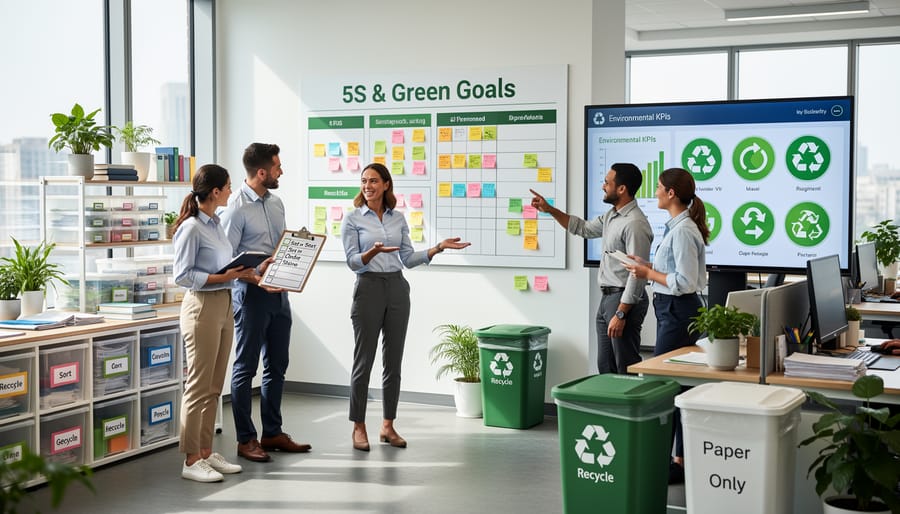
Australian warehouses are discovering that sustainability thrives when staff take ownership. Green teams—voluntary groups of employees passionate about environmental improvement—are transforming how 5S principles connect with eco-conscious practices across the country.
At a Brisbane logistics facility, warehouse staff identified that excessive packaging waste was undermining their Sort efforts. Their green team launched a “Waste Warriors” initiative, creating visual displays showing monthly waste reduction progress. Team members who suggested implemented improvements received recognition through a quarterly sustainability award, along with vouchers to local eco-friendly businesses. Within six months, the warehouse reduced packaging waste by 43 percent while maintaining operational efficiency.
Melbourne-based distribution centres have embraced friendly competition between shifts, tracking metrics like energy consumption during Shine activities and proper recycling during Sort phases. Digital leaderboards display real-time results, fostering genuine enthusiasm for sustainable practices. Winners receive paid volunteer days with local environmental organisations, strengthening community connections while rewarding positive behaviour.
The key to successful green teams lies in empowering staff with decision-making authority. Perth warehouses have established suggestion schemes where employees can propose sustainability improvements, with management committing to respond within two weeks. This approach respects workers’ frontline knowledge while building collective responsibility for environmental outcomes. When teams see their ideas implemented—whether installing motion-sensor lighting or redesigning workflow to reduce forklift trips—engagement soars, creating lasting cultural change that extends well beyond initial 5S implementations.
Tracking Environmental KPIs Alongside 5S Audits
Forward-thinking Australian warehouses are discovering that environmental performance metrics sit naturally alongside traditional 5S audit scorecards, creating a powerful dual-purpose assessment tool. When Melbourne-based logistics company Greenflow implemented this approach, they tracked waste diverted from landfill as part of their Seiso (shine) evaluations, achieving an impressive 87% diversion rate within six months by making bin placement and sorting protocols part of their daily cleaning routines.
The most effective integrated scorecards measure energy consumption per cubic meter of stored goods, linking directly to Seiton (set in order) principles. Brisbane’s EcoStore Facilities reduced energy usage by 23% simply by reorganising pallet layouts to maximise natural light penetration and improve airflow, eliminating the need for constant artificial lighting and climate control adjustments.
Water usage metrics deserve particular attention in our drought-prone climate. Warehouses incorporating water consumption into Seiso protocols have identified substantial savings through regular equipment maintenance and leak detection. One Perth facility discovered that quarterly 5S audits highlighting water-efficient cleaning methods reduced usage by 41%.
The beauty of this integrated approach is its simplicity. Your existing 5S audit form becomes an environmental monitoring tool when you add three columns for waste diversion percentages, energy efficiency scores, and water consumption trends. This dual-purpose system encourages teams to see sustainability not as separate compliance work, but as fundamental to operational excellence.
Getting Started: Your First 5S Project for Environmental Impact
Ready to transform your warehouse while making a genuine difference for the environment? Starting your first 5S project doesn’t need to feel overwhelming. Let’s break it down into manageable steps that deliver both operational improvements and sustainability wins.
Begin by selecting a pilot area of around 50-100 square metres. Your picking zone or packing station makes an ideal starting point because changes here create immediate visibility and impact. Choose somewhere that’s frustrating your team daily – perhaps that corner where everyone struggles to find the right tape dispenser, or where cardboard boxes pile up faster than they can be managed. These pain points become your opportunity for quick transformation.
Form a cross-functional team of four to six enthusiastic volunteers who genuinely care about making things better. You’ll want representation from warehouse floor staff, a supervisor, and ideally someone passionate about environmental initiatives. These become your 5S champions who’ll inspire others once they see results. Hold a brief kickoff meeting to walk through the five pillars and connect each action to both efficiency and environmental outcomes.
Your first week should focus on Sort – the foundation of everything else. Challenge your team to remove anything that hasn’t been used in three months. You’ll be amazed at what surfaces: duplicate equipment draining energy unnecessarily, expired materials headed for landfill, and packaging materials that could be redirected to recycling streams. One Melbourne distribution centre discovered 300 kilograms of recyclable cardboard hidden behind rarely-used shelving during their first Sort session.
Document everything with before and after photos. Measure your waste reduction, even roughly. Perhaps you’ve freed up two cubic metres of space or diverted 50 kilograms from landfill. These tangible wins build momentum and secure leadership support for expanding 5S across your entire facility.
Transforming your warehouse through 5S methodology isn’t just about creating tidier spaces—it’s about joining a movement that’s reshaping how Australian businesses approach sustainability and efficiency simultaneously. Every sorted storage area, every standardised process, and every sustained improvement contributes to a healthier planet while boosting your bottom line.
The beauty of 5S lies in its simplicity and scalability. You don’t need to overhaul your entire operation overnight. Start with one small area—perhaps a single shelf, workstation, or packing zone. Measure your progress not just in time saved and errors reduced, but in kilograms of waste diverted from landfill, energy consumption decreased, and resources conserved. These dual metrics tell the complete story of your transformation.
Australian warehouses implementing 5S are discovering they’re part of something bigger than individual business success. You’re contributing to industry-wide sustainability goals and supporting community initiatives that prioritise environmental stewardship. As more logistics and warehousing operations across the country embrace these practices, we’re collectively building resilient supply chains that respect our unique Australian environment.
The journey begins with a single step. Choose your starting point this week, involve your team in the process, and track both operational and environmental wins. Share your successes with your community—your commitment inspires others and strengthens Australia’s position as a leader in sustainable business practices. Together, we’re proving that efficiency and environmental responsibility aren’t competing priorities; they’re natural partners in building the warehouses of tomorrow.