
Capture every drop falling on your greenhouse roof and transform it into a self-sustaining water source that slashes your bills and drought-proofs your growing space. Australian greenhouse growers are already doing this, connecting simple guttering systems to storage tanks and watching thousands of litres accumulate during even modest rainfall events—a 50-square-metre greenhouse roof can collect over 40,000 litres annually in most Australian regions.
Install guttering along your greenhouse roof edges with a slight gradient toward collection points, directing water through leaf guards and first-flush diverters into food-grade tanks positioned for gravity-fed distribution back to your plants. This closed-loop approach eliminates reliance on mains water while supporting water-efficient gardening practices that keep your greenhouse productive year-round, regardless of water restrictions.
The beauty of greenhouse rainwater harvesting lies in its simplicity and immediate impact. Unlike outdoor gardens where water evaporates or runs off, greenhouse collection systems capture nearly 100% of rainfall from a clean, dedicated surface. You’re not just saving water—you’re creating a buffer against Australia’s increasingly unpredictable rainfall patterns and the rising costs of municipal supply.
Whether you’re managing a commercial growing operation in regional Victoria or nurturing a backyard greenhouse in suburban Perth, rainwater collection transforms your structure from a water consumer into a water generator. The initial investment in guttering, tanks, and basic filtration typically pays for itself within two to three years through reduced water bills, while the environmental benefits start immediately.
This practical guide walks you through everything from calculating your collection potential based on your local rainfall to selecting components that withstand Australian conditions, ensuring you can implement a system that works reliably for decades.
Why Your Greenhouse Is the Perfect Rainwater Catchment
Your greenhouse is already doing half the work for you. While many Australian gardeners are installing separate rainwater tanks and elaborate collection systems, greenhouse owners have a built-in advantage that’s often overlooked. That substantial roof overhead isn’t just protecting your tomatoes and seedlings from harsh weather; it’s prime real estate for water harvesting.
Consider the numbers for a moment. Even a modest 3×6 metre greenhouse offers 18 square metres of catchment area. In a region receiving just 600mm of annual rainfall (well below Australia’s average), that’s potentially 10,800 litres of water flowing off your roof each year. For greenhouse gardeners in higher rainfall areas like coastal New South Wales or Queensland, you could easily double or triple that volume. And here’s the beautiful part: this water doesn’t need to travel far. Your plants are right there, ready to benefit.
The existing structure also means you’re avoiding one of the biggest hurdles in rainwater harvesting: finding suitable catchment space. Your greenhouse framework can support guttering, your walls can accommodate storage tanks, and the whole system integrates seamlessly without requiring additional construction permits in most cases.
Australian greenhouse communities are catching on quickly. From suburban Melbourne to rural Western Australia, gardeners are discovering that even during extended dry spells, strategic collection during brief rainfall events can sustain their growing operations. One Adelaide greenhouse gardener recently shared how capturing water from just three moderate rain days provided enough irrigation for an entire month of summer growing.
The proximity factor cannot be overstated. Unlike household rainwater systems where water travels from roof to distant garden beds through metres of hose, greenhouse collection puts water exactly where it’s needed. This reduces evaporation loss, minimizes infrastructure, and creates a genuinely closed-loop system. Your greenhouse isn’t just a growing space; it’s a self-contained water catchment waiting to be activated.
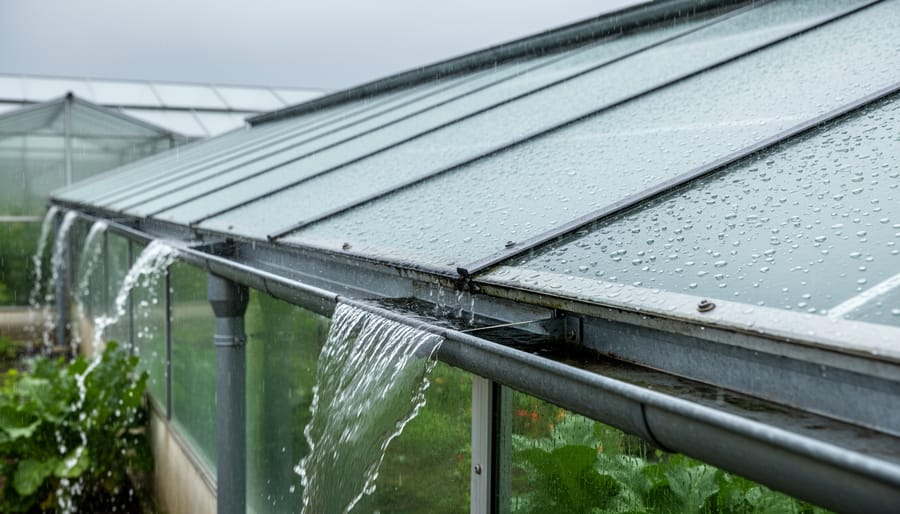
Understanding the Core Components of a Greenhouse Collection System
Gutters and Downpipes: Your First Line of Capture
Getting your gutters and downpipes right is where successful rainwater collection begins. For Australian greenhouse owners, this means thinking beyond standard residential systems to accommodate our unique climate challenges.
Start by sizing gutters to match your greenhouse roof area and local rainfall intensity. In regions experiencing heavy downpours, particularly across northern Australia during the wet season, undersized gutters lead to overflow and wasted water. A 150mm wide gutter typically suits most hobby greenhouses, while commercial structures often require 200mm or larger channels. Remember, Australian storms can be fierce, so generous sizing ensures you capture every precious drop rather than watching it cascade over the sides.
Material selection is crucial in our harsh sun-drenched environment. UV-stabilized PVC remains a popular choice, offering excellent corrosion resistance without the heat retention issues of metal alternatives. However, many community greenhouse projects across Australia are now embracing colorbond steel with proper coating, which withstands our temperature extremes while maintaining structural integrity. The key consideration is UV resistance – our relentless sunshine degrades inferior materials within just a few seasons.
Installation positioning matters enormously. Mount gutters with a slight fall towards downpipes, typically 1:100 gradient, ensuring water flows efficiently without pooling. Include leaf guards or mesh covers to prevent eucalyptus debris and other Australian flora from clogging your system. Position downpipes strategically near storage tanks, minimizing pipe runs and potential contamination points.
These foundational elements set up your entire collection system for success, transforming your greenhouse roof into a productive water-harvesting asset for your growing endeavors.
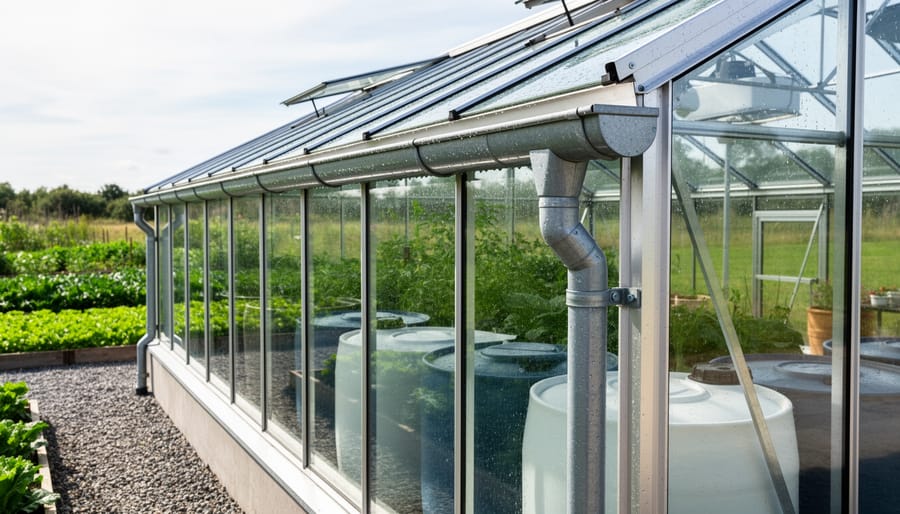
Storage Tanks: Choosing the Right Size for Your Needs
Getting your tank size right can mean the difference between thriving plants and disappointed harvests. The key is matching your storage capacity to your greenhouse’s unique water appetite.
Start by calculating your catchment area—simply multiply your greenhouse roof length by width. A standard 6m x 4m greenhouse gives you 24 square metres of collection surface. Now here’s where Australian weather patterns come into play. Brisbane gardeners might capture around 28,800 litres annually from that same greenhouse, while Perth growers see closer to 19,200 litres. Check your local Bureau of Meteorology data for accurate rainfall averages in your region.
Next, consider your plants’ thirst. Tomatoes and cucumbers guzzle up to 5 litres per square metre daily during peak summer, while herbs manage on much less. Calculate your daily water needs, then multiply by your desired autonomy period. Most Australian growers aim for 2-4 weeks of backup supply to bridge dry spells.
For a medium greenhouse (20-30 square metres of growing space), a 2,000-5,000 litre tank typically hits the sweet spot. Smaller hobby greenhouses often thrive with 1,000-2,000 litres.
Material matters too. Polyethylene tanks offer affordability and UV resistance—perfect for Australian conditions. Steel tanks provide durability and blend beautifully into community garden settings, though they cost more. Concrete suits larger commercial operations needing serious capacity.
Position your tank on level, compacted ground close to the greenhouse to minimise pump requirements and pipe runs. Elevating tanks even 30cm creates natural pressure, reducing reliance on pumps. Remember, water weighs roughly 1kg per litre, so ensure your foundation can handle the load. Many Australian growers are now connecting multiple smaller tanks rather than one massive unit, creating flexibility and easier installation—especially valuable in community greenhouse projects where collaboration makes the work lighter.
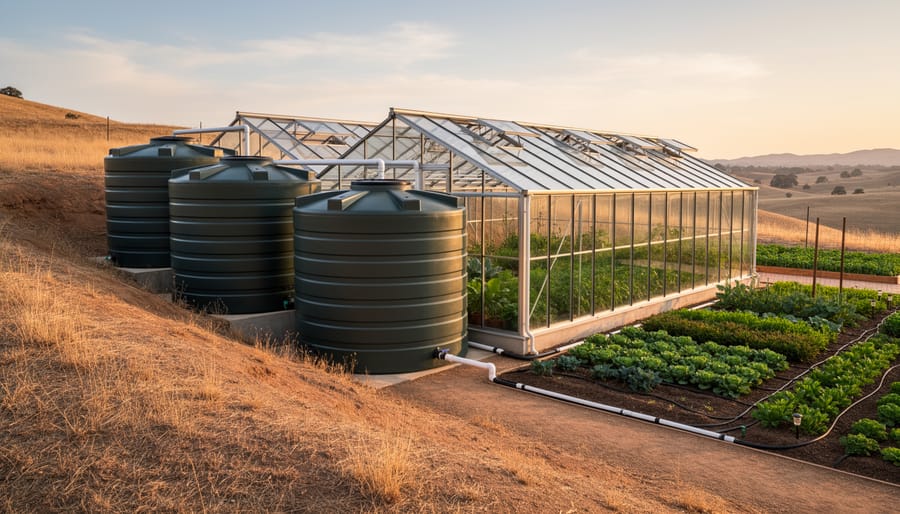
Filtration and First Flush Systems
Clean water flowing into your greenhouse isn’t just about quantity—it’s the foundation of healthy, thriving plants. While rainwater is naturally soft and often superior to treated town water, what runs off your roof carries debris, bird droppings, and accumulated dust that can harbour pathogens and clog irrigation systems.
The good news? Protecting your water quality doesn’t require complicated or expensive solutions. Many Australian greenhouse growers start with a simple mesh screen—typically 1mm or finer—installed over gutters or at tank inlets. This basic barrier catches leaves, insects, and larger debris before they enter your storage. For those wanting extra protection, inline sediment filters provide a second line of defence, removing finer particles that mesh screens might miss.
Here’s where first flush diverters become game-changers for greenhouse systems. These clever devices automatically divert the initial rainwater runoff—which contains most contaminants—away from your storage tanks. Picture the first few millimetres of rain washing your roof clean; that’s precisely what you don’t want mixing with your plant water. First flush diverters typically redirect anywhere from 20 to 100 litres depending on your roof size, then automatically allow clean water to flow into storage once the roof is rinsed.
Installing a first flush system is straightforward enough for most DIY enthusiasts, with models available at hardware stores across Australia starting around $50. Combined with basic filtration, you’re creating water quality that not only keeps plants healthy but also protects pumps and irrigation equipment from premature wear—a practical investment that pays dividends throughout growing seasons.
Setting Up Your System: A Step-by-Step Approach
Assessing Your Greenhouse and Planning the Layout
Before installing your rainwater collection system, take time to walk around your greenhouse with fresh eyes. Start by examining your roof design—whether you have a traditional pitched roof, curved structure, or lean-to design will influence where gutters can be most effectively positioned. In Australian greenhouses, north-facing roof sections often collect less debris, making them ideal for primary collection points.
Consider your existing gutters or where new ones need to go. Most greenhouse owners find success placing gutters along the lowest roof edges where water naturally flows. Measure the total roof area to calculate potential collection volume—remembering that even modest-sized greenhouses across Sydney and Melbourne can harvest thousands of litres annually.
Tank positioning requires balancing practicality with physics. Ideally, place your storage tank on the highest ground near your greenhouse to create gravity-fed pressure for irrigation. This eliminates the need for pumps and reduces ongoing costs. However, space constraints are real, especially in urban community gardens and smaller properties. If elevation isn’t possible, factor in a simple pump system or position tanks where they’re easily accessible for maintenance.
Sketch a basic layout showing gutter runs, downpipe locations, and tank placement. Note any obstacles like trees, pathways, or neighboring structures. Many Australian greenhouse communities share their successful layouts online, offering inspiration tailored to our climate. This planning phase saves headaches later and ensures your system works harmoniously with your existing setup, maximizing every precious drop of rainfall.
Installation Essentials and Common Pitfalls to Avoid
Getting your greenhouse rainwater collection system up and running doesn’t require professional plumbing skills, but attention to detail makes all the difference. Let’s walk through the essentials together, drawing on lessons learned by Australian greenhouse gardeners who’ve gone before you.
Start with the right toolkit: you’ll need a hole saw or jigsaw for cutting downpipes, silicone sealant rated for outdoor use, mesh screens to keep debris out, and appropriate fittings for your chosen tank. Most importantly, invest in quality UV-resistant materials. Australian sun is relentless, and cheap plastics deteriorate quickly, leading to leaks and contamination.
The installation process begins at the roofline. Position your gutters with a slight fall towards collection points, around 1 in 100 gradient works well. Install first-flush diverters to automatically discard the initial roof runoff containing dust, leaves, and bird droppings. This simple device dramatically improves water quality and is something many first-timers overlook.
Here’s where Australian gardeners commonly stumble: underestimating our weather extremes. During summer, tanks can develop algae blooms if exposed to direct sunlight. Position tanks in shade or use opaque containers. Conversely, ensure all connections can handle the force of torrential downpours without backing up or bursting. Overflow systems aren’t optional, they’re essential.
Another frequent mistake is forgetting mosquito prevention. Even small gaps become breeding grounds during humid conditions. Seal every entry point with fine mesh, and ensure your overflow pipe has a flap valve or screen.
The waterproofing challenge extends to your connection points. Use marine-grade sealant around tank fittings and check joins twice yearly. Thermal expansion during our hot summers can crack inferior seals, wasting precious collected water.
Finally, connect with your local gardening community or sustainability group. They’ll share region-specific tips about dealing with local water quality, seasonal challenges, and tried-and-tested suppliers. Your greenhouse rainwater system represents not just water security, but joining a growing movement of Australians taking climate adaptation into their own hands.
Maximizing Water Quality for Healthier Plants
If you’ve ever noticed how much better your garden looks after a good rain, you’re already onto something important. Rainwater isn’t just free – it’s genuinely superior for your greenhouse plants compared to what flows from most Australian taps.
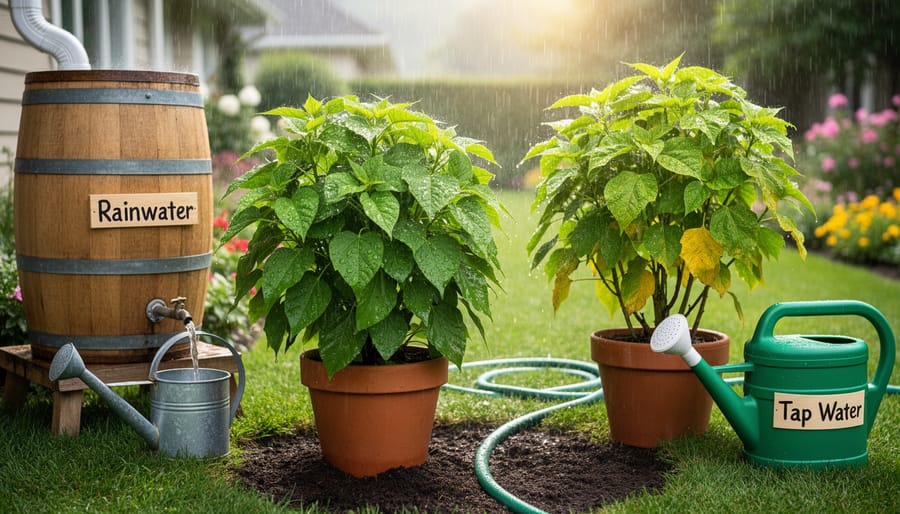
Unlike municipal water supplies, rainwater is naturally soft and typically has a pH level between 5.5 and 6.5, which is slightly acidic and ideal for most plants. This matters enormously for growing your own food in a greenhouse environment. Tap water in many Australian regions contains added chlorine, fluoride, and dissolved minerals that can build up in your soil over time, affecting nutrient availability and plant health. Rainwater sidesteps these issues entirely, delivering what plants have evolved to thrive on for millions of years.
Greenhouse growers across Australia report noticeably healthier foliage, stronger root systems, and improved yields when switching from tap to rainwater. The absence of chlorine means beneficial soil microorganisms can flourish, creating a more vibrant growing ecosystem.
However, maintaining water quality in storage requires attention to our unique Australian conditions. Our climate brings specific challenges including dust storms, particularly in regional areas, abundant pollen during flowering seasons, and the inevitable presence of bird droppings on collection surfaces.
The good news is that protecting your water quality isn’t complicated. First-flush diverters are essential – these clever devices automatically divert the first flow of rain, which carries most contaminants from your roof, away from your storage tank. Think of it as giving your roof a quick rinse before collecting the clean water that follows.
Keep gutters clear of leaves and debris with regular maintenance, ideally before the wet season hits. Mesh guards over gutters prevent larger material entering your system, while fine mesh filters at tank inlets catch smaller particles.
For stored water, ensure your tank has a properly sealed lid to prevent mosquito breeding and debris entry. Consider a dark-colored or opaque tank to minimize algae growth, as our intense Australian sun can quickly turn clear water green.
If you’re in areas prone to dust storms or bushfire smoke, installing higher-grade filtration or even simple sand filters can provide extra protection. Many Australian greenhouse communities share maintenance tips and seasonal reminders, creating a supportive network for keeping systems running smoothly year-round.
Smart Water Management Through the Seasons
Australia’s diverse climate zones demand flexible approaches to greenhouse water management, and understanding your region’s rainfall patterns is essential for year-round success. From the tropical wet seasons of Far North Queensland to the Mediterranean climate of Perth and the temperate zones of Victoria and Tasmania, each area presents unique opportunities and challenges.
During wet seasons, particularly across northern Australia’s monsoon belt and southeastern coastal regions, overflow management becomes crucial. Rather than letting excess water escape, consider connecting your greenhouse collection system to larger storage tanks or even neighborhood water-sharing initiatives sprouting up in communities from Byron Bay to the Adelaide Hills. Installing a simple overflow pipe that directs surplus water to fruit trees, vegetable gardens, or community spaces transforms potential waste into shared abundance. Some growers have found success directing overflow into swales or rain gardens, creating natural filtration systems that recharge groundwater while preventing erosion.
The flip side arrives during Australia’s increasingly common drought periods. This is where strategic sustainable water management truly shines. Smart greenhouse operators across the Murray-Darling Basin and inland regions have learned to stretch their collected water by combining drip irrigation with mulching techniques, reducing evaporation by up to 70 percent. Installing shade cloth during extreme heat waves, common across most of Australia, further conserves precious reserves.
Integrating backup sources ensures resilience during prolonged dry spells. Many Australian growers now connect their rainwater systems to recycled household greywater (appropriately treated for plant safety) or maintain connections to mains water as a last resort. Some innovative communities in regional areas have established water-sharing cooperatives, where greenhouse owners pool resources during critical periods.
The key is planning ahead. Track your local rainfall patterns using Bureau of Meteorology data, calculate your greenhouse’s water needs across seasons, and size your storage accordingly. Remember, successful water management isn’t about perfection but building resilience through preparation and community connection.
Real Australian Greenhouse Stories: What Works in Practice
Across Australia’s diverse climate zones, greenhouse growers are discovering that rainwater collection systems deliver remarkable results, with practical benefits varying by region but consistently proving worthwhile.
In Melbourne’s temperate zone, the Collingwood Children’s Farm transformed their community greenhouse program by installing a 5,000-litre collection system in 2021. Within the first year, they reduced mains water usage by 78% while maintaining productivity across their Australian edible garden teaching spaces. Their biggest lesson? Position tanks close to greenhouses to minimize pump requirements. Community coordinator Sarah Chen notes that involving local families in the installation created ongoing engagement, with volunteers now monitoring water levels and sharing harvesting tips through their newsletter.
Up in subtropical Brisbane, backyard grower James Wu installed a modest 2,000-litre system for his 4×6 metre greenhouse in 2020. During the 2022 summer, his system captured enough water during occasional storms to sustain his tomatoes and herbs through extended dry spells. He calculated annual savings of approximately 15,000 litres of town water, reducing his quarterly bill by around 65 dollars while providing chlorine-free irrigation. His key insight was installing a first-flush diverter, which proved essential in Brisbane’s heavy downpours to keep debris from contaminating stored water.
Perhaps most impressive is the story from arid Broken Hill, where the community garden collective tackled extreme water scarcity head-on. Their 10,000-litre system services three greenhouse structures, capturing every possible drop during the region’s sporadic rainfall. Since implementation in 2019, they’ve maintained vegetable production through 18-month drought periods by combining rainwater harvesting with shade cloth covers that reduce evaporation by 40%. They’ve learned to think in terms of water budgets, calculating exactly how much each crop requires and planning accordingly.
These real-world examples demonstrate that whether you’re managing 300 millimetres or 1,200 millimetres of annual rainfall, properly designed rainwater systems adapt to local conditions. The common thread across all climate zones? Start with quality guttering, invest in adequate storage for your rainfall patterns, and connect with other growers who understand your region’s specific challenges. Australian greenhouse gardeners are proving that water independence isn’t just possible, it’s practical.
Maintenance Made Simple: Keeping Your System Running Year-Round
Here’s the good news: maintaining your greenhouse rainwater collection system requires far less effort than you might think. With just a quarterly check-up routine, you’ll keep your system running smoothly throughout the year, ensuring your plants receive quality water while you continue making a positive environmental impact.
Start each season with a simple inspection schedule. Before the wet season arrives (typically October in northern Australia, May-June in the south), clear your gutters and check inlet screens for debris. Eucalyptus leaves are notorious blockers in Aussie systems, so give these areas special attention. During summer, when evaporation peaks, inspect tank water levels and ensure your overflow valve functions properly. Autumn brings falling leaves again, making it prime time for another gutter clean. Winter requires minimal intervention, though checking for any damage after storms is worthwhile.
Mosquitoes and algae are the two challenges you’ll likely encounter, but both are easily managed. Prevent mosquito breeding by ensuring all tank openings have fine mesh screens (1mm maximum). If mosquitoes do appear, a tablespoon of cooking oil floated on the water surface creates a barrier, or consider introducing native fish to outdoor holding tanks. For algae growth, the solution is simple: keep light out. Dark-coloured tanks naturally discourage algae, while covering any clear pipes with shade cloth or paint does the trick.
Blockages typically announce themselves through reduced water flow. When this happens, disconnect and flush your first-flush diverter, then check downpipe leaf guards. Most greenhouse growers in Queensland and New South Wales report spending just 30-45 minutes per quarter on maintenance, a minimal time investment considering the benefits.
Keep a simple logbook noting when you’ve completed checks. Many Australian greenhouse communities share their maintenance schedules online, creating helpful reminders and fostering collective knowledge. By staying consistent with these straightforward tasks, your system will reliably serve your greenhouse for decades.
Installing a greenhouse rainwater collection system represents more than just an upgrade to your growing space—it’s a meaningful step toward water security and environmental stewardship that resonates far beyond your garden gate. The beauty of these systems lies in their scalability. Whether you’re starting with a single rain barrel attached to your small hobby greenhouse or designing an elaborate setup with multiple tanks for a commercial operation, every litre of rainwater harvested makes a difference to Australia’s precious water resources.
The environmental benefits are clear: reduced strain on municipal water supplies, lower energy consumption from water treatment plants, and healthier plants thriving on chemical-free rainwater. Economically, most Australian gardeners see returns on their investment within two to four years through reduced water bills, with ongoing savings accumulating year after year. When you consider these advantages alongside broader sustainable garden practices, you’re creating a genuinely regenerative growing system.
Imagine the collective impact when entire gardening communities embrace rainwater harvesting. Suburbs across Australia could significantly reduce peak water demand during dry spells, easing pressure on our water infrastructure during critical periods. Your decision today inspires neighbours, local gardening groups, and fellow growers to follow suit.
Ready to begin? Start by measuring your greenhouse roof area this weekend and calculating your potential harvest. Even that first step moves you closer to water independence and a more sustainable future for Australian agriculture.