
Every year, Australians generate over 75 million tonnes of waste, with only 60% being recovered for reuse or recycling. The remaining 30 million tonnes ends up in landfills, costing our economy billions while squandering valuable resources that could fuel new products, create jobs, and reduce our environmental footprint. This linear approach of take-make-waste is no longer viable for a nation facing resource scarcity, climate pressures, and growing mountains of discarded materials.
Waste circularity offers a fundamentally different vision. Rather than viewing materials as disposable, circular systems recognize waste as a resource waiting to be recaptured. It’s about designing products for longevity and disassembly, establishing collection systems that keep materials in productive use, and building industries that transform yesterday’s waste into tomorrow’s raw materials. From composting food scraps to feed soil microbes, to remanufacturing electronics, to converting textile waste into insulation, circularity creates closed loops where nothing is truly thrown away.
Australia stands at a pivotal moment. With China’s 2018 waste import restrictions disrupting traditional disposal routes, we’ve been forced to confront our consumption patterns and develop domestic solutions. The National Waste Policy Action Plan now sets ambitious targets: 80% resource recovery by 2030 and significant reductions in waste generation. States and territories are banning single-use plastics, expanding container deposit schemes, and investing in recycling infrastructure.
These policy shifts create opportunities for businesses to innovate and individuals to participate in building a circular economy. The transition requires collective effort, but the rewards extend beyond environmental benefits to include economic resilience, job creation in emerging industries, and a healthier future for Australian communities.
What Is Waste Circularity? (And Why It’s Different from Recycling)
Imagine if nothing you used ever truly became “waste.” That’s the promise of waste circularity, and it’s reshaping how Australians think about everything from coffee cups to construction materials.
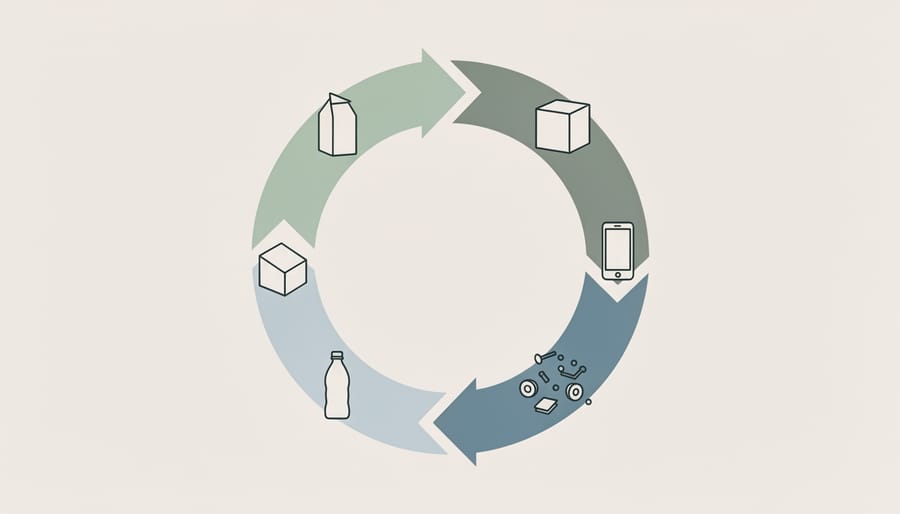
Waste circularity is a system where materials and products are designed, used, and managed to stay in circulation indefinitely. Rather than following the traditional “take-make-dispose” model we’ve relied on for decades, circularity creates closed loops where resources maintain their value and usefulness across multiple lifecycles.
Here’s where it gets interesting: recycling, while valuable, is just one piece of the puzzle. When you toss a plastic bottle into your yellow bin, it typically gets downcycled into lower-grade products that eventually end up in landfill anyway. That’s linear thinking with an extra step. Waste circularity, by contrast, reimagines the entire journey. It asks questions like: Can we design products that never become waste? Can materials be recovered at their highest quality? Can we share, repair, or remanufacture instead of replacing?
Think of it as the difference between treating symptoms and preventing illness altogether. Recycling addresses waste after it’s created, while circularity prevents waste from existing in the first place.
This approach sits at the heart of the circular economy, a transformative framework gaining serious momentum across Australia. From government procurement policies to grassroots community initiatives, Australians are discovering that circularity isn’t just environmentally smart—it’s economically clever too. By keeping materials in productive use, we’re creating local jobs, reducing our reliance on imported raw materials, and building resilience against global supply chain disruptions.
For a nation that generates over 75 million tonnes of waste annually, embracing circularity isn’t just an option—it’s essential. The good news? Communities and businesses across the country are already proving it works, transforming waste from an endpoint into an ongoing resource that benefits everyone.
Australia’s Waste Wake-Up Call: Why We Had to Change
The China Ban That Changed Everything
For decades, Australia had a convenient solution for waste we didn’t want to deal with: we simply shipped it overseas. China was the world’s largest importer of recyclable materials, taking in plastics, paper, and other materials from countries across the globe, including millions of tonnes from Australia each year.
Then, in January 2018, everything changed. China implemented its National Sword policy, effectively closing its doors to foreign waste imports. The policy set contamination standards so strict that most Australian recycling couldn’t meet them. Overnight, the destination for roughly 30% of Australia’s recyclables vanished.
The impact was immediate and dramatic. Stockpiles of recycling began mounting at facilities across the country. Some councils suspended kerbside recycling programs entirely, while others sent recyclables straight to landfill. Processing costs skyrocketed as operators scrambled to find alternative markets in Southeast Asian countries, many of which soon implemented their own import restrictions.
This crisis became Australia’s wake-up call. We could no longer export our waste problem. The National Sword policy forced us to confront an uncomfortable truth: we needed to take responsibility for our own waste and fundamentally rethink how we manage resources. This moment catalysed Australia’s journey toward genuine waste circularity.
The Real Cost of Linear Waste Systems
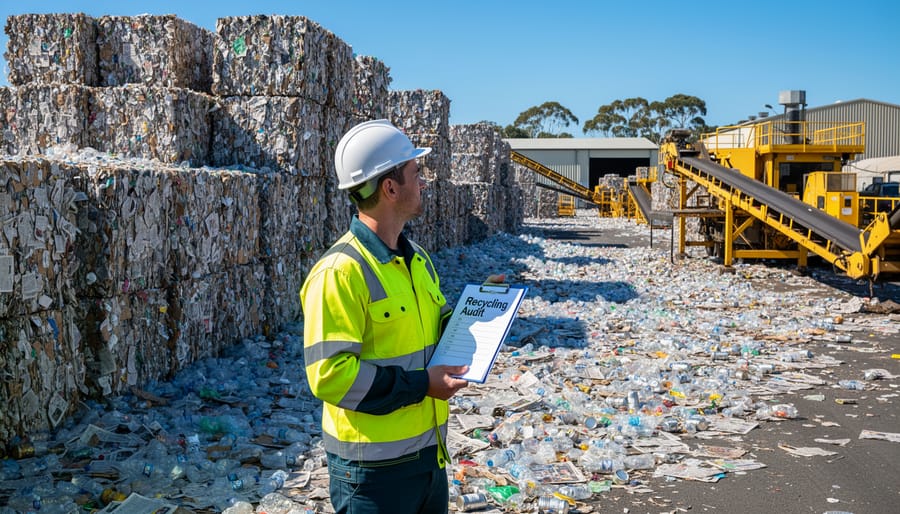
Australia’s current waste approach is costing us far more than we realize. Right now, Australians generate around 74 million tonnes of waste annually, with about 38% ending up in landfill. That’s roughly 2.95 tonnes per person each year – one of the highest rates among developed nations.
The financial burden is staggering. Local councils across Australia spend approximately $2.4 billion annually just managing household waste collection and disposal. For businesses, waste disposal costs can represent 2-4% of total operating expenses, money that could otherwise fuel innovation and growth. The traditional take-make-dispose model also means we’re continually purchasing new raw materials rather than recapturing value from what we already have.
But the environmental toll cuts even deeper. Our landfills produce methane, a greenhouse gas 25 times more potent than carbon dioxide, contributing significantly to Australia’s emissions profile. We’re also losing precious resources forever – metals, plastics, organic matter – that could be regenerated through circular systems.
Perhaps most concerning is the missed opportunity. The waste sector represents unrealized economic potential worth billions. When we bury or burn materials, we’re essentially discarding jobs, manufacturing opportunities, and innovation potential. Communities like Port Phillip in Melbourne are proving there’s a better way, showing that shifting from linear to circular models isn’t just environmentally responsible – it’s economically smart. The question isn’t whether we can afford to change, but whether we can afford not to.
How Waste Circularity Actually Works in Practice
Designing Out Waste From the Start
The most effective way to tackle waste is to prevent it from being created in the first place. This is where thoughtful product design and innovative business models come into play, fundamentally shifting how we think about what we make and consume.
Progressive Australian businesses are embracing design principles that consider a product’s entire lifecycle from day one. This means choosing durable materials, creating modular products that can be easily repaired or upgraded, and eliminating unnecessary packaging. Consider Melbourne-based furniture companies crafting pieces designed to be disassembled and refurbished rather than discarded, or Sydney startups developing packaging from compostable materials that return nutrients to the soil.
Business models are evolving too. Product-as-a-service models, where companies retain ownership and responsibility for their products, incentivize durability over disposability. We’re seeing this with clothing rental services, appliance leasing programs, and even electronics subscriptions across Australian cities.
The beauty of designing out waste is that it benefits everyone. Businesses reduce material costs and build customer loyalty, while consumers enjoy higher-quality products that last. It’s a proactive approach that stops the waste tap at its source rather than scrambling to manage the overflow. When Australian designers and entrepreneurs prioritize longevity and regeneration over obsolescence, they’re not just creating products – they’re building a waste-free future for our communities.
Keeping Materials in Use Longer
The real magic of waste circularity happens when we keep products and materials in active use for as long as possible. Think of that old drill sitting in your garage – you might only use it twice a year, but it’s still perfectly functional. This is where repair, refurbishment, and sharing models come into play.
Across Australia, repair cafes and community workshops are flourishing, teaching people how to fix everything from toasters to torn clothing. Melbourne’s Bower Reuse and Repair Centre has prevented thousands of tonnes from landfill by refurbishing electronics and furniture. Meanwhile, businesses are discovering the value of remanufacturing – taking used products, restoring them to like-new condition, and extending their life significantly.
The sharing economy offers another powerful approach. Tool libraries in Brisbane and Sydney let neighbours borrow what they need rather than everyone buying their own. Car-sharing services, equipment rental platforms, and clothing swaps all reduce the demand for new production while building community connections.
These strategies aren’t just environmentally sound – they’re economically smart. Australian businesses exploring refurbishment and remanufacturing are creating local jobs while reducing costs. For individuals, choosing repair over replacement saves money and reduces your environmental footprint. It’s about shifting from a throwaway mindset to valuing what we already have.
Regenerating Natural Systems
The most transformative aspect of waste circularity is its ability to regenerate rather than simply deplete our natural systems. When we design circular approaches thoughtfully, waste becomes a resource that nourishes the environment instead of harming it.
Composting organic waste is perhaps the most accessible example. Across Australian communities, food scraps and garden clippings are being diverted from landfills and transformed into nutrient-rich soil amendments. These materials return essential nutrients to depleted soils, supporting healthier gardens, farms, and landscapes. Many councils now offer green bin services, while community composting hubs are flourishing in suburbs from Adelaide to Cairns.
Beyond organics, innovative Australian businesses are finding ways to safely return other materials to natural cycles. Biosolids from wastewater treatment are being processed into agricultural fertilizers, while some industries are exploring biodegradable packaging made from seaweed or agricultural byproducts that decompose harmlessly.
The key is ensuring materials are non-toxic and beneficial when returned to nature. This requires careful design from the start, choosing substances that can safely complete their cycle without leaving harmful residues. When we close these loops successfully, we’re not just managing waste—we’re actively healing and rebuilding the natural systems that sustain us all.
Australia’s Waste Policy Framework: What’s Driving Change
National Waste Policy Action Plan 2019
Australia’s National Waste Policy Action Plan 2019 represents a turning point in how we approach waste as a nation. This comprehensive roadmap sets an ambitious target of 80% average resource recovery rate by 2030, a significant leap from previous efforts that signals our commitment to circularity.
The Action Plan focuses on four key priority areas that directly impact Australian communities and businesses. It tackles problematic and unnecessary single-use plastics, supports better design of products and packaging, and strengthens our domestic recycling infrastructure. Perhaps most importantly, it aims to improve household recycling systems so every Australian can participate effectively in the circular economy.
What makes this plan particularly encouraging is its recognition that we’re all in this together. The initiative brings together federal, state, and territory governments alongside industry and communities to transform our waste systems. For businesses, this means new opportunities in recycling and remanufacturing sectors. For households, it translates to clearer guidelines and better access to recycling services.
The 80% recovery target isn’t just a number on paper. It represents real change: less waste to landfill, more resources kept in productive use, and communities working collaboratively toward a sustainable future we can all be proud of.
Product Stewardship and Extended Producer Responsibility
Product stewardship and Extended Producer Responsibility (EPR) schemes are transforming how we think about waste by shifting responsibility upstream to manufacturers. Rather than leaving disposal to councils and consumers, these programs require producers to manage their products throughout their entire lifecycle, including collection, recycling, and safe disposal at end-of-life.
Australia has embraced this approach through several successful schemes. The National Television and Computer Recycling Scheme, operating since 2011, has diverted over 540,000 tonnes of e-waste from landfill by making electronics manufacturers fund collection and recycling services. Similarly, the Battery Stewardship Scheme launched in 2022 addresses the growing challenge of battery waste, with participating retailers and manufacturers establishing collection points across the country.
Container deposit schemes (CDS) represent another powerful example, now operating in every Australian state and territory. By placing a small refundable deposit on drink containers, these programs have achieved remarkable recovery rates, with South Australia’s scheme recovering over 80% of eligible containers.
These initiatives demonstrate how holding producers accountable creates genuine circular systems. When manufacturers bear the cost of waste management, they’re motivated to design products that last longer, use fewer materials, and can be easily recycled. For businesses and consumers, this means more convenient recycling options and the satisfaction of knowing products won’t end up polluting our unique Australian environment.
State-Level Innovation: Leading the Way
Across Australia, state governments are stepping up as champions of waste circularity, each bringing unique approaches that reflect their local challenges and opportunities. New South Wales is charting an ambitious course with its Circular Economy Policy Statement, aiming to halve the amount of waste going to landfill by 2030 while creating thousands of new jobs in the circular economy. The policy goes beyond recycling targets, reimagining how we design, use, and recover resources across entire supply chains.
Victoria has set its sights equally high, targeting an 80 percent diversion rate from landfill by 2030 through its Recycling Victoria initiative. This comprehensive strategy includes banning e-waste and glass from landfills, establishing container deposit schemes, and investing heavily in local reprocessing infrastructure. These aren’t just environmental wins – they’re economic opportunities that keep valuable materials and jobs within our communities.
Meanwhile, South Australia continues to lead the nation with its long-established container deposit scheme and has pioneered food waste collection programs that turn kitchen scraps into renewable energy and compost. These state initiatives prove that when governments commit to circular thinking, real transformation follows, creating blueprints that other regions can adapt and adopt.
Australian Success Stories: Waste Circularity in Action
Businesses Closing the Loop
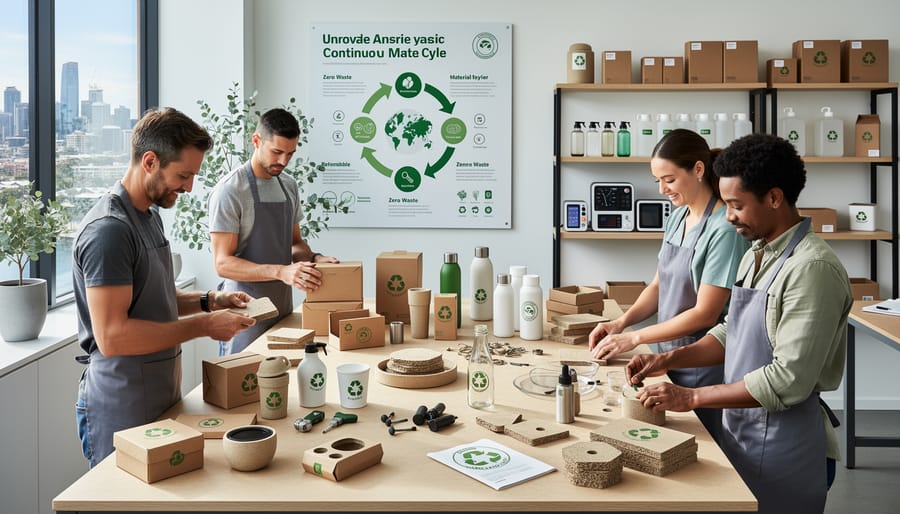
Australian businesses are proving that circularity isn’t just an idea—it’s a profitable reality that’s reshaping entire industries. These pioneering companies show us that closing the loop creates value while reducing waste.
Who Gives A Crap has revolutionised bathroom habits across the country. This Melbourne-born social enterprise manufactures toilet paper from 100% recycled materials, wrapping each roll in paper instead of plastic. But their circular approach extends further: they donate 50% of profits to build toilets in developing communities, addressing sanitation issues while keeping waste out of landfills. Since launching in 2012, they’ve diverted tonnes of paper waste from disposal and delivered products in recyclable cardboard boxes that customers often repurpose.
Upparel tackles fashion’s massive waste problem head-on. This Australian company collects unwanted clothing and textiles—items typically destined for landfill—and redirects them through circular pathways. Wearable pieces find new homes through charity partners, while damaged textiles transform into industrial rags, insulation, or are broken down into fibres for new products. With Australians discarding 800,000 tonnes of clothing annually, Upparel’s collection bins and workplace programs make textile circularity accessible to communities nationwide.
APCO (Australian Packaging Covenant Organisation) members are reimagining packaging through circular design. Companies like Pact Group are creating packaging from recycled plastics, ensuring materials cycle back into production rather than becoming single-use waste. These initiatives demonstrate that circular business models work financially while protecting our environment—proof that Australian innovation is leading the way toward a regenerative economy.
Community-Led Circular Solutions
Across Australia, communities are taking circularity into their own hands through grassroots initiatives that keep resources in use and build local resilience. Repair Cafés have sprung up in suburbs from Brunswick to Byron Bay, where volunteers with soldering irons and sewing machines help residents fix everything from toasters to torn jeans. These gatherings prevent perfectly repairable items from landfill while fostering skills and connection.
Tool libraries are gaining traction too, with members borrowing drills, lawn mowers, and party supplies instead of buying items used once a year. Brisbane’s Library of Things and similar initiatives in Sydney and Melbourne demonstrate how sharing economy models reduce consumption while strengthening neighbourhood ties.
Food waste programs are making remarkable impacts. Community gardens transform organic scraps into compost, while ShareWaste connects households generating food waste with neighbours who have compost systems or chickens. Groups like OzHarvest and FareShare rescue surplus food, redirecting tonnes from waste streams to those experiencing food insecurity.
These initiatives prove that circularity isn’t just about policy and industry—it’s powered by everyday Australians reimagining how we use, share, and value resources together.
Council Innovation in Waste Management
Australian councils are leading the charge in waste circularity with innovative programs that turn rubbish into resources. The City of Sydney’s food scraps collection has diverted thousands of tonnes from landfill, transforming waste into nutrient-rich compost for community gardens and parks. Meanwhile, Kerbside Recycling Victoria’s advanced sorting facilities now recover up to 95% of recyclable materials, creating local jobs while drastically reducing contamination rates.
In Queensland, several councils have partnered with social enterprises to establish repair cafés and resource recovery centres, where residents can fix broken items or find pre-loved goods. These hubs don’t just reduce waste—they’re building connected communities around circular thinking. Western Australia’s Container Deposit Scheme shows how smart policy creates circular loops, with return rates exceeding 80%. These council-led initiatives prove that circular waste management isn’t just environmentally smart—it’s economically viable and socially beneficial for local communities.
The Economic Opportunity: Jobs, Innovation, and Investment
The circular economy isn’t just good for the planet—it’s increasingly proving to be brilliant for business. Australia stands at the threshold of a significant economic transformation, where waste circularity could inject billions into our economy while creating thousands of meaningful jobs across the country.
Recent analysis suggests that fully embracing circular economy principles could unlock $23 billion in economic value for Australia by 2025. This isn’t a distant dream; it’s already happening. The recycling and resource recovery sector currently employs over 50,000 Australians, and that number is set to grow substantially as we shift from linear to circular systems.
Consider the opportunities emerging right now. Every tonne of waste diverted from landfill creates nine times more jobs than traditional disposal methods. Companies specializing in product refurbishment, repair services, and material reprocessing are experiencing rapid growth. Melbourne-based Close the Loop, for instance, has built a thriving business transforming old printer cartridges and soft plastics into everything from road asphalt to building materials, creating jobs while solving waste challenges.
Investment is flowing toward circular solutions too. Australian venture capital and impact investors are increasingly backing circular startups, recognizing both the environmental imperative and the profit potential. From food waste processing facilities generating renewable energy to innovative textile recycling plants, these ventures are attracting serious capital while addressing pressing waste challenges.
For regional communities, waste circularity presents particularly exciting prospects. Local reprocessing facilities mean jobs stay in the area rather than shipping waste interstate or overseas. Towns like Albury-Wodonga are already benefiting from circular economy hubs that process organic waste, creating employment and valuable soil amendments for local agriculture.
Small businesses are finding their niche too. Repair cafes, upcycling workshops, and sharing platforms create entrepreneurial opportunities while strengthening community bonds. These aren’t just feel-good initiatives—they’re viable businesses meeting genuine market demand from Australians increasingly conscious about waste.
The message is clear: waste circularity represents one of Australia’s most promising economic frontiers, where environmental responsibility and economic prosperity walk hand in hand.
What This Means for Your Household or Business
For Households: Simple Shifts That Matter
You don’t need to overhaul your entire life to participate in the circular economy. Simple, intentional choices in your household can create meaningful impact when multiplied across Australian communities.
Start by thinking before you buy. Choose products designed for longevity and repair rather than replacement. When your toaster breaks or your phone screen cracks, seek out local repair cafes or services before heading to the store. Many Australian councils now host regular repair events where community members share skills and tools, keeping perfectly good items out of landfill while building connections.
Embrace circular programs already available in your area. Return your soft plastics to REDcycle collection points at major supermarkets, take old mobile phones to MobileMuster drop-off locations, and participate in container deposit schemes that now operate in most states. These programs only work when we actively use them.
Finally, become a champion of clean recycling. Contamination remains one of the biggest barriers to effective material recovery in Australia. Rinse containers, keep soft plastics separate from hard plastics, and when in doubt, check your local council’s guidelines. Every household that recycles correctly helps make the entire system more viable and valuable, turning waste streams into reliable resource streams for Australian manufacturers.
For Businesses: Getting Started With Circular Practices
Taking your first steps toward circular business practices might feel daunting, but you’re not alone in this journey. Hundreds of Australian businesses are already discovering that circularity isn’t just good for the planet—it’s good for the bottom line too.
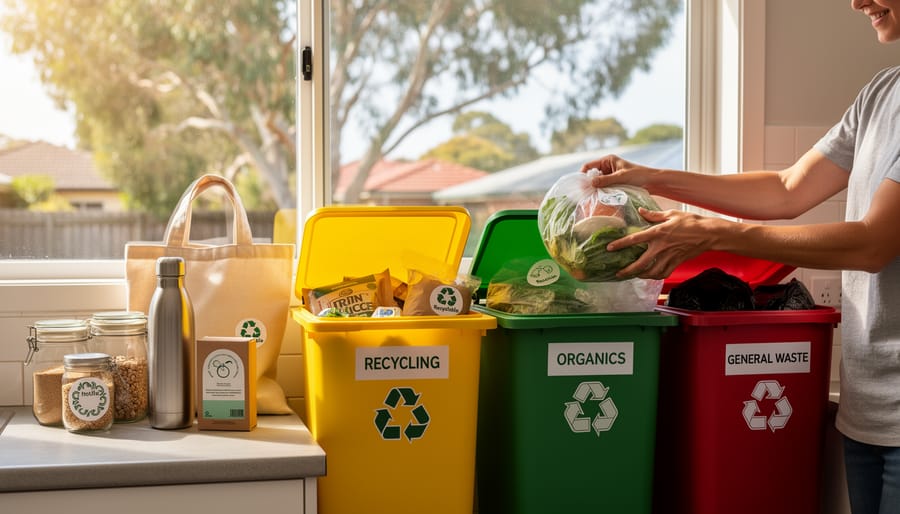
Start with a waste audit to understand what’s really happening in your operations. Many businesses are surprised to discover that up to 30% of what they’re sending to landfill could be reused or recycled. This simple exercise reveals immediate opportunities and helps prioritize where to focus your efforts. Local councils and sustainability consultants across Australia offer free or subsidized audit services to get you started.
Next, explore circular procurement by choosing suppliers who take back products at end-of-life or offer refurbishment services. Melbourne-based café owner Sarah transformed her business by switching to suppliers offering compostable packaging and bulk delivery options, reducing waste by 60% within six months. Ask your current suppliers about circular options—you might be surprised by what’s available.
Product redesign opens exciting possibilities. Consider how your products or packaging could be designed for disassembly, repair, or multiple uses. Even small changes, like switching to modular components or standardized materials, can make a significant difference.
Support is readily available through programs like the NSW Circular Economy Innovation Network and Sustainability Victoria’s business assistance schemes. These initiatives offer workshops, mentoring, and sometimes funding to help you transition. Industry associations are also developing sector-specific guidance, recognizing that what works for manufacturing differs from hospitality or retail.
Remember, circular practices develop over time. Start with one area, learn from the experience, and build momentum. The Australian business community is collaborative—reach out, share challenges, and celebrate wins together.
Challenges We Still Need to Solve
While Australia has made significant strides toward waste circularity, we’re still navigating some genuine hurdles that need our collective attention and innovation. The good news? Each challenge represents an opportunity for communities, businesses, and governments to work together on solutions.
Infrastructure remains one of our most pressing gaps. Many regional areas lack access to advanced recycling facilities, meaning materials that could be recovered often end up in landfill simply due to geography. Even in metropolitan areas, we’re still building out the processing capacity needed to handle the volume and variety of materials we generate. The 2019 National Waste Action Plan identified this infrastructure deficit, but bridging it requires ongoing investment and strategic planning.
Contamination continues to frustrate our best recycling efforts. When non-recyclable items mix with recyclable materials, entire batches can become unusable. This challenge hit home dramatically after China’s National Sword policy restricted imports of contaminated recyclables. We’ve all seen the “wishful recycling” phenomenon, where well-meaning Australians place questionable items in their yellow bins, hoping they’ll be sorted out later. Better education and clearer labeling can help, but it requires sustained community engagement.
Market development presents another critical frontier. Creating a truly circular economy means establishing reliable markets for recycled materials. Australian manufacturers need confidence that recycled content will meet quality standards and be consistently available. Government procurement policies are beginning to prioritize recycled content, creating crucial demand signals, but we need more businesses willing to close the loop by purchasing recycled materials.
The financial equation matters too. Virgin materials often remain cheaper than recycled alternatives, partly because environmental costs aren’t fully factored into pricing. Leveling this playing field through policy innovation and market mechanisms will help circular solutions compete fairly.
These challenges aren’t insurmountable. Communities across Australia are already pioneering solutions, from innovative collection systems to local recycling social enterprises. By recognizing these barriers honestly and tackling them together, we’re building the foundation for genuine waste circularity.
Australia stands at a pivotal moment where waste circularity isn’t just an environmental ideal—it’s becoming an economic imperative and a practical pathway to resilience. The transition from a linear ‘take-make-waste’ model to circular systems offers our nation genuine opportunities: job creation in emerging industries, reduced reliance on imported materials, and meaningful progress toward our environmental commitments. What’s particularly exciting is that this transformation is already underway in communities and businesses across the country, from Melbourne’s innovative resource recovery facilities to regional cooperatives turning agricultural waste into valuable products.
The beauty of waste circularity lies in its scalability. Whether you’re a business rethinking packaging, a council reimagining waste services, or a household making more mindful purchasing decisions, every action contributes to closing the loop. We’ve seen how powerful collective effort can be—community repair cafes, successful container deposit schemes, and businesses thriving on circular principles all demonstrate that change is both possible and profitable.
The question isn’t whether Australia can embrace waste circularity, but how quickly we’ll seize this opportunity together. Your role matters, whether you’re designing systems, advocating for policy change, or simply choosing products with end-of-life in mind. Start conversations in your workplace, support businesses committed to circular practices, and share knowledge within your networks. The circular economy we’re building isn’t a distant vision—it’s taking shape right now, powered by Australians who recognize that our greatest resource might just be the waste we’ve yet to reimagine.