
Every Australian household generates approximately 2.5 tonnes of waste annually, yet up to 60% of what ends up in landfills could be recovered, recycled, or composted. The difference between mounting environmental crisis and genuine progress lies not in grand gestures, but in the sustainable waste management solutions we choose to implement today.
Across communities from Byron Bay to Broome, a quiet revolution is reshaping how we think about waste. Forward-thinking businesses are discovering that sustainable practices don’t just protect our unique ecosystems—they unlock significant cost savings and strengthen customer loyalty. Families are finding that reducing household waste creates healthier homes and teaches children invaluable environmental stewardship. Local councils are proving that circular economy principles can transform entire regions.
The challenge feels overwhelming when you’re standing in front of three different bins wondering which one takes soft plastics. Yet sustainable waste management isn’t about perfection. It’s about consistent, informed choices that collectively create massive impact. When Melbourne’s cafes switched to compostable packaging, when Perth offices implemented comprehensive recycling programs, when Adelaide households embraced bokashi composting—these weren’t perfect solutions, but they were powerful steps forward.
This shift matters urgently. Australia’s landfills are reaching capacity, our oceans face unprecedented plastic pollution, and climate change demands we rethink resource consumption entirely. But here’s the encouraging truth: the solutions already exist, they’re proven effective, and they’re more accessible than ever.
Whether you’re a business owner seeking competitive advantage through sustainability, a homeowner wanting to reduce your environmental footprint, or simply someone who believes we can do better—the strategies ahead offer practical pathways to meaningful change. Together, we’re not just managing waste. We’re building a cleaner, more resilient Australia for generations to come.
Why Traditional Waste Management Isn’t Working Anymore
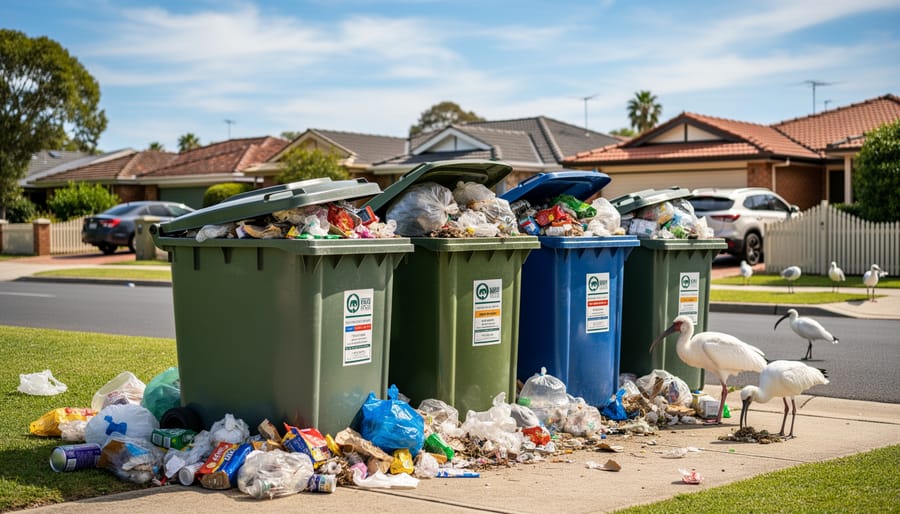
Australia’s traditional “collect and bury” approach to waste is buckling under the weight of modern consumption patterns. What worked for previous generations simply can’t keep pace with our current reality, and the cracks are showing in ways that affect every Australian community.
Consider this sobering fact: Australians generate over 75 million tonnes of waste annually, making us one of the highest waste producers per capita globally. Yet our landfills are reaching capacity at an alarming rate. In New South Wales alone, the Environment Protection Authority warned that Sydney’s remaining landfill capacity could run out within the next 15 to 20 years if current trends continue. Melbourne faces similar challenges, with some metropolitan landfills projected to close within a decade.
The environmental toll extends far beyond space constraints. Australian landfills release approximately 17 million tonnes of carbon dioxide equivalent each year, representing a significant contributor to our national emissions. When organic waste decomposes in landfills without oxygen, it produces methane – a greenhouse gas 28 times more potent than carbon dioxide. This means every banana peel and grass clipping we bury becomes part of our climate challenge.
The economic burden hits close to home too. Australian councils spend roughly 1.5 billion dollars annually on waste management, costs ultimately passed to ratepayers. In regional Victoria, some councils have reported waste management consuming up to 20 percent of their annual budgets. Meanwhile, households face steadily climbing bin collection fees, with some metropolitan areas seeing increases exceeding 30 percent over five years.
Perhaps most troubling is the missed opportunity. When recyclable materials end up in landfills, we’re essentially burying valuable resources that could create jobs and reduce our reliance on virgin materials. Current recycling contamination rates hover around 12 percent nationally, meaning tonnes of potentially recoverable materials are rejected daily.
These challenges demand a fundamental shift toward environmentally conscious disposal and circular economy thinking. The question isn’t whether we need change, but how quickly we can embrace smarter solutions.
The Core Principles of Sustainable Waste Management
The Waste Hierarchy: Prevention First
The waste hierarchy isn’t just an environmental concept – it’s a practical roadmap that flips traditional thinking on its head. Instead of asking “where should this go?”, it prompts us to ask “did this need to exist in the first place?” This five-tier framework prioritises prevention, then reuse, recycling, recovery, and finally, disposal as the absolute last resort.
Prevention sits at the top because avoiding waste altogether delivers the greatest environmental benefit. When Melbourne’s Queen Victoria Market redirected 13 tonnes of unsold produce weekly to community food programs, they demonstrated prevention in action – addressing food insecurity while keeping perfectly good food from bins. Similarly, Bunnings’ packaging-free seed station lets gardeners bring their own containers, eliminating single-use plastic before it enters the waste stream.
Reuse extends product life through repair, refurbishment or repurposing. Community tool libraries across Sydney and Brisbane exemplify this perfectly – members borrow rarely-used items rather than buying new, reducing manufacturing demand and household clutter simultaneously.
Recycling transforms materials into new products, though it requires energy and resources. Australia’s container deposit schemes have achieved remarkable success, with return rates exceeding 80% in some states. However, recycling alone can’t solve our waste crisis – it’s the safety net, not the solution.
Recovery captures energy from non-recyclable waste through controlled processes, whilst disposal in landfill represents system failure. By embracing prevention first, Australian households and businesses can dramatically reduce their environmental footprint whilst often saving money – proving sustainability and practicality go hand-in-hand.
Circular Economy Thinking
Imagine a world where nothing goes to waste – where yesterday’s coffee cup becomes tomorrow’s park bench, and food scraps transform into energy for your home. This isn’t a distant dream; it’s circular economy thinking in action, and Australian innovators are making it happen right now.
Unlike the traditional take-make-dispose model that’s clogging our landfills, the circular economy keeps materials flowing in continuous loops. Products are designed from the start to be reused, repaired, or recycled, eliminating the very concept of waste. Think of it as nature’s blueprint – nothing is wasted in a forest ecosystem, and we’re finally learning to apply that wisdom to our own systems.
Australian businesses are leading this transformation with inspiring results. TerraCycle Australia partners with major brands to recycle traditionally unrecyclable items like coffee capsules and cosmetic packaging, giving these materials new life. In Melbourne, Goterra uses insects to convert organic waste into high-quality fertiliser and animal feed, processing thousands of tonnes that would otherwise rot in landfills. Meanwhile, Samsara Eco in Canberra has developed world-first technology that breaks down plastics at a molecular level, creating virgin-quality materials indefinitely.
The impact extends beyond individual businesses. The City of Sydney has committed to becoming a circular economy by 2030, implementing programs that turn construction waste into road base and capture food waste from restaurants for composting. These initiatives demonstrate that circular thinking works at every scale – from your kitchen bench to entire metropolitan areas.
The beauty of circular economy principles is that everyone has a role to play. Whether you’re choosing products designed for longevity, supporting businesses with take-back programs, or participating in local repair cafes, you’re part of this essential shift from waste to worth.
Proven Solutions That Work in Australian Communities
Organic Waste Composting and Food Recycling Programs
Across Australia, communities are discovering that what once went to landfill can become nutrient-rich soil for tomorrow’s gardens. Organic waste recycling through composting isn’t just environmentally smart—it’s transforming how Australians think about their food scraps.
Council FOGO (Food Organics Garden Organics) programs are leading this change. More than 180 local councils now offer dedicated green bins where residents can dispose of food scraps alongside garden clippings. In South Australia, Port Adelaide Enfield Council diverts over 10,000 tonnes of organic waste from landfill annually, turning it into high-quality compost that residents can purchase at bargain prices. The results speak volumes: households participating in FOGO programs typically reduce their general waste by up to 40 percent.
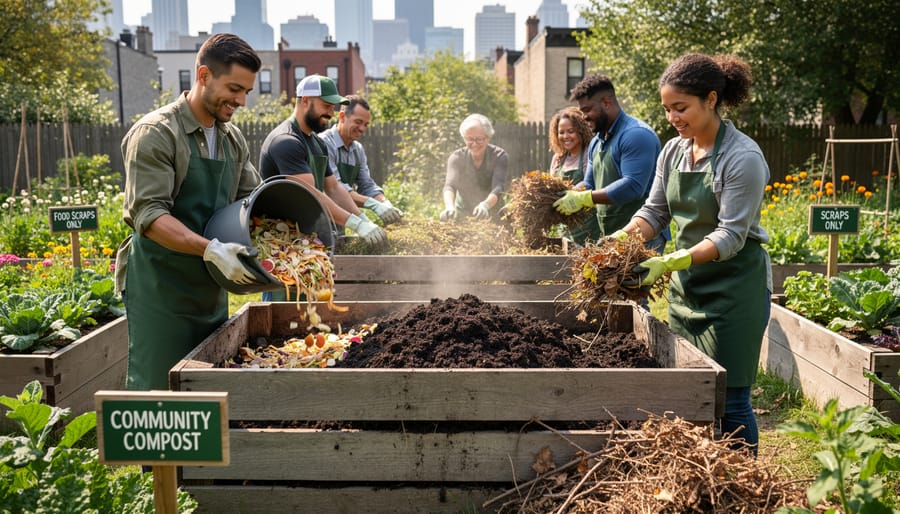
Community composting hubs are sprouting up in neighbourhoods from Perth to Sydney, where residents collaborate on shared systems. Melbourne’s Compost Community has established over 50 sites where locals drop off scraps and collect finished compost for their gardens. These initiatives build connections while reducing waste collection costs.
For those with outdoor space, backyard composting remains incredibly effective. Different composting methods suit various lifestyles—from traditional bins to worm farms and bokashi systems for apartments. Brisbane resident Sarah Chen saved hundreds of dollars annually on soil conditioners while eliminating her food waste entirely through a simple three-bin rotation system.
The message is clear: whether through council programs, community projects, or backyard systems, composting organic waste is accessible, beneficial, and essential for Australia’s sustainable future.
Repair and Reuse Networks
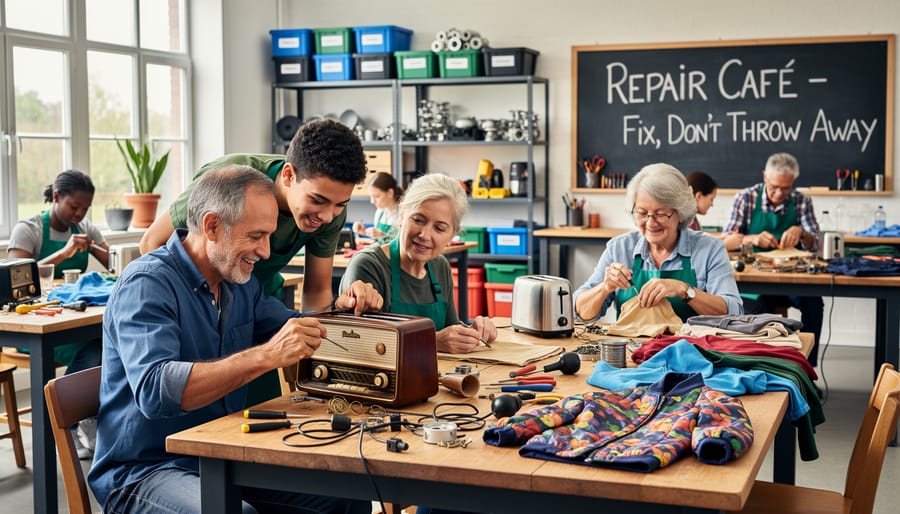
Across Australian suburbs, a quiet revolution is transforming how communities approach consumption and waste. Repair cafes are popping up in community halls from Fremantle to Brunswick, where neighbours gather to fix everything from broken toasters to torn clothing rather than tossing them in the bin. These volunteer-run events pair skilled fixers with locals clutching beloved items, creating connections while diverting tonnes of waste from landfills.
Tool libraries have become the practical solution for those occasional DIY jobs. Instead of purchasing a power drill you’ll use twice a year, members borrow what they need from these sharing hubs. Sydney’s Eastern Suburbs now boasts three such libraries, while Brisbane’s community tool-sharing network continues expanding. This model slashes unnecessary production while making expensive equipment accessible to everyone.
Community swap initiatives are breathing new life into preloved items. Clothing swaps in Melbourne parks see participants exchange wardrobes without spending a dollar, whilst furniture swap groups on local Facebook pages help Australians furnish homes sustainably. These grassroots movements prove that waste reduction doesn’t require sacrifice—it builds stronger communities.
The sharing economy model demonstrates that ownership isn’t always necessary. By participating in these networks, you’re not just reducing waste; you’re investing in neighbourhood resilience and proving sustainable living can be both practical and social.
Advanced Recycling and Material Recovery
Beyond your yellow-lidded bin lies a world of specialized recycling opportunities that many Australians don’t yet know about. These advanced recovery streams are transforming how we handle tricky materials that once had no option but landfill.
Soft plastics present a particular challenge in standard kerbside collection, but dedicated programs are changing the game. Major supermarkets like Coles and Woolworths host REDcycle bins (where available) for bread bags, biscuit packets, and shopping bags. When programs experience capacity issues, many councils now offer alternative collection points. These plastics get transformed into outdoor furniture, bollards, and building materials, giving them valuable new lives.
Electronic waste contains precious metals and hazardous materials that require careful handling. Australia’s e-waste recycling programs accept everything from mobile phones to refrigerators through designated drop-off locations. Many retailers also run take-back schemes when you purchase replacements, making responsible disposal incredibly convenient.
Community resource recovery centres across Australian suburbs now accept specialized items including batteries, light globes, paint, and mattresses. These facilities employ local workers and divert tonnes of material from landfill annually. Some innovative councils even offer collection services for bulky items, bringing convenience directly to your doorstep.
The key is knowing what’s available in your area. A quick search of your council’s website reveals surprising opportunities to recycle items you might currently bin, turning waste challenges into recovery successes.
Zero Waste Precincts and Business Solutions
Australian businesses are proving that zero waste isn’t just an ambitious goal, it’s an achievable reality. From bustling city precincts to individual enterprises, innovative commercial operations are showing the rest of us what’s possible when commitment meets creativity.
Take Melbourne’s Cremorne precinct, where a collaborative approach among businesses has transformed waste management. By sharing resources like organic waste collection and establishing a precinct-wide recycling program, local companies have collectively diverted over 80% of their waste from landfill. The secret? They stopped viewing neighbouring businesses as competitors and started seeing them as partners in sustainability.
Sydney’s hospitality sector is leading similar charge, with restaurants and cafes implementing comprehensive food waste programs. Many now use bokashi bins for immediate composting, while others partner with urban farms to convert their organic waste into fresh produce, creating a circular economy right in the city.
Brisbane’s commercial office towers are embracing smart bin technology that monitors waste levels and composition in real-time, allowing building managers to optimise collection schedules and identify contamination issues before they become problems.
The common thread? These businesses started small, measured their progress, and gradually expanded their initiatives. They’ve discovered that zero waste practices don’t just benefit the environment, they reduce costs, attract environmentally conscious customers, and boost staff morale. Your business could be next.
Smart Technology in Waste Management
Australian councils and communities are embracing smart technology to revolutionise how we manage waste. In cities like Sydney and Melbourne, sensor-equipped bins now alert collection teams when they’re actually full, eliminating unnecessary trips and reducing truck emissions by up to 40%. Brisbane City Council uses GPS tracking and route optimisation software to create more efficient collection schedules, saving fuel and ratepayer dollars.
Smart phone apps are making a real difference too. Many councils now offer waste sorting guides at your fingertips, helping residents identify which bin items belong in with a simple photo scan. This technology is dramatically reducing contamination rates in recycling streams, a persistent challenge that costs Australian councils millions annually.
Data analytics helps waste managers identify problem areas and adjust services accordingly. When certain suburbs show high contamination rates, targeted education campaigns can follow. Some innovative companies are even using AI to sort recyclables more accurately than manual processes, recovering more valuable materials and keeping them out of landfill. This technology isn’t just efficient, it’s building smarter, more sustainable communities across Australia.
Taking Action: Your Pathway to Better Waste Management
Starting at Home: Simple Switches That Make a Difference
The journey to sustainable waste management begins right in your own home, and the good news is that Aussie households are already leading the charge in making meaningful changes. You don’t need a complete lifestyle overhaul to make a real impact—small, consistent switches in your daily routine can dramatically reduce what ends up in landfill.
Start with your shopping habits. Bring reusable bags, containers, and produce bags to farmers markets and supermarkets. Many Australian retailers now offer package-free options, bulk foods, and refill stations for cleaning products. Choose products with minimal packaging or opt for items in recyclable or compostable materials. This simple shift prevents waste before it even enters your home.
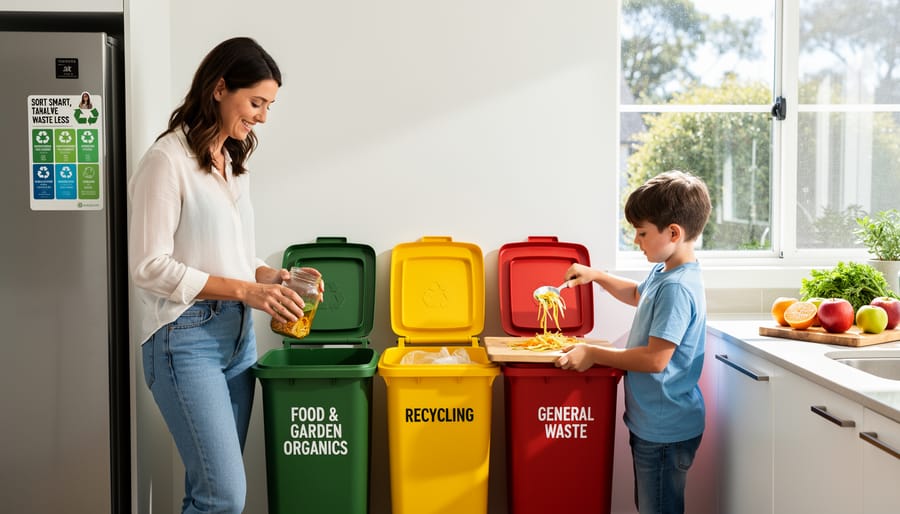
Next, reimagine your bin system. Australian councils are increasingly offering FOGO (Food Organics Garden Organics) bins alongside recycling and general waste. Set up a convenient three-bin system in your kitchen, and take time to understand what belongs in each—contamination is one of the biggest challenges in recycling. Keep a small compost caddy on your benchtop for food scraps, making composting as easy as tossing something in the bin.
Building waste reduction habits also means embracing repair over replacement. That broken appliance? Check if a local repair cafe can fix it. Those worn clothes? Learn basic mending or find a local alterations service. Australians are rediscovering the value in making things last.
Remember, every household’s sustainable journey looks different, and that’s perfectly fine. Start with one change this week, then add another next month. Your efforts contribute to a growing movement of conscious Australians creating lasting environmental change.
Connecting with Your Local Community
Making a real difference in waste management starts right in your own neighbourhood. Across Australia, communities are coming together to tackle waste challenges, and getting involved is easier than you might think.
Your local council is an excellent first port of call. Most Australian councils run comprehensive waste management programs beyond the standard three-bin system. Visit your council’s website or drop into their offices to discover free workshops on composting, e-waste collection days, and community clean-up events. Many councils also offer discounted compost bins and worm farms to residents, plus detailed guides on what goes in which bin for your specific area.
Community gardens and local environmental groups are thriving hubs for waste reduction knowledge. These grassroots organisations often run repair cafes where volunteers help fix broken items, tool libraries for borrowing instead of buying, and swap meets for exchanging unwanted goods. Search social media for sustainability groups in your suburb or check noticeboards at libraries and community centres.
Planet Ark’s Recycling Near You website is a game-changer for finding specialist recycling locations across the country. Whether you need to dispose of batteries, mobile phones, or soft plastics, this resource connects you with nearby drop-off points.
Don’t underestimate the power of conversation either. Chat with neighbours about sharing gardening equipment, organise a street garage sale to keep goods in circulation, or start a WhatsApp group for exchanging tips on reducing waste. When communities work together, sustainable practices become the norm rather than the exception, creating lasting change that ripples far beyond individual households.
Sustainable waste management isn’t just a distant goal – it’s happening right now in communities across Australia. From Melbourne’s composting champions to Perth’s plastic-free pioneers, everyday Australians are proving that meaningful change starts with simple actions. The beauty of this movement lies in its ripple effect: when one household switches to reusable alternatives, neighbours take notice. When one business commits to zero-waste operations, competitors follow suit. This collective momentum transforms individual efforts into powerful community-wide impact.
You don’t need to overhaul your entire life overnight. Start with one manageable step – perhaps auditing your bin contents this week or researching local recycling programs. Choose what feels achievable for your household or business, then build from there. The sustainable waste solutions we’ve explored aren’t revolutionary concepts requiring specialized knowledge; they’re practical approaches that thousands of Australians have already embraced successfully.
Remember, every piece of waste diverted from landfill matters. Every conversation about sustainability plants seeds of change. Together, we’re not just managing waste better – we’re creating a cleaner, more resilient Australia for future generations. Your contribution counts, and your first step starts today.