
The racks of discarded clothing piling up in landfills tell a story most fashion lovers would rather ignore. But across Australia, a new generation of entrepreneurs is rewriting that narrative, proving that style and sustainability aren’t mutually exclusive. These sustainable fashion startups are transforming everything from textile production to retail models, yet they face a persistent challenge that threatens to stall this vital movement: securing adequate funding to scale their impact.
Traditional investors often view sustainable fashion as risky, citing longer development timelines and higher upfront costs compared to fast fashion competitors. Meanwhile, entrepreneurs with groundbreaking solutions for textile waste, ethical manufacturing, and circular design struggle to find backers who understand that profitability and planet-positive practices can coexist. This financing gap isn’t just a business problem; it’s an environmental one. Every delayed launch means more synthetic fabrics polluting our oceans, more exploitative labor practices continuing unchecked, and more greenhouse gas emissions from an industry responsible for roughly 10% of global carbon output.
Yet the landscape is shifting. Impact investors, green venture capital funds, and government grants specifically targeting circular economy initiatives are emerging as powerful allies for Australian sustainable fashion innovators. From Melbourne designers creating biodegradable fabrics to Sydney-based rental platforms extending garment lifecycles, local startups are attracting millions in funding by demonstrating both environmental credentials and strong business models.
Understanding how these financing mechanisms work, which investors are actively seeking sustainable fashion opportunities, and what makes a startup investment-ready can mean the difference between a brilliant idea remaining on the drawing board or becoming the next market disruptor. This guide illuminates the pathways available for entrepreneurs, investors, and community members ready to accelerate Australia’s sustainable fashion revolution.
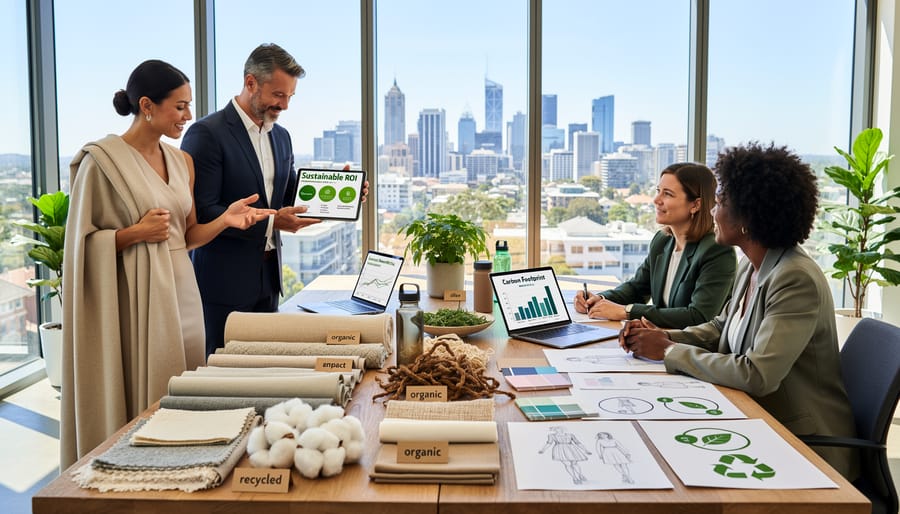
Why Investors Are Finally Taking Sustainable Fashion Seriously
The Real Environmental Cost Driving Investment Decisions
The fashion industry’s environmental footprint tells a story that’s impossible to ignore, and it’s hitting closer to home than many Australians realise. Globally, textile production consumes 93 billion cubic metres of water annually, enough to fill Sydney Harbour 37 times over. Here in Australia, our beloved waterways are paying the price, with textile dye pollutants detected in urban streams across Melbourne and Sydney, affecting both ecosystems and communities who rely on these natural spaces.
The waste crisis is equally staggering. Each year, Australians send approximately 200,000 tonnes of clothing and textiles to landfill, where synthetic fabrics can take up to 200 years to decompose. That’s equivalent to filling the Melbourne Cricket Ground to capacity with discarded clothing every four months. These textiles release methane as they break down, contributing to greenhouse gas emissions that impact our changing climate.
Carbon emissions from the fashion industry account for roughly 10% of global emissions, more than international flights and maritime shipping combined. For Australian startups and investors, these aren’t just environmental statistics; they’re market signals pointing toward massive transformation opportunities.
This environmental urgency is reshaping investment landscapes. Investors increasingly recognise that businesses ignoring these impacts face regulatory risks, consumer backlash, and stranded assets. Meanwhile, sustainable fashion startups addressing water conservation, circular economy models, and carbon-neutral production are attracting capital from those who understand that environmental responsibility and financial returns are becoming inseparable. The question isn’t whether to invest in sustainable fashion, but how quickly we can scale solutions that protect our environment while building profitable businesses.
Australian Consumer Demand Is Reshaping the Market
Australians are leading a powerful shift in how we think about our wardrobes. Recent market research reveals that 73% of Australian consumers now consider environmental impact when making sustainable fashion choices, representing a significant change from just five years ago. More importantly, this isn’t just talk. Australian shoppers are increasingly backing their values with their wallets, with studies showing that 6 in 10 Australians are willing to pay between 10-30% more for clothing produced ethically and sustainably.
This willingness to invest in quality, responsibly-made garments is creating genuine opportunities for local sustainable fashion startups. Young Australians, particularly those aged 25-40, are driving this transformation, actively seeking transparency about where and how their clothes are made. They’re asking questions about fabric origins, worker conditions, and environmental footprints. This informed consumer base is particularly strong in urban centres like Melbourne, Sydney, and Brisbane, where sustainable fashion communities are flourishing. For entrepreneurs, this growing market represents not just a business opportunity, but a chance to be part of a movement reshaping Australia’s fashion landscape for the better.
Where Sustainable Fashion Startups Find Their Funding
Impact Investors and ESG Funds Leading the Charge
The sustainable fashion revolution in Australia is gaining serious financial muscle, thanks to impact investors and ESG funds who understand that profitability and planet-positive practices can go hand in hand.
Impact investing focuses on generating measurable social and environmental benefits alongside financial returns. ESG criteria examine Environmental, Social, and Governance factors to assess a company’s ethical impact and sustainability practices. For fashion startups tackling textile waste, ethical manufacturing, or circular economy models, these investors are becoming essential partners.
Several Australian funds are leading the charge. Impact Investment Group has backed local sustainable fashion ventures, recognising the sector’s potential to transform one of the world’s most polluting industries. Similarly, the Clean Energy Finance Corporation has expanded its scope to support circular economy businesses, including innovative textile recycling startups.
Internationally, funds like Fashion for Good and Closed Loop Partners actively seek Australian fashion innovators with scalable solutions. These investors typically look for startups demonstrating clear environmental metrics, transparent supply chains, genuine circularity, and strong founder commitment to sustainability beyond profit margins.
The emergence of fintech solutions for sustainable businesses has also simplified investment processes, making it easier for ESG funds to connect with promising fashion startups.
What excites these investors most? Businesses that measure their impact rigorously, whether through carbon reduction, waste diversion from landfill, or improved worker conditions. They’re seeking founders who view sustainability not as marketing speak but as fundamental business strategy, ready to scale solutions that could reshape fashion’s future across Australia and beyond.
Government Grants and Green Finance Initiatives
Good news for Australian fashion entrepreneurs committed to sustainability – government support is more accessible than you might think. Both federal and state programs are actively backing ventures that prioritise environmental responsibility, making financing eco-friendly startups increasingly achievable.
The Australian Government’s Entrepreneur’s Programme offers grants up to $250,000 for businesses developing innovative, sustainable solutions. Meanwhile, the Clean Energy Finance Corporation provides tailored financing for ventures incorporating renewable energy or circular economy principles into their operations. State-level initiatives add further opportunity – Victoria’s Business Growth Grant supports sustainable enterprises with up to $50,000, while NSW offers the Sustainability Advantage Program, connecting businesses with expert advice and potential funding pathways.
Tax incentives sweeten the deal considerably. The Research and Development Tax Incentive can return up to 43.5 percent of eligible expenditure for startups innovating in sustainable materials or production methods. Additionally, instant asset write-offs allow immediate deductions for equipment purchases supporting environmental objectives.
Local councils across Australia also run sustainability-focused grants, often overlooked but surprisingly generous. Melbourne City Council’s Sustainable Melbourne Fund, for instance, provides matched funding for circular economy projects. The key is persistence – applications require effort, but these programs exist precisely to support passionate founders like you transforming fashion’s environmental impact while building viable businesses.
Crowdfunding and Community-Supported Models
Australian sustainable fashion brands are increasingly turning to their communities for financial support, and the results have been remarkable. Crowdfunding platforms like Kickstarter and Pozible have become powerful launchpads for ethical fashion ventures, allowing founders to validate their concepts while building a loyal customer base from day one.
Melbourne-based brand Outland Denim successfully raised over $50,000 through crowdfunding to expand their ethical production facilities, which provide fair wages and training to vulnerable women. Their campaign resonated because they shared authentic stories about their artisans, creating an emotional connection that went beyond simply selling jeans.
Similarly, Sydney’s Citizen Wolf used Kickstarter to fund their made-to-order t-shirt range, eliminating waste through custom production. They raised 150% of their target by inviting backers to become part of a manufacturing revolution, offering exclusive designs and behind-the-scenes access.
Community-supported models work particularly well for Australian sustainable fashion startups because they align with our cultural values of mateship and supporting local businesses. When you invest in a crowdfunding campaign, you’re not just purchasing a product – you’re joining a movement. These campaigns often offer early-bird pricing, limited editions, and the satisfaction of knowing you helped launch something meaningful. For emerging designers, this approach provides capital without debt while creating brand ambassadors who champion their vision.
Australian Sustainable Fashion Startups Making Waves
From Waste to Wardrobe: Circular Fashion Success Stories
Australian innovators are proving that yesterday’s waste can become tomorrow’s wardrobe staples, transforming textile trash into fashion treasures through clever circular business models.
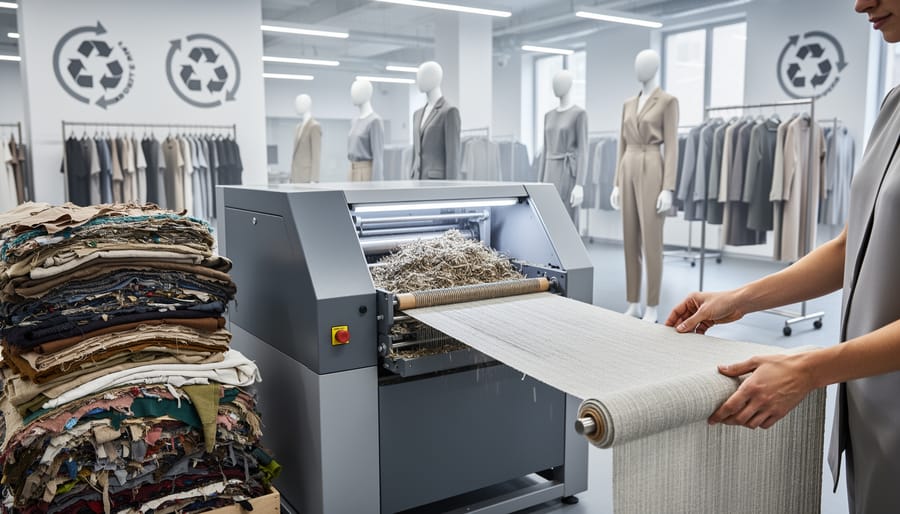
Leading this movement is Upparel, a Melbourne-based startup that’s rescued over 500 tonnes of textile waste from landfill since 2018. Their collection service partners with councils and businesses across Victoria and New South Wales, diverting unwearable clothing into new products or industrial uses. The company secured $1.2 million in seed funding from impact investors including the Australian Ethical Investment’s Future Leaders Fund, demonstrating strong market confidence in waste recovery solutions.
Sydney’s BlockTexx has attracted even greater investment, raising $3.5 million from venture capital firms and government grants to develop their groundbreaking chemical separation technology. This innovation breaks down polyester-cotton blends into raw materials that can be respun into new textiles, solving one of fashion’s trickiest recycling challenges. Their backing came from Clean Energy Innovation Fund and private impact investors seeking scalable environmental solutions.
Meanwhile, The Social Outfit in Sydney combines circular fashion with social enterprise, employing refugee women to create new garments from donated materials. They’ve secured ongoing support through community grants, corporate partnerships with companies like Patagonia, and earned revenue from their popular retail store in Newtown.
These success stories share common threads: they’ve identified specific waste problems, developed practical solutions, and attracted funding from investors who value both environmental impact and financial returns. Their journeys demonstrate that circular fashion isn’t just environmentally sound, it’s increasingly investor-ready, particularly when startups can show measurable waste diversion, clear revenue models, and strong community connections.
Tech-Enabled Transparency and Traceability
In an era where greenwashing concerns run high, Australian sustainable fashion startups are turning to cutting-edge technology to back up their environmental promises with verifiable proof. This transparency isn’t just building consumer trust; it’s becoming a powerful magnet for investment.
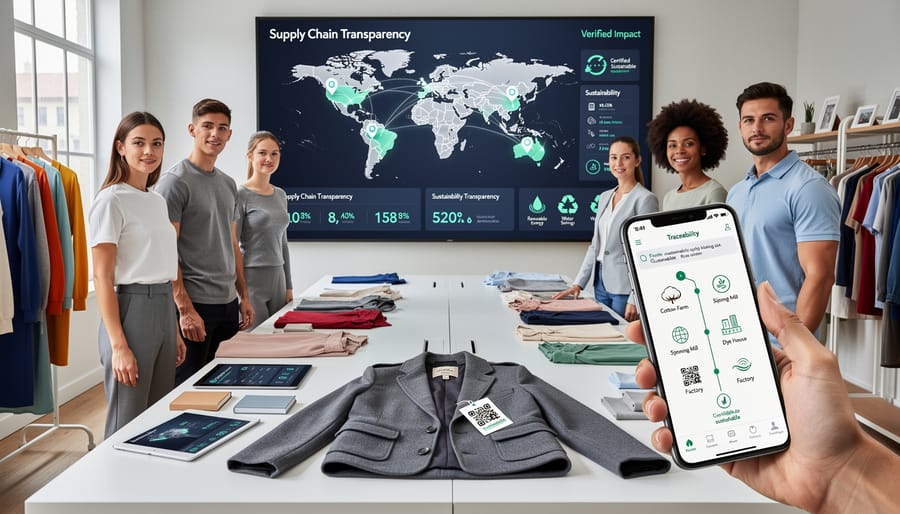
Melbourne-based startup Provenance has pioneered blockchain technology to track garments from raw material to finished product. Every step of the supply chain gets recorded on an immutable digital ledger, allowing customers to scan a QR code and see exactly where their clothing came from, who made it, and under what conditions. This level of transparency attracted significant seed funding from impact investors who recognized that authenticity is the new currency in sustainable fashion.
Similarly, Sydney startup BlockThread has developed an innovative platform that maps entire supply chains, creating digital passports for clothing items. When a Brisbane ethical fashion brand partnered with BlockThread, their investment appeal doubled. Venture capitalists explained that transparency technology dramatically reduces risk by providing concrete evidence of sustainability claims, making these startups far more attractive than those relying solely on certifications or self-reporting.
The technology extends beyond tracking too. Perth’s Circular Systems has developed regenerative textile production methods using agricultural waste, with IoT sensors monitoring environmental impact in real-time. This data-driven approach to sustainability has helped them secure multiple funding rounds, as investors can see measurable environmental outcomes alongside financial returns.
For Australian entrepreneurs in the sustainable fashion space, embracing tech-enabled transparency isn’t optional anymore. It’s becoming the golden ticket to serious investment, proving that in sustainable fashion, showing truly is better than telling.

What Investors Look for in Sustainable Fashion Startups
Proving Your Environmental Impact Metrics
When you’re seeking investment for your sustainable fashion startup, investors want more than just promises—they want proof. The good news is that demonstrating your environmental impact doesn’t require a PhD in environmental science, just commitment to transparent measurement and reporting.
Australian investors typically look for metrics around carbon emissions reduction, water conservation, waste diversion from landfill, and ethical supply chain practices. Start by establishing your baseline: measure your current environmental footprint before implementing sustainable practices, then track improvements quarterly. Tools like the Higg Index, widely used by fashion brands globally, can help you assess everything from material sourcing to manufacturing processes.
Consider pursuing recognised Australian certifications that instantly boost credibility. The Good Environmental Choice Australia (GECA) certification demonstrates your commitment to rigorous environmental standards, while B Corp certification (increasingly popular among Australian fashion startups) evaluates your entire social and environmental performance. For textile-specific credentials, look into Global Organic Textile Standard (GOTS) or OEKO-TEX certifications, both recognised by Australian retailers and consumers.
Your community can become powerful validators of your impact too. Partner with local environmental organisations to conduct independent audits, share your data openly through annual sustainability reports, and engage customers through transparency initiatives. Melbourne’s ethical fashion brands have pioneered this approach, creating online dashboards that track real-time sustainability metrics.
Remember, investors appreciate honesty about challenges alongside achievements. If you’re still working toward certain goals, explain your roadmap clearly. This authenticity builds trust and demonstrates you’re genuinely committed to environmental progress, not just greenwashing.
Building a Business Model That Works at Scale
Here’s the truth: sustainable fashion startups face a unique challenge. You need to prove your business can grow profitably without compromising the environmental values that make you different. Australian investors want to see both green credentials and healthy profit margins.
Start by nailing your unit economics. Calculate the true cost of each garment, including sustainable materials, ethical labour, and your environmental commitments. Brisbane-based startup Outland Denim demonstrates this brilliantly—they’ve shown investors that premium pricing for ethically-made jeans creates sustainable margins while supporting Cambodian artisans. Your numbers need to tell a compelling story: profitability and purpose working together.
Scalability in sustainable fashion requires creative thinking. Can you maintain your environmental standards as you grow from 100 to 10,000 units? Consider modular production partnerships with certified ethical manufacturers, or invest in technology that tracks your supply chain transparency. Melbourne’s Citizen Wolf scaled successfully by using on-demand manufacturing—zero waste, customised products, and compelling economics.
Investors increasingly understand that sustainable business models attract loyal customers willing to pay premium prices. Your customer acquisition cost matters, but so does lifetime value. Sustainable fashion customers typically show 40 percent higher retention rates than fast fashion shoppers.
The key is transparency. Show investors your environmental impact metrics alongside financial projections. Demonstrate how sustainability drives customer loyalty, reduces waste costs, and positions you for long-term success in Australia’s growing conscious consumer market. This isn’t just good ethics—it’s smart business.
The Challenges Sustainable Fashion Startups Face in Securing Funding
Let’s be honest: securing funding for sustainable fashion startups in Australia isn’t always a straightforward journey. While the passion and purpose driving these ventures are strong, they face distinct financial hurdles that conventional fashion businesses typically sidestep.
The most immediate challenge is production costs. Ethical manufacturing, organic materials, and fair wages create a higher price point upfront. A Melbourne-based startup producing organic cotton t-shirts might pay three times more for materials than a fast-fashion competitor sourcing conventional cotton overseas. This reality makes investor presentations trickier when bottom-line comparisons come into play.
Return on investment timelines present another obstacle. Sustainable fashion startups often need longer to scale because they’re building supply chains from scratch, establishing relationships with ethical manufacturers, and educating consumers about why their products cost more. Where a traditional fashion startup might project profitability within 18 months, sustainable ventures realistically need two to three years.
Australia’s limited manufacturing infrastructure compounds these challenges. With most garment manufacturing moved offshore decades ago, finding local ethical production facilities is genuinely difficult. Startups either invest heavily in establishing their own production or navigate complex overseas partnerships that align with their values.
Despite these barriers, successful Australian sustainable fashion startups have found ways through. Many have tapped into green finance options specifically designed for environmental ventures. Others have built strong community support through crowdfunding, turning customers into invested stakeholders from day one.
Brisbane’s Outland Denim exemplifies this persistence. They openly shared their higher costs and longer timelines with investors, emphasizing the social impact alongside financial returns. Their transparency attracted impact investors who valued purpose as much as profit.
The key lesson? These challenges are real, but they’re not insurmountable. Startups succeeding today are those who’ve embraced transparency, sought purpose-aligned investors, and built community support while staying committed to their sustainable vision.
How You Can Support the Sustainable Fashion Finance Movement
The future of sustainable fashion in Australia depends on all of us, and there are meaningful ways you can participate regardless of your background or resources.
As a conscious consumer, your purchasing decisions send powerful market signals. Choose to support Australian sustainable fashion startups by shopping their collections, even if it means buying fewer items of higher quality. Share your discoveries with friends and on social media, helping these emerging brands build the visibility they need to attract further investment. Consider organising clothing swaps in your local community or participating in fashion rental services that challenge the traditional ownership model.
For those with investment capacity, sustainable fashion startups represent an opportunity to align your portfolio with your values. Start by attending pitch events and networking gatherings focused on impact investing. Many platforms now facilitate smaller investments through crowdfunding, making it possible to support sustainable ventures without requiring massive capital. Before investing, engage directly with founders to understand their environmental metrics and long-term vision.
Community supporters play an equally vital role. Volunteer your professional skills, whether in marketing, accounting, or logistics, to help startups overcome resource constraints. Local councils and business networks can advocate for dedicated sustainable fashion precincts or incubator spaces. Universities and TAFEs might consider partnerships with emerging designers to provide mentorship and facilities.
Finally, use your voice to advocate for policy changes that level the playing field. Support initiatives for transparent supply chain legislation, tax incentives for circular business models, and grants specifically allocated to sustainable fashion innovation. Write to your local representatives, sign petitions, and participate in consultations about fashion industry regulation.
Together, we’re not just supporting businesses; we’re weaving a more sustainable future for Australian fashion, one thread at a time.
The transformation of Australia’s fashion landscape isn’t just possible—it’s already happening, one innovative startup at a time. When sustainable fashion ventures secure the funding they need, they’re not simply launching businesses; they’re reshaping an entire industry that’s been crying out for change. These startups prove that fashion can honour both people and planet, creating garments that tell stories of ethical production, circular design, and genuine environmental care.
What makes this movement particularly exciting is that it’s uniquely ours. Australian sustainable fashion startups are addressing challenges specific to our context—our distance from traditional manufacturing hubs, our diverse climate needs, and our growing community of conscious consumers who refuse to compromise their values for their wardrobe. Every dollar invested in these ventures ripples outward, supporting local manufacturing jobs, reducing textile waste in our landfills, and demonstrating that profit and purpose can walk hand in hand.
But here’s the truth: these startups can’t transform the industry alone. They need us—as customers choosing quality over quantity, as investors backing vision over fast returns, as community members spreading the word about brands doing it right. Whether you’re purchasing your first piece from a sustainable Australian label, mentoring an emerging designer, or simply sharing their story with friends, you’re part of this revolution.
The future of fashion is being stitched together right now, and every Australian has a thread to contribute.