
Your electricity bill doesn’t have to climb 30% year after year while the planet heats up. Australian households now have unprecedented access to renewable energy technologies that slash power costs and carbon emissions simultaneously—and you don’t need a six-figure budget to start.
The transformation begins with understanding which solutions match your home’s specific needs and your financial capacity. Solar panels remain the cornerstone for most Australians, with average system costs dropping below $4,000 after government rebates in many states. When paired with battery storage, households can achieve 70-90% energy independence, insulating themselves from volatile grid prices while supporting a cleaner energy future.
But green energy extends far beyond rooftop solar. Strategic efficiency upgrades—LED lighting, modern insulation, smart thermostats—often deliver the fastest return on investment, sometimes reducing consumption by 40% before you generate a single watt. Heat pump systems can replace gas heating and cooling with technology five times more efficient than traditional methods. Even renters and apartment dwellers have options through community solar programs and portable solutions gaining traction across Melbourne, Sydney, and Brisbane.
The financial case strengthens monthly as fossil fuel prices rise and renewable technology costs fall. State-based rebate schemes, interest-free loans, and feed-in tariffs make the transition increasingly accessible. Whether you’re motivated by bill shock, climate concern, or energy security, the right combination of solutions exists for your situation—and the perfect time to assess your options is now, before the next price hike hits your letterbox.
Why Green Energy Matters More Than Ever for Australian Homes
The Real Cost of Traditional Energy in Australia
Most Australian households are feeling the pinch when it comes to energy bills. Over the past decade, electricity prices have risen significantly faster than wages, with some states seeing increases of over 100 percent. For the average family, this translates to thousands of dollars each year simply to keep the lights on and homes comfortable.
Beyond our wallets, traditional energy sources carry an environmental cost that’s increasingly visible across our communities. Coal and gas-fired power generation contributes substantially to Australia’s carbon emissions, while adapting to climate challenges becomes more urgent with each passing summer of extreme heat and bushfire risk.
The encouraging news is that Australian households are uniquely positioned to break free from this cycle. With abundant sunshine, advancing technology, and growing community support for renewable solutions, the shift to green home energy is no longer just an environmental choice. It’s becoming a smart financial decision that puts control back in your hands while reducing your carbon footprint and protecting the future for generations to come.
Australia’s Natural Advantage for Green Energy
Australia truly sits in the renewable energy sweet spot. With some of the highest solar radiation levels on the planet—particularly across Queensland, Western Australia, and South Australia—our sunburnt country receives enough sunlight in just one hour to power the nation for an entire year. That’s not just a statistic; it’s an invitation to harness what nature’s already offering us in abundance.
Beyond our generous sunshine, we’re blessed with vast coastlines perfect for capturing ocean breezes, making wind energy viable even for residential properties in the right locations. Our open spaces mean less shading issues for solar panels, and our relatively stable climate patterns make energy generation predictable and reliable.
For everyday Australians, this natural advantage translates directly into practical benefits. Installing solar panels here isn’t just environmentally sound—it’s financially sensible, with faster payback periods than many other countries. We’re already seeing communities across the continent transform their homes into mini power stations, reducing grid dependence while building resilience against extreme weather events and rising energy costs. The question isn’t whether Australia can lead the renewable energy revolution—it’s whether we’ll seize the opportunity that’s literally shining down on us.
Solar Power: Your Home’s Most Powerful Energy Solution
Understanding Solar Systems That Suit Australian Conditions
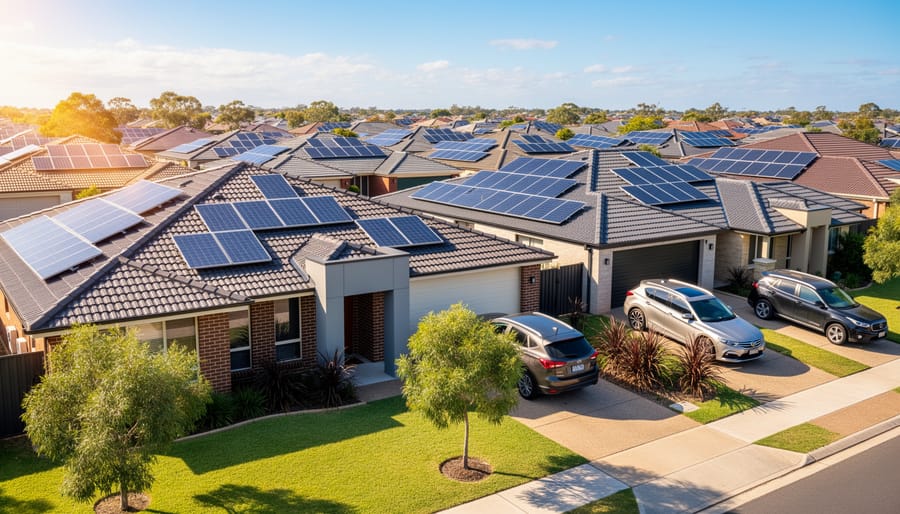
Choosing the right solar system for your home starts with understanding how each type works within Australia’s unique conditions. Our abundant sunshine makes solar particularly effective, but the system that works for a beachside Perth home might differ from what suits a suburban Melbourne property.
Grid-tied systems are the most popular choice across Australia, connecting directly to the electricity network. During sunny days, your panels generate power for immediate use, with excess energy fed back to the grid for a feed-in tariff. When the sun sets, you simply draw from the grid as usual. These systems offer the most affordable entry point into solar energy and work brilliantly in metro areas where grid connection is reliable.
Off-grid systems suit remote properties or those seeking complete energy independence. They rely on battery storage to power your home when panels aren’t generating electricity. While this appeals to many Australians wanting total self-sufficiency, it requires careful planning around battery capacity and backup generators for extended cloudy periods, which can occur even in our sunny climate.
Hybrid systems combine the best of both worlds, connecting to the grid while incorporating battery storage. You can store excess solar energy for evening use, reducing grid reliance while maintaining that safety net during low-generation periods. This flexibility has made hybrid systems increasingly popular as battery technology becomes more affordable and accessible for Australian households.
Real Numbers: What Solar Actually Costs and Saves
Let’s talk numbers, because knowing what solar actually costs makes all the difference when you’re weighing up this decision. Right now, a quality 6.6kW solar system—the sweet spot for most Australian households—typically runs between $4,500 and $7,500 after available rebates. That’s significantly less than a decade ago, and the technology keeps improving.
Here’s where it gets interesting. The Small-scale Technology Certificate rebate can slash around $2,000 off your upfront costs, and many states offer additional incentives. Victorian homeowners might access rebates up to $1,400, while South Australians could tap into subsidised battery schemes when pairing storage with solar.
Feed-in tariffs vary wildly across Australia, from around 5 cents per kilowatt-hour in some states to over 20 cents in others. Your actual savings depend on how much power you use during daylight hours. A typical household exporting 30% of their solar generation and self-consuming 70% might save $1,200 to $1,800 annually on electricity bills.
The reality check? Most Australian systems pay for themselves within 4 to 7 years, sometimes sooner in sunny Queensland or areas with higher electricity rates. After that, you’re essentially enjoying free electricity for the remaining 15-plus years of your system’s life.
One family in Perth shared that their $6,000 system eliminated their quarterly $450 power bills entirely during summer and halved them in winter. That’s real money back in pockets, funding everything from school fees to weekend getaways—while shrinking their carbon footprint.
Making Solar Work for Your Australian Home
Choosing the right solar setup starts with understanding your household’s energy needs and your local climate. In sunny Queensland or Western Australia, you’ll maximize returns on investment, while southern states benefit from quality panels optimized for lower-light conditions. Start by getting at least three quotes from Clean Energy Council-accredited installers—they’re trained to design systems that meet Australian standards and can advise on sizing based on your consumption patterns.
System sizing matters more than you might think. A 6.6kW system suits most average households, but families working from home or those with electric vehicles might need larger installations. Your installer should conduct a proper assessment rather than offering one-size-fits-all solutions. Many Australian communities now share their real-world experiences through local sustainable living networks and events like Sustainable House Day, where you can tour homes with solar systems and ask questions directly.
Maximize efficiency by timing energy-intensive tasks like dishwashing and laundry during peak sunlight hours. Installing a smart meter helps track generation and consumption patterns, letting you adjust habits to capture more free solar power. Remember, the best system is one tailored to your lifestyle and location.
Battery Storage: Capturing Energy for When You Need It Most
How Home Batteries Are Changing the Game
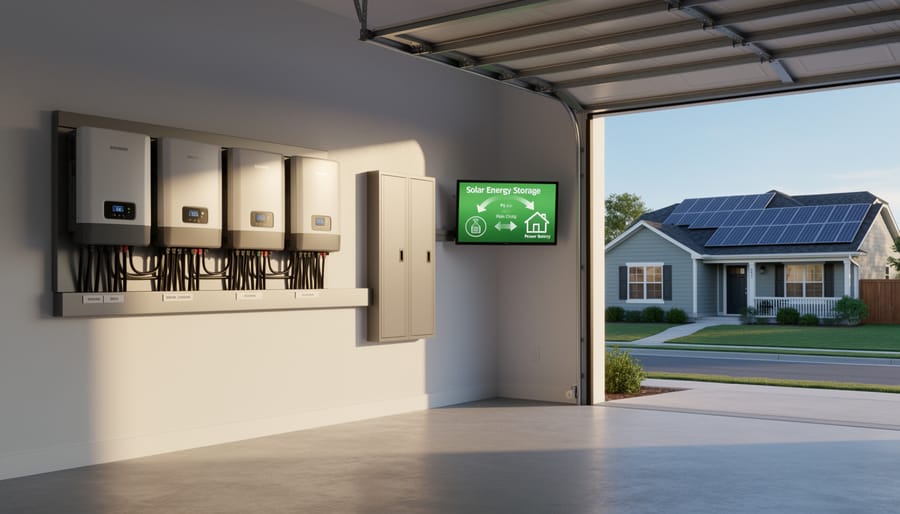
Home battery systems are rapidly becoming the missing puzzle piece in Australia’s renewable energy journey, transforming how we store and use the power our rooftops generate. Think of them as your home’s energy safety net, capturing excess solar during the day when you’re producing more than you need, then releasing it during evening peak times when electricity costs soar.
Modern lithium-ion batteries, like the Tesla Powerwall and locally-supported options such as the Redback Technologies system, can store between 10-15 kilowatt-hours of electricity. That’s typically enough to power an average Australian home through the evening and overnight. For many households, this means reducing grid reliance by 80% or more, particularly valuable as we face increasingly frequent extreme weather events.
The real game-changer? Battery systems shield you from peak pricing periods. In states with time-of-use tariffs, electricity can cost three times more between 4pm and 9pm. By drawing from your battery instead of the grid during these windows, you’re keeping more money in your pocket while reducing strain on our energy infrastructure.
During the 2022 east coast blackouts, homes with battery backup kept their lights on while neighbours went dark. It’s not just about cost savings anymore; it’s about energy security and resilience. With federal and state rebates available, including Victoria’s Solar Homes Battery Rebate offering up to $3,000, joining Australia’s growing community of battery-equipped homes is becoming increasingly achievable for everyday families.
Choosing the Right Battery for Your Household
Selecting the right battery for your home starts with understanding your household’s energy consumption patterns. Take a look at your evening and overnight usage when solar isn’t producing – this gives you a baseline for capacity needs. Most Australian households find batteries ranging from 10-15 kilowatt-hours suitable, though larger families or homes with pools might need more.
Tesla Powerwall 2 remains a popular choice among Aussie homeowners, offering 13.5kWh of usable capacity and seamless integration with existing solar systems. However, local options like Redback Technologies and Sungrow are gaining traction, often at competitive price points between $8,000-$15,000 installed. The beauty of supporting Australian-designed solutions is the local service network and understanding of our unique grid conditions.
Consider whether you need a DC-coupled or AC-coupled system. DC-coupled batteries connect directly to your solar panels and are typically more efficient for new installations, while AC-coupled systems offer flexibility if you’re retrofitting to existing solar. Your installer can guide you based on your setup.
Government incentives make batteries increasingly affordable. Victoria’s Solar Battery Rebate offers up to $1,400, while South Australia provides subsidies for eligible households. These programs reflect growing recognition that home batteries strengthen grid stability during peak demand periods.
Integration matters too. Look for batteries with smart monitoring apps that show real-time energy flows and allow you to optimize charging patterns. Some systems even participate in virtual power plants, where your battery helps stabilize the grid during emergencies while earning you credits. It’s community resilience in action.
Smart Energy Efficiency: The Foundation That Multiplies Your Savings
Insulation and Design for Australian Climates
Australia’s diverse climate zones demand tailored approaches to home design and insulation. What works brilliantly in Darwin’s tropical humidity won’t suit Melbourne’s four-seasons-in-a-day weather, and understanding these differences is the foundation of energy-efficient home design.
In northern regions, focus on ventilation and shade rather than heavy insulation. Cross-ventilation, high ceilings, and strategic eave placement can dramatically reduce cooling costs. Communities in Cairns and Darwin are rediscovering traditional Queenslander design principles, which naturally manage tropical heat without excessive air conditioning.
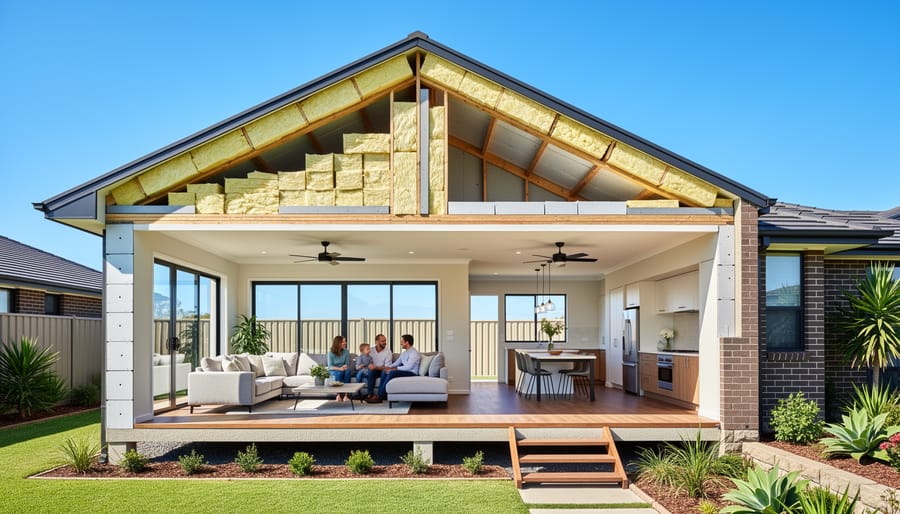
Southern states benefit from comprehensive insulation in ceilings, walls, and floors. Homes in Tasmania, Victoria, and southern NSW should target R4.0 or higher ceiling insulation to retain winter warmth. Double-glazed windows make a significant difference where winter temperatures regularly drop below 10 degrees.
Passive design principles work everywhere. North-facing windows in living areas capture winter sun, while appropriate eave depths block harsh summer rays. Thermal mass, like concrete floors or brick walls, absorbs daytime heat and releases it overnight in cooler months.
The best part? Many Australian councils now require energy efficiency ratings for new builds, and renovation grants often prioritize climate-appropriate insulation upgrades. Your investment not only slashes energy bills but increases property value while reducing environmental impact.
Energy-Efficient Appliances That Pay for Themselves
Upgrading to energy-efficient appliances might feel like a big investment upfront, but many Australian households are discovering these smart swaps pay for themselves within just a few years through dramatically lower energy bills. Start with the heavy hitters: your hot water system accounts for roughly 25% of household energy use, so switching to a heat pump or solar hot water system can slash costs significantly. Look for appliances with high star ratings under Australia’s Energy Rating Label system—each additional star can mean substantial savings over the appliance’s lifetime.
Your HVAC system is another game-changer. Modern reverse-cycle air conditioners with 5+ star ratings use far less energy than older units, keeping your home comfortable year-round without the bill shock. When replacing refrigerators, washing machines, or dishwashers, those extra stars genuinely matter for both water and energy conservation.
Here’s the exciting part: Australian state and federal governments offer generous rebates and incentives for energy-efficient upgrades. Victoria’s Energy Upgrades program, NSW’s Energy Savings Scheme, and various other state initiatives can reduce your upfront costs by hundreds or even thousands of dollars. Check your state’s energy authority website to discover what rebates you’re eligible for—many homeowners are pleasantly surprised by the financial support available for making these sustainable switches.
Smart Home Technology for Energy Management
Managing your home’s energy use has never been easier, thanks to smart technology that puts you in the driver’s seat. Across Australia, households are discovering how smart meters, thermostats, and monitoring systems can dramatically reduce energy consumption while keeping comfort levels high.
Smart meters, now being rolled out across most Australian states, provide real-time insights into your energy usage patterns. Unlike traditional meters that simply record total consumption, these intelligent devices show you exactly when and how you’re using electricity, helping you identify energy-hungry appliances and adjust your habits accordingly. Many energy retailers offer accompanying apps that let you track usage from your phone, making it simple to spot unexpected spikes.
Smart thermostats take climate control to the next level by learning your routines and preferences. These devices can automatically adjust heating and cooling based on whether you’re home, the outdoor temperature, and even weather forecasts. For Australian homes where air conditioning can account for up to 40% of energy bills during summer, this technology delivers substantial savings while maintaining comfort.
Home energy monitoring systems provide the complete picture, tracking solar generation, battery storage, and consumption in one dashboard. This visibility empowers you to make informed decisions about when to run major appliances, maximizing self-consumption of solar power and minimizing grid reliance while contributing to Australia’s clean energy future.
Beyond Solar: Alternative Green Energy Options
Small Wind Turbines for Rural Australian Properties
Small wind turbines can complement solar systems in rural Australian properties, but they’re not for everyone. The reality is that most Australian residential locations don’t have consistent enough wind speeds to justify the investment. You’ll need average wind speeds of at least 5 metres per second, typically found on elevated, exposed sites away from buildings and trees.
Before considering wind power, check your local council regulations. Many areas have strict height restrictions, noise limits, and setback requirements. Some councils require development applications for turbines over 10 metres, which can add significant costs and delay installation.
The Australian small wind industry faces challenges that solar doesn’t. Equipment costs remain high compared to solar panels, maintenance requirements are more demanding, and fewer installers have the expertise. A quality system suitable for Australian conditions typically starts around $15,000 for a 3kW turbine, excluding installation and tower costs.
That said, properties in Tasmania, southern Victoria, and elevated NSW regions with consistent winds might find small turbines worthwhile, especially when paired with battery storage. The key is conducting a thorough wind assessment over several months before committing. Community wind projects are emerging as a more viable alternative, allowing rural neighbours to share costs and benefits while supporting regional renewable energy goals.
Heat Pump Hot Water Systems
If you’re ready to ditch your energy-guzzling storage tank, heat pump hot water systems offer a brilliant alternative that’s perfectly suited to Australia’s temperate climate. Unlike conventional electric systems that generate heat directly, heat pumps work like reverse refrigerators, extracting warmth from ambient air to heat your water. This clever technology uses around 60-75% less electricity than traditional systems.
The upfront investment typically ranges from $3,000 to $5,000 installed, which might feel steep. However, Australian households can recoup this through savings of $300-$600 annually on energy bills, meaning payback in roughly 6-8 years. Many states sweeten the deal with generous rebates too. Victoria’s Solar Homes Program and NSW’s Empowering Homes scheme can slash costs by $1,000 or more.
Heat pumps perform exceptionally well in our warmer regions, though efficiency does drop in colder areas below 5°C. For households in Tasmania or alpine regions, consider split systems or models with electric boost elements for those chilly winter mornings.
The beauty of heat pumps extends beyond your wallet. By significantly reducing electricity consumption, a typical family can avoid approximately 2-3 tonnes of carbon emissions yearly. That’s equivalent to taking a car off the road for six months. When you’re joining thousands of Australian households making this switch, you’re part of a collective movement toward energy independence and climate action.
Funding Your Green Energy Transition
Government Rebates and Incentives Across Australia
Good news – making the switch to green energy is more affordable than ever, thanks to generous government support across Australia. Whether you’re installing solar panels, upgrading to battery storage, or improving your home’s efficiency, there’s likely a rebate or incentive waiting to help you take action.
At the federal level, the Small-scale Renewable Energy Scheme provides upfront discounts on solar panel and solar hot water systems through Small-scale Technology Certificates (STCs). These certificates effectively reduce your installation costs by thousands of dollars, with the discount applied automatically by accredited installers. The scheme runs until 2030, though the value decreases gradually each year – another reason to act sooner rather than later.
State and territory governments have stepped up with their own programs tailored to local needs. Victoria’s Solar Homes Program offers rebates up to $1,400 for solar panels, with additional support for batteries and hot water systems. NSW residents can access interest-free loans through the Empowering Homes program for battery installations, while South Australia’s Home Battery Scheme provides subsidies up to $3,000. Queensland homeowners benefit from interest-free loans for solar and battery systems, and the ACT offers generous feed-in tariffs alongside their Sustainable Household Scheme.
Eligibility typically considers household income, property value, and whether you’ve previously claimed rebates. Application processes vary by state but generally require quotes from accredited installers and proof of eligibility. Many installers can guide you through the paperwork, making the process surprisingly straightforward.
Don’t let these opportunities pass by – check your state’s energy department website today to discover what support is available in your area. Your community is already benefiting from these programs, and now it’s your turn.
Community Solar and Collective Buying Power
You don’t have to go solar alone. Across Australia, community energy initiatives are transforming how neighbourhoods access renewable power while slashing costs through collective action. Community solar projects allow renters and apartment dwellers—who can’t install their own panels—to purchase shares in larger solar farms and receive credits on their electricity bills. These schemes democratise access to clean energy, making it achievable for everyone regardless of housing circumstances.
Bulk-buying programs have emerged as powerful tools for reducing upfront costs. Groups like Solar Citizens and various local councils coordinate collective purchasing, negotiating better rates with installers when dozens of households commit together. These programs typically save participants 10-20% compared to individual purchases while ensuring quality through pre-vetted suppliers.
Many neighbourhood environmental initiatives extend beyond solar to include group battery storage and community energy cooperatives. In Adelaide, Melbourne, and regional areas, pioneering communities are proving that when we pool resources and knowledge, renewable energy becomes more affordable and accessible. Joining or starting a collective buying group combines financial benefits with the empowerment of taking climate action alongside your neighbours—turning individual concerns into community solutions.
Taking Your First Step: A Practical Action Plan
Assessing Your Home’s Energy Potential
Before diving into green energy solutions, it’s essential to understand where your home currently stands. Think of an energy audit as a health check for your house—it reveals where you’re losing energy and money, helping you make smart decisions about improvements.
Many Australian households are surprised to discover their biggest energy drains aren’t always obvious. You can start with a simple DIY assessment by walking through your home on a windy day to feel for drafts around windows and doors, checking insulation in your roof space, and reviewing your energy bills for usage patterns. For a more comprehensive picture, consider engaging an accredited energy assessor who can use thermal imaging cameras to identify hidden issues like poor insulation or air leaks.
Once you’ve identified problem areas, prioritize improvements based on the ‘low-hanging fruit’ principle. Quick wins like draught-proofing, LED lighting upgrades, and adjusting your hot water thermostat deliver immediate savings with minimal investment. Medium-term projects might include insulation improvements or upgrading to energy-efficient appliances, while larger investments like solar panels or battery storage can follow once you’ve reduced your overall consumption.
The beauty of this approach is that reducing your energy needs first means you can invest in a smaller, more affordable solar system later—maximizing both your environmental impact and your budget.
Building Your Green Energy Timeline
You don’t need to transform your home overnight. The beauty of green energy solutions is that they can be implemented in stages that suit your budget and circumstances.
Start with the quick wins that cost little to nothing. Switching to an energy provider offering GreenPower options, installing LED bulbs throughout your home, and adjusting your habits around peak electricity times can make an immediate difference. Many Australian households save hundreds annually just from these simple changes.
Your medium-term plan might include a solar panel installation within the next 12-24 months. Use this time to research installers, compare quotes, and investigate available rebates in your state. Meanwhile, consider energy-efficient appliances when your current ones need replacing rather than rushing to change everything at once.
For the long game, think about battery storage or upgrading to a larger solar system as your circumstances allow. Perhaps you’ll join a community solar project or explore heat pump technology for your hot water system.
The key is to start somewhere and build momentum. Every Australian household that makes the transition, even gradually, contributes to our collective energy future while reducing their own costs. Your timeline is valid whether it takes six months or six years.
Your journey toward a greener home starts with a single step, and that step has never been more important or more achievable than it is right now. Whether you’re installing your first solar panel, switching to energy-efficient lighting, or simply becoming more mindful about your energy consumption, you’re joining thousands of Australians who are reshaping our nation’s energy future.
The beauty of green home energy solutions is that no action is too small. Every kilowatt-hour generated from the sun rather than coal, every degree adjusted on your thermostat, every efficient appliance you choose creates a ripple effect. Multiply your choices by millions of Australian households, and we’re talking about transformational change that benefits our environment, our economy, and our energy independence.
Australia stands at a remarkable crossroads. With some of the world’s best solar resources and a growing community of innovators, early adopters, and passionate advocates, we have an extraordinary opportunity to lead the global transition to renewable energy. Your home can be part of this movement.
Start where you are. Connect with your local council about rebate programs, join community solar initiatives in your area, or simply have a conversation with your neighbours about their experiences with renewable energy. The knowledge you’ve gained here is most powerful when put into action.
The future isn’t something that happens to us; it’s something we create together, one home at a time. What will your first step be?