
Start by auditing your bin for one week, writing down everything you throw away to identify your biggest waste sources. Australian households generate approximately 2.5 tonnes of waste annually per person, but this simple tracking exercise reveals exactly where your efforts will have the greatest impact—whether that’s food scraps, packaging, or single-use items.
Replace your five highest-volume disposables with reusable alternatives immediately. Most Aussie families find these culprits are plastic bags, coffee cups, food wraps, water bottles, and produce bags. Swapping just these five items can eliminate up to 1,000 pieces of waste per person each year, and quality reusables available from Australian retailers now last years rather than months.
Establish a home composting or worm farm system for organic waste, which typically comprises 40% of Australian household bins. Council programs across Sydney, Melbourne, Brisbane, and regional areas now offer subsidised compost bins and worm farms, while apartment dwellers can utilise bokashi systems or community gardens. This single change diverts the heaviest component of your waste stream while creating nutrient-rich soil for gardens.
Connect with your council’s specific recycling guidelines and eco-friendly waste management strategies, as rules vary significantly between Australian municipalities. What’s recyclable in Brisbane might be landfill in Perth, and recent changes to soft plastics collection following REDcycle’s closure mean staying informed is essential for effective waste reduction.
These four foundational strategies create measurable results within your first month. The zero waste journey isn’t about perfection—it’s about progress. Every item diverted from landfill represents a win for your household budget, your local environment, and Australia’s collective sustainability goals. Your participation in this growing movement of conscious Australians proves that individual actions, multiplied across communities, drive genuine environmental change.
What Zero Waste Actually Means (And What It Doesn’t)
The Reality Behind the Bin
Every year, Australians send approximately 76 million tonnes of waste to landfill. That’s roughly three tonnes per person, making us one of the highest waste producers per capita in the developed world. Behind our tidy kerbside bins lies a less tidy truth: much of what we discard doesn’t simply disappear.
Our landfills are reaching capacity faster than anticipated, with major cities facing the real possibility of running out of space within the next decade. In New South Wales alone, the state’s landfills are projected to reach capacity by 2030 if current trends continue. Meanwhile, organic waste decomposing in these oxygen-starved environments produces methane, a greenhouse gas 25 times more potent than carbon dioxide.
The ripple effects touch our communities in tangible ways. Councils across Australia are grappling with rising waste management costs, often passed on through increased rates. The collapse of Australia’s recycling industry following China’s 2018 import ban exposed our vulnerability, with recyclables being stockpiled or sent to landfill when processing facilities couldn’t cope.
But here’s the encouraging part: household waste represents a significant portion of this problem, which means we have genuine power to create change. When families in Brisbane reduced their weekly bin output by half through simple swaps, their local waste facility reported measurable decreases in collection volumes. Your individual actions, multiplied across suburbs and cities, create momentum that transforms statistics into solutions.
The Five Rs That Actually Work in Australian Homes
Refuse: Your First Line of Defense
Before you even think about recycling or composting, the most powerful zero waste strategy is simply learning to refuse what you don’t need. This first step prevents waste from entering your life in the first place, and it’s remarkably effective once you build the habit.
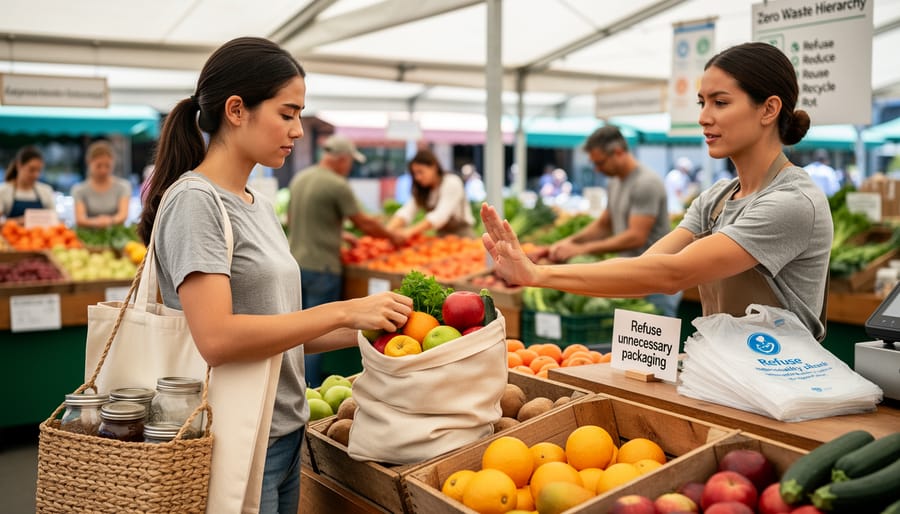
Start with the obvious culprits at Australian shopping centres and cafes. Politely decline plastic bags at checkout, even for single items you can easily carry. Say no to disposable cutlery with your takeaway order—most of us have perfectly good utensils waiting at home or in the car. When grabbing your morning flat white, hand over your reusable cup before the barista reaches for a disposable one. Many Australian cafes now offer discounts for BYO cups, making this an easy win for your wallet too.
Excessive packaging deserves special attention. Choose loose fruit and vegetables over pre-packaged options at Woolies or Coles. Skip the plastic produce bags or bring your own mesh alternatives. When shopping at farmers markets—a growing movement across Australian communities—you’ll find stallholders genuinely appreciate customers who bring their own containers and bags.
The real test comes with freebies and promotional items. That branded pen, sample sachet, or conference tote bag might seem harmless, but these items rarely add value to our lives and quickly become clutter. Practice a simple pause before accepting anything free, asking yourself whether you’ll genuinely use it. This mindful approach transforms refusing from deprivation into empowerment.
Reduce: Trimming the Excess
Before you can refuse or reuse, you need to reduce what’s coming through your door in the first place. For Australians drowning in packaging and impulse purchases, this step is transformative.
Start by auditing your bins for a week. What’s filling them? Single-use plastics from takeaway? Excess food packaging? This simple exercise reveals patterns and helps you develop sustainable waste reduction habits that stick.
Embrace mindful purchasing by asking three questions before buying: Do I need this? Can I borrow or buy second-hand? What happens to it when I’m done? These questions have helped countless Aussie households slash their consumption by half.
Shop smarter by choosing package-free produce at farmers markets, buying in bulk from stores like The Source Bulk Foods, and supporting local businesses that prioritize sustainability. Many Australian communities now have refill stations for cleaning products and pantry staples.
Cancel unnecessary subscriptions and opt out of junk mail through services like the Do Not Mail Register. Small actions compound quickly when you’re intentional about what enters your home, creating space for what truly matters while lightening your environmental footprint.
Reuse: Getting Creative With What You Have
Before rushing to the shops for new items, look around your home with fresh eyes. That glass jar becomes food storage, old t-shirts transform into cleaning rags, and mismatched mugs make perfect desk organisers. Australians are embracing repair culture like never before, with community initiatives popping up nationwide.
Repair Cafes bring together volunteers with fixing skills and community members with broken items. Melbourne, Brisbane, and Sydney host regular events where you can learn to mend everything from clothing to electronics. The Boomerang Alliance reports these gatherings have diverted thousands of tonnes from landfill whilst building valuable repair knowledge.
Tool libraries across Perth, Adelaide, and regional centres let you borrow rarely-used equipment instead of buying new. Why own a drill you’ll use twice a year when you can share resources with neighbours?
Community swap groups thrive on Facebook and apps like Trash Nothing and Givit. These platforms connect people giving away usable items with those who need them. From kids’ outgrown clothing to furniture, one person’s excess becomes another’s treasure.
Learning basic repair skills empowers you to extend product lifespans significantly. YouTube tutorials and local workshops teach darning, appliance troubleshooting, and furniture restoration. Each repair is a small victory against throwaway culture.
Recycle: Doing It Right
Australia’s recycling system varies significantly between states and councils, which can feel confusing but doesn’t have to be overwhelming. Your yellow-lid bin generally accepts hard plastics numbered 1-7, paper, cardboard, glass bottles, and steel and aluminium cans. However, soft plastics like shopping bags, cling wrap, and chip packets cannot go in kerbside recycling—they jam sorting machinery and contaminate entire loads.
The collapse of REDcycle in 2022 left many of us without soft plastic recycling options, though some Coles and Woolworths stores have cautiously reintroduced collection points. Check the Australasian Recycling Label on packaging for guidance, as it clearly shows which bin items belong in or if they’re destined for landfill.
Contamination is recycling’s biggest enemy. A single greasy pizza box or liquid-filled bottle can ruin a whole truck load. Rinse containers before recycling, keep lids on bottles, and when in doubt, throw it out rather than wishfully recycling. State variations matter too—South Australians can recycle items Victorians cannot. Visit your local council website for specific guidelines, as getting it right means your efforts actually make a difference rather than ending up in landfill anyway.
Rot: Composting for Every Living Situation
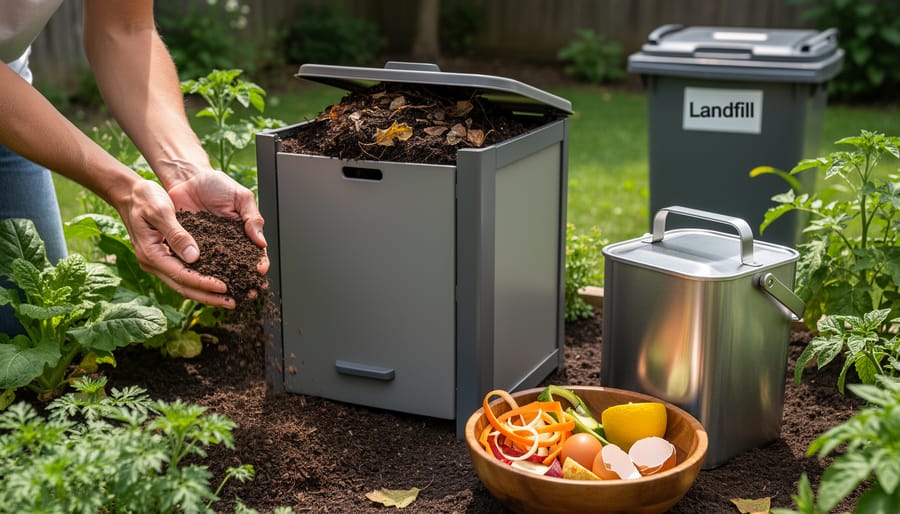
Composting isn’t reserved for those with sprawling backyards. Apartment dwellers across Sydney and Melbourne are discovering bokashi bins fit perfectly under kitchen sinks, fermenting food scraps without odours while creating nutrient-rich soil conditioner for balcony plants. Suburban homes can opt for traditional compost tumblers or worm farms—hungry tiger worms can consume half their body weight in kitchen scraps daily. Many Australian councils now offer subsidised compost bins and workshops to get you started. If you’re truly space-limited, join a community garden where shared composting systems turn neighbourhood food waste into black gold for local veggie plots. Brisbane’s Northey Street City Farm and Adelaide’s community composting hubs demonstrate how collective action transforms organic waste. The key is matching the system to your living situation and committing to diverting organics from landfill, where they create harmful methane.
Room-by-Room Zero Waste Swaps That Save Money
Kitchen: Where Most Waste Happens
Let’s be honest—the kitchen is where most of our waste happens, but it’s also where some of the easiest wins are found. Australians send around 7.6 million tonnes of food waste to landfill each year, and much of it begins right at our kitchen benches.
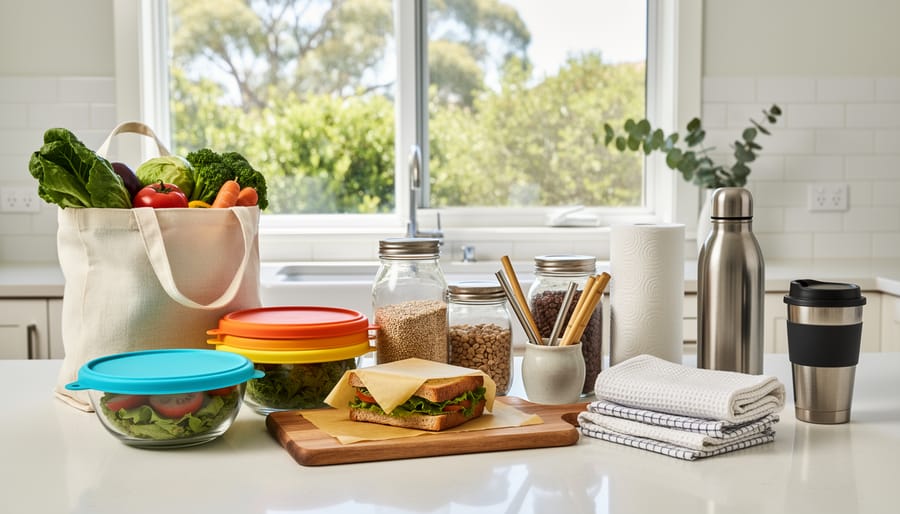
Start with proper food storage to extend produce life. Glass jars and containers work brilliantly for everything from pantry staples to leftover meals. Many community members swear by beeswax wraps as an alternative to cling film, though they do require proper care in our warm climate. Store leafy greens wrapped in cloth in the crisper, and keep herbs fresh in jars of water.
Bulk buying reduces packaging dramatically when you bring your own containers. Stores like The Source Bulk Foods, Naked Foods, and local independent bulk retailers across Australia welcome reusable bags and jars. Start with dried goods like pasta, rice, and nuts before expanding to cleaning products and spices. Even Coles and Woolworths now offer limited bulk options in some locations.
For produce shopping, invest in reusable mesh bags and say goodbye to those flimsy plastic numbers. Harris Farm Markets and many farmers’ markets encourage this practice, often offering small discounts for BYO containers.
Simple swaps make huge differences: swap paper towels for cloth alternatives, switch to bar soap in recyclable cardboard packaging, and replace single-use coffee pods with a French press or stovetop espresso maker. Many Australian brands like Zero Co and Koala Eco offer refillable cleaning products delivered in returnable packaging, making the transition surprisingly simple.
Bathroom: Simple Swaps, Big Impact
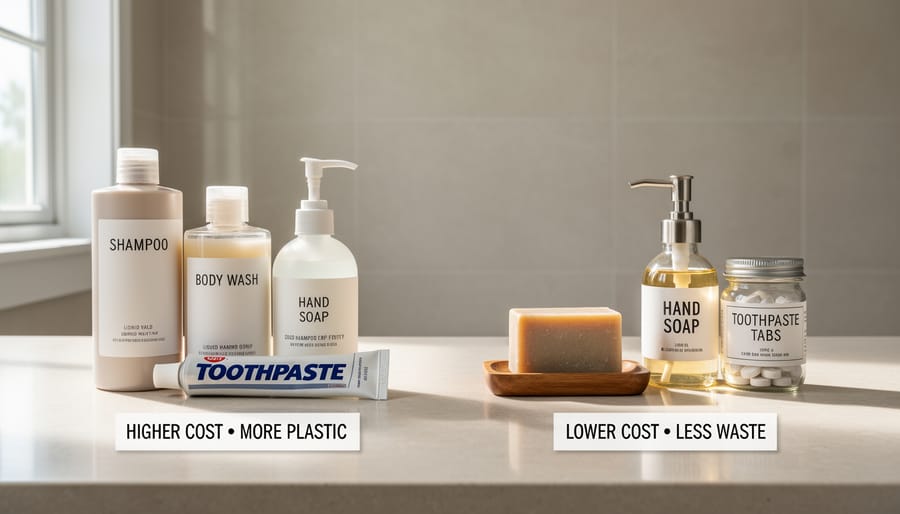
Your bathroom is a goldmine for zero waste wins. Start by swapping liquid soap bottles for package-free soap bars—Australian brands like Ethique and The Australian Natural Soap Company offer shampoo, conditioner, and body wash bars that eliminate plastic entirely. These concentrated bars last longer than bottled alternatives, saving you money while reducing waste.
Ditch disposable razors for a safety razor with replaceable blades. While the upfront cost is higher, you’ll spend less over time and keep countless plastic razors from landfill. For toothcare, switch to bamboo toothbrushes and tooth tablets or powders available from Australian zero waste stores and online retailers.
Making your own products is easier than you’d think. A simple body scrub combines coconut oil with sugar or coffee grounds, while baking soda mixed with coconut oil creates an effective deodorant. For those new to DIY, start with one recipe and build confidence from there.
Period care deserves attention too. Menstrual cups, period underwear from Australian companies like Modibodi, or reusable cloth pads eliminate thousands of disposable products over a lifetime. The investment pays off within months while significantly reducing your environmental footprint.
Remember, you don’t need to replace everything overnight. Use what you have, then choose sustainable alternatives as items run out.
Laundry and Cleaning: Toxic-Free and Waste-Free
Transform your laundry routine by ditching harsh chemicals for simple, effective alternatives already in your cupboard. White vinegar works brilliantly as a fabric softener and removes odours, while bicarb soda tackles stubborn stains naturally. For everyday cleaning, Australian brands like Dirt Company and Koala Eco offer plant-based concentrates in refillable bottles, reducing packaging waste significantly. Many local refill stores across Brisbane, Melbourne, and Sydney now stock cleaning concentrates where you can bring your own containers.
Swap disposable cloths for reusable alternatives like unpaper towels made from organic cotton or bamboo. Old t-shirts and towels make excellent cleaning rags, giving worn textiles a second life before they head to textile recycling. Consider washable microfibre cloths that capture dirt without chemicals, lasting years with proper care.
For laundry, switch to soap nuts, wool dryer balls, or local brands like Kind Laundry that offer plastic-free detergent strips. These compact alternatives eliminate bulky plastic bottles and work in cold water, saving energy too. If you’re near a refillery, bring containers for liquid detergent refills. The collective impact of Australian households choosing these swaps creates meaningful change while keeping toxic chemicals out of our waterways and reducing landfill waste.
Tackling Australia’s Toughest Waste Challenges
Soft Plastics: The REDcycle Lesson and What’s Next
The collapse of REDcycle in November 2022 left many Australians feeling frustrated, with soft plastics piling up at home and no clear recycling pathway. The program’s failure, which saw stockpiles of collected plastics languishing in warehouses, taught us an important lesson: we can’t recycle our way out of the plastic crisis.
Currently, most Australian councils don’t accept soft plastics in kerbside bins, and while new collection trials are emerging in some areas, they’re limited. The good news? This challenge has sparked incredible community innovation. Many local environmental groups now organize plastic-free shopping days and swap meets for reusable produce bags and containers.
Your best strategy is reducing soft plastic use altogether. Choose products with minimal or recyclable packaging, bring your own bags for produce and bulk foods, and support package-free stores and farmers’ markets. For unavoidable soft plastics, some Coles and Woolworths stores are trialing new collection programs, though availability varies by location.
Consider starting a workplace or neighbourhood initiative to buy staples in bulk together, significantly reducing individual packaging. Remember, every piece of soft plastic you refuse is one less item needing a problematic end-of-life solution. Small collective actions create the market pressure needed for genuine systemic change.
E-Waste: Keeping Electronics Out of Landfill
Australia generates over 500,000 tonnes of e-waste annually, with many old devices containing toxic materials and valuable resources. The good news? Our country has excellent e-waste recycling programs making responsible disposal easier than ever.
Most councils offer dedicated e-waste collection days, while major retailers like Officeworks and JB Hi-Fi accept old electronics for free recycling. TechCollect operates drop-off points across Australia for computers, printers, and mobile phones, ensuring harmful materials stay out of landfills and precious metals get recovered.
Before recycling, consider repair options. Community Repair Cafés now operate in most Australian cities, where skilled volunteers help fix everything from smartphones to laptops for free or minimal cost. The Repair It Directory connects you with local repair businesses committed to extending product lifespans.
For working devices, donate to organizations like Tech4Good or Substation33, which refurbish electronics for disadvantaged communities. Even outdated phones can be repurposed through mobile muster programs, which collect old mobiles for charity fundraising and materials recovery. By choosing repair and proper recycling, we’re keeping valuable resources in circulation while protecting our environment.
Organic Waste: From Problem to Resource
Organic waste makes up roughly half of Australian household bins, yet it’s one of the easiest waste streams to divert. Most councils now offer FOGO (Food Organics Garden Organics) programs with green-lidded bins collecting everything from banana peels to pizza boxes. Check your local council website for what’s accepted in your area.
Home composting takes things further, turning scraps into nutrient-rich soil right in your backyard. Melbourne resident Sarah transformed her garden using a simple tumbler system, diverting 3kg of waste weekly while slashing her fertiliser costs. Explore different composting methods to find what suits your space and lifestyle.
No outdoor area? ShareWaste connects people who compost with neighbours who have scraps to share. This growing Australian platform has facilitated over 250,000 connections, proving sustainable solutions thrive on community collaboration. Download the app to find local hosts or become one yourself, transforming organic waste from environmental burden to valuable resource.
Building Your Zero Waste Community
You don’t have to tackle zero waste alone. Across Australia, thousands of people are joining forces to create meaningful change, and connecting with this community can transform your sustainability journey from overwhelming to inspiring.
Start by exploring local groups in your area. Organisations like Boomerang Alliance and Zero Waste Australia coordinate community initiatives nationwide, while grassroots groups often meet through council programs or sustainability hubs. Many suburbs now host regular repair cafes, clothing swaps, and bulk-buying cooperatives that make sustainable living more accessible and affordable.
Online communities offer invaluable support too. Facebook groups like “Zero Waste Australia” and “Plastic Free Australia” connect over 100,000 Australians sharing tips, troubleshooting challenges, and celebrating wins. These platforms are goldmines for discovering local refill stores, ethical suppliers, and region-specific solutions to common waste dilemmas.
The impact of Australian communities are solving the waste crisis grows exponentially when we collaborate. Consider participating in community gardens that reduce food miles, joining beach clean-ups with Tangaroa Blue, or supporting local council initiatives for improved recycling infrastructure.
Businesses can amplify their impact by partnering with organizations like Planet Ark’s Circular Economy Hub or joining B1G1 to give back while reducing waste. Schools and workplaces benefit from sharing resources and creating collective purchasing agreements for sustainable supplies.
Remember, every conversation you have about zero waste plants seeds for change. Share your journey honestly, including the challenges. When neighbours see your compost bin thriving or ask about your reusable coffee cup, you’re building momentum for broader community transformation. Together, we’re creating a cultural shift that makes sustainable living the norm, not the exception.
Your First 30 Days: A Realistic Action Plan
Starting your zero waste journey doesn’t require a complete lifestyle overhaul overnight. Here’s a realistic month-by-month roadmap that thousands of Australian households have successfully followed.
Week One: Audit and Observe
Your first week is simply about awareness. Don’t change anything yet. Keep a waste diary, noting what fills your bins throughout the week. Most Aussie families discover that soft plastics, food scraps, and packaging dominate their rubbish. Take photos of your bins before collection day as a baseline. This isn’t about shame, it’s about understanding your starting point. Many people are genuinely surprised to see how much food waste they generate, particularly after weekend meal prep sessions.
Week Two: The Quick Wins
Now tackle the easy swaps that require minimal effort. Switch to reusable shopping bags for your grocery runs, invest in a quality keep cup for your morning flat white, and start composting your fruit and veg scraps. If you’re in an apartment without garden space, look into community composting programs through your local council or ShareWaste, where neighbours share compost bins. Start refusing plastic straws and cutlery when ordering takeaway. These simple changes typically reduce household waste by 15-20 percent immediately.
Week Three: Kitchen Revolution
Focus entirely on your kitchen this week. Swap glad wrap for beeswax wraps or silicone covers, replace paper towels with cloth alternatives, and start buying pantry staples from bulk food stores. Check out local bulk stores in your area or farmers markets where you can bring your own containers. Set up a proper recycling station with clearly labelled bins so everyone in your household knows what goes where.
Week Four: Building Your Routine
By week four, embed these habits into your daily rhythm. Plan a weekly meal prep session to reduce food waste, establish a regular farmers market routine, and connect with local zero waste communities on social media for ongoing support. If you’ve hit obstacles, troubleshoot them now. Can’t find package-free bread? Try baking or ask your local bakery to fill your own bag. Progress over perfection is the Australian way.
Remember Sarah from our opening, standing in her kitchen surrounded by single-use plastics? Six months into her zero waste journey, her bin now goes out once a month instead of twice weekly. But here’s what matters most: she doesn’t do it perfectly. Some weeks she forgets her reusable cup. Sometimes the convenient option wins. And that’s absolutely okay.
The beauty of Australia’s growing zero waste movement lies not in perfection, but in collective progress. When thousands of households across our cities and regional communities each divert even half their waste from landfill, the environmental impact becomes genuinely significant. You’re not alone in this journey—you’re part of a vibrant community of Aussies reimagining what’s possible.
Start wherever you are. Perhaps it’s swapping to a keep cup this week, finding your local bulk store next month, or joining a community garden by winter. Every choice counts, and every stumble is simply part of learning.
The strategies we’ve explored aren’t meant to overwhelm you—they’re a menu of possibilities to explore at your own pace. Some will suit your lifestyle immediately; others might wait until circumstances shift. What matters is beginning, continuing, and sharing what you discover along the way.
Your zero waste journey starts now, not when conditions are perfect. Choose one strategy from this guide, commit to trying it this week, and notice how it feels. Then share your experience with someone else. Because transformation happens not through individual perfection, but through collective action.
Welcome to Australia’s zero waste community. We’re glad you’re here.