
Picture this: You’re running late for a morning meeting in Melbourne’s CBD. Instead of sitting in gridlock traffic or circling endlessly for parking, you check one app that seamlessly connects you with a train, an e-scooter for the last kilometre, and handles all the payment in one transaction. This isn’t a distant fantasy. It’s Mobility-as-a-Service, and it’s already transforming how Australians move through their cities while slashing carbon emissions.
MaaS platforms integrate public transport, bike shares, car shares, ride-hailing, and micro-mobility options into a single digital ecosystem. Rather than owning a car that sits idle 95% of the time, you access precisely the transport you need, when you need it. For Australia’s growing urban centres, where transport accounts for nearly 19% of our national emissions, this shift represents one of our most practical pathways to a sustainable future.
The environmental mathematics are compelling. When one shared vehicle replaces multiple privately owned cars, we dramatically reduce manufacturing emissions, free up valuable urban space currently devoted to parking, and encourage the use of zero-emission options like electric bikes and scooters. Cities like Sydney and Brisbane are witnessing this transformation firsthand, with integrated transport apps reducing car dependency and cutting individual carbon footprints by up to 30%.
Yet MaaS offers something beyond environmental wins. It promises to rebuild the sense of community connection that car-centric planning has eroded. Shared mobility creates opportunities for chance encounters, supports local businesses previously hidden behind parking lots, and makes sustainable choices the convenient default rather than the virtuous sacrifice. For Australian communities committed to climate action without compromising quality of life, MaaS isn’t just transportation infrastructure. It’s a blueprint for thriving, connected, low-carbon cities.
What is Mobility-as-a-Service? Breaking Down the Basics
Imagine having every transport option in your city available at your fingertips—buses, trains, bike shares, e-scooters, and rideshare services—all seamlessly connected through a single app with one simple payment system. That’s the essence of Mobility-as-a-Service, or MaaS.
Think of MaaS as the Spotify of transportation. Just as Spotify brought together all your music choices in one platform, MaaS integrates diverse transport modes into a unified digital experience. Instead of juggling multiple apps, cards, and payment methods, you simply open one platform, plan your journey, and pay once—whether you’re catching public transport, grabbing a shared bike, or booking a rideshare for the final stretch home.
Here’s how it works in practice: Say you’re traveling from Parramatta to Bondi Beach in Sydney. Your MaaS app might suggest taking the train to Central, then catching a bus to Bondi, with an e-scooter option for the last kilometre to the beach. You’d see real-time availability, compare costs and travel times, and complete the entire journey with seamless transitions—all managed through one platform.
Australian cities are already embracing this concept. Transport for New South Wales has been developing integrated ticketing systems, while Melbourne’s transport network continues expanding digital integration. Private operators like Uber and bike-share companies are increasingly partnering with public transport providers to create more connected experiences.
The beauty of MaaS lies in its simplicity. You’re not locked into owning a car or memorizing complex public transport schedules. Instead, you choose the best option for each journey based on convenience, cost, and yes—environmental impact. This flexibility naturally encourages more sustainable choices, making it easier for everyday Australians to reduce their carbon footprint without sacrificing convenience. When sustainable transport becomes this accessible, we’re all empowered to make better choices for our communities and our planet.

The Environmental Case: Why MaaS Matters for Sustainable Transport
Reducing Private Vehicle Dependency and Emissions
In Australia, transport accounts for approximately 18% of our national greenhouse gas emissions, with private vehicles responsible for the majority of this impact. The typical passenger car emits around 4.6 tonnes of carbon dioxide annually, and with over 15 million registered vehicles on our roads, the environmental cost is substantial. This is where Mobility as a Service becomes a powerful tool for reducing carbon emissions and reshaping how we think about getting around.
MaaS platforms work by making alternative transport options so convenient and affordable that leaving the car at home becomes the easier choice. Rather than defaulting to driving, users can quickly compare options like buses, trains, bike-shares, and ride-sharing through a single app, often finding faster or cheaper alternatives they hadn’t considered. Studies from early MaaS adopters in Helsinki and other cities show that participants reduced their private car use by up to 40% after switching to these platforms.
The environmental benefits multiply when we consider shared mobility options. A single shared car can replace up to 13 privately owned vehicles, dramatically reducing manufacturing emissions and urban congestion. When MaaS users choose public transport or active transport options like cycling, the per-person emissions drop even further.
For Australian communities, this shift represents a genuine opportunity to contribute to climate action while improving our daily lives through reduced traffic stress and lower transport costs.
Optimizing Transport Networks and Reducing Waste
One of the most powerful environmental benefits of MaaS lies in how it uses smart data to reshape our transport networks. Think of it like this: right now, across Australian cities, countless cars sit in traffic with empty seats, buses run half-full on certain routes, and parking spaces consume valuable urban land that could become green spaces or community gardens. MaaS platforms tackle this waste head-on.
By analysing real-time travel patterns across entire communities, these platforms identify where demand actually exists and adjust services accordingly. In Melbourne’s inner suburbs, for example, ride-share integration through MaaS apps has reduced the need for individual car ownership, while ensuring people still reach their destinations efficiently. The data shows which routes need more frequent services during peak times and which can be scaled back, eliminating the environmental cost of running near-empty vehicles.
This optimisation extends to infrastructure planning too. When cities understand how their residents genuinely move around, they can invest in bike lanes, pedestrian zones, and public transport hubs where they’ll actually be used, rather than building more roads that encourage car dependency. The result? Fewer emissions, less congestion, and transport networks that work smarter, not harder, for both people and planet.
Supporting Active and Shared Transport Options
MaaS platforms are game-changers for the greenest transport options—walking, cycling, and shared mobility. By integrating these options alongside public transport, MaaS makes it genuinely convenient to choose low-emission travel for everyday journeys.
Across Australian cities, MaaS apps are connecting users with bike-share schemes, e-scooters, and carpooling services that might otherwise remain hidden or underutilised. A Melbourne commuter might combine a morning cycle-share ride with a tram journey, while a Brisbane resident discovers a convenient carpool option for the school run—all through one platform that shows comparative costs and carbon savings.
The real power lies in making these sustainable choices visible and accessible. When your app shows that cycling to the local shops takes only 12 minutes and costs nothing versus driving, the decision becomes easier. Community-focused MaaS trials in Canberra and Adelaide are demonstrating how bundled subscriptions can include unlimited bike-share access, encouraging regular physical activity while reducing car dependency.
By removing barriers like multiple apps, payment systems, and route planning headaches, MaaS transforms active and shared transport from occasionally inconvenient alternatives into genuinely attractive everyday options for Australian communities.

MaaS in Action: Australian Cities Leading the Charge
Sydney’s MaaS Experiments and Trials
Sydney has emerged as a frontrunner in Australia’s MaaS journey, with Transport for NSW leading several innovative trials that bring seamless, sustainable travel within reach for everyday commuters. The city’s approach focuses on breaking down the silos between different transport modes, making it easier for residents to choose greener options over private cars.
One notable initiative saw the integration of train, bus, light rail, and ferry services with bike-share and ride-share options through a single digital platform. Sydneysiders participating in these pilots could plan, book, and pay for their entire journey using one app, whether they were heading from Parramatta to Bondi or exploring the CBD. The trials also partnered with local councils to include community transport services, ensuring accessibility remained front and centre.
These experiments revealed something powerful: when sustainable transport becomes simple and convenient, people embrace it. Participants reported reducing their car trips by up to 30%, directly cutting emissions and easing congestion. While these trials remain relatively small-scale, they’re paving the way for broader rollouts that could transform how we all move around our harbour city and beyond.
Melbourne’s Approach to Integrated Mobility
Melbourne is quietly becoming a MaaS frontrunner, building on its well-established Myki public transport system. While the city hasn’t yet fully integrated all transport modes into one seamless platform, exciting developments are underway that show real promise for sustainable urban mobility.
The groundwork is already laid with Myki, which covers trains, trams, and buses across Victoria. Transport for Victoria has been exploring ways to expand this infrastructure to include bike-sharing, car-sharing services, and even ride-hailing options. Imagine tapping your Myki card to unlock a shared e-bike for the last mile home, or booking a community car through the same app you use for your morning tram.
What’s particularly encouraging is Melbourne’s community-driven approach. Local councils like Moreland and Yarra have piloted shared mobility hubs where residents can access multiple transport options from one convenient location. These aren’t just government initiatives either – community groups are actively shaping how these services work, ensuring they meet real local needs.
The City of Melbourne’s Transport Strategy 2030 explicitly supports MaaS development, recognising that connected, convenient alternatives to private car ownership are essential for reducing emissions. For everyday Melburnians, this means watching this space as various pilot programs roll out, ready to embrace more integrated, sustainable travel options.

Lessons from Other Australian Cities
Across Australia, cities and regional centres are quietly revolutionising how people move. Brisbane’s partnership with local transport operators has created a single app where residents can plan journeys combining buses, ferries, and bike-share schemes, making car-free commuting genuinely convenient. One local community group reported that members reduced their household transport emissions by 30% simply by having these options at their fingertips.
Perth is testing on-demand shuttle services that connect outer suburbs to train stations, solving that frustrating “last kilometre” problem many of us face. Adelaide’s council has integrated electric scooters and car-share into their journey planner, helping residents discover just how accessible sustainable transport can be.
Regional centres are getting creative too. Ballarat and Wollongong have launched community-driven ride-sharing programmes that connect neighbours travelling similar routes, reducing both emissions and social isolation. These grassroots initiatives prove that MaaS doesn’t require massive budgets or populations to work. What matters is bringing transport options together in ways that genuinely serve community needs, making sustainable choices the easy choice for everyday Australians.
The Barriers We Need to Overcome
Let’s be honest—while Mobility as a Service holds tremendous promise for Australian communities, we’re not quite there yet. Understanding the hurdles we face isn’t about dampening enthusiasm; it’s about working together to clear the path forward.
One of the most significant challenges is our existing infrastructure. Many Australian cities, particularly outside the major metropolitan areas, were designed with cars in mind. Public transport networks in regional centres often run infrequently, making it difficult to create the seamless journey experience that MaaS relies upon. Take Geelong or Newcastle, for instance—while these cities are growing sustainability hubs, their transport options remain limited compared to Sydney or Melbourne. Bridging these gaps requires substantial investment and time.
Data privacy represents another genuine concern for many Australians. MaaS platforms need to collect information about where we travel, when, and how often to provide personalised service. While this data helps optimise routes and reduce emissions, it also raises questions about who has access to our movement patterns and how that information is protected. The good news is that Australian privacy laws are relatively robust, but providers must continue prioritising transparency and user control.
Equity issues deserve our attention too. If MaaS simply becomes another service accessible only to smartphone users with credit cards living in well-serviced suburbs, we’ve missed the point entirely. Rural communities, elderly Australians less comfortable with technology, and lower-income households all risk being left behind. Truly sustainable transport means ensuring everyone can participate, which requires thoughtful design including options for cash payments, phone bookings, and subsidised access.
Finally, regulatory frameworks are still catching up. Different states have varying rules about ride-sharing, e-scooters, and data sharing between transport operators. This patchwork makes it harder for MaaS providers to offer consistent, nationwide services. We need coordinated policy approaches that encourage innovation while maintaining safety and accessibility standards.
These barriers aren’t insurmountable—they’re simply the reality of transforming how an entire nation moves. Communities across Australia are already piloting solutions, testing models, and learning what works in our unique context. By acknowledging these challenges openly, we can tackle them collaboratively rather than being surprised when progress feels slower than we’d hoped.
What You Can Do: Supporting Sustainable Mobility Today
For Individuals and Families
Getting started with MaaS doesn’t require waiting for perfect infrastructure. Many Australians are already embracing sustainable commuting options by creatively combining existing services. Start by downloading apps like TripView, Transit, or your city’s transport planner to map multi-modal journeys. You might discover that cycling to the train station and catching public transport cuts your commute time while ditching car costs.
Consider trialing a car-share membership for occasional trips rather than owning a vehicle. Services like GoGet and Popcar operate in most Australian cities, and combining them with public transport passes can save thousands annually whilst reducing emissions. For families, this might mean keeping one car instead of two, or going car-free entirely in well-connected suburbs.
Advocate for better infrastructure by contacting local councils about bike lanes, improved footpaths, and bus frequency. Australian communities are increasingly successful when they speak up collectively. Join local sustainable transport groups or online communities to share tips and push for change together.
Track your transport choices for a month to identify patterns. Could you walk to the shops instead of driving? Might working from home twice weekly reduce your transport footprint? Small shifts add up. Remember, reducing car dependency isn’t about perfection but progress. Each journey taken sustainably contributes to cleaner air, quieter streets, and a healthier planet for future generations.
For Businesses and Organizations
Australian businesses have a powerful opportunity to drive the mobility transformation while supporting their teams and communities. By embracing Mobility as a Service, organisations can reduce their carbon footprint while creating positive change that extends far beyond their office doors.
Start by supporting employee sustainable commuting through practical initiatives. Consider partnering with local MaaS providers to offer subsidised transit passes or app subscriptions as part of employee benefits packages. Melbourne-based companies like NAB have already introduced incentives for staff who choose public transport, cycling, or carpooling options, demonstrating that corporate commitment makes a real difference.
Partnership opportunities with transport providers can amplify your impact. Work with local councils and transit operators to advocate for improved MaaS infrastructure in your area. Brisbane businesses have successfully collaborated with council initiatives to expand bike-sharing stations near commercial hubs, making it easier for everyone to choose sustainable options.
Your voice matters in shaping transport policy too. Join business networks advocating for MaaS development, participate in council consultations, and share your experiences implementing sustainable transport solutions. When businesses speak up about the need for integrated transport systems, decision-makers listen.
Consider starting small with a workplace mobility survey to understand your team’s transport needs and barriers. This insight helps you design targeted support programs while building a business case for broader advocacy efforts. Remember, every business that champions sustainable transport creates ripple effects throughout the community, inspiring suppliers, clients, and neighbouring organisations to follow suit.
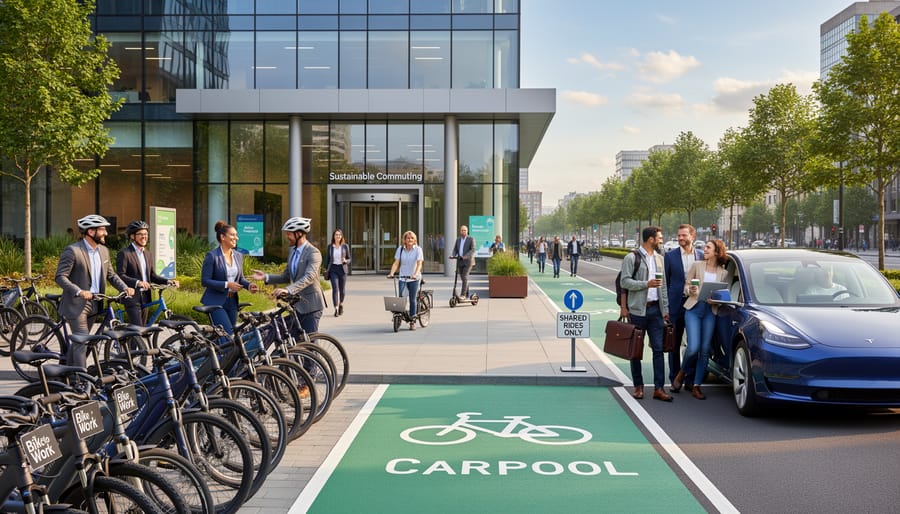
The future of Australian transport is here, and it’s more accessible than you might think. Mobility as a Service represents a genuine opportunity to reshape our cities into cleaner, more connected spaces where getting around becomes simpler while our environmental footprint shrinks. From Sydney’s bustling streets to Perth’s sprawling suburbs, MaaS platforms are already demonstrating that sustainable transport isn’t just about sacrificing convenience – it’s about enhancing it.
The beauty of this transformation lies in its collective nature. Every time you choose a shared e-scooter for that last kilometre, coordinate a carpool through a MaaS app, or opt for public transport over a solo drive, you’re contributing to something bigger. You’re joining thousands of Australians who are actively reducing emissions, easing congestion, and proving that individual choices create powerful ripples of change.
Start small today. Download a MaaS app available in your area, explore the transport options at your fingertips, and challenge yourself to try one sustainable journey this week. Share your experience with friends, encourage your workplace to explore corporate MaaS solutions, and become an advocate for better integrated transport in your community. Together, we’re not just passengers in this movement – we’re the driving force behind Australia’s sustainable transport future.