
Every piece of packaging in your cupboard, garage, or workplace has the potential for a second life. Before that glass jar becomes landfill or that cardboard box enters the recycling stream, consider this: reusing packaging once saves more energy and resources than recycling it multiple times. Across Australia, forward-thinking households and businesses are discovering that packaging reuse isn’t about deprivation or inconvenience; it’s an accessible strategy that strengthens communities while dramatically cutting waste.
Packaging reuse means giving containers, boxes, jars, and wrapping materials another functional purpose before disposal. Unlike recycling, which breaks materials down for reprocessing, reuse keeps items in their current form, extending their usefulness without additional manufacturing energy. A coffee shop replacing disposable cups with a mug library, a family refilling cleaning product bottles at a bulk store, or a business shipping orders in reclaimed boxes are all participating in this circular approach.
The stakes are significant. Australians generate over 2.5 million tonnes of packaging waste annually, with single-use items dominating our bins. Yet the solution doesn’t require perfection or complete lifestyle overhauls. From Melbourne’s container deposit schemes to community swap initiatives in regional Queensland, Australians are already building practical systems that make reuse the easy choice. Whether you’re an individual looking to reduce household waste or a business seeking sustainable operations, packaging reuse offers immediate environmental impact alongside genuine cost savings. The question isn’t whether to participate, but how to start.
Why Australia’s Throwaway Packaging Culture Can’t Continue
The True Cost of Single-Use Packaging Down Under
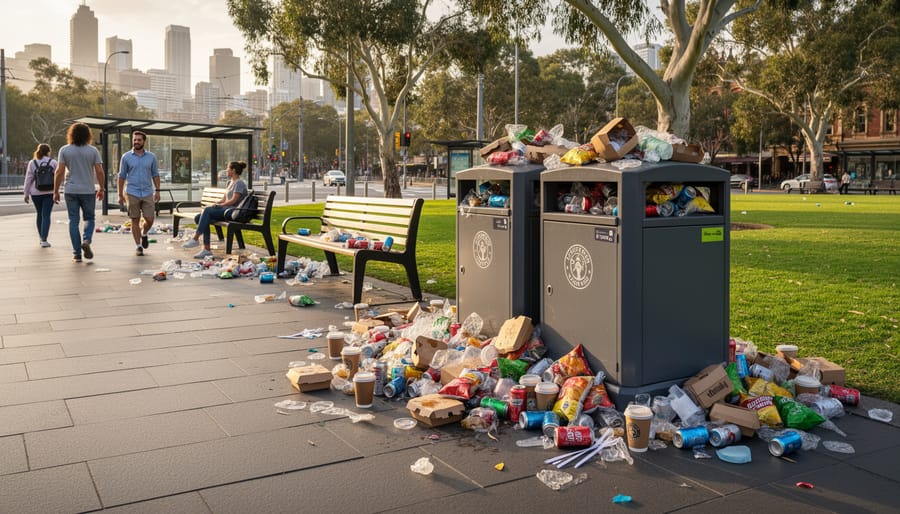
Every year, Australians send approximately 2.5 million tonnes of plastic waste to landfill, with single-use packaging making up a significant portion of this mountain of waste. The true cost goes far beyond overflowing bins at the kerb.
Our landfills are reaching capacity at an alarming rate, with some councils projecting closures within the next decade. This puts enormous pressure on local governments struggling to manage waste, often passing increased costs onto ratepayers through higher fees. The average Australian household now spends an additional $200-300 annually on waste management services, costs that continue climbing as disposal becomes more challenging.
The environmental toll hits particularly close to home when we consider our precious marine environments. Single-use packaging that escapes our waste systems finds its way into waterways, eventually reaching the Great Barrier Reef and our stunning coastal areas. Scientists estimate that over 130,000 tonnes of plastic enters Australian waters each year, threatening marine life and damaging ecosystems that define our national identity. Seabirds, turtles, and marine mammals mistake packaging for food, with devastating consequences.
Beyond the immediate environmental damage, there’s a significant economic opportunity cost. Resources used to create single-use packaging—materials, energy, and water—represent wasted value when items are used once and discarded. By developing stronger waste reduction habits and embracing packaging reuse, we can redirect these resources toward building a more resilient, circular economy that benefits all Australians while protecting the places we love.
What Packaging Reuse Actually Means (And Why It’s Different from Recycling)
The Three Main Types of Reuse Systems
Packaging reuse isn’t a one-size-fits-all solution, and that’s actually its strength. Across Australia, three distinct reuse systems are making waves, each suited to different needs and situations.
Refillable systems bring products back to square one. Think of the Container Deposit Scheme operating across every Australian state and territory, where your empty bottles and cans return to manufacturers for cleaning and refilling. Beyond beverages, innovative retailers like The Source Bulk Foods have built entire business models around customers bringing their own containers to refill with pantry staples, personal care products, and cleaning supplies. It’s catching on in cafes too, with many now offering discounts when you bring your own cup.
Returnable packaging focuses on durable containers that travel back and forth between businesses and consumers. Australia Post’s reusable satchels exemplify this perfectly. Customers receive their online orders in tough, weather-resistant bags, then simply drop them at any post office for cleaning and reuse. Some local veggie box schemes operate similarly, collecting crates from your doorstep when they deliver the next week’s harvest.
Reusable transport packaging operates behind the scenes in supply chains. CHEP’s iconic blue pallets and crates circulate through Australian warehouses and distribution centers, moving goods without generating waste. Woolworths and Coles increasingly use returnable plastic crates instead of cardboard boxes to transport fresh produce from farms to stores, creating a closed-loop system that dramatically reduces packaging waste while protecting products during transit.
Reusable Packaging Success Stories Across Australia
Small Businesses Leading the Reuse Revolution
Across Australia, innovative small businesses are proving that reusable packaging isn’t just feasible—it’s good for business. These enterprises are building loyal customer bases while dramatically reducing waste, offering practical blueprints for others to follow.
In Melbourne, Huskee has transformed the takeaway coffee industry with their cup exchange program. Customers purchase a durable Huskee Cup once, then swap it at any participating café when they’re done. The cafés simply wash and recirculate cups, eliminating thousands of disposables weekly. What started as a small trial now spans hundreds of venues across the country, demonstrating how collaboration between businesses creates systems that individual efforts couldn’t achieve alone.
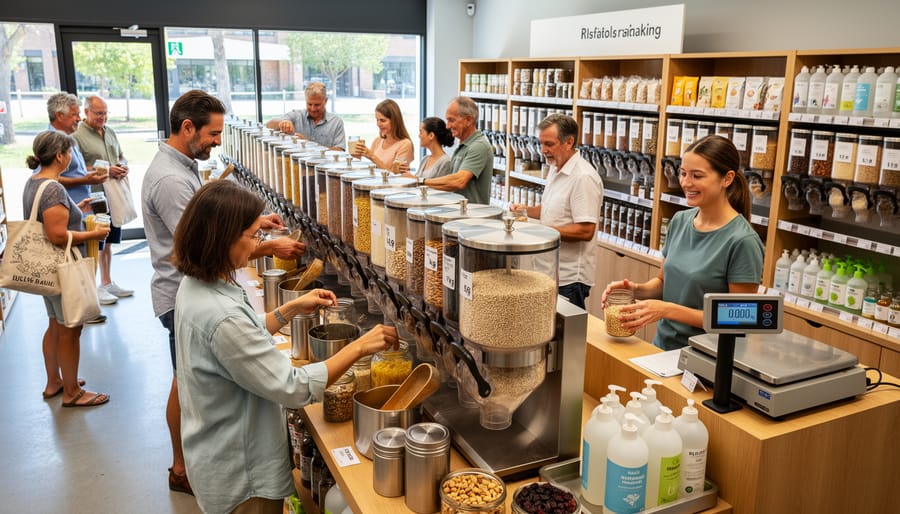
Brisbane’s The Source Bulk Foods operates over 70 stores nationwide, pioneering a bring-your-own-container model for groceries. Customers weigh empty containers, fill them with anything from pasta to peanut butter, then pay only for the product weight. This approach has prevented millions of plastic packages from entering the waste stream. Their success shows that customers genuinely embrace reuse when businesses make it straightforward and accessible.
On a smaller scale, Sydney’s Cornersmith café uses glass jar deposits for takeaway meals. Customers pay a small deposit, enjoy their food, then return jars on their next visit for a refund. This closed-loop system has achieved a remarkable 85% return rate, proving that even modest operations can implement effective reuse programs.
These businesses share common ingredients for success: clear communication with customers, simple return processes, and genuine commitment to their environmental values. They’re demonstrating that packaging reuse strengthens community connections while building commercially viable, sustainable enterprises.
Large-Scale Reuse Programs Making Waves
Across Australia, inspiring reuse initiatives are proving that packaging doesn’t have to be single-use. These programs demonstrate how collaboration between businesses, government, and communities can create real change at scale.
The Container Deposit Scheme operating in all Australian states and territories has become a phenomenal success story. By offering 10 cents per eligible container, the scheme has collected billions of bottles and cans since its expansion, with many containers being cleaned and refilled rather than simply recycled. It’s a brilliant example of how small incentives can drive massive participation.
Major retailers are stepping up too. Woolworths and Coles have both introduced soft plastics collection points in stores nationwide, while independent grocers are embracing refill stations where customers can bring their own containers for pantry staples. These aren’t just token gestures – they’re shifting how Australians shop.
In the corporate space, companies like Who Gives A Crap and KeepCup have built entire business models around reusable packaging. Lush Cosmetics rewards customers who return their empty containers, and Returnr is revolutionizing takeaway food with a deposit-based reusable container system now operating across multiple Australian cities.
Perhaps most exciting are the community-driven milk delivery services making a comeback in suburbs from Sydney to Perth, proving that old solutions can address modern problems. These bottle return programs eliminate thousands of single-use cartons weekly while supporting local businesses.
The momentum is building, and these pioneers are showing us that scalable reuse isn’t just possible – it’s already happening right here in our communities.
How to Start Using Reusable Packaging in Your Daily Life
Smart Shopping Strategies for Less Packaging Waste
Making smarter shopping choices starts before you even enter the store. Across Australia, bulk food stores like The Source Bulk Foods and Naked Foods are transforming how we shop, allowing you to bring your own containers and fill them with exactly what you need. Before heading out, grab clean jars, cloth bags, and reusable containers from home – most stores will weigh them first, then deduct that weight at checkout.
Farmers markets are brilliant allies in reducing packaging waste, with many stallholders happily accepting returnable containers for items like cheese, olives, and fresh produce. In Melbourne, Sydney, and Brisbane, refill stations for household products are popping up in suburban shopping strips, where you can top up cleaning supplies and personal care products in your own bottles.
Container deposit schemes operating across most Australian states offer another incentive to choose reusable options. Return your eligible bottles and cans to collection points, where they’re sorted for proper reuse or recycling, putting money back in your pocket while keeping containers in circulation.
The key is preparation – keep a shopping kit in your car with various sized containers, produce bags, and a cooler bag. Within weeks, you’ll notice dramatically less packaging entering your home, and you’ll be supporting local businesses committed to sustainable practices.
Building Your Personal Reusable Kit
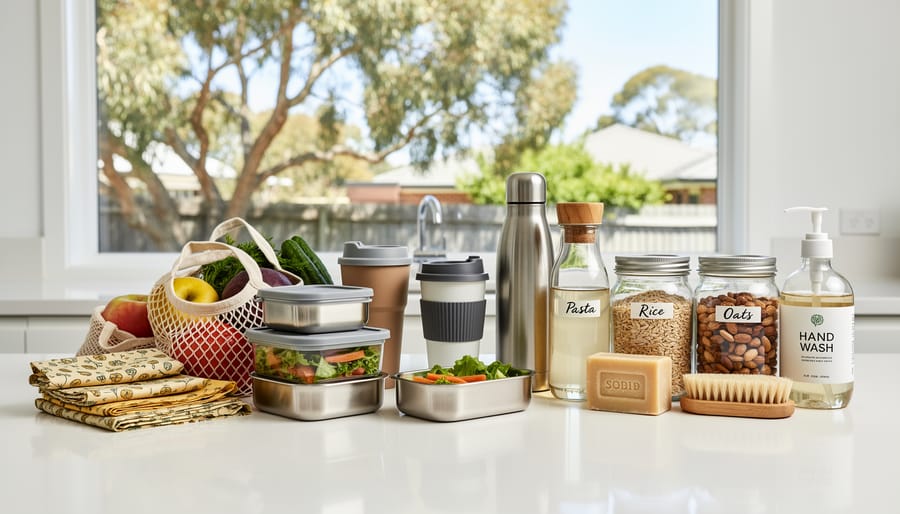
Starting your reusable packaging journey doesn’t require a complete lifestyle overhaul. Begin with a simple kit that covers your daily needs and build from there.
Your essential starter kit should include three to five reusable shopping bags (keep one in your car, one at work, and one in your everyday bag), a sturdy drink bottle, a coffee cup, and a set of lightweight containers for takeaway meals. Many Australian retailers like Kmart, Big W, and The Reject Shop offer affordable options starting from just a few dollars, making it accessible for most budgets.
For produce shopping, consider investing in mesh or cotton bags available at Woolworths, Coles, and independent grocers. These typically cost between five and fifteen dollars for a set and last for years.
Keep a compact cutlery set and reusable straw in your bag for unexpected takeaway situations. Bunnings, local markets, and online Australian retailers stock these items widely.
The upfront investment usually pays for itself within weeks through avoided packaging waste and potential retailer discounts. Many Aussie cafes now offer discounts for customers using their own cups, creating a win-win for your wallet and the environment. As your confidence grows, you’ll naturally discover which additional items suit your lifestyle best.
Implementing Reusable Packaging Systems for Australian Businesses
Choosing the Right Reuse Model for Your Business
Finding the right reuse model depends on your industry and customer behaviour. Australian businesses are already leading the way across diverse sectors.
In hospitality, venues like Returnr partner cafes across Melbourne and Sydney use a deposit-based system for takeaway containers. Customers pay a small deposit, enjoy their meal, and return containers to any participating venue for a full refund. This circular approach works brilliantly for high-volume businesses with regular customers.
Retail stores, particularly those selling bulk foods and personal care products, thrive with customer-owned container models. Brisbane’s The Source Bulk Foods has built a loyal community around bring-your-own packaging, reducing waste while strengthening customer relationships.
E-commerce presents unique challenges, but solutions exist. Companies like Redcycle Box and Loop Australia offer collection schemes where customers receive durable shipping containers, use them, then return via post or drop-off points. This model suits businesses shipping regularly to the same customers.
Consider your customer base, product type, and operational capacity when choosing. Start small with a pilot programme, perhaps in one location or product line. Survey your customers about their interest and gather feedback early. Remember, the most successful reuse models are those that make participation simple and rewarding for everyone involved.
Overcoming Common Barriers and Concerns
Transitioning to reusable packaging systems might feel daunting, but Australian businesses are proving these challenges are entirely surmountable. Let’s tackle the main concerns head-on.
Hygiene worries often top the list, yet the solution is straightforward: establish robust cleaning protocols. Melbourne’s ReturnR program sanitises containers using commercial-grade dishwashers and food-safe processes that exceed health standards. Their transparent approach has earned customer trust and regulatory approval, demonstrating that reusable packaging can be even more hygienic than single-use alternatives when proper systems are in place.
The logistics puzzle – collecting, cleaning, and redistributing containers – requires planning but isn’t insurmountable. Brisbane’s Loop initiative partnered with existing delivery routes to create an efficient return system. Customers simply leave empty containers at their doorstep during the next delivery, making participation effortless. This integrated approach minimises additional transport costs while maintaining convenience.
Customer acceptance has exceeded expectations when businesses communicate the environmental benefits clearly. Café chains like Huskee report that 89% of customers embraced their reusable cup program once staff explained the positive impact. Starting with enthusiastic early adopters creates momentum that draws others in naturally.
Upfront costs for containers and infrastructure can seem significant, but viewing them through the lens of affordable waste management reveals long-term savings. Sydney’s Returnr calculated that businesses recover their initial investment within 18 months through reduced waste disposal fees and eliminated packaging purchases. Government grants and shared container pool systems further reduce financial barriers, making reusable packaging accessible for businesses of all sizes.
The Future of Packaging Reuse in Australia
Policy Changes and Support Programs on the Horizon
Australia is making meaningful strides toward supporting packaging reuse through practical policy frameworks and collaborative programs. The Australian Packaging Covenant Organisation (APCO) has established targets requiring 100% of packaging to be reusable, recyclable, or compostable by 2025, with many businesses already embracing reuse models to meet these goals.
State governments are stepping up too. Victoria’s Container Deposit Scheme has expanded beyond beverage bottles, while several councils across New South Wales and Queensland now offer grants for businesses implementing reuse systems. These initiatives complement existing community waste solutions that demonstrate how collective action creates lasting change.
The upcoming National Plastics Plan includes provisions for supporting refill stations and reusable packaging infrastructure in retail spaces. Meanwhile, industry-led programs like the Australian Food and Grocery Council’s voluntary commitments are helping major retailers transition to reuse models without waiting for mandates.
For everyday Australians and businesses, these changes mean more accessible options are coming. From standardised container systems to financial incentives for participating businesses, the policy landscape is creating opportunities rather than obstacles for those ready to embrace packaging reuse.
The time to embrace packaging reuse isn’t somewhere in the distant future – it’s right now, and communities across Australia are already proving what’s possible. From Brisbane’s thriving container refill networks to Melbourne’s business packaging swap initiatives, Australians are demonstrating that reuse isn’t just an environmental choice, it’s a practical, economical, and deeply satisfying way to reshape our relationship with the things we use every day.
You’ve seen throughout this article that packaging reuse doesn’t require perfection. It asks only that we start somewhere. Whether you’re rinsing out a jar for tomorrow’s bulk store visit, a café owner trialling reusable takeaway containers, or a business exploring returnable shipping systems, every action creates ripples. When your neighbour sees you carrying reusable containers, when your customers appreciate sustainable options, when your local council expands collection programs because of community demand – that’s collective power in action.
The opportunity before us is remarkable. Australia sends millions of tonnes of packaging to landfill annually, yet much of it could circulate through our economy again and again. Each piece we choose to reuse represents resources conserved, waste prevented, and a small vote for the kind of future we want to build together.
Your next step doesn’t need to be grand. Choose one reusable option this week. Support one business making sustainable choices. Share one idea with your community. Together, these seemingly small decisions become the foundation of genuine change, and that’s something worth getting excited about.