
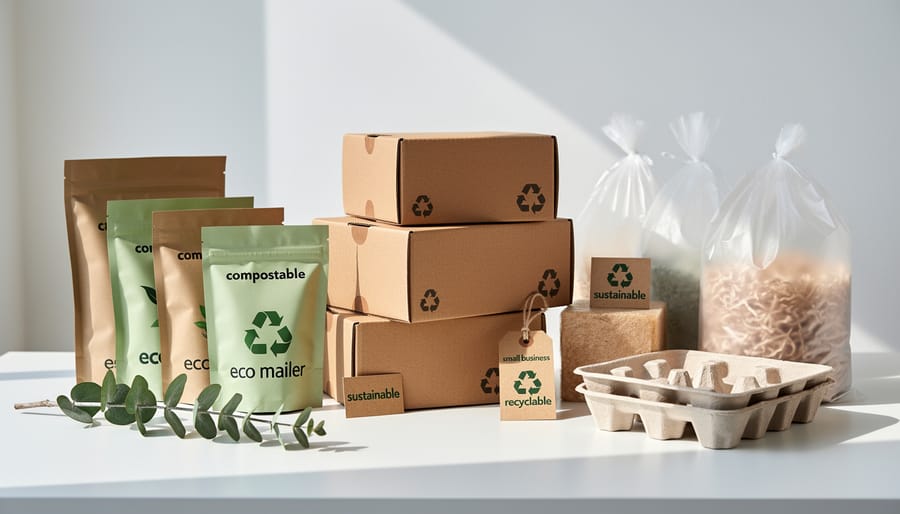
Switch to compostable mailers made from cornstarch or recycled paper instead of plastic poly bags—they break down within 180 days in commercial composting facilities and cost only marginally more than conventional options. Australian suppliers like BioPak and Hero Packaging offer bulk discounts that make the transition affordable even for businesses shipping fewer than 100 orders monthly.
Replace bubble wrap and polystyrene peanuts with shredded cardboard from your own waste stream or mushroom-based packaging materials that protect products just as effectively while decomposing naturally. Companies across Melbourne and Sydney report saving up to 30 percent on void fill costs by repurposing their cardboard boxes rather than purchasing new materials.
Choose recycled cardboard boxes with minimal printing—plain kraft boxes with a simple stamp convey authenticity that Australian consumers increasingly value. Research from Planet Ark shows 83 percent of shoppers prefer businesses using sustainable packaging, and many will pay extra for products that arrive in earth-friendly materials.
Partner with local suppliers to reduce transportation emissions and support the circular economy in your region. Queensland and Victorian businesses have formed cooperative purchasing groups that negotiate better rates on eco-friendly packaging while building community connections that often lead to cross-promotional opportunities.
The packaging choices you make today directly impact both your environmental footprint and your brand reputation. Small businesses across Australia are discovering that sustainable packaging isn’t just good ethics—it’s smart business that attracts loyal customers, reduces waste disposal costs, and positions your company as a leader in the growing conscious commerce movement.
Why Your Packaging Choices Matter More Than Ever
What Australian Customers Actually Want
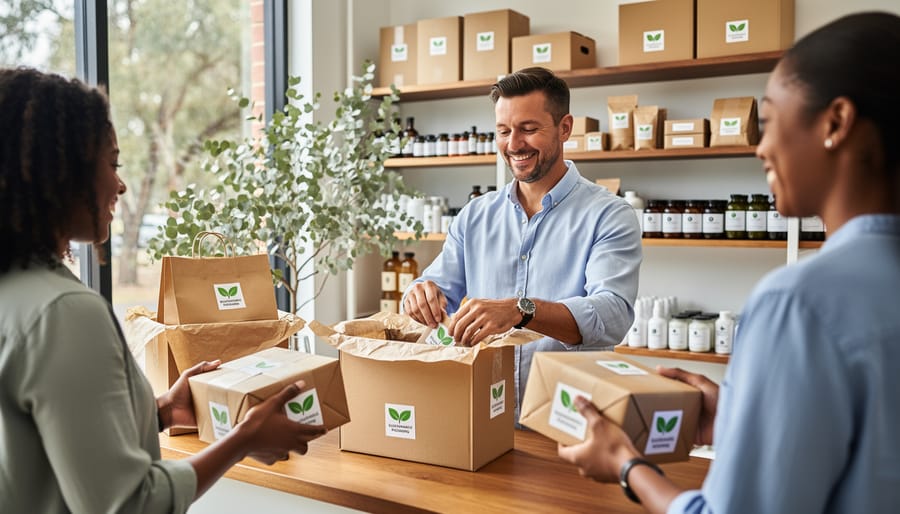
Australian consumers are sending a clear message to small businesses: sustainable packaging matters. Recent research from the Australian Packaging Covenant Organisation reveals that 83% of Australians actively consider environmental impact when making purchasing decisions, with packaging playing a significant role in their choices.
The good news for small businesses embracing eco-friendly alternatives? Australian shoppers are putting their money where their values are. Studies show that 70% of Australian consumers are willing to pay a premium of up to 10% for products using sustainable packaging. This isn’t just about feeling good – it’s about building lasting customer relationships. Nearly two-thirds of Australian shoppers report they’re more likely to remain loyal to brands demonstrating genuine environmental commitment.
What’s particularly encouraging for small businesses is that Australians understand the journey toward sustainability. Rather than expecting perfection overnight, customers appreciate transparency and progress. Local businesses sharing their sustainability story – even small steps like switching to compostable mailers or reducing plastic use – are seeing positive responses from their communities. This creates a unique opportunity for Australian small businesses to differentiate themselves in competitive markets while contributing to the environmental outcomes their customers care about.
The Real Cost of Traditional Packaging
Traditional packaging comes with costs that extend far beyond the initial purchase price, and many Australian small businesses are only now discovering the full extent. Let’s break down what conventional packaging is really costing you.
The environmental toll is staggering. Each year, Australian businesses contribute to the 2.5 million tonnes of plastic packaging waste generated nationally, with much of it ending up in landfill or, worse, our waterways and oceans. But there’s a business case here too. Many councils across Australia are increasing waste management fees, meaning those bulky polystyrene peanuts and bubble wrap are literally costing you more to dispose of each quarter.
Then there’s the hidden impact on your brand reputation. Today’s Australian consumers are savvier than ever, with recent surveys showing 87% of shoppers consider a company’s environmental practices before purchasing. When your product arrives wrapped in layers of single-use plastic, you’re sending a message that might not align with your customers’ values.
There’s also the risk factor. With Australian governments progressively banning single-use plastics and introducing extended producer responsibility schemes, businesses using conventional packaging face increasing compliance costs and potential disruptions to their supply chains. The question isn’t whether to transition to sustainable packaging, but how quickly you can make the shift while staying competitive.
Eco-Friendly Packaging Options That Actually Work for Small Budgets
Biodegradable and Compostable Materials
For small businesses ready to take their sustainability journey further, biodegradable and compostable materials offer packaging that literally returns to the earth. These innovative options are gaining traction across Australian businesses, from online retailers to local markets, proving that what protects your products today doesn’t need to burden tomorrow’s environment.
Compostable mailers have become a game-changer for e-commerce businesses. Made from materials like cornstarch and PBAT (a biodegradable polymer), these mailers break down in home or commercial compost systems within months rather than centuries. Melbourne-based businesses are increasingly switching to these alternatives, finding customers genuinely appreciate the commitment.
Plant-based packaging encompasses everything from seaweed-derived bubble wrap to cassava bags that dissolve in hot water. These materials perform just as well as conventional plastics while offering end-of-life solutions that feel almost magical in their simplicity.
Mushroom packaging represents perhaps the most fascinating development in this space. Grown from agricultural waste and mycelium (mushroom roots), this material moulds to shape and protects fragile items beautifully. While currently more suited to larger businesses due to minimum order quantities, it’s worth watching as Australian suppliers emerge.
When exploring these options, look for certifications that matter in our market. The Australasian Bioplastics Association certification and AS 4736 standard confirm products will genuinely compost in Australian conditions. Home compostable certification (AS 5810) is particularly valuable if your customers have backyard composting systems.
Remember that compostable doesn’t mean litter-friendly. Clear disposal instructions help customers complete the sustainability cycle you’ve started, turning good intentions into genuine environmental outcomes.
Recycled and Recyclable Solutions
Switching to recycled materials and recyclable materials is often the most accessible first step for Australian small businesses. Recycled cardboard boxes and paper-based packaging have come a long way, offering durability that matches conventional options while significantly reducing your environmental footprint. Many Australian suppliers now stock packaging made from post-consumer recycled content, giving new life to materials that might otherwise end up in landfill.
When choosing recyclable plastics, transparency matters. Look for clear labeling with Australian Recycling Labels (ARL) that specify which bin your packaging belongs in. Since REDcycle’s collapse in 2022, many businesses and customers have felt uncertain about soft plastic recycling. The good news is alternative solutions are emerging through council programs and specialty collection points, though availability varies by region.
For your packaging to succeed in Australia’s recycling systems, clear communication is essential. Include simple disposal instructions directly on your packaging, and consider adding a note on your website about regional recycling options. This educates your customers and demonstrates your commitment to closing the loop. Remember, choosing recyclable packaging is only effective when it actually gets recycled, so make it easy for your customers to do the right thing.
Reusable and Returnable Packaging Systems
Rethinking how packaging moves through your business can unlock surprising opportunities for both sustainability and customer connection. Reusable and returnable packaging systems create a circular loop where containers come back to you, dramatically reducing waste while building ongoing relationships with your customers.
Melbourne-based bakery Breadsmate has embraced this model beautifully, offering customers a deposit scheme for their bread bags and produce containers. Customers pay a small refundable deposit, return the packaging on their next visit, and receive their money back or credit toward future purchases. The system has proven so popular that return rates exceed 85 percent, significantly cutting packaging costs while creating a loyal community of regular customers.
Starting small makes implementation manageable. You might begin with local deliveries, where collecting packaging during the next drop-off becomes routine. Coffee roasters across Sydney and Brisbane have successfully adopted this approach with reusable coffee bag systems for their wholesale clients.
The key is making returns effortlessly convenient. Clear instructions, visible drop-off points, and fair deposit amounts encourage participation. Consider partnering with neighbouring businesses to create shared return locations, expanding your reach while building local networks. Some Australian businesses even gamify the process, offering loyalty rewards for consistent returners, transforming a practical system into an engaging customer experience that strengthens your brand’s environmental credentials.
Minimalist Packaging Approaches
Sometimes the most powerful change comes from what you choose to remove rather than add. For small Australian businesses, reducing packaging volume isn’t just environmentally responsible—it’s economically smart too.
The naked packaging movement is gaining momentum across Australia, with retailers discovering that customers appreciate products with minimal or zero packaging. Think fresh produce sold loose, cosmetics in bars rather than bottles, or clothing shipped in home-compostable mailers instead of bulky boxes.
Melbourne’s Nude Food Market pioneered this approach, and now countless small businesses are following suit. By stripping back to essentials, you’ll cut material costs, reduce freight expenses due to lighter parcels, and appeal to eco-conscious customers who value authenticity over excessive wrapping.
Start by questioning every packaging layer: does it truly protect the product, or is it merely decorative? Often, a single recyclable wrap or reusable container does the job better than multiple layers. Your customers will appreciate the honesty, your bottom line will improve, and together we’re creating less waste for our communities.
Making the Switch: A Practical Roadmap for Small Businesses
Start Small: Prioritizing Your Packaging Overhaul
Transforming your packaging doesn’t mean overhauling everything overnight. Start by conducting a simple audit of your current materials. Lay out every component—from outer boxes to inner padding and tape—and ask: What percentage of this can be recycled or composted? Which items generate the most waste?
This visual exercise often reveals quick wins that create immediate impact without breaking the budget. Perhaps you’re already using cardboard boxes but could switch to recycled tape, or maybe you could eliminate plastic air pillows in favour of shredded paper. These small changes build momentum and confidence.
Create a prioritization framework based on three factors: environmental impact, cost implications, and ease of implementation. Items scoring high in all three become your starting point. For many Australian small businesses, replacing bubble wrap with compostable alternatives or switching to recycled mailers offers substantial environmental benefits at comparable costs.
Consider phasing changes around natural restocking cycles. When your current void fill runs out, that’s your opportunity to transition. This approach minimizes waste and spreads costs across quarters, making the shift financially manageable while maintaining your commitment to progress. Remember, every business in your community started somewhere—often with just one thoughtful change.
Finding Australian Suppliers You Can Trust
Finding the right supplier is crucial for your sustainable packaging journey. Start by requesting evidence of environmental claims—legitimate Australian suppliers will readily share certifications like the Australian Packaging Covenant Organisation (APCO) membership, FSC (Forest Stewardship Council) certification for paper products, or Australian Certified Organic credentials.
Ask potential suppliers specific questions: Where do your materials come from? What happens to this packaging at end-of-life? Can you provide carbon footprint data? Their willingness to discuss these details transparently speaks volumes.
Look for suppliers who understand your small business reality. The best partners offer flexible minimum order quantities and can grow with you rather than requiring massive upfront commitments that strain your budget.
The Sustainable Business Network Australia and your local council’s business sustainability programs often maintain vetted supplier directories. Many state governments also run green business directories featuring pre-screened eco-friendly suppliers. Industry associations specific to your sector frequently maintain their own recommended supplier lists.
Connect with other small business owners through local sustainability meetups or online communities. These peer recommendations are gold—fellow business owners will honestly share their supplier experiences, from delivery reliability to actual environmental performance. Building these relationships creates a support network as you transition toward more sustainable operations.
Budgeting for the Transition
Transitioning to eco-friendly packaging requires upfront investment, but it needn’t break the bank. Australian small businesses typically see packaging costs increase by 10-30% initially, though this gap is narrowing as sustainable options become mainstream. The key is viewing this as a phased transition rather than an overnight overhaul.
Start by prioritising your most visible packaging elements or those with readily available sustainable alternatives. Many businesses find that switching to recycled cardboard or compostable mailers costs only marginally more than conventional options, particularly when ordering in bulk.
Several Australian programs can ease the financial burden. The NSW Environmental Trust and similar state-based initiatives occasionally offer grants for waste reduction projects. The Australian Packaging Covenant Organisation provides resources and support for businesses committed to sustainable packaging goals. Additionally, some suppliers offer discounted rates for businesses making long-term sustainability commitments.
Consider the return on investment beyond immediate costs. Melbourne’s Biome reported a 40% increase in customer loyalty after their packaging transition, whilst numerous small businesses have reduced waste disposal costs. Consumers increasingly choose brands aligned with their values, and transparent communication about your eco-friendly journey builds trust within your community.
Remember, reducing packaging altogether often provides the quickest cost savings whilst delivering environmental benefits. Sometimes less truly is more.
Turning Your Green Packaging into a Marketing Win
Tell Your Story Without Sounding Preachy
Your packaging tells a story—make it authentic. Rather than overwhelming customers with technical certifications or lengthy environmental statements, share your sustainability journey as a genuine conversation. Include a simple packaging insert that explains why you chose these materials and what it means for the planet. Keep it personal: “We switched to compostable mailers because our local beach cleanup crew deserves less plastic to tackle.”
Social media offers brilliant opportunities to showcase your eco-journey without lecturing. Share behind-the-scenes glimpses of your packaging choices, introduce your Australian suppliers, or post quick videos demonstrating how customers can dispose of materials properly. Invite your community to share their own sustainable wins—it builds connection while avoiding greenwashing.
On your actual packaging, keep messaging concise and action-focused. Simple icons showing recyclability or compostability work better than paragraphs. Consider adding a QR code linking to your full sustainability story online, letting interested customers dive deeper while keeping packaging clean and accessible for everyone.
Certifications and Labels That Build Trust
Building customer confidence in your eco-friendly claims starts with recognised certifications. In Australia, look for labels like the Australasian Recycling Label (ARL), which clearly shows consumers how to dispose of your packaging correctly. The Australian Packaging Covenant Organisation (APCO) certification demonstrates your commitment to sustainable packaging practices, while Certified Compostable marks (meeting AS 4736 standards) validate biodegradable claims that actually work in Australian conditions.
For small businesses just starting out, focus on one or two certifications that align with your packaging choices rather than pursuing every available label. Display these prominently on your packaging and website, but remember that transparency matters more than collecting badges. Share your sustainability journey openly with customers, explaining what each certification means in practical terms. Many Australian consumers appreciate honest communication about your progress, even if you haven’t achieved every certification yet. Consider joining industry groups like the Australian Packaging and Processing Machinery Association for guidance on which certifications deliver the best return on investment for businesses your size.
Real Stories from Australian Small Businesses Getting It Right
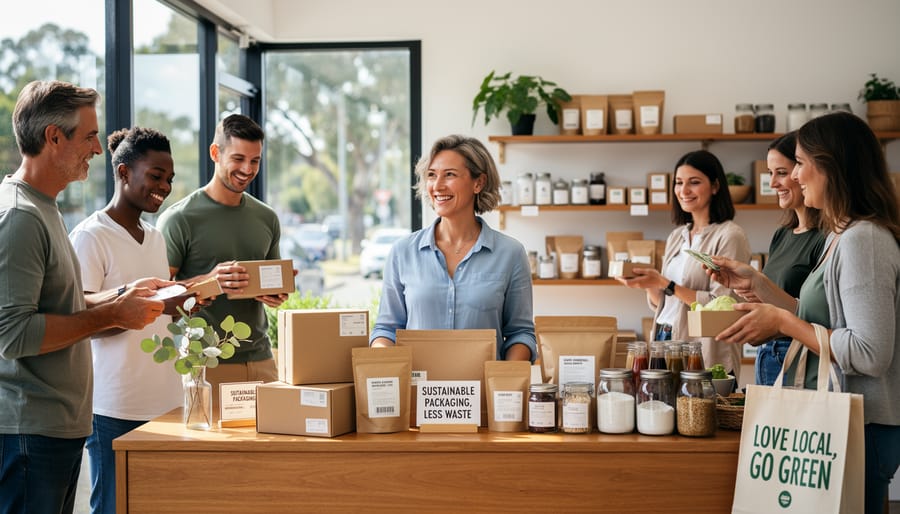
Making the switch to eco-friendly packaging might seem daunting, but these Australian small businesses prove it’s not only possible but can actually strengthen your brand and bottom line.
When Melbourne-based artisan soap maker Lather & Co. decided to ditch plastic packaging in 2021, founder Sarah Chen wasn’t sure how customers would respond. “We were wrapping our handmade soaps in shrink wrap, which felt completely at odds with our natural ingredients philosophy,” she explains. The transition involved switching to compostable cellulose wraps and recyclable cardboard boxes, plus redesigning labels to use soy-based inks. The initial investment was around three thousand dollars for new packaging materials and label redesign, but Sarah reports a twenty-eight percent increase in online sales within six months. “Customers were actively seeking out plastic-free options, and suddenly we were showing up in those searches. The packaging became part of our story.”
Over in Perth, Brothers Coffee Roasters faced different challenges when transitioning their coffee bag packaging. Co-owner Tom Mitchell knew their metallised plastic bags weren’t sustainable, but finding compostable alternatives that maintained freshness was tricky. “Coffee needs protection from oxygen and moisture, so we couldn’t just throw beans in a paper bag,” Tom says. After testing several options, they partnered with an Australian supplier of home-compostable coffee bags made from plant-based materials. While the new bags cost approximately fifteen percent more, they’ve helped Brothers Coffee secure contracts with three eco-conscious cafes who specifically requested sustainable packaging. “The premium positioning actually helped us,” Tom notes. “We’re not competing on price anymore, we’re competing on values.”
Sydney’s Little Luxe Candles took a creative approach by involving their community in the transition. Founder Priya Patel ran a social media campaign asking customers what sustainable packaging they’d prefer, receiving over two hundred responses. Based on feedback, she switched to reusable glass containers with metal lids, encouraging customers to return empties for a discount on their next purchase. “We’ve had a forty percent return rate on containers, which we sterilise and refill. It’s reduced our packaging costs by about twenty percent and created this lovely connection with local customers,” Priya shares. The refill program has become a signature element of the business, with customers actively promoting it.
These businesses show that sustainable packaging isn’t just about environmental responsibility, it’s about building authentic connections with your community and differentiating your brand in meaningful ways.
Common Pitfalls (And How to Dodge Them)
Making the switch to sustainable packaging is exciting, but there are a few common stumbles we’ve seen Australian small businesses experience along the way. Let’s talk about how to sidestep them.
The greenwashing trap catches many well-intentioned businesses. You’ll encounter packaging labeled “eco” or “natural” that isn’t quite what it seems. Some suppliers use vague environmental claims without third-party certifications to back them up. Before committing to a supplier, ask for specific details: What percentage is actually recycled content? Are they certified by recognised Australian standards like the APCO? A Melbourne café owner recently shared how they nearly invested in “biodegradable” bags that only broke down in industrial facilities, not helpful when most customers use home compost bins. Always verify claims and look for transparent certifications.
Functionality issues trip up businesses too. We understand that gorgeous, minimalist cardboard packaging looks fantastic, but if your handmade soaps arrive crushed or your sauces leak during transit, you’ve got a problem. Test your packaging thoroughly before rolling it out. Send samples to friends across different postcodes, drop packages from waist height, leave them in the sun. Your sustainable packaging needs to protect your products as well as conventional options.
Budget miscalculations happen when businesses don’t factor in the full cost picture. Yes, compostable mailers might cost 20 cents more per unit upfront, but consider the marketing value. A Sydney skincare brand found their sustainable packaging generated significant social media buzz and customer loyalty, offsetting the extra expense. Start with one product line rather than switching everything at once. This approach spreads costs and lets you learn what works before scaling up. Remember, progress beats perfection every time.
Making the shift to eco-friendly packaging isn’t about achieving perfection overnight—it’s about taking meaningful steps forward that benefit both our environment and your bottom line. As you’ve seen throughout this guide, sustainable packaging presents a genuine opportunity for small Australian businesses to reduce their environmental footprint while connecting with increasingly conscious consumers and potentially lowering costs.
Remember, even switching one packaging element makes a difference. Whether you start with compostable mailers, recycled cardboard, or simply reducing excess materials, you’re contributing to a collective movement that’s reshaping how Australian businesses operate. Your customers notice these efforts, and they’ll often reward them with loyalty and positive word-of-mouth.
Ready to take your next step? Start by auditing your current packaging, reach out to local suppliers, or explore government sustainability programs available in your state. Better yet, you don’t have to do this alone—connect with fellow business owners who are navigating the same journey. Share your experiences, challenges, and wins with Australian sustainability networks like the Australian Packaging Covenant Organisation or local business chambers focused on green initiatives. What sustainable packaging solutions have worked for your business? Join the conversation and help build a more sustainable future for Australian commerce.