
Moving to Australia with a dog is possible, but it requires four to six months of preparation, strict adherence to biosecurity protocols, and costs typically ranging from $4,000 to $8,000 AUD per pet. Australia maintains some of the world’s most stringent animal import regulations to protect its unique ecosystem from diseases like rabies, which means your dog must complete microchipping, vaccinations, blood tests, and an import permit before boarding a flight to one of three approved quarantine facilities.
The process isn’t just bureaucratic red tape. Australia’s island geography has kept it free from many diseases common elsewhere, and these requirements ensure your furry family member arrives healthy while protecting native wildlife and the broader community. If you’re planning a sustainable relocation down under, understanding the timeline and steps now will save you stress, unexpected costs, and potential heartbreak if documentation isn’t perfect.
Most rejections happen because owners underestimate the preparation window or miss a single step in the vaccine schedule. Your dog must meet all health criteria in your country of origin before the Department of Agriculture, Fisheries and Forestry will issue an import permit. From there, you’ll coordinate with an approved veterinarian, arrange transport with a pet-certified airline, and prepare for a mandatory quarantine period of at least 10 days upon arrival.
This guide walks you through each requirement chronologically, highlights common pitfalls that delay or derail applications, and explains how to verify your dog is truly ready for the journey. With proper planning, you can bring your companion to Australia while minimising the environmental footprint of international pet transport.
What You’ll Need: Essential Documents and Requirements
Before you book a single flight or contact a pet relocation service, gather the documentation and materials that form the foundation of your dog’s Australian entry approval. Missing even one item can delay the process by weeks or result in your pet being turned away at the border, so start this checklist early, ideally six to twelve months before your planned move date.
The cornerstone of your dog’s identification is an ISO-compatible microchip that meets the 15-digit standard (134.2 kHz). If your dog already has a microchip, verify it meets this specification with your vet. Non-compliant chips mean you’ll need to implant a second chip before proceeding, and the microchip number must match across every document you submit. Australia’s biosecurity scanning systems won’t recognise alternative formats, which could strand your dog in quarantine indefinitely.
Your complete documentation package includes:
- ISO 11784 or 11785-compliant microchip implanted before any vaccinations (number recorded on all subsequent documents)
- Current rabies vaccination certificate showing vaccine type, batch number, and validity dates
- Rabies Neutralising Antibody Titre Test (RNATT) results if importing from Group 2 or 3 countries, completed at an approved laboratory
- Health certificate issued by an accredited government veterinarian within five days of departure
- Import permit from Australia’s Department of Agriculture, Fisheries and Forestry (takes 4-8 weeks to process)
- Proof of parasite treatments (tapeworm, ticks, fleas) administered within specific timeframes
- Veterinary clinical history documenting your dog’s health status over the past twelve months
- Blood test results if your dog comes from a country with specific disease concerns
Store everything digitally using cloud-based folders shared with your veterinarian and pet relocation specialist. This approach cuts paper waste dramatically while ensuring you never lose a critical form during the chaos of moving. Create a master spreadsheet tracking every document’s expiry date and required renewal window, rabies vaccines, for example, must remain valid through your dog’s entire quarantine period, not just until departure.
Keep physical copies only of documents you’ll hand to officials at departure and arrival checkpoints. Scan receipts from vet visits and treatments immediately, and label files clearly with dates and your dog’s microchip number for instant retrieval when customs officials request proof at any stage.
Before You Start: Critical Safety and Biosecurity Warnings
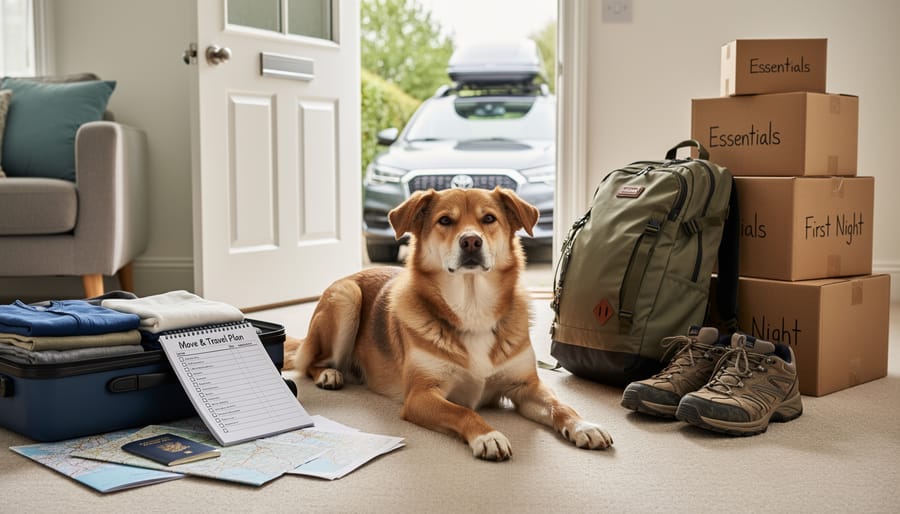
Before committing to the process, understand that Australia’s biosecurity requirements exist for a reason: the country’s isolated ecosystem remains free from rabies and many diseases common elsewhere. These strict measures protect native wildlife, agricultural industries, and the Australian community. If you skip steps, provide incomplete documentation, or attempt to circumvent regulations, your dog may be refused entry, face indefinite quarantine, or in extreme cases, be returned to the country of origin at your expense.
Certain breeds are prohibited from entering Australia regardless of your preparation. Pit bull terriers, American pit bull terriers, dogo Argentino, fila Brasileiro, Japanese tosa, and any crossbreeds of these dogs cannot be imported. If your dog has any ancestry from these breeds, authorities will refuse entry. Border officials make final determinations, and ambiguous-looking breeds may face scrutiny even with pedigree papers.
The financial commitment extends well beyond flights. Expect total costs between $5,000 and $15,000 AUD, covering veterinary work, testing, permits, approved transport, quarantine fees (currently around $2,000 for the minimum 10-day stay), and often unexpected charges when timing or paperwork requires adjustment. Many pet owners underestimate this figure and face difficult decisions mid-process.
Health risks matter too. The stress of air travel, climate changes between hemispheres, and quarantine confinement affect dogs differently based on age, breed, and temperament. Brachycephalic breeds (pugs, bulldogs) face higher risks during flights due to breathing difficulties. Senior dogs or those with existing health conditions may struggle with the journey’s physical demands. Consult your vet honestly about whether your specific dog can handle this relocation, sometimes the kindest choice is alternative arrangements rather than forcing a vulnerable animal through a grueling process.
Timeline miscalculations sink many applications. The process takes 6-12 months from start to finish, not the few weeks some pet owners assume.
Step-by-Step: Bringing Your Dog to Australia
Step 1: Confirm Eligibility and Choose Your Pathway
Your dog’s eligibility to enter Australia depends entirely on where it’s currently located. Australia categorizes countries into three groups based on rabies risk, and this classification determines your quarantine duration and preparation timeline.
Group 1 countries (New Zealand and some Pacific nations) have negligible rabies risk. Dogs from these locations face the shortest quarantine, typically 10 days, and simpler preparation requirements.
Group 2 countries include most of Western Europe, the UK, Japan, Singapore, and other nations with strong rabies control. Your dog will need more extensive pre-export testing and still undergo 10 days of quarantine upon arrival.
Group 3 countries cover everywhere else, including the United States, Canada, Thailand, and most of Asia, Africa, and South America. Group 3 affects quarantine duration significantly, expect 30 days minimum, and requires the most comprehensive veterinary preparation starting 6-12 months before your long-distance move.
Check the Department of Agriculture’s website to confirm your country’s classification before proceeding. This single factor shapes your entire timeline and budget, so get it right at the start.
Step 2: Microchip and Initial Veterinary Preparation
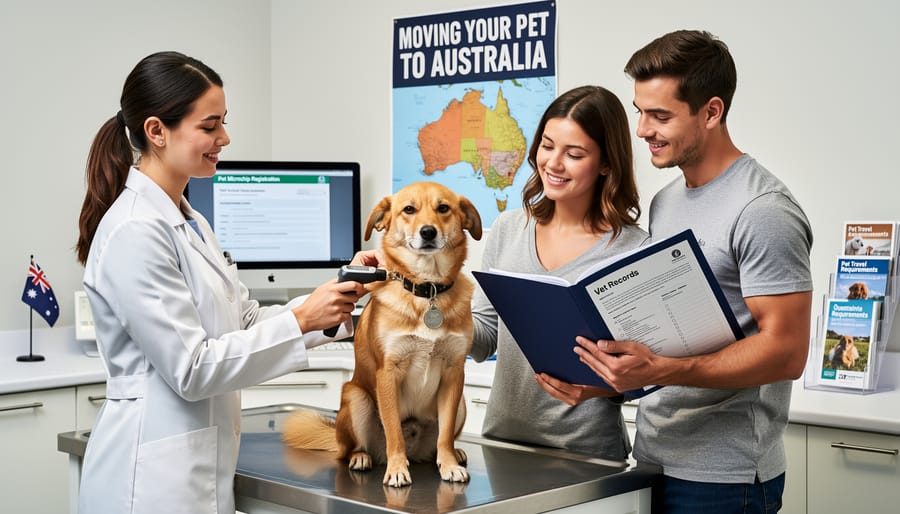
Start this step 6-12 months before your planned move. Your dog needs an ISO 11784/11785 compliant microchip implanted first, everything that follows gets linked to this 15-digit number. Check if your dog already has a microchip by having your vet scan it. If it’s not ISO-compliant or unreadable, you’ll need a new one implanted before any other paperwork begins.
Book a comprehensive health examination with an accredited veterinarian. They’ll assess your dog’s fitness for travel, check for conditions that might complicate quarantine, and start building the official health record Australia requires. This visit establishes your dog’s baseline health status.
Begin the core vaccination schedule immediately after microchipping. Your dog needs current vaccinations for distemper, hepatitis, parvovirus, and particularly rabies. The rabies vaccination must happen at least 180 days before departure for most pathways, which is why starting early matters. Your vet will create a vaccination certificate tied to the microchip number, keep both digital and physical copies organized in a dedicated folder, reducing the need for duplicate paperwork later.
Step 3: Complete Required Testing and Treatments
Once your dog has a microchip and initial health check, the testing phase begins, and timing is everything. Australia requires rabies vaccination at least 60 days before travel, regardless of your dog’s origin country. Use a WHO-approved vaccine and keep the certificate; this single document will be checked multiple times throughout the process.
If you’re coming from a non-rabies-free country (most Group 2 and all Group 3 countries), your dog needs a Rabies Neutralising Antibody Titre Test (RNATT) at least 180 days before arrival. This blood test confirms immunity levels meet Australian standards. The sample must go to an approved laboratory, your vet can’t perform this locally. Results take 2-4 weeks, so don’t leave it to the last minute.
Parasite treatments follow strict schedules. Your dog needs treatment for internal parasites (worms) within 5 days of departure and external parasites (ticks, fleas) within specific windows, usually 3-7 days before travel. These must be administered by a government-approved vet using products Australia recognizes.
Track every treatment date in a spreadsheet. One missed window or incorrect product can delay your entire move and force you to restart portions of the process.
Step 4: Apply for Your Import Permit
With your dog’s microchip, vaccinations, and testing complete, you’re ready to apply for the official import permit through the Department of Agriculture, Fisheries and Forestry’s online portal. You’ll need to create an account on the Biosecurity Import Conditions system (BICON) and submit your application at least eight weeks before your planned travel date, processing typically takes 4-6 weeks, though delays can occur during peak periods.
Your application requires your dog’s microchip number, rabies vaccination certificate, RNATT results (if applicable), and details about your intended quarantine facility. Double-check that all dates align with the required timing windows: your rabies vaccination must be at least 180 days old for some pathways, and treatments must fall within specific windows before departure. Upload digital copies rather than mailing physical documents to reduce paper waste and speed up processing.
Once approved, you’ll receive an import permit valid for 60 days. This permit is your dog’s ticket to Australia, airlines won’t board your pet without it, and quarantine facilities need a copy before arrival.
Step 5: Choose Sustainable Transport and Quarantine Options
Once your dog meets all health requirements, selecting the right transport and quarantine facility becomes crucial, and you can make environmentally conscious choices here too. Most dogs enter Australia via Sydney or Melbourne, requiring IATA-approved airlines that transport pets in climate-controlled cargo holds. Look for pet relocation specialists who prioritize animal welfare and offer carbon offset programs for your dog’s flight; several Australian companies now partner with reforestation projects to neutralize emissions from pet transport, aligning with your eco-friendly moving plan.
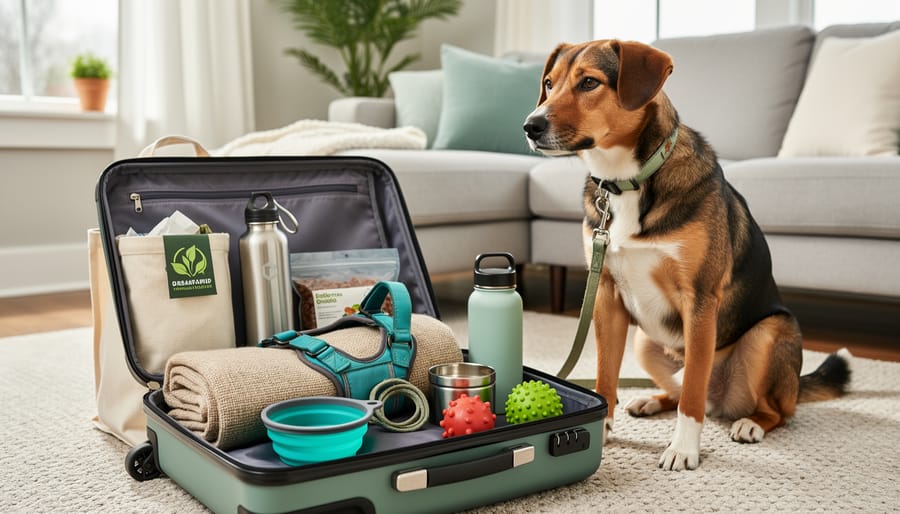
For quarantine, you’ll book a spot at one of the approved facilities near your arrival airport, operated by the Department of Agriculture. Facilities vary in their environmental practices, so ask about waste management policies, renewable energy use, and sustainable food sourcing when making your booking. Prepare your dog’s travel crate with familiar items like a worn t-shirt carrying your scent, but avoid single-use plastic toys, opt for natural rubber or sustainably sourced materials that can be sanitized and reused. Many facilities now encourage owners to bring reusable water bowls and biodegradable cleaning supplies, making the quarantine experience gentler on both your pet and the planet.
Step 6: Pre-Departure Requirements and Travel Day
Within five days of your departure date, your veterinarian must complete the final health examination and sign an official veterinary health certificate. This document confirms your dog is fit to travel and free from signs of infectious disease. The timing is critical, if you miss this window, you’ll need to repeat the examination.
Your export country may require additional export permits or USDA endorsement of health certificates. Contact your country’s agricultural authority well in advance, as processing can take several days. Keep all original documents in a waterproof folder that travels with your dog.
Prepare the travel crate using your dog’s measurements to ensure proper sizing. Line it with biodegradable absorbent pads rather than disposable plastic alternatives, and attach a small water bowl. Avoid new plastic toys; instead, include a worn t-shirt with your scent for comfort. Label the crate clearly with your contact details and “Live Animal” stickers.
On travel day, give your dog a moderate meal four to six hours before departure, enough to prevent nausea but not overfilling. Arrive at the airport early for customs clearance and cargo check-in. Your dog will be loaded into climate-controlled cargo; resist sedation unless specifically recommended by your vet, as it can complicate breathing at altitude.
Navigating Quarantine: What to Expect and How to Support Your Dog
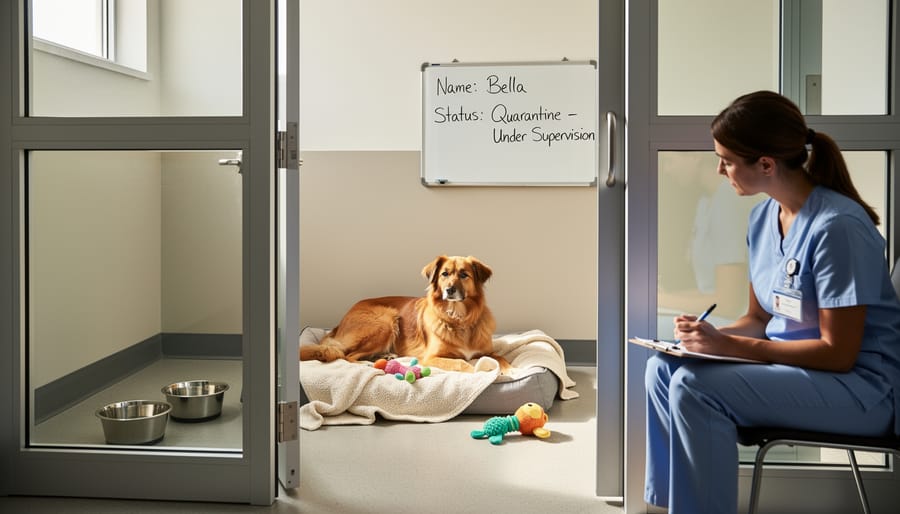
Every dog entering Australia must complete a minimum 10-day quarantine at a government-approved Post Entry Quarantine (PEQ) facility, regardless of their country of origin or health status. Your dog will stay in climate-controlled kennels with outdoor exercise areas, receiving daily health checks from qualified veterinarians and trained animal handlers. Staff monitor for any signs of disease that may have gone undetected during pre-departure screening, protecting Australia’s disease-free status for conditions like rabies.
You cannot visit your dog during quarantine, but approved facilities provide regular updates via phone or email. Some facilities now offer webcam access so you can check on your pet remotely, reducing the need for physical visits and associated travel emissions.
Quarantine costs typically range from $2,000 to $4,500 depending on your dog’s size and the facility, paid directly to the PEQ station. These fees cover accommodation, veterinary care, feeding, and waste management throughout the stay.
Prepare a comfort package before departure: include a worn t-shirt with your scent, a familiar blanket, and your dog’s regular food to minimize digestive upset during the transition. Pack these items in reusable containers rather than disposable plastic bags.
Leading quarantine facilities have adopted environmental management practices including solar battery systems for power backup, water recycling for kennel cleaning, and composting programs for organic waste where biosecurity protocols allow. All medical and contaminated waste undergoes strict incineration protocols to prevent disease transmission, while general waste follows standard recycling practices.
Your dog will be released once they complete the full quarantine period and pass final health inspections. Collection requires photo ID and your approved import permit documentation.
Verifying Success: Post-Arrival Checklist and Next Steps
Once your dog clears quarantine and you receive the official release notification from the facility, you’ll need to complete several verification steps to ensure a smooth transition into Australian life. The facility will provide a discharge summary confirming all biosecurity requirements have been met, keep this document with your pet’s permanent records, ideally as a digital file to reduce paper storage.
Your immediate post-arrival priorities should follow this sequence:
- Register your dog with your local council within 14 days of arrival (most councils offer online registration portals that eliminate paper forms)
- Book a wellness check with an Australian veterinarian within the first week to establish ongoing care
- Update your dog’s microchip details with your new Australian address through the national pet registry
- Research local off-leash parks and walking groups in your area to help your dog adjust socially
Finding eco-conscious pet services helps maintain the sustainable approach you took throughout the relocation. Look for veterinary clinics that use digital records exclusively, stock environmentally friendly parasite treatments, and participate in medication take-back programs. Many Australian pet stores now carry compostable waste bags, natural grooming products, and locally made toys from recycled materials.
Connect with community groups focused on sustainable pet ownership, your dog’s relocation is just one part of your broader sustainable moving checklist and integrating into environmentally aware pet owner networks helps both of you settle into Australian life. Many councils run dog-friendly sustainability initiatives like beach clean-up walks and native habitat restoration projects where leashed dogs are welcome.
Common Questions About Moving to Australia with Your Dog
Moving a dog internationally raises practical questions about money, logistics, and feasibility. Here are answers to the most common concerns from pet owners planning this journey.
How much does it actually cost to bring a dog to Australia?
Expect total costs between $4,000 and $8,000 AUD depending on your dog’s size, country of origin, and testing requirements. This includes veterinary preparation ($500-$1,500), import permits ($500), flights ($1,500-$3,000), and mandatory quarantine fees ($2,000-$3,000).
How long does the entire process take from start to finish?
Plan for 6-12 months minimum. Dogs from Group 2 or 3 countries need at least 180 days after rabies vaccination before the blood test, plus processing times for permits and arranging transport.
What if my dog’s breed isn’t allowed in Australia?
Restricted breeds including Pit Bull Terriers, Japanese Tosas, Dogo Argentinos, Fila Brasileiros, and Presa Canarios cannot be imported under any circumstances. You’ll need to consider rehoming your dog with family or trusted contacts in your current country.
Can I reduce the environmental impact of flying my dog internationally?
Yes. Choose airlines and pet relocation companies that offer carbon offset programs, use reusable or sustainably-sourced travel crates, and pack comfort items in biodegradable materials rather than single-use plastics.
Beyond these basics, timing matters significantly. If you’re moving during Australian summer (December-February), book quarantine facilities well in advance as they fill quickly. Consider whether your dog handles heat well, since some facilities have limited climate control.
For senior dogs or those with health conditions, discuss the journey with your vet early. The stress of long flights and quarantine can be challenging, and in some cases, the kindest decision might be alternative care arrangements. Australia’s biosecurity officers have the authority to refuse entry to any animal that appears unwell or stressed beyond safe limits.
If costs seem prohibitive, investigate whether your employer offers relocation assistance that covers pets. Some international moving packages include pet transport, and it’s worth negotiating this benefit before accepting an overseas position. Keep digital records of all expenses for potential tax deductions related to your move.
Bringing your dog to Australia isn’t a quick decision, it demands months of preparation, attention to detail, and a genuine commitment to meeting strict biosecurity standards. But thousands of pet owners successfully navigate this process every year, and with the right approach, you can too. The investment of time, money, and energy pays off when your companion finally joins you in your new home.
As you move forward, consider this process part of your broader relocation strategy. The same principles that guide sustainable pet transport, reducing waste, choosing ethical providers, minimizing carbon footprint, apply to every aspect of moving logistics in Australia. Whether you’re shipping household goods or transporting your dog, selecting companies with transparent environmental practices makes a difference.
Once you and your dog arrive, you’re joining communities across Australia that genuinely care about both animal welfare and ecological responsibility. Local councils offer digital pet registration, cities feature extensive green spaces for exercise, and you’ll find plenty of eco-conscious pet owners who share your values. Your dog’s new life here can be as sustainable as you choose to make it, from biodegradable waste bags to supporting businesses that give back to environmental causes. The effort you’ve invested in getting here responsibly sets the tone for how you’ll both thrive in Australia’s environmentally aware culture.