
Every bite you take sends ripples through the planet. The steak on your plate required 15,000 litres of water to produce. That imported avocado travelled 12,000 kilometres before reaching your kitchen. Meanwhile, one-third of Australia’s greenhouse gas emissions stem from our food system—a staggering reality that places extraordinary power in your hands three times a day.
Yet here’s the empowering truth: nourishing your body and protecting the environment aren’t opposing goals. They’re natural allies waiting to transform your relationship with food.
Across Australia, a quiet revolution is reshaping dinner tables from Bondi to Broome. Families are discovering that seasonal vegetables from local farmers’ markets offer superior nutrition whilst slashing their carbon footprint. Community gardens are sprouting in suburban backyards, connecting neighbours whilst growing chemical-free produce. Cafés in Melbourne and Brisbane are proving that plant-forward menus can be both delicious and kind to our fragile ecosystems.
The science is clear: diets rich in whole plants, complemented by modest amounts of ethically raised animal products, deliver optimal health outcomes whilst dramatically reducing environmental impact. You don’t need perfection—just purposeful progress.
This journey isn’t about sacrifice or guilt. It’s about rediscovering the vibrant flavours of what grows naturally around us, supporting Australian growers who nurture the land, and joining a movement that’s proving individual choices create collective change. Your fork is more than a utensil—it’s a tool for building the future we desperately need.
The Hidden Environmental Cost of What We Eat
Where Your Food’s Carbon Footprint Really Comes From
Understanding where your food’s emissions come from helps you make choices that truly matter. The surprise? Transport typically accounts for less than 10% of most foods’ carbon footprint. The real impact happens long before your groceries reach the checkout.
**Production is the heavyweight champion** of food emissions. Growing, raising, and harvesting food generates around 80% of its total footprint. For beef and lamb, this includes methane from livestock. For rice, it’s methane from flooded paddies. Even plant foods require energy for irrigation, fertilisers, and machinery. This is why choosing *what* you eat matters more than where it comes from—something that carbon tax policies and carbon pricing mechanisms are beginning to reflect.
**Australia’s vast distances do matter**, though. Our unique geography means domestic transport can sometimes rival international shipping. A Queensland-grown mango travelling to Tasmania might generate similar emissions to one imported from nearby Pacific nations. However, air-freighted foods—like off-season berries from overseas—carry emissions up to 50 times higher than sea freight.
**Processing and packaging** add another layer, contributing roughly 10-15% of the footprint. Highly processed foods require more energy and materials than whole foods.
The good news? By prioritising plant-forward eating and choosing seasonal produce—whether local or imported by sea—you’re already targeting the biggest emission sources. Australia’s growing farmer networks make this easier than ever.
The Water Crisis on Your Plate
Every bite you take carries an invisible water footprint, and in drought-prone Australia, understanding this connection has never been more crucial. Agriculture accounts for roughly 65% of our nation’s water consumption, making our food choices powerful tools for water conservation.
The differences between proteins are staggering. Producing one kilogram of beef requires approximately 15,000 litres of water, while lamb needs around 10,000 litres. Compare this to chicken at 4,300 litres, or better yet, lentils at just 1,250 litres. These aren’t numbers meant to shame your Sunday roast—they’re simply information to help you make informed choices.
Even within plant foods, variations exist. Almonds, popular in many Australian households, require about 12,000 litres per kilogram, while local seasonal vegetables like carrots need only 130 litres. The good news? Small shifts make meaningful differences. Swapping beef for chicken once weekly saves roughly 560,000 litres annually per household—enough to fill an average backyard pool three times over.
By choosing water-wise proteins and supporting Australian farmers using efficient irrigation practices, you’re directly contributing to our collective water security.
Nutritious Eating That Actually Helps the Environment
Plant-Forward Eating Without Sacrificing Nutrition
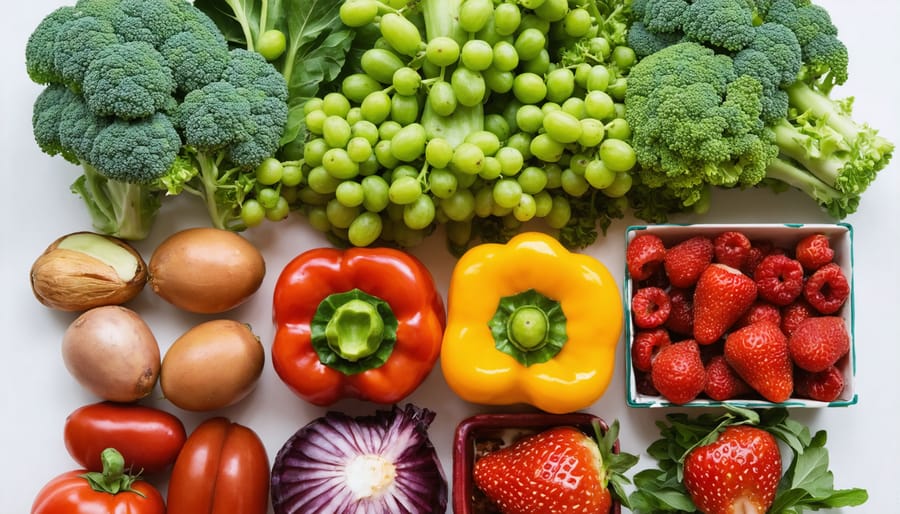
Shifting toward plant-forward eating doesn’t mean abandoning nutrition—it’s about discovering the wealth of protein and nutrients available beyond meat. Many Australians are already making this transition, often surprised by how satisfying and nourishing plant-based meals can be.
Legumes like lentils, chickpeas, and beans offer exceptional protein content alongside fiber and iron. A single cup of cooked lentils provides around 18 grams of protein—comparable to a small steak. Combining these with wholegrains creates complete protein profiles that rival animal sources. Traditional Indigenous foods like wattleseed and bush tomatoes add unique flavors while boosting nutritional value, connecting us to Country in meaningful ways.
Australian-grown quinoa, now cultivated in regions like Tasmania, thrives in our climate while delivering all nine essential amino acids. Locally-adapted crops such as lupin beans—developed right here in WA—contain more protein than soybeans and grow beautifully in Australian conditions with minimal water.
For those concerned about nutrients like B12, iron, and omega-3s, strategic choices make the difference. Fortified plant milks, nutritional yeast, and Australian-grown chia seeds address these needs effectively. Pairing iron-rich foods like spinach with vitamin C sources enhances absorption naturally.
The environmental payoff is substantial. Reducing meat consumption even a few days weekly significantly lowers your carbon footprint—a change that complements broader efforts like supporting carbon tax policies. Start with “Meatless Mondays” using local seasonal vegetables, gradually expanding as you discover new favorites. Your plate becomes a powerful tool for personal health and planetary wellbeing.
Choosing Sustainable Proteins That Build Health
Choosing proteins that nourish both your body and the planet is simpler than you might think. Around Australia’s coastline, sustainable seafood certified by the Marine Stewardship Council offers nutrient-dense options—think wild-caught Australian salmon from Tasmania or prawns from well-managed fisheries. Look for the blue tick label at your local fishmonger to make confident choices.
Regenerative farming is transforming how we produce meat and dairy. Farmers across regional Australia are implementing practices that restore soil health, sequester carbon, and support biodiversity while raising grass-fed beef and lamb. These proteins come with a richer nutritional profile, including higher omega-3 levels, and a significantly reduced environmental footprint compared to conventional methods.
Alternative proteins are also gaining momentum in Australian kitchens. Locally-grown legumes like chickpeas and lentils provide excellent protein while fixing nitrogen in the soil. Community-supported agriculture programs now connect city-dwellers with regenerative farms, creating relationships that strengthen our food system.
The key is diversity—rotating between sustainable seafood, regeneratively-raised meats, and plant-based proteins ensures you’re getting complete nutrition while spreading environmental impact across resilient food systems.
Seasonal Eating: Better Nutrition, Lower Impact
Eating seasonally means choosing produce at its natural peak—when it’s most nutritious and requires minimal resources to reach your plate. In Australia’s diverse climate zones, this looks different everywhere. Summer brings mangoes and stone fruits to Queensland, while Tasmania’s autumn yields crisp apples and root vegetables. Winter sees citrus flourishing across NSW, and spring delivers asparagus in Victoria’s temperate regions.
Seasonal produce travels shorter distances, reducing transport emissions while offering superior nutrient density—vegetables lose vitamins rapidly after harvest. A tomato picked locally in summer contains more antioxidants than one shipped interstate in winter. By following nature’s calendar, you’re supporting regional growers who work with, rather than against, their environment.
Community farmers’ markets make seasonal eating accessible. Chat with growers to discover what’s thriving now in your area, and you’ll naturally align your nutrition with lower environmental impact—a delicious way to eat well while caring for our country.
Practical Sustainable Food Practices for Australian Households
Smart Shopping: What to Look For at Aussie Markets and Supermarkets
Navigating Australian supermarkets with sustainability in mind becomes easier once you know what to look for. Start by seeking out trusted certification labels like the Australian Certified Organic (ACO) bud logo, Marine Stewardship Council (MSC) for seafood, and the RSPCA Approved symbol for ethical animal welfare. These certifications do the heavy lifting for you, ensuring products meet rigorous environmental and ethical standards.
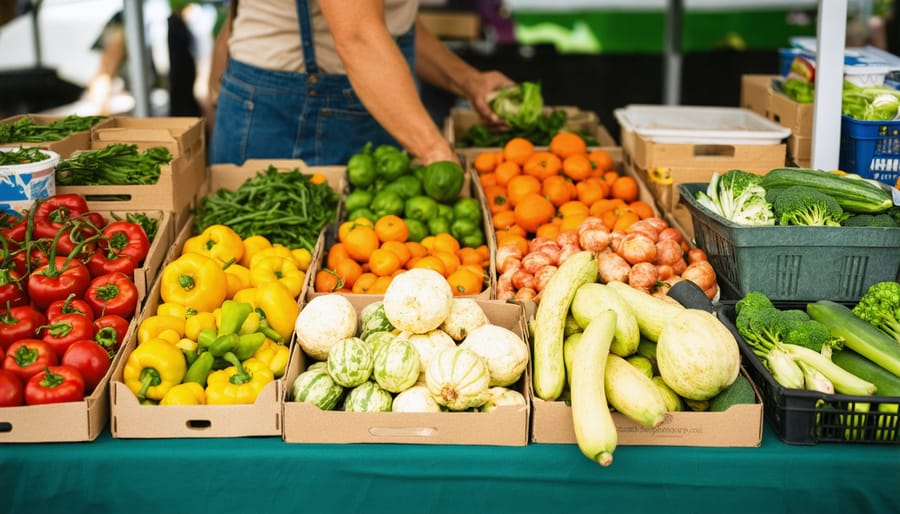
Your local farmers market is a goldmine for sustainable nutrition. When you buy directly from growers, you’re not just getting fresher produce—you’re supporting regional farmers, reducing food miles, and often avoiding unnecessary packaging. Chat with stallholders about their growing practices; many small-scale farmers use sustainable methods even without formal certification.
At the supermarket, flip products over and read beyond the marketing claims. Look for Australian-made products to reduce transport emissions, choose items with minimal packaging, and opt for seasonal produce. Understanding food labelling empowers you to make choices that align with broader environmental goals, much like how carbon pricing approaches encourage businesses toward greener practices.
Remember, every trolley tells a story about the future we’re creating together.
Meal Planning That Cuts Waste and Boosts Nutrition
Smart meal planning is your secret weapon for reducing waste while nourishing your body brilliantly. The key? Building meals around what’s seasonal and abundant in your region. When you plan thoughtfully, you’re not just saving money—you’re part of a growing movement of Australians transforming our food system from the ground up.
Start by checking what’s in season locally. Right now across Australia, depending on your state, you might find sweet corn, zucchini, tomatoes, and stone fruits thriving. Build your weekly menu around these stars. For example, a summer week could include: Monday’s zucchini fritters with poached eggs, Wednesday’s tomato and corn salad with grilled chicken, and Friday’s stone fruit crumble using slightly bruised peaches that supermarkets discount.
The “cook once, eat twice” principle works wonders. Roast a whole cauliflower on Sunday—use half for cauliflower steaks with tahini, then blend the rest into soup for Tuesday. This approach respects the produce you’ve purchased while maximizing nutrition and minimising prep time.
Keep a running inventory of your fridge and pantry. Those wilting greens become tomorrow’s pesto; overripe bananas transform into weekend pancakes. You’re not just preventing waste—you’re discovering creative ways to honour every ingredient that enters your kitchen.
Food Storage and Preservation Methods That Work
Proper food storage can dramatically reduce waste while maintaining nutritional value. In Australian climates, understanding temperature zones is crucial—store potatoes, onions, and tomatoes in cool, dark pantries rather than fridges to preserve flavour and texture. Embrace your freezer as a powerful ally: blanch seasonal vegies before freezing to lock in nutrients, portion leftovers into single servings, and freeze herbs in olive oil using ice cube trays for instant cooking boosts.
Master simple preservation techniques that suit our lifestyle. Fermenting vegetables like cabbage into sauerkraut or pickling excess cucumber harvests extends their life by months while boosting gut health. Many community groups across Australia now share preservation skills through workshops, creating connections while reducing waste. Even simple practices matter—storing greens wrapped in damp tea towels, keeping ethylene-producing fruits separate from sensitive vegies, and using airtight containers can extend freshness by days. These time-tested methods save money, reduce trips to shops, and honour the resources invested in growing your food.
Composting and Food Scraps: Closing the Loop at Home
Transforming food scraps into nutrient-rich compost is one of the most satisfying ways to close the loop on your food journey. Whether you’re in a Brisbane apartment or a Perth backyard, there’s a composting solution for you.
House dwellers can start with traditional compost bins or worm farms, turning vegetable peelings, coffee grounds, and garden clippings into “black gold” for your garden. Many councils across Australia offer subsidised compost bins—check your local council website for programs in your area.
For apartment residents, don’t feel left out! Bokashi bins are compact, odourless systems perfect for balconies and kitchens, fermenting scraps that can later enrich pot plants or be added to community gardens. Many councils now run Food Organics and Garden Organics (FOGO) collection services, particularly in Sydney, Melbourne, Adelaide, and Canberra, where your green-lidded bin diverts waste from landfill.
Community composting hubs are also sprouting up in urban neighbourhoods, creating connection while reducing waste. Visit ShareWaste.com to find locals accepting food scraps or offering compost in return. By composting, you’re not just reducing methane emissions from landfill—you’re actively nourishing the soil that grows tomorrow’s food.
Australian Communities Leading the Way
Community Gardens and Urban Farming Projects
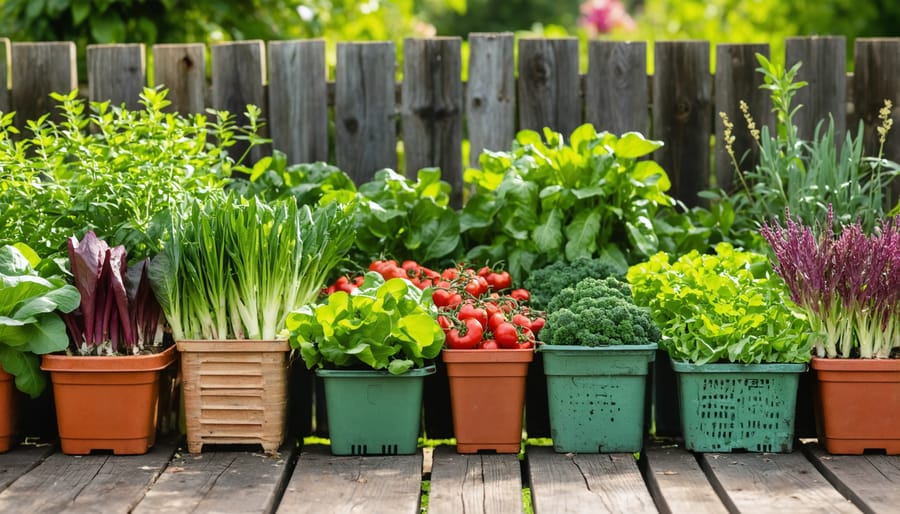
Community gardens are flourishing across Australia, transforming vacant blocks and unused spaces into productive food hubs that strengthen both nutrition and sustainability. In Melbourne’s inner suburbs, projects like CERES demonstrate how urban farming can supply fresh produce while educating thousands about regenerative growing practices. Brisbane’s Northey Street City Farm has been connecting communities with soil since 1994, proving these initiatives create lasting impact.
Getting involved is simpler than you might think. Start by searching for existing gardens through the Australian City Farms & Community Gardens Network, where you’ll find over 500 registered projects nationwide. Many welcome new members regardless of experience—your willingness to learn matters most.
Ready to start your own? Begin with conversations among neighbors, then approach your local council about available land. Groups like Gardening Australia’s community resources offer free planning guides tailored to Australian climates and conditions.
These gardens do more than grow vegetables—they’re nurturing food security, reducing transport emissions, and creating spaces where knowledge about sustainable nutrition spreads naturally through shared experience. Whether you’re contributing a few hours monthly or leading a new project, you’re cultivating change that feeds both people and planet.
Restaurants and Cafes Championing Sustainability
Across Australia, forward-thinking restaurants and cafes are proving that delicious food and environmental responsibility go hand-in-hand. Melbourne’s Silo by Joost Bakker operates entirely waste-free, composting all organic matter and sourcing exclusively from local regenerative farms. In Sydney, The Grounds of Alexandria has transformed urban spaces into productive gardens, serving dishes made from ingredients grown just meters from diners’ tables.
Brisbane’s Gerard’s Bistro champions nose-to-tail cooking, minimizing waste while supporting ethical farmers, whilst Perth’s Long Chim showcases how sustainable seafood can shine in Southeast Asian cuisine. These businesses aren’t just serving meals—they’re building communities around conscious eating. Many offer transparency through supplier lists and farm visits, inviting customers to connect with their food’s journey. By supporting these pioneers, you’re voting with your dollar for a food system that nourishes both people and planet, while inspiring others in the hospitality sector to follow suit.
Indigenous Food Knowledge and Sustainable Practices
Indigenous Australians have sustainably nourished themselves from this land for over 65,000 years, offering profound lessons for modern food systems. Traditional practices like seasonal harvesting, using every part of native plants and animals, and allowing Country to regenerate between harvests demonstrate a deep understanding of ecological balance. Native foods like kangaroo, wattleseed, and warrigal greens are naturally adapted to Australian conditions, requiring minimal water and no synthetic inputs while offering exceptional nutrition. Many Indigenous communities are now leading reconciliation efforts through food, sharing knowledge about bush tucker and regenerative land management. By supporting Indigenous-led food enterprises and incorporating native ingredients into our diets where appropriate and respectful, we honor this wisdom while building more resilient, climate-adapted food systems. Learning from First Nations’ holistic approach to Country reminds us that sustainable eating isn’t just about individual choices—it’s about our relationship with the land that sustains us.
Making the Shift: Your 30-Day Action Plan
Transforming your eating habits doesn’t require a complete overnight overhaul. This 30-day plan guides you through achievable weekly shifts that build momentum whilst respecting your lifestyle and budget.
**Week 1: Foundation Setting**
Start by understanding your current footprint. Track everything you eat for three days, noting where ingredients originate. Visit your local farmers’ market to discover what’s currently in season in your region. Set one simple goal: replace three imported items with Australian-grown alternatives. Perhaps swap Californian almonds for Australian-grown macadamias, or choose local apples over imported varieties.
**Week 2: Plant-Forward Exploration**
Introduce two plant-based dinners this week. You’re not eliminating anything—just expanding your repertoire. Try a hearty lentil bolognese using Australian-grown pulses or a vegetable curry featuring seasonal produce. Notice how these meals make you feel physically and mentally.
**Week 3: Reducing Waste**
Focus on the bin. Plan meals around what’s already in your pantry. Start composting your vegetable scraps—many Australian councils offer subsidised compost bins. Challenge yourself to reduce food waste by half. Freeze herb stems for stocks, turn stale bread into breadcrumbs, and embrace “root-to-stem” cooking.
**Week 4: Building Community Connections**
Connect with like-minded Australians. Join a local community garden, participate in a food swap, or support a regenerative farming initiative. Share your journey on social media using #SustainableAussieEats. Research co-ops or farm-gate purchasing options near you.
By day 30, you’ll have established practical habits that honour both your health and our environment, creating lasting change that feels natural rather than restrictive.
Your journey toward nourishing both yourself and the planet doesn’t require perfection—it simply requires a start. When you choose that locally-grown beetroot at your farmers market, reduce your food waste by meal planning, or embrace Meatless Mondays, you’re joining thousands of Australians creating ripples of positive change. These individual choices weave together, strengthening our communities, supporting local farmers, and protecting the extraordinary landscapes we call home.
The beautiful truth is that what’s good for your health is often what’s best for our planet. Every mindful food decision contributes to a healthier you, a more resilient community, and a thriving environment for future generations. You’re not alone in this—across Australia, passionate people are reimagining our food systems, and there’s a place for you in this movement.
Start today with just one small change. Visit your local farmers market this weekend, connect with a community garden, or swap one meal this week for a plant-based alternative. Share your experience with friends, because transformation happens when we inspire each other. Together, we’re cultivating a more sustainable, nourished Australia—one plate at a time.