
**Recognize that up to 30% of your manufacturing costs are hiding in plain sight as waste**—not just the scraps in your bin, but in every moment of idle machinery, every unnecessary movement on your factory floor, and every product sitting in storage. Australian manufacturers lose an estimated $8 billion annually to these inefficiencies, yet this same waste represents your greatest opportunity for both cost savings and environmental impact.
The seven wastes of manufacturing—overproduction, waiting, transport, extra processing, inventory, motion, and defects—originated from Toyota’s legendary production system, but they’ve never been more relevant than today. When Melbourne-based packaging manufacturer Visy eliminated waiting time in their production lines, they didn’t just reduce costs by 22%; they cut energy consumption equivalent to powering 500 homes annually.
**Map your production process end-to-end** to identify where materials, time, and energy disappear without adding value. Each waste type directly correlates to environmental impact: excess inventory ties up raw materials and storage energy, unnecessary transport burns fuel, and defects mean resources were consumed to create products that can’t be sold.
**Transform these traditional Lean manufacturing principles into your competitive advantage** by understanding that every waste eliminated strengthens both your bottom line and your environmental credentials. Australian businesses leading this charge aren’t just surviving—they’re thriving by turning operational efficiency into sustainability wins that resonate with increasingly eco-conscious customers and stakeholders.
Why Manufacturing Waste Matters More Than Ever
Australian manufacturing stands at a critical crossroads. While our manufacturing sector contributes approximately $100 billion annually to the national economy, it also accounts for nearly 20% of Australia’s total greenhouse gas emissions. This isn’t just an environmental concern—it’s rapidly becoming a business imperative that affects your bottom line, market access, and competitive edge.
The landscape is shifting beneath our feet. Recent sustainability regulations, including the Climate Active Carbon Neutral Standard and mandatory climate-related financial disclosures for larger companies, mean manufacturers can no longer treat waste as merely an operational inconvenience. The Australian Government’s push toward net-zero by 2050 has placed manufacturing efficiency squarely in the spotlight, with increased scrutiny on resource consumption, energy use, and waste generation.
But here’s the encouraging news: this challenge presents an unprecedented opportunity. Australian consumers are voting with their wallets—research shows 87% of Australians now consider sustainability when making purchasing decisions, and 62% are willing to pay more for environmentally responsible products. Companies embracing waste reduction habits aren’t just doing the right thing; they’re positioning themselves for long-term success.
The seven wastes of manufacturing—originally developed for efficiency—now serve a dual purpose. Reducing overproduction, waiting time, transportation, excess inventory, unnecessary motion, defects, and underutilised talent simultaneously cuts costs and environmental impact. When Melbourne-based manufacturer Baiada Poultry reduced their processing waste by 30%, they saved $2.3 million annually while significantly lowering their carbon footprint.
This convergence of environmental stewardship and business efficiency isn’t coincidental—it’s the future of Australian manufacturing. The question isn’t whether to address these wastes, but how quickly we can act together.
Overproduction: Making More Than We Need
The Environmental Cost
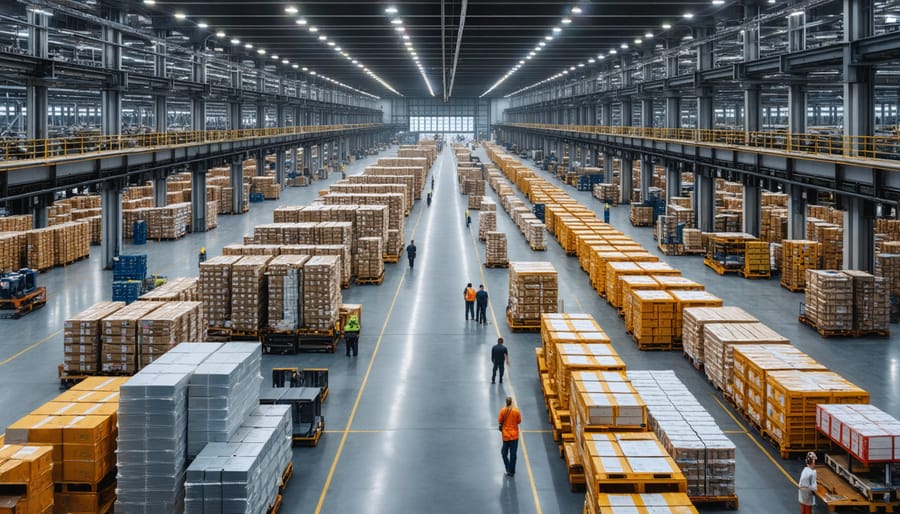
When Australian manufacturers overproduce, the environmental ripple effects extend far beyond the factory floor. Every excess item manufactured represents unnecessary carbon emissions from production processes, additional raw materials extracted from our environment, and energy consumed that didn’t need to be spent. When these surplus products eventually become obsolete or expire, they contribute to Australia’s growing waste crisis—our nation already generates over 67 million tonnes of waste annually.
Consider the food manufacturing sector across Sydney and Melbourne, where overproduction leads to thousands of tonnes of edible products reaching landfill each year. These organic materials decompose and release methane, a greenhouse gas 25 times more potent than carbon dioxide. Similarly, Queensland’s manufacturing hubs have seen excess packaging materials and components accumulate when production outpaces genuine demand.
The encouraging news? Many Australian manufacturers are discovering that reducing overproduction creates both environmental and financial wins. By adopting just-in-time production approaches and improving demand forecasting, businesses across Perth, Brisbane, and regional centres are simultaneously cutting waste, lowering emissions, and improving their bottom line—proving sustainability and profitability can walk hand in hand.
Sustainable Solutions for Australian Manufacturers
Australian manufacturers are discovering that reducing waste isn’t just environmentally responsible—it’s commercially smart. By adopting sustainable solutions, businesses across the country are cutting costs while protecting our environment.
**Just-in-time production** has transformed operations for many Australian companies. Melbourne-based automotive parts supplier, Precision Components, reduced inventory waste by 40% through careful demand forecasting and streamlined ordering systems. This approach minimizes excess materials sitting idle, freeing up capital and warehouse space while reducing the environmental footprint of overproduction.
**Flexible manufacturing systems** allow businesses to adapt quickly to changing demands without waste. Brisbane’s GreenTech Industries invested in modular equipment that can be reconfigured for different product lines, eliminating the need for multiple specialized machines and reducing energy consumption by 30%.
**Digital demand forecasting** tools help Australian manufacturers predict customer needs more accurately. Sydney’s EcoPackaging Solutions implemented AI-driven analytics, reducing raw material waste by 25% within the first year. The system analyzes historical data and market trends, ensuring they produce exactly what’s needed.
These solutions work best when embraced across your entire operation. Start small—choose one area of waste to address, measure your results, and build momentum. Together, Australian manufacturers are proving that sustainability and profitability go hand in hand.
Waiting: The Invisible Energy Drain
The Environmental Cost
Manufacturing facilities across Australia often overlook a significant contributor to their environmental footprint: the energy consumed by machines humming away between production runs. When equipment remains powered during changeovers or lunch breaks, and climate control systems maintain comfortable temperatures in idle warehouses, we’re essentially heating, cooling, and powering empty spaces—a waste that flows directly to our energy grid and carbon emissions.
Extended production cycles compound this impact. When manufacturing processes take longer than necessary due to poor planning or inefficient workflows, every extra hour means additional energy consumption, increased wear on equipment, and more resources devoted to maintaining operations. These extended cycles also delay the implementation of environmentally conscious disposal techniques for production waste.
The good news? Australian manufacturers are discovering that smart scheduling, sensor-based lighting, and strategic equipment shut-downs during idle periods can reduce energy consumption by up to 30%. These changes don’t just benefit our environment—they create tangible cost savings that strengthen your bottom line while building a more sustainable future for our communities.
Sustainable Solutions for Australian Manufacturers
Australian manufacturers are discovering that tackling the seven wastes isn’t just good for productivity—it’s essential for our planet’s future. The encouraging news? Solutions are more accessible than ever, and many Aussie businesses are already leading the way.
**Process optimization** forms the foundation of waste reduction. By mapping your workflows and identifying bottlenecks, you’ll spot opportunities to eliminate unnecessary steps while reducing energy consumption. Melbourne-based manufacturers have reported up to 30% reductions in both time and emissions through simple process refinements.
**Preventive maintenance schedules** keep equipment running efficiently, preventing energy-hungry breakdowns and extending machine lifespans. Rather than waiting for failures, proactive maintenance reduces waste at its source—a strategy that Queensland manufacturers are embracing with impressive results.
**Energy-efficient equipment with smart shut-off features** represents a practical investment that pays dividends. Modern machinery automatically powers down during idle periods, slashing energy bills while reducing your carbon footprint. Many Australian suppliers now offer retrofit options, making upgrades achievable for businesses of all sizes. Together, we’re proving that sustainability and profitability go hand-in-hand.
Transportation: Moving Materials the Wrong Way
The Environmental Cost
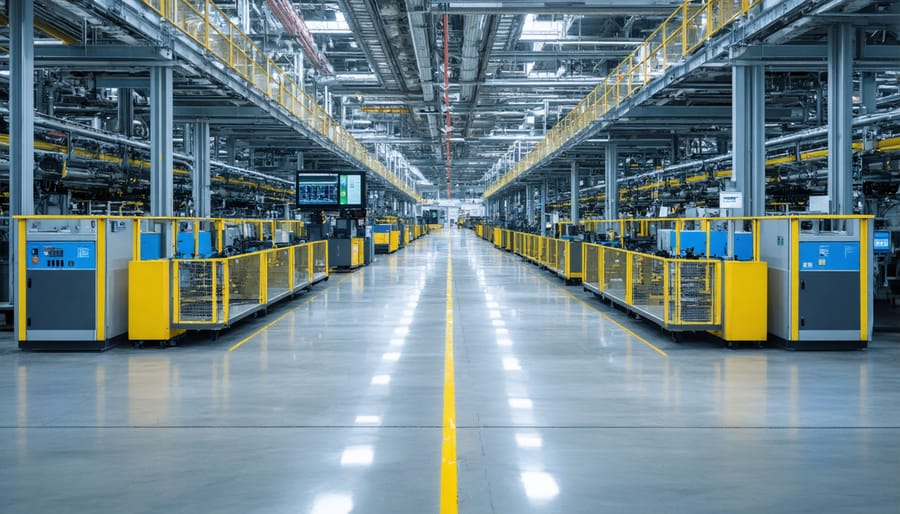
Let’s consider what Australia’s manufacturing waste actually costs our environment. When materials move unnecessarily around a facility, the impact extends beyond productivity losses. A typical Australian manufacturing site using diesel-powered forklifts generates approximately 2.6 kilograms of CO2 per litre of fuel consumed. Multiply this across inefficient layouts requiring excessive material handling, and a medium-sized operation can emit an additional 15-20 tonnes of carbon annually—equivalent to the yearly emissions of three average Australian households.
Inefficient facility layouts compound this problem. When production areas are poorly designed, materials travel further distances, requiring more equipment running for longer periods. Brisbane’s advanced manufacturing sector has demonstrated that optimising floor layouts can reduce material handling by 40%, directly cutting associated emissions. The good news? These changes often cost little to implement but deliver immediate environmental and financial returns. By mapping your current material flows and identifying unnecessary movements, you’re taking the first step toward a lighter carbon footprint while strengthening your operational efficiency.
Sustainable Solutions for Australian Manufacturers
Australian manufacturers are leading the charge in reducing transportation waste through innovative, locally-focused solutions. Redesigning facility layouts to minimise internal movement has helped businesses like Sydney’s precision engineering firms cut unnecessary transport by up to 40%. Switching to electric forklifts and material handling equipment not only reduces emissions but slashes energy costs—a win many Melbourne-based warehouses are already celebrating.
The real game-changer? Building localised supply chains. Perth manufacturers partnering with regional suppliers have dramatically shortened delivery distances, reducing both carbon footprints and lead times. Brisbane’s food processing sector showcases this brilliantly, sourcing ingredients from Queensland farms rather than interstate or overseas suppliers.
These changes aren’t just environmentally sound—they’re creating resilient, community-connected businesses. By investing in smarter layouts, cleaner equipment, and regional partnerships, Australian manufacturers are proving that reducing transportation waste strengthens both the bottom line and our commitment to a sustainable future. Your business can be part of this transformation, starting with one practical change today.
Over-Processing: Doing More Than Necessary
The Environmental Cost
When manufacturers over-process products beyond customer requirements, they’re not just wasting time—they’re multiplying their environmental footprint. Across Australian factories, excessive polishing, redundant quality checks, and over-engineered specifications consume additional energy, water, and materials that customers never requested or valued.
Consider a Brisbane metal fabrication workshop that discovered they were applying three coats of finish when two sufficed. This single process adjustment reduced solvent use by 30% whilst maintaining product quality. Similarly, many Australian manufacturers add “just-in-case” features or excessive packaging that inflate resource consumption without adding genuine value.
The ripple effect extends beyond the factory floor. Over-processing generates more chemical waste, increases energy bills, and often requires additional machinery and maintenance. By questioning which processes truly matter to customers, Australian businesses are finding remarkable opportunities to lighten their environmental impact whilst improving efficiency. The key is distinguishing between essential quality standards and habitual over-engineering that serves neither profit nor planet.
Sustainable Solutions for Australian Manufacturers
Australian manufacturers are taking decisive action to eliminate waste while strengthening their competitive edge. Value stream mapping has become a powerful tool for local companies to visualize their entire production flow, identifying bottlenecks and waste hotspots. Melbourne-based food processor GreenHarvest reduced their energy consumption by 35% after mapping revealed inefficient equipment placement and unnecessary material movements.
Understanding customer requirements precisely prevents the costly waste of overproduction. Brisbane’s EcoTech Industries now conducts quarterly requirement reviews with clients, producing only what’s needed when it’s needed—cutting inventory costs by half whilst reducing warehouse emissions.
Process simplification is equally transformative. Adelaide’s SustainablePack eliminated three redundant quality checks without compromising standards, reducing processing time by 40%. They’ve also created a cross-functional improvement team where floor operators share insights, fostering that essential community approach to problem-solving.
The message from these Australian pioneers is clear: tackling manufacturing waste isn’t just environmentally responsible—it’s economically smart, creating resilient businesses ready for our sustainable future.
Inventory: Storing Problems for Tomorrow
The Environmental Cost
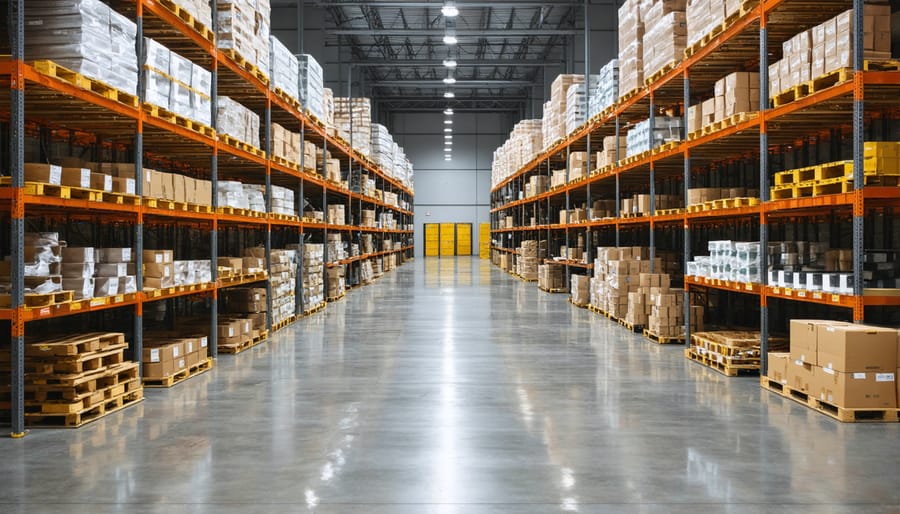
Excess inventory doesn’t just tie up capital—it demands significant energy for climate-controlled warehouses, particularly across Australia’s diverse climate zones where temperature regulation is essential. Consider the continuous power draw of refrigeration units in Perth’s scorching summers or heating systems during Melbourne’s chilly winters, all keeping materials “just in case.”
Material degradation presents another hidden environmental cost. Products sitting idle deteriorate over time, transforming potential resources into landfill-bound waste. Australian manufacturers lose approximately 8-12% of stored inventory to spoilage, damage, or obsolescence annually—materials that required energy, water, and resources to produce in the first place.
The packaging challenge compounds these issues. Long-term storage demands protective materials: bubble wrap, moisture barriers, pallets, and containers that often serve no purpose beyond protecting stagnant stock. Many Australian businesses are discovering that lean inventory practices—ordering closer to need—dramatically reduce both storage energy and packaging waste. One Sydney-based manufacturer reduced their warehouse footprint by 40% simply by reassessing what they genuinely needed on hand, cutting their energy consumption and waste simultaneously.
Sustainable Solutions for Australian Manufacturers
Australian manufacturers are leading the charge in inventory waste reduction through innovative systems that benefit both business and environment. Modern inventory management software helps companies like Melbourne-based packaging manufacturer BioPak maintain optimal stock levels while minimising excess materials that could end up in landfill.
Vendor-managed inventory partnerships are gaining traction across Australian supply chains, with suppliers monitoring and restocking materials as needed. This collaborative approach reduces overproduction and storage waste whilst strengthening business relationships within our manufacturing community.
Forward-thinking companies are embracing circular economy principles, designing products for longevity and recyclability from the outset. Adelaide’s Mighty Kingdom demonstrates this by implementing eco-friendly waste management systems that repurpose manufacturing byproducts into new materials.
The key is starting small—audit your current inventory, identify slow-moving items, and explore partnerships with local businesses who might utilise your excess materials. These practical steps create immediate environmental impact whilst improving your bottom line.
Motion: Wasted Movement, Wasted Resources
The Environmental Cost
When ergonomic inefficiency pervades your manufacturing floor, the ripple effects extend far beyond worker comfort. Poor workstation design forces employees into awkward postures and repetitive movements, increasing energy expenditure by up to 30% as they struggle against poorly positioned equipment. This physical strain translates directly into higher workplace injury rates—a significant concern for Australian manufacturers, where musculoskeletal disorders account for substantial WorkCover claims annually.
Here’s where sustainability efforts truly stumble: injured workers mean extended recovery periods, temporary replacements requiring training, and disrupted workflows that cascade through your operations. Your carefully planned sustainability initiatives lose momentum when key team members are sidelined. Additionally, uncomfortable workers unconsciously compensate by using more lighting, heating, or cooling to manage their environment, quietly inflating your facility’s energy footprint.
The encouraging news? Ergonomic improvements offer immediate returns. Simple adjustments like height-adjustable workbenches, proper tool placement, and anti-fatigue matting reduce strain while simultaneously cutting energy waste and boosting productivity—a genuine win for people, planet, and profit.
Sustainable Solutions for Australian Manufacturers
Australian manufacturers are discovering that reducing the seven wastes doesn’t require massive investments—often, the smartest solutions start with optimising what you already have. Workplace ergonomics play a crucial role here: by positioning tools and materials within easy reach, workers reduce unnecessary motion and physical strain while naturally minimizing waste. The 5S methodology—Sort, Set in Order, Shine, Standardise, Sustain—has proven transformative for Australian businesses wanting to streamline operations sustainably.
Take Melbourne-based component manufacturer Precision Parts Co., which reorganised their workshop floor using 5S principles. By creating designated zones for each production stage and placing frequently-used tools at workstation height, they reduced worker movement by 40% and cut production time by 25%. Similarly, a Sydney packaging facility redesigned their layout based on ergonomic assessments, positioning raw materials closer to assembly points. The result? Less forklift usage, reduced energy consumption, and happier employees.
These workplace improvements demonstrate how environmental and human wellbeing go hand-in-hand, creating efficient spaces that honour both people and planet.
Defects: The Costliest Waste of All

The Environmental Cost
Every defective product tells a story of doubled environmental impact. When a manufacturer produces a faulty item, they’ve already consumed raw materials, energy, and water. Creating a replacement means consuming those resources all over again – effectively doubling the carbon footprint of a single product.
Here’s the sobering reality: Australian manufacturers send approximately 2.7 million tonnes of waste to landfill annually, with defects contributing significantly to this figure. When product recalls occur, the environmental cost multiplies further – transportation emissions for returns, processing energy for disposal, and additional resources for replacement production.
Consider a furniture manufacturer in Melbourne who discovered this firsthand. After calculating their defect rate, they realised each faulty piece meant twice the timber, twice the finishing materials, and double the transport emissions. By implementing quality checks, they reduced defects by 60%, directly preventing tonnes of waste from entering landfills.
The encouraging news? Every defect prevented is a double win for our environment – saving resources that would’ve been wasted and eliminating the need for replacement production.
Sustainable Solutions for Australian Manufacturers
Australian manufacturers are leading the charge against defects through smart quality systems that protect both profits and our planet. Melbourne-based precision engineering firm Austeng implemented poka-yoke devices—simple error-proofing mechanisms like color-coded fixtures and automated sensors—reducing their defect rate by 47% and eliminating tonnes of wasted materials annually.
Statistical process control (SPC) helps manufacturers catch problems before they become environmental disasters. Brisbane’s food processing cooperative uses real-time monitoring to maintain product consistency, cutting waste by 35% while ensuring quality. These systems work brilliantly alongside recycling building materials programs during facility upgrades.
Quality management systems don’t require massive investment—Perth manufacturer GreenTech started with simple checklists and visual controls, progressively building their capability. They’ve partnered with local technical colleges to train staff in lean principles, creating a ripple effect of sustainable practices throughout their community. By preventing defects rather than fixing them, Australian businesses are discovering that quality and sustainability naturally support each other.
Taking Action: Your Manufacturing Sustainability Journey Starts Here
Ready to transform your manufacturing operations? The journey toward eliminating the seven wastes doesn’t require a complete overhaul overnight—it starts with understanding where you are and taking deliberate steps forward.
**Begin with a Waste Audit**
Gather your team and walk through your production floor with fresh eyes. Identify where materials accumulate unnecessarily, where workers wait idle, or where products move inefficiently. Document everything—photos, measurements, and employee observations create your baseline. Many Australian manufacturers discover they’re already halfway to solutions simply by involving workers who’ve noticed these issues for years.
**Set Meaningful Goals**
Rather than aiming for perfection immediately, establish realistic targets. Perhaps reduce transport distances by 20% this quarter or cut inventory holding by 15% within six months. These tangible milestones keep teams motivated and aligned with Australia’s broader zero waste economy ambitions.
**Engage Your Greatest Asset—Your People**
Your employees understand the production realities better than any consultant. Create waste reduction committees, hold regular brainstorming sessions, and celebrate small wins publicly. When workers at a Melbourne packaging facility suggested simple layout changes, they eliminated 30% of unnecessary movement within weeks.
**Access Available Support**
The Australian government offers substantial resources for manufacturers pursuing sustainability. The Business Energy Advice Program provides free assessments, while state-based grants support equipment upgrades and efficiency improvements. Industry associations like the Australian Industry Group also facilitate knowledge-sharing networks where manufacturers collaborate on waste reduction strategies.
**Connect with Your Community**
Join local manufacturing clusters or sustainability roundtables. Sharing challenges and solutions with neighbouring businesses accelerates everyone’s progress. Some regional manufacturers have formed resource-sharing arrangements, turning one company’s waste into another’s raw material.
Your sustainability journey strengthens both your bottom line and Australia’s environmental future—and it begins with that crucial first step today.
Understanding and eliminating the seven wastes of manufacturing isn’t just good business—it’s a powerful pathway toward a more sustainable future for Australian industry. Every efficiency gained translates directly to reduced environmental impact, whether that’s less energy consumption, fewer materials heading to landfill, or decreased carbon emissions from transportation. The beauty of this approach is that it simultaneously strengthens your bottom line whilst fulfilling your environmental responsibilities. It’s genuinely a win-win scenario that benefits your business, your community, and future generations of Australians.
The journey toward waste-free manufacturing might seem daunting, but here’s the encouraging truth: you don’t need to tackle everything at once. Start by identifying just one waste area where you can make meaningful progress. Perhaps it’s reducing waiting times in your production line, or maybe it’s addressing excess inventory that’s taking up valuable space. Choose an area that resonates with your team, implement changes, measure the results, and celebrate the wins—both environmental and financial. This momentum naturally builds, making the next waste elimination project easier to tackle.
Imagine an Australian manufacturing sector where efficiency and sustainability are inseparable—where every factory, workshop, and production facility operates with minimal waste, maximum productivity, and genuine care for our environment. This vision is within reach, and it starts with manufacturers like you taking that crucial first step. Together, we can position Australia as a global leader in sustainable manufacturing practices, creating a legacy of innovation and environmental stewardship that will benefit not just our businesses, but our children and grandchildren who’ll inherit the world we’re shaping today.