
Check your bike’s Q-factor—the distance between your pedals—if you’re experiencing knee pain, hip discomfort, or inefficient pedalling that’s making your daily commute less enjoyable. This often-overlooked measurement, typically ranging from 150mm to 170mm on road bikes and up to 200mm on mountain bikes, directly affects your comfort and could be the difference between embracing cycling as sustainable transport or abandoning your bike altogether.
Measure your current Q-factor by placing a straight edge across both crank arms where the pedals attach, then measure the distance between the pedal mounting points. If you’re experiencing discomfort, compare this measurement against your natural stance width—stand barefoot with feet hip-width apart and have someone measure the distance between the centres of your feet.
For Australians committed to reducing their carbon footprint through cycling, Q-factor alignment isn’t just about comfort; it’s about sustainability. When your bike fits properly, you’re more likely to choose pedalling over driving for those quick trips to the shops, school drop-offs, or your daily commute. Studies show that addressing bike fit issues increases cycling frequency by up to 40%, directly contributing to reduced emissions and healthier communities.
Adjust your Q-factor by changing pedal spindle length, selecting different crank arms, or adding pedal spacers—simple modifications available at most Australian bike shops that transform an uncomfortable ride into an enjoyable, sustainable habit you’ll maintain for years.
What Q-Factor Actually Means for Your Cycling Experience
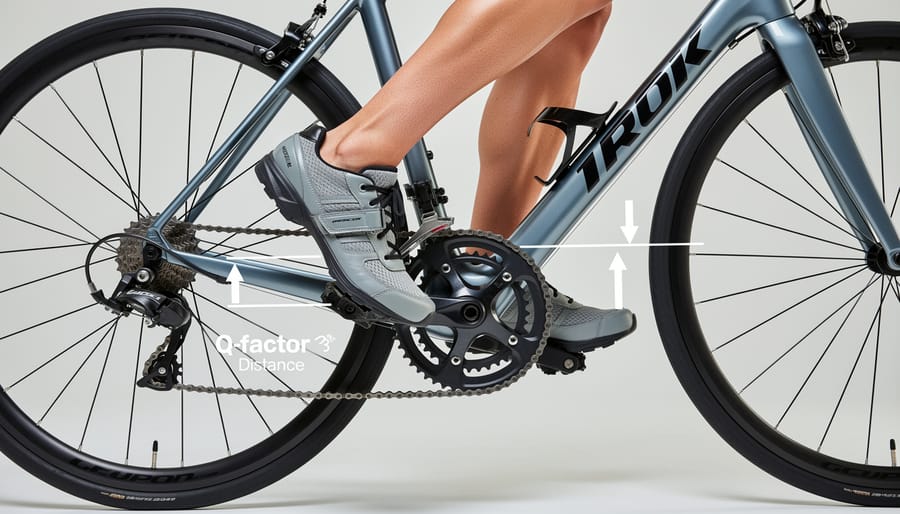
If you’ve ever felt your knees tracking awkwardly on longer rides or experienced hip discomfort during your commute, q-factor might be the culprit. Simply put, q-factor is the distance between where your left and right pedals attach to the cranks, measured from the outside of one pedal to the outside of the other. Think of it as your bike’s stance width—just like how we all have slightly different natural stances when standing, bikes have varying q-factors, typically ranging from 150mm to 180mm.
Picture this: imagine holding two pieces of paper at arm’s width versus close together. The wider position engages different muscles in your shoulders and chest. Similarly, a wider q-factor changes how your hips, knees, and ankles align through each pedal stroke. For some riders, particularly those with wider hips or existing knee concerns, a narrower q-factor can force their legs into an unnatural tracking pattern, creating stress on joints with every revolution. This matters enormously when you’re cycling to work daily or running errands around your local Australian suburb.
Here’s the practical reality: if your bike’s q-factor doesn’t suit your body, that discomfort can quietly discourage you from choosing the bike over the car. Many Australians abandon cycling as sustainable transport not because they don’t care about reducing emissions, but because persistent discomfort makes it unsustainable for their bodies.
Visually, if you looked at a bike from the front, you’d see the cranks angling outward from the bottom bracket (the central axle). The q-factor is that total width at the pedals. A road bike might have a q-factor around 150mm, while a mountain bike could be 175mm or wider to accommodate broader frame designs.
Understanding this measurement empowers you to make informed choices. When your bike fits your body’s natural biomechanics, cycling becomes genuinely enjoyable—transforming sustainable transport from a worthy sacrifice into something you look forward to each day.

The Sustainability Connection: Why Comfort Keeps Cyclists on the Road
The Real Cost of Uncomfortable Cycling
Across Australia, countless bicycles sit gathering dust in garages and under carports, abandoned after just a few uncomfortable rides. This isn’t just disappointing for individual riders—it represents a significant waste of resources and a missed opportunity for sustainable transport. When discomfort from poor bike fit, including incorrect q-factor, drives people away from cycling, they typically return to their cars, particularly in our sprawling suburban landscapes where distances can be challenging.
The environmental cost adds up quickly. Manufacturing a single bicycle generates carbon emissions, and when that bike becomes unused, those emissions were essentially wasted. Meanwhile, each journey taken by car instead of bicycle contributes approximately 271 grams of CO2 per kilometre. For someone who planned to cycle a 10-kilometre daily commute but gave up due to knee pain from q-factor issues, that’s roughly 700 kilograms of additional CO2 emissions annually.
In Australian cities where suburban sprawl makes active transport already challenging, losing potential cyclists to preventable discomfort undermines community efforts toward sustainability. The good news? Understanding bike fit fundamentals like q-factor helps more people stick with cycling as one of the most effective sustainable commuting alternatives. When your bike fits properly, cycling becomes enjoyable enough to maintain long-term, turning environmental intentions into lasting habits.
Building Cycling Habits That Last
Here’s the reality: we won’t swap four wheels for two if every ride leaves us wincing. This is where proper bike fit, including q-factor, becomes a game-changer for reducing car dependency.
When your bike fits correctly, cycling transforms from an uncomfortable chore into something you actually look forward to. Across Australian cities, communities are discovering that addressing technical fit issues keeps people pedaling consistently. That morning coffee run, the school drop-off, or the commute to work suddenly become pleasant experiences rather than exercises in endurance.
The q-factor dimension matters because comfort directly influences behaviour change. If knee pain flares up after every ride, you’ll reach for the car keys instead. But when your stance feels natural and your joints move smoothly, cycling becomes the obvious choice.
Melbourne’s community cycling hubs report that riders who invest in proper bike fitting are three times more likely to maintain regular cycling habits beyond six months. It’s not just about environmental commitment; it’s about making sustainable choices genuinely enjoyable.
Think of q-factor adjustment as removing friction from your green transport goals. When cycling feels good, it stops being a sacrifice and becomes simply how you get around. That’s when individual choices multiply into community-wide change.
Finding Your Ideal Q-Factor: A Practical Guide
Signs Your Q-Factor Needs Attention
Your body often signals when something isn’t quite right with your bike setup, and q-factor issues are no exception. Many Australian cyclists pushing through discomfort don’t realise their pedal stance width could be the culprit, potentially derailing their commitment to cycling as sustainable transport.
Watch for persistent knee pain, particularly on the inside or outside of the knee joint. This discomfort typically worsens during longer rides and may discourage you from choosing your bike over the car. Hip discomfort or tension in the hip flexors is another telltale sign, as your body compensates for an unnatural pedaling stance.
Numbness or tingling in your feet during rides, especially in the outer toes, often indicates pressure points caused by improper q-factor alignment. You might also notice reduced pedaling efficiency—that feeling of working harder without gaining speed, which can be frustrating when you’re committed to sustainable commuting.
If you find yourself unconsciously adjusting your foot position on the pedals or experiencing ankle strain, your q-factor likely needs attention. These symptoms not only affect your comfort but can impact your cycling sustainability goals. After all, if riding causes pain, you’re less likely to maintain cycling as your primary transport choice, affecting both your wellbeing and environmental impact.
Adjustment Options for Every Budget
The good news? Optimising your q-factor doesn’t require breaking the bank, and there are wonderfully sustainable pathways to pedalling comfort that align with your environmental values.
Start with the free options. Visit your local bike shop for a professional bike fit assessment—many Melbourne, Sydney, and Brisbane community bike workshops offer these at no cost or by donation. Sometimes a simple cleat repositioning or saddle adjustment can significantly improve your leg alignment and reduce q-factor-related discomfort. These small tweaks demonstrate how sustainable transport solutions needn’t always involve purchasing new equipment.
If adjustments are needed, pedal spacers or washers represent the most affordable option, typically costing between fifteen and forty dollars. These tiny components sit between your pedal and crank arm, effectively narrowing your stance. They’re reusable across multiple bikes, making them a smart long-term investment for committed cyclists.
For more significant changes, consider second-hand crank arms from Australian cycling forums, Gumtree, or Facebook Marketplace. The thriving community of cyclists upgrading their equipment means quality components are regularly available at a fraction of retail prices. This circular economy approach keeps perfectly functional parts out of landfill whilst making cycling more accessible.
Your local bike cooperative represents another treasure trove of sustainable solutions. These community-focused spaces often stock donated parts and provide workshop access where you can learn to make adjustments yourself—building both skills and connections with fellow environmentally conscious riders.
When new parts are necessary, prioritise Australian retailers who support local repair networks and offer recyclable packaging. Remember, investing in proper q-factor adjustment isn’t just about comfort—it’s about ensuring cycling remains your joyful, sustainable transport choice for years to come, preventing the discouragement that might otherwise push you back toward car dependency.
Q-Factor Considerations for Different Sustainable Cycling Applications
Cargo Bikes and Family Cycling
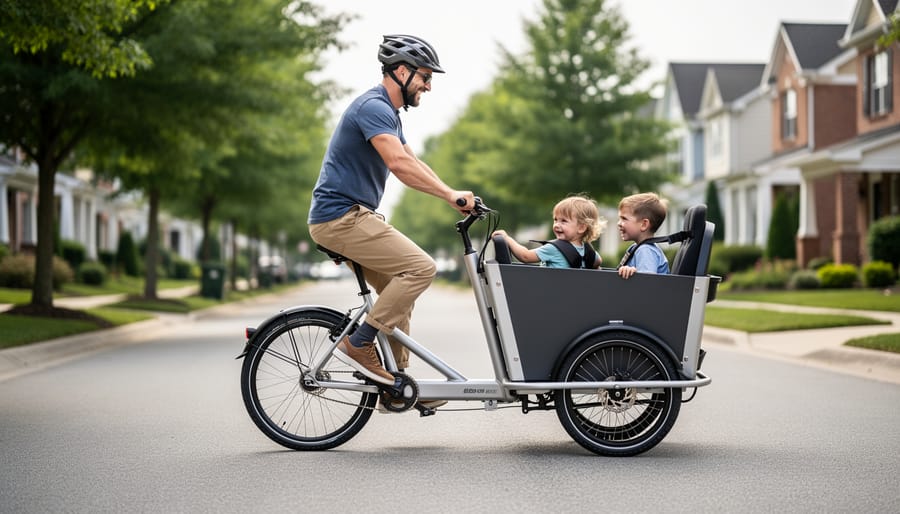
Cargo bikes represent a growing movement among Australian families choosing car-free lifestyles, but they come with unique biomechanical considerations. These utility cycles typically feature q-factors ranging from 200mm to 250mm—significantly wider than standard bikes—to accommodate sturdy frames capable of carrying children, groceries, or business cargo.
The good news? Many riders adapt comfortably within a few weeks of regular use. Your body is remarkably resilient, and the wider stance often feels more stable when loaded, particularly when navigating Melbourne’s bike lanes or Sydney’s shared paths with precious cargo aboard.
If you’re experiencing hip or knee discomfort while pedalling your cargo bike, start by checking your saddle height and position. A slightly higher saddle can help compensate for the wider pedal stance, reducing strain on your joints. Consider shorter, more frequent rides initially to build adaptation gradually—think the school run rather than immediate cross-city expeditions.
Australian cargo bike communities are brilliant resources for troubleshooting comfort issues. Local groups in Brisbane, Perth, and Adelaide regularly share modifications and fitting tips specific to various models. Some riders find that pedal extenders or washers can fine-tune their position, though start conservatively with adjustments.
Remember, every shopping trip by cargo bike instead of car reduces emissions while building sustainable transport habits for your family. Comfort matters because it sustains your commitment to car-replacement cycling long-term.
E-Bikes and Commuter Setups
If you’re considering an e-bike as your sustainable transport solution, q-factor deserves special attention. Many e-bikes feature wider motor housings at the bottom bracket, which can push cranks outward and increase your q-factor by 10-20mm compared to traditional bikes. This matters particularly for Australians making the switch to e-bikes for daily commuting, where comfort directly impacts whether you’ll stick with this greener transport choice.
When test-riding e-bikes, pay close attention to how your hips and knees feel during the ride. A wider stance might initially feel unusual, but discomfort shouldn’t be ignored—it’s your body signaling a potential fit issue. Many quality e-bike manufacturers now offer multiple crank arm options to accommodate the wider motor housing while maintaining a comfortable pedaling position.
For commuter setups designed for Australian conditions, consider that wider tires and mudguards can also affect your bike’s overall geometry. Bikes built for urban commuting often feature clearance for 40mm+ tires, which may influence frame design and subsequently q-factor. Local bike shops increasingly understand these considerations, especially as more Australians embrace cycling for daily transport. Don’t hesitate to ask about crank options and test different setups—your long-term comfort determines whether your sustainable transport choice becomes a lasting lifestyle change rather than a short-lived experiment.
Community Resources and Support in Australia
Across Australia, a growing network of community-driven initiatives is making cycling more accessible, comfortable, and sustainable for everyone. When it comes to addressing bike fit issues like q-factor concerns, you don’t have to navigate the journey alone.
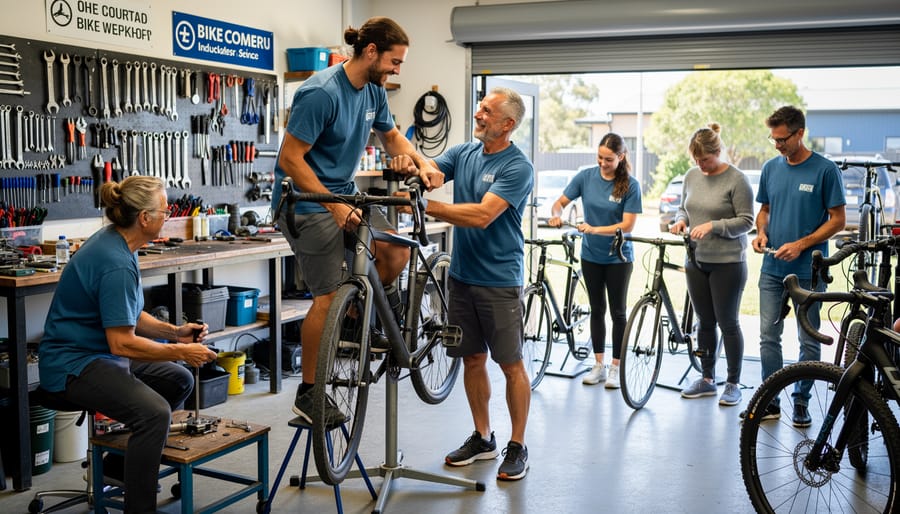
Bicycle co-operatives and community workshops are thriving in cities nationwide, offering hands-on support for riders experiencing discomfort. Melbourne’s Bike Kitchen and Sydney’s Bike Love operate as welcoming spaces where experienced volunteers help you understand your bike’s geometry and make adjustments. These workshops often stock second-hand parts, allowing you to experiment with different crank widths or pedal systems affordably while keeping components out of landfill.
In Brisbane, the Brisbane Bike Hub provides accessible bike fitting services and maintenance courses that demystify the technical aspects of cycling comfort. Their community-focused approach means you’ll learn skills to maintain your bike long-term, reducing reliance on expensive shop visits and supporting your commitment to sustainable transport.
Perth’s Bike Rescue and Adelaide’s Bike Kitchen follow similar models, recognizing that comfortable cycling is essential for keeping people on bikes. When riders abandon cycling due to knee pain or hip discomfort caused by poor bike fit, it represents a lost opportunity for sustainable transport. These organizations bridge the gap between environmental goals and practical reality.
Many local councils are also stepping up. The City of Melbourne’s bike maintenance stations and Bicycle Network’s free workshops across Victoria demonstrate how community support networks make cycling viable for the long term. These initiatives recognize that sustainable transport isn’t just about infrastructure—it’s about ensuring every rider can cycle comfortably.
For those seeking professional guidance, organizations like Cycling Australia maintain directories of accredited bike fitters who understand how q-factor and other geometric factors affect both performance and comfort. These experts can assess your individual biomechanics and recommend adjustments that transform cycling from uncomfortable to enjoyable.
The beauty of these community resources is their focus on empowerment—giving you the knowledge and tools to keep cycling sustainably for years to come.
The Bigger Picture: Bike Fit as Environmental Action
When your bike fits properly, you’re more likely to ride it. It sounds simple, but this connection between comfort and consistency holds profound implications for Australia’s environmental future. Getting your q-factor right isn’t just about pedalling efficiency—it’s about removing the barriers that prevent people from choosing bikes over cars, day after day, year after year.
Consider this: every cycling journey displaces a potential car trip. When knee pain or hip discomfort makes cycling unpleasant, people drift back to driving. But when cyclists address biomechanical issues like incorrect q-factor, they stick with it. They become part of the solution to urban congestion, air quality problems, and carbon emissions. Proper bike fit transforms cycling from a short-lived experiment into a lifelong transportation choice.
Supporting local Australian bike shops for q-factor adjustments strengthens community resilience too. These shops employ local mechanics, source components thoughtfully, and keep knowledge circulating within neighbourhoods. When you invest in professional bike fitting rather than abandoning an uncomfortable bike, you’re supporting skilled trades and circular economy principles. You’re also extending your bicycle’s lifespan—keeping frames, wheels, and components in use rather than sending them to landfill prematurely.
The ripple effects extend further. Comfortable cyclists inspire others. When your neighbour sees you commuting confidently without complaint, they’re more likely to dust off their own bike. Communities with higher cycling rates advocate more effectively for bike infrastructure, creating sustainable transport systems that benefit everyone.
Small adjustments—a few millimetres in pedal stance, different crank arms, or adjusted cleat positions—create cascading environmental benefits. They keep people cycling through decades rather than months. They reduce our collective carbon footprint one comfortable pedal stroke at a time. In a nation where car dependency remains stubbornly high, optimising something as specific as q-factor becomes an unexpectedly powerful environmental action.
Choosing a bike for sustainability is only half the story. If your bicycle causes knee pain, hip discomfort, or leaves you exhausted after short rides, it won’t replace those car trips long-term. That’s why understanding q-factor and overall bike fit matters so profoundly for the environmental outcomes we’re seeking. A comfortable cyclist is a consistent cyclist, and consistency is what transforms individual choices into meaningful carbon reduction.
Take time to assess your current setup. Stand over your bike and observe your pedalling position. Notice whether your knees track inward or your hips feel strained. These small observations can reveal whether q-factor adjustments might help. Many Australian bike shops offer professional fitting services, and local cycling groups often share invaluable knowledge about finding the right setup for your body and riding style.
Remember, sustainable transport isn’t an all-or-nothing proposition. Even replacing two car trips weekly with comfortable cycling makes a genuine difference. When combined with public transport for longer journeys, cycling becomes part of a realistic, practical transport solution rather than an uncomfortable obligation.
Share what you learn with your community. When neighbours see you cycling comfortably and confidently, they’re inspired to try it themselves. Talk about bike fit at community events, workplace sustainability initiatives, or social gatherings. The ripple effect of one person’s comfortable, joyful cycling experience extends far beyond individual environmental impact—it helps build the cycling culture Australia needs for a sustainable future.