
Every day, the average Australian household sends over 200 litres of perfectly reusable water down the drain—water from showers, washing machines, and bathroom sinks that could be nourishing your garden instead. Building your own greywater recycling system isn’t just about water conservation; it’s about taking practical action that reduces your environmental footprint while cutting water bills by up to 40%.
Right now, as Australia faces increasing water scarcity and rising utility costs, DIY greywater systems offer an accessible solution that any homeowner can implement over a single weekend. You don’t need expensive contractors or complex plumbing knowledge to get started. With basic tools, readily available materials from your local hardware store, and a clear understanding of sustainable water management principles, you can divert household water to where it’s needed most.
This comprehensive guide walks you through every stage of creating your own greywater system, from understanding Australian regulations and safety requirements to selecting the right setup for your property, constructing the system step-by-step, and maintaining it for optimal performance. Whether you’re dealing with Brisbane’s summer heat or Melbourne’s temperamental climate, you’ll discover how to design a system that works with your local conditions.
The best part? You’ll join thousands of Australians who’ve already transformed their water usage, creating resilient gardens while making a tangible difference for our shared environment. Let’s get building.
Understanding Greywater: What It Is and Why It Matters
What Can and Can’t Go Into Your Greywater System
Getting your greywater system right starts with understanding what can safely flow through it. Think of it like home composting systems – what goes in determines what comes out, and ultimately affects the health of your garden and soil.
The golden rule is simple: if it’s harsh on your skin, it’s harsh on your plants. Safe products include biodegradable soaps, phosphate-free detergents, and plant-friendly cleaning solutions. Look for Australian brands like Ecostore, Koala Eco, or Earth Choice, which are readily available at Woolworths and Coles. These products break down naturally without harming soil microorganisms or plant roots.
What you absolutely must avoid are products containing bleach, antibacterial agents, boron (common in some laundry powders), and harsh chemicals. Boron is particularly problematic in Australian soils as it accumulates over time and can become toxic to sensitive plants. Check labels carefully – if a detergent contains sodium perborate or borax, keep it out of your greywater system.
Kitchen sink water requires extra caution due to food scraps, oils, and grease, which is why many DIYers exclude it altogether. Bathroom and laundry greywater are typically your safest sources when using approved products.
Creating a simple reference chart near your washing machine helps everyone in your household remember which products are greywater-safe. This small step ensures your system continues benefiting your garden rather than harming it, making your sustainable choice truly effective.
Know Before You Build: Australian Regulations and Safety Considerations
Choosing the Right System for Your Property
Before diving into construction, take time to match your system to your property’s unique needs. Start by assessing your garden size and water requirements. A small suburban garden with a few veggie beds might thrive on bathroom greywater alone, while larger properties across regional Australia often benefit from tapping into laundry and shower sources combined.
Walk through your home and identify accessible greywater sources. Laundry systems are typically easiest for beginners since washing machines already pump water out, requiring minimal plumbing modifications. Bathroom sources offer higher volumes but need careful consideration of soap and shampoo products you’ll use.
Consider your climate zone honestly. Northern Queensland gardeners battling dry seasons will prioritize maximum water capture, while those in Tasmania’s cooler regions might focus on seasonal systems that complement natural rainfall patterns. Your local community garden or Landcare group can offer invaluable insights into what works in your specific area.
Calculate your household’s daily greywater output—an average Australian household produces 100-200 litres daily from laundry and bathrooms. Match this against your garden’s thirsty periods. Remember, it’s better to start small with one reliable source than overwhelm yourself trying to capture everything at once.
Think about your physical setup too. Properties on slopes naturally suit gravity-fed systems, while flat blocks might need simple pump assistance. Ground space for mulch basins or subsurface irrigation also matters. Take measurements, snap photos, and sketch a basic property map before committing to any particular design. This groundwork ensures your DIY system becomes a sustainable success story rather than an abandoned project.
Building Your DIY Greywater System: Step-by-Step
Tools and Materials You’ll Need
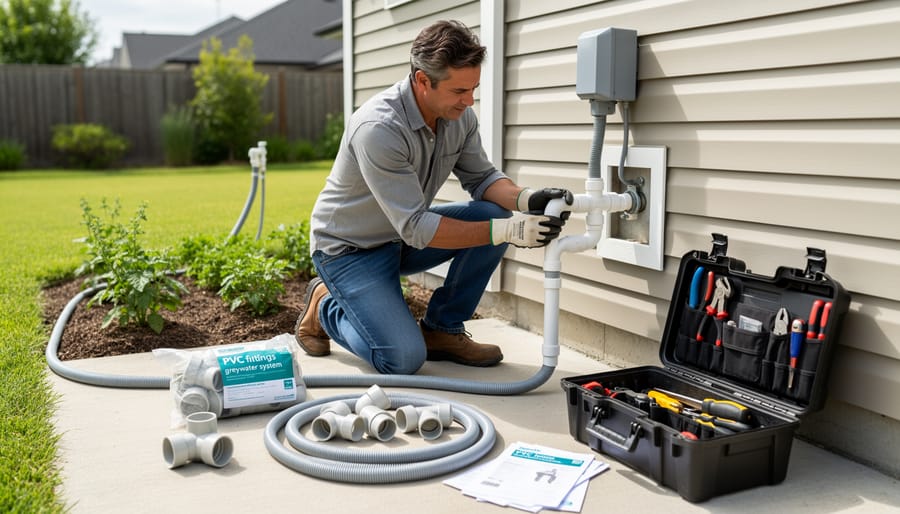
Getting started with your greywater system is easier than you might think, and the good news is that everything you need is available at your local Bunnings or Mitre 10. Here’s what you’ll need to gather before beginning your project.
For the plumbing components, pick up 40mm and 50mm PVC pipes and fittings (budget around $50-80 depending on your system size). You’ll need a three-way diversion valve ($30-60) that lets you switch between sending water to the sewer and your garden. A basic mesh filter or lint trap ($20-40) is essential for catching hair and debris before water reaches your garden.
Don’t forget the practical tools: a hacksaw or PVC pipe cutter ($15-25), PVC primer and cement ($20 for both), measuring tape, and a spirit level. If you’re creating subsurface irrigation, grab some agricultural pipe ($30-50 for 20 metres) and a roll of weed mat ($25).
For your mulch basin system, you’ll need quality mulch like woodchips or pea straw ($10-15 per bag, plan for 5-10 bags) and possibly some river rocks for filtration ($8-12 per 20kg bag).
Total estimated cost: $250-450 for a basic laundry-to-garden system, which is remarkably affordable considering the water savings you’ll achieve. Many Australian households recover this investment within 12-18 months through reduced water bills.
Remember to check with your local council about any specific requirements, as some areas have additional guidelines that might affect your materials list. This small upfront investment creates lasting benefits for both your garden and our precious water resources.
Setting Up a Laundry-to-Garden System
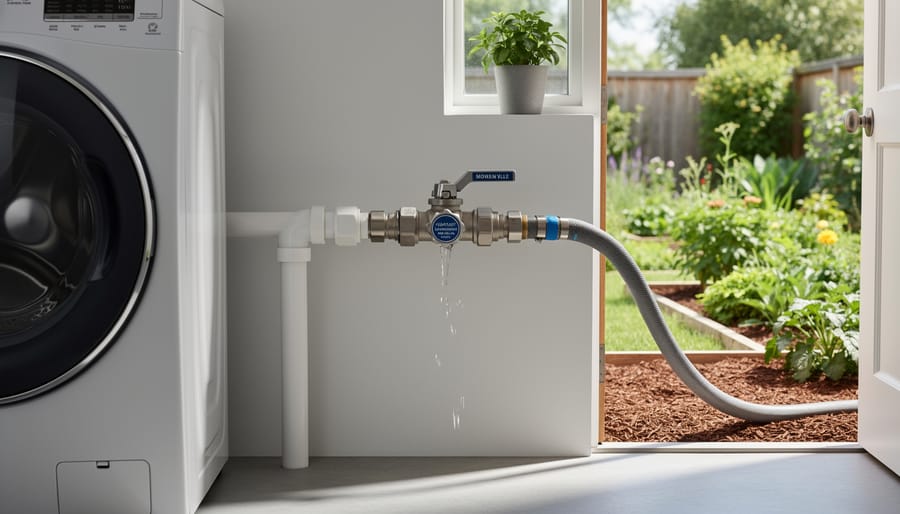
The laundry-to-garden system is hands-down the most straightforward greywater project you can tackle on a weekend, and it’s perfectly suited to Australian backyards. This system diverts water from your washing machine directly to your garden beds, bypassing your septic or sewer system entirely.
Start by locating your washing machine’s outlet hose, which typically drains into a standpipe or laundry tub. You’ll need a three-way diversion valve (available at Bunnings for around $30-60), approximately 20 metres of 25mm garden hose or agricultural poly pipe, and some hose clamps. The beauty of this system is that it requires no council approval in most Australian states for simple laundry-to-garden setups, though always check your local regulations first.
Installation takes just a few hours. Disconnect your washing machine outlet hose and attach the diversion valve to the standpipe. One outlet continues to your regular drainage, while the other connects to your garden hose. Run this hose to your garden beds, keeping it at a slight downward slope to ensure gravity does the work. Position the outlet at least 100mm below the washing machine’s drain point to prevent backflow.
Here’s where many first-timers stumble: the hose end should sit above soil level, allowing water to spread across the surface rather than pooling. Create a simple basin around fruit trees or established garden beds using mulch to help distribute the water evenly. For a typical 8-9kg washing machine, you’ll release roughly 100-150 litres per load, so rotate between several garden areas.
When you’re doing loads that aren’t garden-friendly (nappy soaks, heavily soiled work clothes), simply switch the valve back to regular drainage. Most households find they can safely redirect three-quarters of their laundry water.
Common troubleshooting: If water backs up, check for kinks in your hose or insufficient fall. If plants show stress, you might be overwatering one area. The solution? Add more outlet points or alternate between garden zones. This simple system can save an average Australian household up to 15,000 litres annually while keeping your garden thriving through our increasingly harsh summers.
Installing a Bathroom Greywater System
Your bathroom is a goldmine for water conservation. In most Australian homes, the shower and basin account for up to 40% of total water use, making them perfect candidates for greywater recycling. The good news? Installing a bathroom diversion system is surprisingly achievable for confident DIYers.
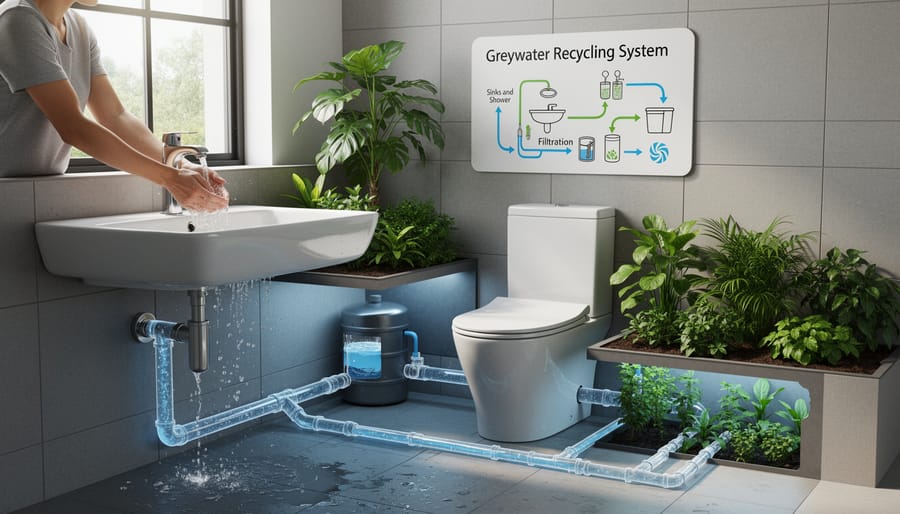
Start by identifying your drainage pipes beneath the bathroom floor or in the subfloor area. You’ll need to redirect water from your shower and handbasin only—never include toilet waste, which requires separate treatment. For most homes, this means tapping into the existing drainpipe before it joins the sewer line.
Install a simple diversion valve that allows you to switch between greywater irrigation and standard drainage. This flexibility is crucial during wet periods when your garden doesn’t need additional water. Many Australian suppliers now offer compliant three-way diversion valves specifically designed for residential use.
Before the water reaches your garden, it must pass through proper filtration. A basic mesh filter removes hair and larger particles, protecting your irrigation system from blockages. For clay-heavy Australian soils common across much of the continent, consider adding a gravel-filled surge tank that allows sediment to settle before distribution.
The irrigation itself works best as a subsurface system. Dig trenches about 30 centimetres deep and lay slotted agricultural pipe surrounded by gravel. This approach keeps greywater below the surface, preventing contact with people or pets while supporting effective water management in gardens.
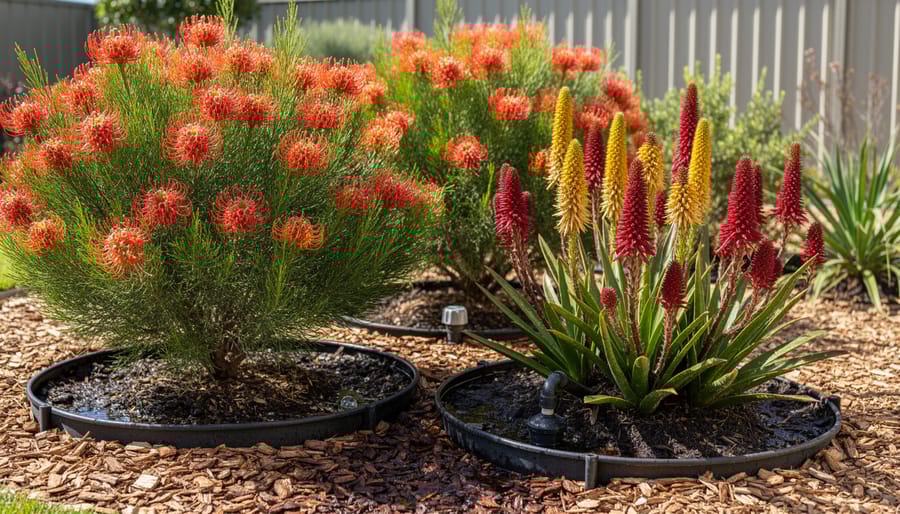
Create mulch basins around established trees and shrubs as distribution points. These shallow depressions, filled with organic mulch, allow water to percolate slowly into the root zone while the mulch layer filters and breaks down any residual soaps. Native plants and fruit trees particularly thrive with this arrangement.
Remember to use biodegradable, low-sodium cleaning products once your system is operational. Your garden will thank you, and you’ll be joining thousands of Australian households already making every drop count.
Making Your Greywater System Work: Best Practices for Australian Gardens
Which Plants Love Greywater (And Which Don’t)
The good news is that many Australian gardens absolutely thrive on greywater! Once you’ve built your system, you’ll be amazed at how lush your landscape becomes.
Australian natives are greywater champions. Bottlebrush, grevillea, kangaroo paw, and westringia handle the sodium and phosphorus in greywater remarkably well. These tough plants evolved to cope with nutrient-poor soils, so they’re not fussed by slightly soapy water. Wattles and eucalypts are particularly forgiving, though they prefer greywater diluted during establishment.
Fruit trees love greywater too, especially citrus, stone fruits like peaches and apricots, and established avocados. Just keep greywater away from the trunk and distribute it around the drip line. Passionfruit vines, grapes, and berries grown on trellises also respond beautifully.
Many ornamentals flourish under greywater irrigation, including roses, hibiscus, agapanthus, and most flowering shrubs. Established lawns handle greywater well, creating a lush carpet while saving precious drinking water.
However, some plants should stay on town water. Avoid using greywater on root vegetables like carrots, potatoes, and beetroot where soil contact raises health concerns. Delicate herbs and leafy greens grown for eating are best watered with fresh water, especially if you’re using greywater containing food particles. Young seedlings and acid-loving plants like azaleas and camellias may struggle with greywater’s alkalinity.
The secret is rotating your irrigation between different garden zones, giving greywater-sensitive plants fresh water while your tougher natives and established trees handle the recycled supply. This approach maximizes water savings while keeping your entire garden healthy.
Maintenance and Monitoring Your System
Your greywater system will thrive with just a little regular attention. Set aside fifteen minutes each month to check your system—think of it as catching up with an old mate who’s doing important work for your garden and the planet.
Start by inspecting filters and removing any accumulated debris. Check outlet points for signs of salt buildup, particularly common in Australian soils during our drier months. If you notice white crystalline deposits around irrigation areas, it’s time to rotate your watering zones or dilute with rainwater. This simple step prevents soil degradation and keeps your plants happy.
Watch your nose—literally. A healthy greywater system shouldn’t smell. If you detect odours, your water might be sitting too long before use. Ensure your system drains within 24 hours and check for blockages in pipes or distribution points.
Seasonally, adjust your system’s output. During summer, your garden will welcome every drop, while winter might require redirecting excess to appropriate drainage. Many Australian households find their greywater systems work harder during our notorious dry spells, making them even more valuable.
Keep a simple logbook noting any changes or issues. This creates a helpful reference and helps you spot patterns before they become problems. Your future self will thank you for these quick notes.
Real Results: What Australian Households Are Saving
The numbers tell a compelling story when you look at what Australian households are actually achieving with DIY greywater systems. Take the Henderson family from Bendigo, who installed a simple laundry-to-garden system in 2022. They’re now redirecting 120 litres of water daily to their vegetable patch and fruit trees. Over summer, this translates to roughly 3,600 litres monthly that no longer comes from their mains supply, saving them around $45 per quarter on water bills.
In Brisbane, the Nguyen household took their system a step further, connecting both bathroom and laundry greywater to irrigate their quarter-acre block. During the dry winter months, they’ve cut outdoor water use by 70 percent, saving approximately $180 annually. When drought restrictions hit their area in 2023, their garden thrived while neighbours struggled with browning lawns.
The calculations become even more impressive during extended dry periods. A typical four-person household generates between 200-400 litres of greywater daily. At current Australian water prices averaging around $2.50 per kilolitre (varying by state), redirecting 300 litres daily saves roughly $275 annually. During drought, when water prices can increase and restrictions limit garden watering, these savings multiply.
Perth residents are seeing particularly strong results, given Western Australia’s water scarcity challenges. One community group tracking eco-friendly home solutions reported average savings of $250-400 annually per household using greywater systems, with drought years pushing savings beyond $500.
Beyond finances, households consistently report healthier gardens, reduced reliance on town water, and the satisfaction of putting waste water to productive use. These practical outcomes demonstrate that greywater recycling delivers measurable environmental and economic benefits for everyday Australians.
Building your own greywater recycling system is more achievable than you might think. Whether you start with a simple laundry-to-garden setup or progress to a more sophisticated mulch basin system, every litre of greywater you redirect makes a tangible difference. Remember, you don’t need to tackle everything at once. Begin with one greywater source, observe how it performs, and expand gradually as your confidence grows.
Across Australia, we’re facing increasing water scarcity and rising utility costs. Your DIY greywater system isn’t just about personal savings, though many households reduce their water bills by 30-40%. It’s about contributing to a collective solution that strengthens our communities against drought and climate uncertainty. When thousands of Australian households embrace greywater recycling, we collectively preserve millions of litres of precious drinking water for where it’s truly needed.
We’d love to hear about your greywater journey. Share your experiences, challenges, and successes with fellow Australians who are making similar changes. Consider connecting with sustainable living groups in your area to exchange practical tips and inspire others. Together, we’re building a more water-wise Australia, one garden at a time.