
Set your air conditioner to 24°C (75°F) for the sweet spot between comfort and efficiency—this single adjustment can slash your cooling costs by up to 30% compared to running your system at 20°C. For every degree you raise above this baseline, you’ll save approximately 10% on your energy bill, a significant impact that adds up across Australian summer months.
The science is straightforward: your AC works hardest when fighting the temperature difference between indoors and outdoors. On sweltering 35°C days common across much of Australia, maintaining a 24°C indoor environment creates a manageable 11-degree gap rather than forcing your system to sustain an energy-intensive 15-degree split at 20°C. This reduced workload means your compressor cycles less frequently, drawing considerably less power from the grid.
Beyond the temperature setting itself, combining this optimal range with ceiling fans creates perceived cooling of 2-3 degrees through air circulation, allowing you to maintain 24-25°C comfortably while using a fraction of the energy. Australian households embracing this approach report noticeable reductions in quarterly electricity bills while contributing to lower peak demand on our energy infrastructure during heatwave events—a genuine win for both your wallet and our collective environmental footprint.
Why Your AC Temperature Setting Matters More Than You Think
Every degree counts when it comes to your air conditioning, and the numbers tell a compelling story for Australian households. When you adjust your thermostat by just one degree cooler, you’re increasing your energy consumption by approximately 10 percent. That might not sound dramatic until you consider what it means for your wallet and our environment.
Let’s put this into perspective with real Australian figures. The average household in New South Wales pays around 28 to 35 cents per kilowatt-hour for electricity. If you’re running your AC at 22 degrees instead of the recommended 24 degrees during summer, you could be adding an extra $200 to $400 annually to your energy bills. Multiply that across the millions of households cooling their homes during our scorching summers, and we’re looking at substantial unnecessary carbon emissions.
The relationship between temperature settings and energy use isn’t linear either. Your AC works hardest when trying to maintain a significant difference between indoor and outdoor temperatures. On a 35-degree day in Brisbane or Perth, setting your system to 20 degrees forces it into overdrive, constantly cycling to maintain that 15-degree gap. This intensive operation doesn’t just consume more electricity; it also puts strain on the electricity grid during peak demand periods, contributing to the need for additional power generation.
Beyond individual impact, our collective temperature choices shape Australia’s energy landscape. By embracing efficient air conditioning practices, we’re joining a community-wide effort to reduce demand on our power infrastructure. Every household that sets their thermostat mindfully contributes to a more sustainable energy future, demonstrating that comfort and environmental responsibility can coexist.

The Science-Backed Sweet Spot: 24-25°C
How This Temperature Saves Energy Without Sacrificing Comfort
Here’s the reality that might surprise you: every degree you lower your air conditioning below 24°C can increase your energy consumption by 5-10%. For the average Australian household running AC during our scorching summers, that seemingly small adjustment from 21°C to 24°C could save between $200-$350 annually on electricity bills.
Let’s put this into perspective with a typical Brisbane home. Running your system at 21°C on a 35°C day means your compressor works overtime, cycling almost continuously to fight that 14-degree temperature gap. Bump it to 24°C, and you’re only battling an 11-degree difference. The compressor runs less frequently, uses less power, and you’re still beautifully comfortable.
Australian businesses see even more dramatic results. A Melbourne café that shifted from 22°C to 24°C across their 150-square-metre space reduced their quarterly energy bills by nearly $400, which funded their switch to compostable packaging. The best part? Not a single customer noticed the change.
This isn’t about suffering through the heat. It’s about recognizing that 24°C, paired with ceiling fans and sensible clothing choices, genuinely feels comfortable once you give your body a few days to adjust. You’re working with your environment, not constantly fighting against it.
When to Adjust: Seasonal Variations Across Australia
Australia’s diverse climate zones mean your optimal AC temperature might need tweaking depending on where you call home. In tropical North Queensland, where humidity often feels more oppressive than heat itself, setting your AC to 24-25°C during the wet season provides relief while managing energy use. The key here is pairing your cooling with good dehumidification settings, which often matters more than dropping temperatures lower.
For temperate cities like Melbourne, you’ve got breathing room. Summer’s milder peaks mean 25-26°C works beautifully on most days, though those occasional heatwaves might justify brief adjustments. Many Melbourne households are discovering they can push to 27°C on cooler summer evenings, significantly cutting energy bills without sacrificing comfort.
Perth and Adelaide residents face dry heat, where the magic combination is slightly higher AC settings (25-27°C) paired with strategic use of ceiling fans. That arid climate means evaporative cooling often outperforms refrigerated systems for efficiency, though when you do use AC, the lower humidity makes higher temperature settings more tolerable.
The common thread across all regions? Community energy initiatives are showing that gradual seasonal adjustments, rather than dramatic changes, help households adapt while building more sustainable cooling habits year-round.
Making the Efficient Temperature Work for You
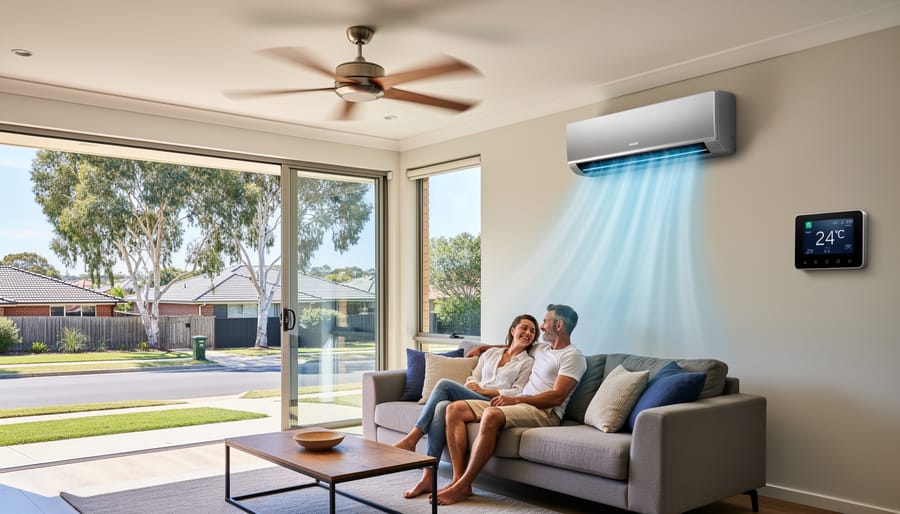
Smart Thermostat Programming for Australian Lifestyles
Modern thermostats can slash your energy bills while keeping you comfortable, but only when programmed to match how Australians actually live. Start by setting your AC to switch off or increase to 26°C during typical work hours (9am-5pm on weekdays) when the house is empty. For families, program a cooler setting around 3:30pm before kids arrive home from school, then adjust back up around bedtime.
During Australia’s glorious shoulder seasons (March-May and September-November), you’ll barely need cooling at all. Program your system to only activate if temperatures exceed 28°C, letting natural ventilation do the work on mild days. This approach works brilliantly with energy efficient appliances that respond quickly without energy spikes.
Weekend schedules deserve separate programming since families are home more. Consider a slightly warmer daytime setting (25-26°C) with strategic cooling during peak heat hours (1pm-4pm). Many Aussie households find success with geo-fencing features that detect when you’re heading home, ensuring comfort without wasting energy on an empty house. Remember, every degree higher saves around 10% on running costs, so finding your family’s sweet spot between comfort and efficiency makes both environmental and financial sense.
Low-Cost Upgrades That Amplify Your AC Efficiency
Before investing in a new AC unit, consider these accessible upgrades that complement your optimal temperature settings. Australian homes particularly benefit from ceiling insulation improvements, which can reduce cooling costs by up to 45 percent. For around $1,500 to $3,000, DIY or professionally installed insulation pays for itself within three to five years in most states.
Door seals and window films offer even quicker returns. Weather stripping costs under $100 and takes an afternoon to install, while reflective window film blocks up to 80 percent of heat gain for around $10 per square metre. These simple additions mean your AC works less to maintain that efficient 24-25 degree setting.
Embrace passive cooling by opening windows during Melbourne’s cool evenings or installing external blinds in Queensland’s harsh sun. Communities across Perth and Adelaide are rediscovering outdoor awnings, which can reduce indoor temperatures by up to 5 degrees before your AC even switches on.
The real win? These upgrades work together. A well-sealed, properly insulated home might need 30 percent less cooling capacity, meaning your AC runs less frequently while you stay comfortable. That’s money back in your pocket and fewer emissions heating our shared atmosphere.
The Environmental Impact of Getting It Right
When Australian households collectively adjust their air conditioners to 24°C instead of running them at 21°C, the environmental impact is genuinely remarkable. Recent studies suggest that if just half of Australian homes made this simple change, we’d reduce carbon emissions equivalent to taking approximately 200,000 cars off our roads each summer. That’s the same environmental benefit as planting roughly 4 million trees.
The mathematics behind this impact is straightforward. Every degree cooler you set your air conditioner below 24°C increases energy consumption by around 10 percent. Across millions of households, those extra degrees translate into significant greenhouse gas emissions from our predominantly fossil-fuel-powered electricity grid. In practical terms, setting your thermostat just three degrees warmer could prevent approximately 300 kilograms of carbon dioxide emissions per household annually.
This collective action becomes even more powerful when combined with renewable energy systems, creating a multiplier effect for environmental benefits. Communities across Australia are already demonstrating this potential, with suburbs reporting measurable reductions in peak electricity demand during heatwaves simply through coordinated temperature adjustments.
The beauty of this change lies in its accessibility. Unlike major home renovations or expensive technology upgrades, adjusting your thermostat costs nothing yet contributes meaningfully to Australia’s emissions reduction targets. When we recognise that comfortable, efficient cooling aligns perfectly with environmental stewardship, the choice becomes clear. Together, we’re not just cooling our homes more efficiently; we’re actively participating in Australia’s sustainable future.
Common Myths About AC Temperature Settings (Debunked)
Let’s clear the air about some persistent AC myths that might be costing you money and contributing to unnecessary emissions. You’ve probably heard these around the barbie or at the local café, and it’s time we set the record straight.
The biggest myth? Setting your thermostat to 18°C will cool your home faster than setting it to 24°C. Here’s the truth: your air conditioner works at the same speed regardless of the temperature you select. It’s like flooring the accelerator in your car when you’re already at top speed – it doesn’t make you go faster, it just wastes fuel. Your AC unit pushes out cold air at a consistent rate, so setting it lower simply means it runs longer, not harder. You’ll end up with an uncomfortably cold home and a shocking electricity bill.
Another common misconception is that leaving your AC running all day while you’re at work uses less energy than turning it off and cooling down the house when you return. This myth stems from the idea that the initial cooling requires enormous energy. In reality, the energy needed to maintain a cool temperature in an empty home far exceeds the brief spike required to cool it down later. Think of it like switching off unused appliances – every hour they’re running unnecessarily adds to your consumption.
Many Australians also believe ceiling fans cool rooms when nobody’s in them. Fans cool people, not air, by creating wind chill. Running them in empty rooms wastes energy without benefit. Similarly, closing vents in unused rooms doesn’t improve efficiency in most modern systems; it actually disrupts airflow balance and can strain your unit.
Understanding these myths empowers our community to make genuinely efficient choices that benefit both household budgets and our shared environment.
There you have it—a simple adjustment that delivers remarkable results. Setting your air conditioner to 24°C isn’t just a number on a thermostat; it’s a conscious choice that ripples through your household budget, your carbon footprint, and ultimately, our shared environment here in Australia. The beauty lies in how effortless this change truly is. No expensive retrofits, no complicated technology—just a mindful decision that can reduce your energy consumption by up to 10% for every degree you raise.
We encourage you to make this shift today and track your energy bills over the coming months. Notice the difference, celebrate the savings, and share your experience with neighbours, colleagues, and your local community groups. When entire neighbourhoods embrace energy-efficient cooling practices, we collectively reduce strain on the grid during those scorching Australian summers, preventing blackouts and decreasing reliance on fossil fuel power generation.
Your action matters. Start monitoring your thermostat today, observe how comfortable 24°C truly is once you adjust, and become part of a growing movement of Australians choosing sustainability without sacrifice. Together, we’re proving that significant environmental impact starts with small, achievable steps.