
You’ve likely seen products labeled ‘biodegradable’, ‘compostable’, or ‘eco-friendly plastic’ and wondered if they’re genuinely better for our planet. The truth might surprise you: many of these alternatives won’t break down in Australian landfills and could be adding to our waste crisis rather than solving it.
Australia’s waste management infrastructure isn’t equipped to handle most eco-friendly plastics, meaning that compostable coffee cup you bought with good intentions might sit in landfill for decades alongside conventional plastics. Without access to industrial composting facilities—which only exist in select Australian regions—these materials simply won’t decompose as promised on their packaging.
But here’s the encouraging news: understanding what actually works in our local context empowers you to make genuinely sustainable choices. Some bioplastics do offer real benefits when disposed of correctly, while certain alternatives outperform both conventional and eco-friendly plastics entirely.
This isn’t about feeling guilty for past purchases or overwhelmed by greenwashing claims. It’s about cutting through the confusion with Australian-specific facts. We’ll explore which eco-friendly plastics deliver on their promises within our waste systems, how to identify genuine alternatives from marketing spin, and what disposal options actually exist in your local area.
Whether you’re a household trying to reduce your environmental footprint or a business seeking sustainable packaging solutions, you deserve clear answers about what works here in Australia—not just in theory, but in practice.
What ‘Eco-Friendly Plastic’ Really Means (Spoiler: It’s Complicated)
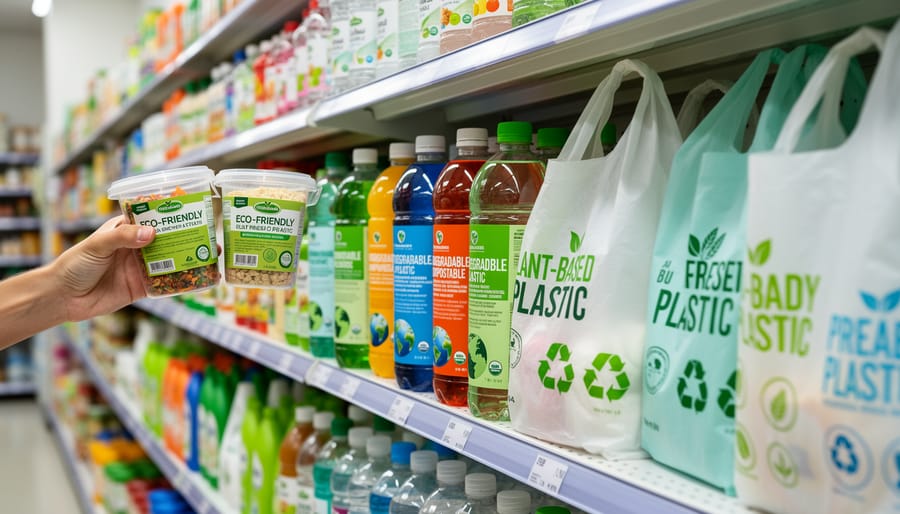
Biodegradable vs Compostable: Why the Difference Matters
You’ve probably seen products labeled “biodegradable” and “compostable” and wondered if they’re just different words for the same thing. Here’s the truth: they’re vastly different, and understanding this distinction is crucial for making choices that actually benefit our environment.
Biodegradable plastics break down naturally over time, but here’s the catch – this could mean anything from a few months to several hundred years, depending on conditions. There’s no guarantee about what they break down into, and many biodegradable plastics still leave microplastics behind. Even more concerning, most need specific industrial conditions to degrade properly – conditions rarely found in Australian landfills or our natural environment.
Compostable plastics, however, are held to stricter standards. In Australia, look for the AS4736 certification, which ensures a product will break down completely within 180 days in a commercial composting facility, leaving no toxic residue. These plastics need specific conditions: temperatures between 55-60°C, adequate moisture, and the right microbial activity – conditions only industrial facilities can reliably provide.
This is where many Australians get stuck. You might purchase certified compostable packaging with the best intentions, but unless your local council accepts compostable plastics in their green bin program, it’s heading to landfill anyway. Before buying compostable products, check with your council about what they actually accept. Some forward-thinking Australian communities, particularly in South Australia and parts of Victoria, are expanding their organics programs to include AS4736-certified items, but we’re not there yet nationwide.
The bottom line? Certification matters, and so does your local infrastructure.
Bio-Based Plastics: Plant-Derived Doesn’t Mean Earth-Friendly
Here’s a scenario many Australians encounter: you’re standing in the supermarket aisle, choosing between conventional plastic bags and ones labelled “bio-based” or “plant-derived.” The packaging shows green leaves and promises these products come from renewable corn or sugarcane. Surely that’s better for the planet, right? Not quite so simple.
Bio-based plastics are made from plant materials rather than petroleum, and while this sounds promising, it doesn’t automatically make them biodegradable or compostable. Many bio-based plastics are chemically identical to conventional plastics, they’ve simply swapped the raw material source. That corn-based water bottle? It might last just as long in landfill as its petroleum cousin.
In Australia, we’re seeing more bio-based products on shelves, particularly those using local sugarcane. These innovations do reduce reliance on fossil fuels, which matters for carbon emissions. However, they still require proper disposal systems. Some bio-based plastics can only break down in industrial composting facilities, many of which aren’t yet available across all Australian councils.
The takeaway? Plant-derived is a step in the right direction for reducing fossil fuel dependency, but it’s not a free pass. Always check whether your local area can actually process these materials before assuming they’re the environmental winner.
The Australian Reality: Why Most ‘Eco-Friendly’ Plastics End Up in Landfill
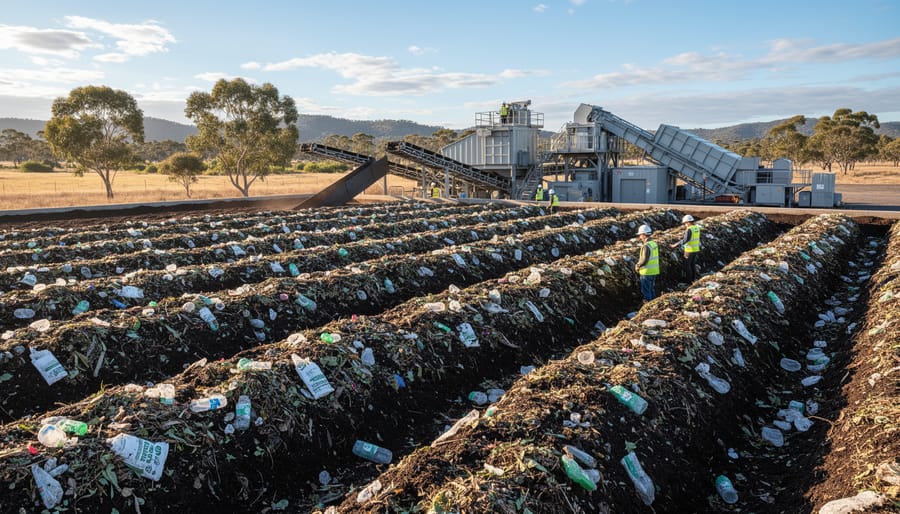
Where Your Compostable Coffee Cup Actually Goes
Picture this: you’ve just finished your flat white at a Melbourne café, and the barista hands you a cup labeled “100% compostable.” You feel good about your choice, toss it in the compost bin outside, and head off knowing you’ve done the right thing. But here’s where the story takes an unexpected turn.
That cup likely won’t become compost. In most Australian councils, compostable cups aren’t accepted in organic waste recycling bins because they require commercial composting facilities to break down properly. These facilities need specific conditions—the right temperature, moisture, and timeframe—that your home compost heap simply can’t provide. Even more challenging, many councils don’t have access to commercial composting infrastructure at all.
So what actually happens? Your well-intentioned cup often ends up contaminating the organic waste stream, getting sorted out and redirected to landfill anyway. In some cases, it goes straight to general waste from the start because staff at waste facilities can’t easily distinguish between regular plastic-lined cups and genuinely compostable ones during sorting.
The Sydney-based Planet Ark organization found that fewer than 30 Australian councils currently accept compostable packaging in their green bins. This means the majority of Australians don’t have access to proper disposal pathways, even when they purchase compostable products. It’s a perfect example of how good intentions meet infrastructure reality, leaving consumers confused and products failing to deliver on their environmental promises.
The Contamination Problem Councils Don’t Talk About
Here’s something many Australian councils quietly grapple with: well-intentioned eco-friendly plastics are actually disrupting the systems we’ve built to manage waste. It’s a challenge that doesn’t get nearly enough airtime, but it’s affecting communities right across the country.
When compostable coffee cups and biodegradable packaging enter traditional recycling bins, they create what’s known in the industry as contamination. These materials look remarkably similar to regular plastics, but they have completely different melting points and chemical compositions. The result? They can compromise entire batches of recyclable materials, forcing facilities to redirect loads to landfill instead.
The story isn’t much better with composting systems. Most Australian commercial composting facilities operate within strict timeframes and temperature ranges. Items labelled as compostable often need industrial composting conditions that reach 60-70 degrees Celsius for extended periods. Home compost bins rarely achieve these conditions, meaning these products simply won’t break down in your backyard setup.
A recent audit at a Melbourne composting facility found that up to 15% of incoming material was contaminated with items labelled compostable that weren’t actually breaking down. This contamination means extra sorting, increased costs, and ultimately, less efficient processing of genuine organic waste.
The Brisbane City Council’s waste education team has observed similar challenges, noting that confusion around eco-friendly plastics has actually increased contamination rates in both recycling and organics bins. It’s not that residents don’t care; they’re simply navigating a confusing landscape of competing claims and unclear disposal pathways.
Understanding this contamination challenge helps us make smarter choices about what we bring into our homes and businesses in the first place.
When Eco-Friendly Plastic Actually Works: Success Stories from Australian Communities
Melbourne’s FOGO Program and Compostable Packaging
Melbourne councils are leading the charge in diverting organic waste from landfill through their FOGO (Food Organics Garden Organics) programs, and certified compostable packaging is playing an important role in this circular system. Councils like Moreland, Yarra, and Darebin now collect food scraps alongside garden waste in dedicated lime-green bins, processing them at commercial composting facilities that reach temperatures high enough to break down certified compostable products.
Here’s what makes this work: products carrying the AS 4736 or AS 5810 certification will actually break down in these facilities alongside your banana peels and coffee grounds. Local cafes and food businesses using certified compostable takeaway containers are helping residents keep contamination out of their FOGO bins. The City of Melbourne alone diverts over 3,000 tonnes of organic waste annually through this system, creating nutrient-rich compost that returns to community gardens and local farms.
However, success depends on matching packaging to infrastructure. Before tossing that compostable cup in your FOGO bin, check your council’s guidelines. Not all programs accept packaging yet, though the network is rapidly expanding. Understanding different composting methods helps you make informed choices about what belongs where, ensuring these programs deliver their full environmental benefit.
Event Waste Management: Where Compostables Shine
Across Australia, forward-thinking events are proving that compostables can work brilliantly when paired with proper collection systems. Take the Byron Bay Bluesfest, which has pioneered comprehensive compost programs for years. Festivalgoers enjoy their meals from certified compostable plates and cups, then dispose of them in clearly marked organics bins staffed by friendly waste ambassadors. The result? Thousands of kilograms of festival waste transformed into nutrient-rich compost rather than landfill.
Melbourne’s Sustainable Living Festival has similarly embraced this approach, combining compostable serviceware with education stations where volunteers help attendees understand what goes where. The key difference between these successes and everyday failures lies in the complete system: designated collection streams, staff training, and partnerships with commercial composting facilities that can actually process the materials.
These events demonstrate that compostables shine when three elements align: the right products, clear communication, and proper infrastructure. For smaller community gatherings, organisations like Compost Revolution offer advice on setting up collection systems. The lesson here isn’t that compostables are perfect everywhere, but rather that they thrive in controlled environments where collection and processing are guaranteed. If you’re planning an event, consider whether you can replicate these conditions or if reusables might serve your purpose better.
What Actually Works: Better Alternatives to Eco-Friendly Plastic
The Reusables Revolution in Australian Businesses
While the plastic problem feels overwhelming, Australian businesses are proving that practical reusable systems can work brilliantly in real-world settings. These pioneers are showing us what’s possible when we move beyond single-use thinking.
Take Melbourne’s growing network of cafes participating in reusable cup schemes like Huskee Swap and Again Again. Customers simply borrow a cup, return it to any participating venue, and the system handles the washing. No guilt about forgetting your keep cup, no wasteful disposable cups. Brisbane’s Green Caffeen follows a similar model, now operating across hundreds of locations nationwide. These community-driven initiatives remove the barriers that previously made reusables inconvenient.
Container deposit schemes have transformed beverage recycling across most Australian states. Since Queensland introduced its scheme in 2018, over six billion containers have been returned for recycling, keeping them out of landfills and waterways. The financial incentive works, with return rates far exceeding traditional recycling bins.
Refill stations are another game-changer. Retailers like The Source Bulk Foods and Wasteless Pantry operate across multiple states, letting customers refill containers with everything from pantry staples to cleaning products. Major supermarkets are catching on too, with Coles and Woolworths trialling refill stations in select stores.
Even industrial businesses are joining the movement. Australian logistics company Loscam has saved millions of single-use pallets through their reusable pallet pooling system, proving that circular economy thinking works at scale. These aren’t fringe experiments; they’re viable business models creating meaningful change while building stronger local communities around shared environmental values.
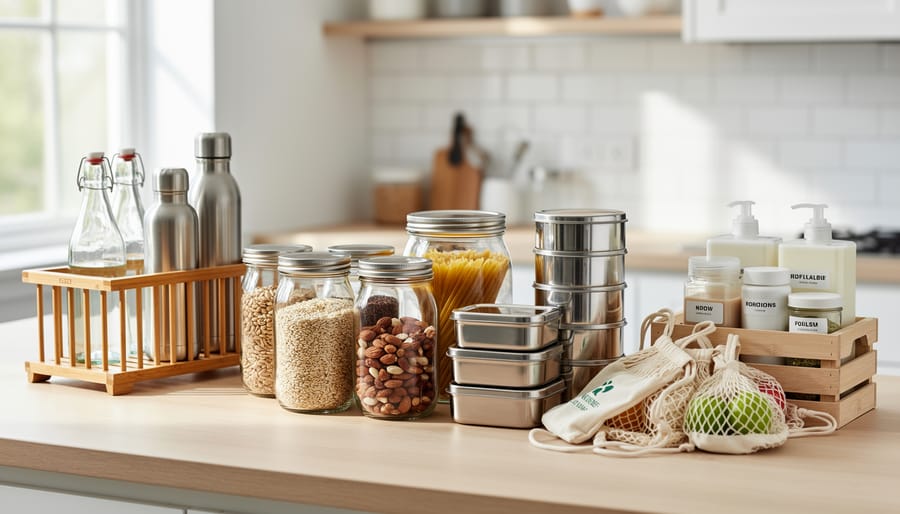
How to Make Smart Choices: Your Action Plan
Questions to Ask Before Buying ‘Eco-Friendly’ Products
Before you reach for that product with the green leaf logo, take a moment to ask these essential questions. First, check what certifications it carries – look for legitimate Australian standards like the Australasian Bioplastics Association certification or internationally recognised marks such as Seedling or OK Compost. Then ask yourself: where will this actually end up? Can your local council handle it, or does it require commercial composting facilities that might not exist in your area?
Consider the disposal reality in your postcode. Ring your council and ask specifically whether they accept compostable plastics in their organics bin. Many don’t, which means that compostable cup could be heading to landfill anyway. Question whether the product needs to exist at all – is there a reusable alternative that would serve you better in the long run?
Think about the bigger picture too. Does this purchase support an Australian business committed to genuine sustainability, or is it greenwashing from overseas? What’s the product’s full lifecycle impact, from manufacture to disposal? Your community’s waste infrastructure should guide your choices more than marketing claims. When genuine eco-friendly options align with local facilities, they’re worth supporting. When they don’t, sometimes the most sustainable choice is simply using less plastic altogether.
Working With Your Local Council
Your local council is your frontline partner in sustainable waste management, yet many Australians remain uncertain about what their area actually accepts. Start by visiting your council’s website or calling their waste hotline to get specific guidance on eco-friendly plastics and compostable materials. Many councils now provide downloadable apps that clarify exactly which bin items belong in, taking the guesswork out of proper disposal techniques.
Beyond understanding current systems, consider becoming an advocate for better infrastructure. Attend council meetings, join local environmental groups, or participate in community consultations about waste management. The City of Melbourne and Byron Shire have both expanded their organics processing thanks to persistent community pressure, demonstrating that resident voices genuinely influence change.
Look for council-run programs that align with your sustainability goals. Many Australian councils offer free workshops on waste reduction, host community composting hubs, or organise collection days for problem items like soft plastics. Some even provide rebates for home composting systems. By actively engaging with these initiatives, you’re not just managing your own waste better—you’re helping shape a more sustainable future for your entire community.
Here’s the truth: eco-friendly plastic isn’t the solution we’ve been hoping for. While innovations in bioplastics and compostables show promise, they’re not the silver bullet that will solve our waste crisis. Without proper infrastructure, clear labelling, and accessible collection systems across Australia, these materials often end up causing more confusion than good.
Real change requires us to think bigger. We need systemic shifts in how products are designed, manufactured, and distributed. Australian councils must invest in better waste processing facilities, and businesses need to embrace circular economy principles. Government policies should support these transitions while holding producers accountable for the full lifecycle of their products.
Most importantly, we need to prioritize reduction and reuse before reaching for any disposable option, eco-friendly or not. The most sustainable plastic is the one we never use.
But here’s the empowering part: you’re not powerless in this. Every choice to refuse unnecessary packaging, support businesses with genuine sustainability practices, or advocate for better community waste solutions creates ripples of change. Connect with local environmental groups, share what you’ve learned, and remember that collective action drives transformation. Together, we’re building a future where sustainability isn’t just a label but a lived reality across Australia.