
Across Australian farms—from the red soil of the Mallee to the rich volcanic plains of the Tablelands—a quiet transformation is taking root. Farmers are discovering that sustainable agriculture isn’t about choosing between productivity and environmental stewardship. It’s about recognizing they’re inseparable.
The numbers tell a compelling story. Australian soils have lost up to 50% of their organic carbon since European settlement, yet farms implementing regenerative practices are reversing this decline while simultaneously improving yields and drought resilience. This isn’t theoretical—it’s happening right now in communities where growers are rethinking how they work with the land rather than against it.
Sustainable agriculture represents a fundamental shift in perspective. Instead of viewing farms as factories that extract resources, these seven practices treat agricultural land as living ecosystems that, when properly managed, become more productive over time. They address the urgent challenges Australian farmers face: depleted soils, water scarcity, increasing input costs, and climate unpredictability.
What makes these practices particularly relevant for Australian conditions is their adaptability. Whether you’re managing a small market garden in suburban Melbourne, a broadacre cropping operation in the Riverina, or a pastoral property in Queensland’s rangelands, these principles can be tailored to your specific context. They’re already being proven by your neighbors—farmers who’ve cut chemical inputs by 70%, increased water retention in previously degraded paddocks, and built more profitable operations while healing country.
The following seven practices aren’t just techniques—they’re investments in the long-term viability of Australian agriculture, connecting traditional land management wisdom with contemporary agricultural science to create farms that truly sustain.
Why Australian Agriculture Needs to Change Now
Australian agriculture stands at a crossroads. Our farmers have fed the nation for generations, but the land is sending us urgent signals that business as usual is no longer an option.
Consider this: over 50% of Australia’s agricultural soils have lost more than half their original organic carbon. We’re facing the highest rate of land salinity in the developed world, with 2 million hectares already affected and another 17 million at risk. Meanwhile, the Murray-Darling Basin—the food bowl that produces one-third of Australia’s food supply—has experienced devastating water shortages that have forced entire communities to rethink their relationship with the land.
These aren’t distant environmental concerns. They’re hitting farm balance sheets right now. Degraded soils mean farmers need more fertilizers and water to achieve the same yields, driving up costs while productivity declines. Extreme weather events—from prolonged droughts to unexpected floods—are becoming more frequent, turning once-predictable farming calendars into gambles.
Much of this stems from conventional agricultural practices developed for different climates and conditions. Heavy tilling has left topsoil vulnerable to wind and water erosion. Monoculture cropping has depleted soil nutrients and biodiversity. Over-clearing has removed the natural buffers that once protected against salinity and erosion.
Here’s the encouraging news: Australian farmers are renowned problem-solvers, and sustainable agriculture offers practical solutions that work with our unique environment rather than against it. We’re not talking about returning to less productive methods or sacrificing profitability. In fact, farms adopting regenerative practices often see reduced input costs within three to five years, alongside improved drought resilience and soil health.
This transition isn’t just environmentally responsible—it’s economically essential. International markets increasingly demand sustainably produced food, and Australian agriculture can’t afford to be left behind. The question isn’t whether to change, but how quickly we can support farmers in adopting practices that will secure both their livelihoods and the land for generations to come.
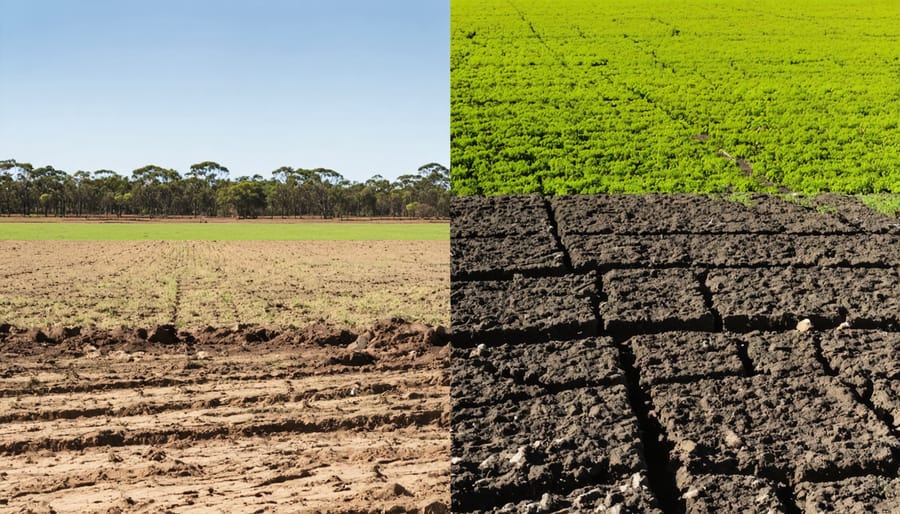
1. Regenerative Soil Management: Building Life From the Ground Up
Beneath every thriving farm lies a hidden world of life—billions of microorganisms, fungi, and invertebrates working tirelessly to create the foundation for healthy crops. Regenerative soil management recognizes that soil isn’t just dirt; it’s a living ecosystem that, when nurtured properly, can sequester carbon, retain water, and produce nutrient-dense food for generations.
At the heart of regenerative soil practices is minimal tillage, which preserves the intricate underground networks that conventional ploughing destroys. When soil remains undisturbed, beneficial fungi form mycorrhizal relationships with plant roots, extending their reach for water and nutrients. In the Riverina region, mixed farming operations are increasingly adopting no-till approaches, reporting improved soil structure and reduced erosion even during drought years.
Cover cropping works hand-in-hand with minimal tillage. Rather than leaving fields bare between crops, farmers plant species like legumes, oats, or vetch that protect soil from erosion, suppress weeds, and fix nitrogen. Western Australian grain growers have successfully integrated cover crops into their rotations, reducing synthetic fertilizer needs by up to 30 percent while building organic matter.
Composting closes the nutrient loop by returning organic matter to the soil. Many organic farming methods center on creating rich compost from farm waste, green materials, and even livestock manure. The process feeds soil microbes and improves water retention—crucial in our increasingly variable climate.
Starting small is perfectly valid. Even backyard gardeners can implement these principles by avoiding rototilling, mulching heavily, and composting kitchen scraps. For larger operations, transitioning one paddock at a time allows you to observe results while managing risk. The soil beneath our feet holds incredible potential for renewal—we simply need to give it the conditions to thrive.
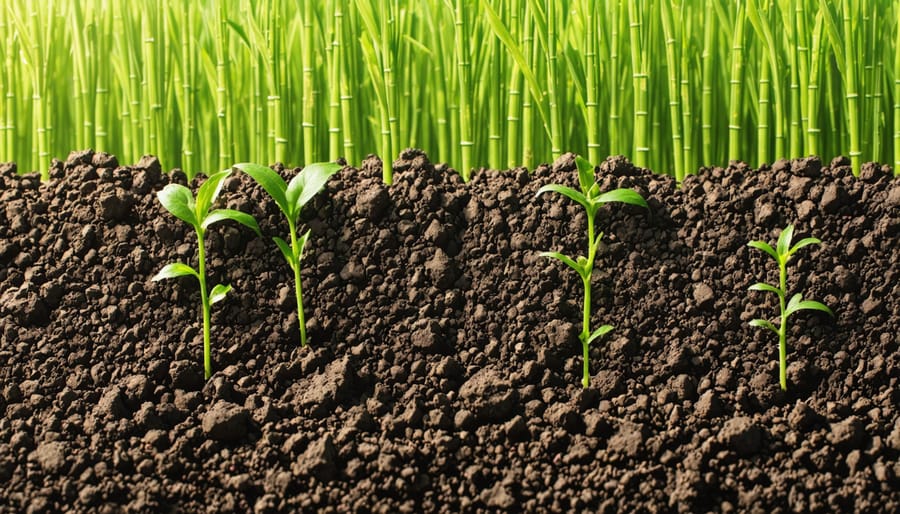
2. Smart Water Stewardship in a Dry Continent
Water is liquid gold in Australia, and our farmers are becoming world leaders in making every drop count. With rainfall patterns shifting and droughts becoming more frequent across the continent, smart water stewardship isn’t just good practice—it’s essential for farm survival and thriving ecosystems.
Drip irrigation systems have revolutionised water efficiency on Australian farms, delivering moisture directly to plant roots and reducing water use by up to 60% compared to traditional methods. While the initial investment ranges from $1,500 to $3,000 per hectare, most farmers recoup costs within three years through reduced water bills and improved yields. Central Victorian vegetable grower Sarah Chen reports her drip system paid for itself in just eighteen months while simultaneously protecting waterways from nutrient runoff.
Rainwater harvesting transforms farm infrastructure into water-catching assets. Large shed roofs can collect thousands of litres during single rain events, stored in tanks or farm dams for the dry months ahead. In Queensland’s Darling Downs, grain farmers are installing strategic swales—shallow channels that slow and direct water flow—to recharge groundwater and prevent erosion.
Perhaps most importantly, drought-resistant crop selection is helping Australian agriculture adapt to our changing climate. Traditional European varieties are giving way to heritage grains, indigenous plants, and cultivars bred specifically for Australian conditions. Western Australian farmers are successfully growing ancient grains like sorghum and millet, which thrive with minimal irrigation while fetching premium prices at market.
The cost-benefit analysis is clear: water conservation techniques require upfront investment but deliver long-term financial resilience, improved soil health, and reduced environmental impact. For a medium-sized operation, combining these approaches typically costs $15,000-$30,000 initially but can reduce water use by 40-70% annually—a compelling return in our driest inhabited continent.
3. Integrated Pest Management: Nature’s Own Defence System
Nature has perfected pest management over millions of years, and Integrated Pest Management (IPM) taps into this ancient wisdom while dramatically reducing reliance on chemical pesticides. Rather than reaching for synthetic sprays at the first sign of trouble, IPM works with natural ecosystems to create balanced environments where pests rarely become problems.
The foundation of IPM lies in understanding that not all insects are enemies. Beneficial insects like ladybirds, lacewings, and native parasitic wasps are powerful allies that feast on aphids, caterpillars, and other crop-damaging pests. Australian farmers are increasingly planting native flowering species along field margins to attract these helpful predators. Native plants such as Hardenbergia violacea (purple coral pea) and Brachyscome multifida (cut-leaf daisy) provide nectar and habitat for beneficial insects year-round.
Companion planting offers another layer of protection. Pairing crops strategically can confuse pests, repel unwanted visitors, or attract beneficial species. Victorian vegetable grower Sarah Mitchell has eliminated 80 percent of her pesticide use by interplanting marigolds with her tomatoes and establishing beetle banks filled with native grasses between crop rows. These simple changes created habitat for predatory beetles that now patrol her fields naturally.
Biological controls, such as introducing specific predators or diseases that target particular pests without harming crops, round out the IPM toolkit. Bacillus thuringiensis, a naturally occurring soil bacterium, effectively controls caterpillar pests while remaining safe for humans, livestock, and beneficial insects.
The results speak volumes. Tasmanian apple orchards using IPM have reduced pesticide applications by 60 percent while maintaining yields, proving that working with nature rather than against it creates resilient, productive farming systems. The transition requires patience and observation, but the environmental and economic benefits make IPM an investment in long-term farm health.
4. Biodiversity Enhancement: Creating Farming Ecosystems That Thrive
A thriving farm is more than rows of crops—it’s a living ecosystem where diversity creates resilience. Australian farmers are rediscovering what Indigenous land managers have always known: when you work with nature’s variety rather than against it, the land gives back abundantly.
Biodiversity enhancement starts with simple additions that make profound differences. Hedgerows planted along fence lines provide shelter for native birds, insects, and small mammals while reducing wind erosion. In Victoria’s Goulburn Valley, citrus growers who established native flowering hedgerows saw dramatic increases in pollinator activity, directly boosting fruit set and quality. These living corridors connect fragmented habitats, allowing wildlife to move safely across farming landscapes.
Mixed cropping systems—growing multiple species together rather than monocultures—mirror natural ecosystems. When legumes grow alongside grains, they fix nitrogen in the soil, reducing fertilizer needs. Companion planting confuses pests naturally, decreasing pesticide reliance. In Queensland’s Lockyer Valley, market gardeners using diverse planting patterns report healthier soils and fewer pest outbreaks than neighboring monoculture operations.
Native plantings deserve special attention in Australian contexts. Species like wattles, banksias, and native grasses have evolved for our harsh conditions, requiring minimal water while providing crucial habitat. They support native bee populations—often more efficient pollinators than European honeybees for many Australian crops. These plantings also contribute to broader ecological restoration efforts across rural landscapes.
Wildlife corridors linking farm biodiversity zones to nearby bushland create genetic pathways for species adapting to climate change. Many landholders collaborate with neighbors and revegetation initiatives to establish these connections.
The payoff extends beyond environmental benefits. Biodiverse farms demonstrate greater resilience during droughts, floods, and heatwaves—increasingly critical as climate extremes intensify. They’re productive and protective simultaneously, proving that farming and thriving ecosystems aren’t opposing goals but natural partners.
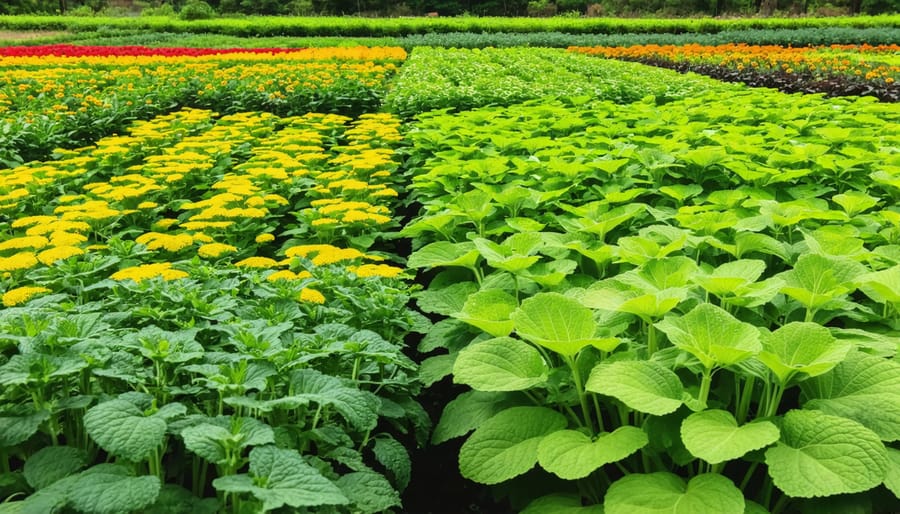
5. Crop Rotation and Polyculture: Breaking the Monoculture Trap
The devastating 2022 wheat rust outbreak in Western Australia reminded many farmers why our grandparents never planted the same crop in the same paddock year after year. Monoculture farming might seem efficient on paper, but it’s essentially setting up a buffet table for pests and depleting soil nutrients at an alarming rate.
Crop rotation and polyculture work because they mimic nature’s diversity. When you rotate crops seasonally, you interrupt pest and disease cycles while different root systems access various soil depths and nutrients. A nitrogen-fixing legume like chickpeas or field peas can actually replenish what a nutrient-hungry wheat crop depleted the previous season.
For southern Australian farms with Mediterranean climates, a classic three-year rotation might include wheat in year one, canola or pulses in year two, and pasture legumes in year three. This pattern suits regions from Adelaide Hills to southwestern Victoria. In tropical north Queensland, rotating sugar cane with legume cover crops like cowpeas can break pest cycles while restoring nitrogen levels.
Polyculture takes this further by growing multiple species together simultaneously. Indigenous Australian land management has practised this for millennia, and contemporary farmers are rediscovering its wisdom. The “Three Sisters” approach, growing climbing beans alongside corn and pumpkin, works beautifully in temperate zones. The beans fix nitrogen, corn provides climbing structure, and pumpkin’s broad leaves suppress weeds while retaining soil moisture.
Central Victorian farmer Sarah Chen rotates her market garden between brassicas, nightshades, and root vegetables while intercropping with herbs that repel pests naturally. “My soil is healthier than when I started five years ago, and I’ve halved my pest management costs,” she shares.
The key is starting small. Choose one paddock for a rotation trial, observe the results, then expand. Your soil and future harvests will thank you.
6. Renewable Energy Integration: Powering Farms With Australian Sun and Wind
Australian farmers are increasingly turning to the abundant sunshine and consistent winds across our continent to power their operations, and the results are transforming both their bottom lines and environmental impact. Renewable energy integration represents one of the most financially viable sustainable agriculture practices available today, with technology costs dropping significantly over the past decade.
Solar panels have become particularly popular on Australian farms, from small-scale installations powering irrigation pumps in regional Queensland to massive arrays supporting entire dairy operations in Victoria. The economics are compelling: a typical 100kW solar system can reduce electricity costs by 50-80 percent, with payback periods often between 3-5 years. Wind turbines offer similar potential in windier regions like South Australia’s agricultural belt, while bioenergy systems convert farm waste into power, creating a circular system that turns problems into solutions.
The Australian government recognizes this potential through various incentive programs. The Small-scale Renewable Energy Scheme provides upfront discounts through Small-scale Technology Certificates, while state-based programs like Victoria’s Energy Saver Incentive and the NSW Energy Savings Scheme offer additional support. Regional farmers can also access low-interest loans through the Clean Energy Finance Corporation specifically designed for agricultural operations.
Beyond financial returns, renewable energy dramatically reduces carbon emissions from farm operations. A medium-sized farm switching to solar can eliminate 100-150 tonnes of carbon dioxide annually, equivalent to taking 30 cars off the road. Many farmers report this shift not only improves their environmental credentials but also provides energy security during peak demand periods when grid electricity becomes expensive or unreliable. As energy costs continue rising, renewable integration isn’t just sustainable, it’s becoming essential for competitive farming operations across Australia.
7. Community-Connected Agriculture: Strengthening Local Food Systems
When food travels directly from farm to plate, something remarkable happens—farmers receive fair prices for their work, communities gain access to fresh produce, and the environmental cost of long-distance food transport disappears. This is the heart of community-connected agriculture, and it’s transforming how Australians eat and farm.
Farmers’ markets have flourished across Australia, from Melbourne’s Queen Victoria Market to Adelaide’s Central Market and countless regional weekend stalls. These vibrant gathering places do more than sell vegetables—they rebuild the human connections that industrial food systems have erased. When you buy carrots from the person who grew them, you’re not just a consumer; you’re part of a food community.
Community Supported Agriculture (CSA) programs take this connection even further. Members pay upfront for a season’s harvest, sharing both the abundance and the risks with farmers. This model provides growers with financial security while giving families access to diverse, seasonal produce. Programs like CERES Environment Park in Brunswick and Bunyip Food Hub in regional Victoria demonstrate how CSA builds resilient local food networks.
Farm-gate sales and on-farm experiences through agritourism create additional income streams while educating urban Australians about where their food originates. Whether it’s pick-your-own berries in the Adelaide Hills or farm stays in Tasmania, these initiatives strengthen the bond between city and countryside.
The benefits extend beyond economics. Community-connected agriculture reduces food miles, ensures freshness, preserves agricultural land close to cities, and creates food security during supply chain disruptions—a lesson many Australians learned during recent challenges. For farmers struggling with volatile commodity markets, these direct relationships can mean the difference between closing down and thriving, while communities gain nutritious food and meaningful connections to the land that sustains them.
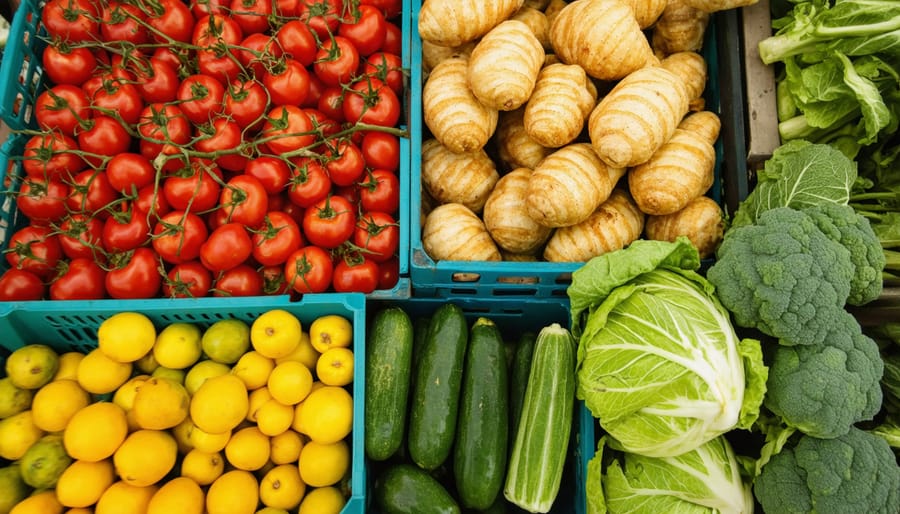
Making the Transition: Your First Steps Toward Sustainable Farming
Transitioning to sustainable agriculture might feel daunting, but you’re not alone on this journey. Across Australia, farmers at every scale—from backyard market gardeners to broad-acre operations—are successfully making the shift, supported by a growing network of resources and fellow practitioners.
Start where you are. If you’re managing a hobby farm or small acreage, begin with one or two practices that align with your goals. Perhaps that’s building your first compost system or planting a windbreak of native species. Commercial operators might trial regenerative techniques on a portion of their property before scaling up. This staged approach reduces risk while building knowledge and confidence.
Financial support exists to ease the transition. The Australian Government’s Agriculture Biodiversity Stewardship Package offers grants for implementing sustainable practices. State-based programs like Victoria’s Sustainable Farming Incentive and Queensland’s Rural Economic Development grants provide additional funding. Organizations such as Landcare Australia connect you with local groups offering hands-on support, workshops, and shared equipment.
Connecting with established networks proves invaluable. Farmers for Climate Action brings together producers committed to sustainable methods, while the Organic and Regenerative Investment Cooperative provides resources specific to organic transitions. Your local catchment management authority can offer tailored advice for your region’s soil and water challenges.
The transition period typically spans three to five years, and yes, yields may temporarily dip as soil biology rebuilds. However, Australian farmers report that patience pays off—many see improved productivity alongside reduced input costs once their systems mature. Document your baseline data now: soil tests, water usage, input costs. This creates a roadmap for measuring progress.
Remember, adopting sustainable living practices on your land contributes to broader environmental goals while future-proofing your operation. Every regenerated hectare represents real progress toward resilient Australian agriculture.
Remember Sarah from the Yarra Valley, whose depleted soil once struggled to support even a modest crop? Today, her farm tells a remarkably different story. By embracing these seven sustainable practices over three growing seasons, she’s witnessed her soil organic matter double, water requirements drop by forty percent, and yields increase by nearly thirty percent. Her farm has become a thriving ecosystem where native birds have returned, pollinators buzz through diverse crop rows, and neighbouring farmers now visit regularly to learn from her success.
Sarah’s transformation isn’t exceptional—it’s entirely achievable for anyone willing to shift their approach. Sustainable agriculture isn’t a distant ideal reserved for well-funded operations or academic experiments. It’s happening right now across Australian farms, from small community gardens in suburban Melbourne to vast pastoral properties in Queensland. The practices we’ve explored aren’t just environmentally sound; they’re economically sensible and increasingly necessary as our climate becomes more unpredictable.
The urgency is real, but so is the opportunity. Every regenerative decision you make—whether you’re managing hundreds of hectares or tending a backyard veggie patch—creates ripples through our communities and ecosystems. Start by supporting local farmers at your nearest market who prioritise these methods. If you’re farming yourself, choose one practice to implement this season. Connect with fellow growers through local landcare groups or sustainable agriculture networks.
Together, we’re not just growing food—we’re healing country, building resilience, and creating a legacy our grandchildren will thank us for. The question isn’t whether we can afford to farm sustainably; it’s whether we can afford not to.