
Forget everything you thought you knew about composting timelines and turning schedules. The Johnson-Su composting method transforms ordinary garden waste into a living microbial powerhouse within 12 months, with zero turning required and minimal maintenance that fits even the busiest Australian lifestyle.
This static composting system, developed by Dr. Elaine Ingham and the Johnson family in New Mexico, creates fungal-dominated compost that doesn’t just feed your plants—it rebuilds soil biology from the ground up. While traditional composting frustrations often stem from improper carbon-nitrogen ratios and exhausting turning requirements, the Johnson-Su system sidesteps these issues entirely through ingenious design.
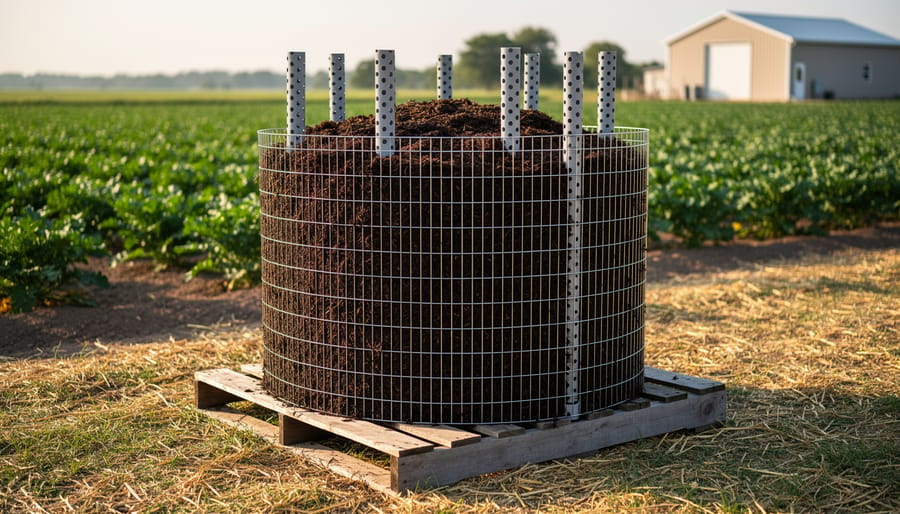
Picture a vertical composting tower with strategically placed aeration pipes running through its core. You fill it once, water it regularly, and walk away. Over the course of a year, thermophilic bacteria give way to beneficial fungi, creating a balanced ecosystem teeming with protozoa, nematodes, and microarthropods. The result isn’t just compost—it’s a microbial inoculant that Australian farmers and gardeners are using to restore depleted soils, reduce water consumption by up to 30%, and eliminate synthetic fertilizer dependency.
What makes this method revolutionary for Australian conditions is its water efficiency and heat tolerance. Our harsh climate actually accelerates the initial decomposition phase, while the system’s moisture-retention design prevents the dry-out problems common in traditional heaps. From suburban backyards in Melbourne to regenerative farms in regional Queensland, this composting approach is quietly transforming how we think about soil health, carbon sequestration, and growing nutrient-dense food in challenging conditions.
What Makes the Johnson-Su Method Different
If you’ve been composting for a while, you might be wondering what sets the Johnson-Su method apart from the techniques you already know. The answer lies in its elegant simplicity and the remarkable microbial community it creates.
Unlike hot composting, which relies on high temperatures to break down materials quickly, the Johnson-Su method operates at ambient temperatures. This might sound counterintuitive, but it’s actually the secret to its success. While hot composting creates conditions where only heat-tolerant microorganisms survive, the Johnson-Su bioreactor becomes home to an incredibly diverse ecosystem of fungi, bacteria, protozoa, and beneficial nematodes. Think of it as creating a five-star hotel for microbes rather than a sauna that only certain guests can tolerate.
Here’s where it gets interesting for time-poor Australians: this system requires absolutely no turning. Traditional composting methods demand regular aeration through physical turning, which can be backbreaking work, especially during our scorching summers. The Johnson-Su bioreactor achieves continuous aeration through its unique design. Those vertical pipes running through the compost act as airways, allowing oxygen to reach microbes throughout the pile passively. It’s like the compost is breathing on its own.
The static nature of this system offers another crucial advantage. When you turn traditional compost, you’re constantly disrupting the fungal networks developing within. Fungi are incredibly valuable, forming thread-like structures called hyphae that create stable soil aggregates and help plants access nutrients. In a Johnson-Su bioreactor, these fungal highways remain undisturbed for the entire twelve-month process, resulting in compost extraordinarily rich in beneficial fungi.
Compared to worm farming, the Johnson-Su method produces a more comprehensive soil amendment. While worm castings are excellent, they’re primarily bacteria-dominant. The Johnson-Su extract contains a complete soil food web, making it particularly valuable for restoring degraded Australian soils that have lost their biological diversity through intensive agriculture or bushfire damage.
The real magic happens at the microscopic level. By maintaining optimal moisture and oxygen levels without disturbance, you’re essentially cultivating billions of beneficial organisms. When applied to your soil or garden, these microbes continue their work, improving soil structure, disease resistance, and nutrient availability. You’re not just making compost; you’re brewing life itself.
The Soil Health Revolution: Why This Compost is Different
What makes Johnson-Su compost truly revolutionary isn’t just what goes into it, but what comes out: a thriving universe of soil life that can transform even the most challenging Australian gardens.
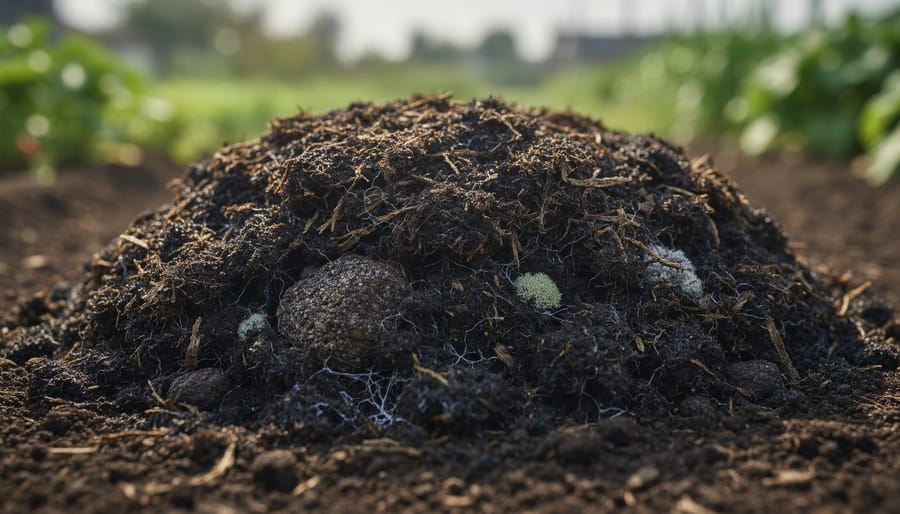
Traditional composting methods certainly break down organic matter, but the Johnson-Su process creates something far more valuable. Through its unique design and extended timeframe, this method cultivates an exceptionally diverse community of beneficial microorganisms. We’re talking about billions of bacteria, kilometres of fungal networks, thousands of protozoa, and beneficial nematodes—all working together in perfect balance.
This biological diversity is where the magic happens. When you apply Johnson-Su compost to your soil, you’re not just adding nutrients; you’re introducing an entire ecosystem. The fungal networks, particularly mycorrhizal fungi, form partnerships with plant roots, extending their reach far beyond what roots could access alone. These microscopic allies break down organic matter, suppress disease-causing organisms, and actually improve soil structure by binding particles together.
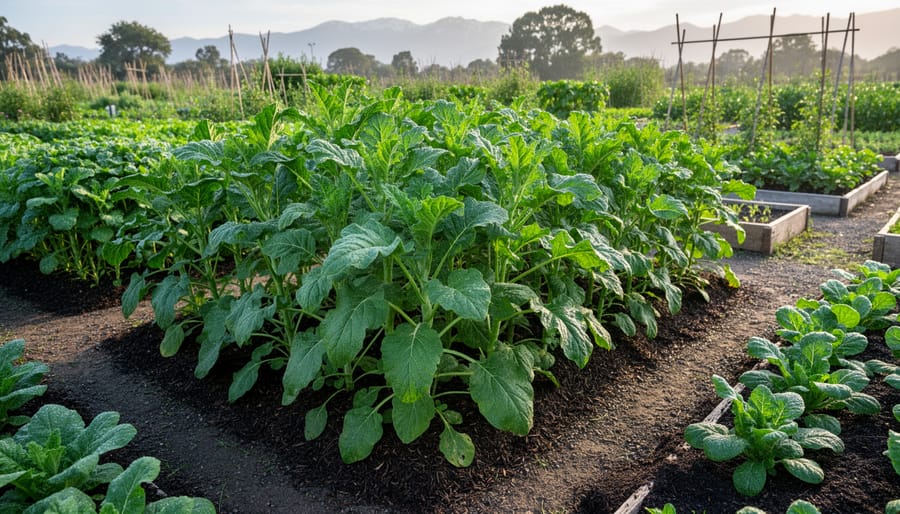
For Australian gardeners facing our unique challenges, this microbial richness is particularly valuable. The improved water retention created by better soil structure means your garden can weather dry spells more effectively, while the enhanced drainage helps during our increasingly unpredictable downpours. Plants grown in soil enriched with Johnson-Su compost show remarkable resilience, requiring less water and developing stronger resistance to heat stress and pests.
Communities across Australia are discovering that this isn’t just about growing better tomatoes (though you’ll certainly do that). It’s about rebuilding soil health from the ground up, creating gardens that work with nature rather than against it. In our variable climate, where soils can range from heavy clay to coastal sand, introducing this diverse microbial life gives plants the support system they need to genuinely thrive, not just survive.
Building Your Johnson-Su Bioreactor: An Australian Perspective
Materials You’ll Need
Building your Johnson-Su bioreactor doesn’t require a trip to specialty stores. Most materials are readily available at your local Bunnings or hardware shop, making this an accessible project for Aussie composters across the country.
You’ll need welded wire mesh (sometimes called GAW mesh) with 50mm or 100mm openings. A roll measuring approximately 1.2 metres high and 3 metres long costs between $40-$80 at Bunnings or rural suppliers like Rural Fencing Supplies. This creates a cylinder roughly one metre in diameter, the ideal size for the Johnson-Su method.
For structural support, grab four star pickets or timber posts around $8-$15 each. These anchor your bioreactor and prevent collapse as the compost settles. Heavy-duty cable ties (around $10 per pack) secure the mesh cylinder together, though galvanised wire works equally well if you’ve got some in the shed.
The centre aeration tube requires either 100mm perforated agricultural pipe (approximately $3-$5 per metre, available at Irrigation Warehouse or Bunnings) or you can improvise with regular PVC pipe and drill your own holes. You’ll need about 1.2 metres length.
Don’t overlook shade cloth or hessian for covering the top (around $15), which maintains moisture while allowing airflow. Some composters use old carpet underlay or empty feed sacks, embracing the true spirit of resourcefulness.
Total investment ranges from $100-$150, though savvy scroungers often halve this cost by repurposing materials. Check local buy-swap-sell groups or chat with farming neighbours who might have spare mesh from fencing projects.
Step-by-Step Construction
Building your Johnson-Su bioreactor is surprisingly straightforward, and many Australian composters find the process both satisfying and achievable in a weekend. Here’s how to create your own living soil factory.
Start by selecting your location carefully. In Queensland’s tropical regions or during Darwin’s wet season, position your bioreactor under a shelter or wide eave to prevent waterlogging from heavy downpours. For southern states and inland areas, morning sun with afternoon shade works brilliantly, keeping microbial activity humming without overheating. Perth and Adelaide gardeners particularly benefit from placing their units near established trees that provide dappled shade during scorching summer afternoons.
Begin construction by standing your weld mesh cylinder upright and securing the edges together with wire ties. This forms your main structure. Position it on bare ground rather than concrete, allowing beneficial soil organisms to migrate upward into your compost. If you’re in areas with clay soil, consider placing a thin layer of coarse sand underneath to improve drainage.
Insert your central aeration pipe vertically through the middle, ensuring it’s stable and reaches the full height of your cylinder. Some Australian composters use multiple smaller pipes for enhanced airflow in our often-dry conditions. Drill or punch holes along the entire length of the pipe so oxygen can reach the compost core.
Next, line the interior walls with shade cloth or hessian, leaving the top and bottom open. This breathable barrier keeps your materials contained while allowing air circulation. Many community gardens across Sydney and Melbourne have found that double-layering shade cloth works beautifully in windy coastal conditions.
Now you’re ready to fill. Add your carbon-rich and nitrogen-rich materials in roughly equal parts, watering as you build to achieve that crucial sponge-like moisture. In Tasmania’s cooler climate, slightly more nitrogen helps maintain temperature, while Northern Territory composters might add extra woody material to improve structure during monsoonal humidity.
Choosing the Right Location
Finding the perfect spot for your Johnson-Su bioreactor will set you up for long-term composting success, so it’s worth taking a moment to think strategically about placement. Across Australia’s diverse climate zones, there are a few universal principles that will serve you well.
First, consider accessibility. You’ll be filling your bioreactor over several months and eventually harvesting rich compost, so choose a location that’s easy to reach year-round. A spot near your garden beds makes practical sense, reducing the distance you’ll need to transport finished compost. Many Australian gardeners find that placing their bioreactor along a pathway or near a vegetable patch creates a natural workflow that encourages regular feeding and monitoring.
Climate considerations matter significantly in our sunburnt country. In tropical and subtropical zones across Queensland and northern New South Wales, partial shade prevents the pile from drying out too quickly during our intense summers. Conversely, gardeners in cooler regions like Tasmania or the Victorian highlands might prefer a sunnier position to maintain microbial activity during chilly months. Those in arid zones should definitely prioritise shade and wind protection to preserve moisture.
Level ground is essential for stability, though a slight slope can aid drainage in high-rainfall areas. Think about integration too. The bioreactor becomes a conversation piece in community gardens, inspiring neighbours to explore composting together. Some gardeners cleverly position theirs near fruit trees, making it simple to top-dress with finished compost when harvest time arrives. Choose thoughtfully, and your bioreactor will become a hardworking cornerstone of your sustainable garden ecosystem.
Feeding Your Bioreactor: What Goes In
The beauty of the Johnson-Su bioreactor lies in its flexibility, and here in Australia, we’re blessed with an abundance of diverse organic materials perfect for feeding this system. Think of your bioreactor as a living ecosystem that thrives on variety, much like the communities we’re building around sustainable practices.
Start with what’s readily available in your Australian garden. Native plant prunings are excellent additions, bringing unique microbial diversity to your compost. Eucalyptus leaves often get a bad reputation, but they’re perfectly fine in moderation, mixed well with other materials. The key is balance. Wattles, bottlebrush trimmings, grevillea clippings, and banksia prunings all contribute valuable organic matter. Kitchen scraps are welcome too, from vegetable peelings to coffee grounds and crushed eggshells.
Understanding the carbon-nitrogen balance doesn’t require a chemistry degree. Think of it simply as browns and greens. Browns are dry, carbon-rich materials like dried leaves, straw, shredded paper, and cardboard. Greens are nitrogen-rich and include fresh grass clippings, kitchen scraps, and green plant material. Aim for roughly equal volumes of each, though the Johnson-Su method is forgiving.
Moisture is crucial but straightforward. Your mix should feel like a wrung-out sponge, damp enough that a squeezed handful releases just a drop or two of water. Too wet and you’ll create anaerobic conditions; too dry and microbial activity slows. Since you’re not turning this compost, getting moisture right from the start matters.
What to avoid? Skip diseased plants, weeds with seeds, meat, dairy, and oils. Treated timber and glossy paper contain chemicals we don’t want in our soil food web.
The magic happens when you combine diversity with patience. Layer your materials as you fill the bioreactor, ensuring good contact between different ingredients. This diversity feeds countless beneficial microorganisms, creating the remarkable compost that will transform your soil and support Australia’s journey toward regenerative growing practices.
The Waiting Game: What Happens During the 12 Months
Once you’ve sealed your Johnson-Su bioreactor, patience becomes your greatest ally. Unlike hot composting methods that demand regular attention, this system works quietly behind the scenes, and that’s exactly what it should do.
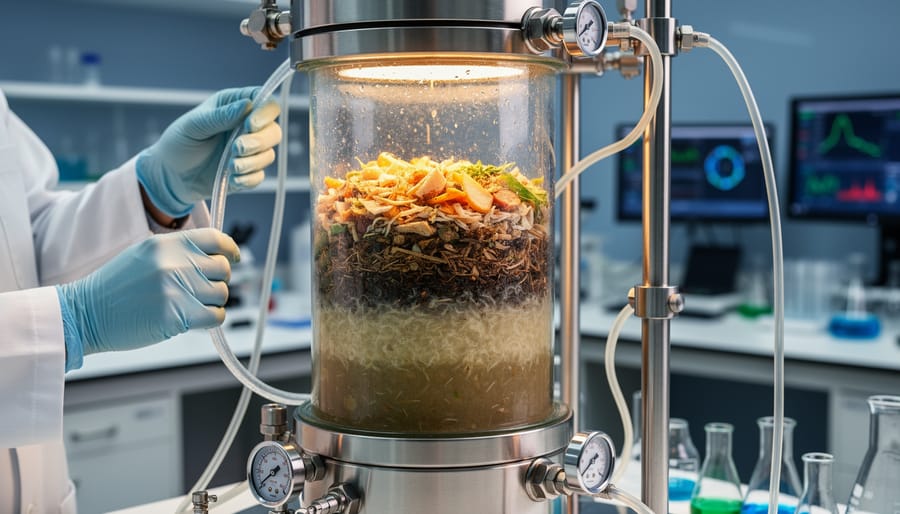
During the first three months, you might peek inside and worry nothing’s happening. Here’s the reassuring truth: cold composting operates at ambient temperature, so don’t expect heat. Instead, beneficial fungi and bacteria are steadily colonizing your materials, beginning their slow transformation. The temperature stays cool, creating the perfect environment for diverse microbial communities to flourish.
Between months three and eight, the magic intensifies. You’ll notice the pile settling as materials break down. If you detect earthiness rather than rotting smells, everything’s progressing beautifully. A properly constructed bioreactor with good carbon-to-nitrogen balance shouldn’t smell offensive. If it does, you’ve likely added too much nitrogen-rich material, but don’t panic. Simply add some dry leaves or shredded paper through the top to rebalance things.
Pests can occasionally investigate your bioreactor, especially in Australia’s warmer regions. A well-sealed system with mesh covering air holes should deter most visitors. If flies become problematic, ensure you’ve buried any fresh food scraps under carbon materials and check your covering is secure.
By months nine to twelve, your compost transforms into dark, crumbly material teeming with life. The wait feels long, but here’s the beautiful part: while one batch quietly matures, you can start another bioreactor. Many Australian community gardens now operate multiple units on rotation, ensuring continuous supply without the fuss of traditional composting.
Trust the process. Nature’s timeline delivers extraordinary results worth every patient day.
Harvesting and Using Your Liquid Gold
After 12-18 months, your Johnson-Su bioreactor transforms kitchen scraps and garden waste into rich, biology-packed compost that Australian growers are calling their secret weapon. The finished product should be dark, crumbly, and smell earthy—not like rot.
Harvesting is refreshingly straightforward. Simply remove the support poles and lift off the wire cylinder. What remains is a beautiful pile of finished compost, ready to work its magic across your garden. Unlike hot composting methods, there’s no need to screen or further process the material.
The real power of Johnson-Su compost lies in how you use it. Rather than mixing large quantities into soil, this method focuses on inoculating your garden with beneficial microorganisms. For vegetable gardens, apply a thin layer (around 1-2cm) as a top dressing around established plants or work gently into the soil before planting. The microbial diversity does the heavy lifting, improving soil structure and nutrient availability over time.
Making compost extract amplifies your harvest even further. Add one part finished compost to five parts non-chlorinated water, aerate for 24 hours using an aquarium pump, then strain. This liquid gold can be diluted further and applied as a soil drench or foliar spray. Community gardens across Melbourne and Sydney report remarkable results using this approach on tomatoes and leafy greens.
For native plantings, use extract at half-strength, as many Australian natives prefer lower nutrient levels. Lawns benefit from quarterly applications of diluted extract, while potted plants thrive with monthly drenches.
The Brunswick Community Garden in Victoria documented a 40% increase in tomato yields after switching to Johnson-Su extract applications. Similarly, the Addison Road Community Garden in Sydney found their soil carbon levels increased measurably within two growing seasons.
One bioreactor produces enough compost to treat an average suburban block for an entire year. By focusing on biology rather than bulk, you’re building genuinely resilient soil that works with Australia’s unique conditions.
Common Challenges and How to Solve Them
While the Johnson-Su method is remarkably resilient, Australian conditions can present unique challenges that require thoughtful solutions. Let’s explore how fellow composters across the country have tackled these obstacles while staying true to sustainable practices.
During extreme heat waves, particularly across inland regions, bioreactors can dry out faster than anticipated. The solution? Create a shade structure using recycled materials or position your bioreactor beneath established trees. Melbourne gardener Sarah Thompson shares her approach: layering hessian sacks soaked in greywater over the top during 40-degree days. This simple technique maintains moisture while keeping temperatures stable.
Drought conditions require creative water management. Rather than abandoning your composting efforts, harvest water from air conditioners, dehumidifiers, or washing machine rinse cycles. Community gardens in Perth have successfully maintained their bioreactors through three-year dry spells by establishing water-sharing networks among members.
Conversely, waterlogging during wet seasons can create anaerobic conditions. Prevention starts with proper siting on slightly elevated ground with good drainage. If heavy rains arrive, temporarily cover your bioreactor with a breathable tarp, ensuring air still circulates through the side perforations. Some Brisbane composters dig shallow drainage channels around their bioreactors during monsoon season.
For urban dwellers with limited space, consider half-scale bioreactors built with 200-litre drums instead of full-sized bins. These fit perfectly on balconies or small courtyards while following the same principles. The Sydney Apartment Composting Collective proves that even high-density living needn’t exclude you from creating incredible compost. Remember, challenges become opportunities when our community works together to find solutions.
Joining the Movement: Community and Resources
You’re not alone on this journey. Across Australia, a growing movement of Johnson-Su composters is transforming food waste into soil gold, and connecting with like-minded people makes the process even more rewarding.
Community groups are sprouting up nationwide, from urban permaculture collectives in Melbourne to regenerative farming networks across regional Queensland. Many local councils now run workshops on the Johnson-Su method, recognizing its potential to divert organic waste from landfill while supporting Australia’s environmental targets. Check with your local sustainability officer about upcoming sessions in your area.
Online, Australian Facebook groups and forums dedicated to Johnson-Su composting provide invaluable support. Members share troubleshooting tips, celebrate their successes, and swap locally adapted techniques. The Australian Regenerative Agriculture Alliance regularly features Johnson-Su composters sharing their experiences, while gardening clubs increasingly incorporate the method into their educational programs.
This technique perfectly embodies circular economy principles, turning what was once waste into a valuable resource that nourishes soil and grows food. By adopting Johnson-Su composting, you’re contributing to Australia’s waste reduction goals while building healthier, more resilient landscapes.
Don’t hesitate to document your own Johnson-Su journey and share it with others. Your experiences, whether triumphs or challenges, help strengthen this community. Take photos, note what works in your climate, and contribute your knowledge. Together, we’re not just making compost—we’re cultivating a more sustainable future, one bioreactor at a time.
The Johnson-Su composting method represents more than just another way to transform kitchen scraps into garden gold. It’s a powerful step toward rebuilding the living soil that forms the foundation of thriving ecosystems across Australia. By choosing this approach, you’re joining a growing community of gardeners, farmers, and environmental stewards who understand that healthy soil is our greatest ally in creating a more sustainable future.
Starting your Johnson-Su bioreactor might seem like a small action, but its ripple effects extend far beyond your backyard. Each bioreactor becomes a microbial factory, producing billions of beneficial organisms that restore soil health, reduce the need for synthetic inputs, and help sequester carbon from the atmosphere. In a country facing increasing drought, heat, and soil degradation, these regenerative practices aren’t just beneficial; they’re essential.
The beauty of this method lies in its accessibility. Whether you’re managing a suburban garden in Melbourne or stewarding acres in regional Queensland, the principles remain the same. You don’t need expensive equipment or scientific training, just commitment and patience.
Now is the time to take action. Gather your materials, find a suitable spot, and begin building your bioreactor this weekend. Connect with local composting groups, share your progress, and inspire your neighbours. Every healthy garden created through these methods contributes to a larger movement toward environmental resilience. Your journey starts with a single step, transforming waste into life-giving soil that will nourish plants and communities for years to come.