
# A Sustainable Village NYC: Lessons for Australian Communities
Picture a full-scale neighbourhood where every home runs on solar power, rainwater fills the taps, and community gardens feed residents year-round. This wasn’t a remote eco-commune—it was Manhattan’s Union Square in 2013, where “A Sustainable Village” exhibition transformed urban space into a living laboratory of environmental innovation.
For three days, this ambitious showcase demonstrated how sustainable living could transition from fringe concept to mainstream reality. Visitors walked through modular eco-homes, touched renewable energy systems, and witnessed composting technologies typically hidden from city dwellers. The exhibition proved that sustainability wasn’t about sacrifice—it was about smarter design, community collaboration, and accessible technology.
Why does a decade-old NYC event matter to Australians today? Because the principles showcased there—renewable energy integration, water conservation, waste reduction, and community-scale solutions—address the exact challenges our communities face. With Australia’s unique climate extremes, water scarcity concerns, and growing energy costs, we’re perfectly positioned to leapfrog outdated models and create sustainable villages tailored to our environment.
The exhibition’s greatest lesson wasn’t its specific technologies, but its approach: bring sustainability out of the abstract and into tangible, replicable community projects. From Melbourne’s inner suburbs to regional Queensland towns, Australian communities are already building their own versions of sustainable villages—and the movement is gaining momentum. The question isn’t whether sustainable communities work, but how we adapt these proven concepts to Australian conditions and culture.
Inside NYC’s Sustainable Village Exhibition

The Concept Behind the Village
The Sustainable Village NYC exhibition represents more than just a display—it’s a living, breathing demonstration of how communities can thrive while treading lightly on our planet. Created as an immersive experience, this innovative showcase transforms abstract sustainability concepts into tangible, walkable realities that visitors can touch, explore, and genuinely understand.
At its heart, the village operates on a philosophy of interconnected living systems. Rather than presenting sustainability as isolated technologies or practices, the exhibition weaves together renewable energy, water conservation, waste management, and community spaces into a cohesive ecosystem. Imagine stepping into a neighbourhood where solar panels aren’t merely decorative additions but actively power communal spaces, where greywater systems visibly nourish rooftop gardens, and where composting stations seamlessly integrate into daily rhythms.
The design approach deliberately mirrors real-world community living, complete with shared spaces that encourage connection and collaboration—elements that resonate deeply with Australian values of mateship and collective action. Visitors don’t just observe; they participate in workshops, experience tiny homes designed for minimal environmental impact, and witness how urban agriculture can flourish in compact spaces.
This hands-on philosophy proves particularly relevant for Australians exploring sustainable transitions. The exhibition demonstrates that sustainability isn’t about sacrifice—it’s about reimagining how we live together, creating resilient communities that enhance rather than diminish quality of life while protecting the environment we all depend upon.
Key Features and Interactive Elements
The Sustainable Village NYC transforms complex environmental concepts into tangible, hands-on experiences that inspire real-world action. At its heart, the exhibition showcases four interconnected systems that demonstrate how urban communities can thrive whilst treading lightly on our planet.
The renewable energy demonstrations bring clean power to life through interactive solar panel installations and wind turbine models. Visitors can pedal stationary bikes connected to generators, experiencing firsthand how much effort it takes to power everyday devices—a surprisingly eye-opening activity that resonates long after leaving. These displays illustrate concepts directly transferable to Australian conditions, where abundant sunshine makes solar energy particularly viable for urban and suburban households.
The waste management zone tackles one of our most pressing challenges with inspiring solutions. Composting systems show how organic waste transforms into nutrient-rich soil, whilst recycling stations demonstrate proper sorting techniques. Perhaps most compelling is the “circular economy” display, where materials flow continuously through repair, reuse, and regeneration rather than ending up in landfill.
Green building displays showcase construction materials and techniques that reduce environmental impact without compromising comfort or aesthetics. From passive solar design to water-efficient fixtures, these examples prove sustainability and modern living complement each other beautifully.
The urban farming showcase might be the exhibition’s most beloved feature. Vertical gardens, aquaponics systems, and balcony-friendly planting solutions demonstrate that growing fresh food isn’t reserved for rural properties. These practical demonstrations spark conversations about how Australian communities can adapt similar approaches to our unique climate and urban landscapes, fostering local food security whilst building neighbourhood connections.
Lessons Australian Communities Can Apply From NYC’s Model
Adapting to the Australian Climate and Landscape
While the sustainable village concepts showcased in NYC offer incredible inspiration, Australia’s unique environmental challenges and opportunities require thoughtful adaptation. The good news? Our country’s conditions actually amplify certain sustainable practices, making them even more effective and urgent.
**Water wisdom takes centre stage**
Australia’s ongoing water scarcity issues mean that water management systems aren’t just nice-to-have features—they’re essential infrastructure. Where NYC’s sustainable village might showcase rainwater collection as an educational exhibit, Australian communities need to embed these systems into everyday life. Greywater recycling systems, which reuse water from showers and washing machines for gardens, become fundamental rather than experimental. Communities across regional Australia are already demonstrating this brilliance, with some households reducing mains water consumption by up to 70%.
**Turning fire risk into resilient design**
Bushfire preparedness transforms sustainable village planning in profound ways. Fire-resistant native landscaping replaces water-hungry lawns, creating defensible spaces that also support local biodiversity. Community gardens incorporate strategic firebreaks, while solar panel installations require careful positioning and ember-guard protection. These adaptations aren’t compromises—they’re innovations that make sustainability more robust and practical for Australian conditions.
**Harnessing our solar superpower**
Australia’s abundant sunshine transforms solar energy from an alternative to an obvious choice. Where northern hemisphere projects might struggle with seasonal variations, Australian communities can achieve near year-round solar reliability. Combined with emerging battery storage technologies, our solar potential allows sustainable villages to move beyond grid-connected efficiency toward genuine energy independence.
The key insight? Adapting sustainable village concepts to Australian conditions doesn’t dilute their impact—it strengthens them, creating solutions that are both environmentally sound and practically essential for our climate reality.
Community-Driven Sustainability Initiatives
The beauty of sustainability is that it thrives when communities take ownership of change. Australian neighbourhoods and local councils are uniquely positioned to create engaging exhibition experiences and implement village-style sustainability principles right where people live, work, and gather.
Start by reimagining existing community spaces. That underutilised council hall or empty shopfront in your suburb could transform into a rotating sustainability showcase. Melbourne’s neighbourhood houses and Sydney’s community centres have already pioneered pop-up exhibitions featuring local solar installations, composting demonstrations, and water-saving technologies. The key is making sustainability tangible – people need to see, touch, and experience solutions rather than just read about them.
Brisbane’s West End and Adelaide’s Bowden Village demonstrate how resident-led initiatives can reshape entire precincts. These communities established “sustainability hubs” where neighbours share tools, organise clothing swaps, and coordinate bulk-buying of eco-friendly products. Council support matters, but the magic happens when locals drive the vision. Consider forming a neighbourhood sustainability committee that meets monthly at a local café or park. Start small – perhaps a community garden or shared composting system – then build momentum.
Local councils can facilitate these efforts without massive budgets. Providing seed funding for community groups, waiving permit fees for sustainability events, or simply promoting grassroots initiatives through council channels makes an enormous difference. The City of Fremantle’s “One Planet” strategy shows how councils can partner with residents to co-design sustainability programs that reflect local character and needs.
Australian suburbs have something special – strong community bonds and a willingness to pitch in. When we combine that spirit with practical sustainability knowledge, we create living laboratories where innovation happens organically. Your street, your suburb, your community can become the next inspiring example that others look to for guidance. The conversation starts with one neighbour talking to another, one idea shared over the fence, one small action that ripples outward.
The Role of Sustainable Living Exhibitions in Driving Change
From Inspiration to Action
Events like A Sustainable Village NYC demonstrate how sustainable living exhibitions can spark genuine transformation in attendees’ daily lives. The real magic happens when inspiration becomes action—and the evidence is compelling.
After attending similar exhibitions in Australia, Melbourne resident Sarah Chen converted her balcony into a thriving vertical garden, reducing her grocery bills by 30% while growing herbs and vegetables year-round. “Seeing the demonstration at the exhibition made it feel achievable,” she explains. “I went home that weekend and started immediately.”
In Sydney, a group of neighbours formed a tool-sharing cooperative after attending a sustainable living event, preventing duplicate purchases across twelve households. They’ve since expanded to include garden equipment, party supplies, and even camping gear—keeping hundreds of items out of landfills while strengthening community bonds.
Brisbane’s James Wong implemented a greywater system after learning about water conservation techniques at a local sustainability expo. His household now saves approximately 15,000 litres annually, a significant impact during Queensland’s regular drought periods.
These stories aren’t exceptional—they’re typical. Research shows that 68% of exhibition attendees implement at least one sustainable practice within three months of visiting. The key is providing practical, relatable solutions that people can visualise in their own homes. When we witness sustainable living in action, the path forward becomes clear, achievable, and genuinely exciting.

Building Community Through Shared Experience
One of the most powerful outcomes of sustainability exhibitions like the Sustainable Village NYC isn’t just the information shared—it’s the connections forged between like-minded individuals and organisations. These gatherings create magnetic spaces where environmental passion transforms into collective action, proving that sustainable living isn’t a solitary journey but a community movement.
When people gather around shared environmental values, something remarkable happens. Small business owners meet suppliers committed to ethical practices. Homeowners discover local solar installers they can trust. Community groups find corporate partners willing to sponsor green initiatives. These exhibitions become networking hubs where the abstract concept of sustainability becomes tangible through human connection.
The social fabric woven at these events extends far beyond the exhibition floor. Attendees exchange contact details, form WhatsApp groups, and organise follow-up meetups to continue conversations that began over a compost bin demonstration or renewable energy display. Australian communities have witnessed this phenomenon firsthand at events like Sustainable Living Festival Melbourne, where friendships spark collaborations that last years.
For businesses, these connections open doors to partnerships that strengthen the circular economy. A café might discover a local urban farm for food scraps composting, while that farm finds restaurants eager for their produce—creating a closed-loop system benefiting everyone.
The ripple effect is profound: one conversation at an exhibition can catalyse neighbourhood sustainability groups, business alliances, and community projects that amplify environmental impact exponentially. Together, we’re not just learning about sustainability—we’re building the collaborative networks essential for creating lasting change.
Sustainable Living Exhibitions Happening in Australia
State-by-State Opportunities
Australia’s vibrant calendar of Australian sustainability events offers countless opportunities to experience sustainable living firsthand, much like New York’s innovative exhibitions but with our own unique Aussie flavour.
In Victoria, Melbourne hosts the annual Sustainable Living Festival each February, transforming the city into a celebration of eco-innovation with workshops, market stalls, and inspiring talks from local change-makers. This is your chance to connect with like-minded communities and discover practical solutions you can implement at home.
New South Wales residents can explore the Sydney Sustainable Markets, running monthly across various locations, showcasing everything from zero-waste products to renewable energy technologies. The annual Earth Hour events in Sydney also bring thousands together, demonstrating the power of collective action.
Queensland’s GreenHeart Fair in Brisbane brings together sustainability experts, local producers, and environmental advocates every year, creating a welcoming space for families to learn about eco-friendly living. The state’s tropical climate also inspires unique demonstrations in water conservation and passive cooling techniques.
South Australia leads with its focus on renewable energy showcases, particularly in Adelaide where community-driven initiatives demonstrate solar power solutions and sustainable urban design. Western Australia’s Perth hosts regular permaculture workshops and coastal conservation events throughout spring and summer.
Don’t miss Sustainable House Day, held nationally each September, where homeowners across Australia open their eco-friendly homes for tours. This grassroots event perfectly captures our community spirit, proving that sustainable living isn’t just aspirational—it’s happening right in your neighbourhood. These state-wide opportunities make sustainable inspiration accessible to every Australian, regardless of location.
How to Make the Most of Your Visit
Whether you’re exploring sustainable village concepts in NYC or closer to home, approaching these exhibitions with intention transforms passive observation into active learning. Start by photographing or sketching layouts that inspire you—note how spaces encourage interaction and resource sharing. Don’t hesitate to ask exhibitors about scalability: “Could this work in suburban Melbourne?” or “What’s the maintenance reality?”
Focus on systems rather than individual products. Understanding how composting integrates with community gardens, or how greywater systems support urban agriculture, reveals connections you can replicate. Engage with other visitors too—some of the best insights come from fellow Australians who’ve already implemented similar ideas.
Before leaving, collect contact details and resources. Many exhibitors offer follow-up consultations or connect you with Australian suppliers and community groups. Create a simple action plan: choose one achievable change to implement within a month, whether it’s starting a neighbourhood tool library or trialling a backyard water-saving technique. Remember, sustainable villages begin with individual commitment that ripples outward. Your curiosity today could spark your community’s transformation tomorrow.
Creating Your Own Sustainable Village at Home
Start Small: First Steps for Households
You don’t need to overhaul your entire life to start living more sustainably—the beauty of exhibitions like Sustainable Village NYC lies in their demonstration that small, consistent changes create meaningful impact. For Australian households, the journey begins right at home with three foundational areas that deliver immediate results.
**Waste reduction** is your strongest starting point. Begin by conducting a simple bin audit—sort through one week’s rubbish to understand what you’re actually throwing away. You’ll likely discover that food scraps and packaging dominate. Start a small composting systems in your backyard or even a worm farm under the kitchen sink. Melbourne resident Sarah transformed her family’s waste output by 60% within three months simply by composting food scraps and switching to reusable shopping bags and containers.
**Energy efficiency** comes next, perfectly suited to Australia’s climate challenges. Replace traditional bulbs with LED alternatives, which use 75% less energy and last significantly longer in our harsh conditions. Install draught stoppers on doors and windows—a $20 investment that can reduce cooling costs by 25% during sweltering summers. Consider your air conditioning settings too; raising your thermostat by just two degrees can slash energy bills while maintaining comfort.
**Water conservation** resonates deeply in our sun-scorched continent. Install a basic rainwater tank or even bucket systems under downpipes to capture precious rainfall for gardens. Reduce shower times by two minutes—that’s 20 litres saved daily per person. Fix those dripping taps promptly; one drop per second wastes 15,000 litres annually.
These foundational steps mirror the NYC exhibition’s core message: sustainability isn’t about perfection, it’s about progress through purposeful action.
Scaling Up: Neighbourhood and Community Projects
Drawing inspiration from NYC’s Sustainable Village exhibition, Australian communities are perfectly positioned to launch their own transformative community sustainability projects. The key is starting conversations with your immediate neighbours—perhaps over a cuppa—about shared environmental goals.
Community gardens represent an excellent entry point. Approach your local council about unused land parcels; many Australian councils now have dedicated sustainability officers eager to support such initiatives. Present a simple proposal outlining benefits like reduced food miles, improved biodiversity, and stronger community connections.
Tool libraries are gaining momentum across Australian suburbs, reducing consumption by sharing resources like lawn mowers, power drills, and gardening equipment. Start small by creating a neighbourhood WhatsApp group where residents can offer and borrow tools, then formalise as interest grows.
For renewable energy co-ops, connect with organisations like the Community Power Agency, which helps Australian communities establish solar bulk-buying schemes or community batteries. These projects significantly reduce household energy costs while accelerating our renewable transition.
The secret to success? Begin with enthusiastic early adopters, document your wins (even small ones), and share progress through local newsletters and social media. Australian communities thrive on practical action and mateship—qualities that make collaborative sustainability projects not just viable, but genuinely enjoyable. Your council’s sustainability team can provide grants, expertise, and connections to similar initiatives nearby.
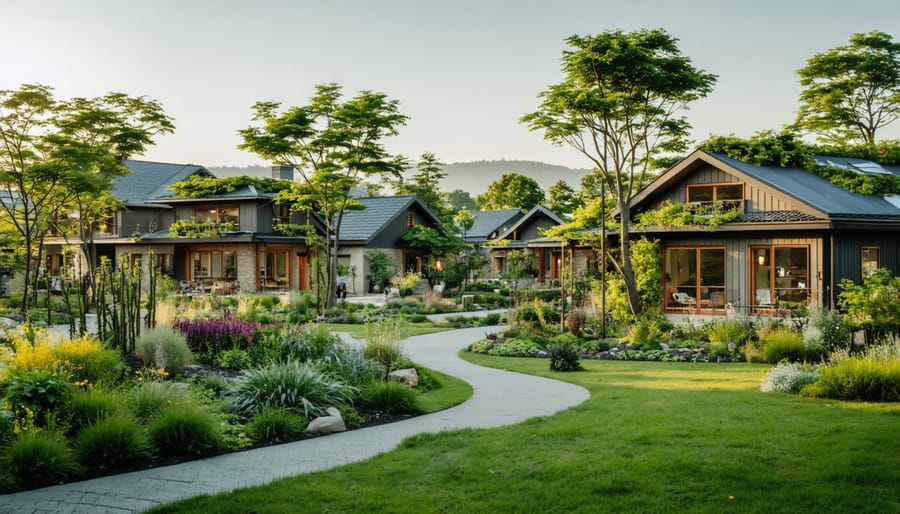
Exhibitions like New York’s Sustainable Village serve as powerful catalysts, sparking conversations that ripple far beyond their physical walls. While the innovation and scale of such displays capture our imagination, their true value lies in inspiring tangible change within our own Australian communities. The sustainable practices showcased overseas aren’t distant dreams—they’re blueprints waiting to be adapted to our unique landscape, climate, and way of life.
Your journey toward sustainable living doesn’t require waiting for the next international exhibition to arrive. Start by attending local sustainability expos in your city, where you’ll discover Australian innovators creating solutions specifically for our conditions. Connect with community gardens, neighbourhood repair cafés, or local environmental groups. These grassroots initiatives are where theory transforms into action, and where individual efforts multiply into collective impact.
Consider implementing just one new sustainable practice this month—perhaps composting, switching to renewable energy, or supporting local producers. Share your experiences with neighbours, friends, and colleagues. Every conversation plants seeds of possibility, and every small action contributes to a larger movement.
Australia’s future as a leader in sustainable living depends on communities coming together, learning from global examples while honouring our local wisdom. The sustainable village we’re building isn’t happening somewhere else—it’s happening here, now, with every conscious choice we make. Together, we’re not just imagining a more sustainable future; we’re actively creating it, one community at a time.