
Look for timber products bearing the FSC (Forest Stewardship Council) or PEFC (Programme for the Endorsement of Forest Certification) logos—these globally recognized marks guarantee the wood comes from responsibly managed forests where trees are replanted, wildlife habitats are protected, and logging communities receive fair wages. Request documentation from suppliers showing chain-of-custody certification, which traces timber from forest to finished product, ensuring no illegal or unsustainable wood enters the supply chain. Prioritize Australian plantation timber over imported products when possible, as our local forestry industry operates under some of the world’s strictest environmental regulations and reduces carbon emissions from transportation.
Understanding sustainably sourced timber matters more now than ever. Australia loses native forests at alarming rates, while global deforestation contributes nearly 15% of greenhouse gas emissions worldwide. Yet here’s the encouraging reality: every purchasing decision you make creates ripples through supply chains, rewarding responsible forestry practices and protecting ecosystems for future generations.
Sustainably sourced timber means wood harvested using methods that maintain forest health, preserve biodiversity, support local communities, and ensure forests regenerate for continued use. It’s the opposite of destructive logging that depletes forests faster than they can recover, destroys wildlife habitats, and damages soil and waterways.
Whether you’re renovating your home, building furniture, or making procurement decisions for your business, choosing certified sustainable timber isn’t complicated—it simply requires knowing what to look for. Australian consumers and businesses are increasingly demanding transparency about where their timber originates, and suppliers are responding. You’re part of a growing community making forest-friendly choices that protect our unique eucalypt woodlands, support regional timber workers, and demonstrate that economic growth and environmental stewardship aren’t mutually exclusive.
The True Definition of Sustainably Sourced Wood
Sustainably sourced wood comes from forests managed with a commitment to three fundamental principles: environmental health, social responsibility, and economic viability. Put simply, it means harvesting timber in a way that ensures forests can regenerate naturally, wildlife habitats remain intact, and local communities benefit—all while meeting our need for wood products.
At its core, sustainable wood sourcing respects the forest ecosystem as a living, breathing entity. Rather than clear-cutting entire areas, responsible harvesting involves selective logging techniques that maintain the forest structure and allow for natural regeneration. Trees are removed at a rate that matches or is slower than regrowth, ensuring the forest continues to thrive for generations.
Here in Australia, this definition takes on special significance. Our forests are home to unique species found nowhere else on Earth—from koalas and greater gliders to ancient mountain ash trees that can live over 400 years. Sustainable sourcing in the Australian context means protecting these irreplaceable ecosystems while still providing timber for homes, furniture, and paper products.
Many people mistakenly believe sustainably sourced wood simply means planting a tree for every one cut down. While reforestation matters, true sustainability goes much deeper. It considers soil health, water quality, carbon storage, and the complex web of life depending on forest ecosystems. It’s not just about tree numbers—it’s about forest quality and ecological integrity.
Another common misconception is that all plantation timber is sustainable. While plantations can reduce pressure on native forests, they don’t automatically qualify as sustainable unless managed with biodiversity and environmental standards in mind. Similarly, “recycled” or “reclaimed” timber, while valuable, represents just one aspect of buying paper and wood responsibly.
Understanding these distinctions empowers you to make informed choices that genuinely support forest conservation. When you choose genuinely sustainable wood, you’re voting with your wallet for practices that protect Australia’s extraordinary natural heritage while supporting responsible forestry communities.
Certifications That Actually Matter in Australia
FSC and PEFC: The Global Standards You’ll See Most Often
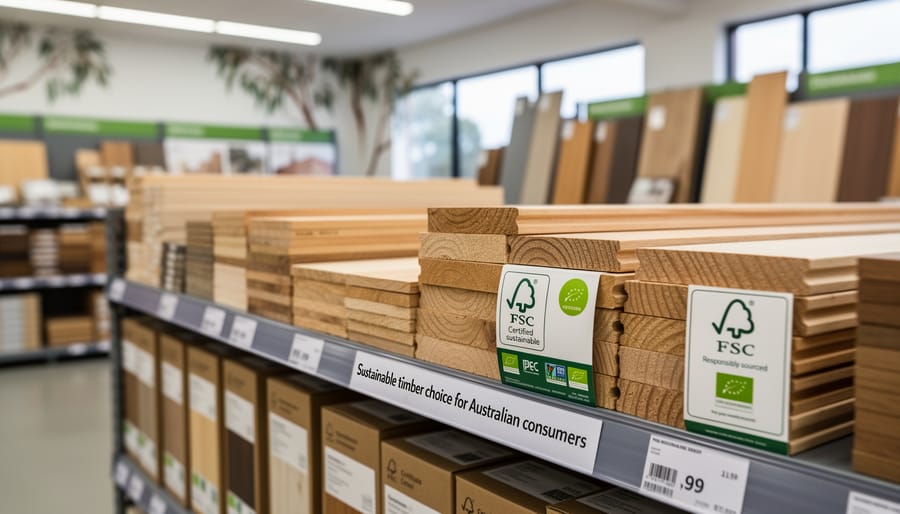
When you’re shopping for timber in Australia, two certification logos appear more than any others: FSC and PEFC. Understanding what these symbols mean puts real power in your purchasing decisions.
The Forest Stewardship Council (FSC) operates as an international non-profit that’s become the gold standard for responsible forestry. When you spot that distinctive tree checkmark logo, you’re looking at timber from forests managed according to strict environmental, social, and economic standards. FSC certification guarantees that trees are harvested sustainably, wildlife habitats are protected, and Indigenous rights are respected. It’s comprehensive third-party verification that gives you confidence in your purchase.
The Programme for the Endorsement of Forest Certification (PEFC) takes a slightly different approach but delivers similar outcomes. As the world’s largest forest certification system, PEFC works through national certification schemes, making it particularly relevant for Australian timber products. PEFC-certified forests must meet rigorous sustainability requirements, including biodiversity protection, soil and water conservation, and fair treatment of forest workers.
Here’s what matters for Australian buyers: both certifications are legitimate and respected worldwide. Many Australian timber suppliers carry one or both certifications, particularly for plantation timber and imported products. The key difference is that FSC tends to have stricter protocols around Indigenous consultation and old-growth forest protection, while PEFC excels at certifying smaller family-owned forests.
When you choose FSC or PEFC certified timber, you’re joining a global community committed to keeping forests standing for generations to come. These aren’t just logos; they’re your assurance that sustainable sourcing isn’t just marketing talk.
Responsible Wood: Australia’s Homegrown Certification
When you’re choosing timber for your next project, you might come across the Responsible Wood certification—and it’s worth getting excited about! This is Australia’s very own forest certification scheme, developed right here to protect our unique eucalypt forests and the incredible biodiversity they support.
Responsible Wood operates under international standards recognised by the Programme for the Endorsement of Forest Certification, but here’s what makes it special: it’s tailored specifically to Australian conditions. The scheme ensures forests are managed sustainably, protecting everything from koala habitats to water catchments, while supporting local forestry communities across the country.
The certification covers both plantation and native forests, requiring forest managers to demonstrate responsible environmental practices, social responsibility, and economic viability. Think of it as a triple-check system that benefits our land, our people, and our economy.
How does it compare internationally? While schemes like FSC (Forest Stewardship Council) are globally recognised, Responsible Wood understands the particular challenges of Australian forestry—from fire management to protecting endemic species. Both certifications hold weight, but Responsible Wood brings that local knowledge and community connection that resonates with Australian values.
For you as a buyer, choosing Responsible Wood certified timber means you’re supporting homegrown sustainable forestry. You’re backing local jobs, protecting native wildlife corridors, and ensuring forests regenerate properly. It’s a practical way to make a genuine difference while getting quality timber that hasn’t travelled halfway around the world. Look for the Responsible Wood logo next time you’re at the timber yard—it’s your assurance of genuinely sustainable Australian forestry.
Red Flags: Vague Claims to Watch Out For
When browsing timber products, be cautious of vague, unsubstantiated claims that sound impressive but lack real meaning. Terms like “eco-friendly”, “natural”, “green”, or “responsibly sourced” often appear on labels without certification to back them up. These buzzwords might feel reassuring, but without third-party verification, they’re just marketing spin.
Here’s what to watch for: products claiming to be sustainable without displaying recognized certification logos like FSC or PEFC. Ask yourself whether the company provides transparent information about their supply chain. Can they tell you where the wood originated? How it was harvested? If the answers are murky or absent, you’re likely facing greenwashing.
Spotting misleading eco-friendly claims becomes easier when you know what questions to ask. Don’t hesitate to request documentation or certification details from suppliers. Australian businesses genuinely committed to sustainability will proudly share this information. Remember, you have the power to demand better from the companies you support, and your purchasing choices can drive real change in our timber industry.
Why Sustainably Sourced Wood Matters for Australian Ecosystems
When you choose sustainably sourced wood, you’re helping to protect some of Australia’s most precious ecosystems—from the towering Mountain Ash forests of Victoria to the ancient Gondwana rainforests stretching across our eastern states. Understanding your timber supplier’s wood source isn’t just about making an ethical choice; it’s about safeguarding the natural heritage that makes our country unique.
Consider the Greater Glider, a possum-sized marsupial that depends entirely on old-growth eucalypt forests for survival. These gentle creatures need large tree hollows that only develop in trees over 120 years old. When forests are logged unsustainably, their homes disappear, and populations plummet. The Greater Glider recently moved from vulnerable to endangered status, partly due to habitat loss from logging. They’re not alone—over 300 native species rely on the complex ecosystems found in our mature forests.
Australia’s native forests do more than provide wildlife habitat. They’re incredible carbon storage systems, with some forests holding more carbon per hectare than tropical rainforests. When mature trees are cleared unsustainably, centuries of stored carbon releases into the atmosphere, contributing to climate change. Conversely, sustainably managed forests continue absorbing carbon dioxide while still providing timber for our needs.
The ecological ripple effects extend further. Our forests regulate water cycles, prevent soil erosion, and maintain biodiversity hotspots. The Victorian Central Highlands, home to some of the world’s tallest flowering plants, demonstrates this interconnectedness. These Mountain Ash forests support Leadbeater’s Possum—Victoria’s faunal emblem and one of the world’s rarest mammals—alongside countless other species in a delicate ecological balance.
Sustainable sourcing practices ensure forests are harvested at rates allowing regeneration, protecting critical habitats, and maintaining ecosystem health. This means future generations of Australians will still experience the magic of walking through a pristine forest, hearing kookaburras laugh overhead, and spotting a koala nestled in eucalyptus branches.
By choosing certified sustainable wood products, you’re voting with your wallet for practices that honor these ecosystems. You’re supporting forestry operations that work with nature rather than against it, ensuring Australia’s unique forests continue thriving for wildlife, climate stability, and the communities who depend on them.

Where to Find Sustainably Sourced Timber in Australia
Hardware Chains and Specialty Timber Suppliers
The good news is that sustainable timber is becoming increasingly accessible through mainstream Australian retailers. Major hardware chains like Bunnings and Mitre 10 now stock certified timber products, though availability varies by location and product type. Specialty timber suppliers often offer a wider range of responsibly sourced options and can provide detailed information about timber origins.
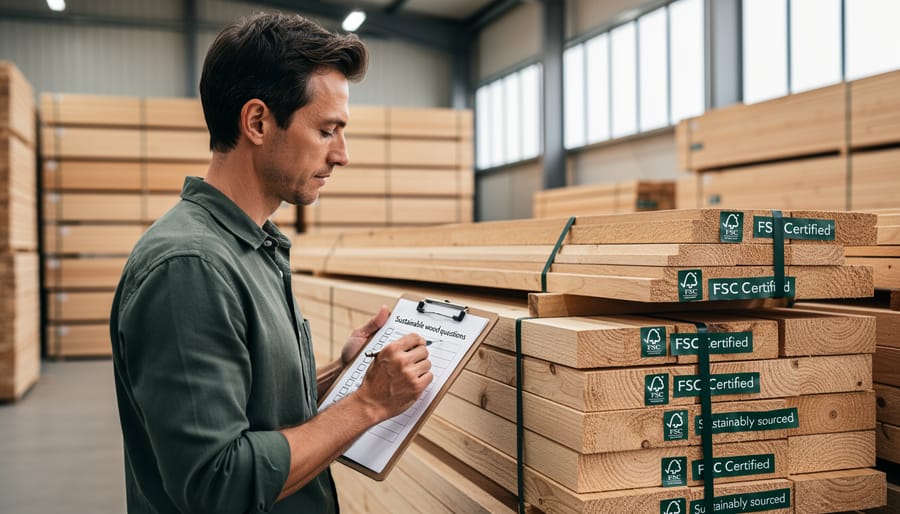
When shopping for timber, don’t hesitate to ask questions. Request to see certification documentation for products labelled as sustainable. Ask where the timber was harvested and what certification it holds. Reputable suppliers should readily provide this information or have it displayed on product labels. Look for clear chain-of-custody documentation that traces the timber from forest to store.
To verify claims at the point of purchase, check for certification logos directly on the timber or accompanying tags. You can photograph certification numbers and verify them online through FSC or PEFC databases. Be wary of vague terms like “eco-friendly” or “green” without supporting certification. If a supplier can’t provide proof of their sustainability claims, that’s a red flag.
Many Australian timber yards are embracing transparency, with staff trained to discuss sustainable sourcing. By asking informed questions and supporting verified suppliers, you’re helping build demand for genuinely sustainable timber, creating positive change throughout the industry.
Local Community Initiatives and Salvaged Wood Networks
Right across Australia, communities are breathing new life into timber that might otherwise end up in landfill. Local salvage yards and reclamation projects have become treasure troves for environmentally conscious builders and DIY enthusiasts, offering character-rich timber with a significantly smaller carbon footprint than newly harvested wood.
Melbourne’s Timber Revival and Sydney’s ReStore program are brilliant examples of community-led initiatives rescuing timber from demolition sites and renovation projects. These programs not only divert waste but also preserve our building heritage, with salvaged hardwoods often superior in quality to modern alternatives. Brisbane’s Reverse Garbage and similar cooperatives across Perth, Adelaide, and regional centres connect people with reclaimed materials, creating circular economies within local communities.
Choosing reclaimed timber means you’re reducing demand for forest harvesting while supporting second-hand alternatives that strengthen community networks. You’ll often find unique timber species no longer commercially available, each piece telling its own story. The cost savings can be substantial too, particularly for feature pieces and smaller projects.
Check your local council websites or community Facebook groups to discover salvage yards and timber reclamation networks near you. Many offer weekend workshops teaching restoration techniques, turning sustainable sourcing into an enriching community experience.
Australian Native Plantation Timber
Here’s some encouraging news for Australian timber buyers: plantation-grown native hardwoods offer a brilliant sustainable alternative to old-growth forest timber. These plantations are specifically cultivated to take pressure off our precious ancient forests, allowing them to thrive as vital ecosystems while still meeting our timber needs.
When you’re shopping for sustainable Australian timber, look for plantation-grown species like Spotted Gum, Blackbutt, and Ironbark. These hardwoods have been successfully cultivated in managed plantations across New South Wales, Queensland, and Victoria. Many local councils and community groups have championed plantation initiatives, creating timber sources that regenerate within 20-40 years rather than the centuries required for old-growth forests.
The beauty of plantation timber is that it maintains the durability and character Aussie hardwoods are famous for, while supporting responsible land management practices. These plantations often incorporate sustainable forestry methods like selective harvesting and biodiversity corridors that protect native wildlife.
To ensure you’re getting genuinely sustainable plantation timber, ask your supplier about the timber’s origin and look for certification from recognised schemes. Supporting plantation-grown Australian natives means you’re investing in our country’s forestry future while protecting the irreplaceable old-growth forests that define our landscape.
Making Your Next Timber Purchase Count
Every time you purchase timber, you’re casting a vote for the kind of industry you want to support. Whether you’re a homeowner planning a deck renovation or a business sourcing materials for a project, making informed choices doesn’t have to be overwhelming. Here’s your practical checklist to ensure your next timber purchase truly counts.
Start by asking your supplier direct questions: Where does this timber come from? Can you provide certification documents? Australian suppliers worth their salt will happily share this information. Request copies of FSC or PEFC certificates, and don’t be shy about asking for the chain of custody documentation that traces the wood from forest to your doorstep.
Look beyond the price tag when comparing options. While sustainably sourced timber might cost slightly more upfront, consider the long-term value. You’re investing in materials that support healthy Australian forests, protect wildlife habitats, and ensure timber workers receive fair treatment. Many Aussie businesses find that customers increasingly appreciate and support these values, making it a worthwhile investment.
If budget constraints are genuine concerns, get creative. Consider mixing certified timber for visible areas with reclaimed or recycled timber for structural elements. Many Australian salvage yards offer beautiful recycled hardwoods with character that new timber simply can’t match, often at competitive prices.
Build relationships with suppliers who share your values. Local timber merchants who prioritize sustainability often become valuable partners, helping you navigate options and stay within budget. They understand that sustainable sourcing isn’t about perfection; it’s about making progressively better choices.
Remember, the Australian timber industry responds to demand. When enough of us consistently choose certified, responsibly sourced materials, we collectively shift the entire market toward better practices. Your purchase power matters more than you might think.
Every time you choose sustainably sourced timber, you’re casting a vote for Australia’s precious forests and the countless species that call them home. Your purchasing power is more influential than you might think—when businesses see customers demanding certified sustainable wood, they respond by changing their supply chains. It’s that simple, and that powerful.
You’re now part of a growing movement of Australians who understand that environmentally conscious purchasing decisions aren’t just good ethics—they’re essential for preserving our unique bushland, protecting koala habitats, and ensuring our grandchildren can enjoy the same natural beauty we do today. From Melbourne to Cairns, communities are choosing certified timber for their decks, furniture, and building projects, proving that sustainability and quality go hand in hand.
The knowledge you’ve gained today is worth sharing. Talk to your builder, recommend certified suppliers to friends renovating their homes, and explain what those certification labels mean. Together, we’re creating a future where every piece of timber tells a story of responsible stewardship rather than destruction. Welcome to Australia’s community of forest protectors—your choices matter, and the impact starts now.