
Yes, native plants can behave invasively in your garden, but this doesn’t make them problematic for the environment. The distinction matters: a plant that spreads aggressively in your backyard isn’t causing ecological harm like a true invasive species would. Native plants evolved here, support local wildlife, and belong in Australian ecosystems, even when they’re vigorous growers.
The confusion often arises because many Australians associate “invasive” solely with how fast a plant spreads. In reality, environmental scientists reserve this term for non-native species that threaten biodiversity and ecosystem health. When your native violet carpet races across your garden bed or your kangaroo paw sends up unexpected shoots, that’s simply robust growth, not invasion.
Understanding this difference empowers you to make better planting decisions. Some native species like bower vine, native mint, and certain grasses naturally spread quickly in garden conditions where they receive regular water and nutrients, conditions more generous than their typical bushland habitat. This vigour becomes manageable when you know what to expect and plan accordingly.
The good news? Australian gardeners can enjoy the environmental benefits of native plants, creating habitat for local birds, butterflies, and beneficial insects, while maintaining control over their garden design. Strategic plant selection, proper placement, and simple management techniques allow you to harness the resilience of native species without sacrificing your garden’s aesthetic or functionality. The key lies in matching the right native plant to the right spot and understanding its growth habits before you dig the first hole.
What Makes a Plant ‘Invasive’ vs. ‘Aggressive’?
Here’s a scenario many Australian gardeners face: you’ve planted a lovely native grass or groundcover, only to find it’s taken over half your garden bed within a season. Does this mean your native plant is invasive? Not quite, and understanding the distinction matters enormously for both your garden and our environment.
In botanical and ecological terms, invasive specifically refers to non-native plants that spread aggressively in ecosystems where they don’t naturally occur, causing environmental or economic harm. Think of bitou bush colonising coastal areas or lantana smothering bushland. These plants evolved elsewhere and arrive without the natural predators, diseases, or competitors that would keep them in check back home.
Native plants, by definition, cannot be invasive in their own country. They’re part of the ecological fabric, with countless insects, birds, and other organisms depending on them. However, native plants can certainly be aggressive, vigorous, or weedy, and this is where confusion often creeps in.
An aggressive native is simply one that spreads enthusiastically, sometimes beyond where you’d prefer. Lomandra longifolia, for instance, is a wonderful Australian grass that can self-seed generously in garden beds. Kidney weed (Dichondra repens) makes an excellent lawn alternative but will happily creep into neighbouring areas. These plants aren’t causing ecological harm; they’re doing what comes naturally.
Vigorous describes healthy, robust growth, which is generally positive. Weedy behaviour means a plant readily colonises disturbed ground, often through prolific seeding. Some native plants tick both boxes.
The key distinction for Australian gardeners is this: while an aggressive native might require extra management in your garden, it’s contributing positively to local biodiversity. Native birds, butterflies, and beneficial insects recognise and utilise these plants. They’re part of the solution to habitat loss, not the problem. Understanding this difference helps us make informed choices about which natives suit our specific garden conditions, while maintaining enthusiasm for supporting Australian flora.
Can Native Plants Really Be Invasive?
The ‘Right Plant, Wrong Place’ Phenomenon
Just because a plant is native to Australia doesn’t mean it belongs in every Australian garden. This is what gardeners call the ‘right plant, wrong place’ phenomenon, and it’s more common than you might think.
Picture this: a stunning Queensland rainforest plant thriving in tropical humidity suddenly finds itself in a temperate Victorian garden. Without its natural checks and balances – the specific soil microbes, local climate patterns, and native herbivores that keep it in check – this plant might behave quite differently. Some Queensland natives, for instance, can become remarkably aggressive when planted in southern states where winters are milder than their natural range and competitive species are different.
The coastal wattle (Acacia longifolia var. sophorae) offers a perfect example. Native to coastal New South Wales and Victoria, it’s been planted widely across southern Australia for erosion control. Yet in South Australia and Western Australia, it’s escaped cultivation and now threatens local ecosystems, outcompeting indigenous plants that evolved in those specific conditions.
This isn’t about avoiding native plants – quite the opposite. It’s about choosing local provenance plants that naturally occur in your region. When planning your garden, focusing on indigenous garden planning means selecting species that evolved specifically in your local area, complete with the natural relationships that keep ecosystems balanced.
Your local native nursery can guide you toward plants indigenous to your specific region, ensuring your garden supports local biodiversity rather than inadvertently disrupting it. This approach creates resilient, low-maintenance gardens that truly belong.
When Garden Conditions Favour Aggressive Growth
Here’s where things get interesting for Australian gardeners. Even well-behaved native plants can shift into overdrive when we give them conditions far better than what they’d experience in the bush. Think about it: in natural settings, our natives have adapted to poor soils, irregular rainfall, and a whole ecosystem of insects, fungi, and competition keeping them in check.
When you bring these tough survivors into your garden and provide supplemental watering, rich fertilisers, and remove their natural constraints, you’re essentially giving them the botanical equivalent of a free pass. That lomandra that grows slowly in nature might send runners everywhere when regularly watered. The coastal rosemary that stays compact on windswept cliffs could become a sprawling giant in your protected, nutrient-rich garden bed.
Garden settings often lack the natural predators and diseases that keep plant populations balanced in the wild. Without these checks, natives can produce more seed, spread faster, and outcompete their neighbours. This doesn’t make them bad plants; it just means we need to understand their potential and manage accordingly. The good news? Recognising these triggers helps us make smarter choices about placement, care, and maintenance in our native gardens.
Australian Natives That Can Dominate Your Garden
Ground Covers That Won’t Stop Growing
Ground covers are beloved for their low-maintenance appeal, but some Australian natives take their job a bit too seriously. Kidney Weed (Dichondra repens) is a perfect example. This soft, creeping native creates a lush green carpet that many gardeners adore, but it doesn’t recognize garden bed boundaries. Once established, it’ll cheerfully spread into paths, lawns, and neighbouring gardens through its vigorous runners.
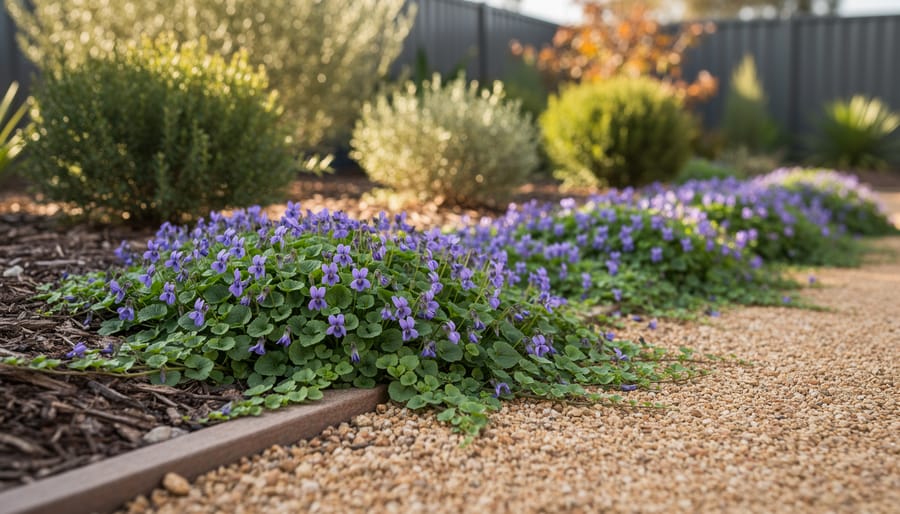
Native Violet (Viola hederacea) tells a similar story. While its delicate purple flowers are charming in shaded areas, this enthusiastic spreader produces both runners and seeds, allowing it to pop up in unexpected places across your garden. Many Australian gardeners have discovered violet seedlings appearing in pots, between pavers, and throughout garden beds they never intended to colonize.
The good news? These plants aren’t causing environmental harm in their native regions, but they do require active management in home gardens. Regular edge trimming, physical barriers, and thoughtful placement away from more delicate plants can help you enjoy their benefits without losing control. Consider planting them in contained areas where their spreading nature becomes an asset rather than a challenge, or choose them specifically for spaces where you want complete coverage.
Vigorous Shrubs and Small Trees
Some of our most beloved Australian natives can become garden bullies when given the right conditions. Take certain Acacia varieties, for instance. While wattles are iconic and beautiful, species like Cootamundra Wattle can spread rapidly through seed dispersal, creating dense thickets that crowd out other plants. Similarly, some Lilly Pilly cultivars, though prized for their vibrant foliage and berries, can grow far more vigorously than anticipated in nutrient-rich garden soils.
Coastal Rosemary (Westringia fruticosa) is another example. This tough, attractive shrub thrives in Australian gardens but can quickly dominate smaller garden beds, requiring regular pruning to keep in check. The key isn’t to avoid these species entirely, but to understand their growth habits before planting.
When selecting vigorous natives, consider your available space and neighbouring plants. Research mature sizes and growth rates specific to your local climate. Many gardeners in Sydney and Melbourne have discovered that what behaves moderately in one region can become exuberant in another with different rainfall and soil conditions.
The good news? With thoughtful placement and occasional maintenance, these energetic natives can still play valuable roles in your garden, providing habitat and beauty without overwhelming your space. Choose wisely, plant strategically, and enjoy these Australian treasures responsibly.
Self-Seeding Champions
Some Australian natives are enthusiastic self-seeders, turning one plant into dozens before you’ve finished your morning cuppa. While this vigorous reproduction is brilliant for revegetation projects, it can create unexpected maintenance in home gardens.
Coastal wattle species, grevilleas, and certain eucalypts produce abundant seed that germinates readily in disturbed soil. You might plant one decorative wattle only to find twenty seedlings popping up throughout your garden bed the following year. In community gardens across Sydney and Melbourne, volunteers often spend considerable time managing native seedlings that appear in pathways and vegetable patches.
The key is understanding your plant’s reproductive habits before planting. Choose sterile cultivars when available, or position prolific seeders where their offspring won’t cause problems—perhaps in larger bushland-style gardens rather than manicured beds. Regular deadheading before seed pods mature dramatically reduces unwanted seedlings while keeping your garden tidy.
This doesn’t mean avoiding these plants altogether. Many gardening groups share surplus seedlings through plant swaps, turning your “problem” into a community resource. That wandering wattle might become someone’s erosion control solution or wildlife corridor contribution. It’s about working with nature’s abundance rather than against it, while keeping your garden manageable and enjoyable.
Why This Matters for Your Native Plant Garden
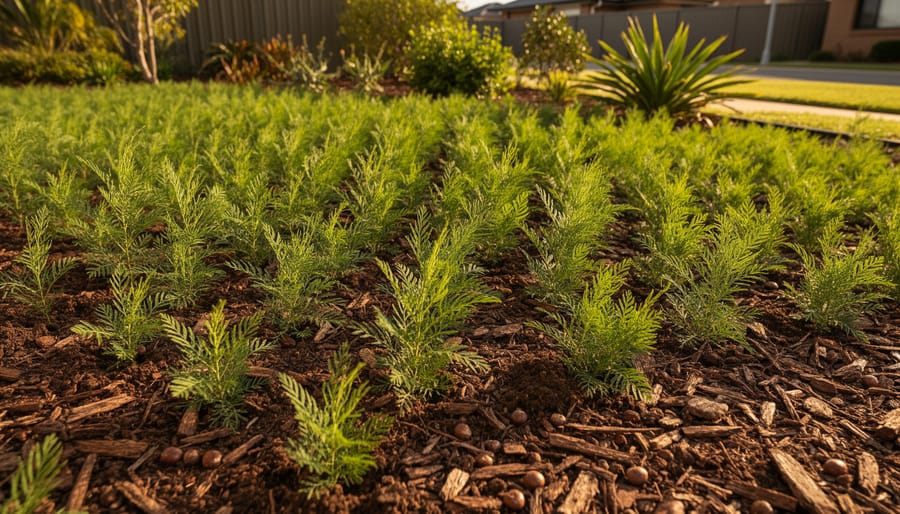
Understanding how native plants behave in your garden isn’t about abandoning native gardening—it’s about becoming a more thoughtful, effective gardener. When you recognise that even Australian natives can sometimes dominate their space, you’re better equipped to create thriving, diverse garden ecosystems that truly support local wildlife.
Think of your garden as a miniature version of a healthy bushland community. In nature, balanced ecosystems contain dozens or even hundreds of plant species working together. When one aggressive native takes over your entire garden bed, you’re inadvertently creating a monoculture—the very thing many of us are trying to avoid when we choose native plants over lawns or exotic species.
This matters deeply for biodiversity. Native birds, insects, and other wildlife have evolved to rely on a variety of plant species for food, shelter, and breeding habitat throughout the year. A garden dominated by a single spreading native, like vigorous lomandra or fast-growing acacia species, provides far less ecological value than a diverse planting. You might be growing natives, yet still missing out on supporting the full range of local wildlife.
From a practical standpoint, understanding plant behaviour saves you time, money, and frustration. Gardeners across Australian communities often share stories of spending weekends pulling out aggressive natives that seemed perfect at planting time. A coastal tea-tree that’s well-behaved in sandy soils might become rampant in richer garden beds. A groundcover that fills gaps beautifully in year one can smother your precious native orchids by year three.
The good news? Once you understand which species need management in your specific conditions, you can still include them strategically. You might choose a slower-growing alternative, use aggressive spreaders in contained areas, or simply commit to regular pruning. Your native garden can be both authentically Australian and beautifully balanced—it just requires informed plant selection and realistic maintenance planning.
Managing Aggressive Natives Without Giving Up on Them
Strategic Placement and Containment
The good news is that even vigorous native plants can thrive in your garden with thoughtful placement. Start by matching the plant to the right spot—consider using robust growers like lomandra or native mint bush in areas where their spreading habit becomes an asset, such as erosion-prone slopes or large garden beds that need filling quickly.
Physical barriers work brilliantly for containing enthusiastic natives. Installing root barriers (available at most Australian garden centres) around plants like running bamboo or certain grevillea species prevents underground spread while allowing the plant to flourish above ground. For smaller spaces, many aggressive natives adapt beautifully to container growing—try coastal rosemary or pigface in large pots where their growth remains naturally limited.
Garden beds with defined edges, whether raised garden beds, concrete borders, or even sunken pavers, create clear boundaries that make monitoring spread much easier. This approach is particularly effective in community gardens across Melbourne and Sydney, where gardeners successfully manage native plantings alongside vegetable patches.
Remember, containment isn’t about restricting your plants—it’s about creating harmony in your garden while supporting Australian biodiversity. Regular maintenance checks, perhaps during your seasonal garden tidy-ups, ensure your strategic placement continues working as intended.
Regular Maintenance and Monitoring
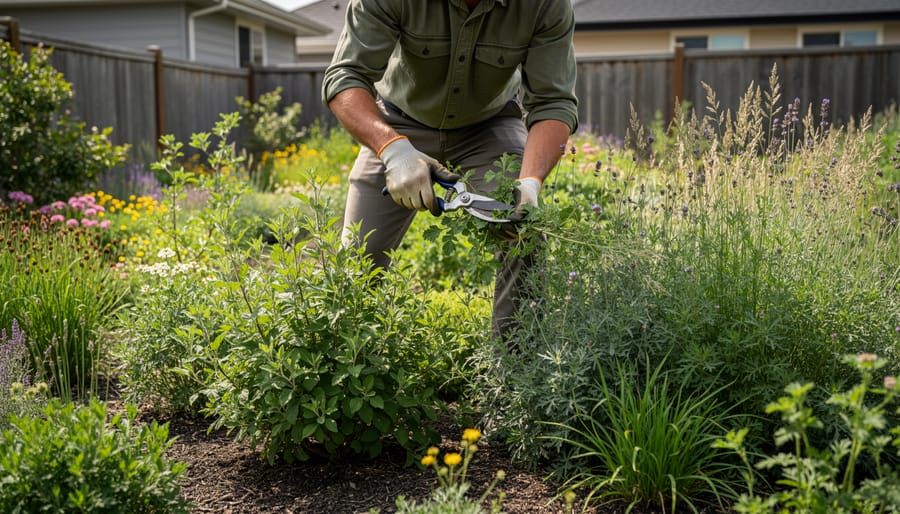
The good news is that most vigorous native plants respond beautifully to simple maintenance routines, keeping them exactly where you want them. Regular pruning becomes your best friend here, particularly during the growing season. For enthusiastic spreaders like native violets or guinea flower, a quick trim every few weeks prevents them from wandering into neighbouring plants’ territory.
Deadheading spent flowers serves double duty in controlling spread. By removing seed heads from plants like kangaroo paw or native hibiscus before they mature, you’re stopping thousands of potential seedlings before they start. This simple five-minute task during your weekend garden stroll can make an enormous difference over a season.
Early intervention is absolutely crucial. Keep an eye out for seedlings popping up in unexpected places, especially after rain. These are easiest to remove when they’re small, requiring just a gentle tug rather than serious digging later. Many Australian gardeners find success with monthly garden walkthroughs, treating it as a chance to connect with their space while staying ahead of any ambitious growth.
Consider joining your local Landcare or community garden group. Members often share maintenance schedules and swap tips specific to your region’s conditions, creating a supportive network where everyone benefits from collective wisdom about managing native plants successfully.
Choosing the Right Cultivars and Varieties
The good news is that Australian nurseries and horticulturists have been listening to gardeners’ concerns. Through careful selection and breeding programs, less aggressive cultivars of popular natives are now widely available. These plants retain the beauty and ecological benefits we love while behaving more considerately in the garden.
Take Lomandra longifolia, for example. The standard form can spread vigorously, but cultivars like ‘Tanika’ and ‘Katie Belles’ offer compact growth habits perfect for smaller spaces. Similarly, Hardenbergia violacea ‘Happy Wanderer’ has been bred to be less rampant than its wild relatives while still providing stunning purple flowers.
When making your native plant selection, look for terms like ‘compact’, ‘dwarf’, or specific cultivar names on plant labels. Chat with your local native plant nursery staff about your garden’s conditions and size constraints. Many Australian communities now share knowledge through local Landcare groups and native plant societies, creating a supportive network of gardeners who’ve tested various cultivars in real-world conditions. This collaborative approach helps everyone make informed choices that support biodiversity without creating maintenance headaches.
Building a Balanced Native Garden Ecosystem
Creating a thriving native garden that supports biodiversity without causing headaches requires planning and patience, but it’s absolutely achievable. The key is approaching your garden as an ecosystem rather than a collection of individual plants.
Start by researching thoroughly before you buy. Contact your local council’s environment team or visit regional botanic gardens to learn which native plants suit your specific conditions. Many Australian councils offer free native plant guides tailored to local soil types, rainfall patterns, and wildlife needs. The Nursery and Garden Industry Australia website can help you find accredited native plant nurseries where staff understand regional variations and can recommend appropriate species.
Understanding your site conditions makes all the difference. Is your soil sandy or clay-based? Does that corner stay boggy after rain? How much shade does your fence cast? Matching plants to these conditions prevents the stressed plants and vigorous overcrowding that lead to management issues. A coastal wattle might thrive in sandy Sydney soil but struggle in Melbourne’s heavier clay, while local alternatives will establish beautifully without becoming problematic.
Diversity is your garden’s best friend. Instead of massing the same species, create layers with different growth habits – groundcovers, mid-story shrubs, and taller specimens. This mirrors natural Australian ecosystems and prevents any single species from dominating. Include a mix of flowering times to support pollinators year-round.
Connect with your local Landcare group or native plant society. These communities share invaluable knowledge about what works in your area and often run plant swaps or propagation workshops. Through thoughtful garden management and community support, you’ll create a resilient, balanced native garden that enhances rather than overwhelms your outdoor space.
Yes, native plants can sometimes behave aggressively in our gardens, but this reality shouldn’t deter us from embracing them. The key lies in understanding that “native” doesn’t automatically mean “maintenance-free” – it means ecologically valuable and adapted to our climate. When we choose the right native species for our specific conditions and manage them thoughtfully, we create gardens that truly support Australia’s unique biodiversity.
Think of it as matchmaking between plant and place. A vigorous coastal wattle might thrive beautifully in a large bush garden but overwhelm a small suburban courtyard. Similarly, lomandra varieties perfect for erosion control on rural properties might spread too enthusiastically in manicured beds. The solution isn’t avoiding these valuable plants altogether – it’s selecting species that suit your space and being realistic about maintenance.
Creating a sustainable native garden means doing a bit of homework upfront. Talk to local community nurseries, join native plant societies in your area, and observe what thrives in neighbouring gardens. Start small, monitor how plants behave in your specific conditions, and don’t hesitate to prune, divide, or relocate when needed.
Your garden can become a haven for native birds, butterflies, and beneficial insects while remaining manageable and beautiful. Take that first step today – choose one native plant perfect for your space and watch your local ecosystem flourish.