
Locate your nearest household hazardous waste disposal facility by checking your local council website or calling their waste management hotline – most Australian councils operate permanent drop-off centres or hold regular collection events for items like paint, batteries, pesticides, and cleaning chemicals. These facilities exist because everyday products containing toxic chemicals can contaminate soil and waterways when dumped in regular bins, threatening Australian wildlife and community water supplies.
Identify hazardous items in your home by looking for warning symbols – skulls, flames, or corrosion marks – on products including motor oil, fluorescent globes, aerosols, pool chemicals, and electronic waste. Store these materials safely in their original containers, away from children and pets, until you can transport them to a disposal facility.
Book a drop-off appointment if your facility requires one, typically available through council websites or phone services, and check accepted items beforehand since some facilities have restrictions. Transport hazardous materials upright in your vehicle’s boot, secured in plastic containers to prevent spills, and never mix different chemical products together.
Consider the broader impact of your disposal choices on Australia’s fragile ecosystems – from the Great Barrier Reef to urban waterways. Proper disposal through authorized facilities ensures toxic substances undergo specialized treatment rather than leaching into environments that sustain native species and our agricultural future. By participating in these community programs, you’re joining thousands of Australians committed to protecting our unique environmental heritage while maintaining safe, healthy homes for generations ahead.
What Makes Household Waste ‘Hazardous’?
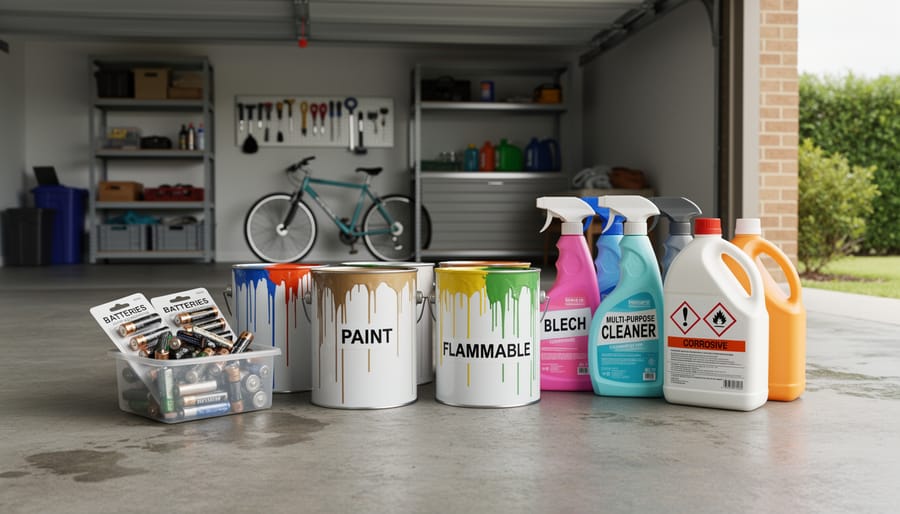
The Usual Suspects in Your Home
Right now, tucked away in your laundry, garage, or garden shed, there’s likely a collection of items that shouldn’t end up in your regular bin. Let’s identify these common culprits that need special attention.
In the garage and workshop, you’ll find paints and solvents, motor oils, antifreeze, and car batteries. These liquids contain heavy metals and chemicals that can contaminate soil and waterways for decades.
Your garden shed houses another category: pesticides, herbicides, and fertilizers. Pool owners will recognise chlorine tablets, algaecides, and pH adjusters as essential but hazardous when disposed of incorrectly.
Inside the home, look for expired cleaning products, particularly those marked corrosive or flammable, drain cleaners, oven cleaners, and aerosol cans. Your bathroom cabinet might contain old medications and mercury thermometers.
Lighting upgrades leave behind fluorescent tubes and compact fluorescent bulbs containing mercury vapour. Old appliances, computers, mobile phones, and printers all qualify for electronic waste recycling due to their toxic components and valuable recoverable materials.
Don’t forget household batteries, from button cells to rechargeable lithium-ion packs, fire extinguishers past their use-by date, and gas bottles.
The good news? Most Australian councils and dedicated facilities accept all these items. Identifying what you have is the first step toward responsible disposal that protects our communities and environment. Take a quick inventory today, and you’ll be ready to clear out these hazards safely.
How Household Hazardous Waste Disposal Facilities Work
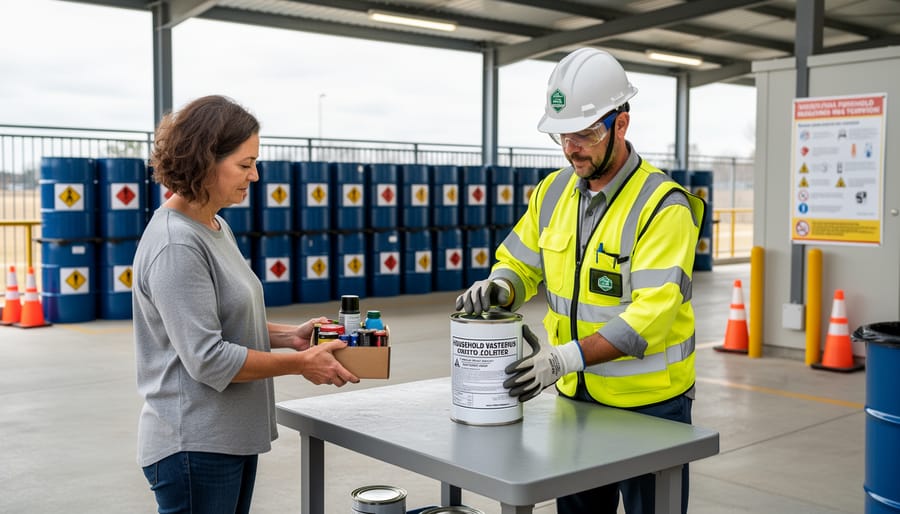
What to Expect When You Visit
Walking into a household hazardous waste disposal facility for the first time might feel a bit daunting, but you’ll quickly find it’s a straightforward and welcoming process designed with everyday Australians in mind.
Upon arrival, you’ll typically see clearly marked drop-off zones and friendly staff ready to guide you through the process. Many facilities operate with a drive-through system where you stay in your vehicle while trained workers safely unload your items. Simply let them know what you’ve brought, and they’ll direct you to the appropriate collection point.
Staff are well-versed in handling everything from old paint tins to car batteries, and they’re genuinely pleased to help you dispose of materials responsibly. Don’t hesitate to ask questions if you’re unsure whether something belongs there.
For containers and packaging, the golden rule is simple: keep items in their original containers whenever possible. This helps staff identify contents and handle them safely. If the original container is damaged, use a sturdy, sealed alternative and label it clearly. Keep liquids upright and secure them in your boot using towels or boxes to prevent spills during transport.
Most facilities accept items as-is, meaning you don’t need special packaging. However, avoid mixing different products together, as this can create dangerous chemical reactions. Battery terminals should be taped to prevent sparking.
The entire process usually takes less than fifteen minutes, and you’ll leave knowing you’ve protected your local waterways and community from harmful contamination. Many visitors describe feeling a genuine sense of accomplishment, joining thousands of Australians actively contributing to a cleaner, safer environment.
Finding Your Nearest Facility in Australia
State-by-State Resources
Across Australia, each state and territory has developed programs to help residents safely dispose of hazardous household waste, though the specifics vary considerably depending on where you live.
In New South Wales, the Community Recycling Centres network provides free drop-off services for problem wastes including paint, batteries, smoke detectors, and gas bottles. Many local councils also run regular collection events, particularly helpful for those in regional areas without year-round access to permanent facilities.
Victoria’s approach centers around sustainability centres operated through local councils, with Detox Your Home events held multiple times annually in metro and regional locations. These mobile collection services bring convenience directly to communities, often coinciding with local events to maximize participation.
Queensland residents can access permanent facilities at waste transfer stations, complemented by council-organized collection days. The state’s ChemClear program specifically assists rural properties in disposing of agricultural chemicals safely, acknowledging the unique needs of farming communities.
South Australia offers Green Industries SA’s Household Hazardous Waste Program, with permanent collection points and special collection days scheduled throughout the year. The state has earned recognition for its comprehensive approach to keeping dangerous materials out of landfills.
Western Australia provides HazWaste collection facilities at multiple locations, with local councils supplementing these with pop-up collection events. In Tasmania, the Northern Territory, and the Australian Capital Territory, local councils coordinate hazardous waste collections, typically through scheduled drop-off dates or permanent transfer station facilities.
For those without nearby permanent facilities, marking your calendar for special collection events is essential. Contact your local council to learn specific dates and what items they accept, as programs regularly expand based on community needs and participation.
The Real Cost of Getting It Wrong
When paint, batteries, or cleaning products end up in regular bins, the consequences ripple far beyond our kerbside. Across Australia, improper disposal creates challenges we can genuinely prevent together.
In Melbourne’s western suburbs, a 2019 incident saw motor oil poured down stormwater drains, contaminating local waterways and impacting platypus populations in nearby creeks. These native creatures are particularly vulnerable to petroleum products, which coat their fur and reduce insulation. Similarly, mercury from improperly discarded fluorescent lights has been detected in sediments along the Parramatta River, accumulating in fish tissue and affecting the broader food chain.
Groundwater contamination presents another serious concern. When household chemicals leach through landfills, they can seep into aquifers that communities rely on for drinking water. In regional Queensland, monitoring has detected traces of paint solvents and pesticides in groundwater near older waste sites, requiring expensive treatment processes.
The risks extend to the people who handle our waste. Councils across New South Wales report dozens of incidents annually where collection workers suffer chemical burns or respiratory issues from hazardous materials hidden in regular rubbish bags. Lithium batteries pose particular dangers, sparking fires in collection trucks and sorting facilities. In 2022 alone, these battery fires caused over $10 million in damage to Australian waste management infrastructure.
The encouraging news? These outcomes are entirely avoidable. By choosing environmentally conscious disposal methods, we protect waterways, wildlife, workers, and infrastructure. Every container of paint or old battery taken to a proper facility represents a small victory for our shared environment. When we understand what’s at stake, making the right choice becomes straightforward, and facilities across Australia stand ready to help us do exactly that.
Reducing Hazardous Waste Before It Starts
Smart Shopping Swaps for Australian Households
The best approach to reducing hazardous waste is preventing it from entering your home in the first place. Australian households have excellent access to safer alternatives that protect both your family and the environment while often delivering better value over time.
Start with cleaning products by swapping harsh chemical cleaners for eco-friendly options like Ecostore, Koala Eco, or Bio-Zet. These Australian brands cost between $6-12 per bottle compared to $4-8 for conventional cleaners, but they’re concentrated formulas that last longer. Even better, create your own cleaners using vinegar, bicarb soda, and eucalyptus oil for just dollars per year.
For pest control, ditch toxic sprays in favour of natural deterrents. Diatomaceous earth effectively manages ants and crawling insects for about $15 per kilogram, lasting months longer than chemical sprays. Essential oil-based products from brands like EcoSmart provide safe mosquito and fly control without harmful residues.
When tackling home projects, choose water-based paints over solvent-based options. Major Australian retailers like Bunnings stock Dulux Wash&Wear and Taubmans Endure, which cost similarly to traditional paints but eliminate disposal headaches and reduce indoor air pollution. This consideration extends to recycling building materials throughout your renovation journey.
Finally, invest in rechargeable batteries. While an Eneloop battery pack costs around $30 compared to $8 for disposables, each rechargeable battery replaces approximately 2,100 single-use batteries over its lifetime, saving hundreds of dollars and preventing toxic waste.
These simple swaps reduce your household’s hazardous footprint while building a healthier home environment for your community.
Making It a Community Effort
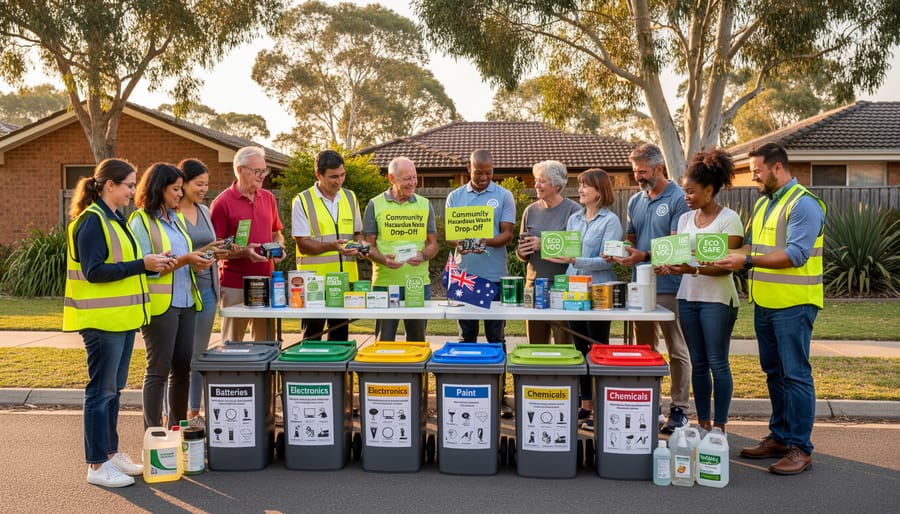
Across Australia, communities are transforming how they handle hazardous waste, proving that collective action creates lasting change. The City of Boroondara in Victoria runs quarterly Chemical Clean Out events that have collected over 500 tonnes of hazardous materials since inception, preventing these substances from contaminating waterways. Meanwhile, the Northern Beaches Council in New South Wales has established permanent drop-off facilities that residents can access year-round, removing barriers to proper disposal.
School programs are particularly powerful in spreading awareness. Brisbane’s Cavendish Road State High School launched a battery collection initiative that expanded to surrounding suburbs, collecting thousands of batteries while educating younger generations about responsible waste management. These community waste initiatives demonstrate what’s possible when neighborhoods unite around environmental goals.
You can spark similar action in your area. Start by connecting with your local council to advocate for more frequent collection events or permanent facilities. Organize a neighborhood group to pool resources for safe transport to existing facilities, making disposal convenient for everyone. Schools and community centers often welcome partnerships for educational workshops about hazardous waste identification and reduction.
Consider establishing collection points for specific items like batteries or paint. Share disposal information through local Facebook groups, community noticeboards, and neighborhood apps. When people see their neighbors prioritizing safe disposal, it becomes the norm rather than the exception. Some communities have created helpful reminder systems, texting residents before scheduled collection days.
The beauty of community-driven efforts is their ripple effect. One person’s initiative inspires another, creating momentum that transforms entire suburbs into models of environmental responsibility.
Taking that first step toward proper hazardous waste disposal is easier than you might think, and the impact reaches far beyond your own home. By choosing to safely dispose of batteries, old paint tins, chemicals, and electronics at your nearest household hazardous waste facility, you’re actively protecting Australia’s unique waterways, soil, and wildlife from contamination. You’re also safeguarding your family and neighbours from potential health hazards.
This weekend, why not locate your local council facility and plan a household clear-out? Many Australians are surprised by how much potentially hazardous material accumulates in garages, sheds, and under kitchen sinks. Gathering these items and taking them to a designated facility is a straightforward action that demonstrates real environmental stewardship.
Remember, sustainable living isn’t about perfection – it’s about making informed choices when opportunities arise. When thousands of Australian households commit to responsible disposal practices, the collective impact becomes transformative. Together, we’re building cleaner communities, preserving our natural environments for future generations, and proving that practical environmental action starts right at home. Your contribution matters, and your local hazardous waste facility makes it simple to do the right thing.